

Panasonic DP-UB9000AG1

Specifications and features


Overview
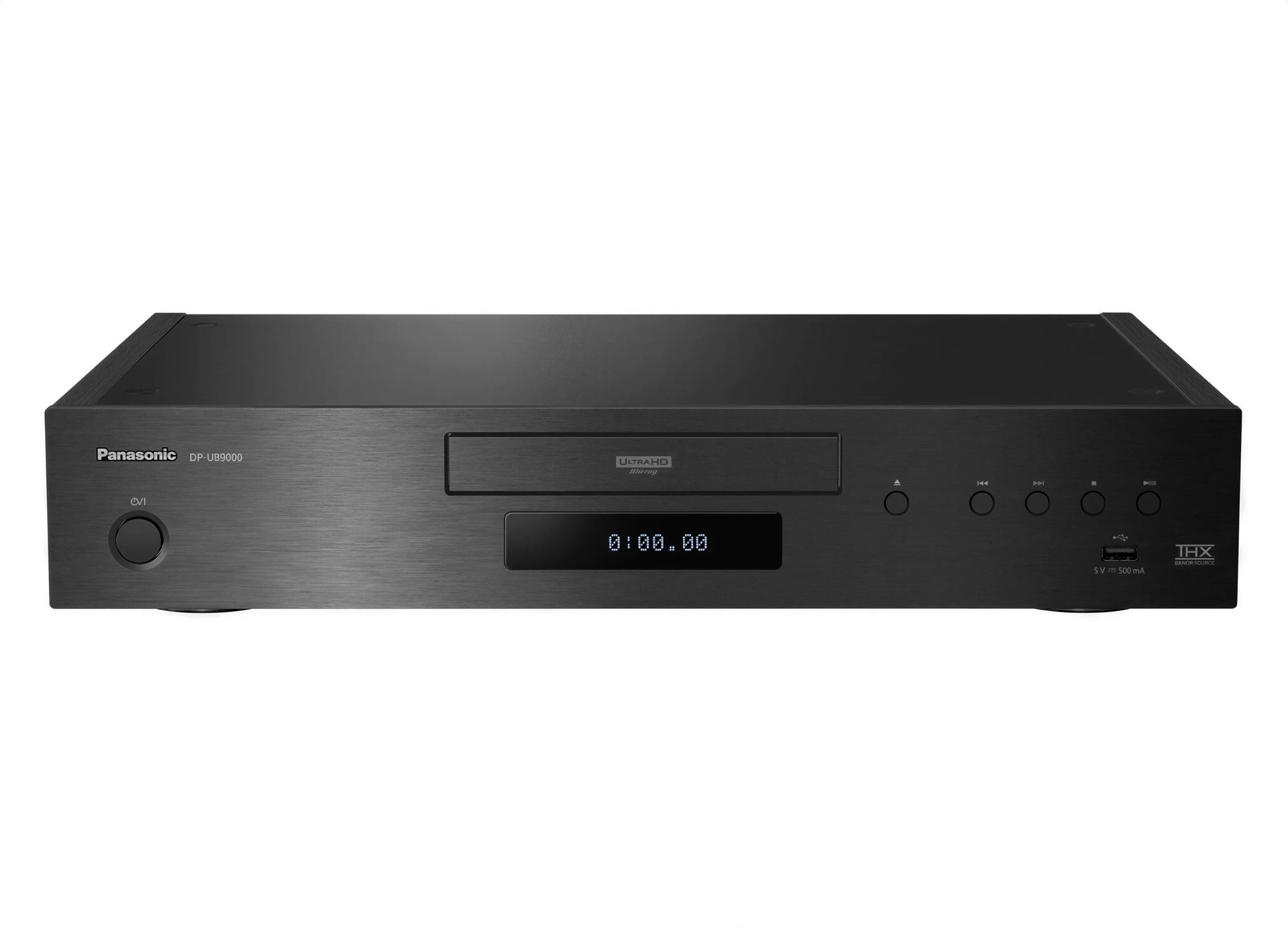
Watching an Ultra HD Blu-ray in the conditions intended by the director requires a player capable of adapting each image to the screen displaying it. The reference model in the Panasonic range, the DP-UB9000AG1 combines the brand’s HCX video processor with an audio section given the same care as a hi-fi component. Its substantial, heavy, extensively reinforced chassis reveals an ambition: to serve home theater and music listening equally well.
A substantial chassis to counter vibrations
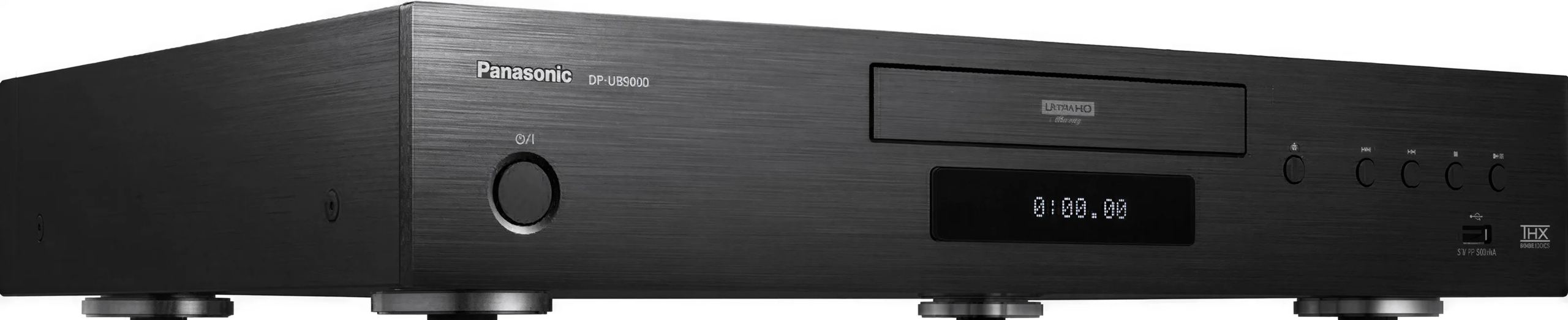
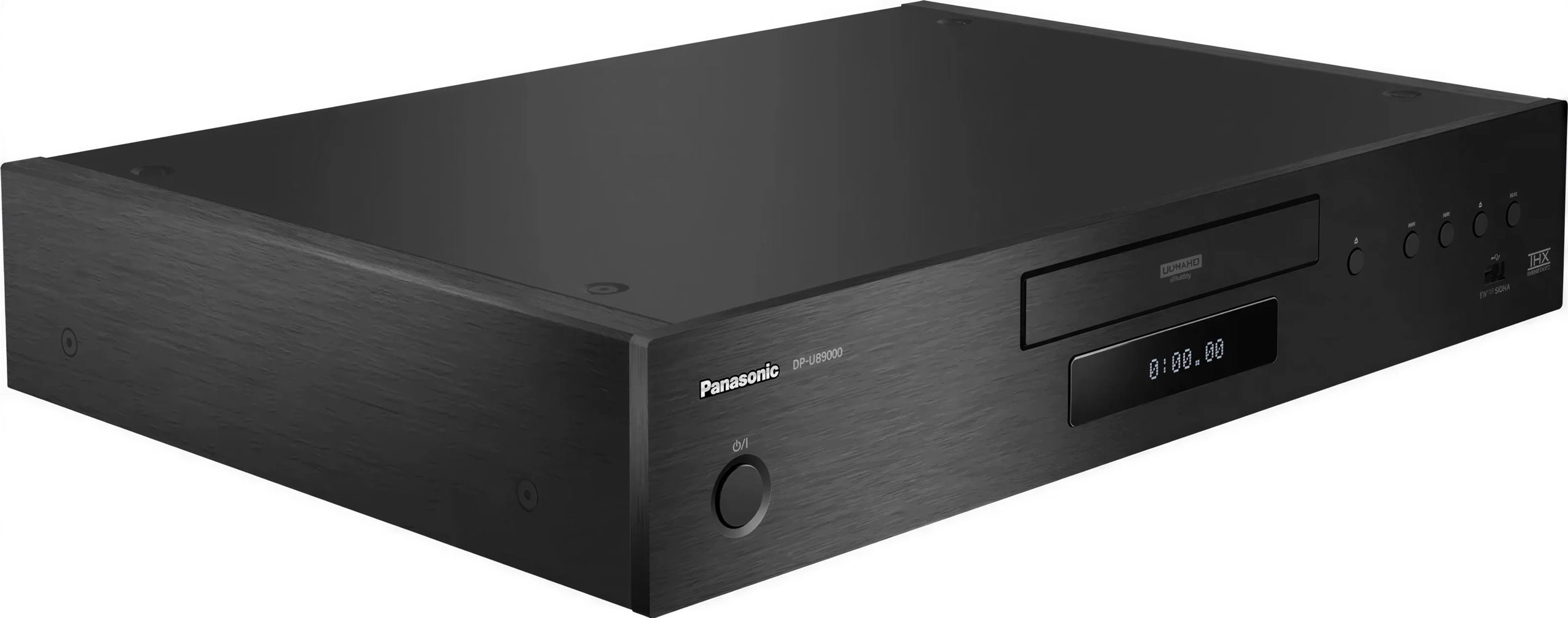
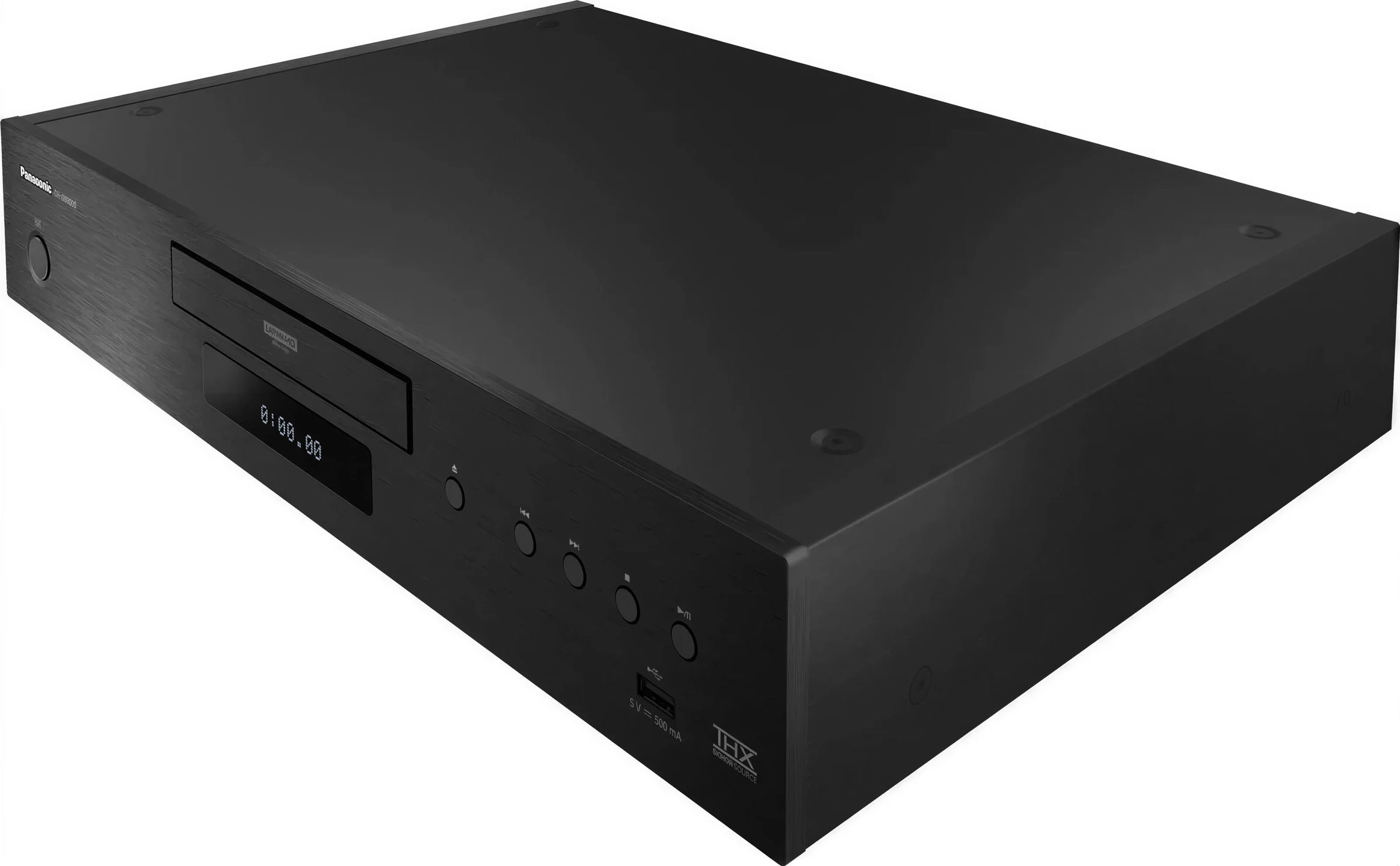
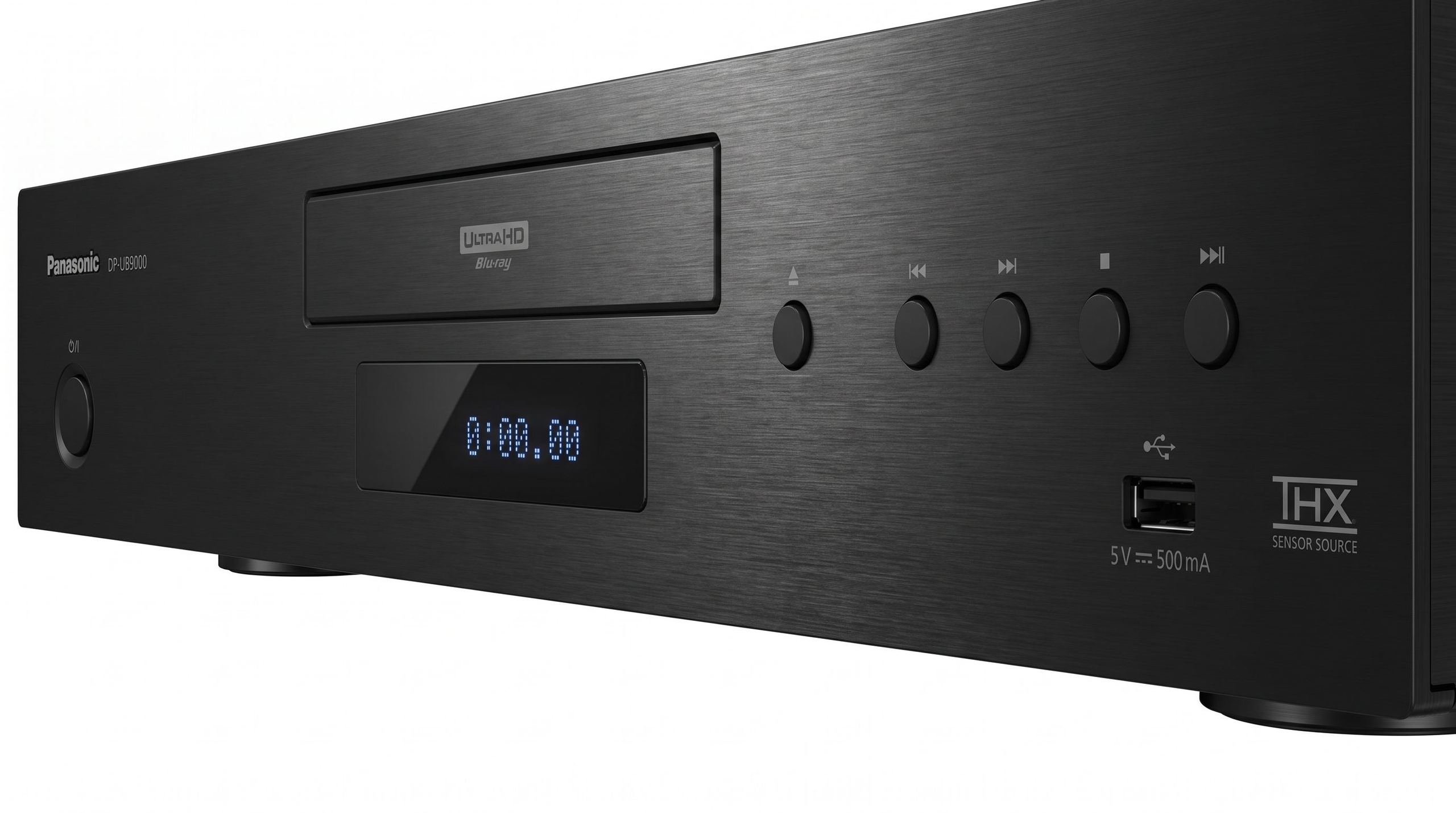
The DP-UB9000AG1 does not look like a typical Blu-ray player, and that is apparent as soon as you handle it. Its 7.8 kilograms come from a double-layer construction: aluminum front and side panels, an internal steel plate and a lowered center of gravity to limit resonance. Inside, the circuits are compartmentalized to prevent each section from interfering with its neighbors: the power supply on one side, the disc mechanism in the center and video processing on the other. It needs a stable, sufficiently deep spot on a cabinet, as its 43-centimeter width and 30-centimeter depth will not fit just anywhere. The player uses the same core video technology as the DP-UB820, one step down in the range. It adds this reinforced chassis and dedicated audio electronics, which account for most of the difference between the two.

HDR adjusted to your screen
HCX stands for Hollywood Cinema Experience: it is the name of Panasonic’s in-house video processor. Its primary role is to decode Ultra HD Blu-ray discs cleanly and reproduce their colors faithfully. The player supports all four current HDR formats: standard HDR10, its two dynamic-metadata variants, HDR10+ and Dolby Vision, and finally HLG, used in television broadcasting.
The feature that really sets this player apart is called HDR Optimizer. An Ultra HD movie can be mastered for peak brightness levels that no home television actually reaches. Without correction, these highlights are clipped to featureless white. The DP-UB9000AG1 reads the disc’s HDR metadata, recalculates its own tone curve and adapts it to the type of screen you specify during setup. It offers several profiles depending on the screen: OLED TV, LCD panels with varying brightness levels, or projector, which has less brightness in reserve. With Dolby Vision and HDR10+, the metadata already adjusts scene by scene, so this processing switches off and lets them do the work.
The processor also handles color. Ultra HD Blu-rays encode it in 4:2:0, with reduced color information compared with brightness information. The processor reconstructs it in 4:4:4, resulting in finer gradients and sharper edges, including when upscaling a Full HD source to 4K. These processing capabilities earn the player Ultra HD Premium and THX 4K HDR Source certifications, which attest to an image that meets the criteria of these two organizations.
A hi-fi-grade audio section
Most Blu-ray players simply pass sound through. The DP-UB9000AG1 treats it like a fully fledged music player. Its audio power supply is separate from the rest, and a high-end digital-to-analog converter handles high-resolution files: FLAC up to 192 kHz/24-bit, WAV up to 384 kHz/32-bit, ALAC, AIFF and DSD up to 11.2 MHz. A dedicated analog stereo output connects it directly to a hi-fi amplifier, using either a conventional RCA connector or a balanced XLR connector. The XLR connection limits noise picked up by the cable between the two devices. A 7.1 analog output (up to 192 kHz/32-bit) feeds a home theater amplifier without going through HDMI.
For movies, internal decoding covers Dolby TrueHD and DTS-HD Master Audio, with bitstream output. Dolby Atmos and DTS:X tracks are sent as bitstreams to a compatible amplifier. Two modes round out the package. High Clarity Sound Premium switches off the video circuits during music listening to reduce interference, in the spirit of a Pure Audio mode. Digital Tube Sound seeks to recreate the warmth of tube amplifiers, an effect that can be enabled or disabled according to individual taste.
Two HDMI outputs to separate picture and sound
The dual HDMI output is one of the player’s practical strengths. The first sends the picture to the television or projector, while the second sends sound to the home theater amplifier. This is useful when the amplifier cannot pass through a 4K HDR signal: video goes directly to the screen, sound takes its own path, and nothing is lost along the way.
The remaining connections also keep the signals separate. Two digital audio outputs, one optical and one coaxial, complement the analog outputs already described. For USB, the front connector (USB 2.0) is used to connect a flash drive or hard drive occasionally, while the rear port (USB 3.0) is better suited to permanently connected storage. An Ethernet port rounds out the package for a more stable network connection than Wi-Fi.

Network playback, files and discs
The DP-UB9000AG1 no longer offers online video apps: Netflix, YouTube and Prime Video have disappeared from the player, as they have from the DP-UB820. The built-in Wi-Fi and network port are used to play files stored on the local network via the DLNA protocol, with the player retrieving movies and music from a computer or home server. They are also used for discs’ BD-Live features and firmware updates. Via either a USB flash drive or the network, it plays numerous video formats (MKV, MP4 in H.264 or HEVC, MPEG-2, AVCHD, including in 3D) and displays JPEG photos in 4K. For streaming services, the television or a media box takes over, leaving the player to focus on playing discs and files.
Documentation
French
Technical specifications
Overview
- Type: high-end Ultra HD Blu-ray player
- Highlights:
- HCX processor for a picture faithful to the disc
- HDR Optimizer tailored to the screen type
- Hi-fi-grade audio section with RCA, XLR and 7.1 analog outputs
- THX 4K HDR Source and Ultra HD Premium certifications
- Dual HDMI output to separate picture and sound
Playable formats
- BD-ROM: Ultra HD Blu-ray, Full HD 3D, BD-Video
- BD-RE / BD-RE DL (Ver.3): BDAV, AVCHD, AVCHD 3D, JPEG, MPO
- BD-R (Ver.1.3) / BD-R DL (Ver.2): BDAV, AVCHD, AVCHD 3D, MKV, JPEG, MPO
- DVD-Video
- Audio CD
- SACD and DVD-Audio: not supported
Video quality
- HCX processor for Ultra HD Blu-ray
- HDR support:
- HDR10
- HDR10+
- Dolby Vision
- Hybrid Log-Gamma (HLG)
- HDR Optimizer
- 4K upscaling: 60p / 50p / 4:4:4 (HDMI 2.0), 24p / 25p
- 4K direct chroma upscaling
- Picture modes: Normal, Cinema, Fine Cinema, Retro Cinema, Animation, Live
- Functions: Freeze, Random, Noise Reduction
- Certifications and technologies:
- Ultra HD Premium
- THX 4K HDR Source
- Deep Color
- x.v.Color
Sound quality
- Dolby Digital / Dolby TrueHD: decoding and bitstream output
- Dolby Digital Plus: decoding and bitstream output
- DTS-HD Master Audio / DTS-HD High Resolution Audio: decoding and bitstream output
- Dolby Atmos / DTS:X: bitstream output
- Supported audio formats:
- FLAC: max. 192 kHz / 24 bits
- WAV: max. 384 kHz / 32 bits
- ALAC: max. 96 kHz / 32 bits (7.1 ch), 176.4 / 192 kHz / 32 bits (5.1 ch)
- DSD (DFF, DSF): 2.8 MHz (2 ch / 5.1 ch), 5.6 MHz (2 ch / 5.1 ch), 11.2 MHz (2 ch)
- AIFF: max. 384 kHz / 32 bits (2 ch)
- Pure audio via HDMI (low HDMI clock jitter)
- High-quality network audio playback (DLNA): FLAC, WAV, ALAC, DSD, WMA, AAC, MP3, AIFF
- Premium high-clarity sound
- Digital tube sound
- Surround remastering
Network
- Built-in Wi-Fi
- LAN (Ethernet)
- Network functions: DLNA, BD-Live, firmware update
- Online video apps (Netflix, YouTube, Prime Video): not available
USB playback formats
- Audio: FLAC, WAV, ALAC, DSD, WMA, AAC, MP3, AIFF
- Video: MKV, MP4 (H.264 / HEVC), TS (MPEG-2 / H.264 / HEVC), MPEG-2, AVCHD, AVCHD 3D
- Image: JPEG (up to 4K), MPO
Connections
- HDMI: 2 outputs (video + audio, or separate audio)
- USB:
- Front: 1 (USB 2.0 High-Speed)
- Rear: 1 (USB 3.0 SuperSpeed)
- Optical digital audio output
- Coaxial digital audio output
- Stereo analog audio output: RCA and balanced XLR
- 7.1 analog audio output: up to 192 kHz / 32 bits
- LAN (Ethernet)
Dimensions and weight
- Dimensions (W x H x D): 430 x 81 x 300 mm
- Weight: 7.8 kg
General
- Video system: PAL / NTSC
- Power supply: AC 220-240 V, 50 Hz
- Power consumption:
- Normal use: 40 W
- Standby (Quick Start Off) - network active: 2 W
- Standby (Quick Start Off) - network disabled: 0.4 W
Frequently asked questions
Does the DP-UB9000AG1 enhance the image of an HDR film on a non-HDR compatible TV?
Yes. The player features built-in HDR to SDR conversion: it analyzes the HDR content on the disc and renders it within the screen’s standard dynamic range, with a brighter and more contrasted picture than a standard Blu-ray. This is useful for a 4K TV without HDR or a Full HD projector.
Do you need a specific television to enjoy Dolby Vision?
Yes. The player transmits the Dolby Vision signal, but it is the TV or projector that must handle this format to display it. On a non-compatible screen, playback switches to another supported HDR format (HDR10 or HDR10+ depending on the disc), with no loss of compatibility.
Can it be used as a music player connected to a hi-fi system?
This is one of its intended uses. Its dedicated analog stereo output connects directly to a hi-fi amplifier without an external converter: the player decodes high-resolution files (FLAC, WAV, ALAC, DSD, AIFF) played via USB or over the network by itself. High Clarity Sound mode then cuts the video circuits to minimize noise.
Does the HDR Optimizer also work with a video projector?
Yes, and this is one of its advantages. During setup, you tell the player that the source is a projector, which has a lower light output than a television. Two projector profiles (high or standard brightness) adapt the HDR curve to this constraint, to avoid an overly dark image or crushed highlights.
Is there a headphone output on the player?
No, the DP-UB9000AG1 does not have a headphone jack. Headphone listening is done through the home theater amplifier or hi-fi amplifier connected to the player, depending on your setup.
- Eco-contribution included in the sale price.
- GTIN / EAN: 5025232995097


