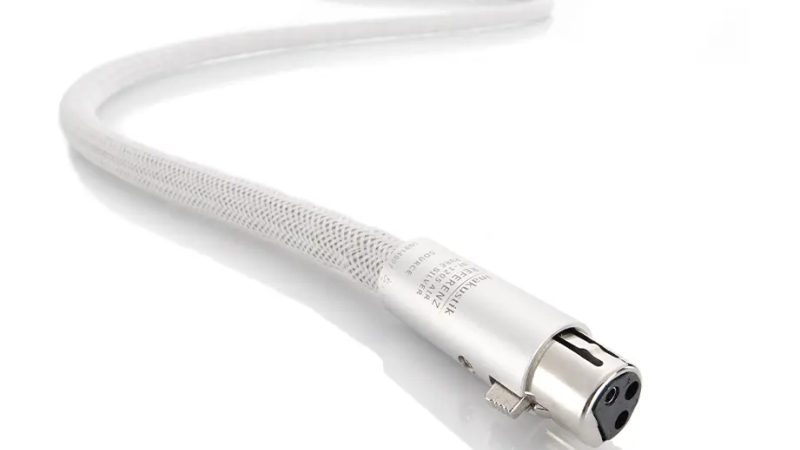
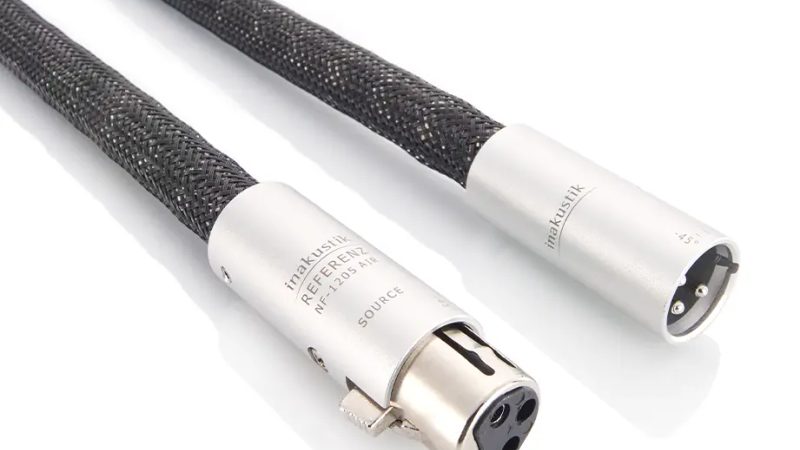
Inakustik Reference NF-1205 AIR | XLR 2m

Overview
Moving from RCA to XLR is not simply a matter of screwing different plugs onto the end of the same cable. A balanced connection carries two signal conductors with identical status, and its effectiveness relies on the true symmetry of everything surrounding them. in-akustik has therefore revised the internal geometry of its 13 mm Referenz interconnect cable, while retaining the air insulation that gives the AIR line its name.
Air as insulation right down to the final centimeters
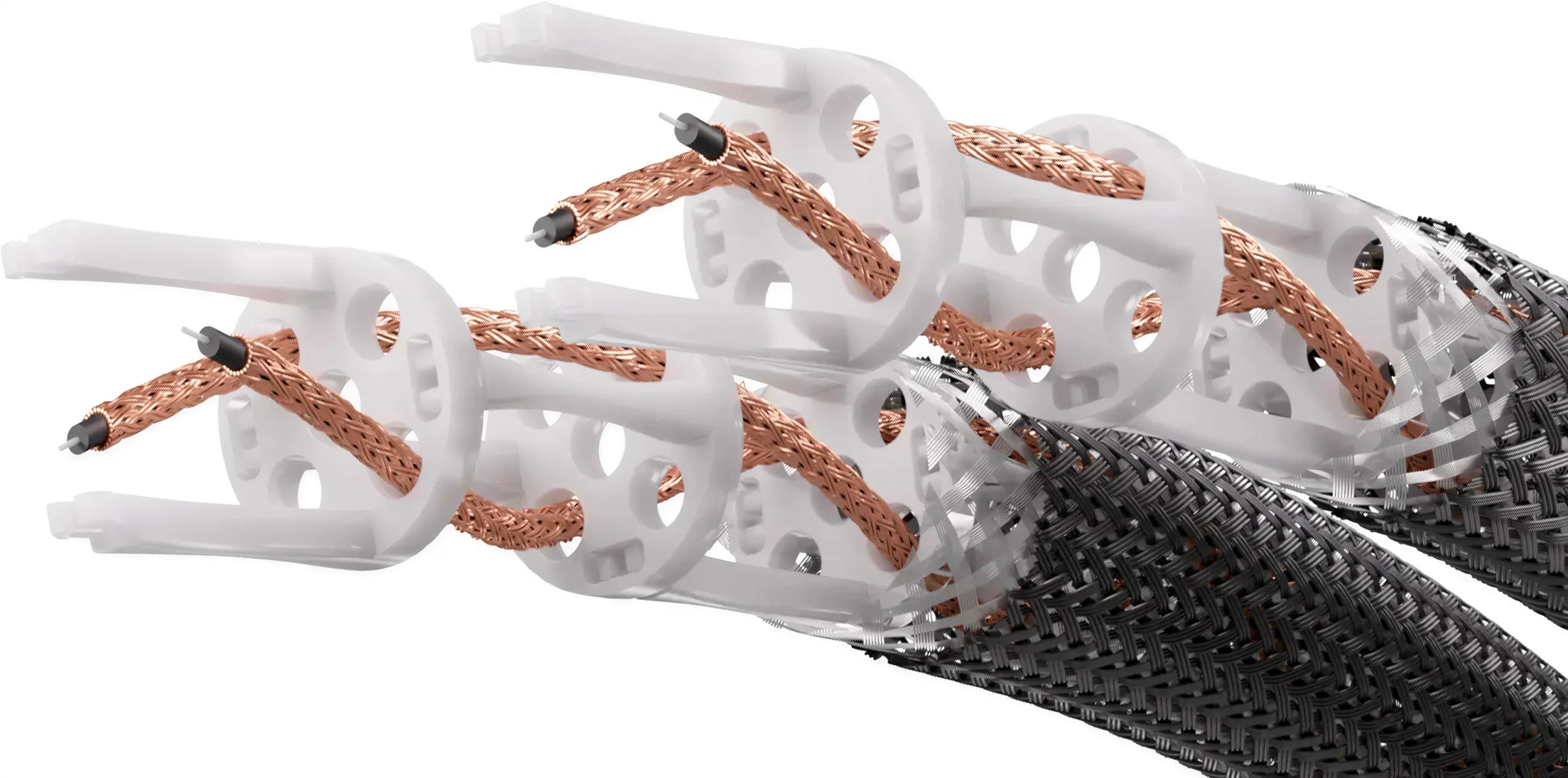
In an interconnect connection, the signal is weak and the source output impedance encounters the cable capacitance: together, they form a low-pass filter whose cutoff frequency depends directly on that capacitance. Lowering capacitance pushes this filter far beyond the audio band. The method chosen by in-akustik consists of removing almost all insulating material between the conductors. Clips placed at defined intervals along the entire length keep the helical conductors apart, while two spacers hold these clips together while preserving their spacing, keeping the cable flexible. Between two clips, the conductors are suspended in a vacuum: the insulation is almost 100% air.
The fifth generation of this design adds point-to-point connection. Transitions designed for each cable and connector type extend the air helix into the plugs, where previous generations interrupted it at the separators. The improvement concerns a few centimeters—the very ones where the signal previously passed through a conventionally insulated environment.
A balanced geometry specific to the XLR version
The manufacturer’s technical data clearly distinguishes the two versions of the NF-1205 AIR: coaxial construction on the RCA side, balanced construction on the XLR side. The difference is understood in light of the principle. An unbalanced link carries a signal and its ground return. A balanced link carries two out-of-phase versions of the signal, which the receiving input stage subtracts from one another to cancel noise picked up along the way. This subtraction is fully effective only if both conductors have undergone exactly the same conditions, hence a geometry that treats them equally rather than placing one at the center and the other on the outside.
The cable is sold as a stereo pair, one cable per channel, a principle the brand calls dual mono: no conductor shares its sheath with the neighboring channel. Inside, the conductors are interwoven into multicore structures whose magnetic fields partially overlap and cancel each other out, reducing the inductance of the connection. Over a few meters of interconnect cable, this inductance remains marginal in any case: capacitance remains the determining parameter.
Individually varnished strands
The conductor is called the Cross Link Super Speed waveguide. Its braided structure distributes current among numerous fine strands rather than through a solid core, and each strand receives a layer of varnish that insulates it from its neighbors and protects it from oxidation. The stated aim is to limit eddy currents inside the conductor and the resulting skin effect. At audio frequencies and with these cross-sections, the skin effect remains modest: it is above all the consistency of the effective cross-section and the handling of current peaks that justify the process. The copper is high-purity OFC, batch-selected before multi-stage wire drawing to the desired cross-section.
Dense shielding and PVC-free jacket
Around the helix, a dense tinned copper braid forms the shield. Wireless networks, mobile telephony and switching power supplies saturate the home environment with interference whose level far exceeds that of an interconnect signal. Tin plating protects the braid from oxidation, which would degrade its electrical continuity over time.
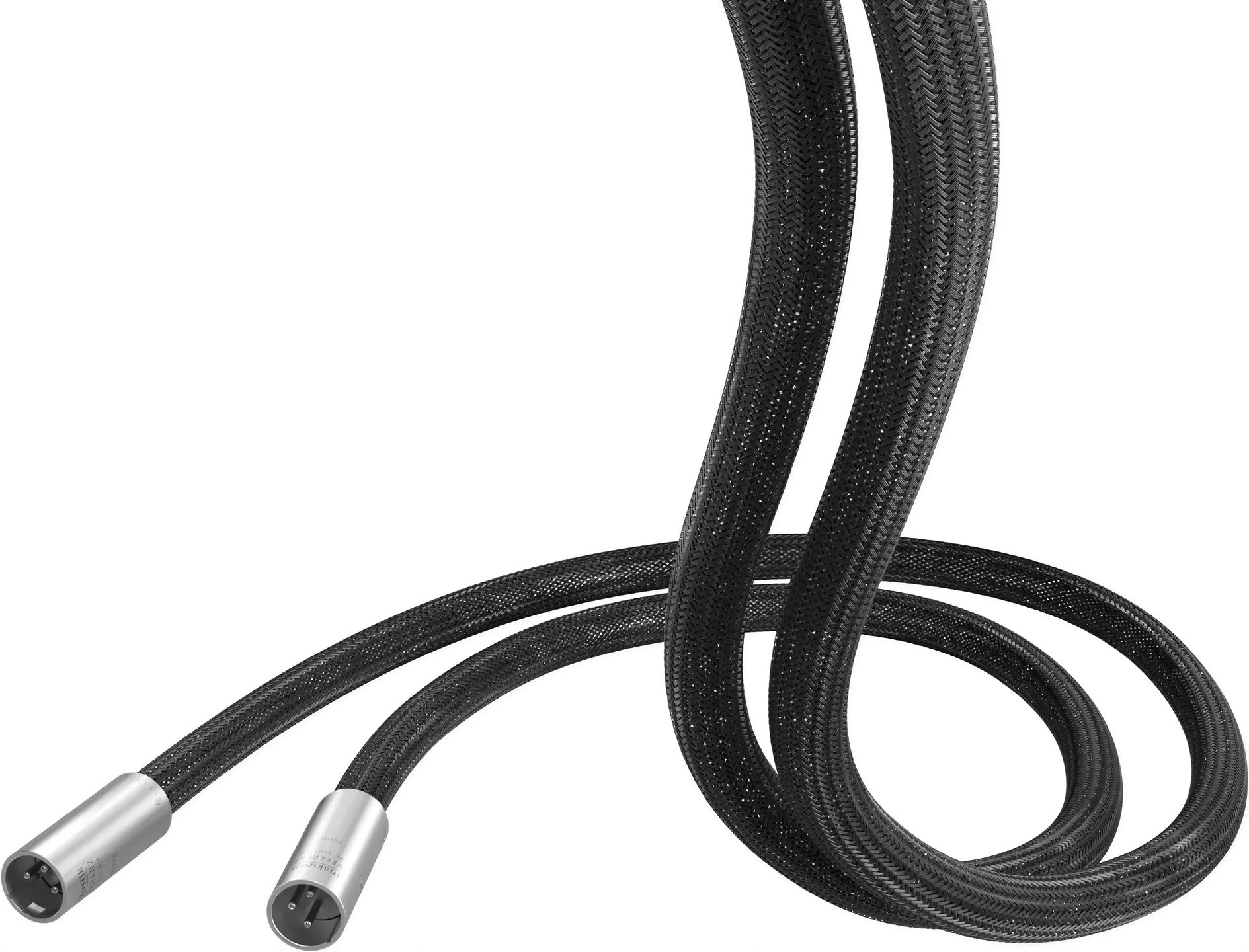
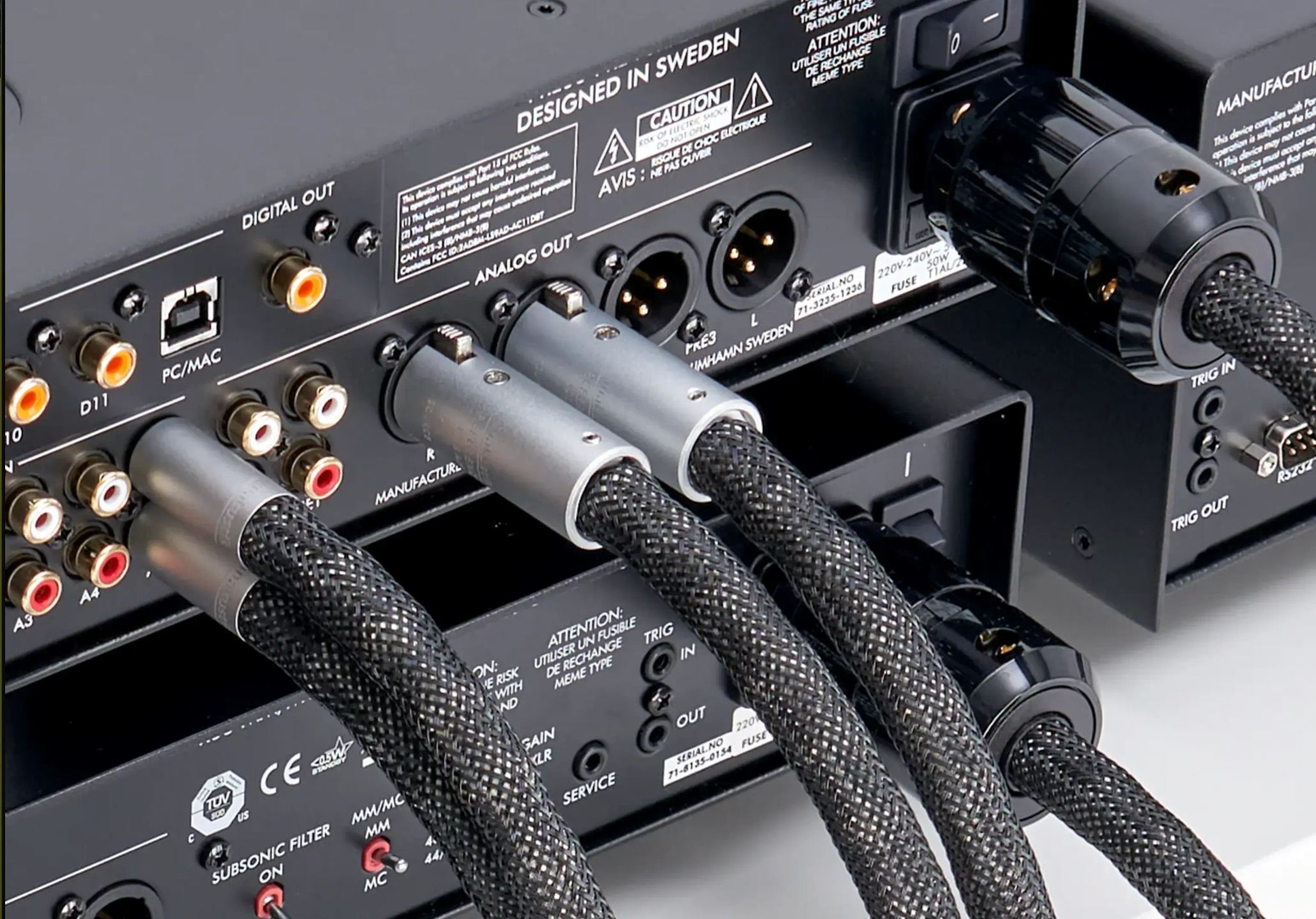
The outer jacket replaces conventional PVC with a network of polyethylene monofilaments. PVC adds capacitance and dielectric losses; the PE mesh holds the conductors firmly and limits micro-vibrations. The trade-off: with a 13 mm diameter and a firm jacket, this cable does not bend easily. Clearance must be allowed behind the cabinet, and it should not be routed out of a socket at a sharp angle.
Plugs that rotate by 45 degrees
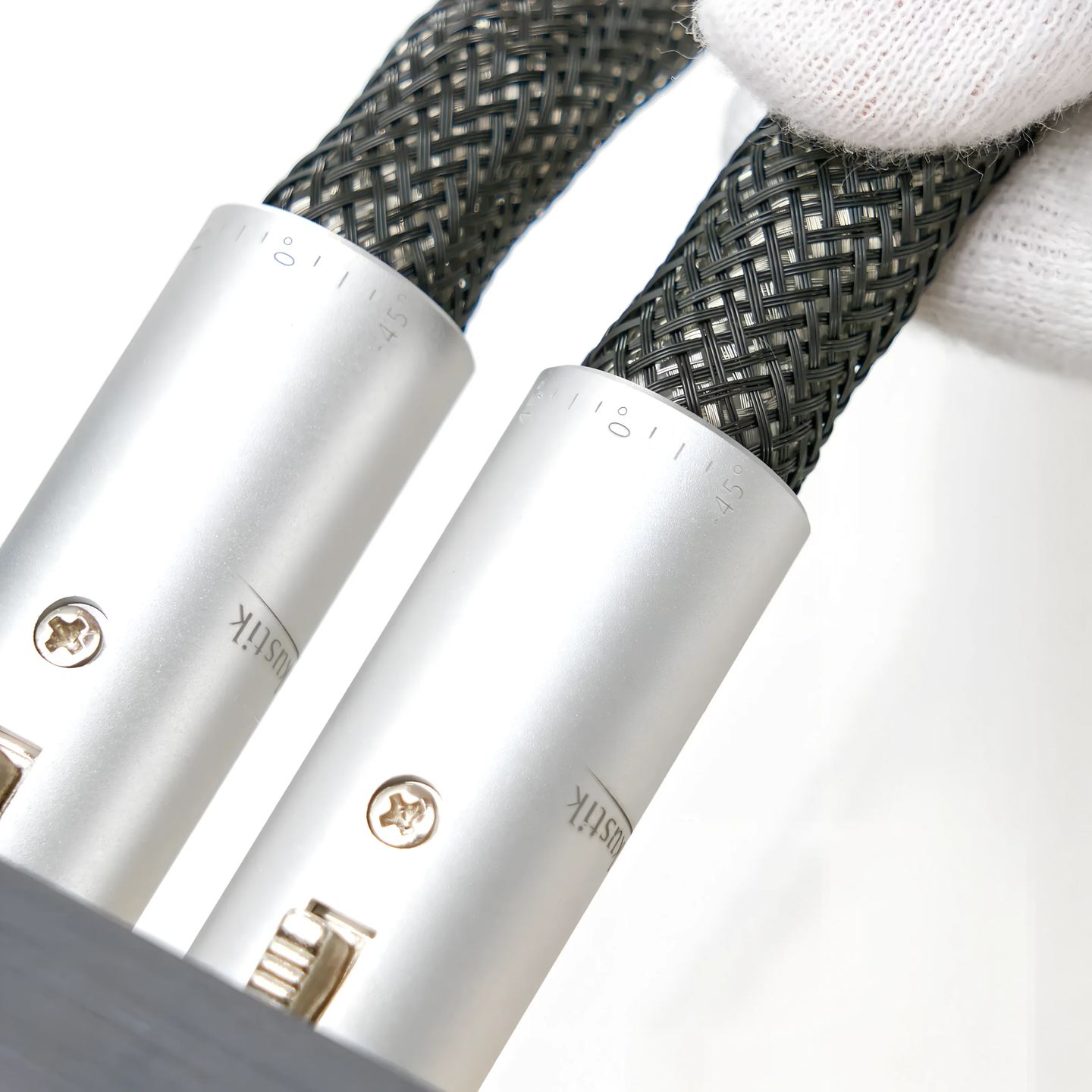
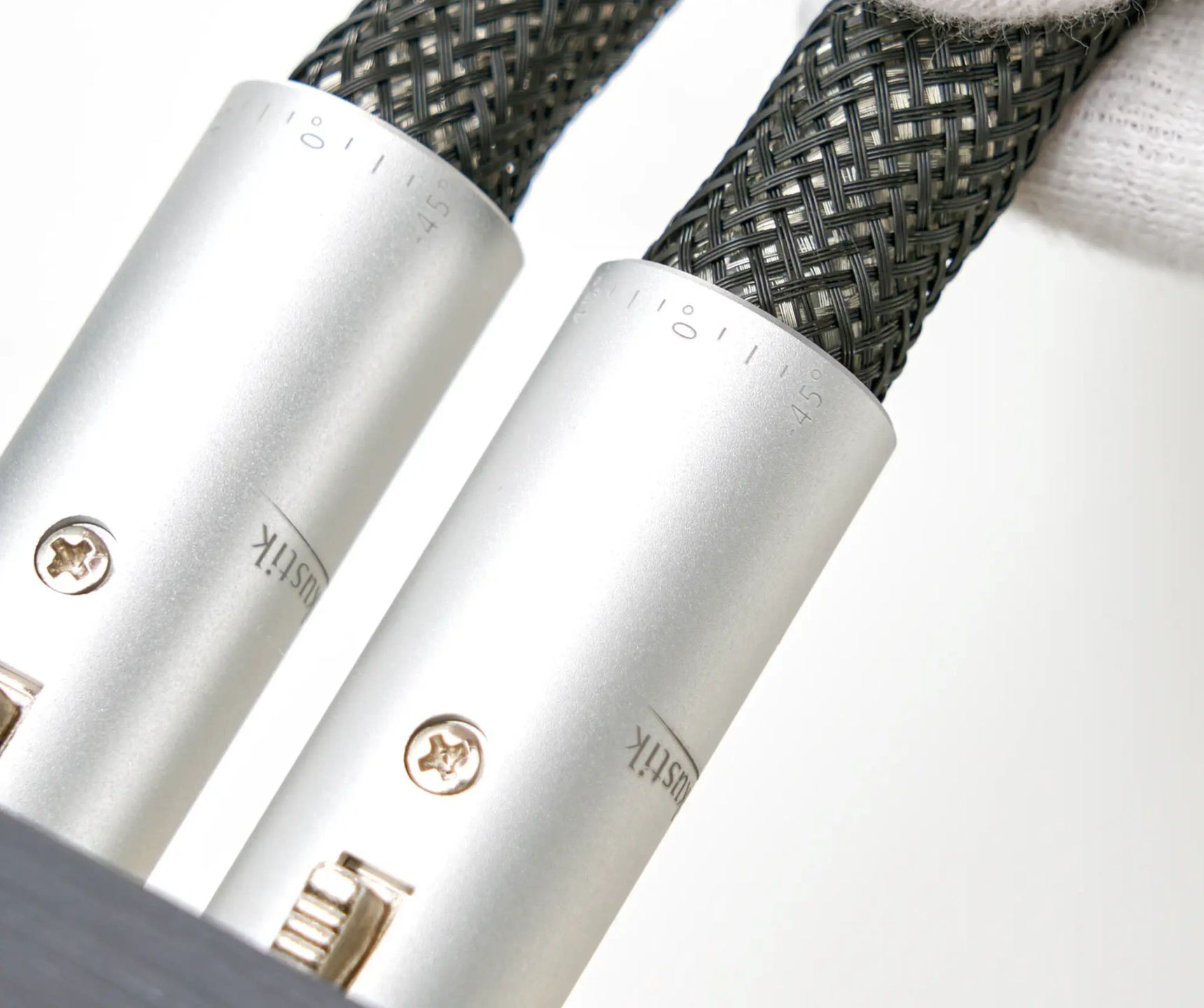
An XLR plug only fits in one orientation, and socket orientation varies from one device to another. The usual result is a cable forced into a twist, pulling on its own solder joints and on the device socket. The in-house developed XLR 180 plug rotates plus or minus 45 degrees around its axis, giving 90 degrees of movement per connector—enough to align the cable with the output without stressing it.
The housing is made of solid metal. The contacts are made of tellurium copper, an alloy harder than brass that retains high conductivity, and receive rhodium plating. Rhodium conducts less well than gold by volume, but it withstands mechanical wear much better: on a contact that is plugged and unplugged regularly, long-term durability takes priority. Assembly is soldered, unlike the SL RCA plugs of the unbalanced version, which are crimped without solder. User repair is not possible.
Hand-assembled in Germany
Each unit comes from the in-akustik factory in Ballrechten-Dottingen. The clips are fitted by hand, the waveguide is threaded one conductor at a time, then the shielding and PE jacket are installed before the plugs are assembled. The manufacturer provides telling figures: a 1.5 m pair comprises 254 components, 855 m of copper wire, 334 m of PE monofilament and 208 drilled holes. Quality control takes place before, during and after assembly, with verification of each part’s tolerances, configuration checks and short-circuit detection at every stage, functional and mechanical tests, followed by a final inspection before shipping.
Where to connect it in the chain
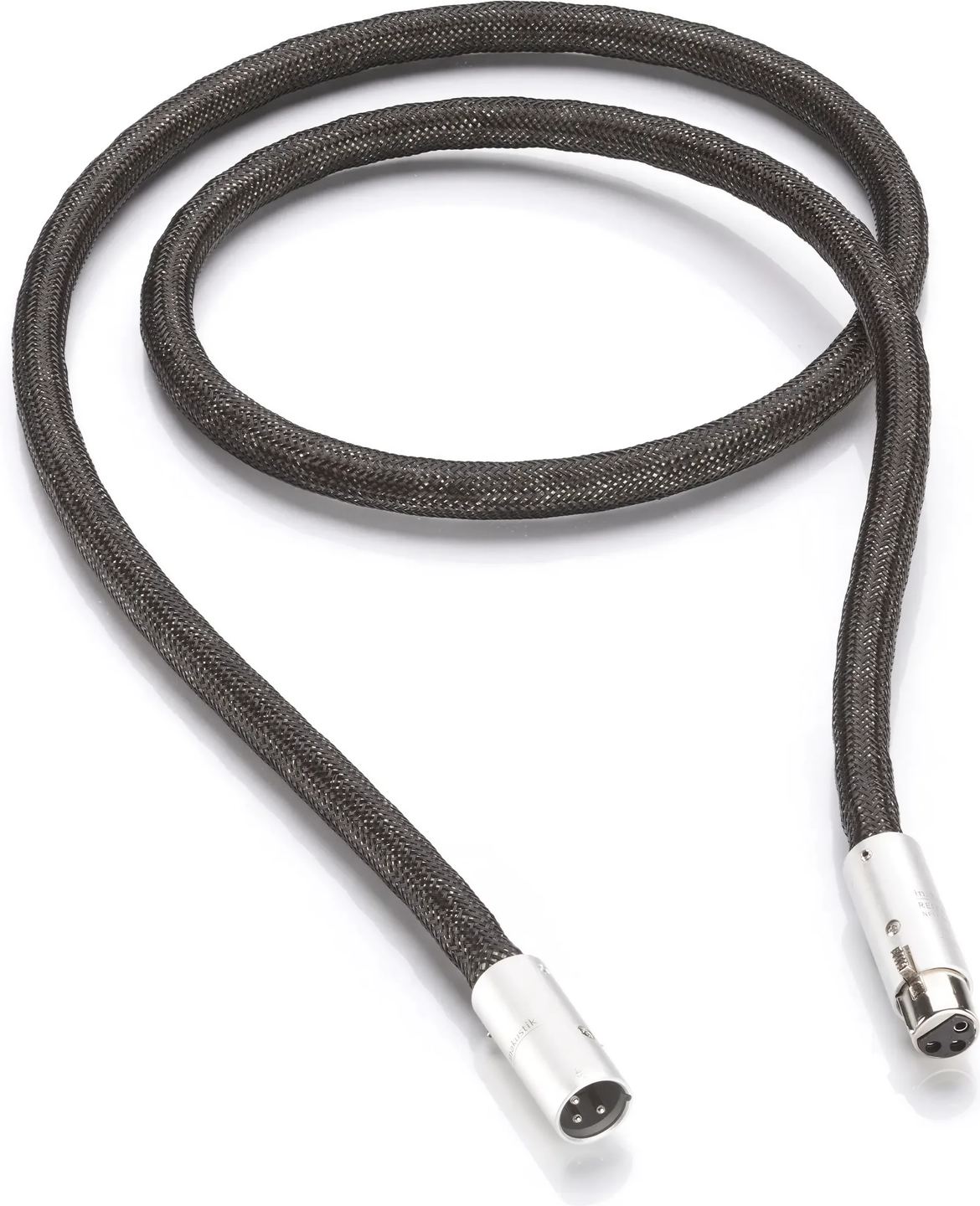
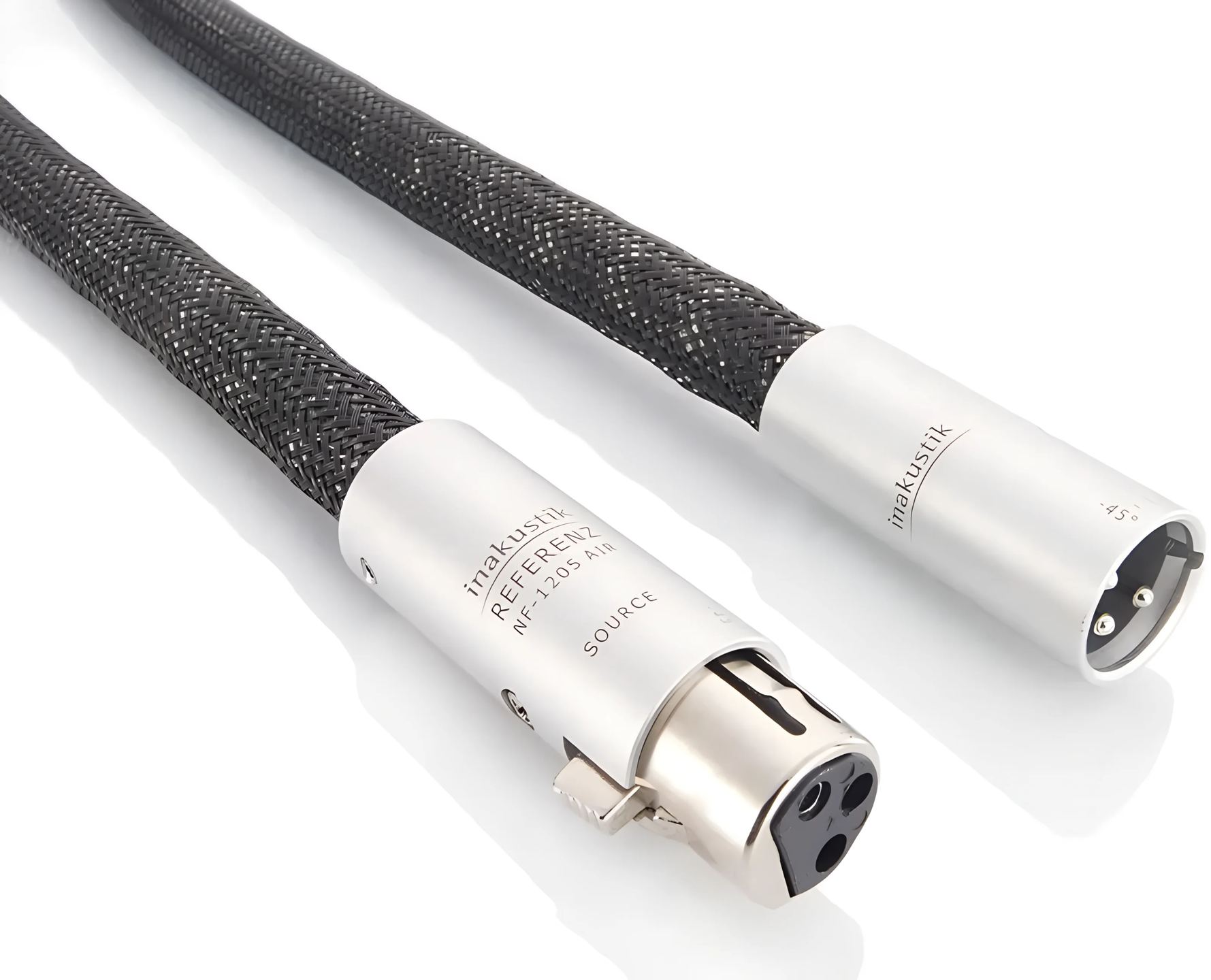
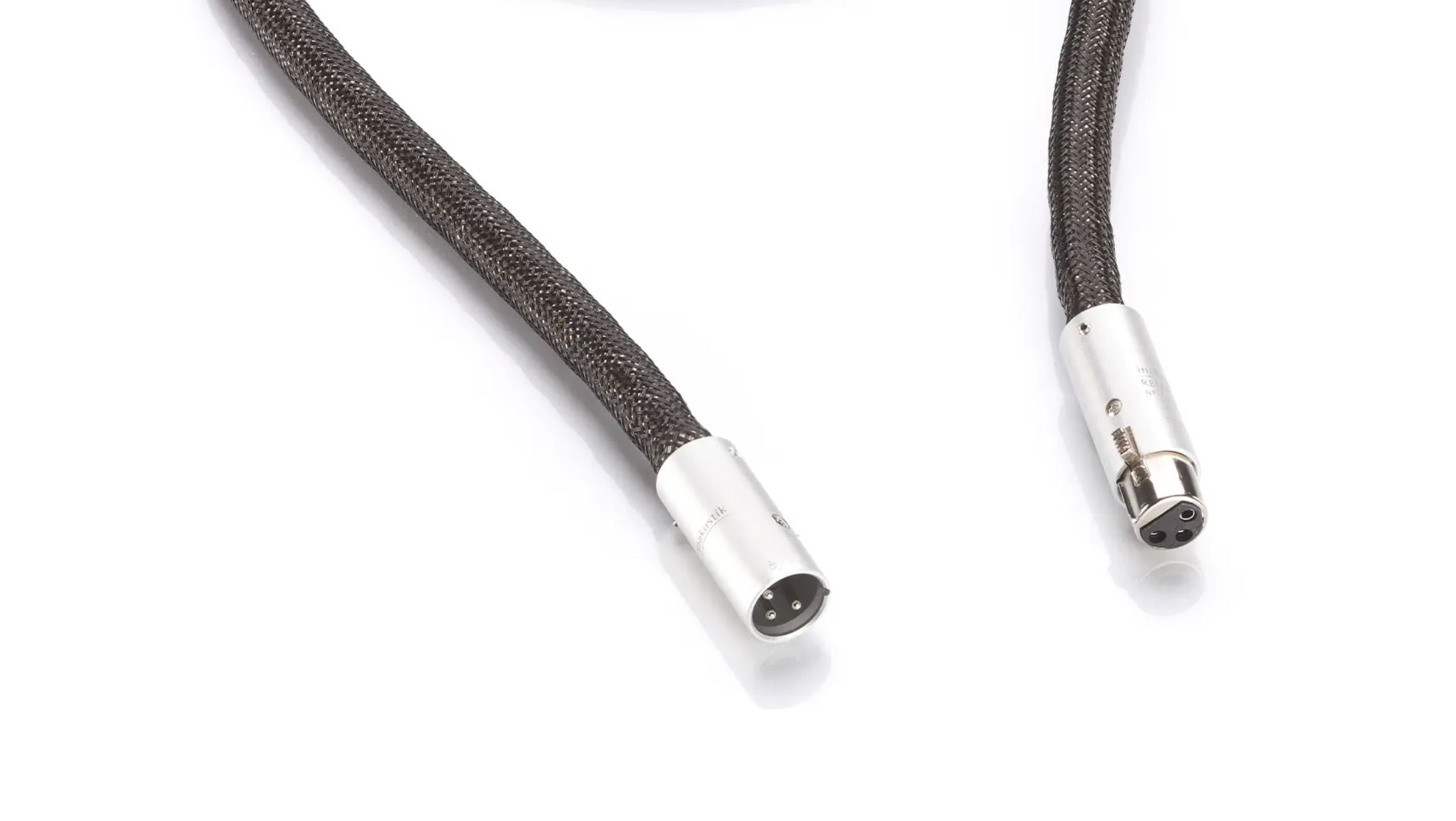
The termination is 2 × female XLR to 2 × male XLR: the female connector plugs into the output of the source or preamplifier, and the male connector into the input of the next device. Three lengths are listed in the catalog—1 m, 1.5 m and 2 m—while custom assembly remains available on request. Beyond 2 m, the matter is handled by special order rather than the standard reference.
One useful point before purchase: an XLR socket does not guarantee that the device is internally balanced. Some converters and preamplifiers offer an XLR output obtained by an inverter at the output of an unbalanced circuit. The cable does its job in both cases, but noise rejection reaches its full potential when both ends of the connection are genuinely balanced. At the same signal level, an XLR output generally delivers 6 dB more than an RCA output: the usual volume knob position will change.
Technical Specifications
AIR Helix Point-to-Point Technology
- Air Helix point-to-point architecture for end-to-end connections
- 5th generation of in-akustik’s Air Helix architecture
- Signal conductors freely suspended along the entire length of the cable
- Conductor insulation almost 100% by air
- Transitions specially designed for each cable and connector type
- Special clips positioned at defined intervals keeping the helical conductors apart
- Two spacers ensuring cable flexibility and precise clip positioning
- Dielectric: air, reducing capacitance and dielectric losses to a minimum
- Signal transmission with minimized losses down to the last centimeters for detailed, dynamic sound
Conductor
- Structure: Cross Link Super Speed waveguide
- Braided structure preventing skin effects caused by eddy currents
- Precise transmission of extreme current peaks
- Lacquer coating around each wire preventing internal eddy currents and protecting against oxidation
- Balanced sound reproduction with vibrant timbres that are never overemphasized
- Material: high-purity, oxygen-free OFC copper
- Rigorous selection of pure copper batches
- Copper quality control before multi-stage drawing to the required cross-section
- Compliance: CE, REACH, RoHS
Shielding and Jacket
- Shielding: dense tinned copper braid (oxidation protection)
- Protection of sensitive music signals against EMI interference
- Jacket: polyethylene (PE) mesh jacket
- Polyethylene monofilaments keeping the conductors tightly in place
- Deliberate absence of a PVC jacket to avoid capacitance and dielectric losses
- Reduction of micro-vibrations
- Faithful handling of extreme dynamic peaks
Connectors
- Configuration: 2 x XLR (f) > 2 x XLR (m)
- Feature: XLR 180 adjustable to +/- 45°
- Total rotation of +/- 90° per connector
- Reduced mechanical stress on the cable
- Optimal alignment with equipment sockets
- Connector housing: solid metal
- Contact material: tellurium copper
- Harder alloy retaining high conductivity
- Significantly superior to brass connectors
- Contact enhancement: rhodium plating
- Durable contact and corrosion resistance
- Stable conductivity even after frequent connections
- Superior to gold contacts, which wear out more quickly
- Connector assembly: soldering
Dimensions and Lengths
- Cable diameter: 13 mm
- Available lengths: 1 m, 1.5 m, 2 m
Manufacturing
- Handcrafted at the in-akustik factory
- Assembly carried out by qualified technicians with care and precision
- Rigorous quality control before, during, and after assembly
- Verification of tolerances for each individual component
- Configuration and electronics checks (short circuits) at every stage
- Functional and mechanical tests
- Final quality control before shipping
Frequently asked questions
What is the difference from the RCA version of the NF-1205 AIR?
Both share the conductor, copper, shielding, jacket, and 13 mm diameter. The internal geometry differs—coaxial for RCA and balanced for XLR—as do the connectors: crimped, solderless SL RCA plugs on one side, and soldered XLR 180 plugs on the other. The choice depends on your devices’ connectors, not on a difference in quality level.
Can this cable be used as an AES/EBU digital connection?
No. An AES/EBU connection requires a characteristic impedance of 110 ohms, controlled over the entire length of the cable. The NF-1205 AIR XLR is an analog cable optimized for the lowest possible capacitance, with no defined characteristic impedance. Used digitally, it would cause reflections and playback jitter.
What does the Pure Silver version offer?
The NF-1205 AIR Pure Silver XLR uses the same design with pure silver conductors instead of OFC copper. Silver conducts approximately 6% better than copper. in-akustik describes its sound as more detailed and that of copper as warmer and more neutral, and distinguishes solid silver from silver-plated copper, which the brand considers to offer clearer reproduction.
How much space should be allowed behind the equipment?
Allow plenty of room. With a 13 mm diameter, a tight PE jacket, and metal connectors, the minimum bend radius is significantly greater than that of a standard interconnect cable. Rotating the connectors helps the cable exit the socket straight, but it does not replace the clearance needed between the back of the device and the wall.
Does rhodium plating require maintenance?
Very little. Rhodium is corrosion-resistant and does not tarnish like silver. Wiping the contacts with a dry cloth when disconnecting is sufficient. Avoid abrasive contact cleaners, which could prematurely wear down a thin plating.
What can be found above in the Referenz AIR line?
The NF-2405 AIR XLR (25 mm) and NF-4005 AIR XLR (40 mm) feature a symmetrical dual construction and position the conductors farther apart, increasing the volume of air between them. They incorporate the Cross Link Super Speed waveguide, OFC copper, tinned shielding, and XLR 180 connectors. Below the NF-1205, the Referenz Micro AIR line applies the same insulation principle to cables with smaller cross-sections.
Is an XLR-to-RCA adapter possible?
Technically yes, but it defeats the purpose of the connection. The adapter connects the inverted signal pin to ground, which eliminates noise rejection and causes a loss of around 6 dB in level, if it does not cause issues with certain balanced output stages. To connect an XLR output to an RCA input, it is better to use an unbalanced cable connected to the device’s RCA outputs when available.
- Eco-contribution included in the sale price.
- Manufacturer reference: 0071853203
- GTIN / EAN: 4001985522682