

Kaiku Wave walnut


Specifications and features


Kaiku Wave noise-cancelling Bluetooth headphones
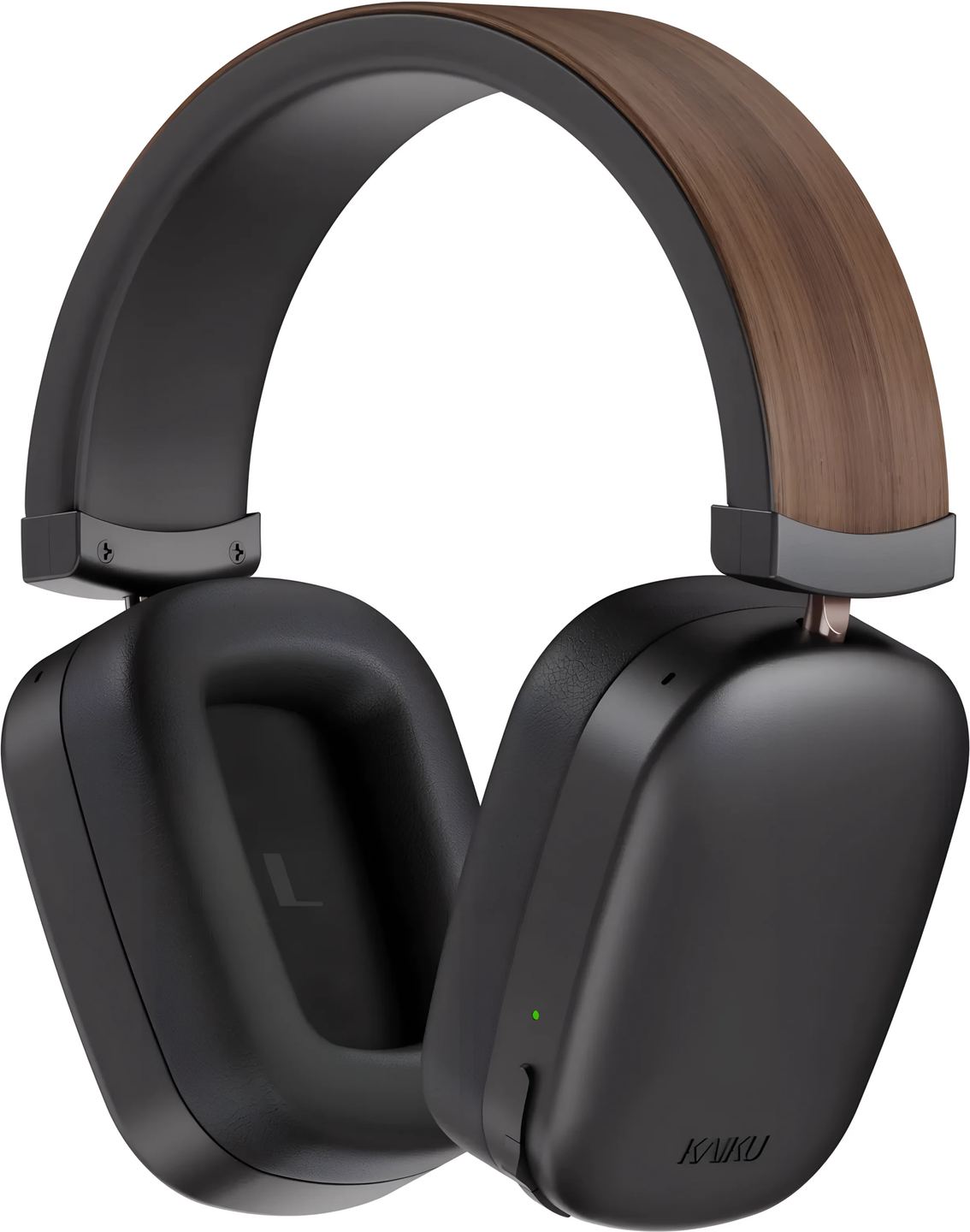
A hand-bent wooden headband made in Finland, anodized aluminum earcups, and inside, active noise cancellation, aptX Bluetooth and up to 100 hours of listening on a single charge. Kaiku Acoustics’ first headphones capable of reducing outside noise, the Wave applies the Kuopio company’s taste for natural materials to a circumaural closed-back headphone, equally suited to the office and travel.

Finnish wood on aluminum earcups
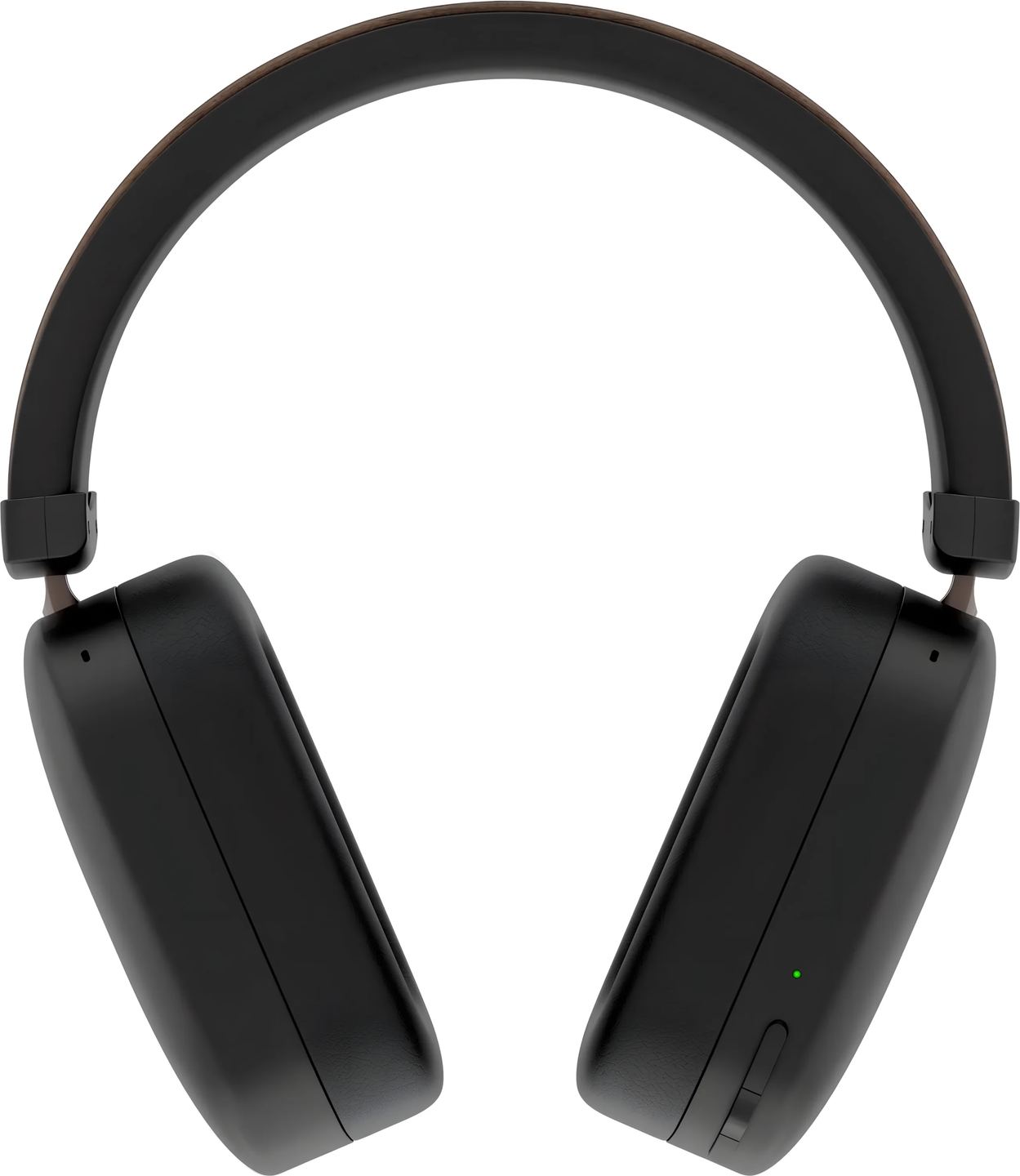
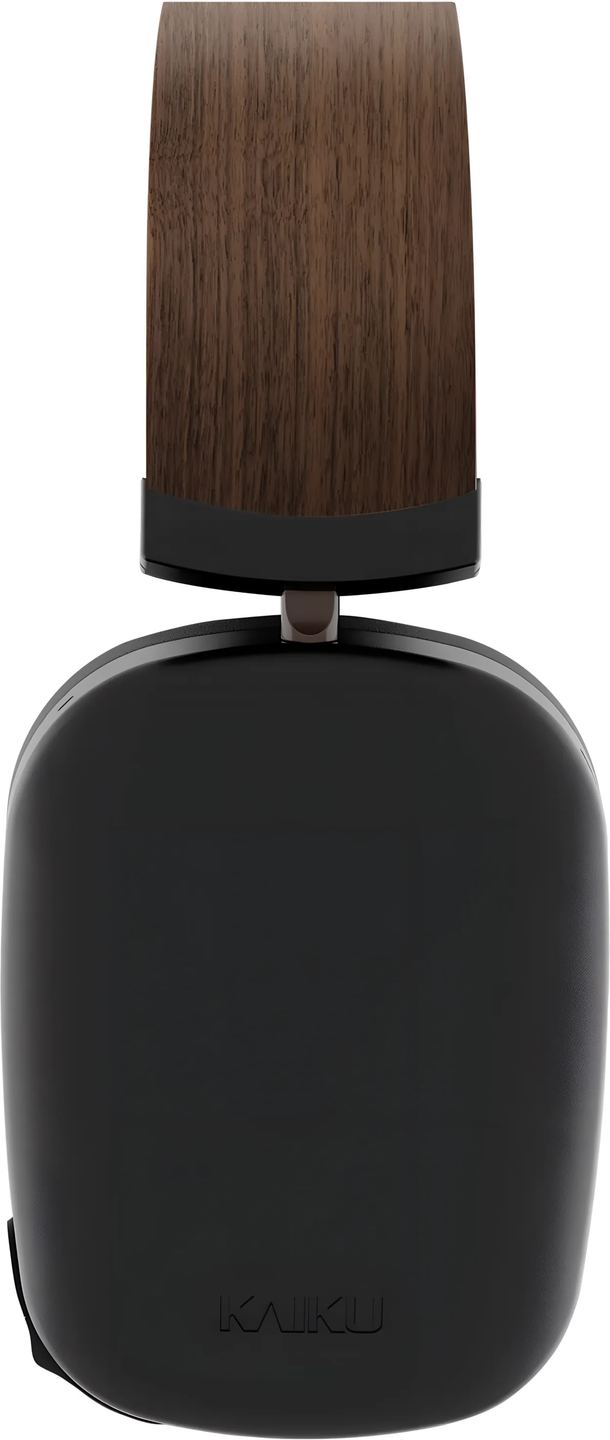
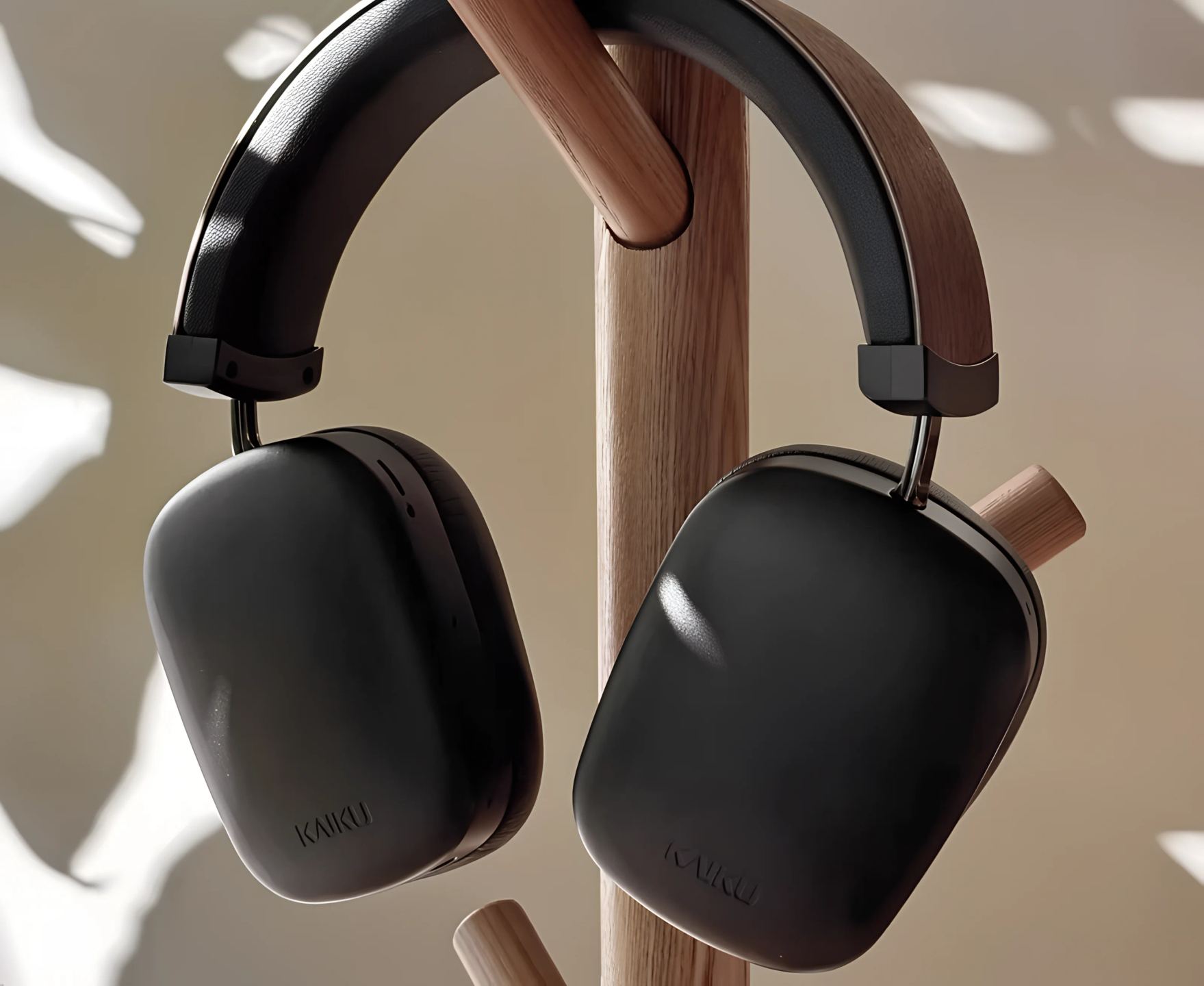
The headband is the feature that sets the Wave apart at first glance. Its arch consists of five layers of FSC-certified Finnish wood, assembled and handcrafted in Finland, with an outer veneer available in walnut or oak. The grain varies from one piece of wood to another: no two Wave headphones ever have exactly the same pattern.
For the earcups, Kaiku has replaced plastic with anodized Japanese aluminum. Anodizing hardens the metal surface and makes it more resistant to scratches and everyday wear, whereas paint eventually chips away. The earcups adjust in height and pivot on their hinges to follow the shape of the head, while the headband retains a degree of flexibility.
Wood does, however, require care: the headband must not be twisted or spread beyond its normal range of movement, or the headband and its veneer may be damaged.
A sound tuning focused on naturalness
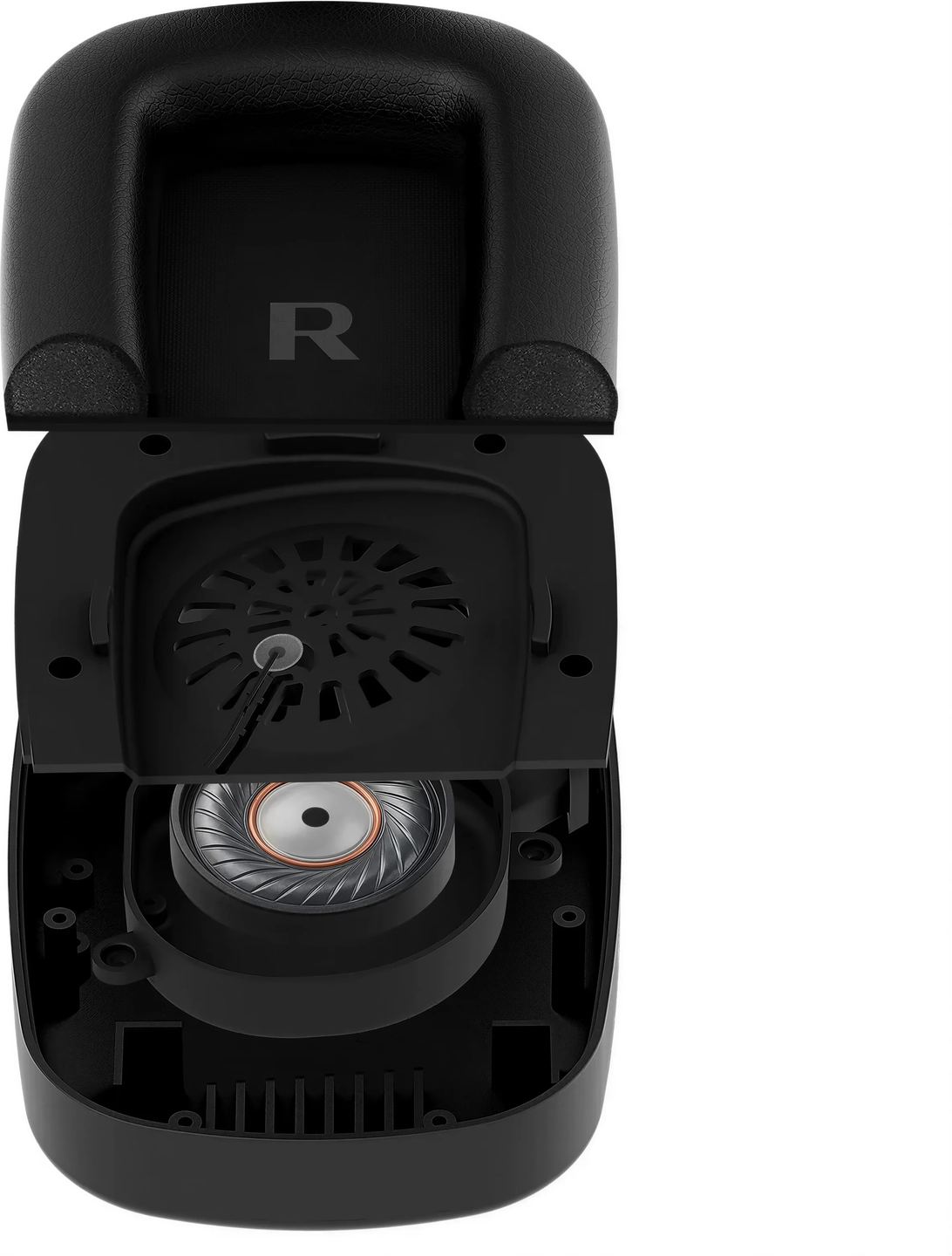
The sound was developed with audio professionals, aiming for natural, balanced reproduction in which bass, midrange and treble each retain their place without one masking the others. The 40 mm drivers cover the 20 Hz to 20 kHz range, encompassing the full frequency range perceived by the human ear.
Two technical values indicate how easy they are to drive. A sensitivity of 110 dB SPL/mW means the headphones reach high volume with very little power, while a 32 Ω impedance makes them easy for compact electronics to drive. When listening by cable, the headphone output of a smartphone, laptop or portable player is sufficient, without a dedicated headphone amplifier.
The closed-back design has its consequences. The earcups let very little sound leak outside, which office or train neighbors will appreciate, and already isolate some ambient noise before any electronics come into play. The usual trade-off with this type of headphones is a more confined soundstage, perceived more inside the head than with an open-back model.

aptX, AAC or jack cable codecs: three paths for music
The wireless connection relies on a Qualcomm chip with Bluetooth 5.3, with a range of up to 12 m. To travel over the air, music must be compressed: this is the role of the codec, a kind of transport format that the phone and headphones automatically negotiate when connecting.
The Wave supports six levels. SBC is the universal baseline, compatible with any Bluetooth device. AAC is used by the iPhone and iPad. The aptX, aptX HD and aptX Adaptive codecs transmit more information than standard Bluetooth and preserve more detail; aptX HD goes up to 24-bit, while aptX Adaptive continuously adjusts its bitrate according to connection quality to avoid dropouts in streets crowded with radio waves. These last three work with compatible Android smartphones.
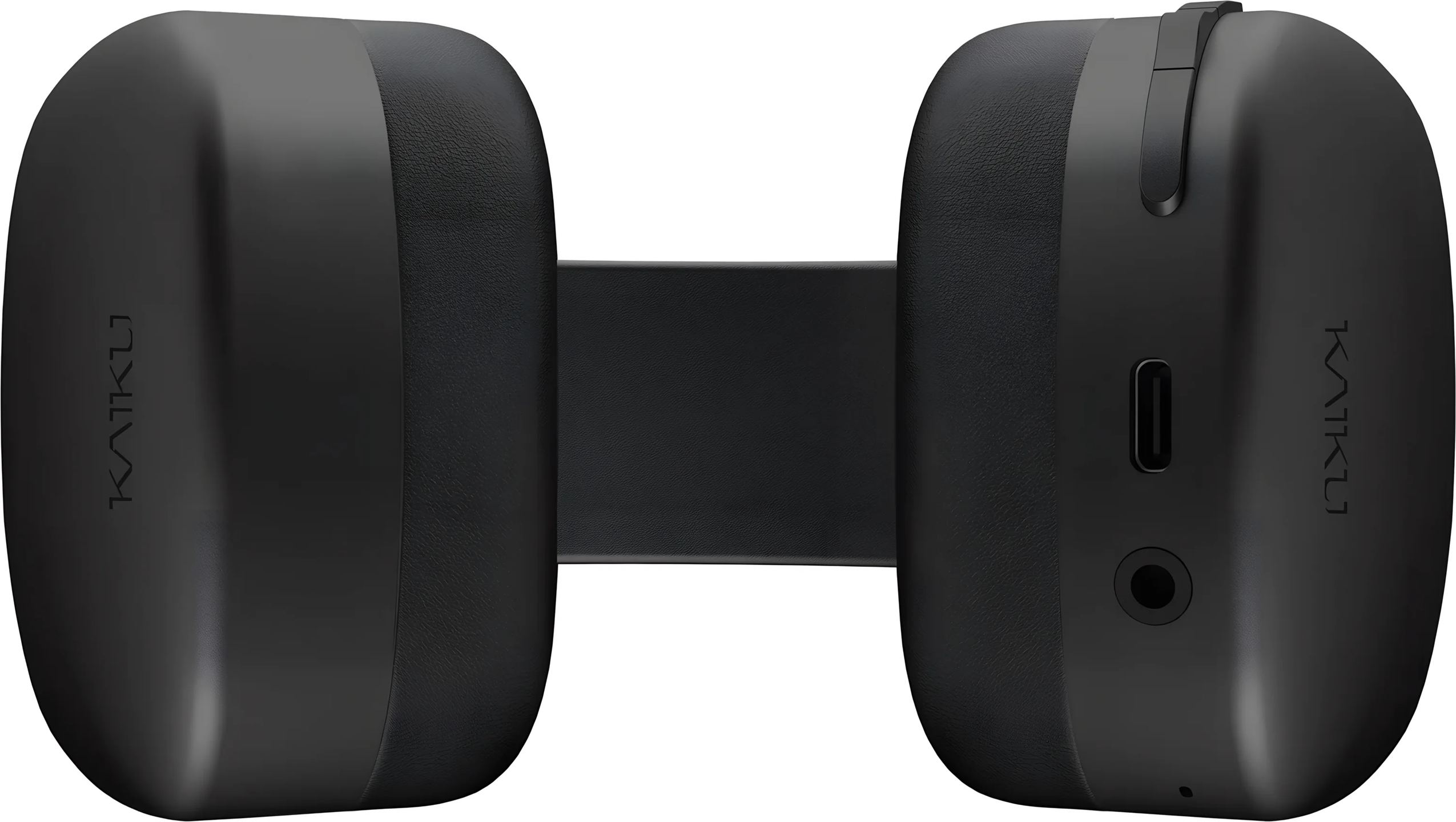
A 3.5 mm jack socket on the earcup accepts the supplied cable. It can be used on a plane to connect the headphones to the seatback screen, with a desktop computer without Bluetooth, with a portable player or with the headphone output of an amplifier.
Active noise cancellation and microphones for calls
Microphones continuously pick up surrounding noise, and the headphone electronics generate an opposite signal that reduces it in real time, by up to 36 dB. The thickness of the aluminum earcups complements this electronic reduction with passive isolation. As with any noise-cancelling headphones, effectiveness is greatest with low, continuous noises—the engine of an airplane, the rumble of a train or the ventilation in an open-plan office—and lower with voices or sudden sounds. A double press on the main button activates the function.
For conversations, six microphones pick up the voice and reproduce it clearly for the other person, whether on the phone or in video calls.
One hundred hours of listening and three physical buttons
The 1,000 mAh battery provides up to 100 hours of listening at 60% volume. At two hours of commuting per day, this represents nearly seven weeks without plugging in. Charging is via USB-C with the supplied cable; the indicator remains red during charging and turns green once the battery is full. Kaiku recommends an initial charge of at least two hours. The headphones cannot be used while charging, something to keep in mind before leaving.
Controls consist of three physical buttons on the earcup. The main button combines power on and off, play and pause, call answering and noise-cancellation activation. The two volume buttons also skip between tracks. An indicator shows Bluetooth connection and charging status, and the headphones automatically switch off after 10 minutes without a connection, avoiding a flat battery after they have been left switched on in a bag.
User-replaceable earpads and headband
The Wave lasts a long time because its wear parts can be replaced. The earpads can be removed without tools by turning them a quarter-turn counterclockwise, and the new ones fit in the same way. The headband and its cushion are also replaceable: worn earpads or a damaged headband do not mean replacing the entire headphones.
Documentation
Technical Specifications
Overview
- Type: closed-back circumaural Bluetooth headphones with active noise cancellation
- Origin: Finnish brand Kaiku Acoustics, Kuopio
- Style: sleek Scandinavian design
- Sound reproduction: natural and precise
- Tuning: sound tuning developed with audio professionals
- Balance: bass, midrange and treble reproduced without one masking the others
Design and construction
- Ear cups: anodized Japanese aluminum, resistant to scratches and wear
- Headband: five-layer FSC-certified Finnish wood headband, handmade in Finland
- Finishes: walnut or oak outer veneer, with grain unique to each pair of headphones
- Adjustment: height-adjustable and swiveling ear cups
- Replaceable parts: ear pads (quarter-turn, tool-free), headband and headband cushion
- Precaution: do not twist or bend the headphones excessively, as the headband and wood could be damaged
Audio
- Drivers: 40 mm diameter
- Sensitivity: 110 dB SPL/mW, the headphones reach high volume easily
- Impedance: 32 Ω, a smartphone is sufficient to power them in wired listening mode
- Frequency response: 20 Hz to 20 kHz, covering the entire audible range
Wireless connection
- Bluetooth: version 5.3, Qualcomm chip
- Range: up to 12 m
- Supported codecs: aptX Adaptive, aptX HD, aptX, AAC, SBC
- Benefits of aptX codecs: transmit more data than standard Bluetooth, for more detailed sound
- Compatibility: aptX codecs work with compatible Android smartphones; iPhones use AAC
Wired connection
- Socket: 3.5 mm jack on the ear cup
- Use: listening with a cable, on a plane or with a device without Bluetooth
Noise cancellation and calls
- Active noise cancellation (ANC): microphones pick up external noise, and the headphones reduce it in real time, by up to 36 dB
- Suitable situations: planes, public transport, open-plan offices
- Activation: double-press the main button
- Calls: six microphones capture the voice clearly, useful for phone calls and video conferencing
Controls
- Location: three buttons on the ear cup
- Main button: power on, power off, play, pause, answer calls, activate ANC
- Volume buttons: sound adjustment and track change
- Indicator light: indicates Bluetooth connection and charging
- Standby: automatic shut-off after 10 minutes without a connection
Battery life and charging
- Battery: 1,000 mAh
- Battery life: up to 100 hours, at 60% volume
- Charging: via USB-C port
- Charging indicator: red while charging, green once the battery is full
- First use: charge for at least 2 hours
- While charging: the headphones cannot be used
Box contents
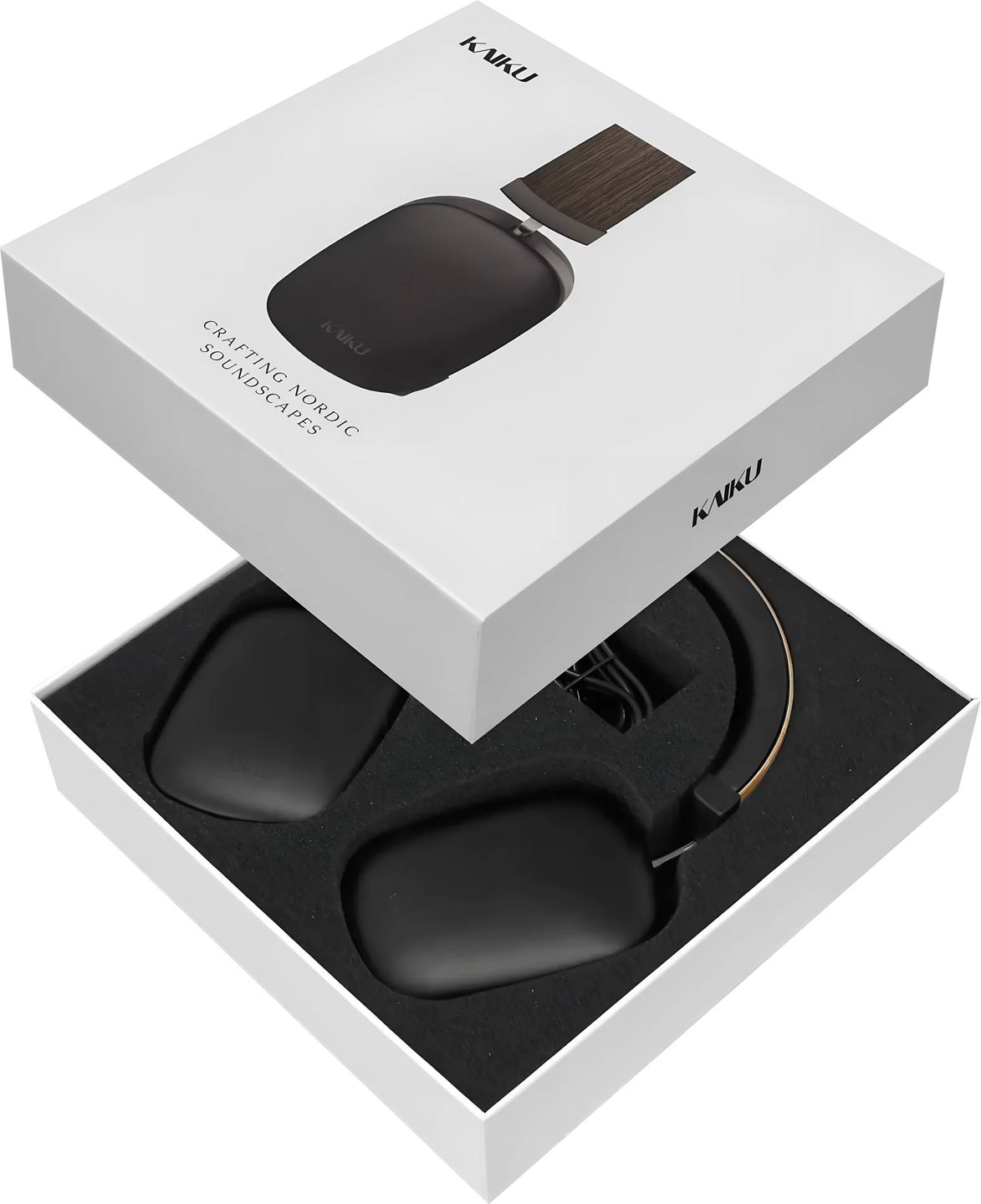
- Kaiku Wave headphones
- 3.5 mm jack audio cable
- USB-C charging cable
Frequently Asked Questions
Does Wave work with an iPhone?
Yes, without any functional restrictions. The iPhone does not support aptX codecs and transmits music in AAC, the codec Apple uses across all its devices. Noise cancellation, controls and calls work in the same way as with an Android smartphone.
Can it be used with a computer?
Yes, in two ways. Via Bluetooth, a Mac transmits in AAC, while a Windows PC most often uses SBC, with aptX depending on the Bluetooth adapter and its drivers. Using the supplied jack cable, the Wave connects to the computer’s headphone output, eliminating any compatibility or latency issues for video.
Does the Wave connect to an airplane seat screen?
Yes, via the included 3.5 mm jack cable. Some aircraft still have a dual-prong socket: a small aircraft adapter, sold separately, is then required.
What is the difference compared with the Kaiku Tone?
Released in 2024, the Tone is an on-ear headphone, with ear pads that rest on the ear, and it does not feature active noise cancellation. The Wave uses an over-ear design, with ear pads that surround the ear, adds active noise cancellation, and retains the aluminum earcups, with a more rounded profile.
Do walnut and oak finishes change the sound?
No. The wood is on the headband, not in the aluminum earcups that house the speakers. The five-layer construction is the same in both cases; only the outer veneer differs: the choice is purely aesthetic.
How should the 100 hours “at 60% volume” be understood?
This is the condition under which battery life is measured. Listening at higher volumes requires more power from the speakers, and noise cancellation also uses battery power, which reduces actual battery life. Even with a comfortable margin, the Wave easily lasts through a work week and several long trips between charges.
- Eco-contribution included in the sale price.
- Manufacturer reference: 3020




