

Sony VPL-GTZ380/1

Specifications and features


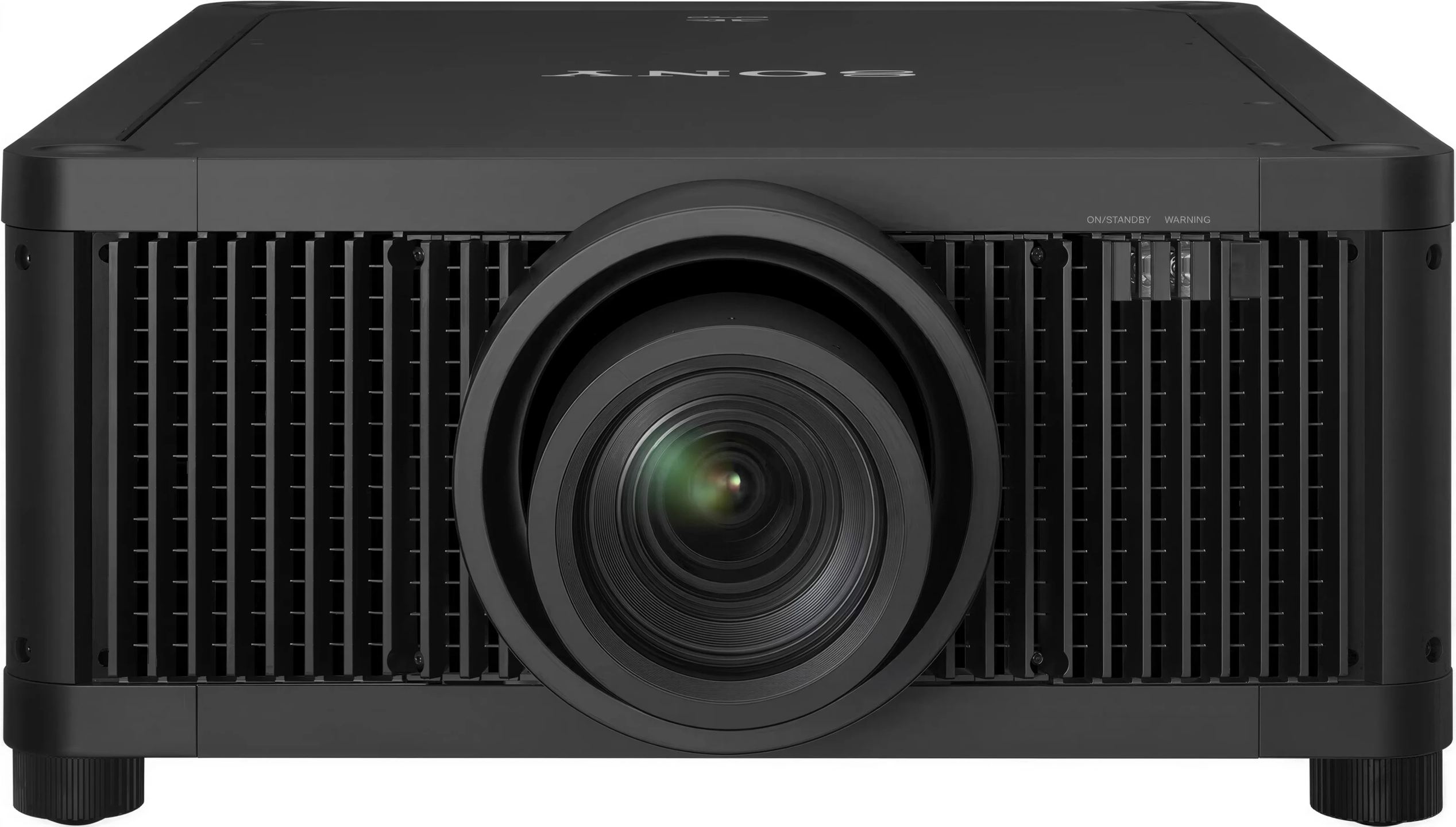
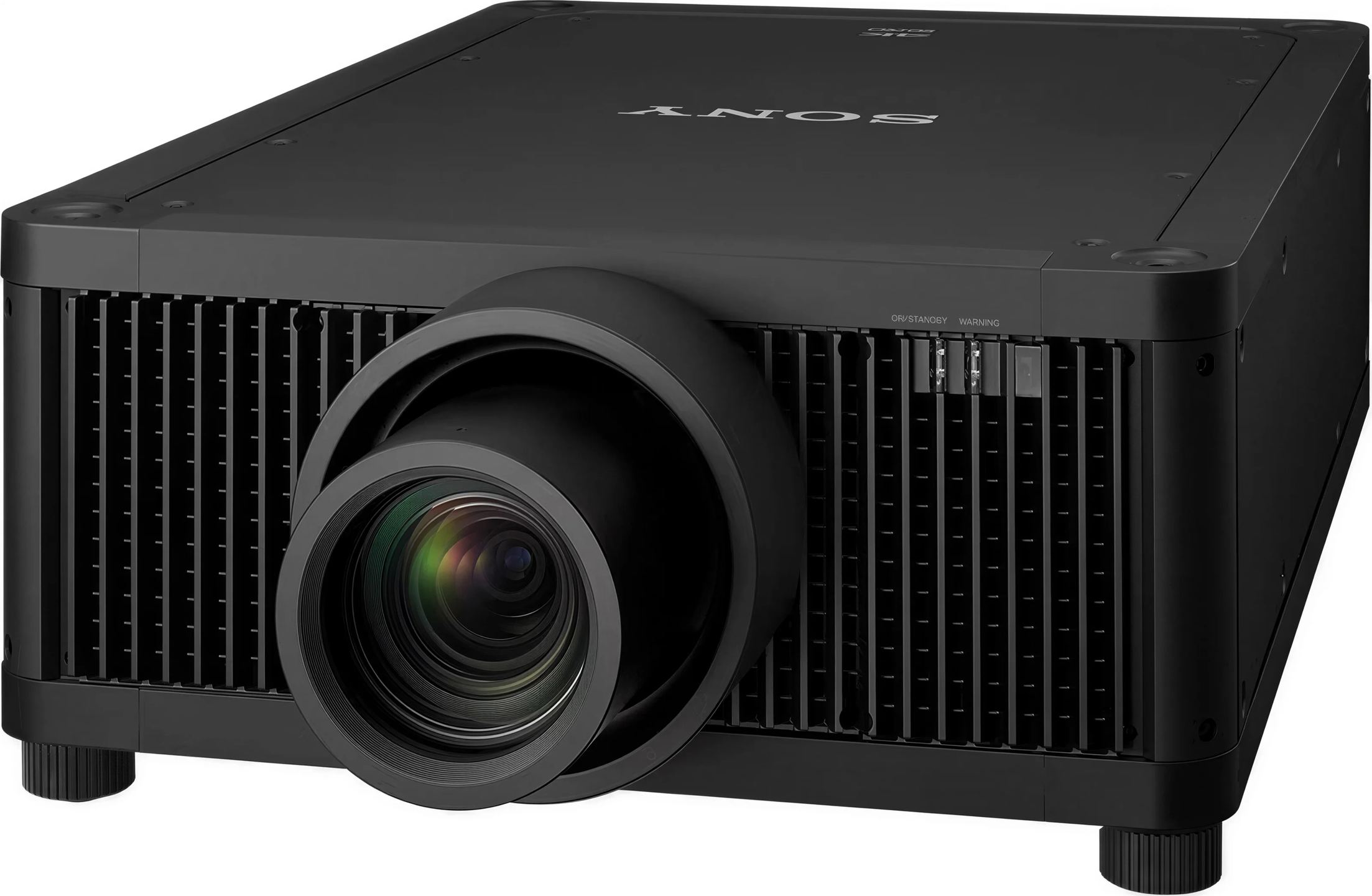
Sony VPL-GTZ380/1, 10,000-lumen native 4K laser projector
Ten thousand lumens, three native 4K panels, and a laser light source that retains digital cinema colors at full brightness: the flagship of the Sony Professional projection range fits into a 51 kg chassis, compact for this level of brightness. It illuminates screens several meters wide, or a room that cannot be made completely dark. This is an installation projector, to be planned with an integrator from the room’s design stage.
Three native 4K SXRD panels, without pixel shifting
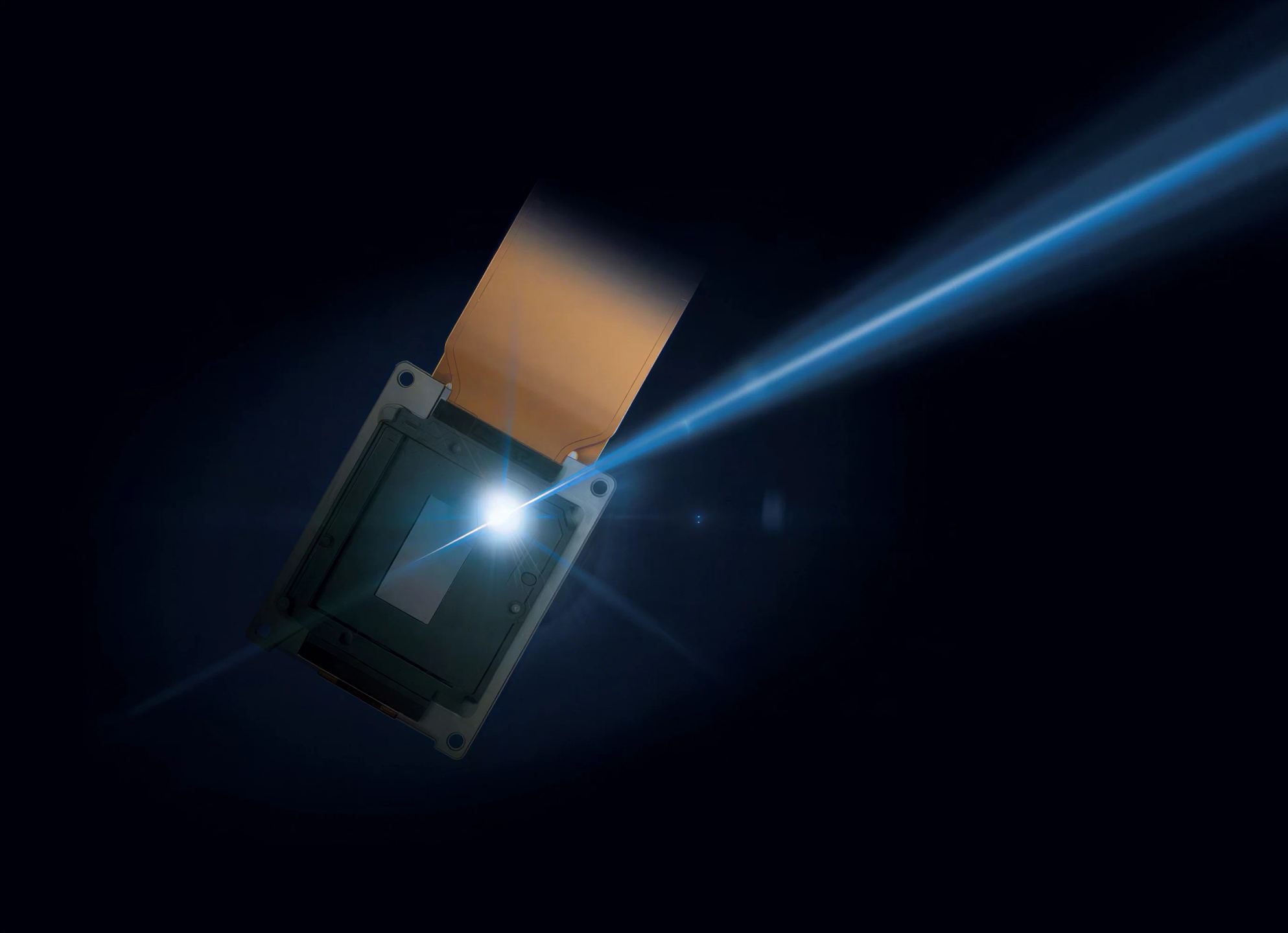
Many projectors sold as 4K reconstruct their image by moving a lower-resolution panel very rapidly. The VPL-GTZ380/1 has a 0.74-inch SXRD panel with 4096 × 2160 pixels for each of the three primary colors, totaling more than 26.5 million pixels. Each pixel in the image therefore corresponds to a physical pixel, and the 4096 × 2160 resolution is that of digital cinema (DCI), slightly wider than the Ultra HD used by televisions.
SXRD is Sony’s version of LCoS technology: a layer of liquid crystals deposited on a reflective silicon chip, through which light passes on the way in and again on the way out. This double pass produces deeper blacks than systems in which light passes through only once, and native contrast reaches 16,000:1. The “∞:1” in the specifications refers to dynamic contrast, achieved by reducing laser power on very dark images. To handle 10,000 lumens without performance drifting over time, these panels use a new liquid crystal that is more resistant to heat and light.
A three-channel laser light source to cover DCI-P3
In a conventional laser-phosphor projector, a blue laser excites a phosphor wheel that produces yellow light, which is then recombined into white. This white lacks deep red, and filtering is needed to achieve cinema colors, at the cost of some brightness. Here, a red laser is added to the blue laser and phosphor. The DCI-P3 color space, used in movie theaters and considerably wider than that of HD television, is covered 100% without a filter. The color light output (CLO) rating of 10,000 lumens, identical to the white light output, reflects this result: saturated colors retain their brilliance when white brightness is at its maximum. The phosphor wheel has a patented spiral fin that dissipates heat.
An estimate helps put this output in perspective. A movie theater targets around 48 cd/m² on the screen. On a 16:9 screen 4 meters wide with a gain of 1.0, 10,000 lumens amount to more than 350 cd/m² on paper, before calibration and adjustment of the laser power. This headroom can be used in several ways: to enlarge the image, give HDR movie highlights more impact, or compensate for ambient light that cannot be eliminated. The previous generation, the VPL-GTZ270, topped out at 5,000 lumens.
The X1 Ultimate processor adapted for projection
HDR films are mastered for screens capable of 1,000 to 4,000 cd/m², which no projector can reach. The image must therefore be recalculated to fit within the projector’s actual range without crushing detail, a process called tone mapping. The X1 Ultimate for projector processor, derived from the one used in BRAVIA televisions, handles this scene by scene with Dynamic HDR Enhancer, which works together with laser light source modulation to make bright scenes brighter and dark scenes deeper. The supported HDR formats are HDR10 and HLG, the latter being used in television broadcasting.
Processing goes beyond managing the image as a whole. Object-based HDR Remaster identifies objects on screen and adjusts each one’s contrast to enhance depth and textures. Object-based Super Resolution detects hundreds of objects and refines their resolution separately, which matters for Full HD sources upscaled to 4K. Two databases share the work: one reduces video noise, while the other handles upscaling. Finally, Digital Contrast Optimiser analyzes each scene in advance to preserve shadow detail.
Two ARC-F lenses to choose from according to throw distance
The lens is not included: two ARC-F (All Range Crisp Focus) lenses, with motorized focus, zoom, and lens shift, can be mounted on the chassis. The VPLL-Z8014 is the standard lens, with approximately 1.95x zoom and a throw ratio of 1.49:1 to 2.91:1. The VPLL-Z8008 is a short-throw lens, with approximately 1.28x zoom and a throw ratio of 0.85:1 to 1.09:1. For a 16:9 image 3.50 meters wide, the first sits between 5.20 and 10.20 meters from the screen, and the second between approximately 3 and 3.80 meters. The Z8014 therefore offers considerable flexibility for placing the projector at the back of the room or in a projection booth, while the Z8008 suits shallower rooms.
Optical lens shift moves the image on the screen without tilting the projector or resorting to digital keystone correction, which degrades resolution. It reaches ± 80% vertically and ± 33% horizontally with the Z8014, and ± 50% vertically and ± 19% horizontally with the Z8008. Lens settings can be saved to switch from one image format to another.
Connectivity for custom installation rather than the living room
The rear panel has two HDMI inputs and two DisplayPort 1.4 inputs, all protected by HDCP 2.3. Over HDMI, 4K supports up to 60 frames per second, while 120 Hz is available in Full HD and certain computer resolutions (WQHD, WQXGA). Used together, the two DisplayPort inputs carry 4K at 120 Hz in 10-bit RGB 4:4:4, a configuration drawn from professional applications (simulation, visualization, graphics workstations) that also supports dual-stream active 3D in 4K at 60 Hz.
Control follows custom installation standards: an RS-232C port, an RJ45 network connection, mini-jack infrared input and output to relay remote-control commands to a projection booth, two 12 V triggers to control a motorized screen or masking system, and a VESA-format 3D sync output. A USB port supplies 5 V power. The projector has no app platform, Wi-Fi, or speaker: sources are connected through a player, processor, or home theater receiver. Menus are available in 18 languages, including French.
51 kg and 1,800 W: an installation to plan for
At 560 × 262 × 760 mm and approximately 51 kg without a lens, the VPL-GTZ380/1 requires a ceiling mount or shelf rated for that load, and several people to install it. The chassis has mounting points at all four corners, used in professional settings to stack multiple projectors. In France, it runs on 200-240 V and consumes 1,800 W. Its heat output of 6,138 BTU/h roughly corresponds to that power draw: the room receives the equivalent heat of an electric radiator running throughout each viewing session, and an enclosed room requires ventilation or air conditioning planned accordingly.
Operating noise ranges from 33 to 39 dB depending on the settings. In a quiet room, it remains audible near the projector, making it worth positioning away from the listening area or installing it in a booth, which the standard lens’s throw range makes easier. The operating temperature range is 5 to 40 °C. The RM-PJ29 remote control and power cord are included.
Documentation
French
Technical specifications
Display system and image processing
- Projection system: 4K SXRD panels.
- Display device:
- Image size: 1.88 cm (3).
- Number of pixels: 26542080 (4096 × 2160 × 3).
- Image processor: X1 Ultimate for projector.
Lens and projection
- Projection lens (note 1):
- Motorized focus.
- Motorized zoom: approximately × 1.95 with the VPLL-Z8014, approximately × 1.28 with the VPLL-Z8008.
- VPLL-Z8014 lens, optional:
- Motorized lens shift: vertical ± 80%, horizontal ± 33% (note 2).
- Throw ratio: 1.49:1 to 2.91:1 (note 2).
- VPLL-Z8008 lens, optional:
- Motorized lens shift: vertical ± 50%, horizontal ± 19% (note 2).
- Throw ratio: 0.85:1 to 1.09:1 (note 2).
Light source and image quality
- Light source: laser phosphor.
- Brightness: 10000 lm.
- CLO rating, color brightness: 10000 lm.
- Dynamic contrast ratio: ∞:1.
Supported digital signals
- 720 × 576 at 50p, 720 × 480 at 60p.
- 1280 × 720 at 50p and 60p.
- 1920 × 1080 at 50i, 60i, 24p, 50p, 60p, 120p and 100p.
- 3840 × 2160 at 24p, 25p, 30p, 50p and 60p.
- 4096 × 2160 at 24p, 25p, 30p, 50p and 60p.
- WUXGA at 60p, QXGA at 60p and 120p, WQHD at 60p and 120p, WQXGA at 60p and 120p.
Inputs, outputs and control
- HDMI: 2 digital inputs, HDCP 2.3, RGB / Y Pb / CbPr / Cr.
- DisplayPort: 2 digital RGB inputs, version 1.4, HDCP 2.3.
- Trigger: 2 mini-jack connectors, 12 V DC, 100 mA maximum.
- Remote control: RS-232C, 9-pin male D-sub connector.
- LAN: RJ45, 10BASE-T / 100BASE-TX.
- Infrared: 1 input and 1 output on mini-jack connectors.
- 3D sync output: 3-pin mini-DIN connector, VESA 3D.
- USB: Type A, 5 V DC, 500 mA maximum.
Interface and noise level
- On-screen display in 18 languages: English, Dutch, French, Italian, German, Spanish, Portuguese, Turkish, Russian, Swedish, Norwegian, Japanese, Simplified Chinese, Traditional Chinese, Korean, Thai, Arabic, Polish.
- Noise level: 33 dB to 39 dB (note 3).
Environmental conditions
- Operating: temperature from 5 °C to 40 °C, humidity from 20% to 80%, non-condensing.
- Storage: temperature from −10 °C to 60 °C, humidity from 20% to 80%, non-condensing.
Power and consumption
- Power requirements: 200 V to 240 V AC, 50 Hz / 60 Hz; 100 V to 120 V AC, 50 Hz / 60 Hz (note 4).
- Power consumption:
- 100 V to 120 V AC: 1200 W.
- 200 V to 240 V AC: 1800 W.
- Standby power consumption: 0.3 W when the remote activation function is set to “Off”.
- Network standby power consumption: 0.5 W with a LAN connection when the remote activation function is set to “On”; 0.4 W in low-power mode when no LAN device is connected.
- Activation of standby mode or network standby mode: after approximately 10 minutes.
- Heat dissipation: 1799 W.
Dimensions and weight
- Dimensions, width × height × depth:
- Excluding protruding parts: 560 × 228 × 760 mm.
- Overall: 560 × 262 × 760 mm.
- Weight: approximately 51 kg, without the lens.
Supplied accessories
- RM-PJ29 remote control (1), AA (R6) manganese batteries (2), AC power cord (1), plug holder (1), safety regulations document (1).
Notes
- Note 1: lenses are optional accessories.
- Note 2: display aspect ratio: 16:9.
- Note 3: this value is approximate. It varies depending on the projector settings and operating conditions.
- Note 4: brightness is reduced.
- Note 5: when a product containing software subject to updates is manufactured, it includes the latest version of the software and firmware available at that time. To keep the product’s software and firmware up to date, follow the update procedure directly on the product or visit https://www.sony.fr/electronics/support/downloads.
- Note 6: Sony may, where applicable, release updates for software essential to the product’s operation and necessary to ensure its conformity. These updates will be provided during the statutory conformity warranty period.
Frequently asked questions
Does the VPL-GTZ380/1 support Dolby Vision and HDR10+?
No, it supports HDR10 and HLG. 4K Blu-ray discs and content in Dolby Vision or HDR10+ almost always include an HDR10 layer, which the player automatically sends to the projector. Tone mapping is then handled by the Dynamic HDR Enhancer, which is better suited to projection than metadata designed for flat-panel displays.
Can you connect a game console to it in 4K at 120 Hz?
No: over HDMI, 4K is supported up to 60 Hz. A console runs at 4K at 60 Hz, or Full HD at 120 Hz. 4K at 120 Hz is only possible using two DisplayPort cables simultaneously, an output option offered by some computer graphics cards, but not by consoles.
How does 3D work on this projector?
The 3D is active: it requires an external synchronization emitter connected to the 3-pin VESA mini-DIN output and compatible shutter glasses. The emitter and glasses are not included. With dual-stream DisplayPort, 3D is displayed in 4K at 60 Hz for each eye.
Is a standard electrical outlet sufficient?
At 1,800 W on 230 V, the projector draws just under 8 A, which a 16 A circuit can handle. A dedicated line from the electrical panel is still preferable: it avoids sharing the circuit with audio equipment, a heater or a vacuum cleaner, and reduces the risk of power cuts during a viewing session. The installation should be approved by an electrician, especially if the outlet is on the ceiling.
Is it suitable for a 2.35:1 CinemaScope screen?
Yes. The lens position memories save one zoom and lens-shift setting for 2.35:1 films, which then fill the full width of the screen, and another for 16:9 content, displayed at a constant height. You can switch between them using the remote control, as all three lens functions are motorized.
Which projection screen should you choose for 10,000 lumens?
A high-gain screen offers no benefit at this brightness level: a white screen with a gain close to 1.0 preserves uniformity and viewing angle, even at very large sizes. An ambient light rejecting (ALR) or gray screen is only worthwhile if the room remains lit during viewing. In a dark room with a moderately sized screen, it makes more sense to reduce the laser power than to look for a brighter screen.
Will the light source need to be replaced?
There is no lamp to replace: the laser light source lasts for several thousand hours, with a very gradual decline in brightness that the 10,000-lumen output more than compensates for in home use. The firmware can be updated directly on the device or through the download section of Sony’s support site.
- Eco-contribution included in the sale price.
- Manufacturer reference: VPL-GTZ3801


