

SIM2 Crystal 4SH black


Specifications and features


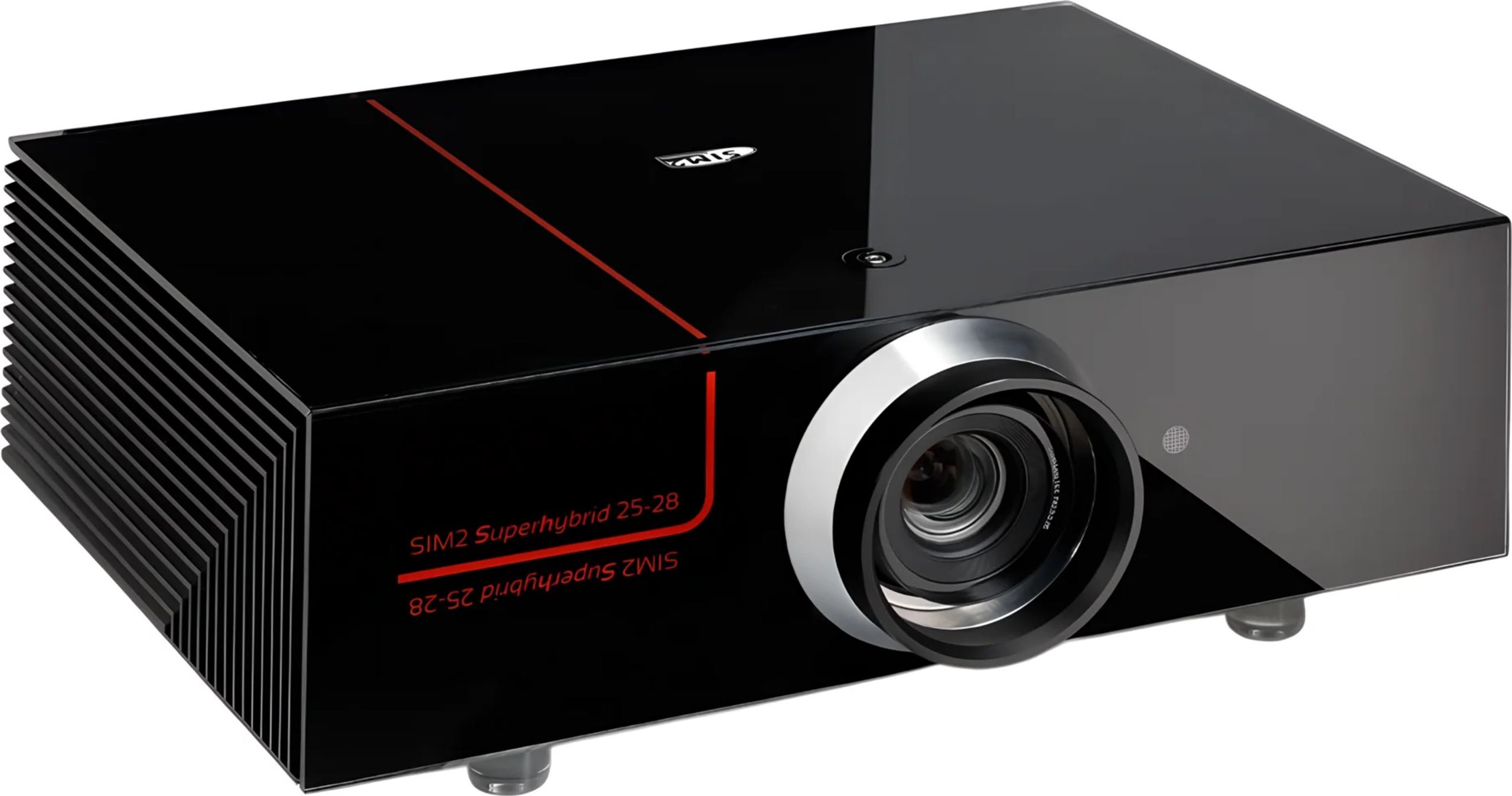
SIM2 Crystal 4Sh, hybrid laser 4K projector
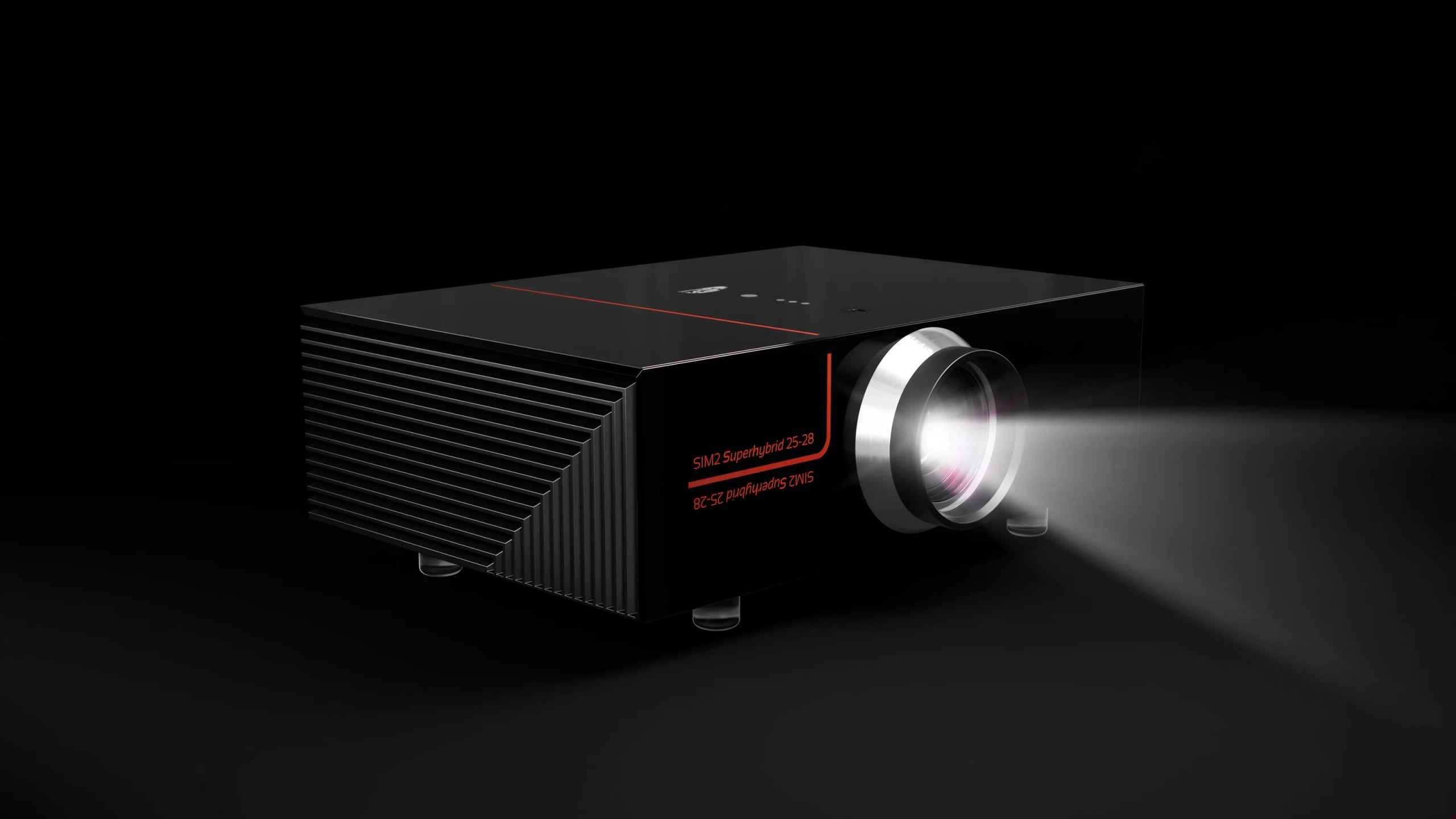
A black or white crystal glass housing, an all-glass lens and a light source combining blue lasers with phosphors: in this 4K projector, the Italian manufacturer brings together the HDR processing of its reference model and brightness reaching 3,800 lumens. The laser successor to the lamp-based Crystal 4, it is equally suited to a dedicated home theater room or a living room equipped with a large screen.
A hybrid laser source corrected by two wheels
The hybrid laser principle is simple to describe: laser diodes emit very pure blue light, which strikes phosphors that produce green and yellow. On many projectors of this type, this conversion results in whites with a yellow or green tint. SIM2 addresses this shortcoming with two separate wheels. The first carries latest-generation green and yellow phosphors, whose output remains stable over time and across operating temperatures. The second, fitted with dichroic filters (filters that only let a specific color band through), refines each hue before it reaches the chip. The color sequence includes red, green, blue, yellow and a clear segment, and runs at 120 Hz.
The result is reflected in the color range: the gamut exceeds Rec.709, the color space used for HD Blu-rays and television, and covers more than 80% of the DCI digital cinema color space, with an accurate white point. The light source is rated for 25,000 hours, with no lamp to replace, and its power can be adjusted from 50 to 100% in 5% increments. In a dark room, reducing laser power lowers the black level and preserves the source.
HDR processing from the Nero 4S
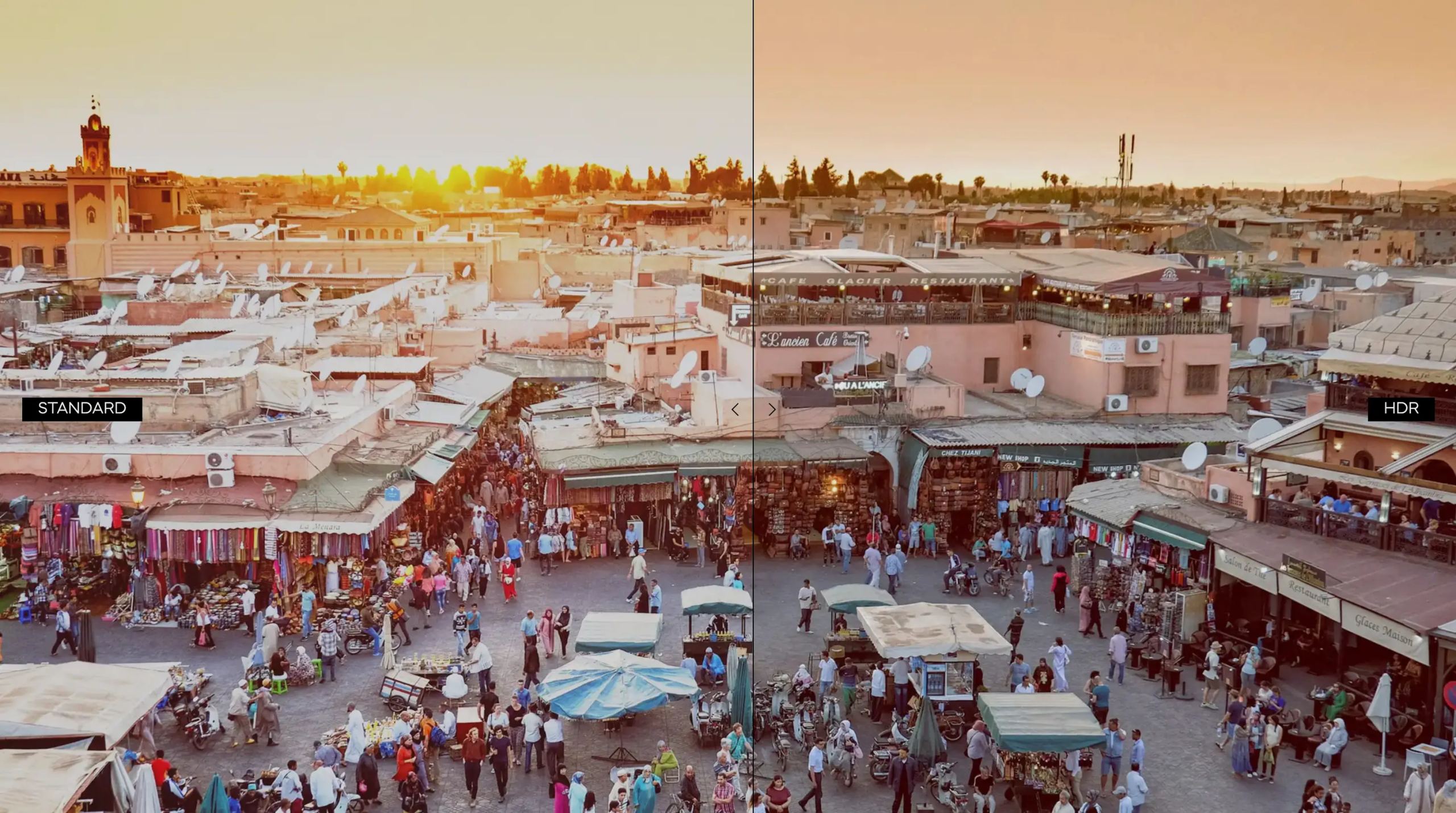
The Crystal 4Sh inherits the HDR electronics developed for the Nero 4S, the brand’s flagship. It reads HDR10 and HLG signals (the format used for HDR television broadcasts) and switches automatically between SDR and HDR. Four presets for the conversion curve, called EOTF, adapt the rendering to the screen size, since a large screen receives less light per square meter than a small one. The processing also adjusts its settings to the maximum light level encoded on each Ultra HD Blu-ray disc, so highlights retain their detail rather than being clipped into solid white areas.
Super Hybrid mode acts on contrast: it modulates laser power according to the displayed image while simultaneously adjusting the video settings, deepening blacks in nighttime scenes. It can be selected from the user menu, with three levels available.
A 0.66-inch DLP chip and glass optics
The Texas Instruments DMD chip measures 0.66 inches (1.7 cm diagonally), making it one of the largest UHD formats available in DLP. Its micromirrors, larger than those on 0.47-inch chips, scatter less stray light and improve contrast. The chip displays 4.15 million points, and a very fast optical shift doubles each point on screen to achieve a UHD resolution of 3840 × 2160 pixels.
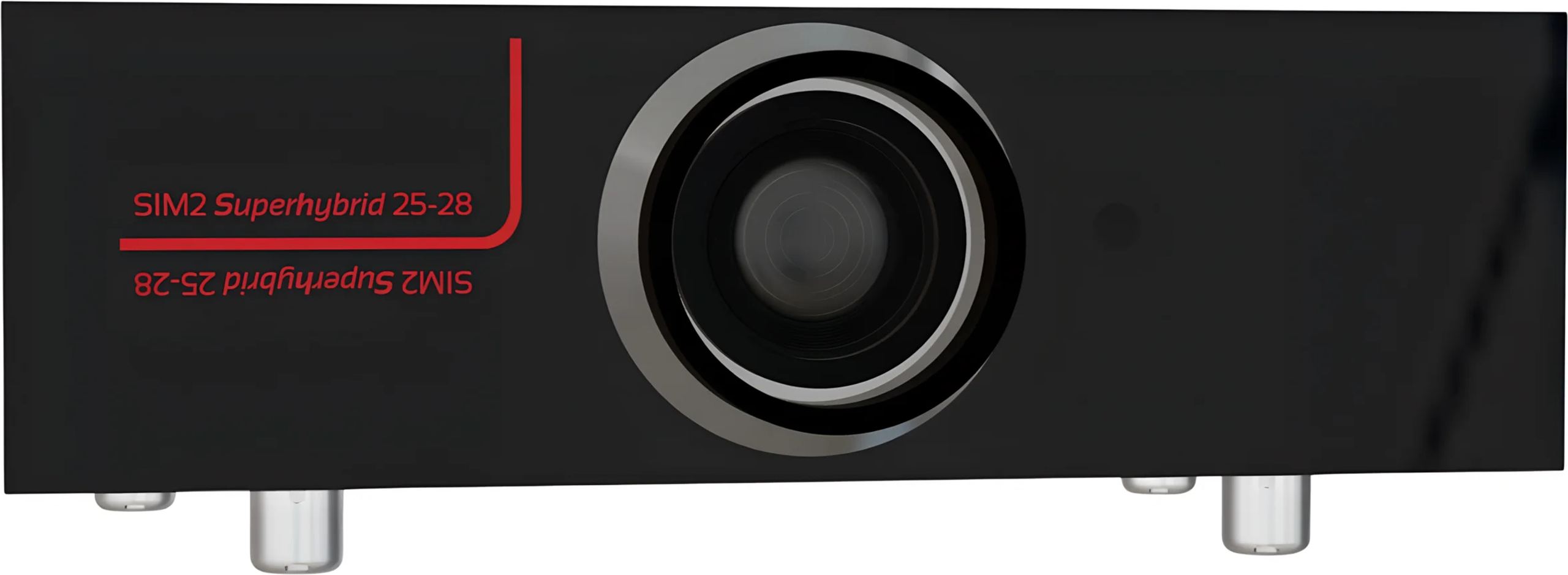
The lens, made from low-dispersion pure glass elements, offers a 1.6× zoom and an aperture of 2.50 to 3.26, which benefits contrast. Three-level judder compensation smooths camera tracking shots in films shot at 24 frames per second, while those who prefer the original cinematic look can disable it.
Positioning the projector and sizing the screen
The throw ratio ranges from 1.40:1 to 2.24:1. For a 2.50 m-wide image, the projector is placed between 3.50 m and 5.60 m from the screen, and for a 3 m-wide image, between 4.20 m and 6.70 m. This range allows a choice between ceiling mounting in the middle of the room and placement on a shelf at the back of the room, behind the viewers. Focus covers distances from 2.5 to 9 m.
The optical offset is fixed at 100%: when placed on a shelf, the projector forms the image entirely above its lens axis, and when inverted on the ceiling, entirely below it. Vertical lens shift adds a 15% margin. Since this adjustment only affects height, the projector must be centered horizontally on the screen, a point to account for when planning the installation. Weighing 14.5 kg, it requires an appropriately rated ceiling mount.
Installation-focused connectivity
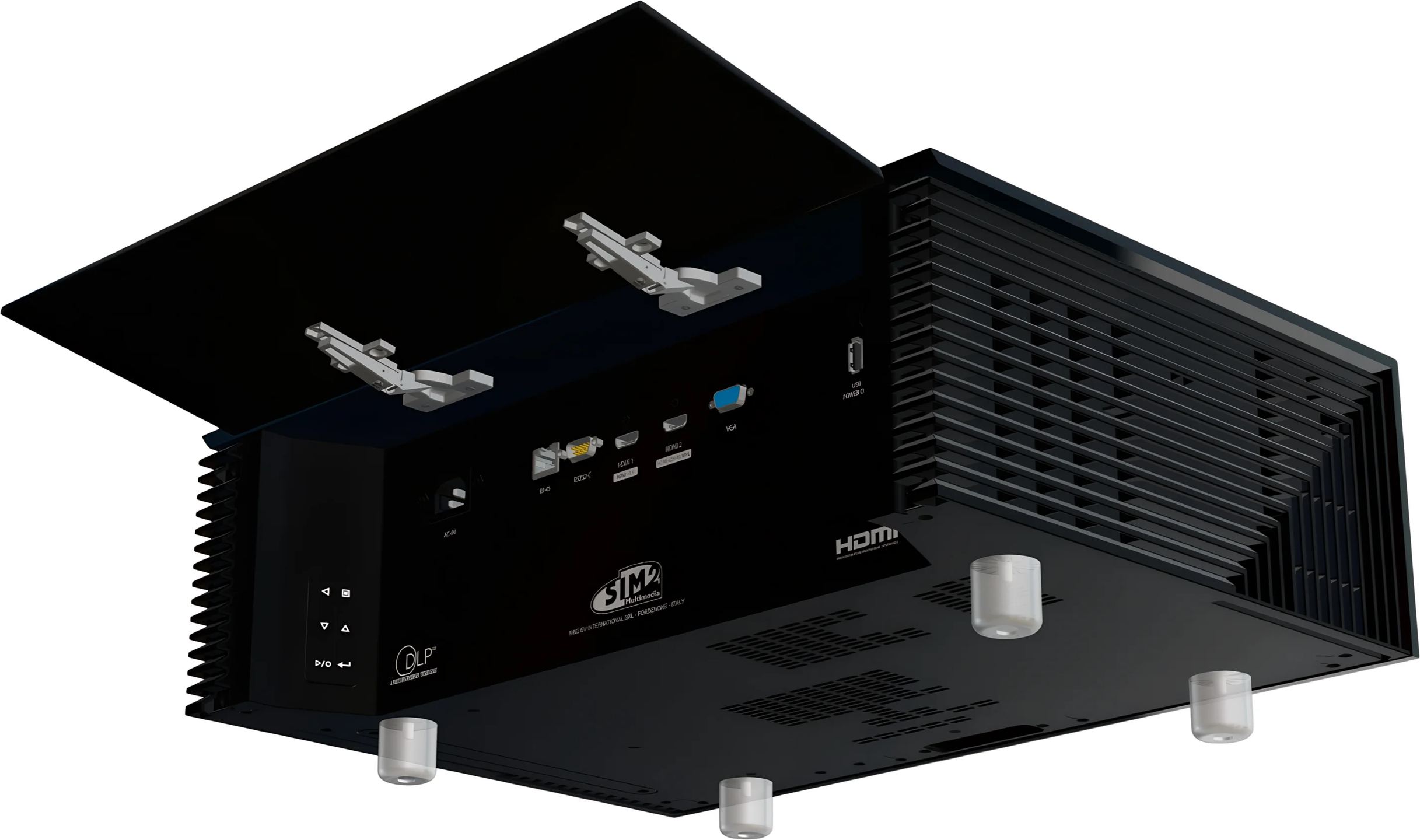
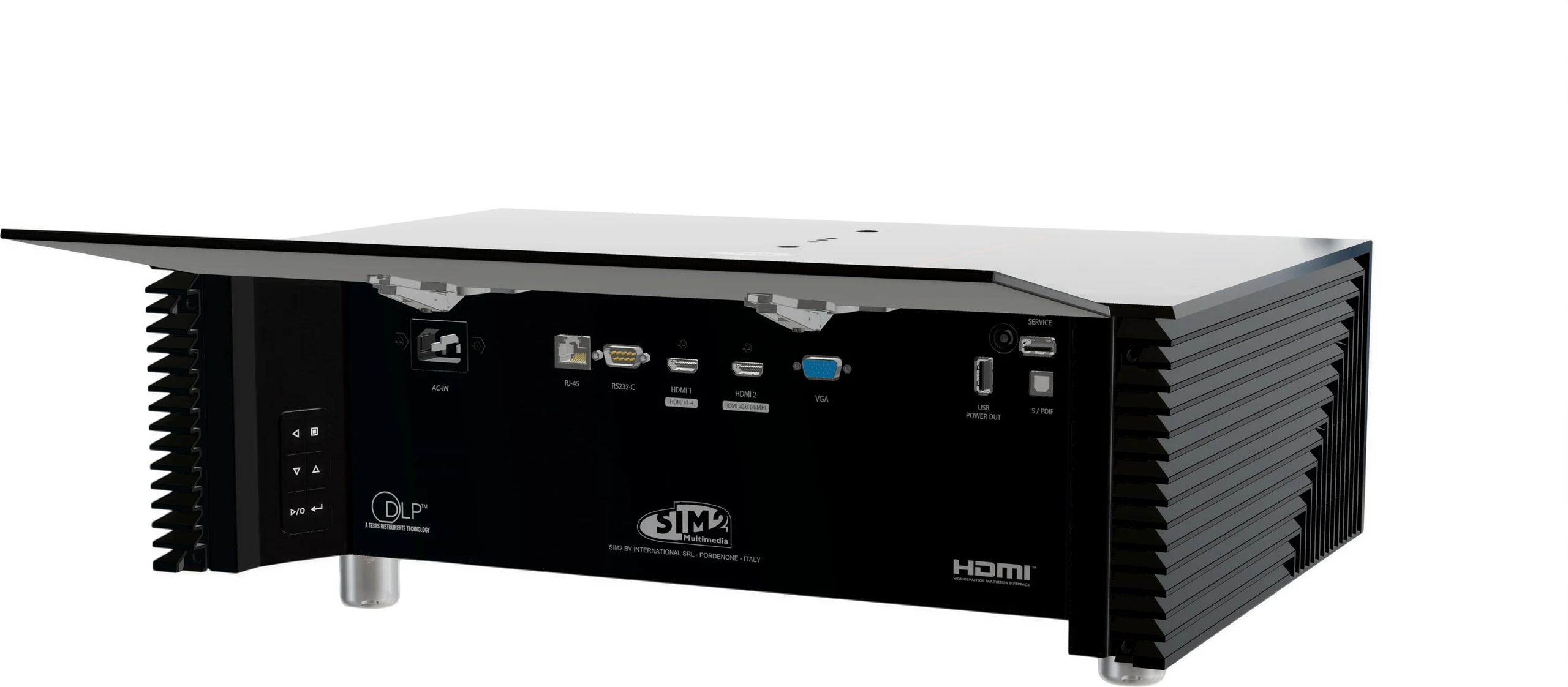
Two HDMI inputs handle the sources. The HDMI 2.0 input, with HDCP 2.2 protection and MHL 2.1 compatibility, accepts UHD, HDR10 and HLG signals. The HDMI 1.4a input is limited to Full HD. In practice, 4K sources run through a home theater receiver connected to the HDMI 2.0 input, bringing together the Ultra HD Blu-ray player, set-top box and console. A VGA input remains available for a computer.
For room control, the projector has a 12 V trigger output that lowers a motorized screen when switched on, an RJ-45 network port with a web interface and a full set of IP commands, and an RS-232 connection for home automation systems. A 5 V / 1.5 A USB port powers a streaming stick or charges a device, while a second USB port is used for firmware updates.
Full calibration with LCC 4.0 software
The color management system adjusts the primary colors (red, green, blue), secondary colors (cyan, magenta, yellow) and white point. SIM2 also provides its Live Colors Calibration 4.0 software, the same as on the Nero 4S: installed on a computer connected to the projector and paired with a measurement probe, it automatically calibrates all projection settings. An installer can thus fine-tune the Crystal 4Sh to the actual screen and lighting in the room, and repeat the process over the years.
A crystal glass housing and quiet operation
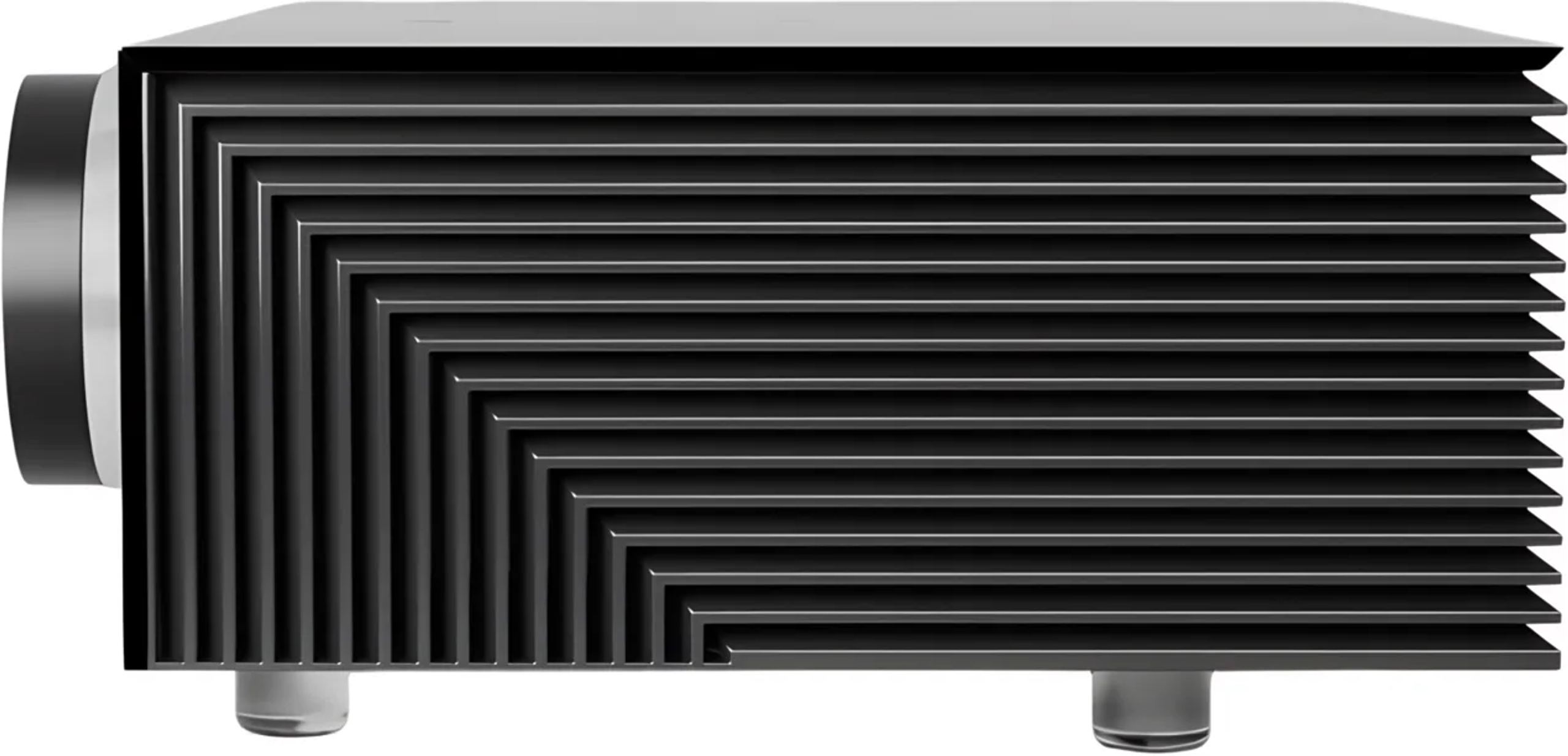
The casing, designed by Giorgio Revoldini, is covered with a 6 mm crystal glass panel, in black or white. This thick glass limits ventilation noise escaping through the top, front and rear, which matters when the projector is ceiling-mounted directly above the sofa. At the rear, a crystal glass door conceals all the connections and cables, and the front remains clean once installation is complete.
Technical specifications
Display technology
- Technology: DLP UHD with 1.70 cm DMD digital micromirror array
- Resolution: UHD 4K, 3840 × 2160 pixels
- Light engine configuration: 100% optical offset according to the manufacturer
- Judder and motion compensation: 3 adjustment levels
- Vertical scanning frequency: 24 to 120 Hz
Light source and colorimetry
- Light technology: hybrid laser system with blue lasers and phosphors
- Maximum brightness: up to 3800 lm
- Rated light source lifespan: up to 25000 hours
- Laser power modulation: 50% to 100%, in 5% steps
- Color reproduction: optimized white point, wide color space
- Gamut coverage: > Rec.709
- Stated color standard: DCI
- Color wheel: red, green, yellow, clear
- RGBY CW color configuration: red, green, blue, yellow, clear segment, 120 Hz
- Color wheel system: 2 wheels
- One phosphor wheel
- One wheel equipped with dichroic filters
- Latest-generation phosphors: green and yellow emissions designed to maintain good stability over time and across temperatures
- Color management: CMS / LCC
- Adjustment of primary and secondary colors, white point
- Integrated SIM2 LCC 4.0 software: Live Colors Calibration 4.0, also referred to as Live Color Calibration
- Professional calibration of all projection parameters
- Precise automatic color calibration from a compatible computer
Video processing and HDR
- Supported HDR formats: HDR10, HLG
- Automatic SDR / HDR selection
- HDR management: dedicated electronics for dynamic range optimization
- Display modes dedicated to the EOTF electro-optical transfer function, with 4 presets
- Optimized visibility of details in dark and bright areas
- Super Hybrid dynamic contrast through laser modulation: 3 adjustment levels
- Option accessible from the user menu
- Improved black level in predominantly dark images and scenes
Optics and installation
- Lens: high-definition optics with pure glass lenses
- Aperture: 2.50–3.26 → high contrast, low black level
- Throw ratio: 1.40:1 to 2.24:1, with a tolerance of ± 5%
- Optical zoom: 1.6×
- Vertical lens shift:
- ± 15%
-
- 15% according to the manufacturer’s specifications
- Projection offset: 15°
- Stated projection angle: 12°
- Rated projection distance: 2.5 to 9 m, depending on the focus range
- Installation: ceiling, shelf, suitable cabinet
Connectivity and control
- HDMI 2.0: 1 input with HDCP 2.2 and MHL 2.1 compatibility
- HDMI 1.4a: 1 input with HDCP 1.4
- VGA: 1 HD15 input
- USB Type-A power: 1 port, 5 V / 1.5 A, intended for charging
- USB Type-A service: dedicated port for maintenance and firmware updates
- 12 V trigger output: 1 control interface for compatible equipment
- LAN via RJ-45: communication, Web control, full set of IP commands
- RS-232: 1 serial interface on a 9-pin D-Sub connector
Power supply and consumption
- Supply voltage: 100 to 240 V AC, ± 10%
- Mains frequency: 50 to 60 Hz
- Mains voltage adaptation: automatic
- Maximum power consumption: 395 W
- Standby power consumption: less than 0.5 W
Design and finishes
- Housing: elegant, minimalist design with a crystal glass surface
- Available finishes:
- Black version: black crystal glass surface
- White version: white crystal glass surface
- Cable management: rear panel concealed behind a crystal glass door
Dimensions and weight
- Dimensions:
- Width: 507 mm
- Height: 392 mm
- Depth: 181 mm
- Weight: 14.5 kg
Frequently asked questions
Does the Crystal 4Sh support Dolby Vision or HDR10+?
No. It supports HDR10 and HLG. Discs and programs in Dolby Vision or HDR10+ always include a base HDR10 layer, which the projector displays using its own dynamic processing.
Can you connect a console to it to play in 4K at 120 Hz?
The HDMI 2.0 input limits 4K to 60 frames per second, even though the projector’s vertical refresh rate reaches 120 Hz. A console works without any issues at 4K 60 Hz, but the 4K 120 Hz modes on recent consoles, which require HDMI 2.1, are not available.
Does the projector have built-in speakers?
No, the Crystal 4Sh does not have any built-in speakers. Sound is played through a home theater amplifier or a soundbar connected to the source.
Which input should an HLG source be connected to?
HLG is only processed through the HDMI 2.0 input, the same one used for UHD and HDR10 sources. The HDMI 1.4a input accepts signals up to Full HD and is suitable for a secondary source such as an older Blu-ray player.
Does the light source require maintenance?
There is no lamp to replace: the laser light source is rated for 25,000 hours, or more than twenty years at three hours of projection per day. Dusting the air intakes is still recommended, especially for a ceiling-mounted projector.
What type of screen should be paired with the Crystal 4Sh?
The throw ratio of 1.40:1 to 2.24:1 is suitable for a conventional long-throw projection screen, white or gray, tensioned or motorized. Ambient light-rejecting screens designed for ultra-short-throw projectors positioned at the base of the screen do not work with a projector placed several meters away.
Can the Crystal 4Sh be integrated into a home automation system?
Yes. The network port supports a full set of IP commands and a web interface, the RS-232 connection is used for wired home automation controllers, and the 12 V output synchronizes the motorized screen or other equipment with the projector powering on.
- Eco-contribution included in the sale price.


