

Contents
A 3,000-lumen projector that turns out to be less bright than a competing model rated at 1,500 lumens: the absurdity is only apparent. Behind these numbers lies a jungle of measurement units that manufacturers exploit to their advantage. Before investing in a projector that can operate in broad daylight, it’s best to understand what these specifications really mean—and what they hide.
Find the ideal projector for your living room
ANSI lumens, LED lumens, source lumens: total chaos
A projector’s brightness is measured in lumens, but not all lumens are created equal. As early as 1992, the American National Standards Institute (ANSI) established a standardized measurement protocol: the projected image is divided into nine zones, the brightness in each zone is measured at the center, then these values are averaged. This figure, expressed in ANSI lumens, reflects the light actually perceived on the screen.
Some manufacturers prefer to display “LED lumens” or “source lumens.” The difference is considerable: 1,000 LED lumens correspond to roughly 417 ANSI lumens (division by 2.4 according to technical data published by several manufacturers). Worse still, 1,000 source lumens translate to only 40 to 60 ANSI lumens, because this measurement does not take into account optical losses inside the projector.
This disparity is explained by what manufacturers call the Helmholtz–Kohlrausch effect: saturated colors appear brighter to the human eye than they objectively are. LED and laser projectors produce images perceived as brighter, which creates a temptation to inflate the numbers.
The golden rule: only compare ANSI lumens with ANSI lumens. When faced with a model that only lists “lumens” without further detail, caution is advised.
Brightness thresholds depending on the environment
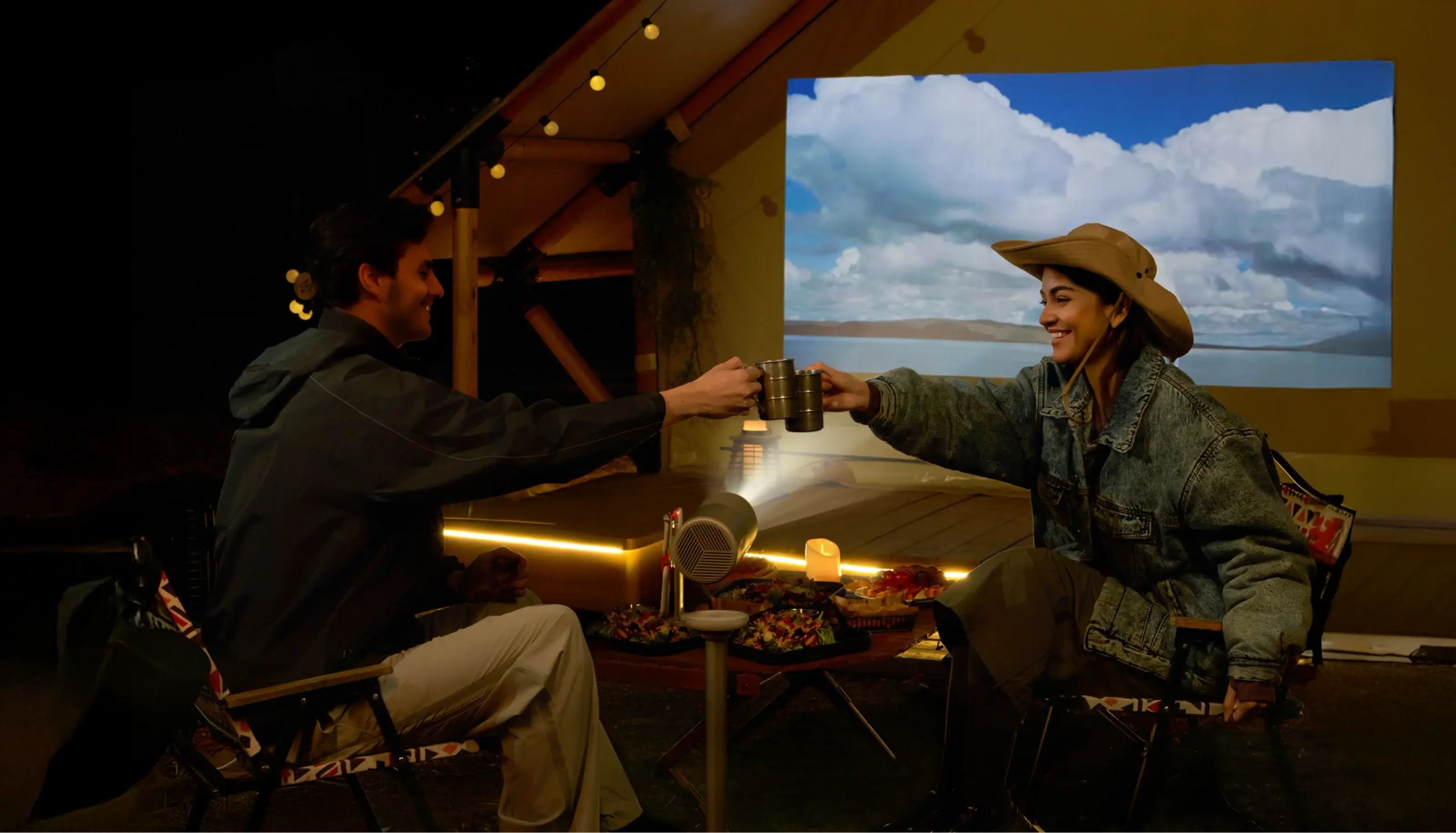
Needs vary significantly depending on usage conditions. Here’s what technical data and our own experience allow us to establish:
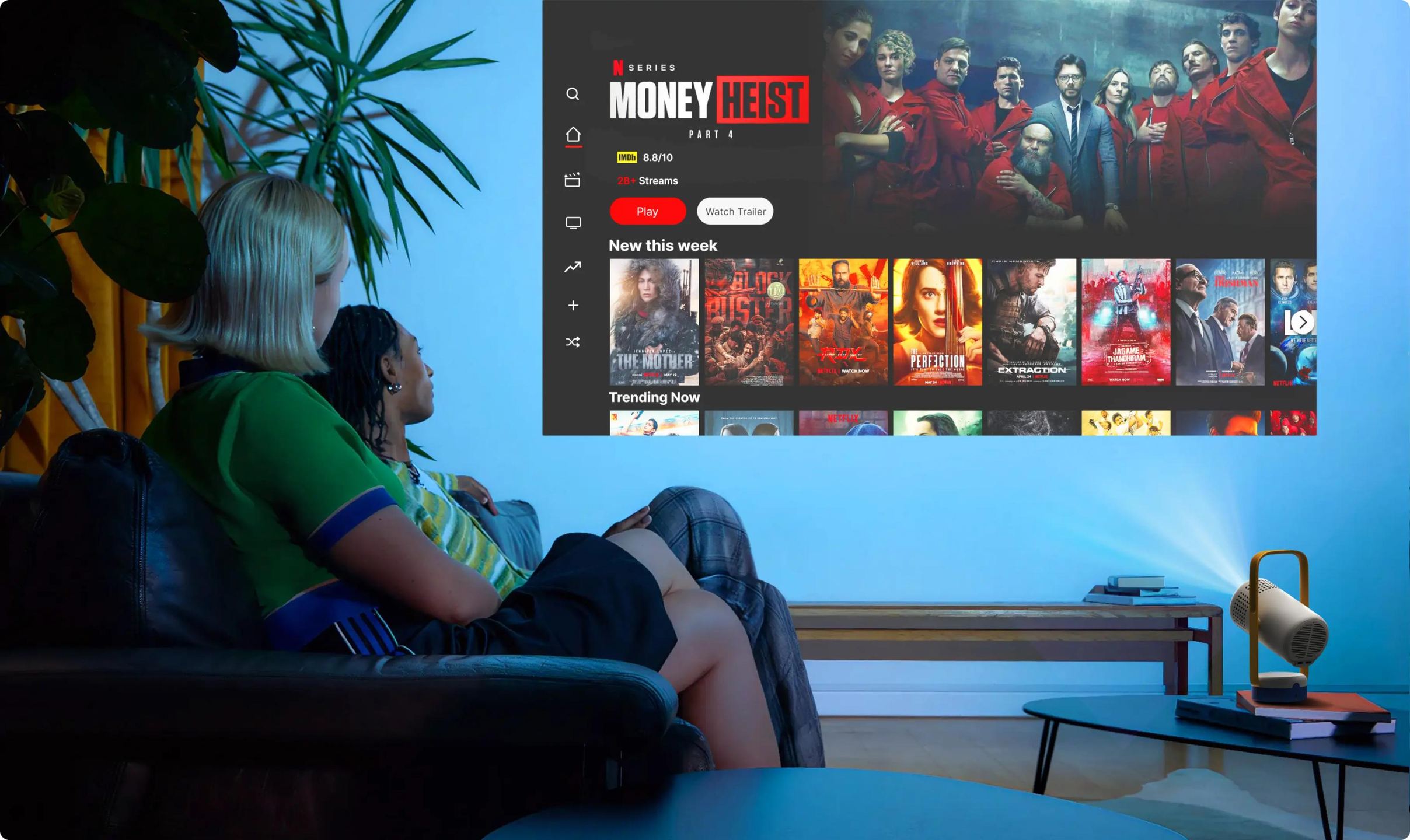
Darkened room (home cinema, evening) 1,000 to 1,500 ANSI lumens are enough. In total darkness, too much brightness becomes counterproductive: it tires the eyes and degrades black-level contrast.
Room with moderate ambient light (living room in the evening, indirect lighting) 2,000 to 2,500 ANSI lumens will keep the image readable. Closing curtains and using dimmed lighting significantly improves the result.
Indoor daylight (windows, natural light) A minimum of 3,000 ANSI lumens becomes necessary. For comfortable visibility in a bright room, aim more for 4,000 lumens.
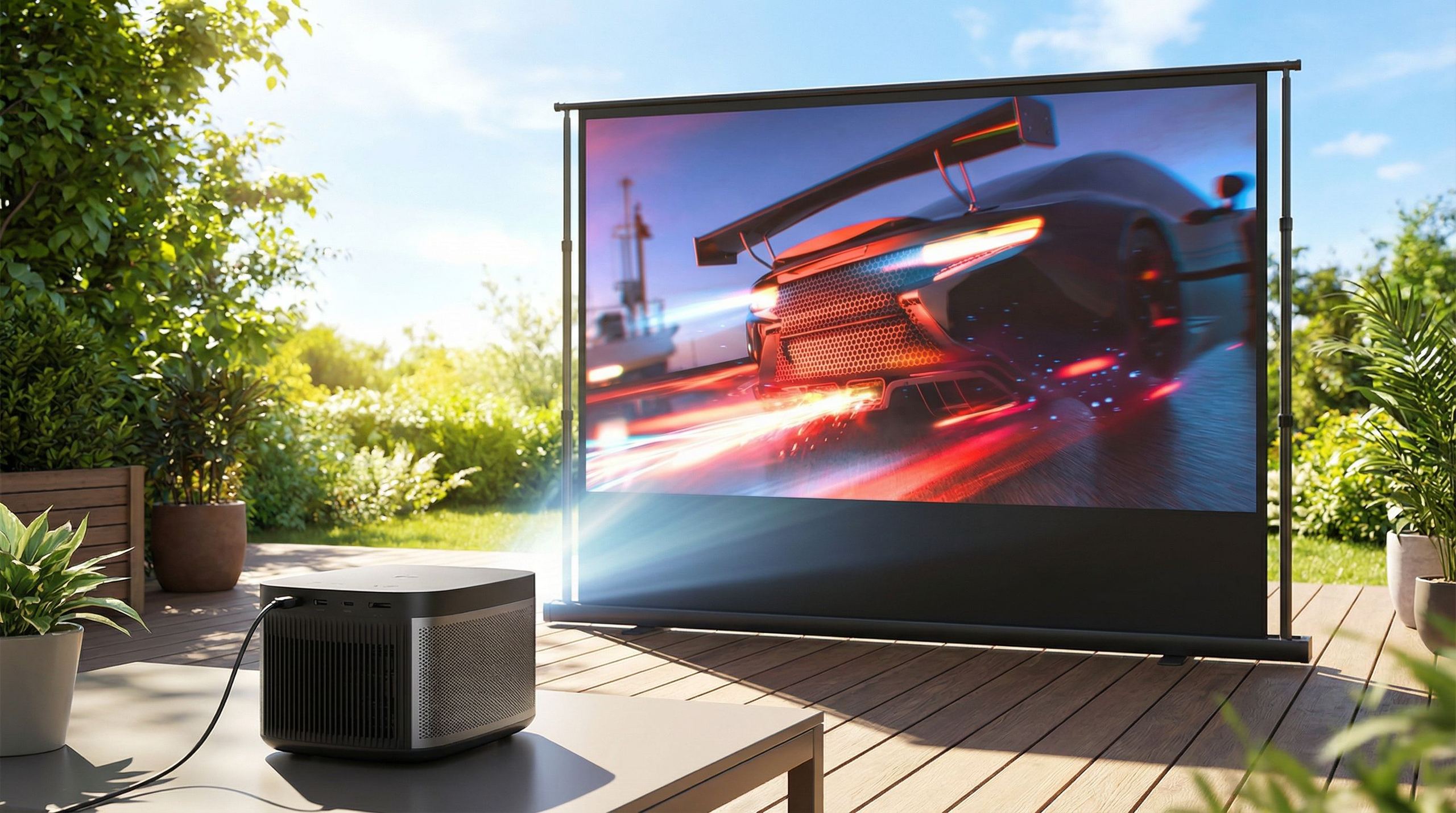
Outdoor daytime projection Things get complicated. A sunny day produces between 10,000 and 100,000 lux on the projection surface. To cope with these conditions, you would theoretically need more than 5,000 ANSI lumens, a threshold that pushes you into the category of professional projectors costing several thousand euros.
The sun’s maximum light intensity (around 120,000 lumens per square meter) far exceeds what any consumer projector can produce. No home device will compete with the midday sun.
Screen size: an often-overlooked factor
Brightness is diluted in proportion to the projection surface. Doubling the width of the image quadruples its area and divides the perceived brightness per unit of surface accordingly.
A 2,000-ANSI-lumen projector will produce a dazzling image on an 80-inch diagonal, but will look dull at 150 inches. For daytime use on a large screen (120 inches or more), the requirement quickly climbs beyond 4,000 ANSI lumens.
Projection distance also matters: the farther the projector, the more the light spreads out. Ultra-short-throw (UST) models, positioned just a few centimeters from the screen, concentrate their light beam better and lose less power.
The ALR screen, a force multiplier
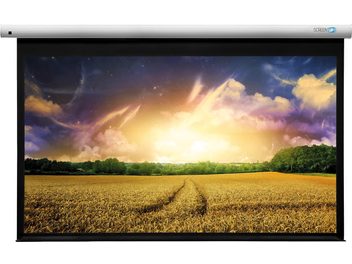
Rather than investing in an ever more powerful projector, there’s an alternative worth considering: the ambient light rejecting screen (ALR, for Ambient Light Rejecting).
These screens use optical micro-structures (lenticular or Fresnel) to reflect light coming from the projector toward the viewer, while absorbing or deflecting ambient light arriving from other angles. High-performance models reject between 60% and 85% of stray light.
There are two main categories:
“Cinematic” (CLR) screens effectively block light coming from the ceiling. They are suitable for rooms with controlled artificial lighting, but remain vulnerable to lateral light from windows.
“Daylight” (Fresnel) screens reject light coming both from the ceiling and from the sides. Better suited to daytime use, they do however offer a narrower viewing angle (around 40 to 50°).
A quality ALR screen costs between €500 and €2,500 depending on size and technology. The investment can be more sensible than buying a projector twice as bright: better 2,500 ANSI lumens with a good ALR screen than 4,000 lumens on a white wall.
Lamp, LED, or laser: impact on real-world brightness
The light source directly affects daytime performance.
Lamp projectors (UHP, mercury) easily reach 3,000 to 5,000 ANSI lumens at accessible prices. Their major downside: progressive brightness degradation. After 1,000 hours of use, a lamp projector already loses 20% of its initial power. Replacing the bulb (€100 to €300) becomes necessary every 2,000 to 4,000 hours. Note: under European RoHS regulations, the sale of mercury-lamp projectors will be banned from 2026 onwards.
LED projectors appeal thanks to their longevity (20,000 hours and more) and color accuracy. However, their brightness generally tops out around 2,000 to 3,000 ANSI lumens for consumer models. This physical limitation makes them less suitable for very bright environments.
Laser projectors combine high brightness (3,000 to more than 10,000 ANSI lumens), long life (20,000 to 30,000 hours), brightness stability over time, and instant start-up. They are the technically optimal solution for daytime use, at the cost of a higher initial investment. Triple RGB laser models also offer an extended color gamut (up to BT.2020).
Practical strategies for daytime projection
Beyond technical specifications, several adjustments can significantly improve visibility:
Choose the right time The 11 a.m.–2 p.m. window concentrates maximum light intensity. Late afternoon (from 4 p.m. onward), or overcast weather, makes a 2,500-lumen projector more usable. Dawn and dusk offer the best conditions for outdoor projection.
Create shade An awning, a parasol, or simply the shadow cast by a building drastically reduces ambient light on the projection area. This simple trick can turn an impossible viewing into an acceptable experience.
Orient the screen correctly Avoid surfaces facing windows or direct light sources. A screen set perpendicular to the main window will receive less stray light.
Adapt the content Bright scenes (sports, cartoons, presentations) remain legible with less power than films with dark atmospheres. A nighttime thriller will require more lumens than a sports broadcast.
Partially close the curtains A compromise between natural light for room comfort and darkening the projection area.
What the numbers don’t tell you
Contrast is just as important as raw brightness. A 3,000-lumen projector with a 5,000:1 contrast ratio will produce a more legible image than a 4,000-lumen model limited to 1,500:1. In bright environments, aim for a minimum of 3,000:1.
Display technology also matters. Single-chip DLP projectors can produce a rainbow effect perceptible to some viewers. LCD or 3LCD models avoid this issue but sometimes offer less deep blacks.
Finally, high light output often goes hand in hand with increased noise. A projector running at full power needs a more active cooling system. For living-room use, check the noise level in full-power mode (ideally below 35 dB).
Verdict and outlook
Manufacturers will continue to improve the power of LED and laser sources while reducing costs. In a few years, 5,000 ANSI lumens will probably be available in compact and affordable formats. In the meantime, the combination of a suitable projector + ALR screen + intelligent ambient light management remains the most effective formula for enjoying a quality image in broad daylight.