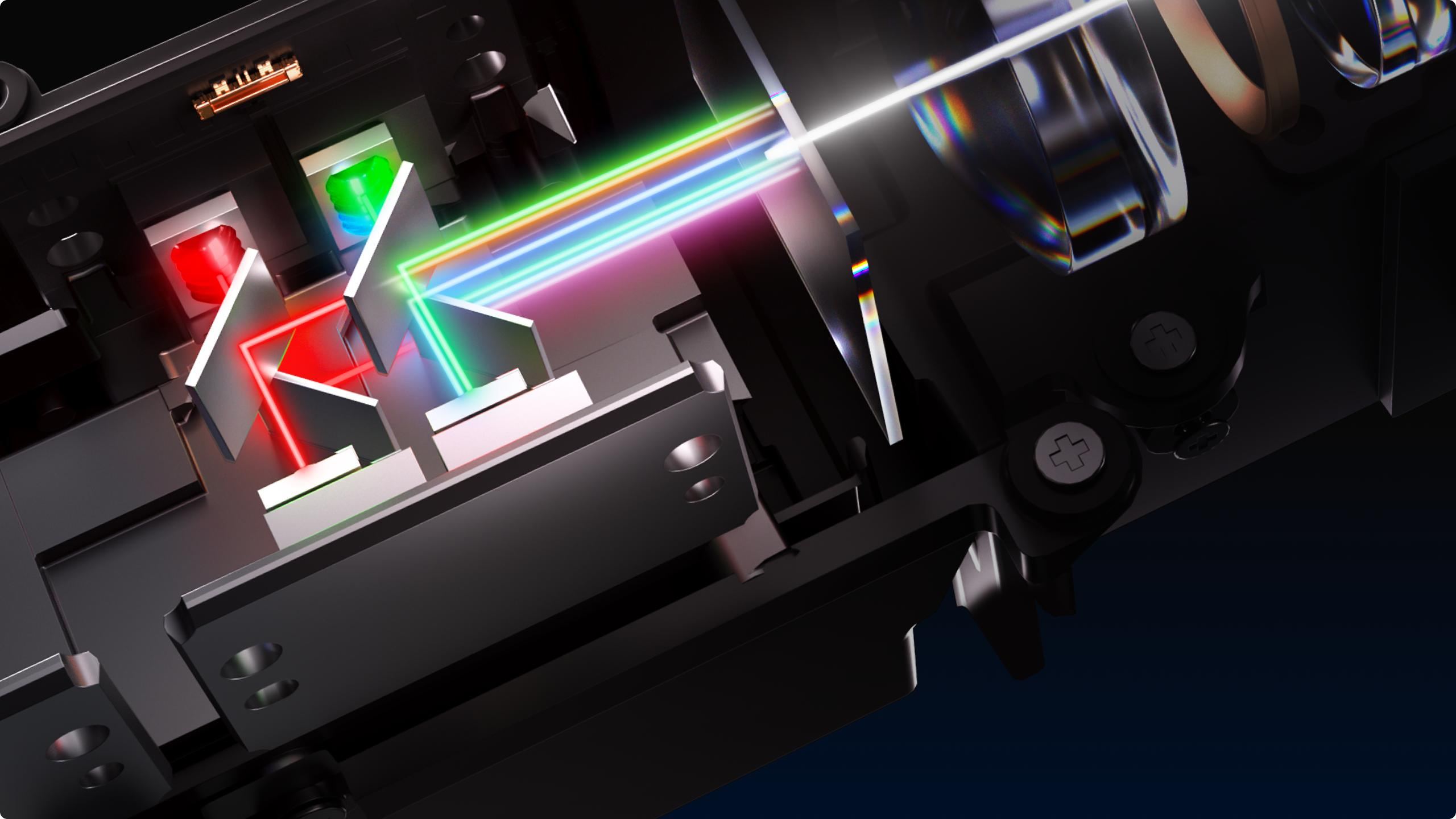
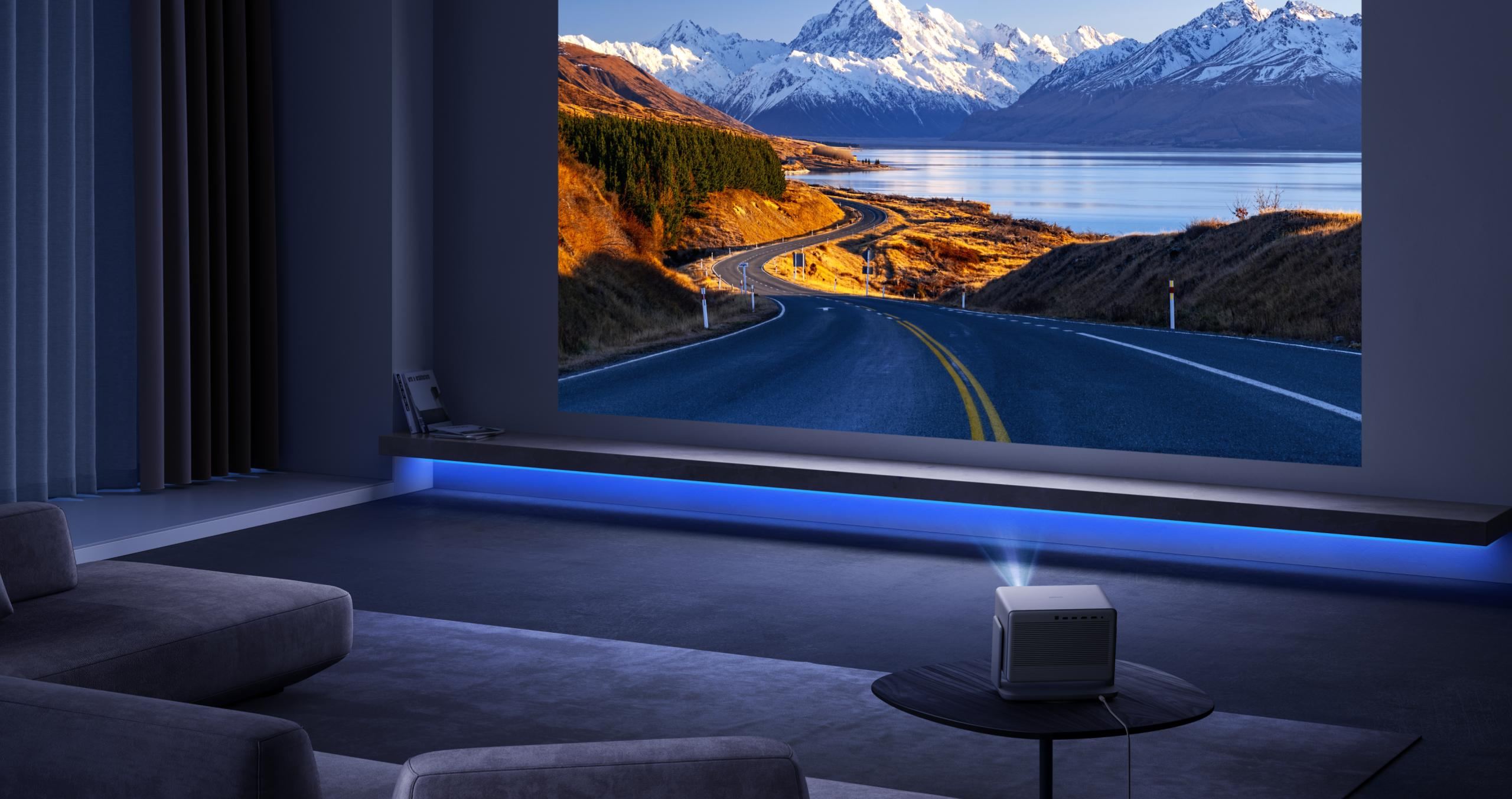
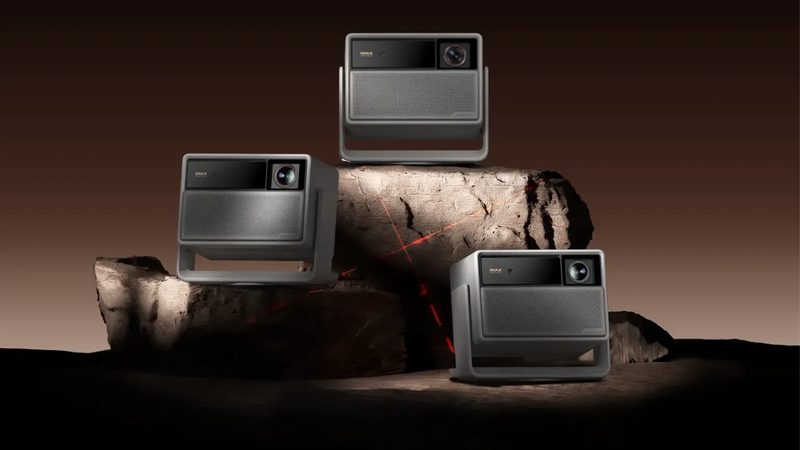
Three laser beams, one for each primary color: that’s the principle at the heart of this projector. XGIMI takes a leap forward with the Horizon 20, which adopts an RGB triple-laser light source capable of covering 110% of the BT.2020 color space. The result is more saturated and more accurate tones than single-laser or hybrid systems, while still offering simplified setup thanks to the brand’s automation features.
Refined design and meticulous build
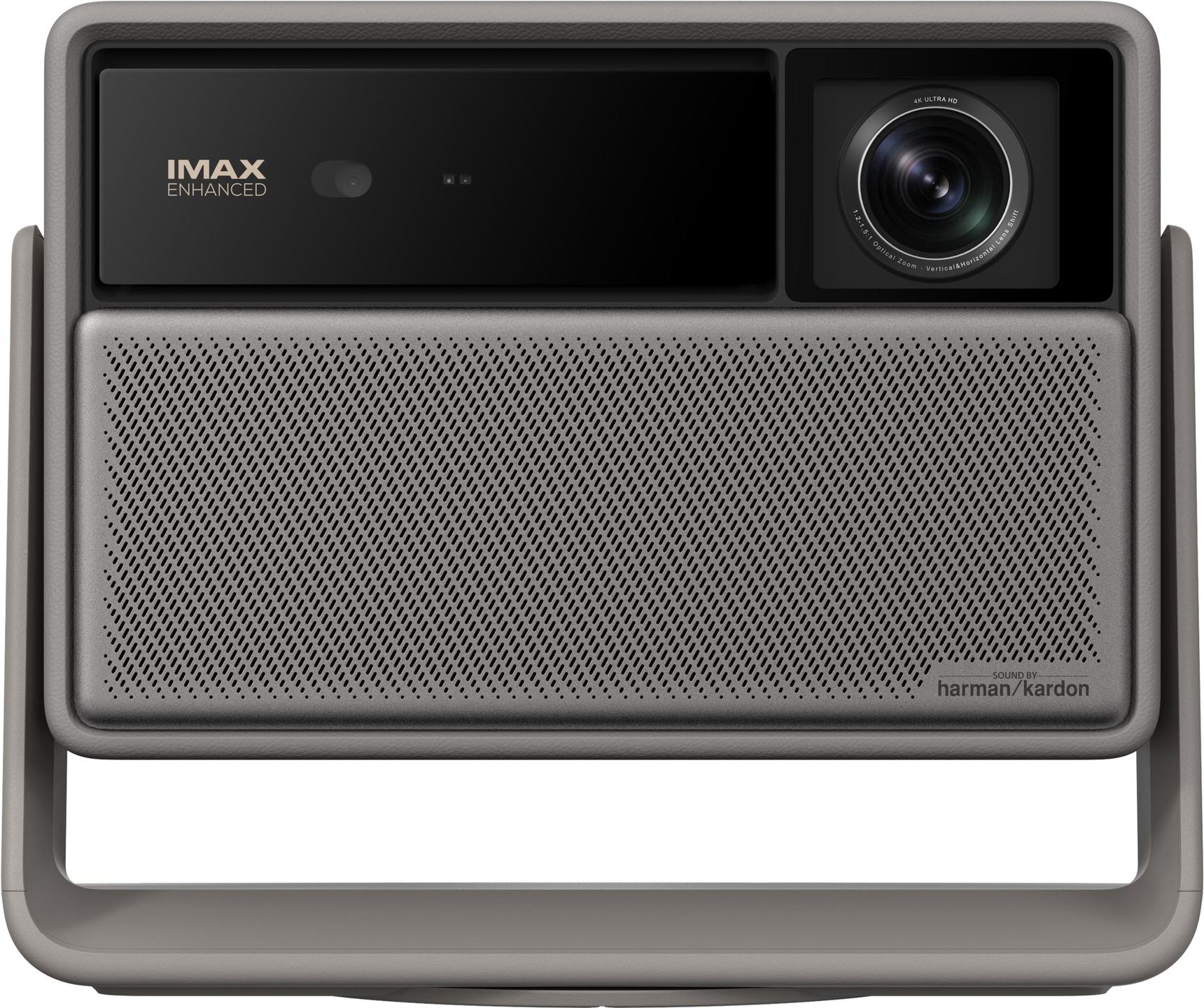
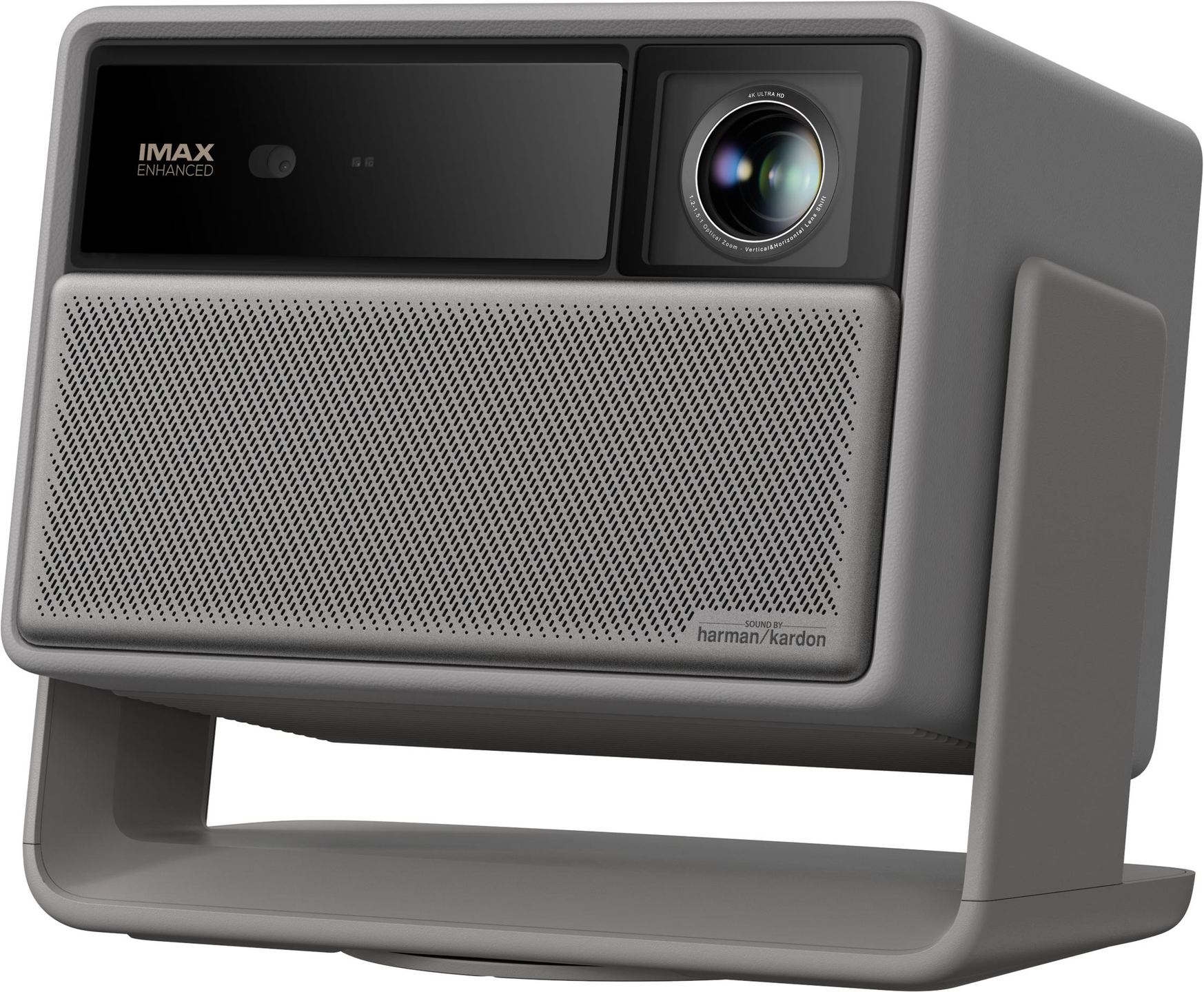
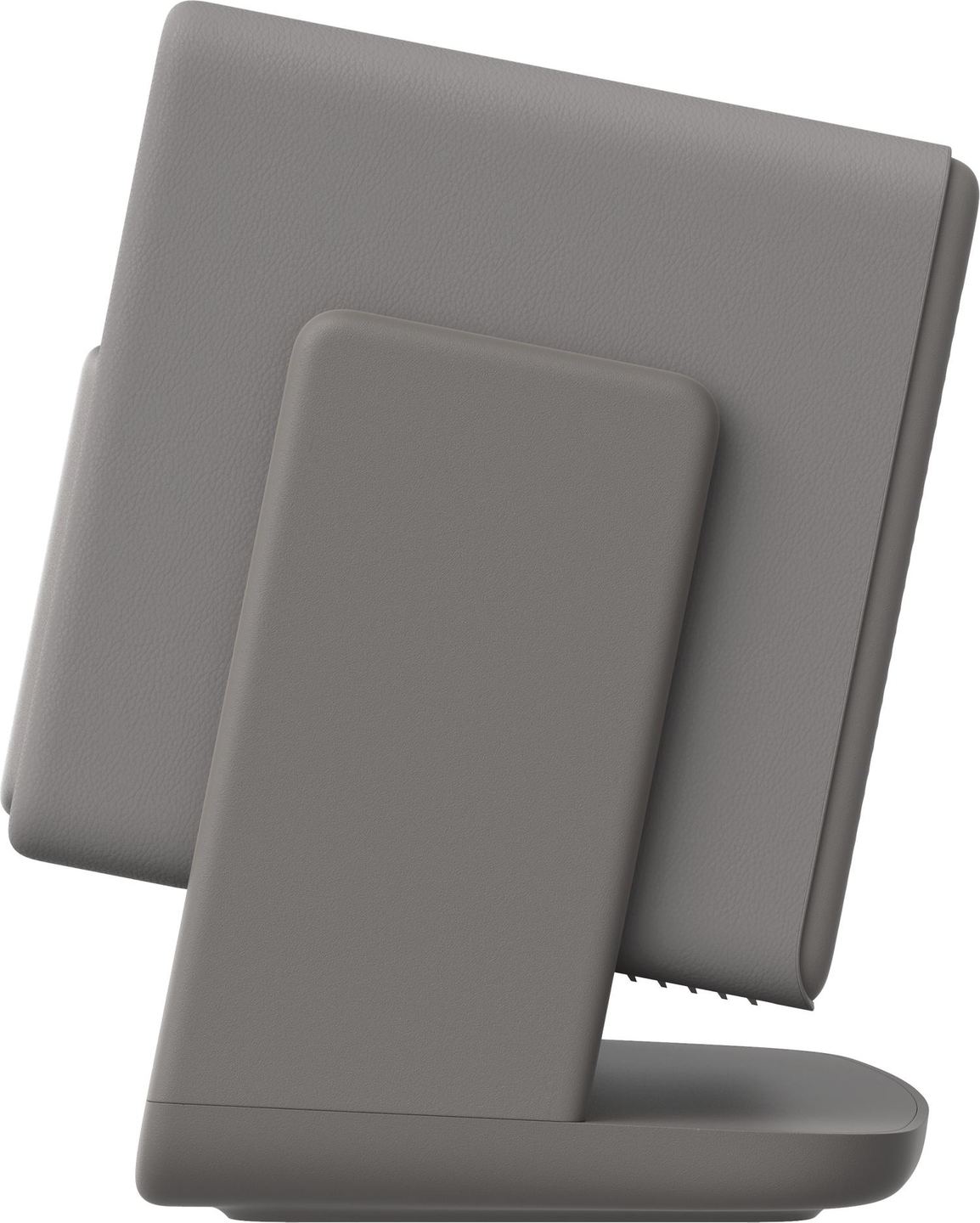
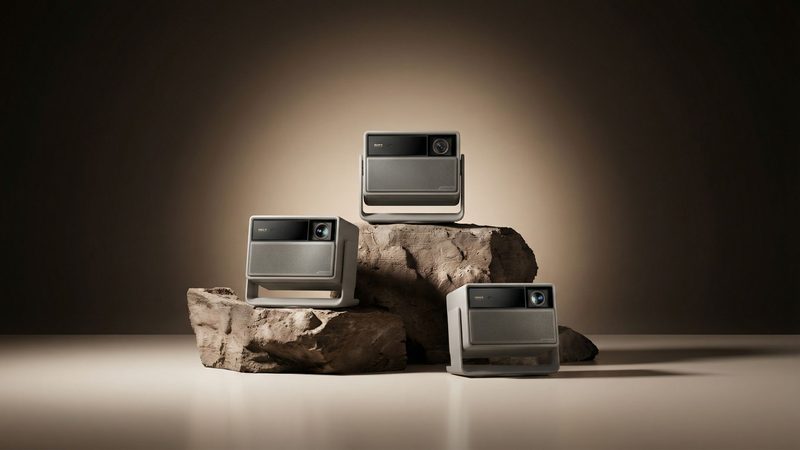
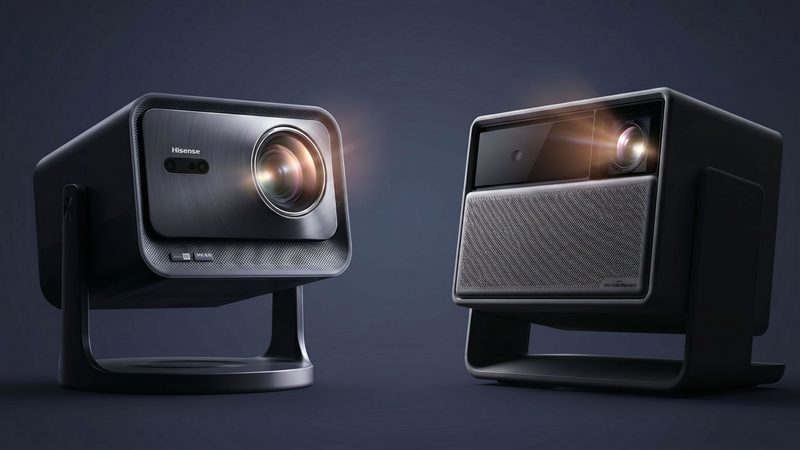
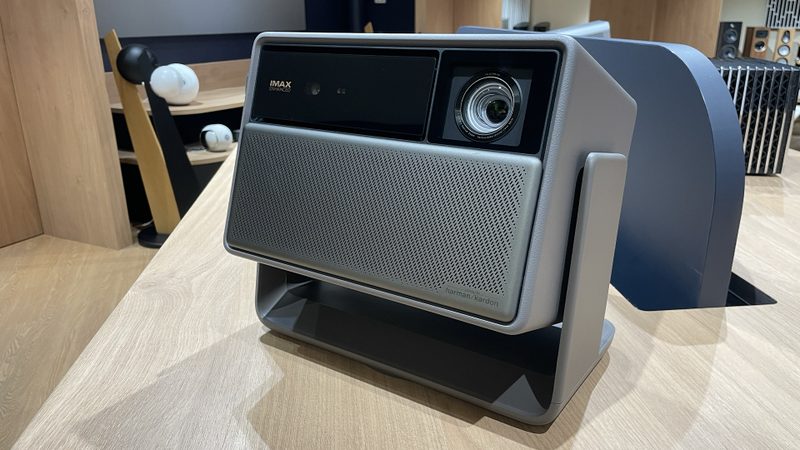
The Horizon 20 retains the clean lines that have characterized the range since its inception, with a rectangular chassis and rounded corners measuring 249 × 298 × 190 mm and weighing 4.8 kg. The neutral gray finish blends discreetly into any home environment, while the textured coating gives a quality feel to the touch.
The front lens benefits from an anti-reflective coating and a high light-transmission glass element. Unlike the Horizon S models which featured a motorized lens cover, this generation opts for an open design, prioritizing immediate accessibility. The ventilation grille runs along the sides of the chassis, allowing for efficient heat dissipation while keeping noise levels down to 28 dB.
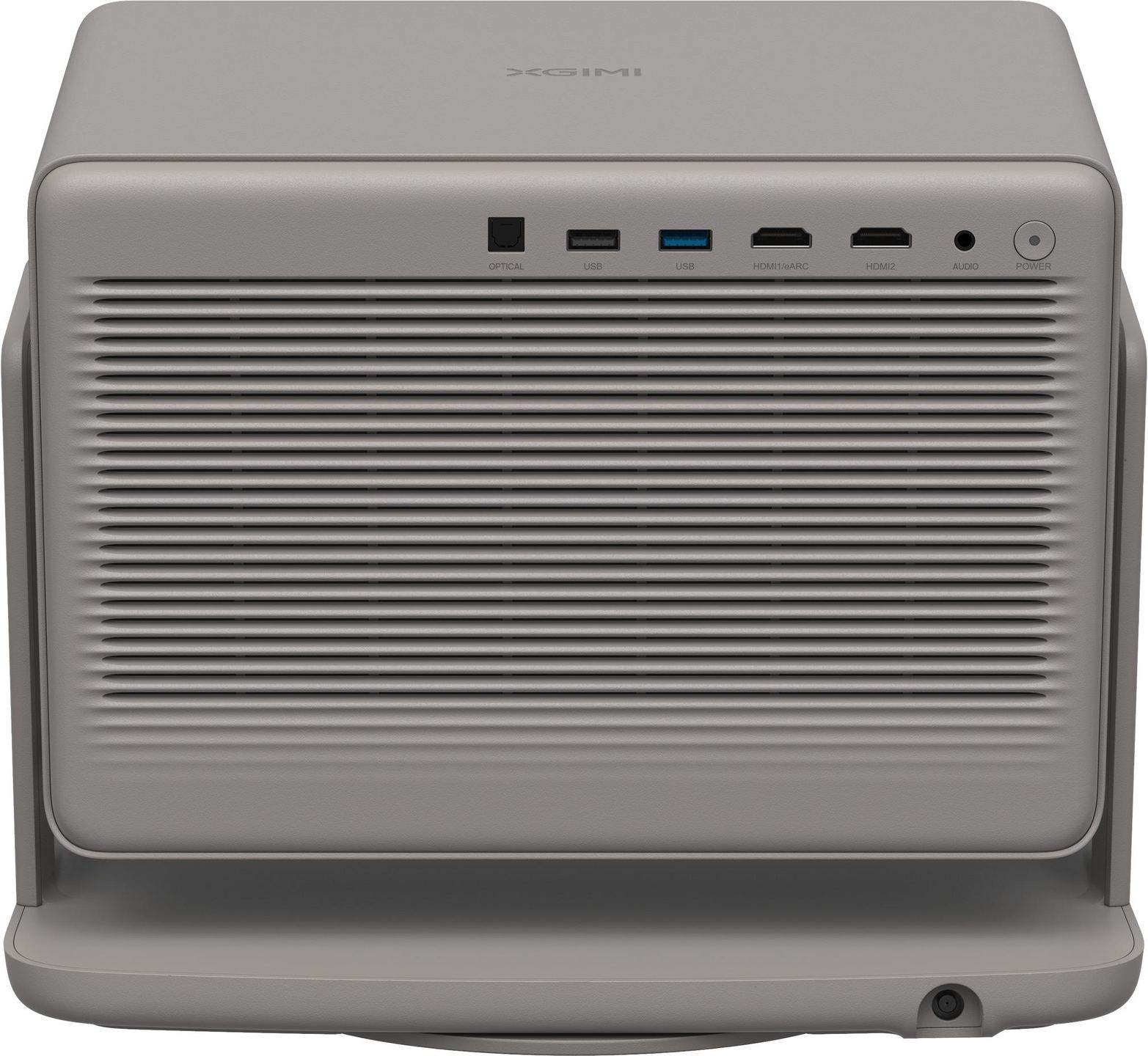
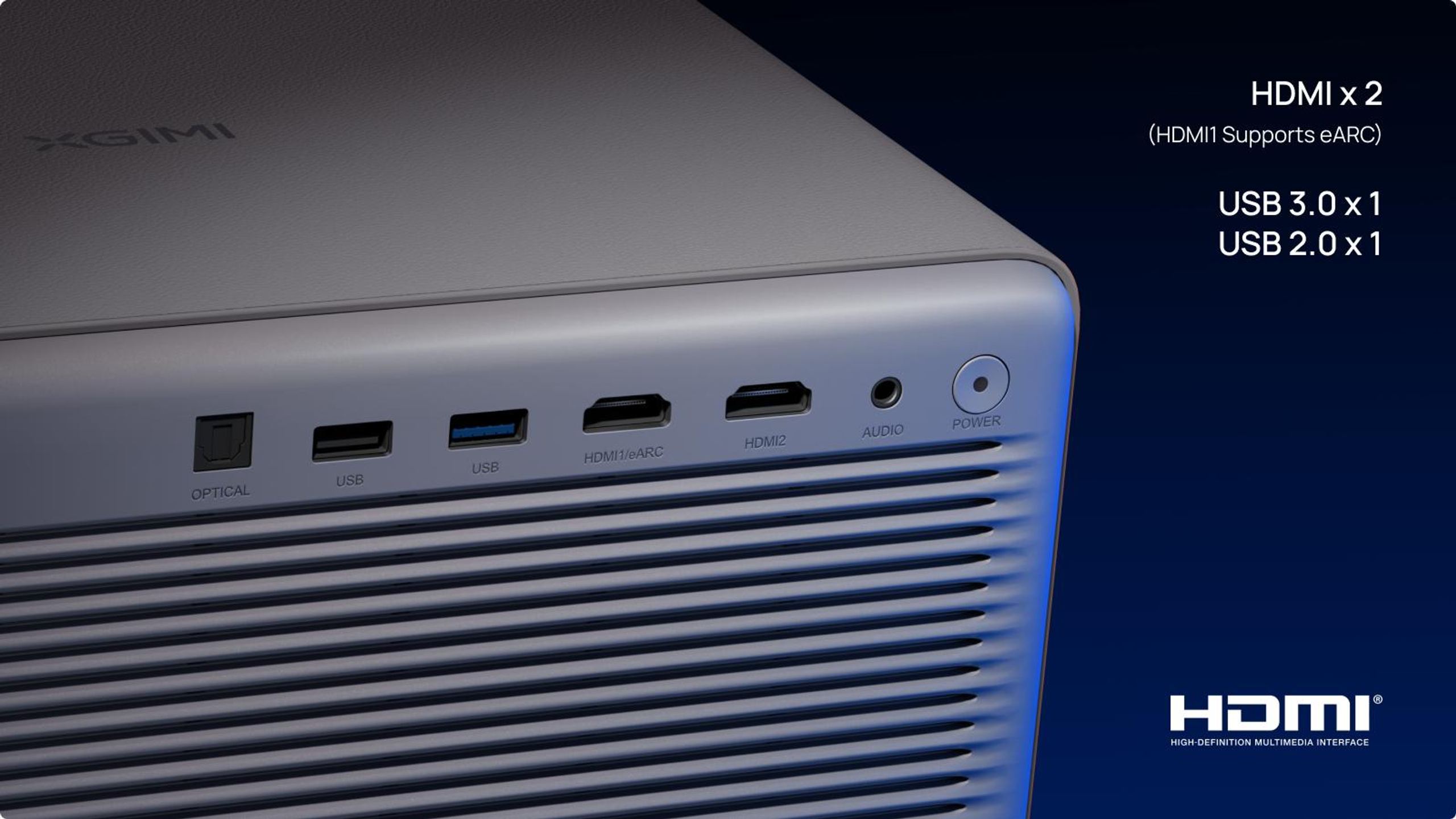
The rear connection panel brings together two HDMI ports (including one eARC-compatible for audio return), one USB 3.0 port, one USB 2.0, an optical output and a 3.5 mm audio jack. This comprehensive array of connections accommodates a variety of sources while maintaining a compact footprint. The supplied Bluetooth remote follows XGIMI’s usual minimalist design, with backlit buttons for easier use in the dark.
RGB triple laser: a mature projection technology
The adoption of an RGB triple-laser light source is the main technical evolution of the Horizon 20. This technology, previously reserved for high-end models such as the MoGo 4 Laser in the portable range, delivers brightness of 3,200 ISO lumens measured according to the ISO 21118 standard. This level of brightness allows comfortable projection even with moderate ambient light.
The projector uses a 0.47” DMD chip from Texas Instruments combined with XPR (Expanded Pixel Resolution) technology to display a native 4K UHD resolution of 3,840 × 2,160 pixels. The XPR system rapidly shifts the micromirrors four times per frame to create 8.3 million distinct pixels, providing sharpness comparable to 4K display while limiting double-edge artifacts on extreme transitions.
Color gamut coverage reaches 110% of the BT.2020 space, far exceeding usual market standards. Color accuracy, certified by SGS with a Delta E below 0.8, guarantees faithful reproduction without additional calibration. The hardware anti-speckle system, combining multi-axis LSR diffusion modules and half-wave plates, effectively eliminates the characteristic laser shimmer associated with this technology.
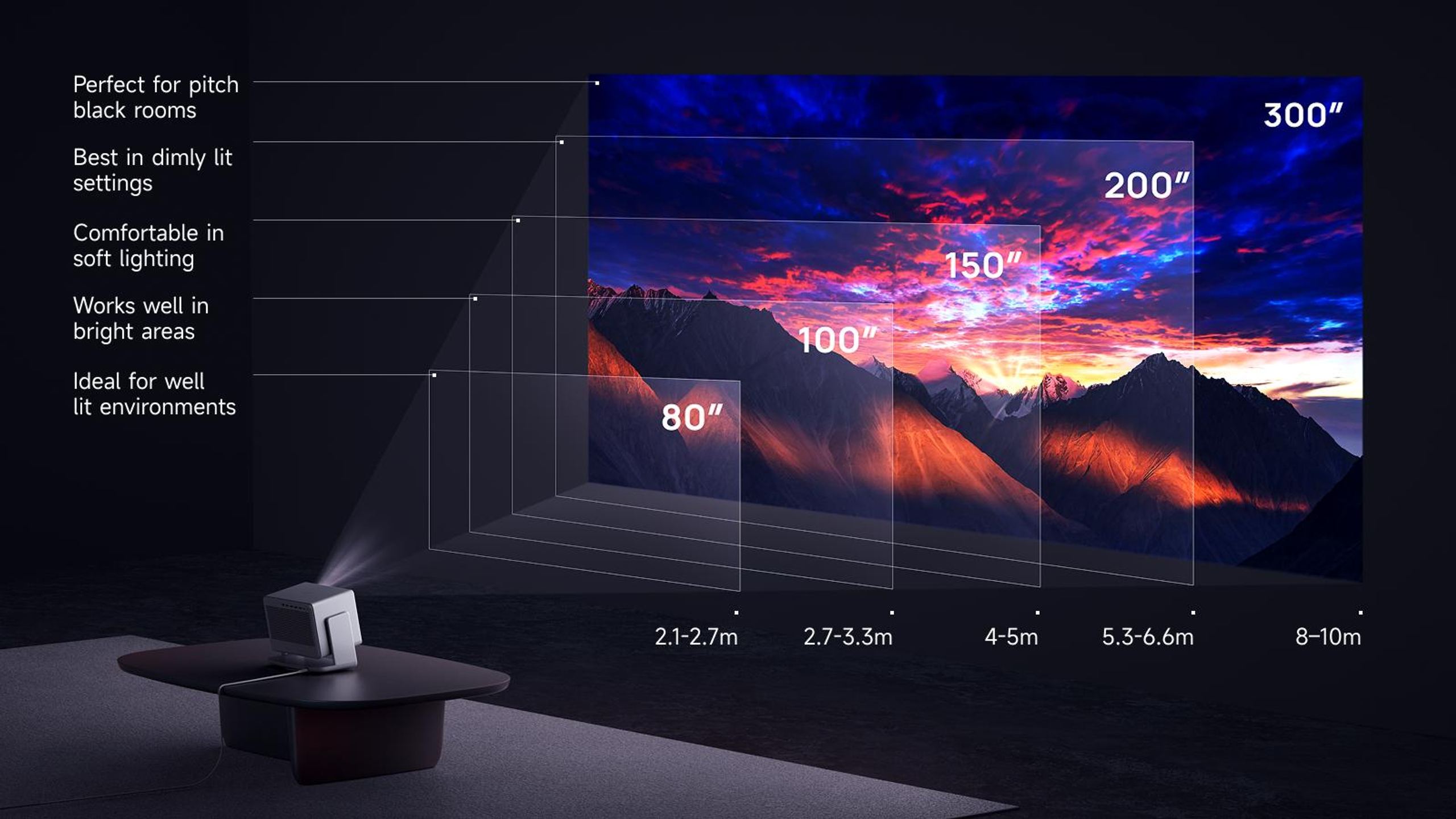
The variable throw ratio of 1.2:1 to 1.5:1 supports image sizes from 102 cm to 762 cm in diagonal. The dynamic contrast ratio of 20,000:1 with DBLE (Dynamic Black Level Enhancement) enabled ensures deep blacks and bright whites, particularly noticeable in HDR content.
Lens shift and optical zoom: maximum installation flexibility
For the first time in an XGIMI home cinema projector, the Horizon 20 incorporates a mechanical lens shift offering vertical offset of ±120% and horizontal offset of ±45%. This feature lets you move the projected image without touching the projector or introducing keystone distortion, unlike digital corrections which degrade resolution.
The optical zoom further enhances this flexibility by allowing you to adjust image size without physically moving the unit. These two optical technologies ensure optimal image quality regardless of installation configuration, a major advantage over previous models that relied solely on digital corrections.
This combination of lens shift and optical zoom puts the Horizon 20 on par with professional projectors, offering placement freedom rarely seen in this price range. The user can install the projector off-center relative to the screen, on a side shelf or up high, while still maintaining perfect geometry.
ISA 5.0: next-generation automatic calibration
The Intelligent Screen Adaptation system in its fifth version represents a major technological step forward. Autofocus now uses ToF (Time of Flight) sensors for instant, precise focusing, even when the projection distance changes. Automatic keystone correction works continuously, detecting any movement of the projector and adjusting the image in real time.
Intelligent screen alignment analyzes the contours of the projection surface to automatically maximize image size without overspill. Obstacle detection identifies objects on the wall (paintings, shelves, switches) and adapts the projection to automatically avoid them. This feature is particularly useful in home environments where walls are not always clear.
Wall color adaptation is a standout new feature: the projector analyzes the wall color (color temperature from 3,000K to 15,000K) and compensates automatically to maintain natural colors even on colored surfaces. This technology, developed from spatial perception algorithms trained on millions of samples, guarantees an optimal viewing experience without manual intervention.
The built-in eye protection detects human presence in the light beam and instantly reduces brightness to prevent glare, a particularly welcome feature in households with children.
Gaming performance: minimal latency and maximum smoothness
The Horizon 20 explicitly targets gamers with ambitious technical specifications. Latency drops to 1 ms at 1080p 240 Hz, 2.2 ms at 1080p 120 Hz, and 3 ms at 4K 60 Hz with VRR (Variable Refresh Rate) enabled. These figures place the projector among the most responsive on the market, rivaling dedicated gaming monitors.
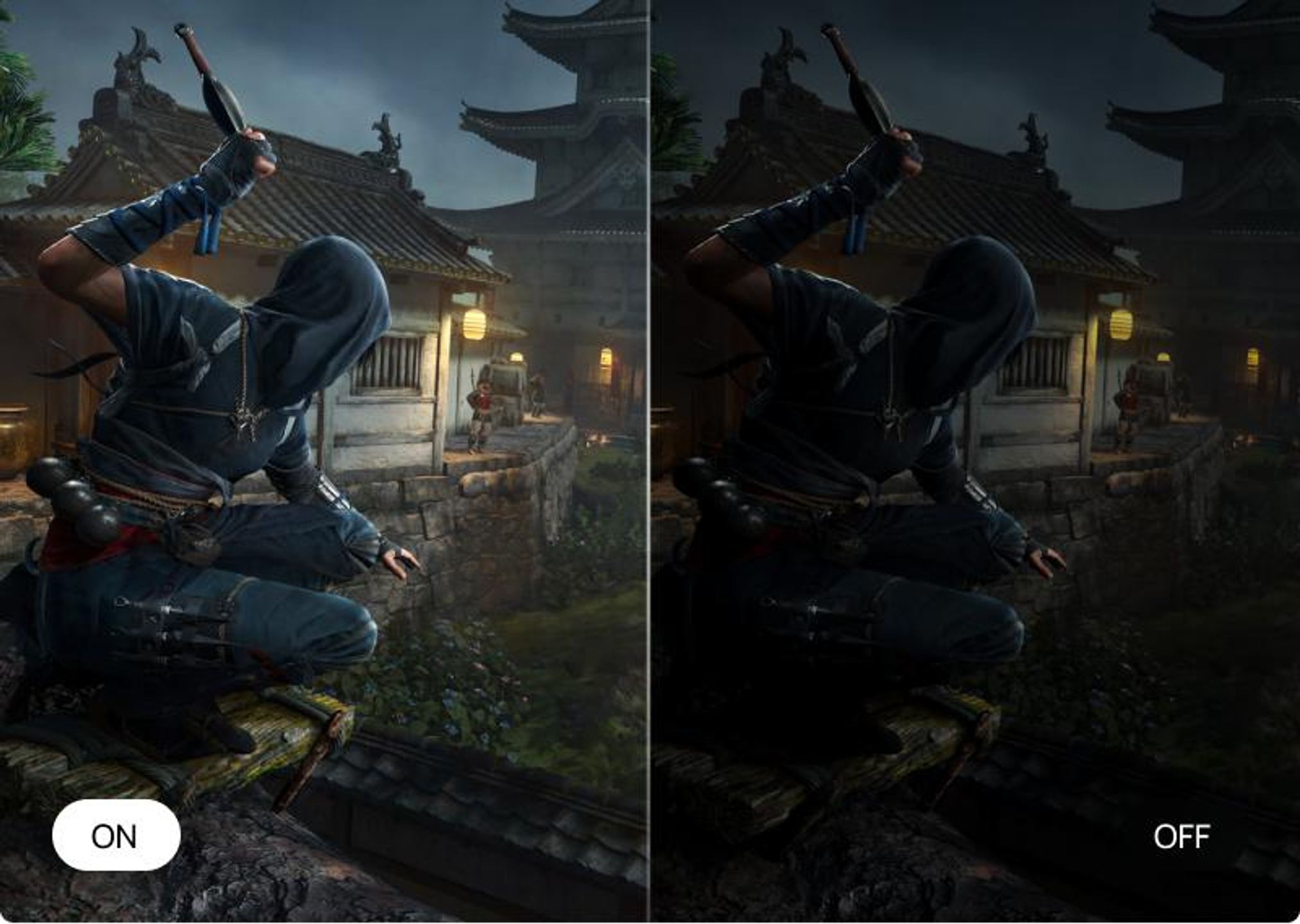
Support for VRR and ALLM (Auto Low Latency Mode) ensures perfect synchronization with the latest-generation consoles. The black equalizer improves visibility in dark areas without overexposing highlights, a real asset in competitive games. The MEMC (Motion Estimation, Motion Compensation) system interpolates frames for increased smoothness during fast motion.
Genre-specific picture modes automatically optimize settings according to the type of content: boosted contrast for stealth games, maximized frame rate for FPS, brightened dark areas for strategy, enhanced color tones for RPGs, and reduced motion blur for sports games. This intelligent adaptation will be further refined through future OTA updates.
Google TV and connected ecosystem
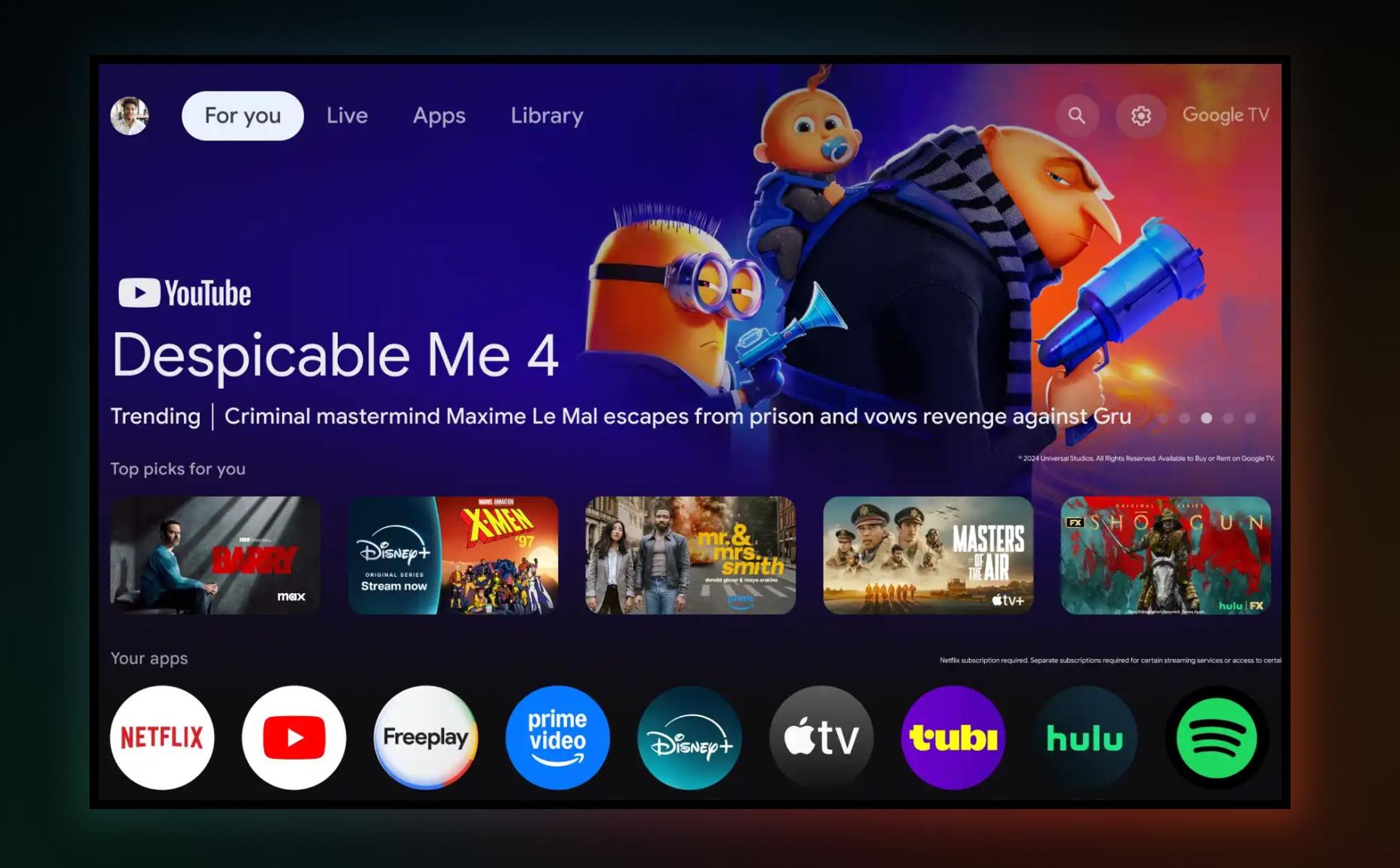
The Horizon 20 runs on Google TV, providing access to Netflix, YouTube, Prime Video and the full Android TV app catalog. The MediaTek MT9679 processor combined with 4 GB of RAM and 128 GB of storage ensures smooth navigation and fast app launches. This hardware configuration is the most generous XGIMI has ever offered in this range.
Dual-band Wi‑Fi 6 compatibility provides sufficient bandwidth for uncompressed 4K HDR streaming, while Bluetooth 5.2 allows connection of external audio accessories or game controllers. GoogleCast and DLNA protocols make wireless casting from smartphones and computers easy.
Google Home integration turns the projector into a smart home hub, enabling voice control via Google Assistant. This functionality goes beyond simple projector control, extending to the management of compatible connected devices throughout the home.
Built-in Harman Kardon audio system
The two 12-watt speakers designed by Harman Kardon deliver immersive stereo sound thanks to their patented ring-shaped design. DTS Virtual:X compatibility simulates a three-dimensional sound environment without additional speakers, creating a convincing vertical soundstage for compatible content.
Support for DTS-HD, Dolby Audio, Dolby Digital and Dolby Digital Plus formats ensures faithful reproduction of high-definition audio tracks. The volume level is sufficient for medium-sized rooms, eliminating the need for an external audio system in many setups. The optical output and eARC nonetheless allow connection to more ambitious audio systems if desired.
Evolution from previous Horizon generations
The Horizon range, launched over three years ago with the FHD and Pro models delivering 1,500 ISO lumens, has seen remarkable technical progress. The Horizon S Pro (1,800 lumens) and S Max (3,100 lumens) introduced in 2024 brought Dual Light 2.0 technology combining LED and laser, as well as an integrated flexible stand that is absent from this new generation.
The Horizon Ultra, the previous flagship with 2,300 lumens and first-generation Dual Light technology, already offered Dolby Vision and motorized optical zoom. The new Horizon 20 surpasses these models with its pure RGB triple-laser light source offering better energy efficiency, a 20,000-hour lifespan and, above all, the addition of mechanical lens shift, a feature previously absent from the entire XGIMI home cinema range.
This evolution positions the Horizon 20 as the most technically accomplished entry-level model, offering features (lens shift, optical zoom, VRR) usually reserved for professional projectors. The 3,200-lumen brightness places it above the Horizon Ultra while still below the S Max, creating a coherent hierarchy within the range where brightness is the main factor distinguishing the models.
What the press says
The Xgimi Horizon 20 Max is incredibly bright for a home cinema projector, and it does hold up well in a bright room.[...] In its darkened environment, the Horizon 20 Max looks very good. Black levels are strong – black tones actually look black – with a colour performance that's warm and rich.[...] While the colours are attractive, they're not always the most accurate, even in Dolby Vision.[...] The soundstage feels big, and I didn't feel the need to raise it above level 40 as it was loud enough and filled the room with sound.[...] BBC iPlayer, just like it was with the Horizon S Max, is not supported but the rest of the UK catch-up apps are.
The Horizon 20 Max is capable of being a seriously enjoyable watch across a surprisingly wide range of room conditions.[...] This welcome new interest from Xgimi in creating a picture that’s built around immersion, balance and refinement is joined by outstanding sharpness, too.[...] Dark scenes can look a touch grey if you fancy a serious dark room movie night, though, and the rainbow effect can be hard to ignore.
The XGIMI HORIZON 20 is an excellent projector for movies. It combines high brightness, strong contrast, and vibrant color, so it performs well in both dark rooms and rooms with a bit of ambient light. Its contrast does weaken in near-dark scenes, where blacks can look slightly elevated, but overall, it's still an excellent choice for watching movies. [...] It supports high refresh rates, and it feels noticeably more responsive at 120Hz and above than it does at 60Hz. [...] It also supports VRR, though enabling it introduces visible color separation artifacts, so whether it's worth using will depend on your tolerance for that trade-off.
Inputs: 2 × HDMI (including 1 with eARC), 1 × USB 3.0, 1 × USB 2.0, 1 × DC power
Outputs: 1 × optical, 1 × audio jack
Audio system
Built-in speakers: 2 × 12 W Harman/Kardon
Audio compatibilities: DTS Virtual:X, DTS-HD, Dolby Audio, Dolby Digital (DD), Dolby Digital Plus (DD+)
Power and physical specifications
Power supply: AC 100–240 V, 50 / 60 Hz
Power consumption: ≤ 180 W
Noise level: ≤ 28 dB at 1 m
Dimensions (H × W × D): 249 × 298 × 190 mm
Weight: 4.8 kg
Box contents
Power cable × 1
Bluetooth remote control × 1 (AAA batteries × 2 included)
User manual × 1
Warranty card × 1
Frequently asked questions
Can the Horizon 20 really be used in broad daylight?
+
With its 3,200 ISO lumens, the projector delivers a visible image during the day with light curtains or blinds drawn. For optimal quality in full daylight, keep the image size to a maximum of 100 inches. Performance mode maximizes brightness at the expense of slight color variation and more audible fan noise, which is acceptable for daytime sports or gaming content.
What’s the difference between RGB triple laser and the Dual Light technology in the S models?
+
The RGB triple laser uses three monochromatic laser sources (red, green, blue) to create the image, offering higher light efficiency, more saturated colors and extended lifespan. Dual Light combines LED and laser to balance cost and performance. The triple laser also eliminates the “color breaking” phenomenon visible on hybrids during rapid eye movements.
Does lens shift really disable all the automatic corrections?
+
Yes, activating lens shift disables autofocus, automatic keystone correction, wall color adaptation and eye protection. This technical choice is due to incompatibilities between mechanical optical adjustments and digital corrections. Once lens shift is configured, these functions can be reactivated manually if the optical offset is not sufficient.
How does the Horizon 20 compare with the Pro and Max models?
+
All three Horizon 20 models share exactly the same technical specifications; only brightness differs: 3,200 lumens for the standard model, 4,100 for the Pro with its distinctive red ring around the lens, and 5,700 for the Max equipped with the X-Master Red Ring lens. The choice mainly depends on your ambient light conditions and available budget.
User reviews
Christophe
Amazing!! projection onto the left side at 4.5 m from the screen, 130-inch image!
Comment from September 10, 2026 — Experience from August 30, 2026
Automatically translated — Show original (French)
Superbe !! projection sur le côté gauche à 4m50 de l’écran image de 130 pouces !
Tony
Excellent projector. The image quality is surprising. It has very effective auto-calibration: no need to spend hours adjusting it. You place your projector in front of your screen, and it automatically focuses and adjusts the image size according to the distance. I recommend it.
Comment from September 02, 2026 — Experience from August 22, 2026
Automatically translated — Show original (French)
Excellent videoprojecteur. La qualité de l’image est surprenante.Il dispose d’un autocalibrage très performant: pas besoin de passer des heures à régler. Vous posez votre videoprojecteur face à votre écran, il procède à la mise au point et au recadrage automatique de la taille de l’image en fonction de la distance. Je le recommande.
Raymond
Very happy with this device, for me it’s bright enough on my 150" screen, not noisy, it’s the first model, that’s enough for me, it’s to watch good movies in large format. And thanks again for the fast delivery. As always, a reliable company, 5 stars.
Comment from December 04, 2025 — Experience from November 23, 2025
Automatically translated — Show original (French)
Très content de cet appareille, pour moi il est assez lumineux sur mon écran de 150¨ pas bruyant, c'est le premier model, moi ça me suffit c'est pour regarder les bon films en grand.
et encore merci pour la livraison rapide.
Comme toujours une boites sérieuses, 5 étoiles
Eco-contribution of €0.75 included in the sale price.
To better understand our visitors, measure marketing effectiveness and personalise ads, we and our partners use cookies and mobile advertising identifiers on your device. This data makes it possible to display personalised and non-personalised ads and measure their performance. Some cookies, which are technically necessary, are exempt from consent. You can accept those that require your consent, refuse them by clicking “Reject”, or customise your choices via “More options”.
To find out how Google uses the data collected once you have given your consent, see Google’s Business Data Responsibility site (opens in a new window).
You can change or withdraw your consent at any time via the “Cookies” link. Your choices will apply on our site for 12 months.