

XGIMI Horizon 30 Pro


Specifications and features


Overview
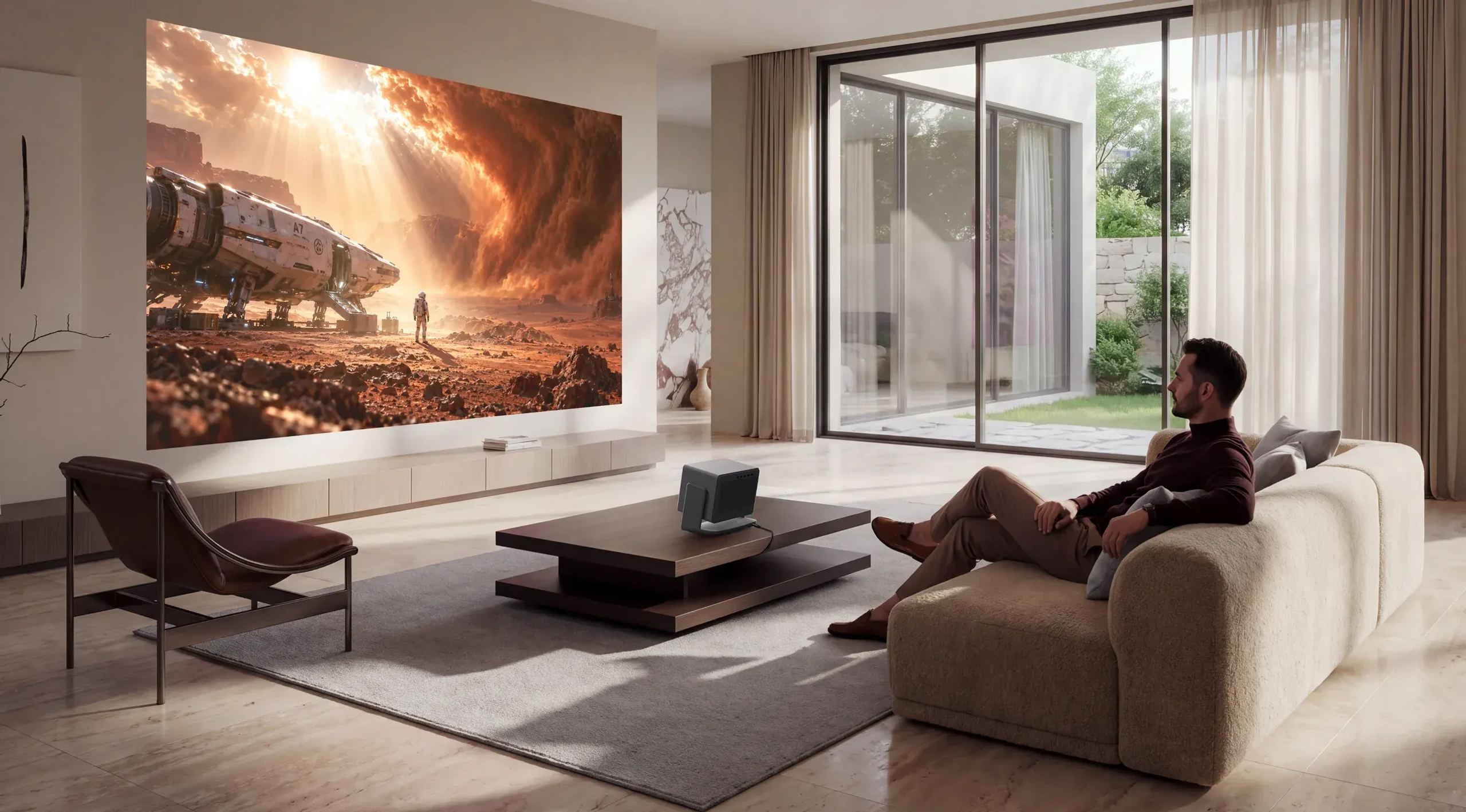
Projecting a 4K film almost three meters wide in a living room with the lights still on, then starting a console game with no perceptible lag between the controller and the screen: that is what this triple-laser projector offers. It retains the previous generation’s chassis, boosts brightness, delivers 4K at 120 frames per second and adds a dual iris that adjusts the light scene by scene.
Three lasers and a smoother 4K image
Light comes from three lasers, one red, one green and one blue, rather than a lamp or a blue laser converted by a phosphor wheel. With each primary color produced directly, the palette covers 110% of the BT.2020 color space, the reference for HDR content, and brightness reaches 4800 ISO lumens. This value is measured according to the ISO 21118 standard in Performance mode: picture modes intended for everyday viewing, which are more accurate and quieter, deliver slightly less light. The image is formed by a 0.47-inch (1.19 cm) DLP chip whose micromirrors shift at very high speed to recreate a resolution of 3840 × 2160 pixels on screen.
The 120 Hz refresh rate in 4K, twice that of the previous generation, primarily benefits gaming, but also serves cinema. On a single-chip DLP projector, colors are displayed one after another, and some viewers perceive brief colored trails in high-contrast areas, the “rainbow effect”: a faster rate makes it less visible. MEMC motion compensation, which calculates intermediate frames to smooth out panning shots and sports, can be disabled to restore films’ original frame rate.
A dual iris for deeper blacks
Contrast remains the weak point of very bright DLP projectors, and this is where this generation makes the greatest progress. Two motorized irises adjust the amount of light to suit the content: they close down during a nighttime scene to deepen blacks and open fully for a sunlit shot. Native contrast reaches 8000:1, measured without any processing, and rises to 80,000:1 when the DBLE (Dynamic Black Level Enhancement) function also modulates laser power. This dynamic figure compares an entirely black image with an entirely white image; within a single scene, the native value reflects what the eye perceives.
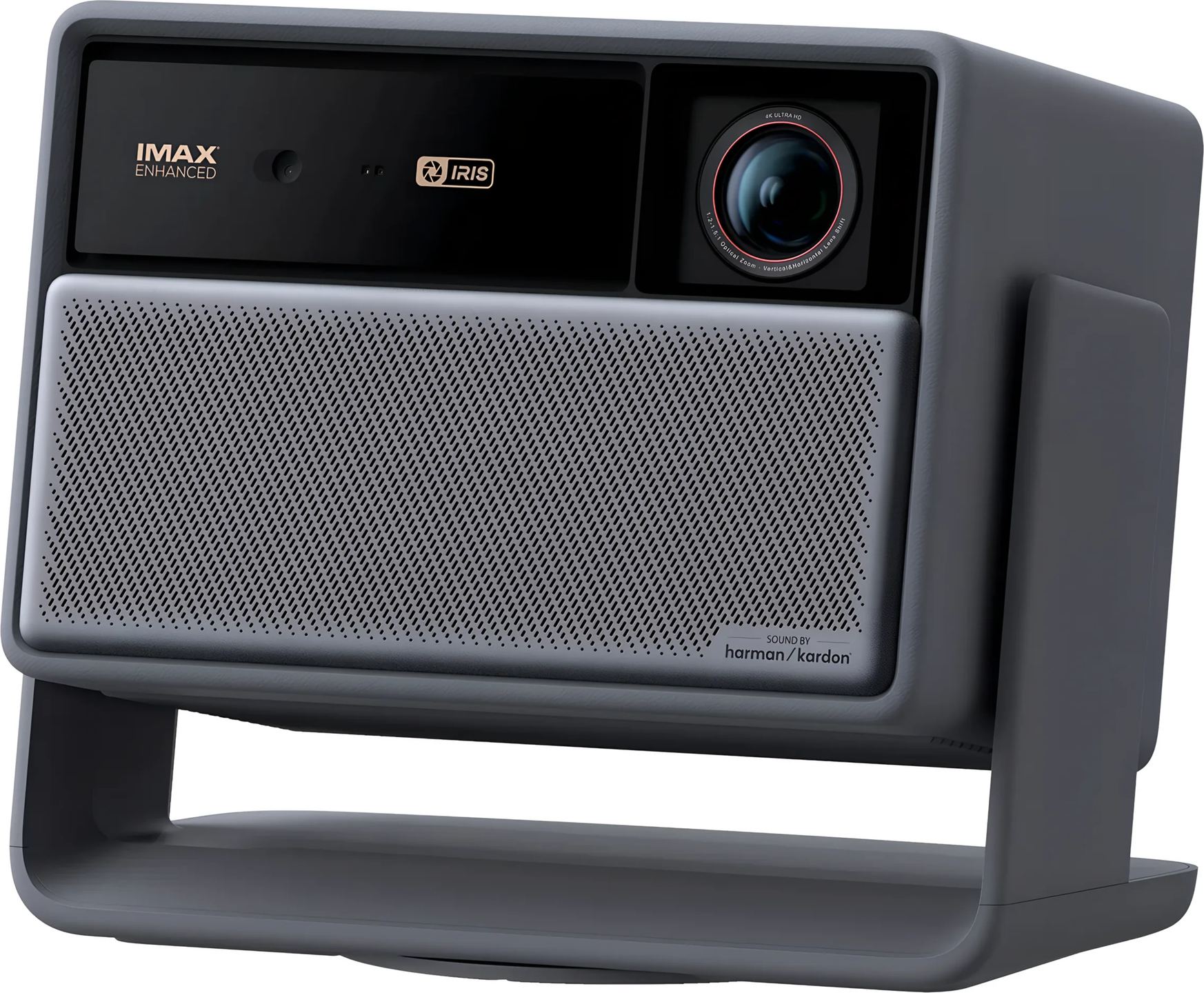
HDR10+ and Dolby Vision formats, whose metadata adjusts brightness shot by shot, are supported, as is IMAX Enhanced certification for labeled content. Each unit is factory-calibrated, with a typical color deviation (Delta E) below 0.8 in high color fidelity mode, below the threshold of 1 generally considered imperceptible; this calibration is certified by SGS, which has also validated the image’s low graininess (“speckle,” the slight shimmering characteristic of laser sources) and minimal color fringing around edges.
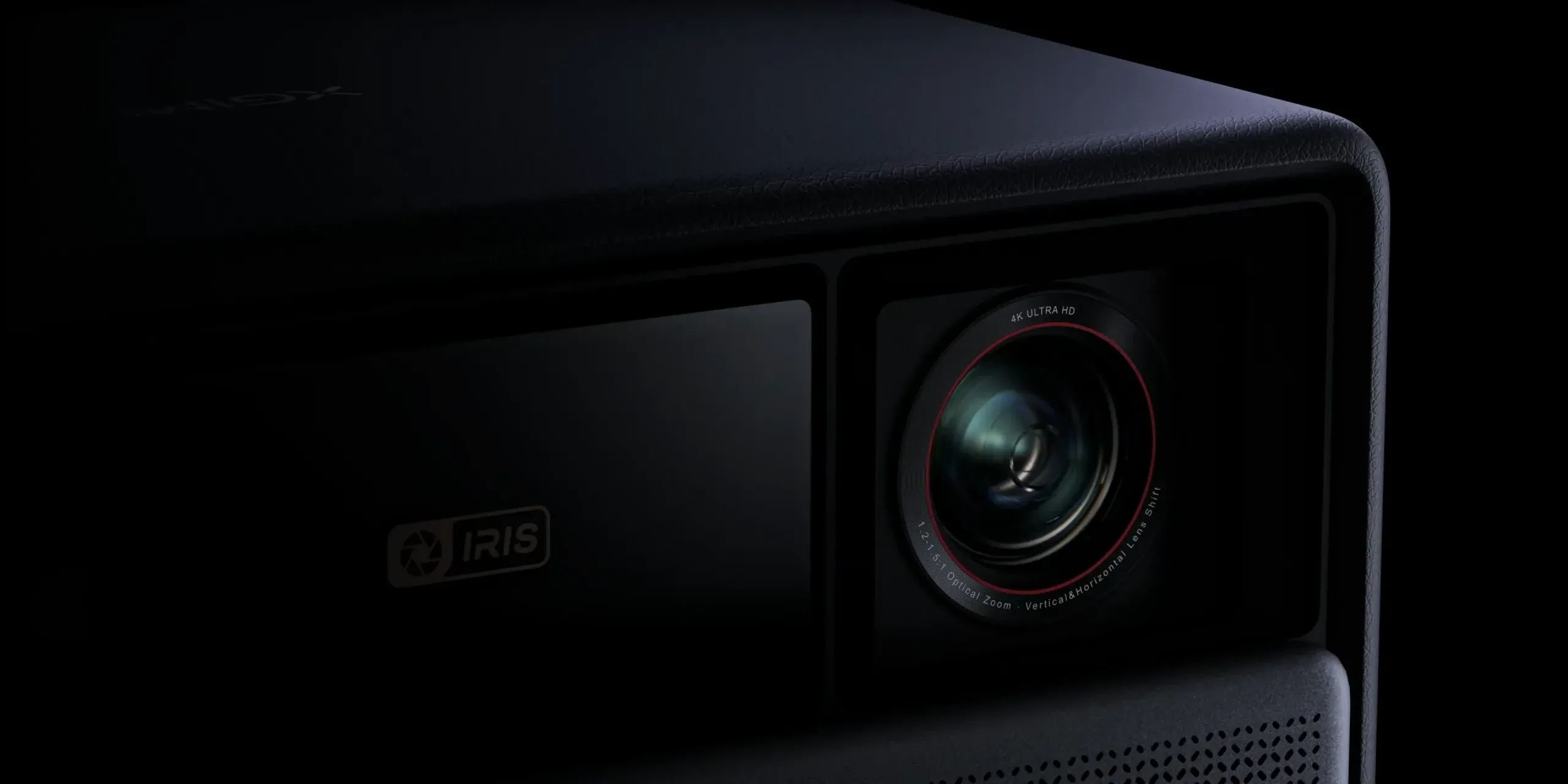
Position the image without moving the projector
The optical zoom, with a throw ratio of 1.2 to 1.5:1, and motorized lens shift allow the projector’s position to be independent of the image’s position. For a 100-inch (2.54 m) diagonal, the projector sits approximately 2.65 to 3.30 m from the screen, and the lens moves the image over a range of ±130% of its height and ±50% of its width, without loss of resolution, unlike digital correction. These maximum ranges are achieved on only one axis at a time: pushing vertical shift to its maximum means leaving horizontal shift centered, and vice versa. A lens memory saves the settings and switches between screen formats with a single command.
For quick placement on furniture, automatic functions take over: focus, continuous keystone correction that follows the unit as it is moved, alignment with the edges of a black-bordered screen, avoidance of obstacles such as a picture frame or shelf, and adjustment to the wall’s tint, from 3000 to 15,000 K. Continuous keystone correction requires automatic screen alignment and obstacle avoidance to be disabled, and works at horizontal angles of up to 40°. The projector supports front, rear (behind a rear-projection screen) and ceiling installation in either orientation, for image diagonals from 101.6 to 762 cm, with a recommended range of 60 to 150 inches (1.52 to 3.81 m). Eye protection, which can be enabled in the settings, dims the beam when a presence is detected in front of the lens.
Big-screen gaming without lag
In Game mode, the delay between the received signal and the displayed image drops to 1.9 ms at 4K 120 Hz, 3 ms at 4K 60 Hz and 1 ms at 1080p 240 Hz, a rate that competitive PC games can take advantage of. VRR (variable refresh rate) and AMD FreeSync certification synchronize the display with the actual output rate of the console or graphics card, eliminating screen tearing when the frame rate fluctuates, while ALLM automatically switches the projector to Game mode as soon as a console requests it. These latency figures are measured with automatic keystone correction disabled, as this processing adds delay. Both HDMI inputs accept 4K at 120 Hz, so a console and a 4K Blu-ray player or PC can remain permanently connected without either losing frame rate.
Google TV, Harman Kardon sound and eARC output
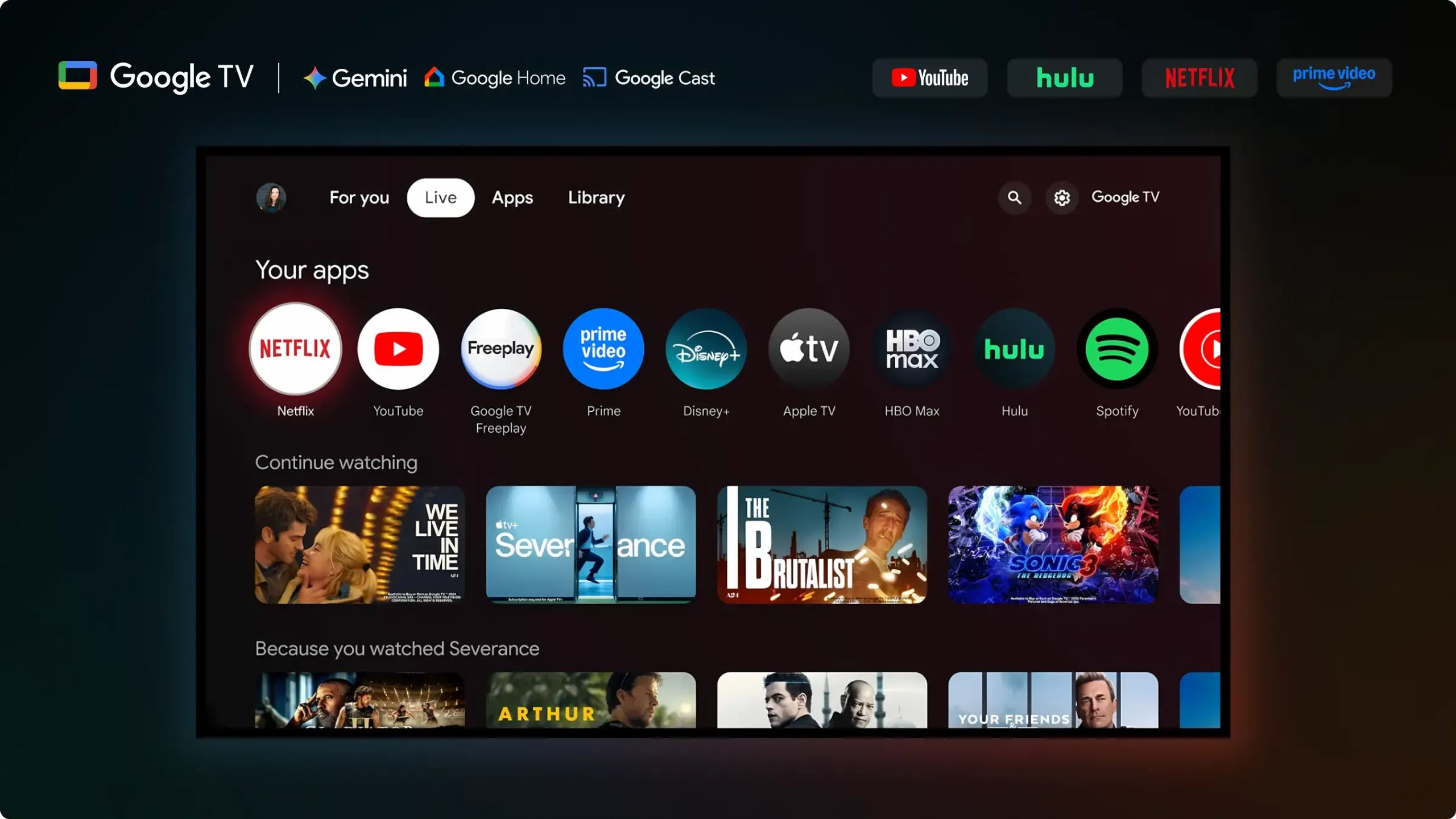
Google TV brings streaming apps and recommendations together in a single interface, controlled by a backlit Bluetooth remote that is easy to read in a dark room. The MediaTek MT9679 processor works with 3 GB of RAM and 64 GB of storage, and quick startup lets the projector resume where it left off without a full system restart. A smartphone or computer can cast its screen via Google Cast or DLNA.
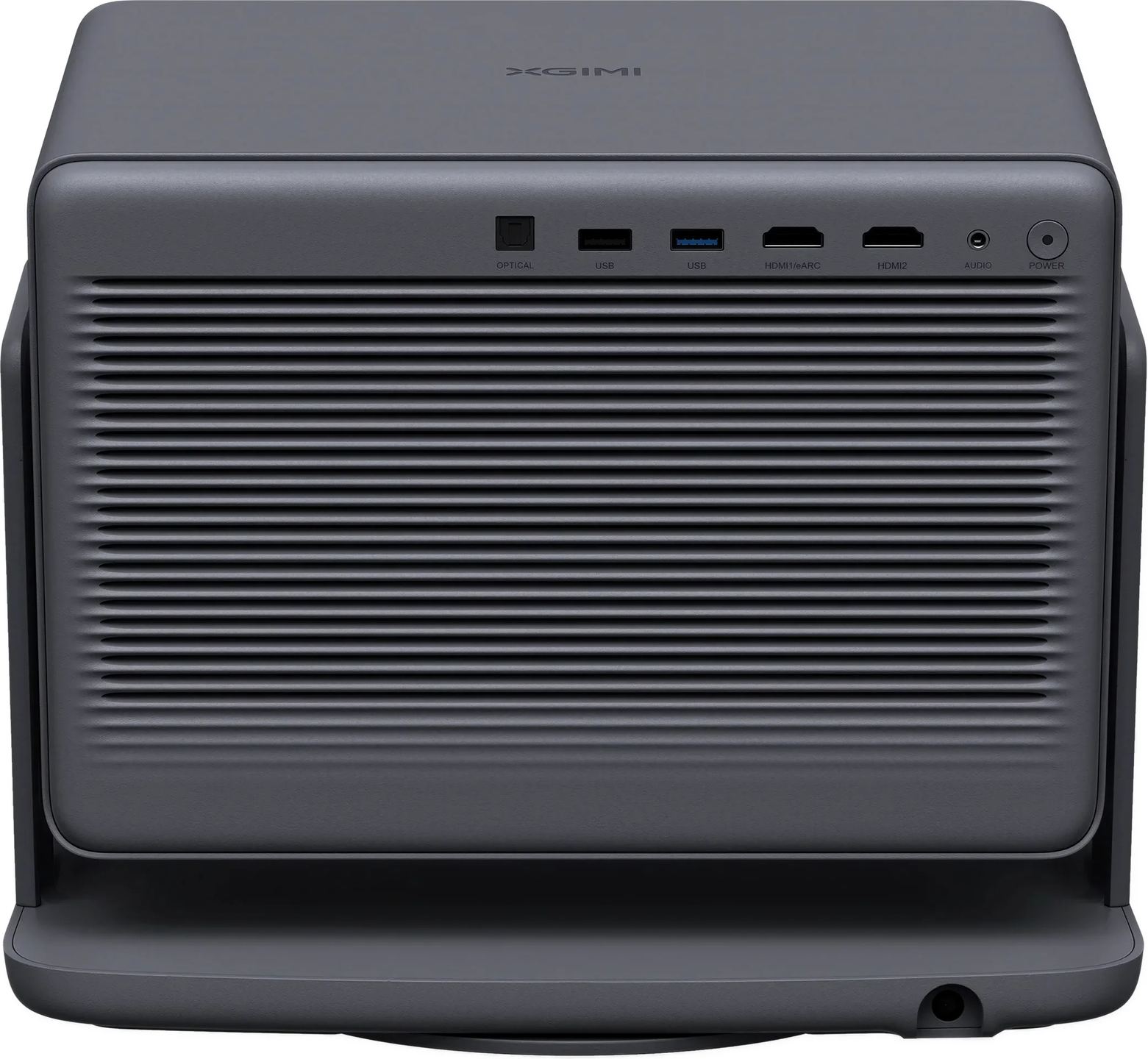
Two 12 W speakers tuned by Harman Kardon decode Dolby Digital Plus and DTS-HD, while DTS Virtual:X processing widens the soundstage from these two channels. They are suitable for an impromptu viewing session; for a true cinematic experience, the eARC-compatible HDMI 1 input sends the audio track to a home theater receiver or soundbar through the same cable, with an optical output and an analog audio output completing the connections. Dual-band Wi-Fi 6 handles 4K streaming, and two USB ports (3.0 and 2.0) accommodate a flash drive or hard drive.
Changes compared with the Horizon 20 Pro
The chassis retains exactly the same dimensions, 249 × 298 × 190 mm, and gains 400 g to reach 5.3 kg. Brightness rises from 4100 to 4800 ISO lumens, 4K increases from 60 to 120 Hz on both HDMI inputs, the dual iris makes its debut with a now-specified native contrast ratio, and the lens shift range expands to ±130% vertically and ±50% horizontally, compared with ±120% and ±45% previously. The processor, speakers, throw ratio and number of connections remain identical, while RAM decreases from 4 to 3 GB.
Documentation
Technical specifications
Display and image quality
- Display technology: DLP
- DMD chip: 1.19 cm
- Light source: triple RGB laser
- Resolution: 3840 × 2160 pixels
- Brightness: 4800 ISO lumens
- Colour space: 110% BT.2020
- Contrast:
- Native: up to 8000:1
- Dynamic: up to 80000:1, DBLE enabled
- HDR formats: HDR10+, Dolby Vision, IMAX Enhanced
- MEMC motion compensation: yes
- 3D compatibility: yes
- Aspect ratio: 16:9
- Projected image size: 101.6 to 762 cm
- Coated lens with high light transmission
Installation and adjustments
- Autofocus
- Continuous automatic keystone correction
- Intelligent image alignment: yes
- Intelligent obstacle detection and avoidance: yes
- Lens shift:
- Horizontal: ± 50%
- Vertical: ± 130%
- Optical zoom: yes
- Digital zoom: yes
- Throw ratio: 1.2–1.5:1
- Projection modes: front, rear, front ceiling, rear ceiling
- Eye protection: yes
Gaming performance
- Latency:
- 1 ms at 1080p at 240 Hz, Game mode enabled and AK disabled
- 2.2 ms at 1080p at 120 Hz
- 1.9 ms at 4K at 120 Hz
- 3 ms at 4K at 60 Hz
System and memory
- Operating system: Google TV
- Processor: MediaTek MT9679
- Graphics processor: Mali-G52
- RAM: 3 GB
- Internal storage: 64 GB
- Quick start: yes
- Screen mirroring: Google Cast / DLNA
Audio
- Built-in speakers: 2 × 12 W, Harman / Kardon
- Supported audio technologies: DTS Virtual:X, DTS-HD, Dolby Audio, Dolby Digital, Dolby Digital Plus
Connectivity
- Dual-band Wi-Fi 6:
- Frequency bands: 2.4 GHz, 5 GHz
- Standards: 802.11a, 802.11b, 802.11g, 802.11n, 802.11ac, 802.11ax
- Bluetooth: version 5.2
- HDMI inputs: 2, compatible with 4K at 120 Hz
- HDMI 1: eARC support
- USB 3.0 port: 1
- USB 2.0 port: 1
- Optical audio output: 1
- Audio output: 1
- DC power input: 1
Power supply and noise level
- Noise level: ≤ 28 dB at 1 m
- Power consumption: 230 W
- Power supply: AC, 200–240 V, 50 Hz
Included accessories
- Power cable
- External power supply
- Backlit Bluetooth remote control
- 2 AAA batteries
- User manual
- Warranty card
Dimensions and weight
- Dimensions (H × W × D): 249 × 298 × 190 mm
- Weight: 5.3 kg
Frequently asked questions
Do I need a projection screen, or is a white wall enough?
A smooth, light-colored wall already provides a decent image, and wall color adaptation compensates for a slightly warm or cool tint. However, a projection screen provides a perfectly flat surface, a neutral white and a black border that serves as a reference for automatic framing. With an RGB triple-laser source, a white screen with a gain close to 1 is the safest choice: some ambient light-rejecting screens with a lenticular structure, designed for long-throw projectors, are not compatible with this type of laser and can produce iridescence.
Are 3D glasses included?
No, the box contains the projector, its external power supply, the power cable, the remote control and its two AAA batteries, the manual and the warranty card. 3D playback requires compatible active glasses, sold separately, and a 3D source such as a Blu-ray player.
Is the projector noisy?
The noise level remains at or below 28 dB at one metre, equivalent to a faint whisper in a quiet room. In Performance mode, which delivers maximum brightness, the fan speeds up and becomes more audible; the more moderate picture modes remain the quietest for watching a film.
What's the difference compared to the Horizon 30 Max and Ultra Max?
All three models share a triple-laser light source, 4K at 120 Hz and a dual iris. They differ in brightness and native contrast: 5300 ISO lumens and 9000:1 for the Horizon 30 Max, 6000 ISO lumens and 10 000:1 for the Horizon 30 Ultra Max, compared with 4800 ISO lumens and 8000:1 here. The difference matters most for a very large image or a room that is difficult to darken.
Can you listen to the audio through Bluetooth headphones?
Yes, Bluetooth 5.2 lets you connect wireless headphones or a speaker, which is handy for a late-night viewing session without waking the household. For a home theater system, an HDMI eARC connection remains preferable, as it transmits audio tracks without the compression and slight delay inherent in Bluetooth.
Does digital zoom replace optical zoom?
No. Optical zoom enlarges or reduces the image by moving the lenses, without any loss of resolution. Digital zoom reduces the image by using only some of the pixels, which lowers the effective resolution and brightness; it comes in handy when the projector is a little too far from the screen and the optical zoom range has been exhausted.
How do I install it on the ceiling?
Ceiling projection mode, front or rear, flips the image in the settings, and the vertical lens shift allows considerable flexibility in height relative to the screen. A suitable ceiling mount, sold separately, is required; at 5.3 kg, it must be secured to a solid structure (slab or joist).
- Eco-contribution included in the sale price.








