Projeo Frame ALR LT 100
Overview
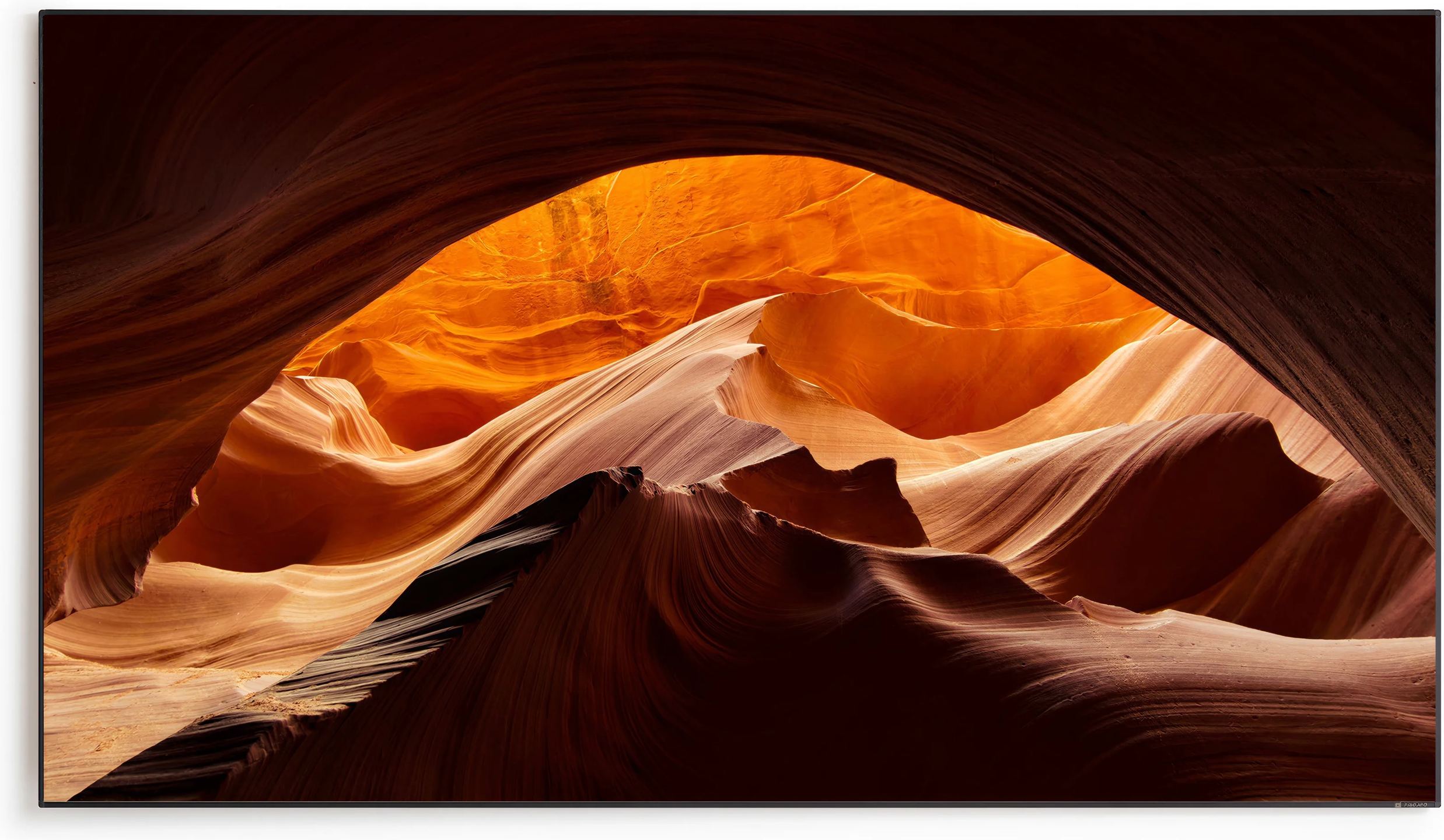
Watching a movie projected in broad daylight, with the shutters open, without seeing the image turn washed-out gray: that is what ALR technology promises. Most of these technical screens are designed for ultra-short-throw projectors. The Frame ALR LT 100 takes a different direction and is matched to long-throw projectors, installed on the ceiling or on a rear shelf. Its 100-inch diagonal fits into a living space without any remodeling.
ALR screen material and long-throw projectors
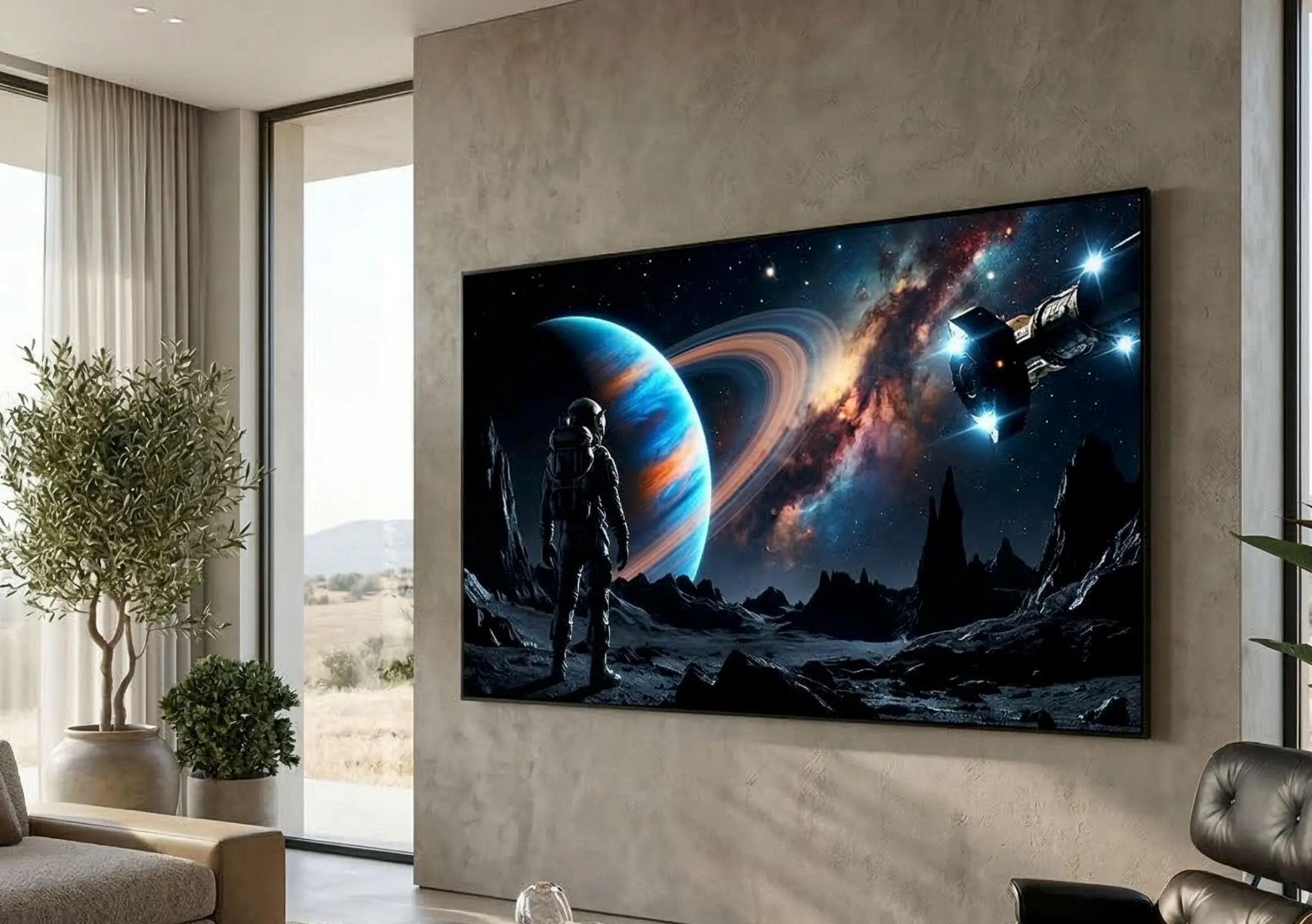
An ALR screen rejects part of the ambient light to preserve image contrast. The distinction lies in the geometry. The most common ALR screens are optimized for ultra-short-throw projectors, placed just below the screen: their structure accepts light rising from below and repels light coming down from the ceiling. The Frame ALR LT 100 works differently. Its surface, a Long Throw PET screen material, is calibrated for projectors placed in front of the screen, on the ceiling or on furniture at the back of the room.
Its 1.8 gain concentrates the reflected light output toward the seats. In practical terms, the image gains brightness on the central axis, which helps preserve rich colors when a lamp remains on or daylight comes through a window. The 120° viewing angle defines the cone within which this brightness remains uniform. Beyond this angle, a viewer sitting far off-center will perceive a darker image. A typical sofa arrangement, facing the screen, remains within the comfortable zone.
The rejection of stray light is most noticeable in the blacks. Rather than turning gray in the presence of ambient light, dark areas retain depth, which matters for UHD 4K content where the difference between highlights and shadows accounts for a large part of the image’s sense of depth.
A slim frame and a tensioned screen material
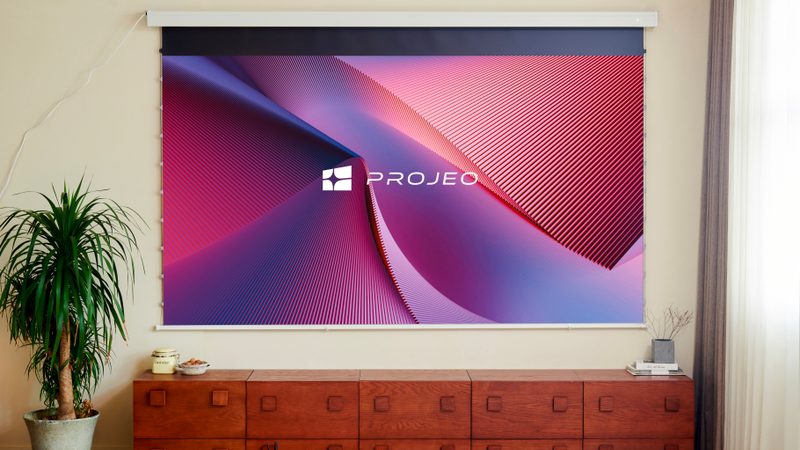
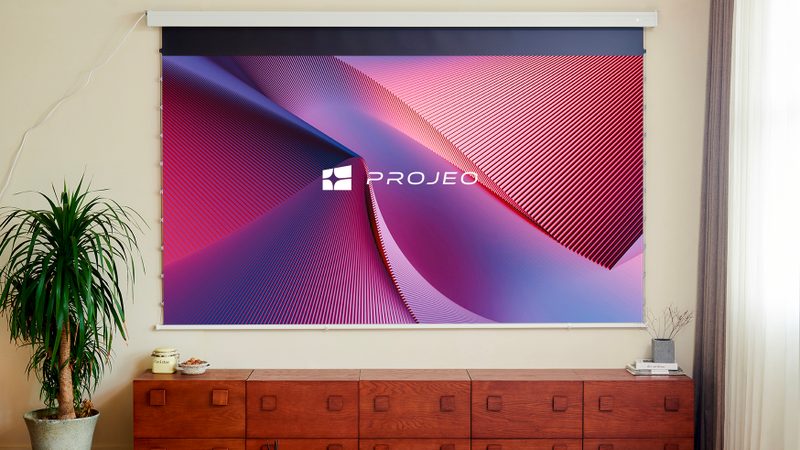
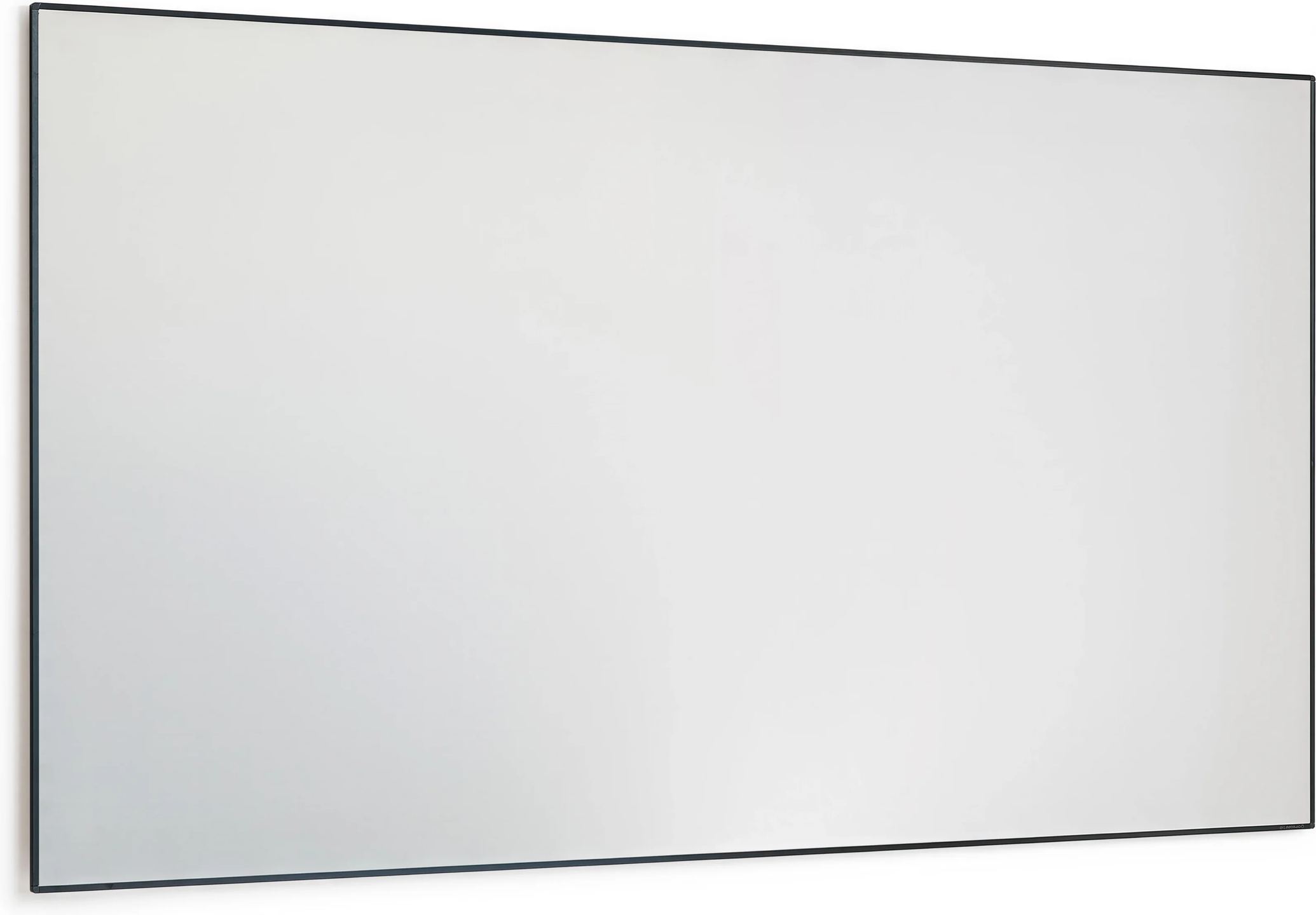
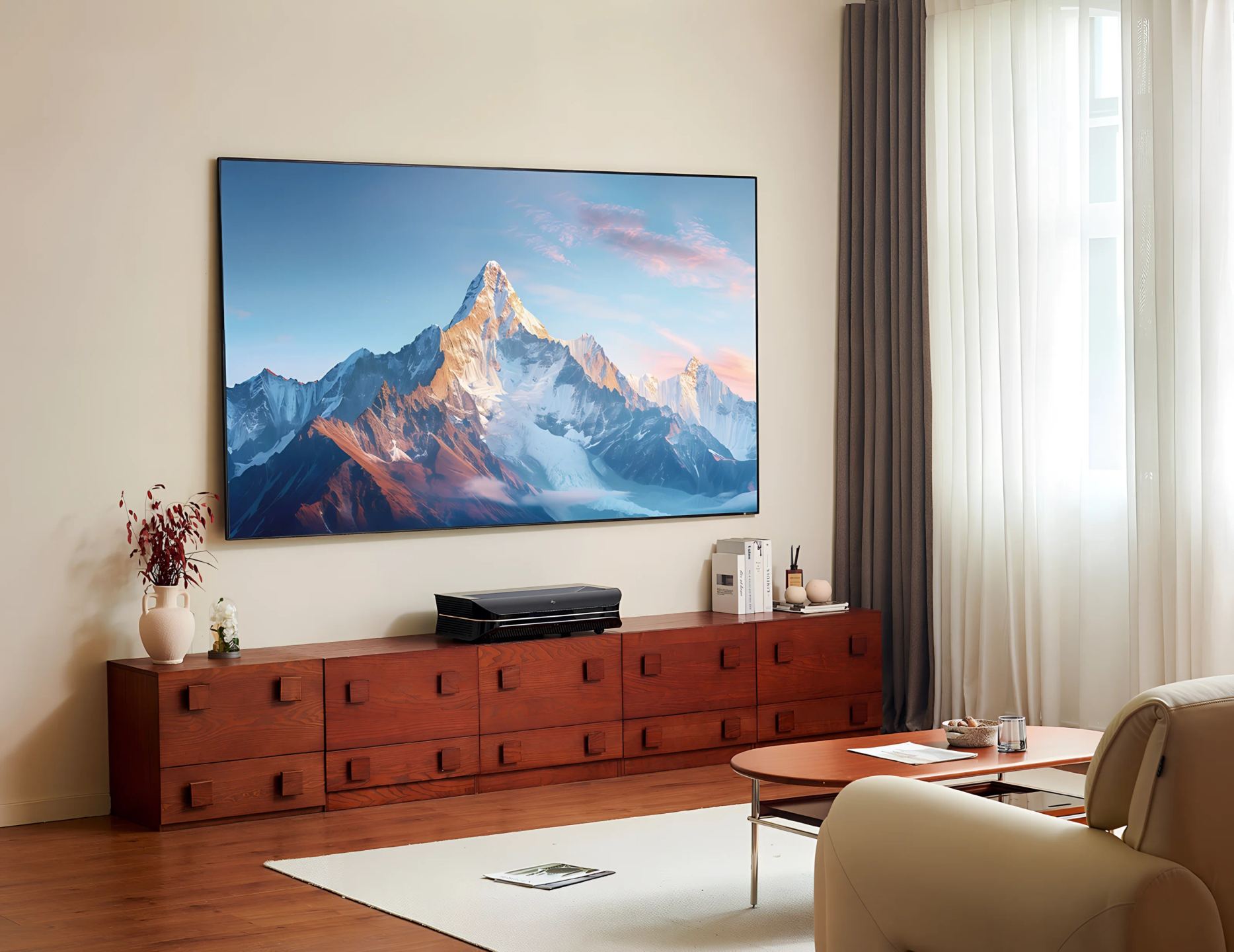
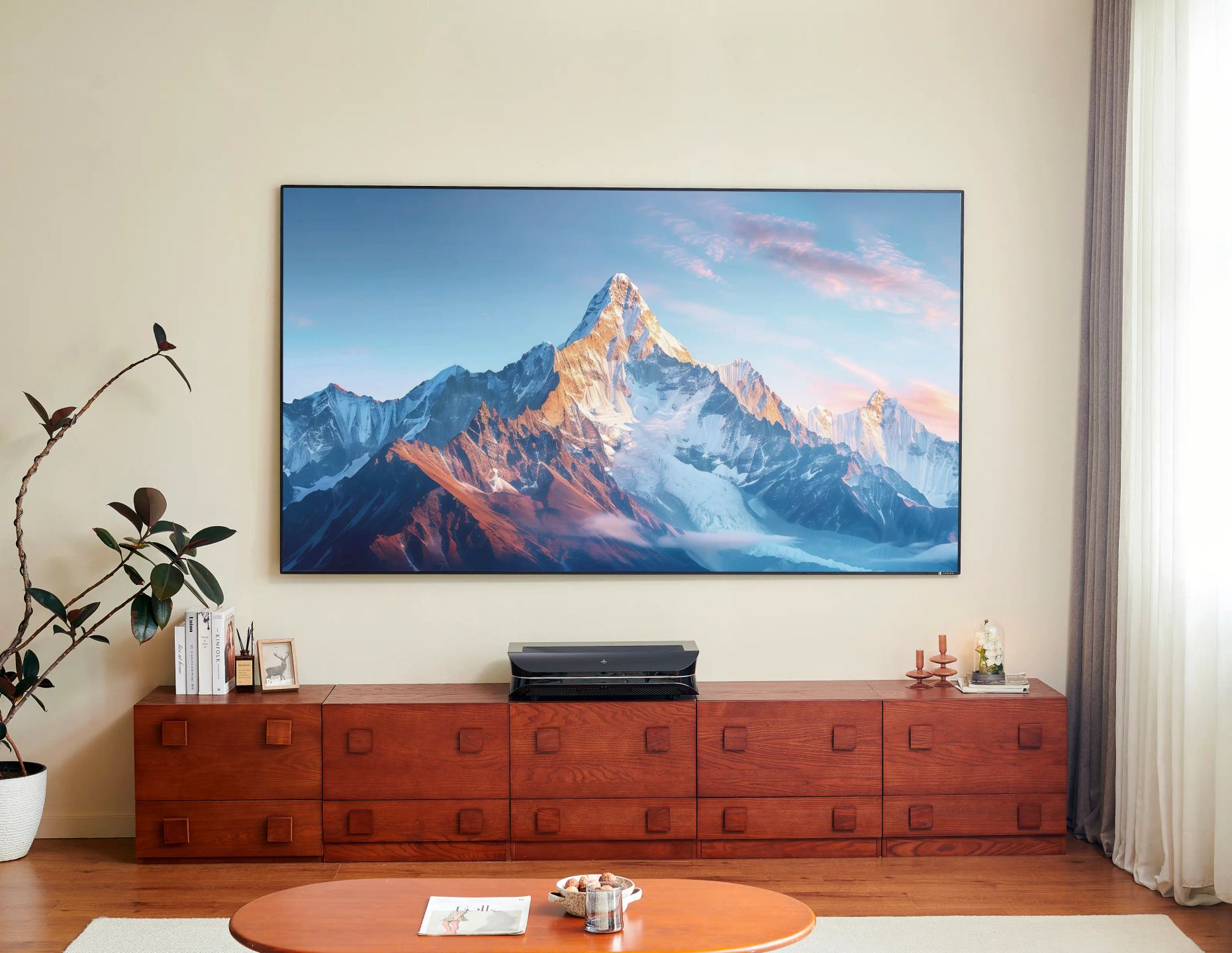
The casing is made of black lacquered aluminum alloy, finished with black velvet on the visible side. This velvet serves a precise purpose: it absorbs projector light spill at the edges of the image and limits reflections around the projected area. The frame edges measure 10 mm, a reduced width that allows the screen material to occupy almost the entire footprint of the screen.
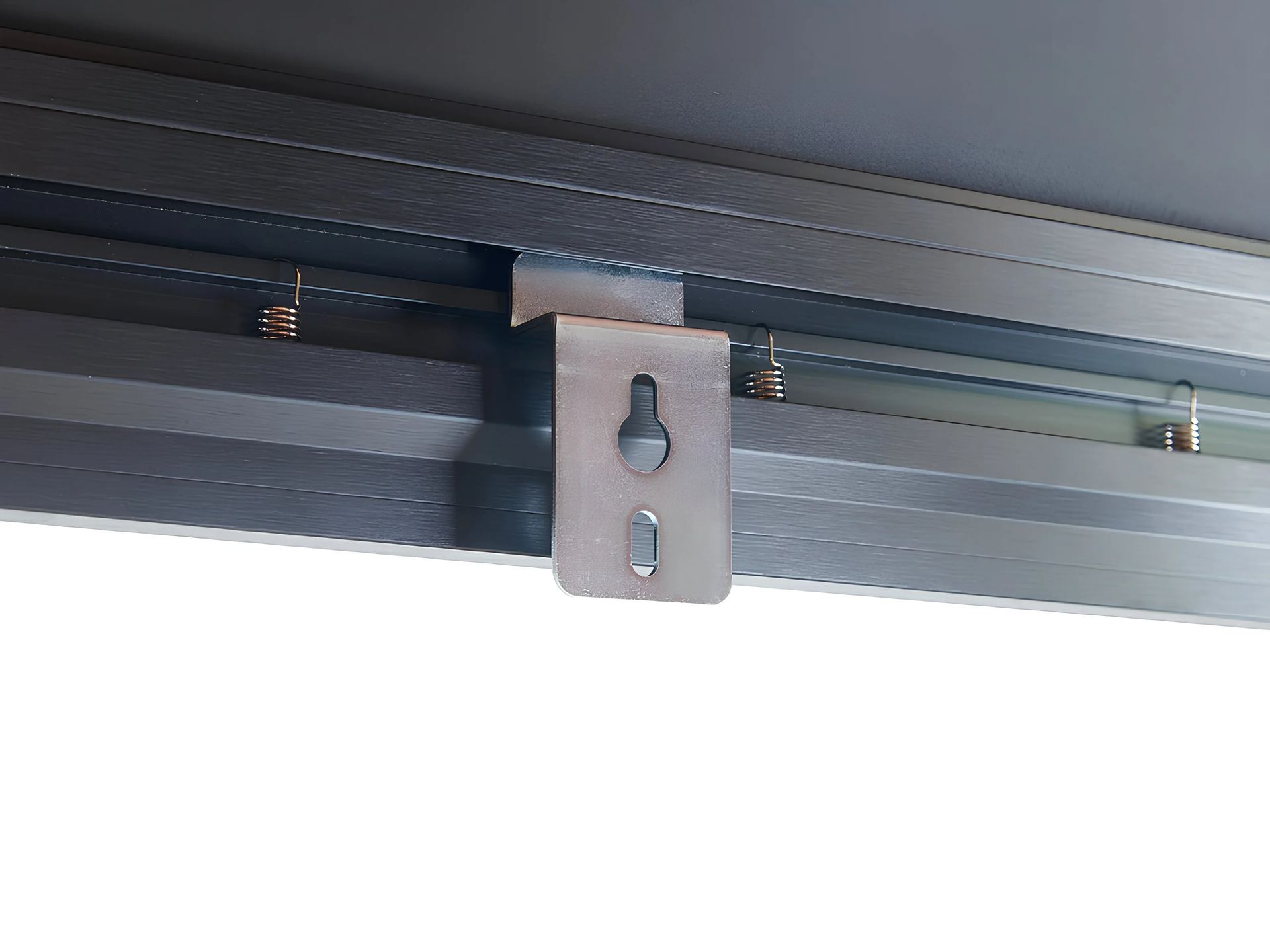
Flatness depends on the tension of the screen material. On the Frame ALR LT 100, the surface is tensioned over the frame by a clip system, with no folds or ripples that would distort the image. The frame remains fixed: the screen does not roll up or retract, it occupies a permanent position on the wall. With a usable image size of 221.4 × 124.5 cm for overall frame dimensions of 223.4 × 126.5 cm, the wall footprint is easy to calculate before installation.
Wall mounting with screws and clips
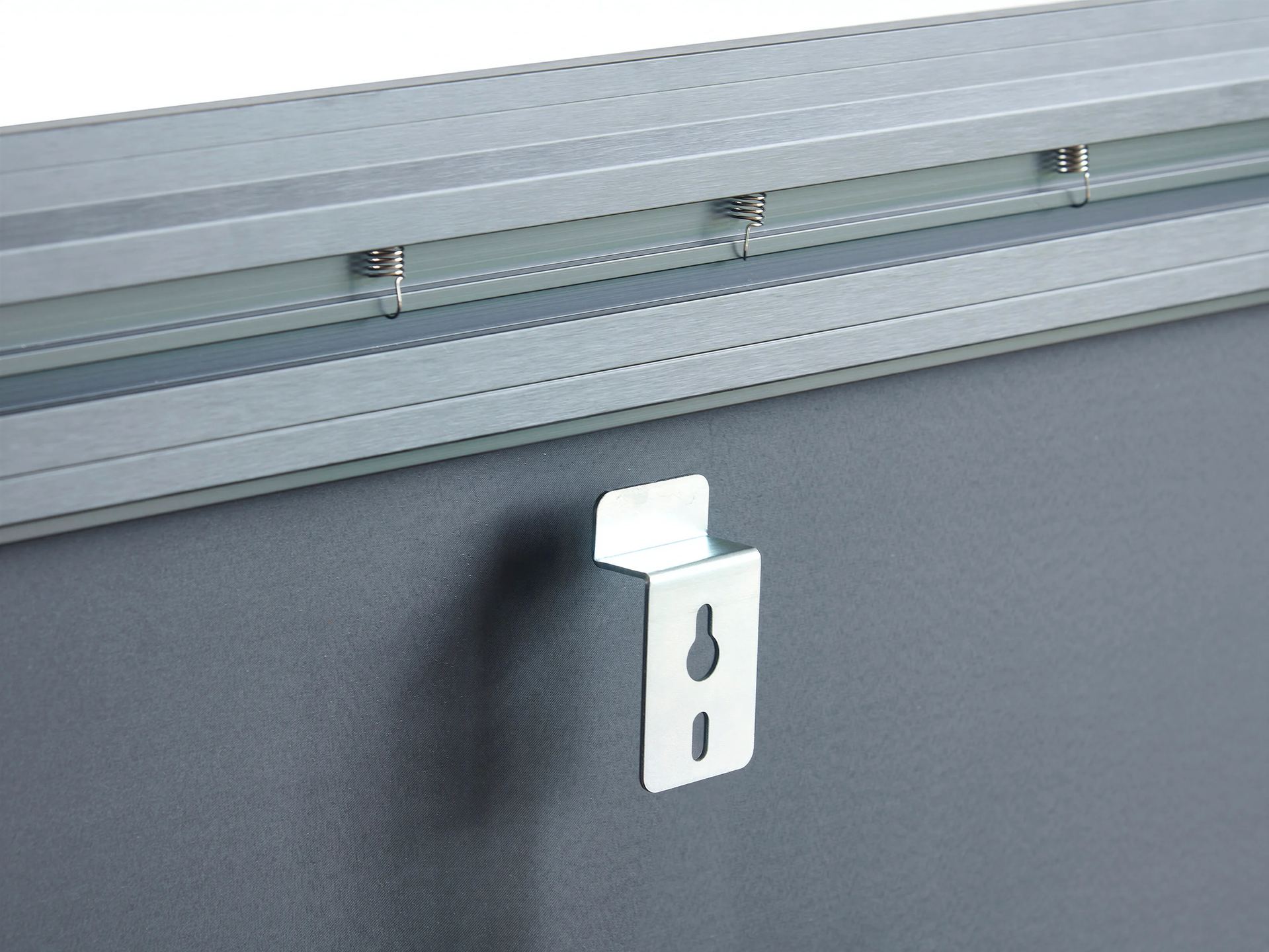
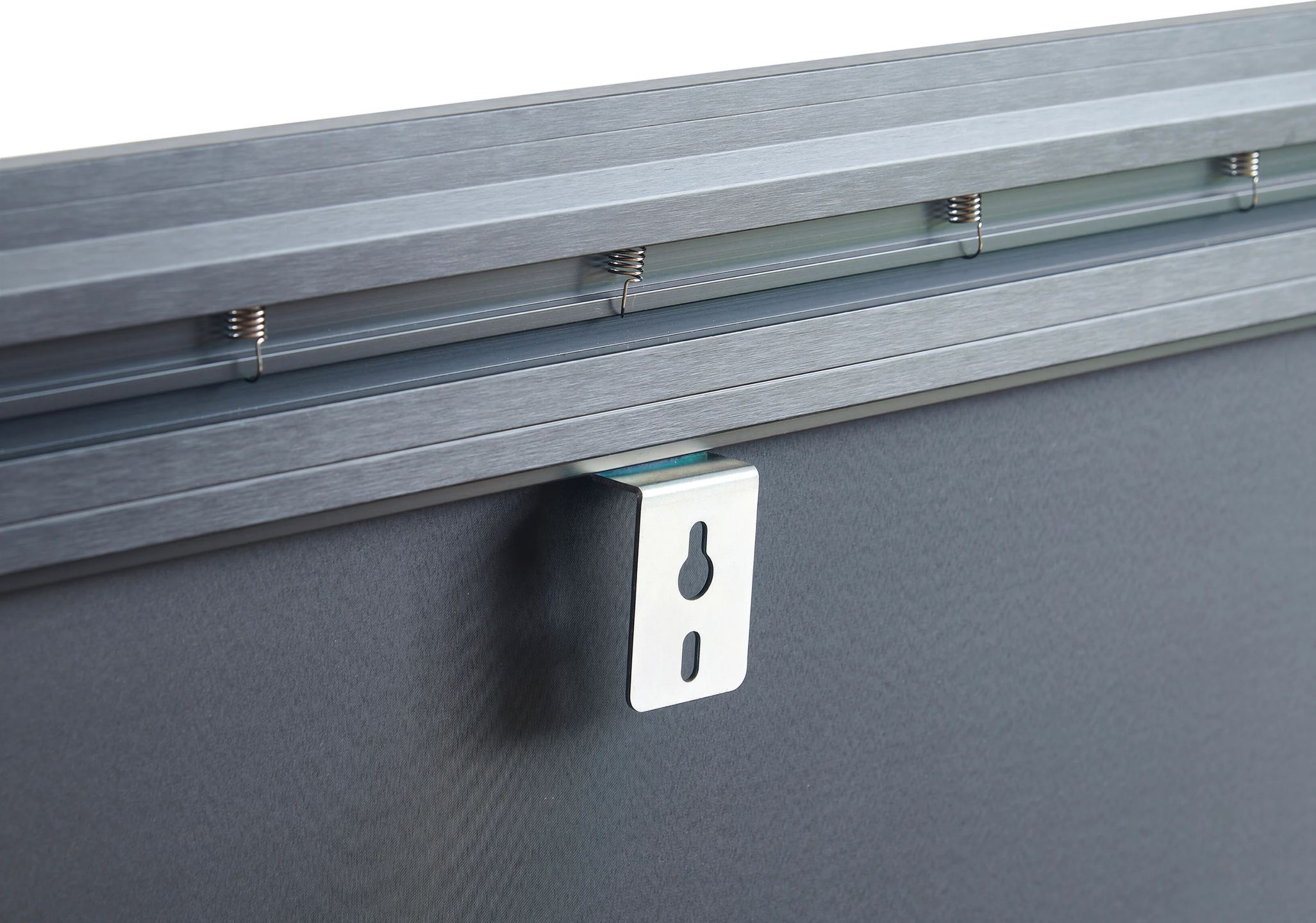
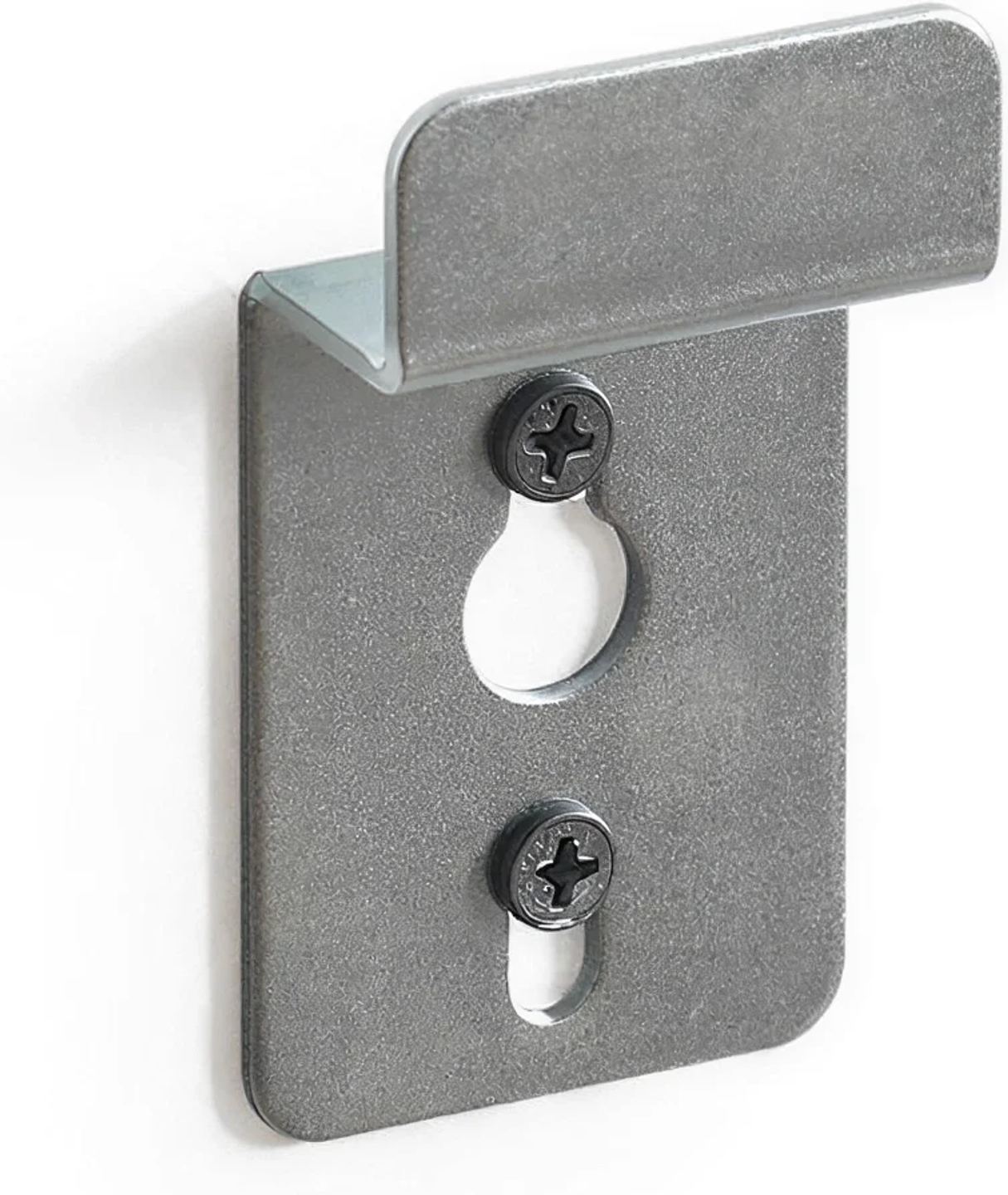
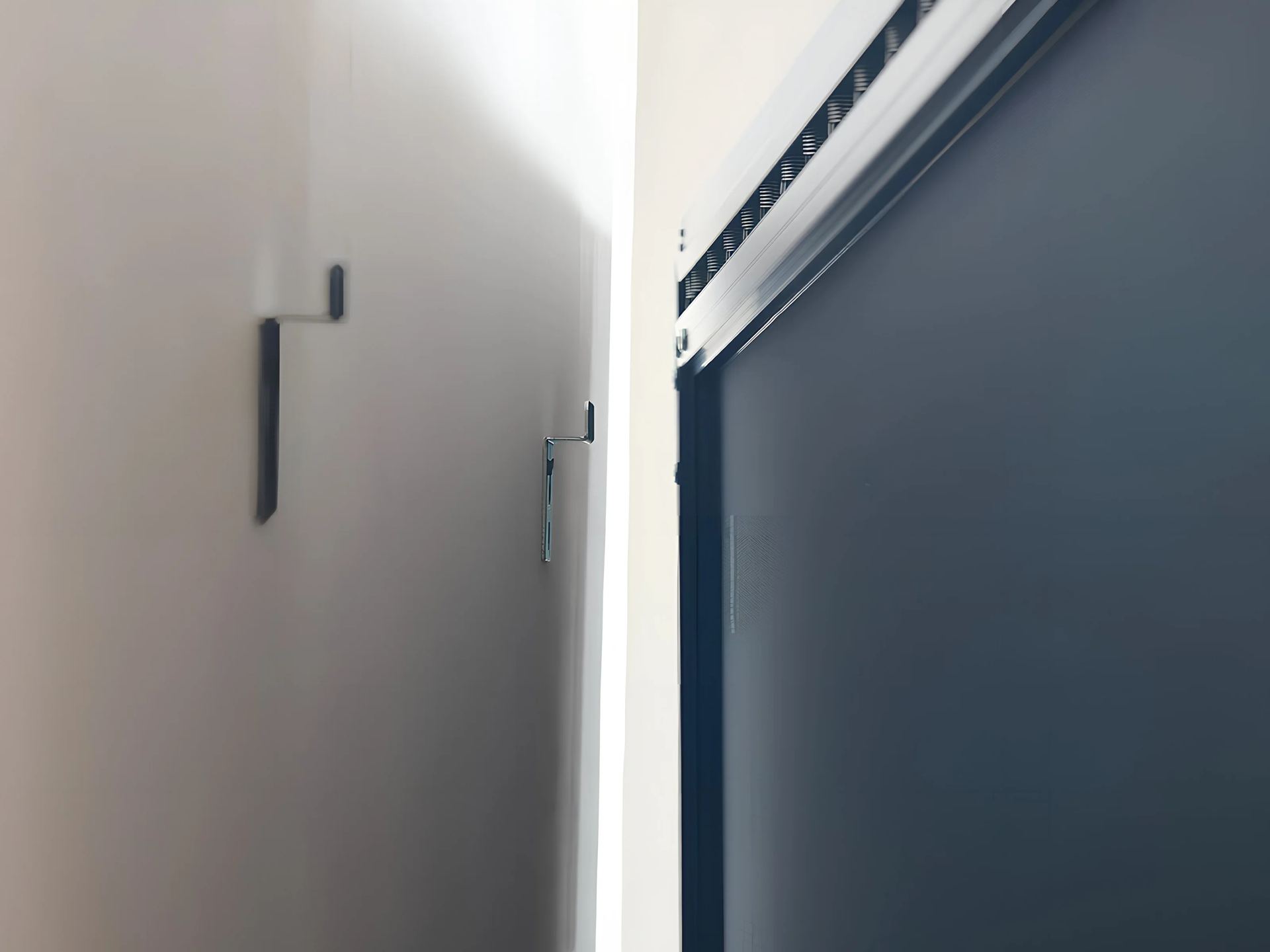
Installation is done by screwing it to the wall. The frame is fixed first, then the screen material clips onto the frame, a method that simplifies assembly and tensioning. Make sure you have a sound wall and carefully check the horizontal alignment, since the position becomes permanent once the screen is fixed.
One logistical point deserves attention as soon as it is delivered. The package measures 227 × 29 × 19.5 cm and must be stored flat, horizontally. A technical screen material of this kind does not handle prolonged vertical storage well, as it may mark the surface. It is better to plan the installation shortly after delivery rather than leaving the box standing upright while waiting.
The right lighting environment
This screen is intended for use in a living space where total darkness is neither possible nor desirable: a living room with windows, an open-plan room connected to a kitchen, a room with light-colored walls that reflect light. The ALR LT screen material maintains usable contrast there without requiring all the shutters to be closed.
That said, it does not eliminate the need for any light management. A direct light source aimed at the screen material, a ceiling spotlight directly above, or a full-frontal window facing the screen remain unfavorable. ALR reduces diffuse and indirect light; it does not neutralize strong frontal lighting. Paired with a sufficiently bright long-throw projector, the screen delivers sharp results in the vast majority of living rooms during the day.
Documentation
Technical Specifications
Description
- Fixed-frame projection screen
- Projeo Frame ALR LT: the power of fixed cinema in full light
- Designed for standard living environments, without requiring darkness
- Flawless flatness and harmonious integration into the interior
- ALR LT technical screen fabric (Ambient Light Rejecting) dedicated to long-throw video projectors
- Active filtering of unwanted ambient light to preserve contrast and deliver deep blacks
- Ideal for UHD 4K content
- Controlled directivity concentrating the light output toward the audience
Screen Fabric and Projection Surface
- Screen fabric type: ALR (ambient light rejecting) PET LT
- Gain: 1.8
- Directivity: 120°
- Compatible projector type: long throw
Frame and Structure
- Housing: black lacquered aluminum alloy
- Finish: black velvet
- Control system: fixed
Dimensions and References
- Projeo Frame ALR LT 100
- Format / ratio: 16 / 9
- Screen fabric: ALR Long Throw
- Usable image size: 221.4 × 124.5 cm
- Diagonal: 100” (254 cm)
- Frame size (L1 × L2): 223.4 × 126.5 × 3 cm
- Frame borders (B1 × B2): 10 × 10 mm
- Packaging dimensions: 227 × 29 × 19.5 cm
Frequently asked questions
What is the difference between an ALR LT screen material and an ALR screen material for ultra-short throw?
Both reject ambient light, but according to opposite angles. A screen material for ultra-short throw expects light from the projector to come from below, since the device is placed just under the screen. By contrast, the ALR LT screen material of the Frame 100 expects a beam coming from the front, at the height of or above the viewers. Using one in place of the other greatly degrades image uniformity, with some areas brighter and others darker.
Does the Frame ALR LT 100 work with an ultra-short-throw projector?
That is not its intended use. The screen material is calibrated for a frontal beam, typical of projectors installed on the ceiling or at the back of the room. An ultra-short-throw model, placed against the wall under the screen, would light the surface at an angle the screen material does not handle correctly, and the rendering would lack uniformity. For this type of projector, a screen material specifically designed for ultra-short throw remains necessary.
What projection distance should be planned?
It depends on the projector’s throw ratio, not on the screen. To fill the 221 cm width of the image, a long-throw projector is placed at the back of the living room or on the ceiling, several meters from the screen material. Refer to your device’s technical specifications, which indicate the distance range corresponding to a 100-inch image.
Does the room need to be completely darkened?
No, that is the benefit of the ALR screen material. It maintains correct contrast with moderate ambient light, with accent lamps on or indirect daylight. However, a window lighting the screen material directly or a spotlight placed right in front will still be troublesome. The screen reduces the effect of diffuse light; it does not correct intense frontal lighting.
Does installation require a professional?
Not necessarily. The frame is screwed to the wall and the screen material clips onto the frame, with no complex tension adjustment. Two points still call for a methodical approach: the frame is over two meters wide, which makes installation by two people safer, and the horizontal alignment must be checked before final tightening, since the position is then fixed.
- Eco-contribution included in the sale price.
- Manufacturer reference: PROFRA100LT
- GTIN / EAN: 3700795165232