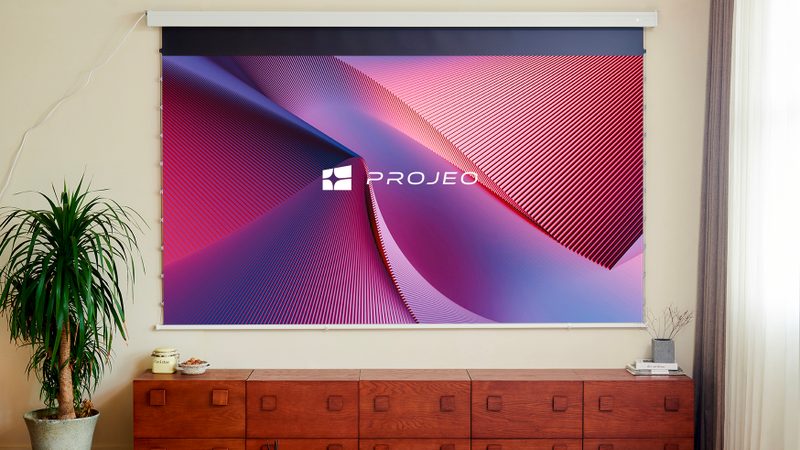
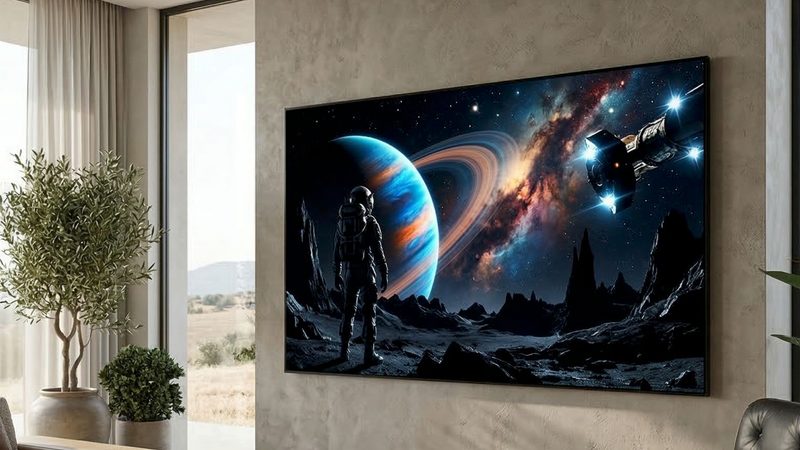
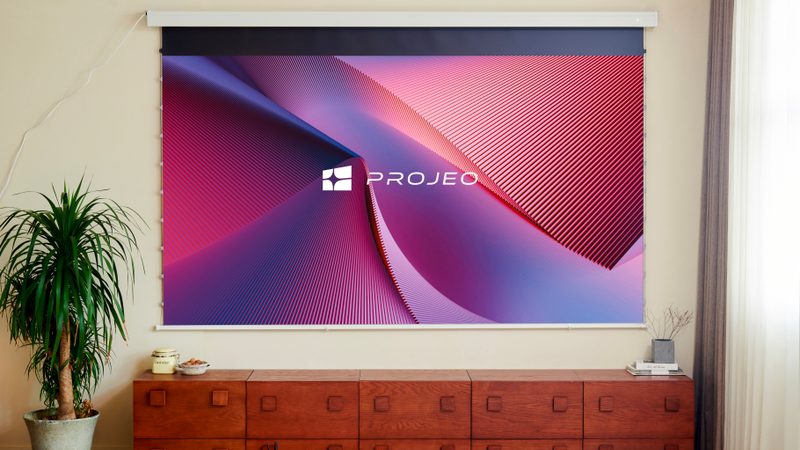
Projeo Frame ALR LT 120
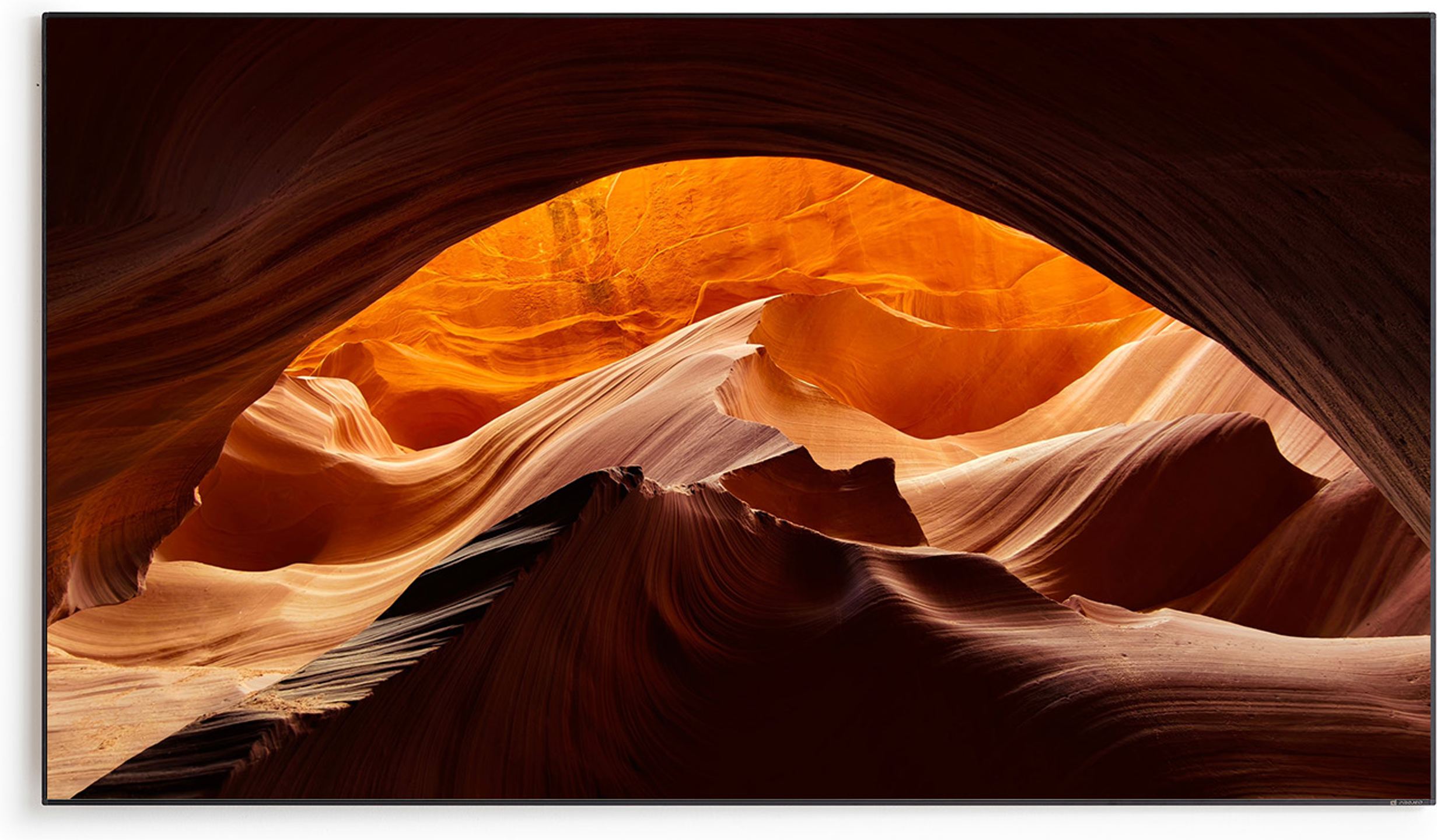

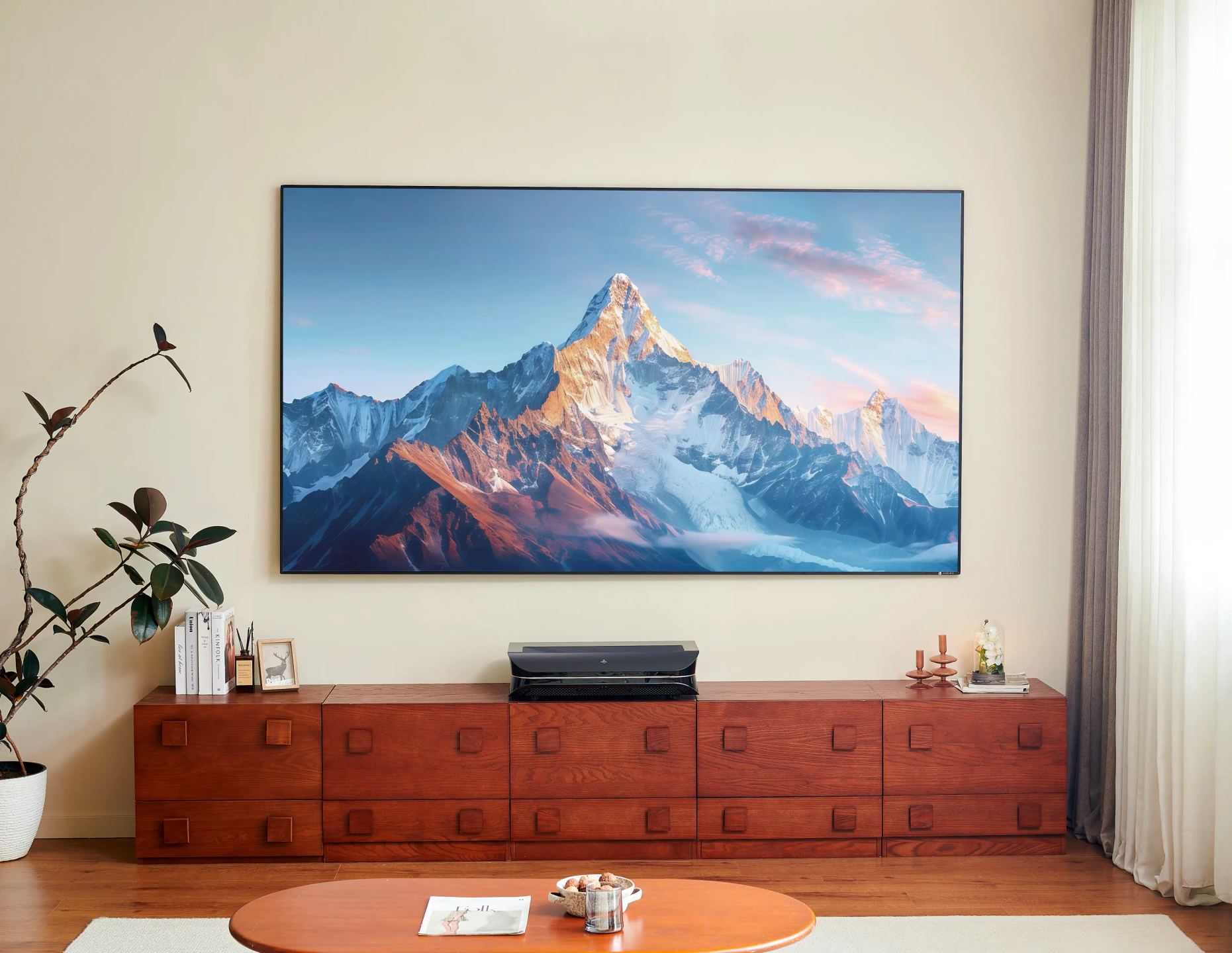
Projeo Frame ALR LT 120: fixed-frame screen for long-throw projector
Projecting a large image in a bright living room has long meant making an unsatisfying choice: draw all the curtains, or accept grayish blacks and dull colors. Ambient light rejecting screens shift that balance. Projeo’s Frame ALR LT 120 applies this technology to a 117-inch fixed frame and is designed for long-throw projectors, the kind installed on the ceiling or at the back of the room.
Preserving contrast in full light
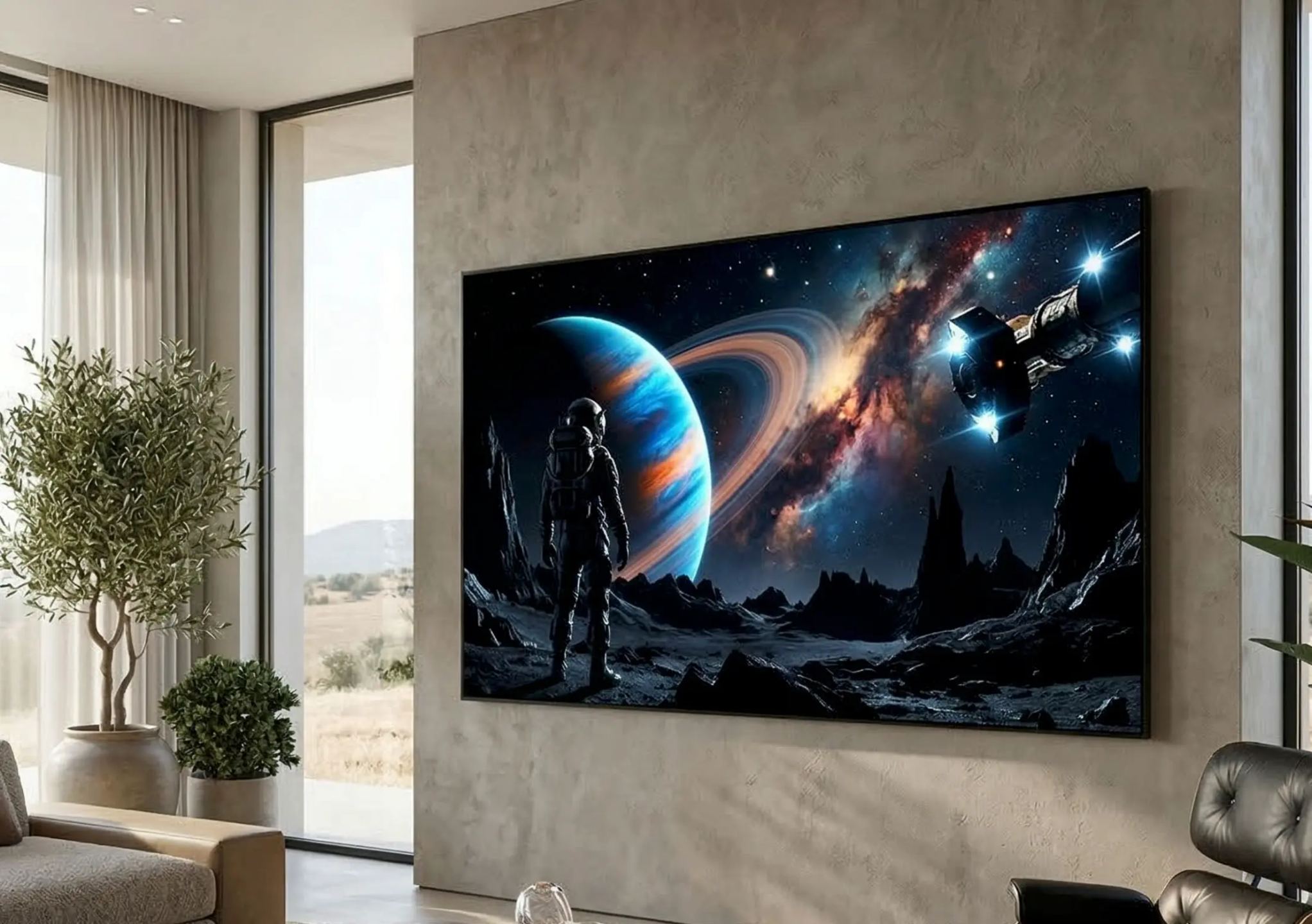
A conventional white projection screen reflects all the light it receives indiscriminately. The projector’s light, but also light from windows, lamps, and light-colored walls. The result is immediately visible: blacks turn gray and contrast collapses. The ALR LT screen addresses this problem through its optical structure. The acronym stands for Ambient Light Rejecting. In practical terms, the surface is treated to reflect toward viewers the light coming from the projector, while absorbing or deflecting light coming from other directions.
The two letters LT specify the intended use: Long Throw. The screen’s microstructure is designed for a projector placed at a normal distance, on the ceiling or at the back of the room. This distinction matters, because short-throw ALR screens work with the opposite geometry and are not interchangeable with this model. The surface itself, made of PET LT, is a rigid technical polymer that serves both as an optical support and as a guarantee of flatness.
In a room that remains lit, the screen preserves deeper blacks and richer colors. The benefit is real without being absolute: direct, intense light on the screen, a ray of sunlight for example, degrades the image regardless of the technology. The screen reduces stray light; it does not eliminate it.
A fixed aluminum and velvet frame
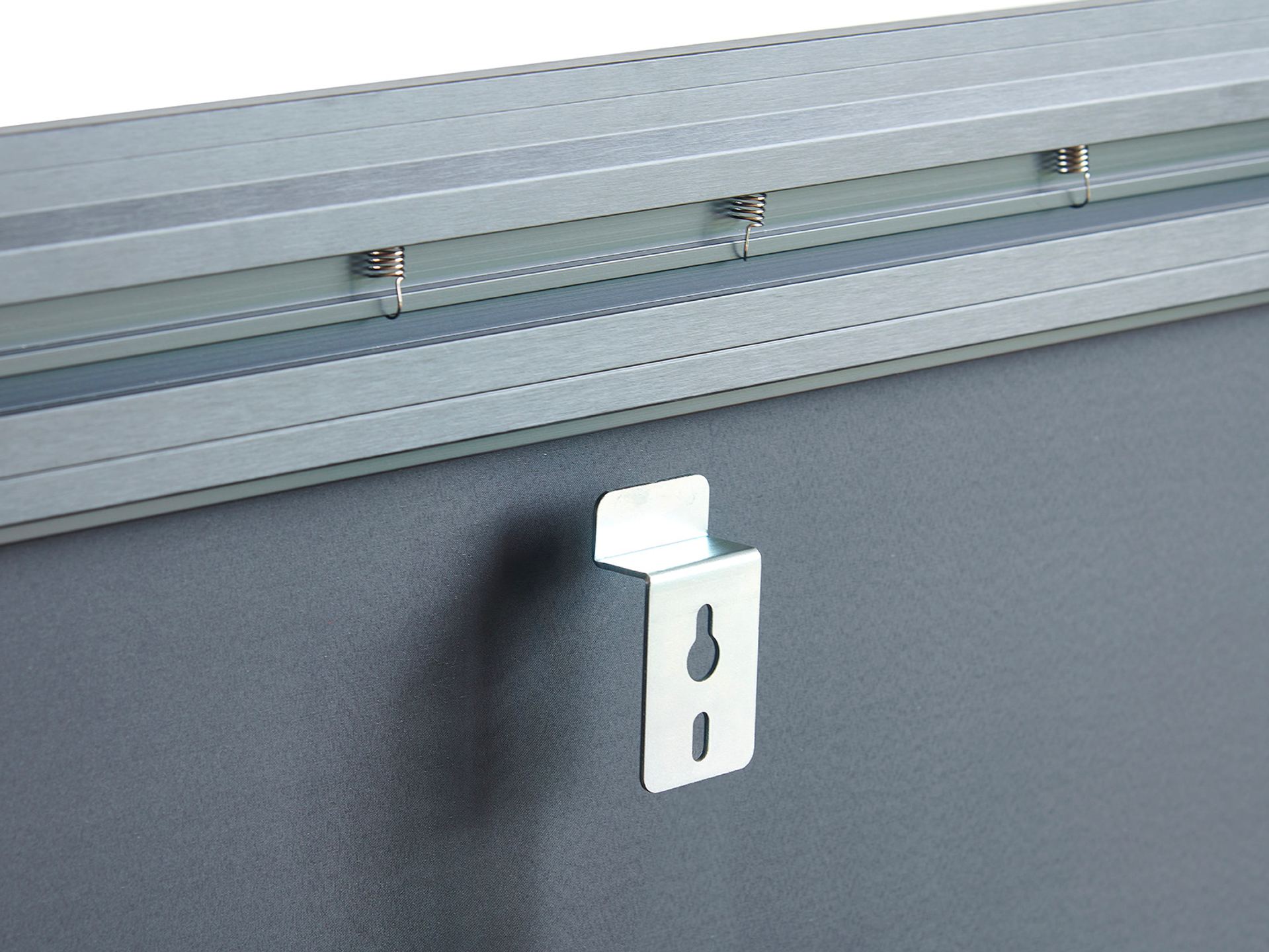
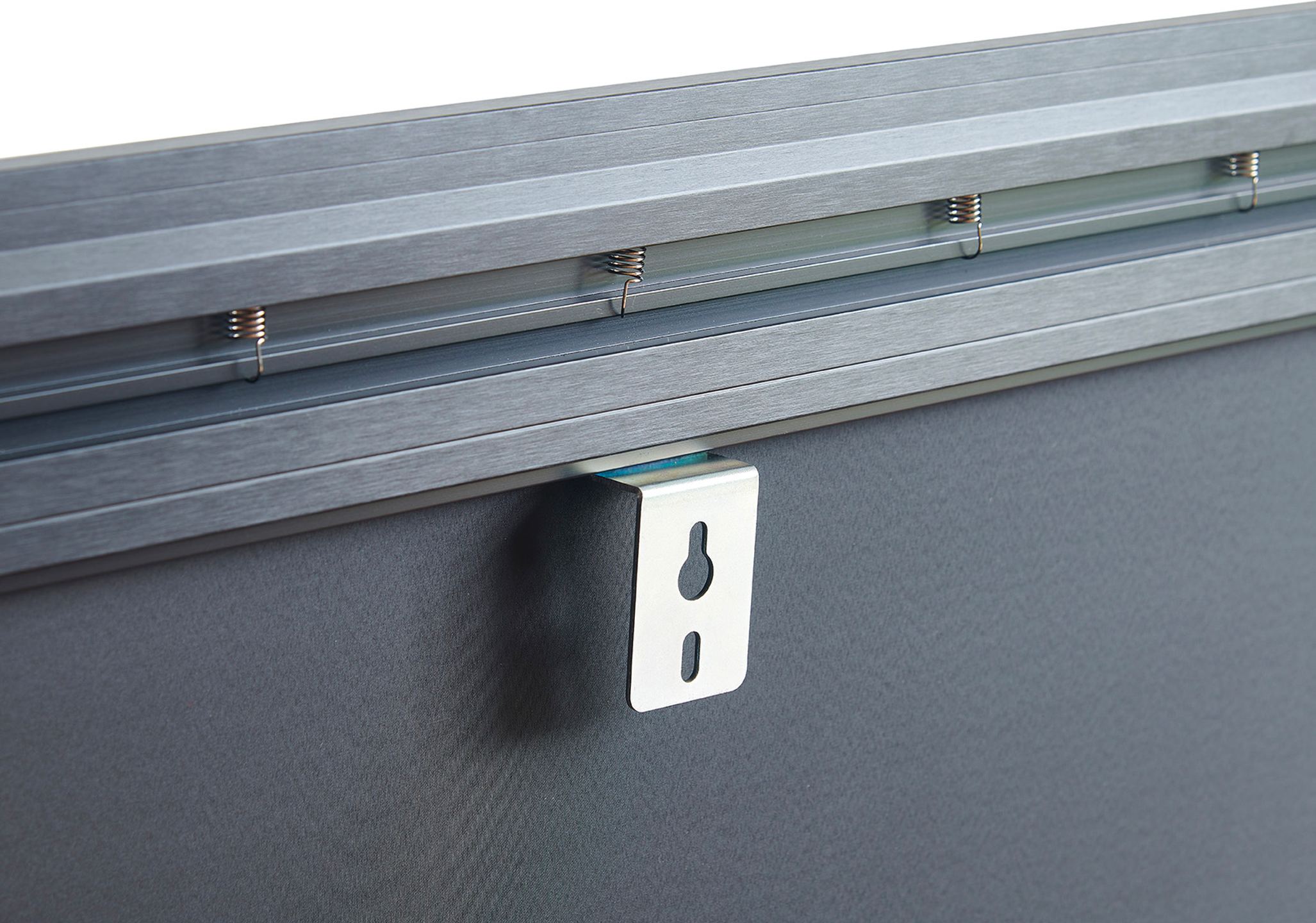
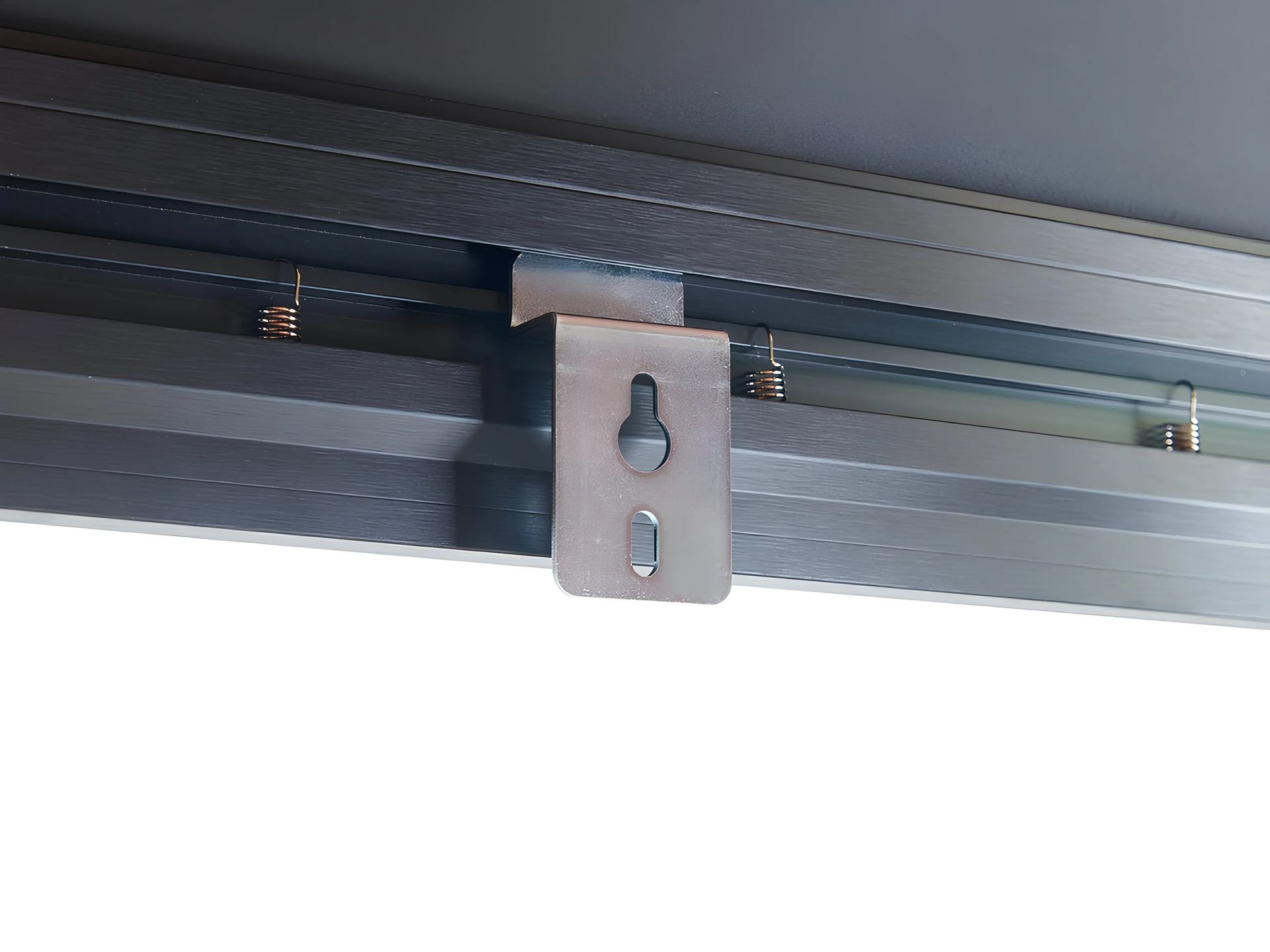
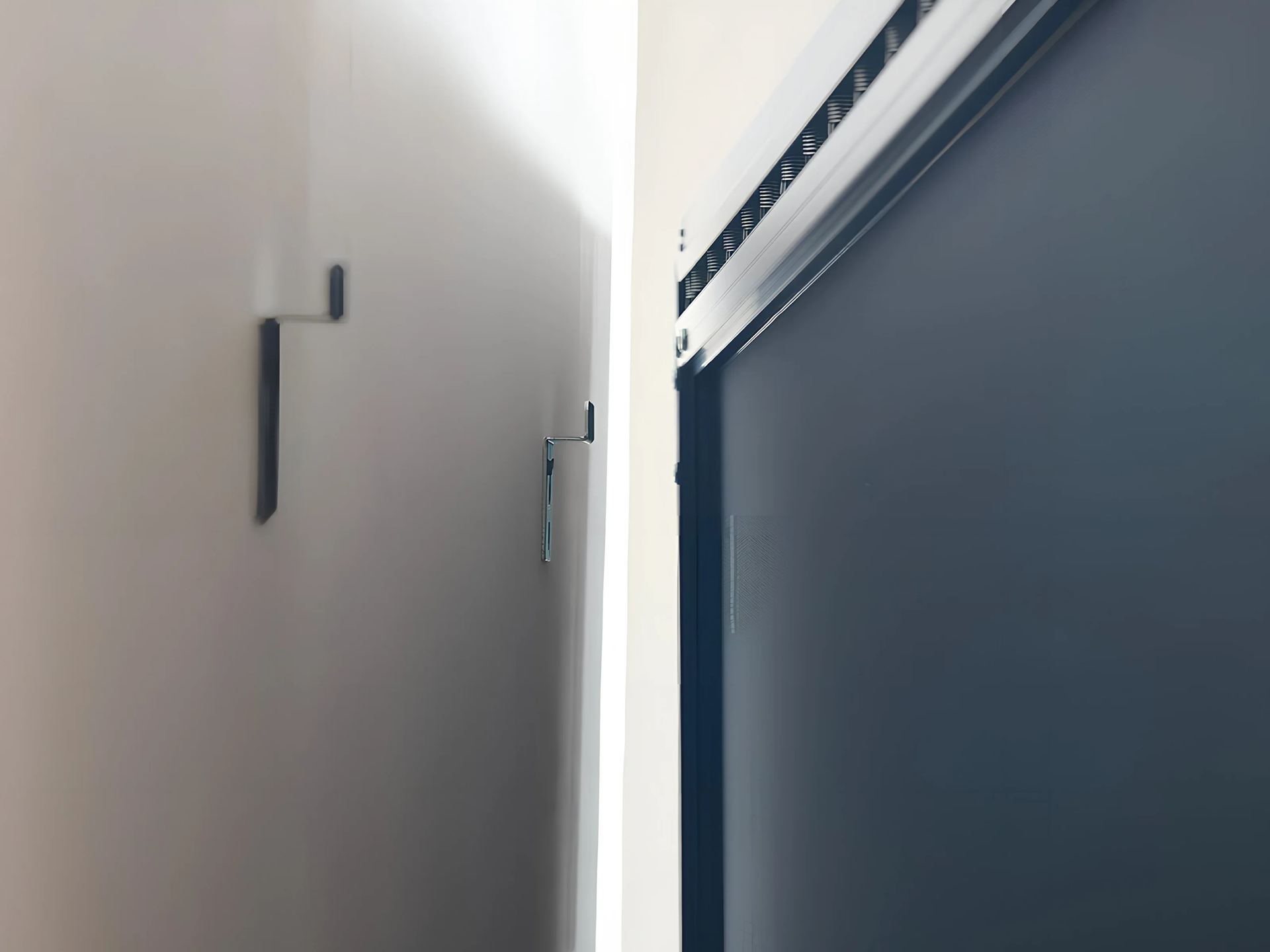
The housing is made of black lacquered aluminum alloy. This choice of material keeps the frame straight over time, without the warping that a lighter profile may experience. The screen attaches to this frame using a clip system. The method is quick to install and, above all, it tensions the surface evenly around the entire perimeter.
This even tension provides a flatness that few roll-down screens can achieve. The issue is not cosmetic: a screen that ripples, even slightly, distorts the geometry of the image and creates areas that are more or less bright. On a perfectly flat surface, the projection retains its proportions and uniformity.
The visible face of the frame features a black velvet finish. The velvet absorbs the slight light overspill that the projector casts beyond the image area. Without it, this border would reflect a diffuse glow that would blur the outline of the image. With a border width of only 10 mm and a thickness of 3 cm, the frame remains discreet and keeps the screen close to the wall.
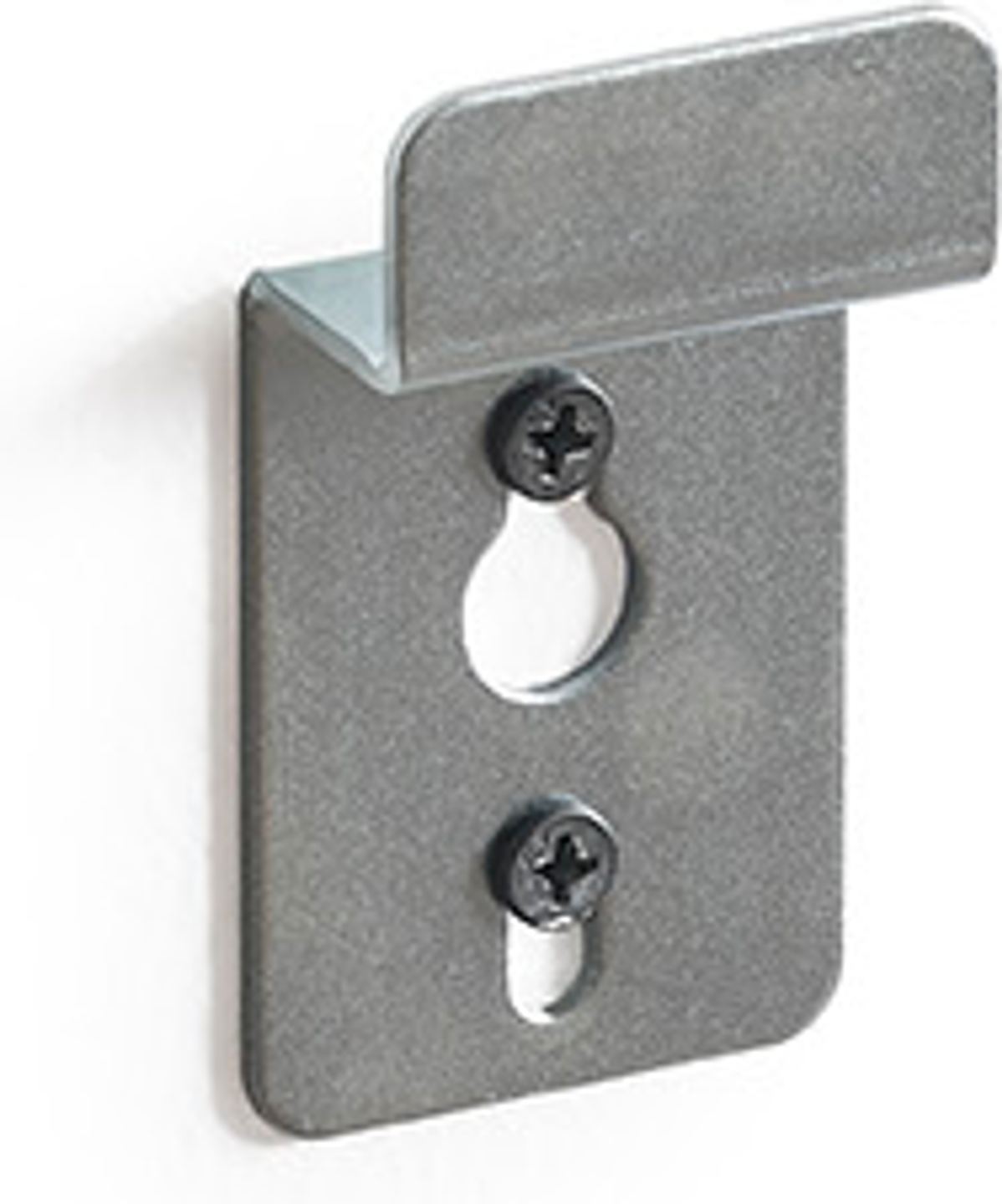
Installation is done with screws, which means the wall must be able to support the whole assembly. That is the downside of a fixed-frame screen: once installed, it permanently occupies its wall space and does not retract, unlike a motorized model. The trade-off for that permanence is precisely the rigidity and stability of the image.
1.8 gain and 120° viewing angle
Gain measures the amount of light a screen reflects toward the viewer, compared with a reference white surface whose gain is 1.0. Here, the value of 1.8 indicates a light output clearly higher than that reference. The image gains brightness, which helps preserve visual substance when the room is not plunged into darkness.
This concentration of light has a well-known trade-off. A high-gain screen reflects the light in a narrower beam, and two phenomena may appear. The first is hotspotting, a slightly brighter central area where the projector axis strikes the screen. The second is a drop in brightness as you move away from that axis.
This is where the 120° viewing angle comes in. This figure describes the angular cone within which the image remains bright and uniform. One hundred twenty degrees is a comfortable spread for a sofa and a few armchairs placed facing the screen. Viewers seated far off to the sides, or a particularly wide room, will fall outside this optimal zone and perceive a duller image.
Gain and viewing angle are not two separate characteristics. They describe the same behavior: a screen that directs light toward a defined volume rather than scattering it in every direction. This is also what makes ambient light rejection possible.
The 120 format and the space it requires
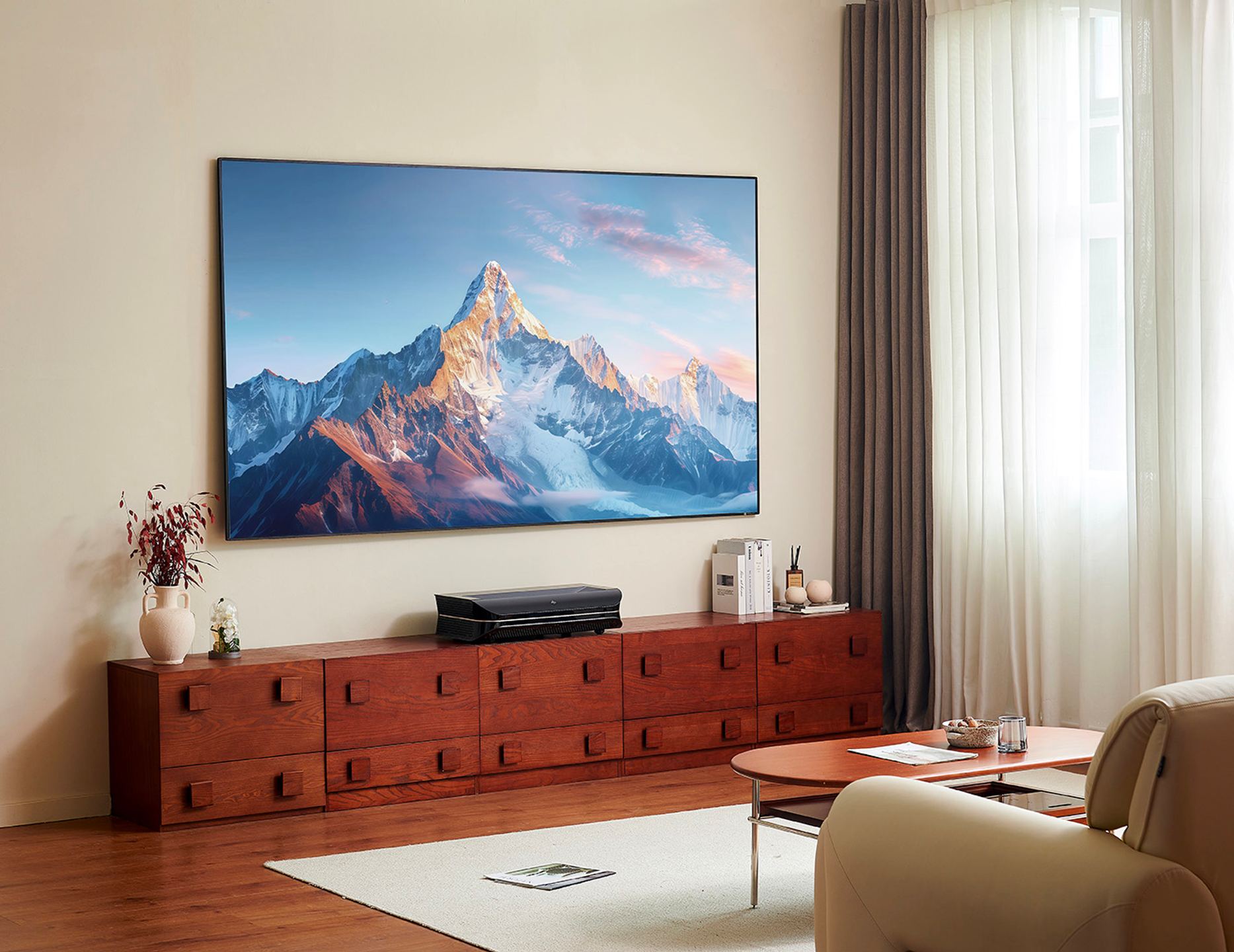
The 120 offers a 117-inch diagonal, or 297.2 cm, in a 16:9 format. The viewable area measures 260 cm wide by 146.2 cm high, and the full frame measures 262 by 148.2 cm. Before ordering, it is therefore best to check that the wall has at least 2.62 m of clear width, with no outlet, switch, or molding within that footprint.
The 16:9 ratio matches the format of recent films, series, and nearly all 4K UHD content. The smooth surface of the PET screen reproduces the detail of these sources without showing grain or texture, which matters on an image of this size where the slightest flaw would be visible.
On the projector side, the screen requires a long-throw unit, meaning a conventional model placed on the ceiling or on furniture at the back of the room. The depth of the room and the projector’s throw ratio must be sufficient to produce an image width of 2.60 m. Most living-room projectors can do this, but the calculation is worth making before purchase.
One logistical point to note: the screen must be transported and stored flat, horizontally. Its packaging, a long 268 cm box, must not remain upright, otherwise the frame and screen may be put under strain.
Documentation
Technical specifications
Overview
- Fixed-frame projection screen
- Projeo Frame ALR LT: the power of fixed cinema in full light
- Designed for standard living environments, without requiring dim light
- Flawless flatness and harmonious integration into the interior
- ALR LT technical screen material (Ambient Light Rejecting) dedicated to long-throw video projectors
- Active filtering of unwanted ambient light to preserve contrast and deliver deep blacks
- Ideal for UHD 4K content
- Controlled directivity concentrating the light output toward the audience
Screen material and projection surface
- Screen material type: ALR (ambient light rejecting) PET LT
- Gain: 1.8
- Directivity: 120°
- Compatible projector type: long throw
Frame and structure
- Housing: black lacquered aluminum alloy
- Finish: black velvet
- Control system: fixed
Dimensions and references
- Projeo Frame ALR LT 120
- Format / ratio: 16 / 9
- Screen material: ALR long throw
- Useful image size: 260 × 146.2 cm
- Diagonal: 117” (297.2 cm)
- Frame size (L1 × L2): 262 × 148.2 × 3 cm
- Frame borders (B1 × B2): 10 × 10 mm
- Packaging dimensions: 268 × 29 × 19.5 cm
Frequently Asked Questions
Is this screen compatible with an ultra-short-throw (UST) projector?
No. The ALR LT screen is designed for long-throw projectors, whose light reaches the surface at a standard angle. An ultra-short-throw projector illuminates the screen from below, almost vertically, and requires a type of ALR screen with the opposite geometry. Pairing a UST projector with this model results in a non-uniform image and ineffective light rejection. The correct pairing is a long-throw projector.
Do you need a completely dark room to enjoy it?
No, that is the whole point of an ALR screen. The screen maintains usable contrast with curtains partly open or a few lamps switched on. Above all, you should avoid a direct source, sunlight or a light fixture, hitting the surface: no screen can withstand that. For the deepest blacks, dim lighting is still preferable, but complete darkness is no longer a requirement.
Does the Frame ALR LT range offer other sizes?
Yes. Alongside the 120 model, with its 117-inch diagonal, the range includes a 100 model, with a 100-inch diagonal and an image measuring 221.4 by 124.5 cm. The ALR LT screen and the aluminum frame are identical from one size to another: only the projection area changes, for walls offering less clearance. The references are PROFRA120LT and PROFRA100LT.
- Eco-contribution included in the sale price.
- Manufacturer reference: PROFRA120LT
- GTIN / EAN: 3700795165249