Arnaud
Excellent value for money and works very well
Comment from 27 June 2025 — Experience from 17 August 2023
Automatically translated — Show original (French)
Excellent rapport qualité prix et fonctionne très bien

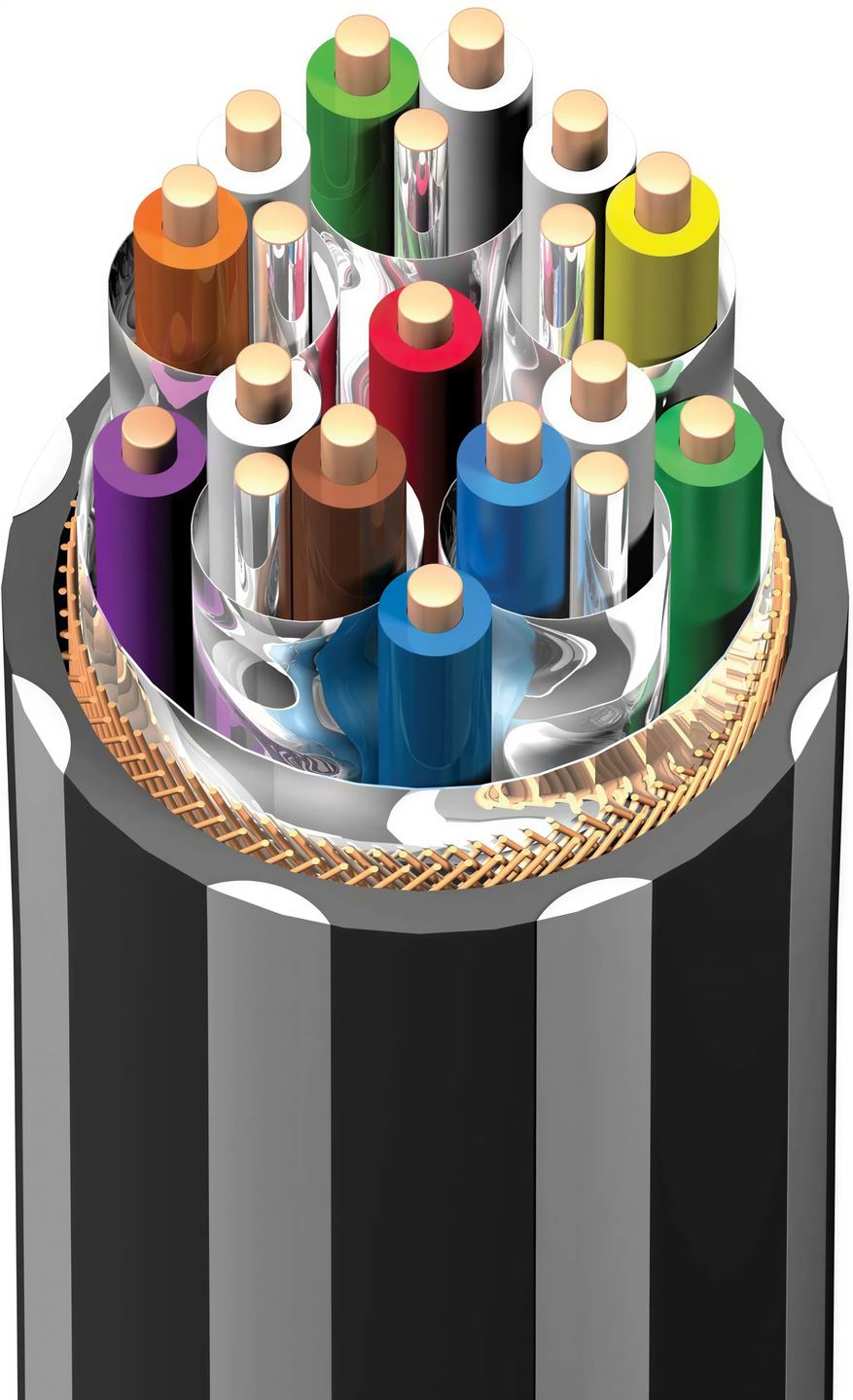
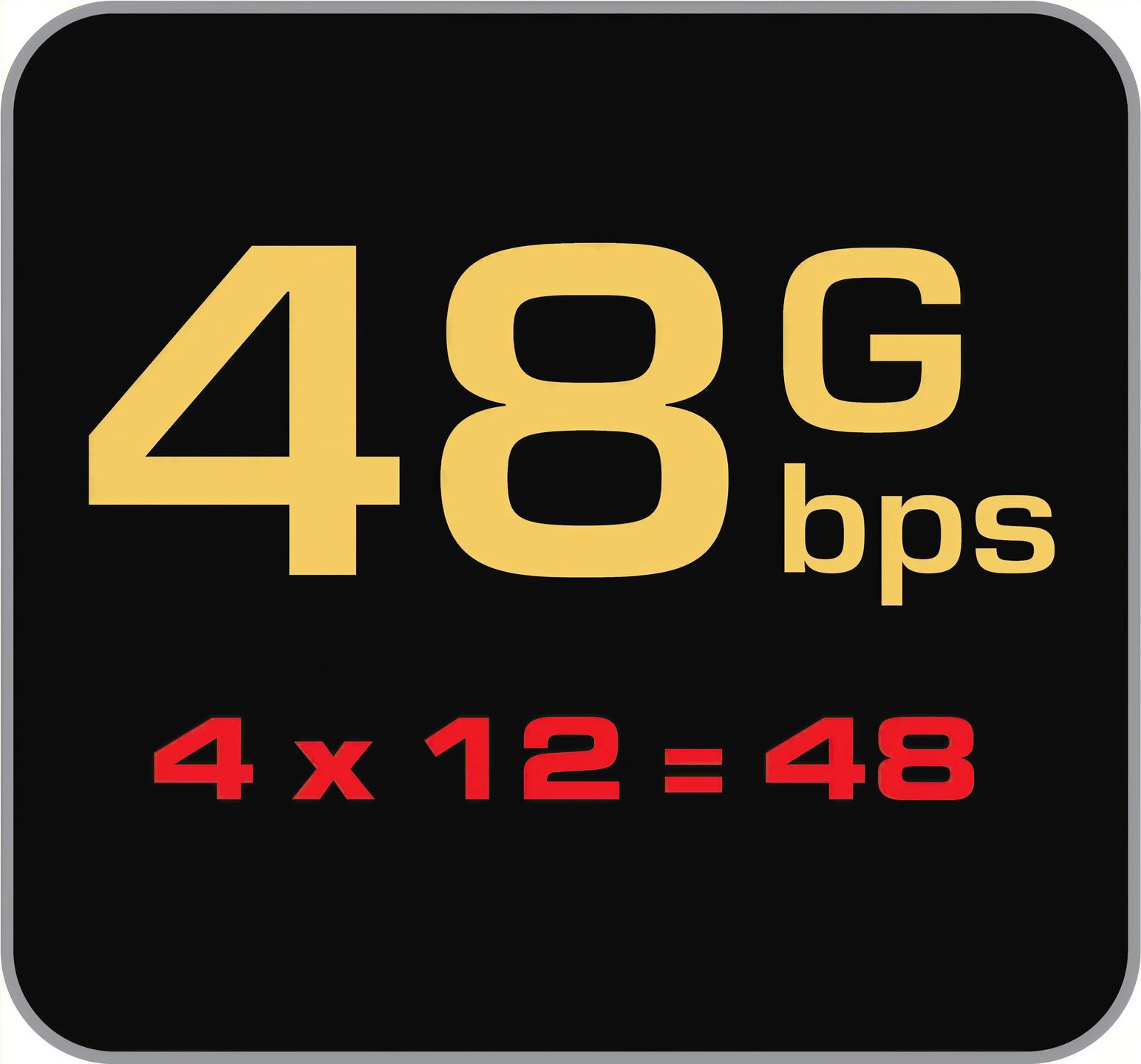




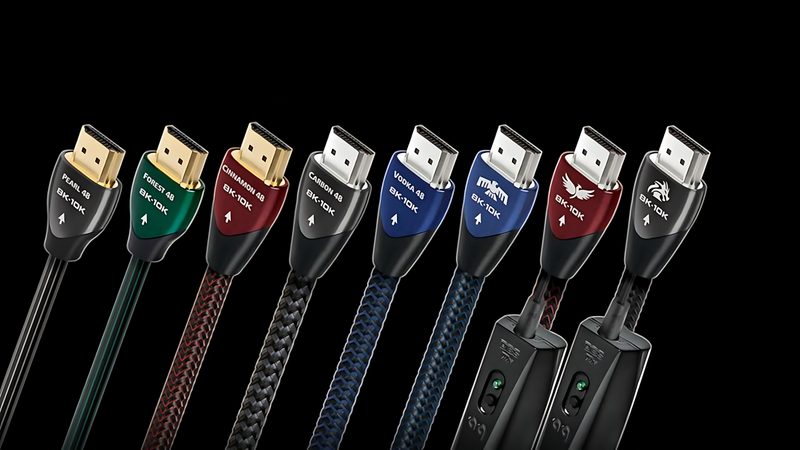
Playing in 4K at 120 frames per second on a recent console or sending a Dolby Atmos track from the TV to the amplifier requires an HDMI cable capable of reaching 48 Gbit/s, the maximum data rate of the HDMI 2.1 standard. The Pearl 48 is the first model in AudioQuest’s 48 series. Its conductors are made of solid copper, and all nineteen wires in the cable receive treatment against radio-frequency interference, including those that carry sound.
The picture travels over four balanced pairs. Each carries 12 Gbit/s, for a total of 48 Gbit/s. This data rate supports 4K at 120 Hz, 8K at 60 Hz and professional resolutions up to 10K. It also carries dynamic HDR (Dolby Vision, HDR10+), whose metadata adjusts brightness and contrast frame by frame rather than applying a single setting to the entire film. The Pearl 48 remains compatible with HDMI 2.0 devices: a 4K Blu-ray player or a set-top box running at 4K at 60 Hz will work without difficulty, even if they use only part of the bandwidth.
A cable does not add any features: it passes through those that the source and display can handle. On many TVs, only one or two HDMI inputs support the full data rate of the 2.1 standard. It is therefore worth checking which port to plug the console or amplifier into.
Most HDMI cables use stranded conductors, made up of many very fine wires twisted together. In the Pearl 48, each conductor is a single solid wire. According to AudioQuest, electrical and magnetic interactions between the strands of a single conductor are a major source of distortion in a cable, and a solid wire eliminates them.
The metal is the brand’s Long-Grain Copper (LGC). This is copper treated so that its crystals are longer than those in ordinary copper, reducing the number of crystal boundaries the signal has to cross. The ground reference wires are made of tinned copper.
An HDMI signal is digital: as long as the cable sustains the required data rate, the pixels arriving at the screen are identical to those sent from the source. AudioQuest’s material choices target something else: the electrical noise that accompanies the signal to the devices’ circuitry.
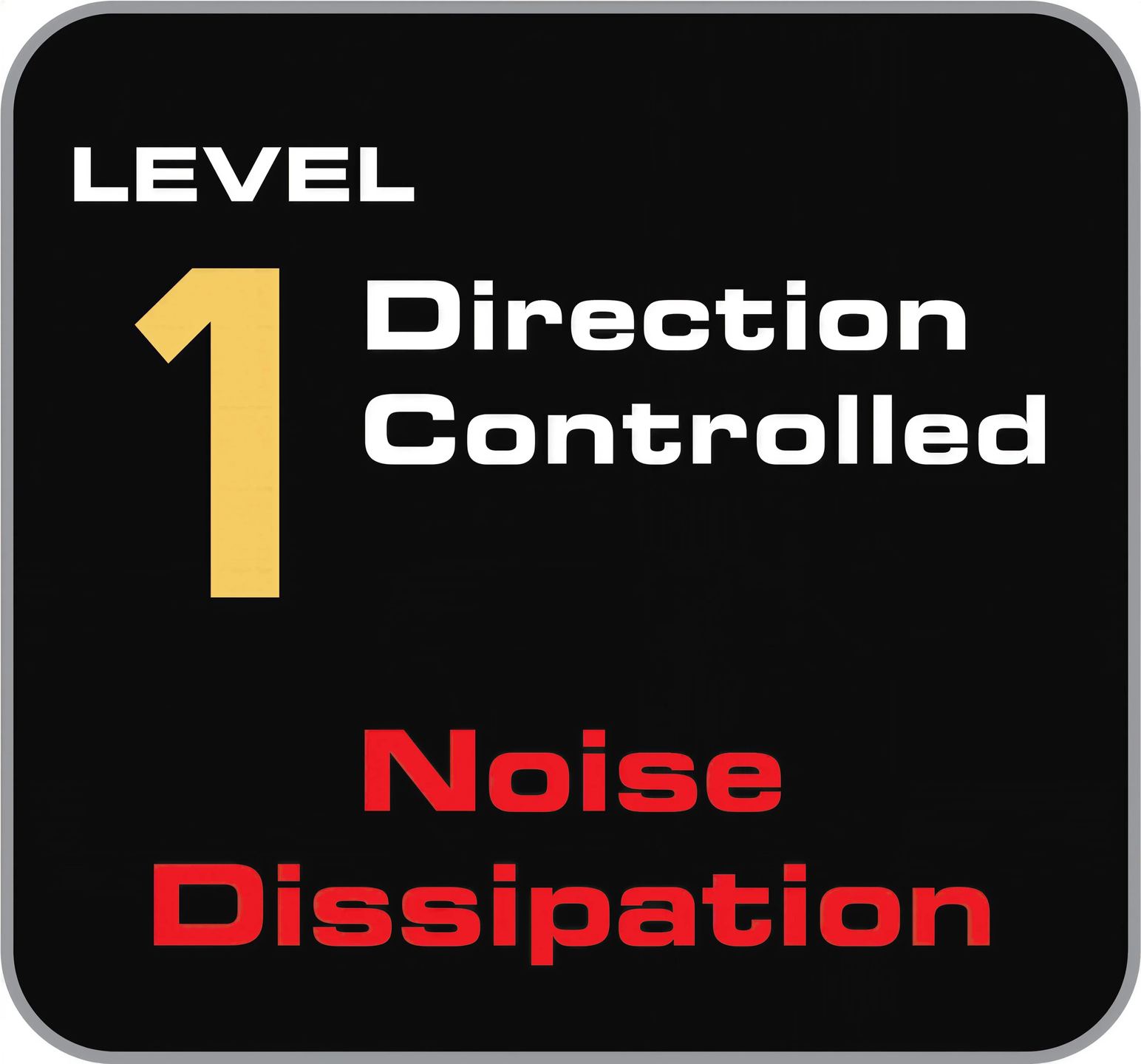
An HDMI connector has nineteen pins, and the cable has just as many conductors: audio-video pairs, an eARC pair, ground references, control lines and a power line. According to AudioQuest, 100% shielding is not enough to counter the waves emitted by Wi-Fi routers, phones and other wireless devices. The Pearl 48 therefore features level 1 of the brand’s Noise-Dissipation technology: each conductor is installed in a specific direction (Direction-Controlled) so that high-frequency noise is directed away from sensitive circuitry rather than back towards it.
This level 1 is the foundation of AudioQuest’s entire HDMI range. Models above the Pearl 48 add other dissipation techniques and silver-plated conductors.
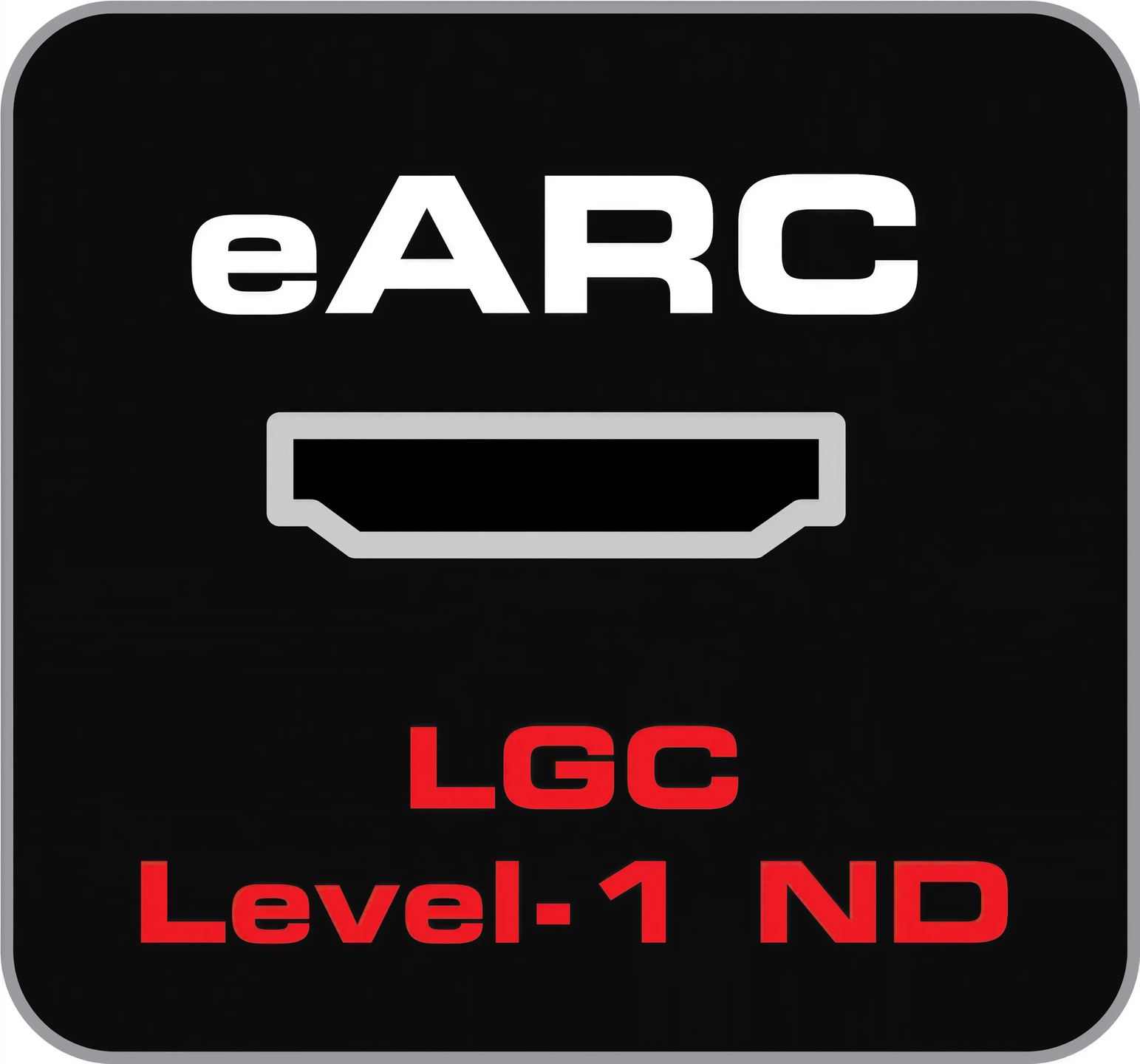
eARC (enhanced Audio Return Channel) carries sound from the TV to an AV receiver or a soundbar through the HDMI cable that already connects them. With a much higher data rate than the older ARC, it transmits Dolby TrueHD, Dolby Atmos, DTS-HD Master Audio and DTS:X without compression, as well as multichannel PCM. It is the simplest solution when all sources are connected to the TV and the amplifier receives only sound.
In the Pearl 48, the pair carrying eARC is made in the same way as the video pairs: the same solid LGC copper, the same conductor direction. The TV and amplifier must still support eARC, on the ports labelled as such. If either one only has ARC, sound remains limited to compressed formats.
The PlayStation 5 and Xbox Series X consoles, along with PC graphics cards equipped with an HDMI 2.1 output, use several features of the standard that depend on the cable’s data rate. VRR (Variable Refresh Rate) synchronises the TV’s display with the console’s actual output rate, eliminating screen tearing when the number of frames per second varies. ALLM automatically switches the TV to game mode when a game starts to reduce response time. QFT (Quick Frame Transport) sends each frame faster from the source to the screen to reduce display lag. The Pearl 48 passes through all three features, as well as 4K at 120 Hz.
Arrows on the plugs indicate the direction: they point from the device sending the image (console, player, AV receiver) toward the one displaying it. Connected the wrong way round, the cable still works, since the HDMI signal travels in both directions on certain lines, but the orientation chosen by AudioQuest to drain noise is no longer respected.
The cable is rarely the cause. On most TVs, you need to enable a setting such as “extended HDMI signal,” “enhanced HDMI,” or “Ultra HD signal format” for the input being used, depending on the brand. You also need to connect the console to an HDMI 2.1 port on the TV and enable 120 Hz in the console’s video settings. If an AV receiver is connected between the two, its inputs and outputs must also support 4K at 120 Hz.
If both cables support the required data rate, the transmitted pixels are the same. A visible difference mainly appears when a cable cannot support that data rate: intermittent black screens, sparkling white dots, audio dropouts. AudioQuest’s claims focus on connection stability at 48 Gbit/s and electrical noise transmitted to devices, not on a more colorful or more detailed image.
The Forest 48 retains the solid long-grain copper conductors and Level 1 noise dissipation, with 0.5% silver plating on the conductors. It is the first step in a progression toward conductors with increasingly higher silver content and higher levels of noise dissipation in the 48 series.
Yes, provided that both the graphics card and the monitor have an HDMI port. To enjoy 4K at 120 Hz or VRR, the graphics card’s output must be HDMI 2.1. The cable is not suitable for a monitor that only has DisplayPort inputs, and an adapter does not guarantee the highest data rates.
Yes. Most 4K projectors have HDMI 2.0 inputs, which the cable supports thanks to its backward compatibility. HDMI 2.1 models will benefit from 4K at 120 Hz if the source provides it. The features transmitted depend on the projector, not the cable.
Based on reviews from customers who purchased this product, summarised by AI
Arnaud
Excellent value for money and works very well
Comment from 27 June 2025 — Experience from 17 August 2023
Eric
The signal gets through, and that's what really matters, right?
Comment from 3 December 2024 — Experience from 10 December 2023
Fernand
Very good product, I recommend it.
Comment from 11 December 2023 — Experience from 30 November 2023
* Attention ! Un crédit coûte de l'argent et doit être remboursé
Pour un achat de 300 € en 4 fois : acompte de 75 €, puis 3 mensualités de 75 €. Crédit de 225 € au taux débiteur fixe de 0% sur 3 mois. Coût du crédit 0 €. Montant total dû 300 €. TAEG 0%. Le coût du crédit est pris en charge par l'enseigne.
Sous réserve d'acceptation par Alma SAS (almapay.com), société de financement agréée par l'ACPR (code CIB : 17408). RCS Nanterre 839100575. Contact : support@almapay.com