

Vincent
No problem, it works properly.
Comment from 20 May 2026 — Experience from 9 May 2026
Automatically translated — Show original (French)
Aucun problème, il fonctionne correctement.
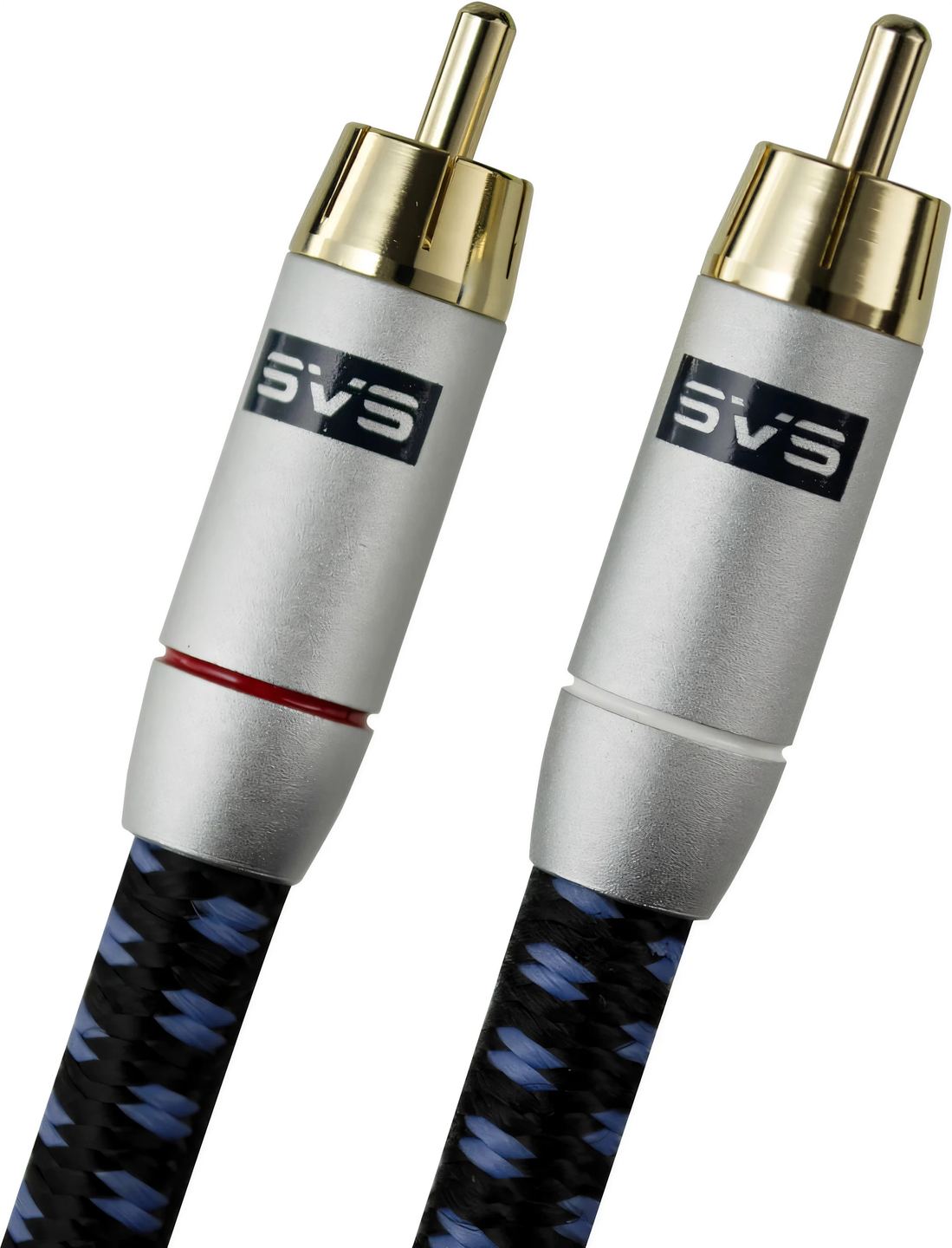

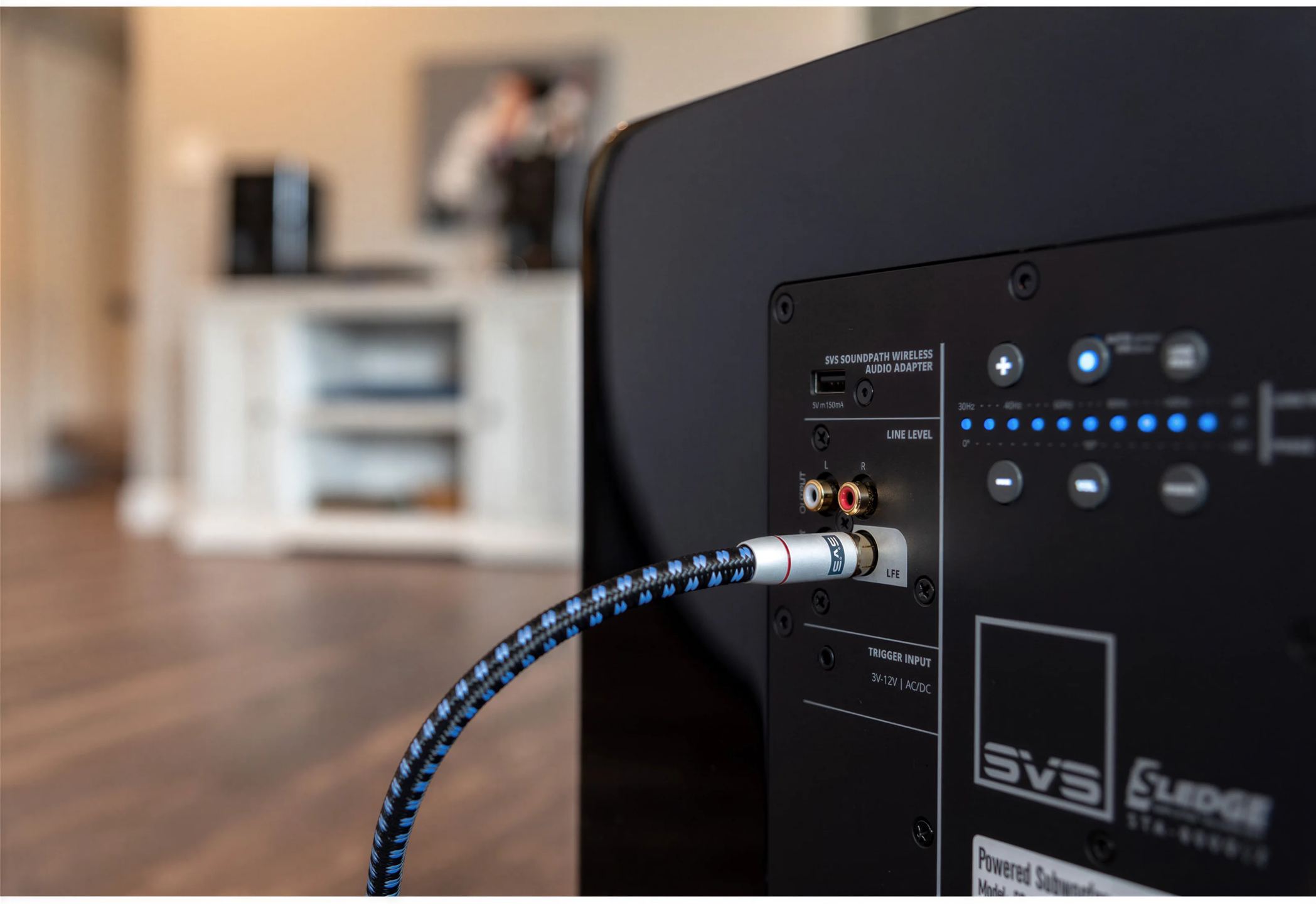
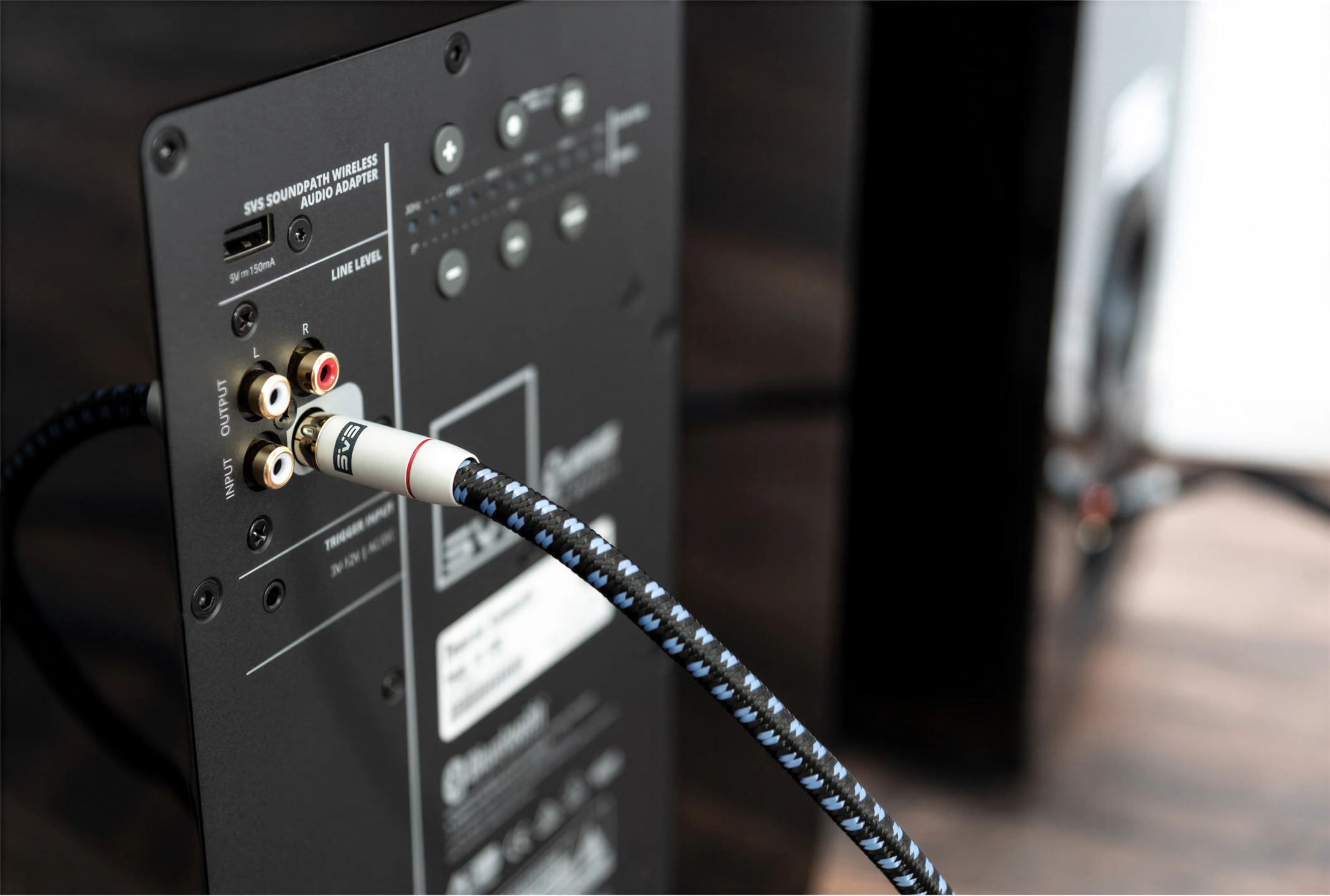
Placing a subwoofer away from the amplifier means running several metres of RCA cable across the room. Over this distance, insufficient shielding allows hum and interference through, muddying the bass. The 12-metre version of the subwoofer cable SVS SoundPath is designed precisely for this situation: connecting a source and a distant subwoofer while keeping the signal clean from end to end.
The signal travels down to the subwoofer through two conductors insulated from one another, each made of fourteen strands of 99.99% purified oxygen-free copper (OFC). Around them, the insulation is arranged in five layers. The first is a 1.6 mm high-density polyethylene (HDPE) jacket that wraps each conductor separately and limits interactions between the two. Next comes a 7 mm high-density PVC dielectric forming the cable’s backbone, followed by a PET (Mylar) foil that holds and protects the internal structure. The shielding forms the penultimate layer, detailed below, while a braided cotton jacket encloses the whole assembly, providing both mechanical protection and finishing. The outer diameter remains a compact 7 mm, slim enough to run along a skirting board or beneath a rug.

Over twelve metres, the shielding does most of the work. It combines aluminium foil and a braid of 56 tinned OFC copper strands, spirally wrapped around the internal structure. Its purpose is to block electromagnetic and radio-frequency interference (EMI and RFI), which a long cable picks up all the more easily as it runs through a room filled with electrical devices.
A special feature of this shielding is that it is grounded on one side only, at the source end. This asymmetric connection prevents a loop from forming between the two devices through the shielding itself, a classic cause of hum. It also gives the cable a direction: one end is intended for the source, amplifier or processor, and the other for the subwoofer.
The plugs reflect the care devoted to the cable. Their shells are machined from anodised aircraft-grade aluminium, with red and white identification rings to distinguish the ends and channels at a glance. The centre pin and outer ring are made of 24-carat gold-plated brass, a coating that resists corrosion and maintains stable contact over time. The ground body is slotted, ensuring a firm grip on the RCA socket of both the subwoofer and amplifier.
The solder joints use a high-quality lead-free alloy. This matters for a bass connection, where deteriorating contact eventually becomes audible as crackling or dropouts.
The published measurements provide a precise picture of the cable. DC resistance is 77 milliohms per metre for the conductors and 30 milliohms per metre for the shielding. Nominal capacitance remains low, at 39 picofarads per metre at 1 kHz. Nominal impedance is 110 ohms, with cable and plugs matched to reduce standing wave ratio and reflection losses. On a 3-metre cable, the stated bandwidth runs from DC up to 5 megahertz, with a standing wave ratio of less than or equal to 1.09 and a return loss of at least 27 decibels.
These values belong to the vocabulary of radio frequencies. Yet a subwoofer signal operates between roughly twenty and two hundred hertz, far below the measured megahertz range: the bandwidth and impedance matching greatly exceed what bass requires. At subwoofer scale, the benefit lies in the low capacitance and low conductor resistance, which preserve signal level and definition over long distances, and above all in the quality of the shielding. The radio-frequency figures primarily demonstrate the seriousness of the construction.
The cable is available from 1 to 15 metres, and this model sits at the second-highest length. Twelve metres covers situations where the subwoofer is clearly distant from the electronics: the opposite corner of the living room, placement behind the seating, or a dual-subwoofer installation where one unit is far from the equipment rack.
Choosing a length as close as possible to the actual distance, with a little slack for corners, avoids accumulating excess cable. The slim 7 mm profile and flexible cotton jacket make it easy to route along walls. For long-term peace of mind, SVS covers the cable with a five-year warranty and offers the option to try it at home for 45 days.
Yes. Its shielding is connected to ground only on the source side, which designates one end for the amplifier or processor and the other for the subwoofer. To get the most out of the shielding, follow this orientation by connecting the end intended for the source to the device sending the signal. Reversed, the cable still carries the signal, but noise rejection is no longer as effective.
No. A coaxial S/PDIF connection requires a characteristic impedance of 75 ohms, whereas this cable is rated at 110 ohms. It is designed to carry a line-level analog signal, such as the one connecting a subwoofer output (or LFE) to the input of an active subwoofer. For coaxial digital, a cable specifically rated at 75 ohms is required.
It depends on the subwoofer’s inputs. Many active subwoofers have a single LFE input, or a mono input that is sufficient on its own: one cable is then enough. If you use both the left and right line inputs on a subwoofer, you need two, as this item is sold individually. Since a home theater amplifier’s subwoofer output is mono, a single cable remains the most common setup.
Not directly. Shielding addresses interference picked up through the air, electromagnetic and radio-frequency waves. Ground loop hum, on the other hand, arises from a potential difference between two devices connected to the mains earth: it is a different mechanism. Grounding the shield at one end only prevents the cable from worsening this phenomenon, but hum that is already present must be corrected at the electrical installation level or with a dedicated device.
Yes. RCA connectivity is a universal standard: the cable connects any amplifier or processor subwoofer output to any active subwoofer input, regardless of the equipment.
Vincent
No problem, it works properly.
Comment from 20 May 2026 — Experience from 9 May 2026


