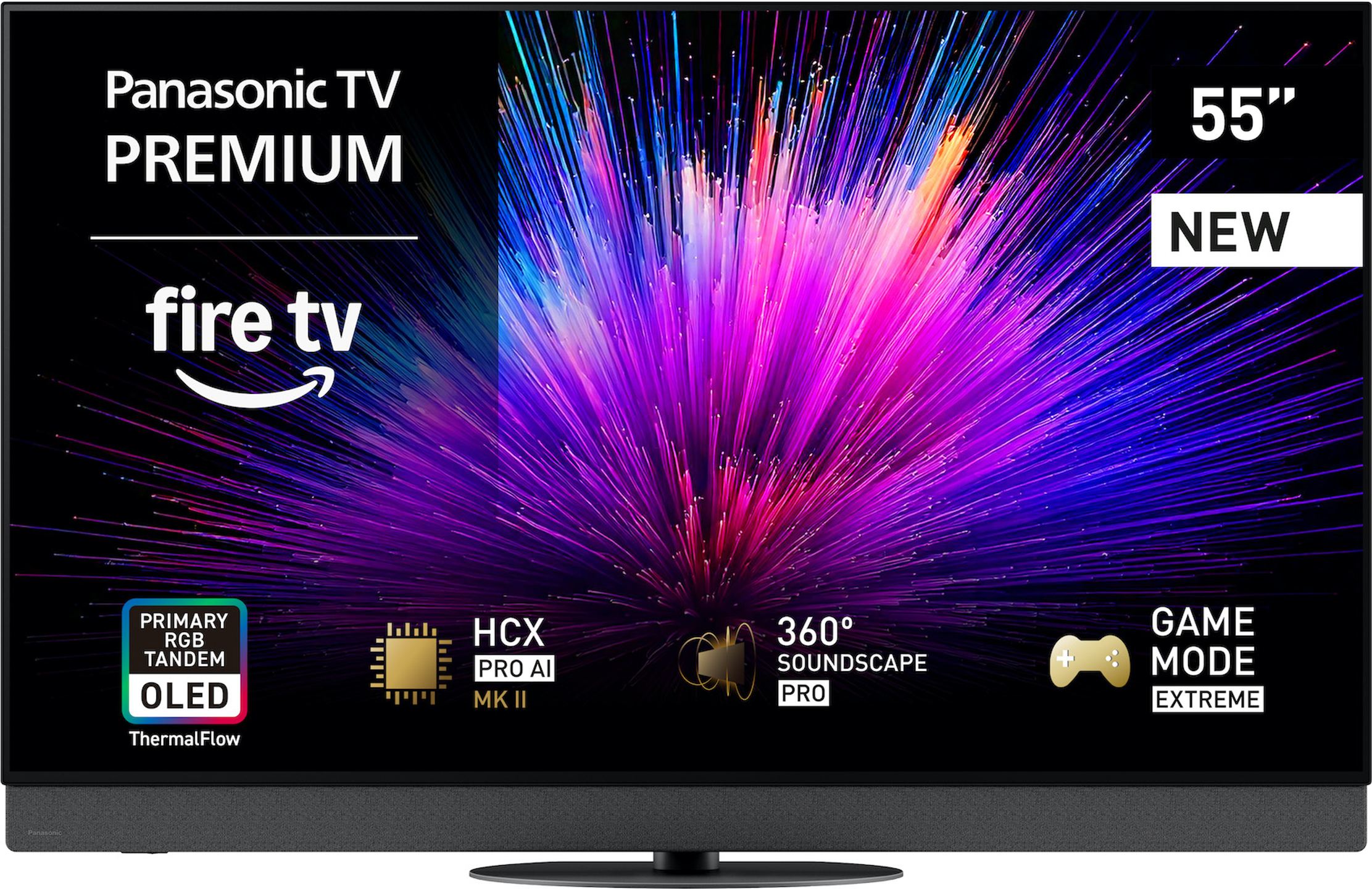
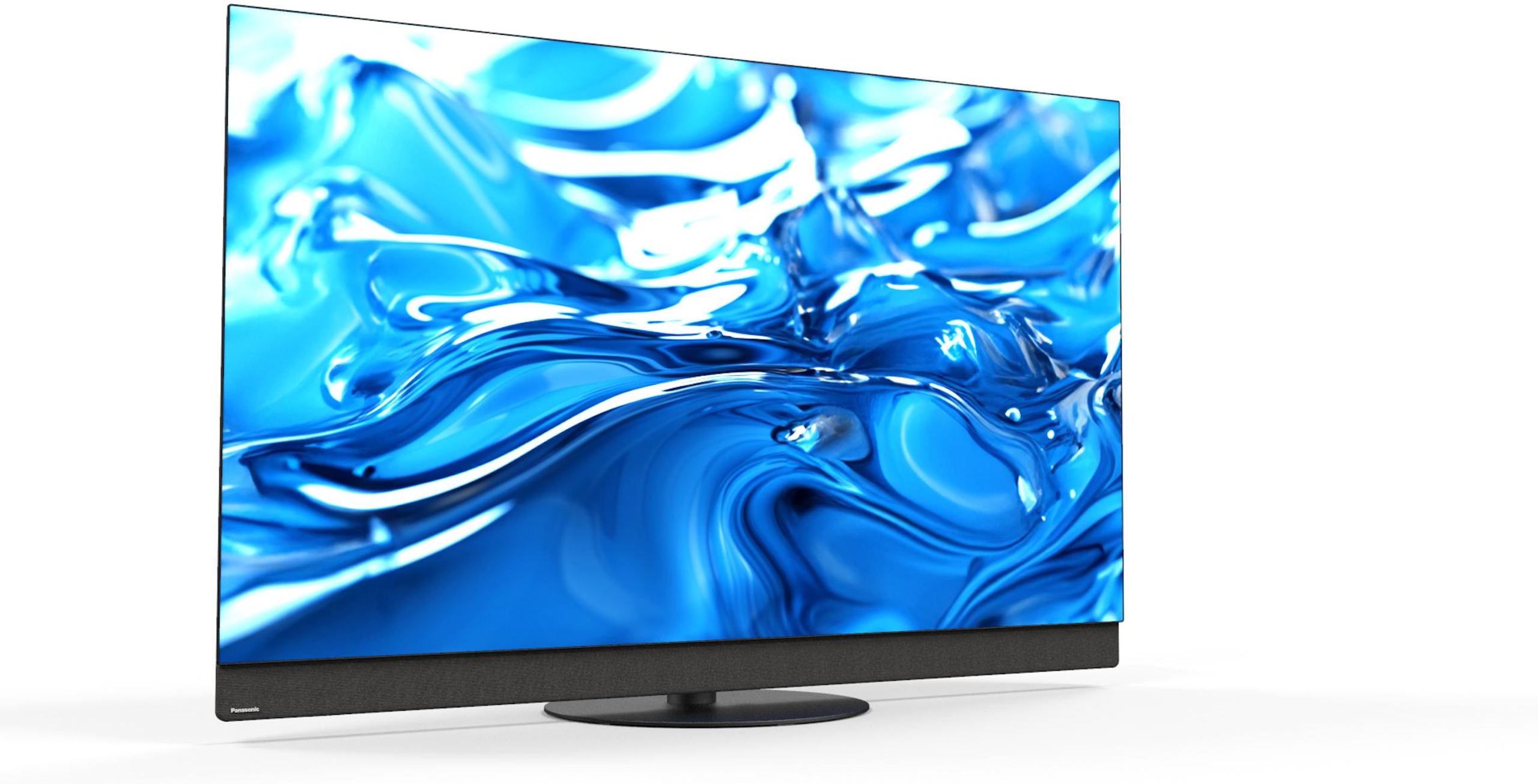
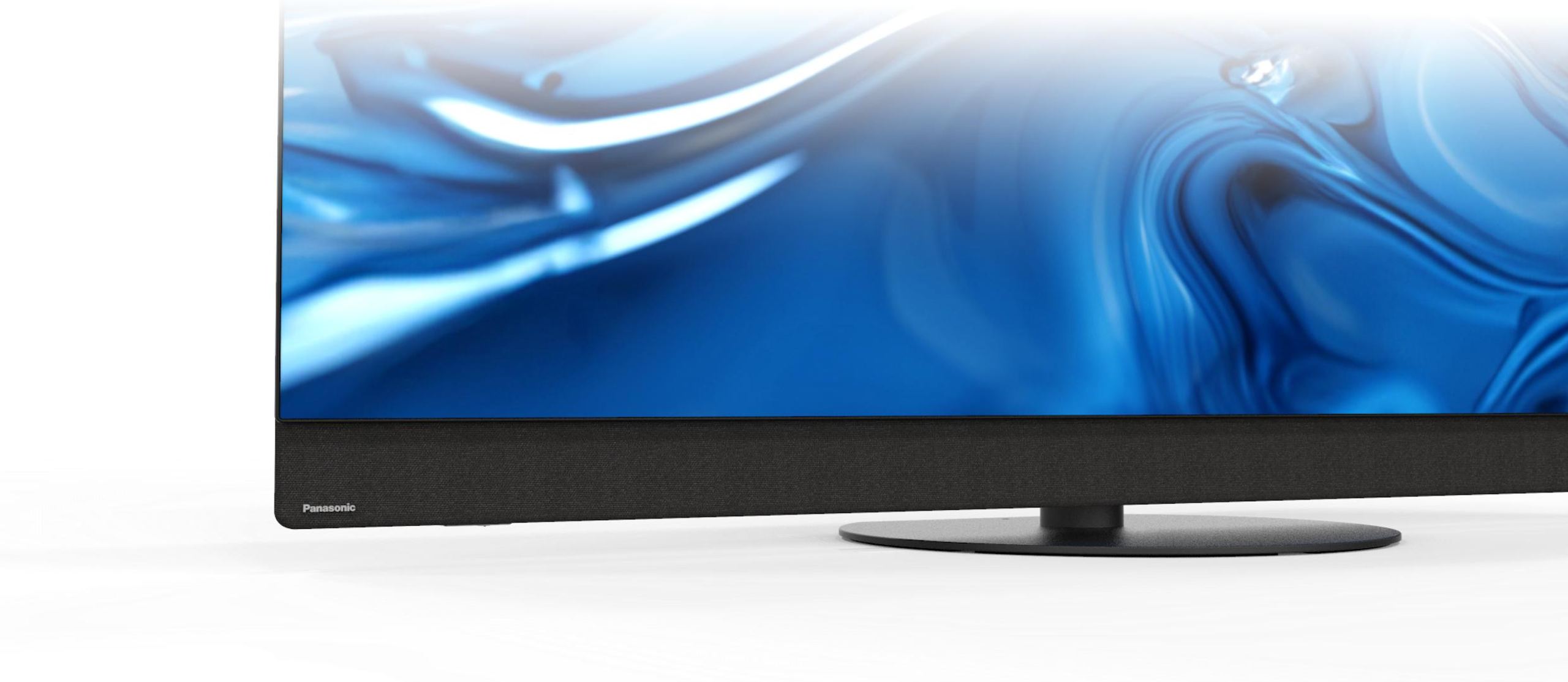
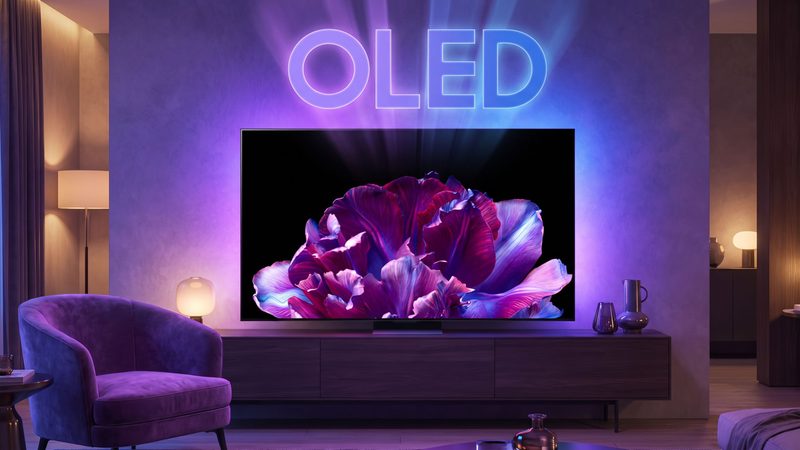
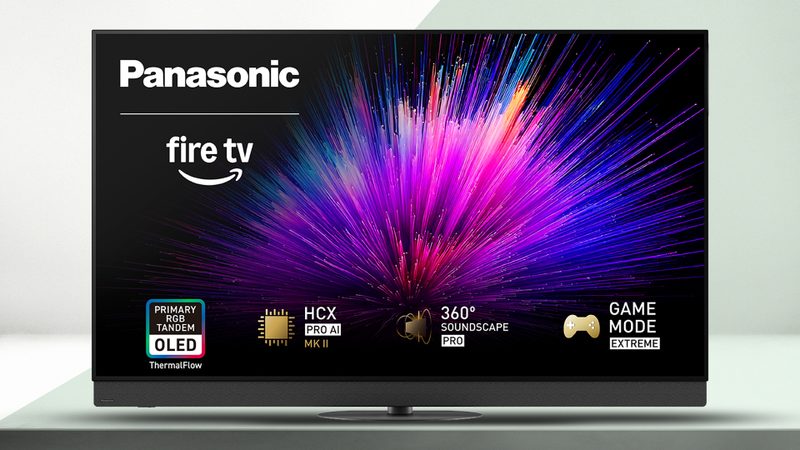
Making an OLED panel brighter is not enough if it heats up so much that it has to throttle its brightness a few moments later. On this 139 cm television, Panasonic has addressed both issues together, with a new generation of panel featuring four emissive layers and a chassis redesigned to dissipate heat. It also retains the strengths of the Z95 range: a picture tuned to film industry standards, a sound system tuned by Technics and Fire TV for apps.
A four-layer panel cooled by airflow
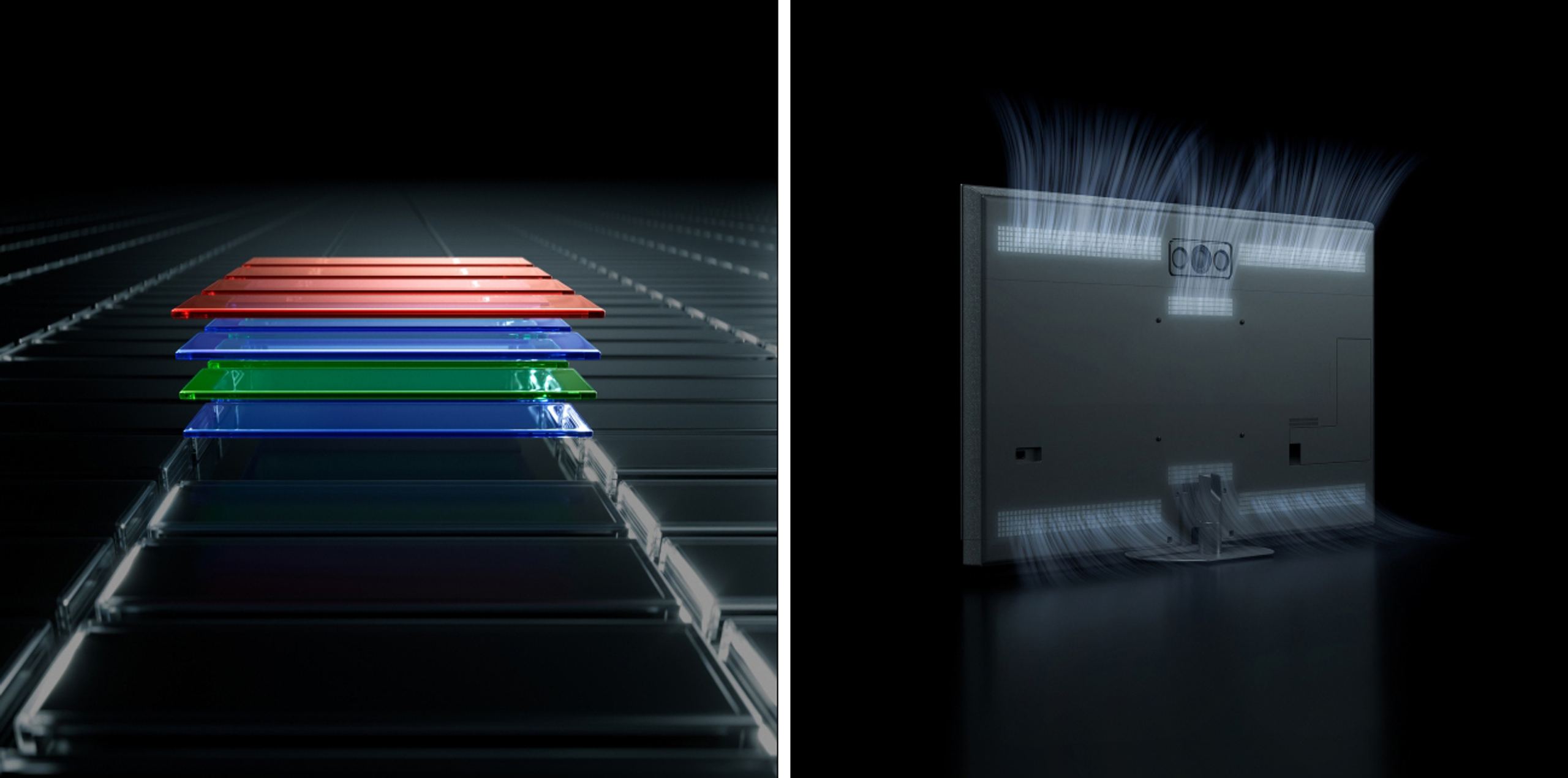
On an OLED television, each pixel produces its own light and can switch off completely. This is what delivers those deep blacks, with no halo around white subtitles on a black background. The TV-55Z95BEG’s Primary RGB Tandem panel stacks four emissive layers instead of three: two blue layers surround red and green layers that are now separate. Each primary colour is emitted more purely, and light output improves by 40%. On screen, this translates into brighter highlights, skies and city lights in HDR, and colours that remain saturated even in bright areas, where previous generations tended to wash them out.
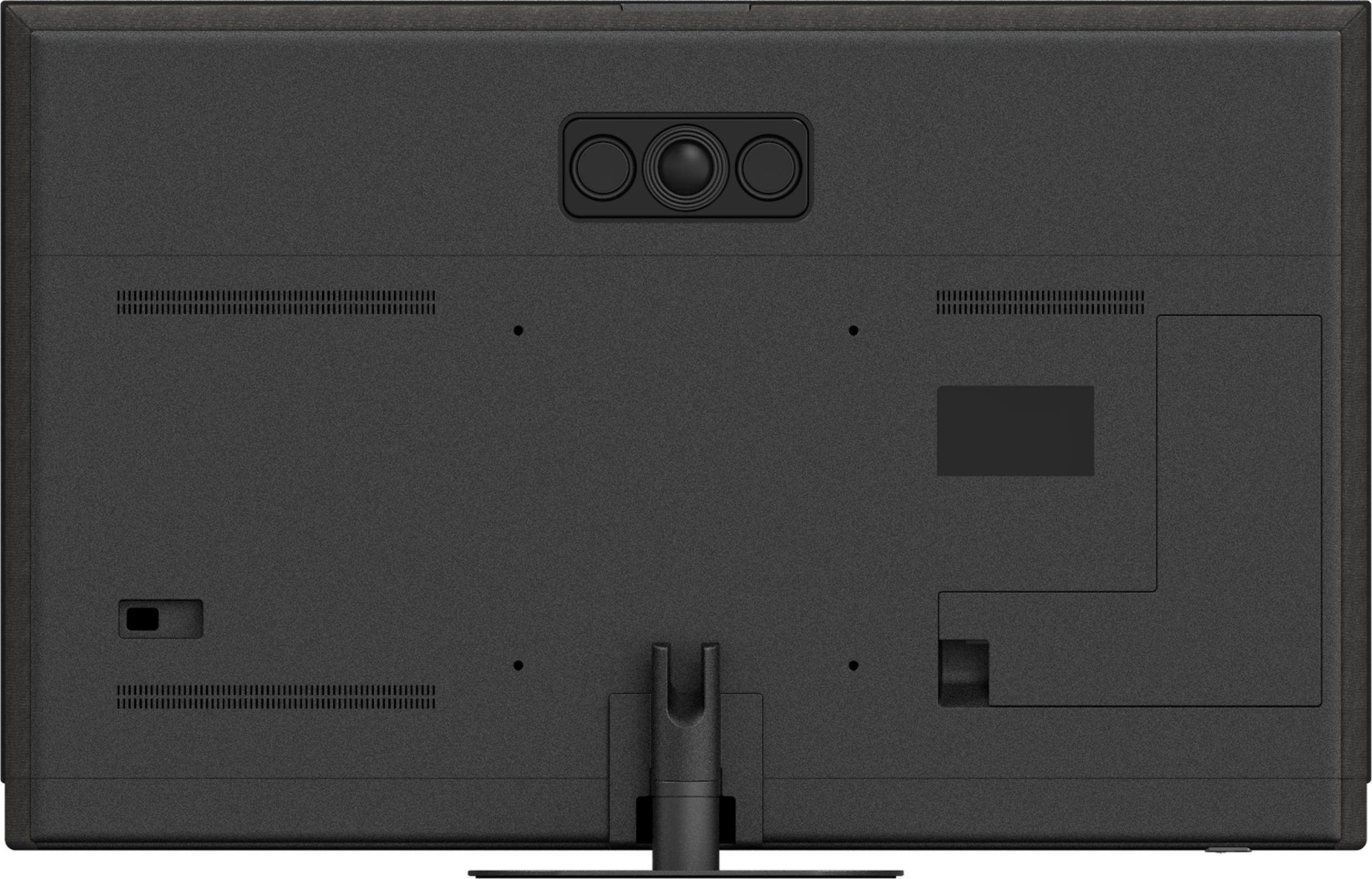
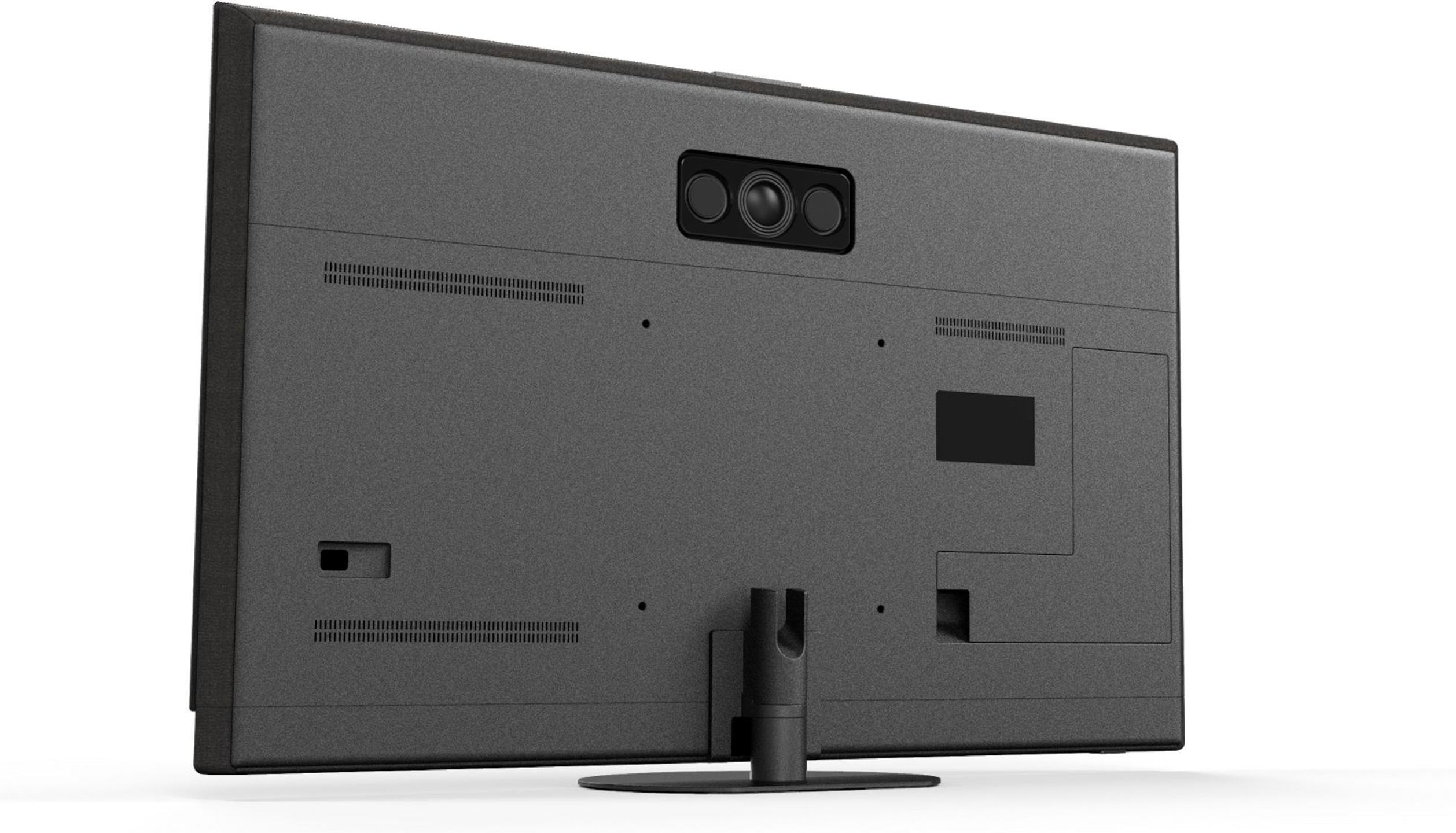
This increase in brightness comes at a cost: heat. The ThermalFlow system addresses this by reorganising the entire rear of the chassis. The vents have been moved and the subwoofer repositioned to clear the airflow behind the panel, following aerodynamic principles borrowed from motor racing. A better-cooled panel can sustain its peak brightness for longer. On an entirely white image, however, an OLED still falls short of an LCD with a powerful backlight. This television performs at its best in a living room with controlled lighting, although it holds its own better than its predecessors in broad daylight.
Picture processing focused on fidelity
The HCX Pro AI MKII processor handles upscaling from HD sources to 4K, motion smoothness with Smooth Motion Drive Pro and colour accuracy at all brightness levels. The four common HDR formats are supported, including the two competing dynamic formats, Dolby Vision IQ and adaptive HDR10+. A UHD Blu-ray disc or a streamed series is therefore always displayed in its most advanced format, regardless of the studio that produced it. The “IQ” and “adaptive” versions take room lighting into account, measured by a sensor on the front.
The list of picture modes is long, but fairly straightforward. Automatic AI mode adjusts the picture according to the content detected, for those who do not want to adjust anything. Filmmaker mode, with an intelligent sensor, respects the colourist’s choices while compensating for ambient lighting. Netflix Adaptive Calibrated and Prime Video Calibrated modes apply to programmes on these two services. Finally, the two professional modes are intended for full calibration, either by an ISF-certified technician or using Calman automatic calibration software, which returns on this generation.
Sound tuned by Technics, from the bottom of the screen to the ceiling
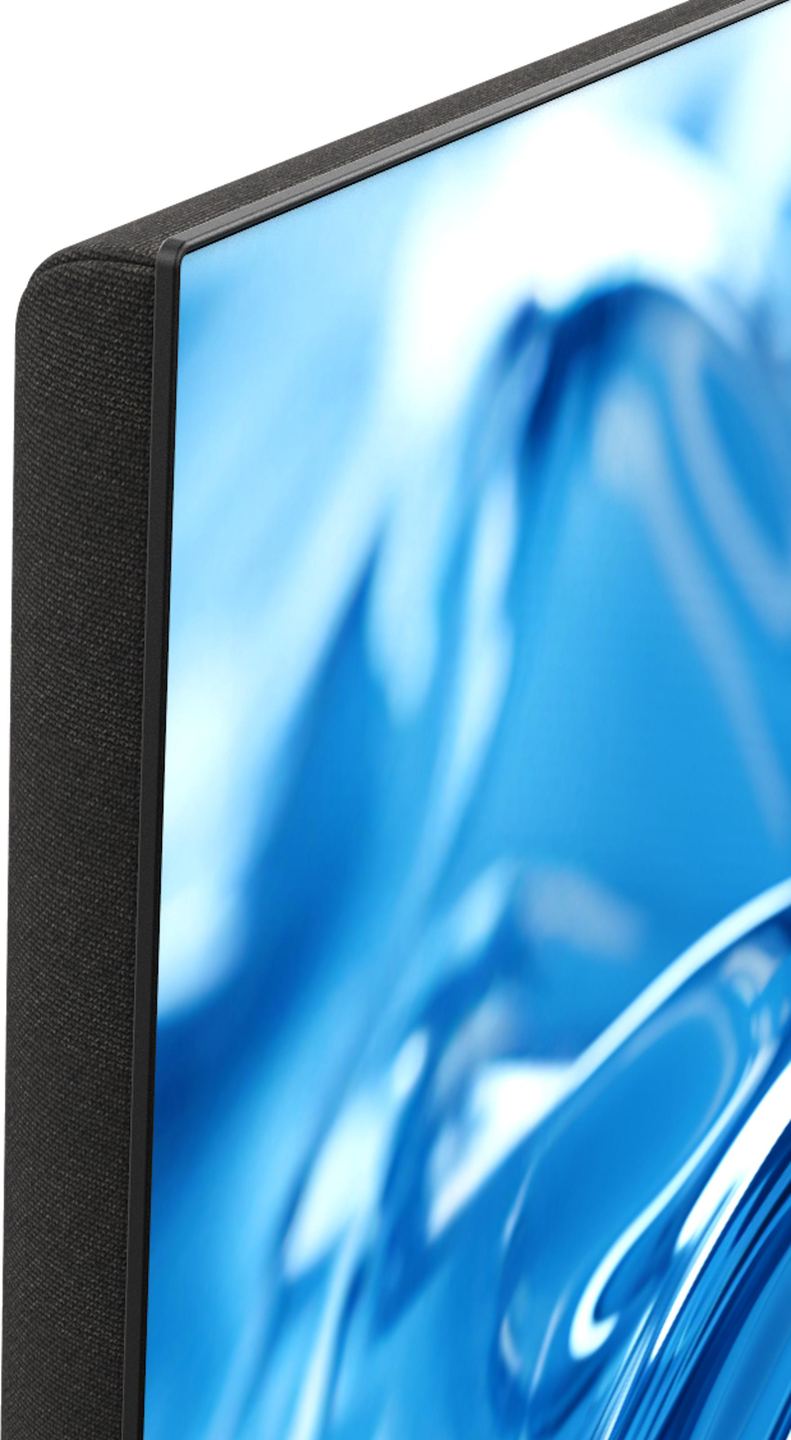
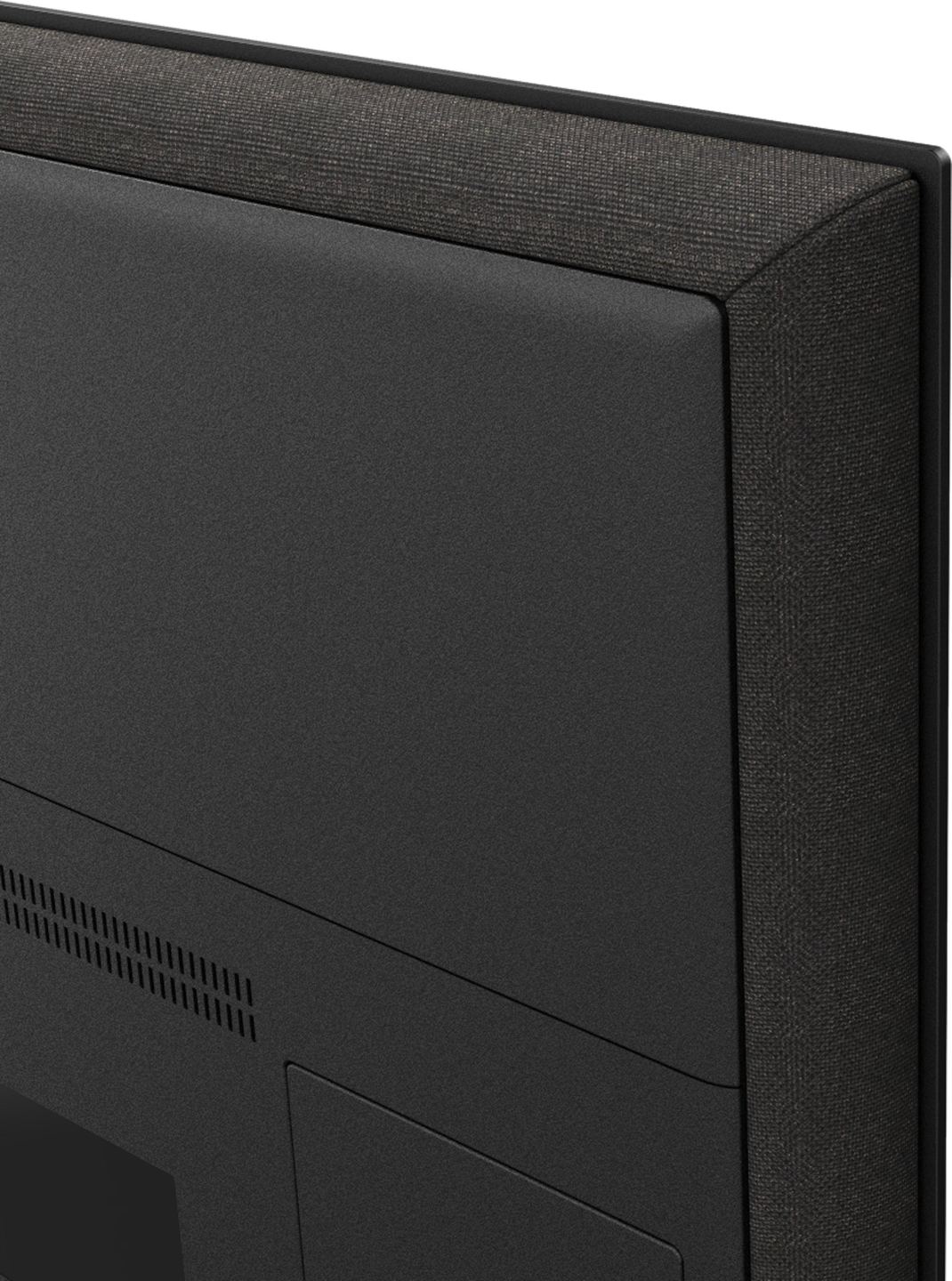
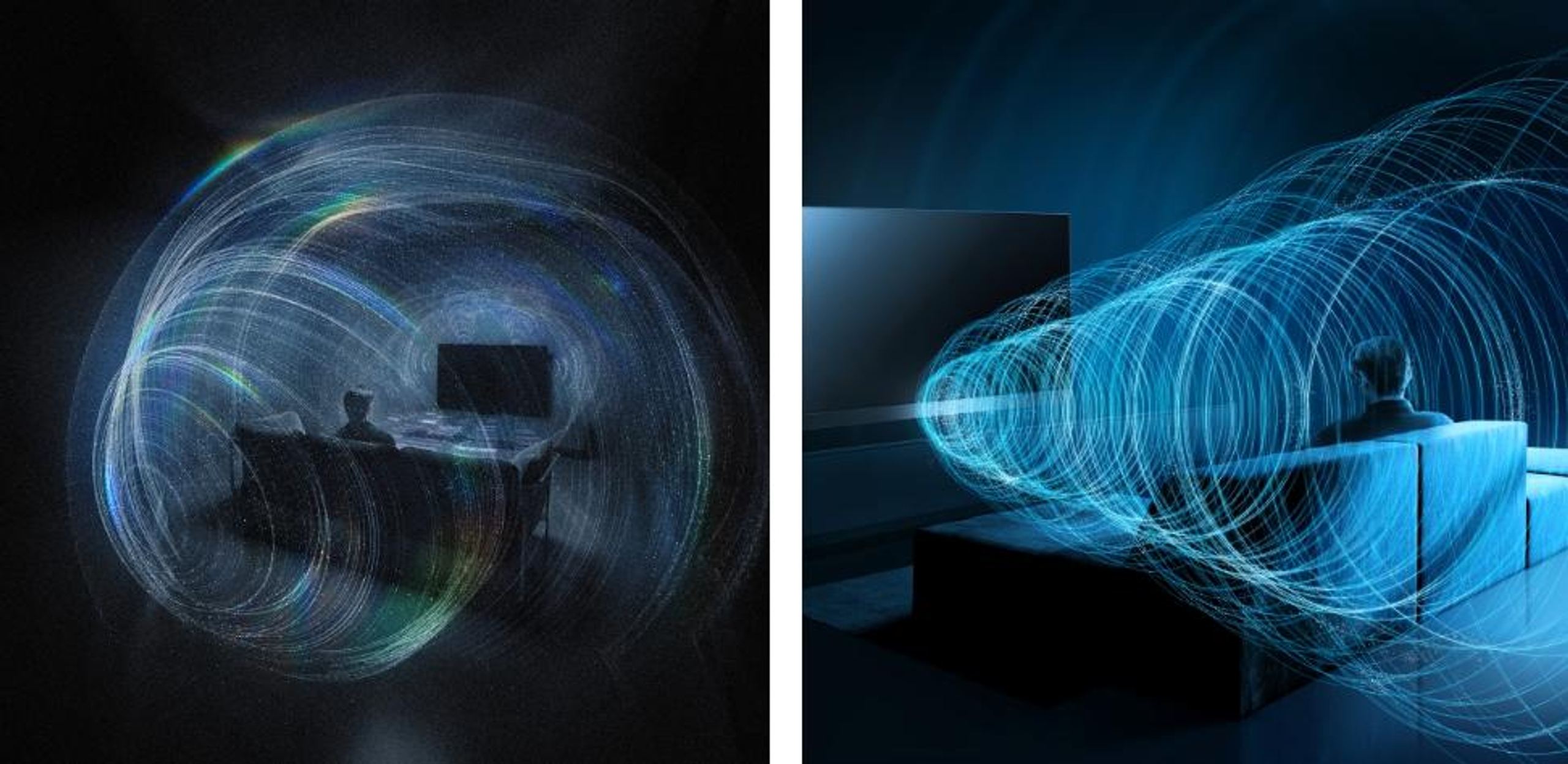
The 360° Soundscape Pro system distributes 160 W across seven channels and a subwoofer. A row of front-facing speakers, housed beneath the panel, carries voices towards the sofa. Two side-facing speakers widen the soundstage, while two others, facing upwards, reflect the height effects of Dolby Atmos soundtracks off the ceiling. The subwoofer, positioned at the rear and supported by two passive radiators, has 30 W of power. Technics engineers have tuned the whole system, concealed behind the anthracite grey fabric that wraps around the television.
This system is sufficient for many living rooms, without an additional soundbar. It does have its limits, however: a subwoofer built into just a few centimetres of depth will never reach as low as a separate subwoofer. Those aiming for a multichannel setup with real surround speakers will use an AV receiver. The sound modes cover the essentials, from speech to stadium sound, with two settings dedicated to shooting games and role-playing games.
Fire TV, Alexa and Apple devices together
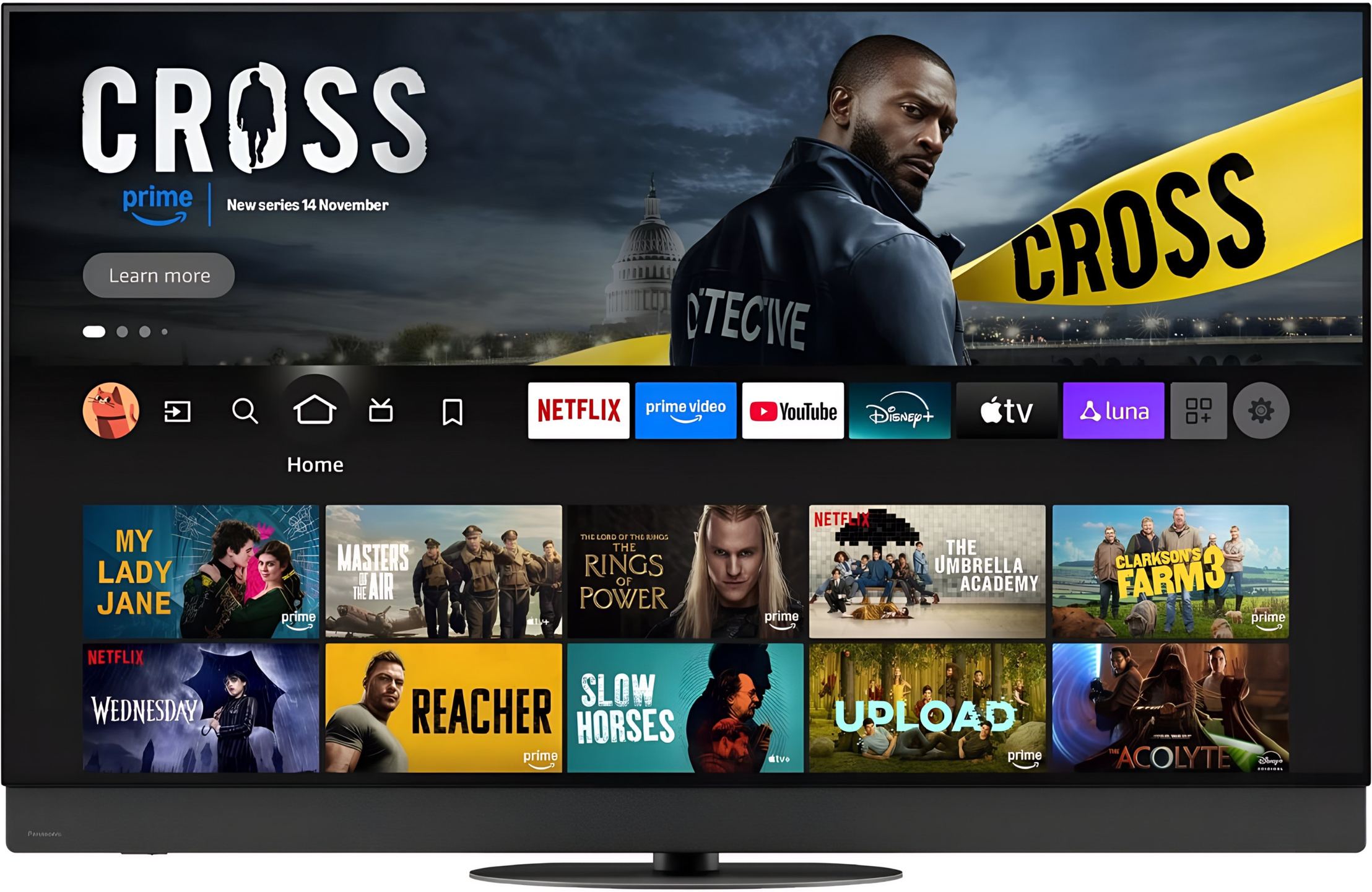
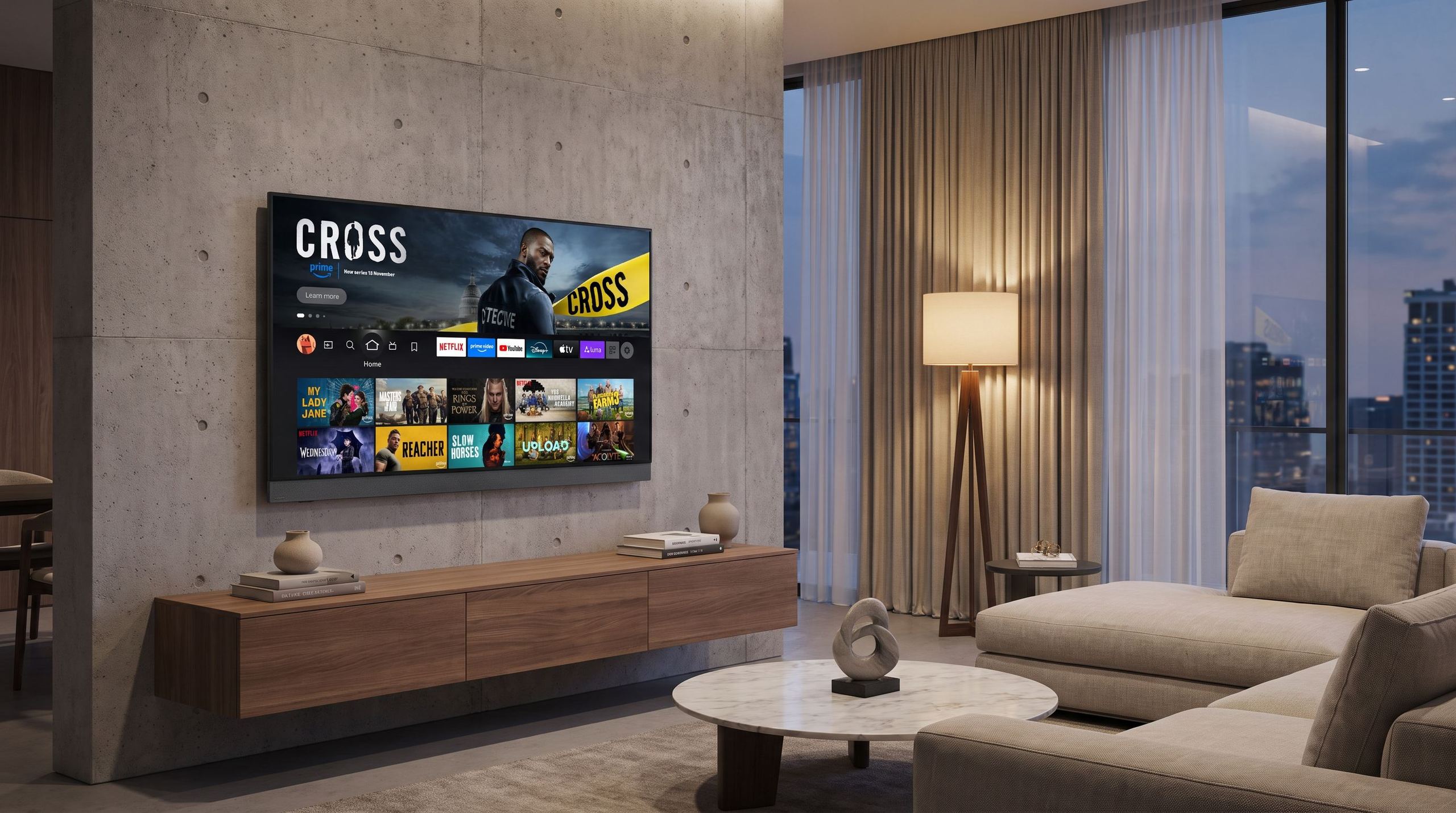
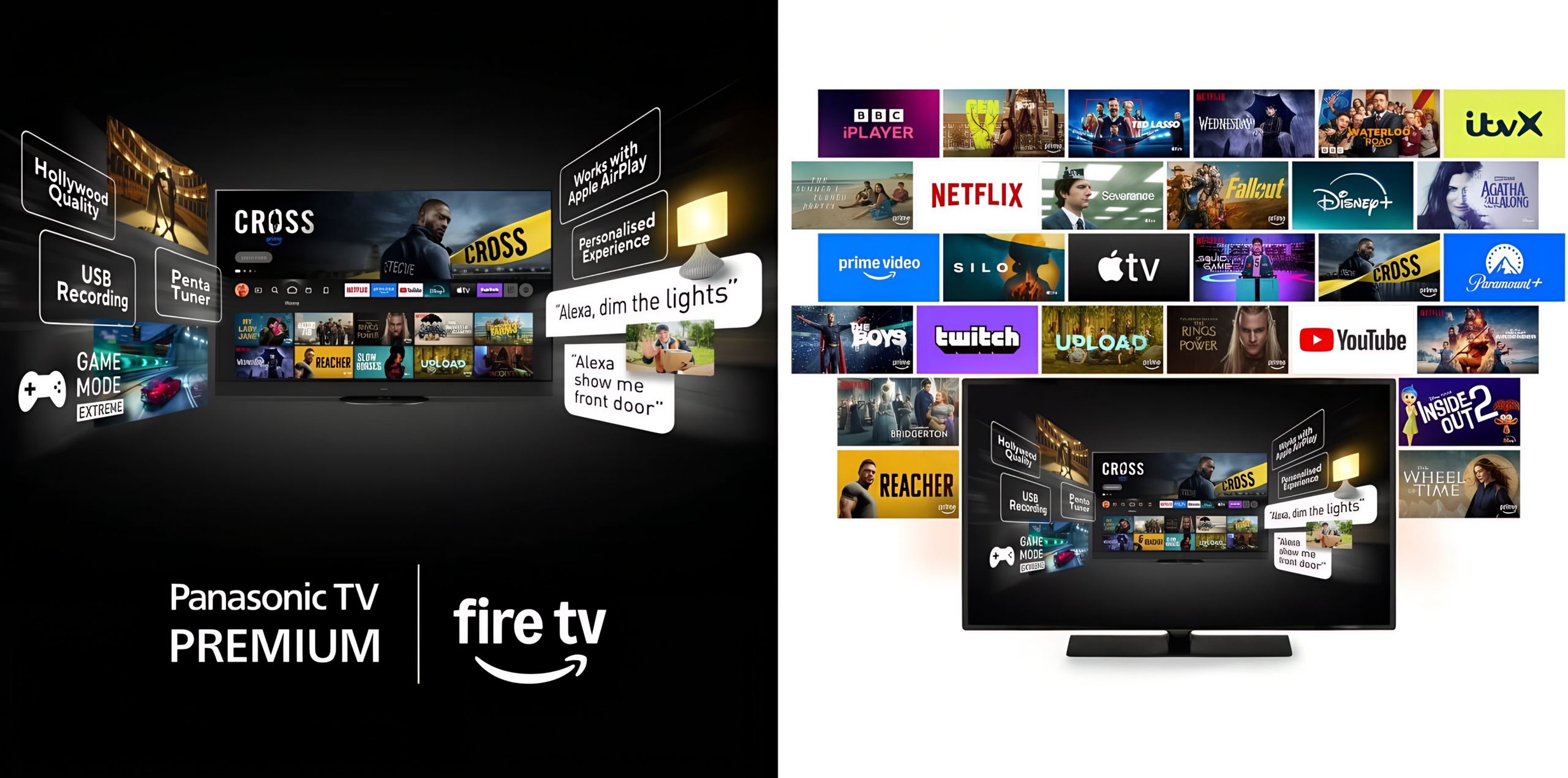
The Fire TV interface brings streaming apps, channels and suggestions based on viewing habits together on a single home screen. Thanks to the built-in microphones, Alexa responds to voice commands without the remote control, and the television is also compatible with Google Assistant. Households with an iPhone or Mac have AirPlay for sharing videos and photos, as well as Apple Home for home automation. When the television is off, Ambient mode displays artwork, personal photos or information widgets.
Bluetooth works both ways. It sends sound to headphones or a wireless speaker, receives music from a phone to play through the television’s speakers, and accepts a keyboard or mouse for faster menu navigation.
Consoles and PCs: four HDMI ports, two at full speed
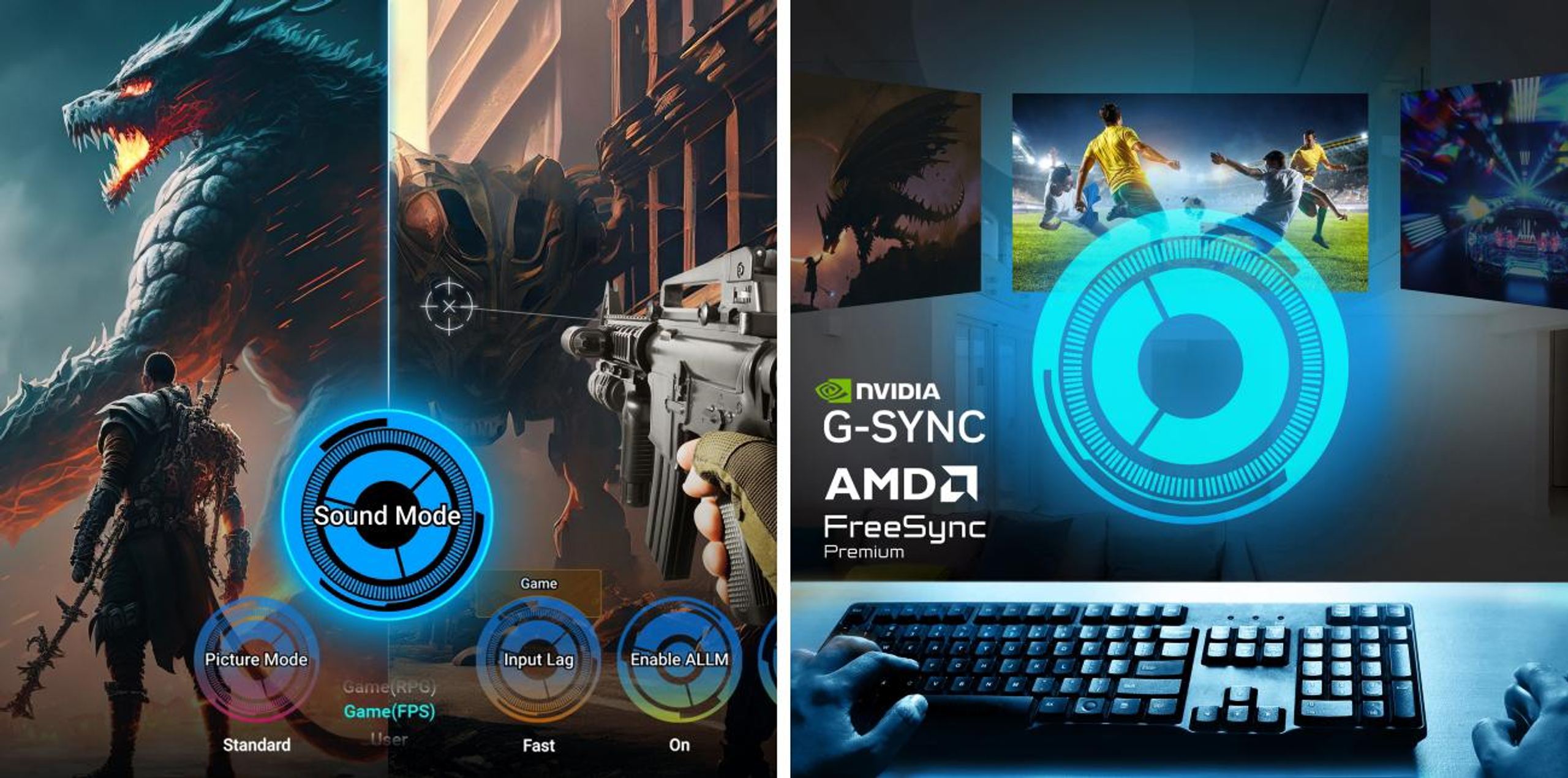
The four HDMI inputs are positioned on the side, making them easy to access even when the television is wall-mounted. All automatically switch to low-latency mode as soon as a console starts a game. The most demanding features are reserved for inputs 1 and 2: high-frame-rate 4K, variable refresh rate up to 144 Hz and AMD FreeSync Premium and G-Sync compatibility. The 144 Hz refresh rate is mainly of interest to PC gamers, as current consoles top out at 120 frames per second.
This arrangement becomes a real compromise when an AV receiver enters the picture. The enhanced audio return channel (eARC) is on input 2: once the receiver is connected, only one full-speed input remains for a recent console or PC. The game control panel, accessible during play, brings together useful settings and indicators without leaving the game screen.
TV reception, recording and network sharing
The Penta Tuner receives digital terrestrial TV (DVB-T/T2), cable (DVB-C) and satellite (DVB-S2). Thanks to the twin tuner, you can watch one channel while recording another to a USB hard drive, or display two programmes side by side. The SAT>IP function turns the television into a channel server for other compatible televisions in the home, and also works in the opposite direction. The programme guide, audio description and HbbTV complete the package.
An easy-to-install 55-inch television
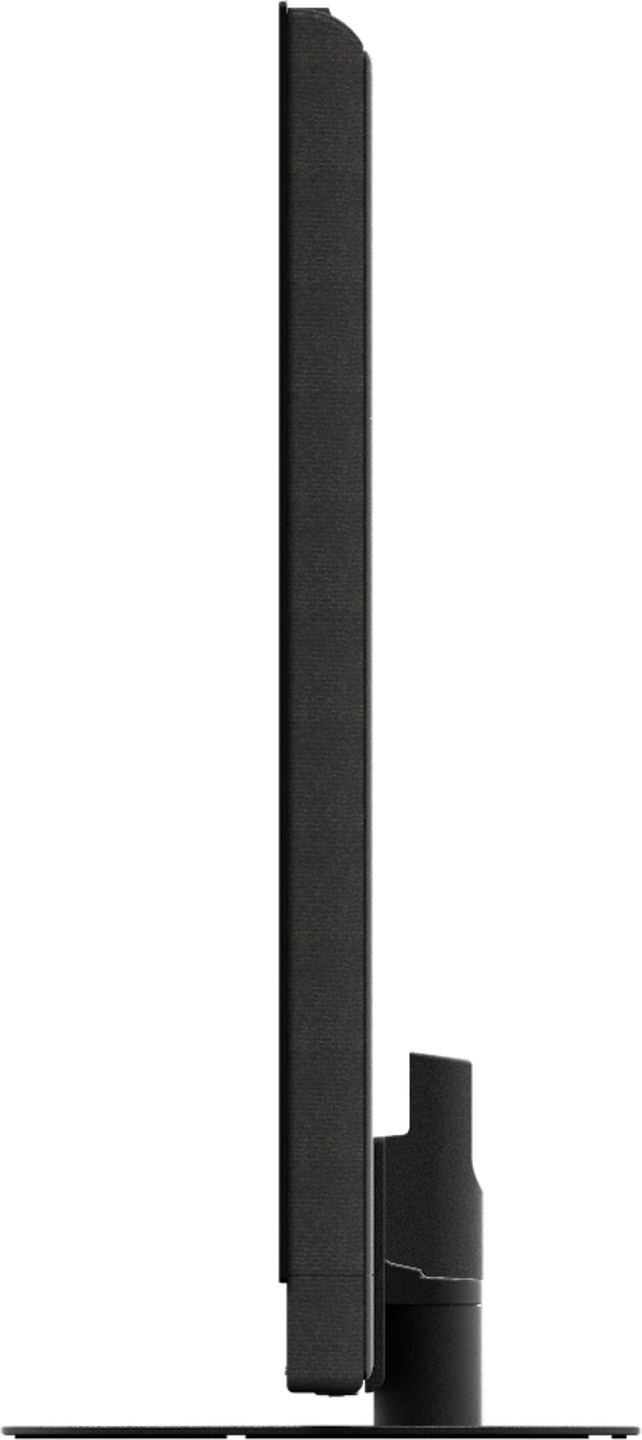
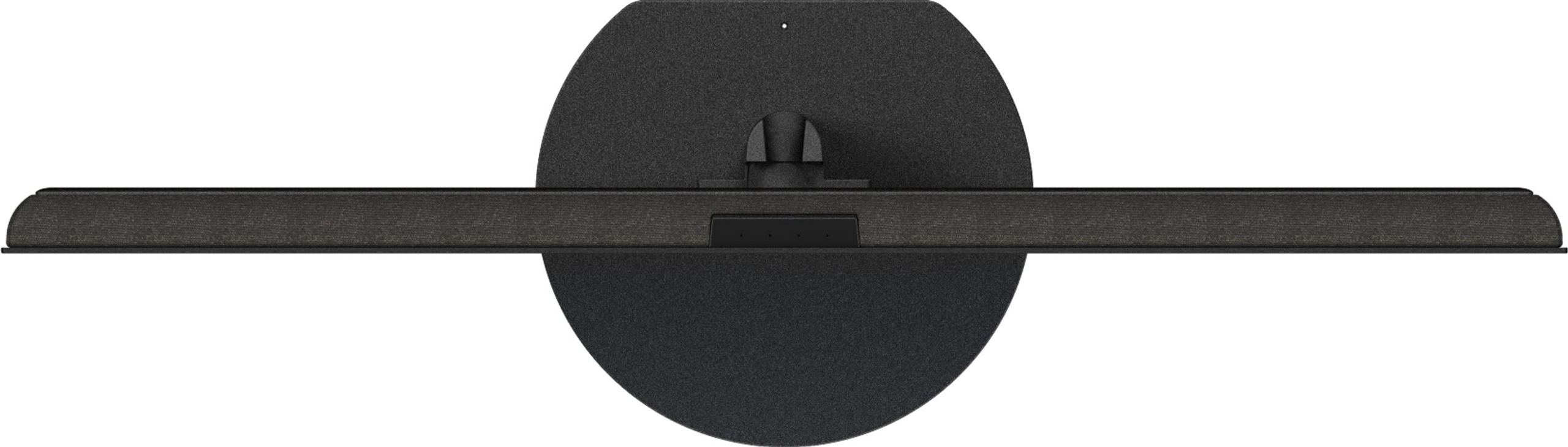
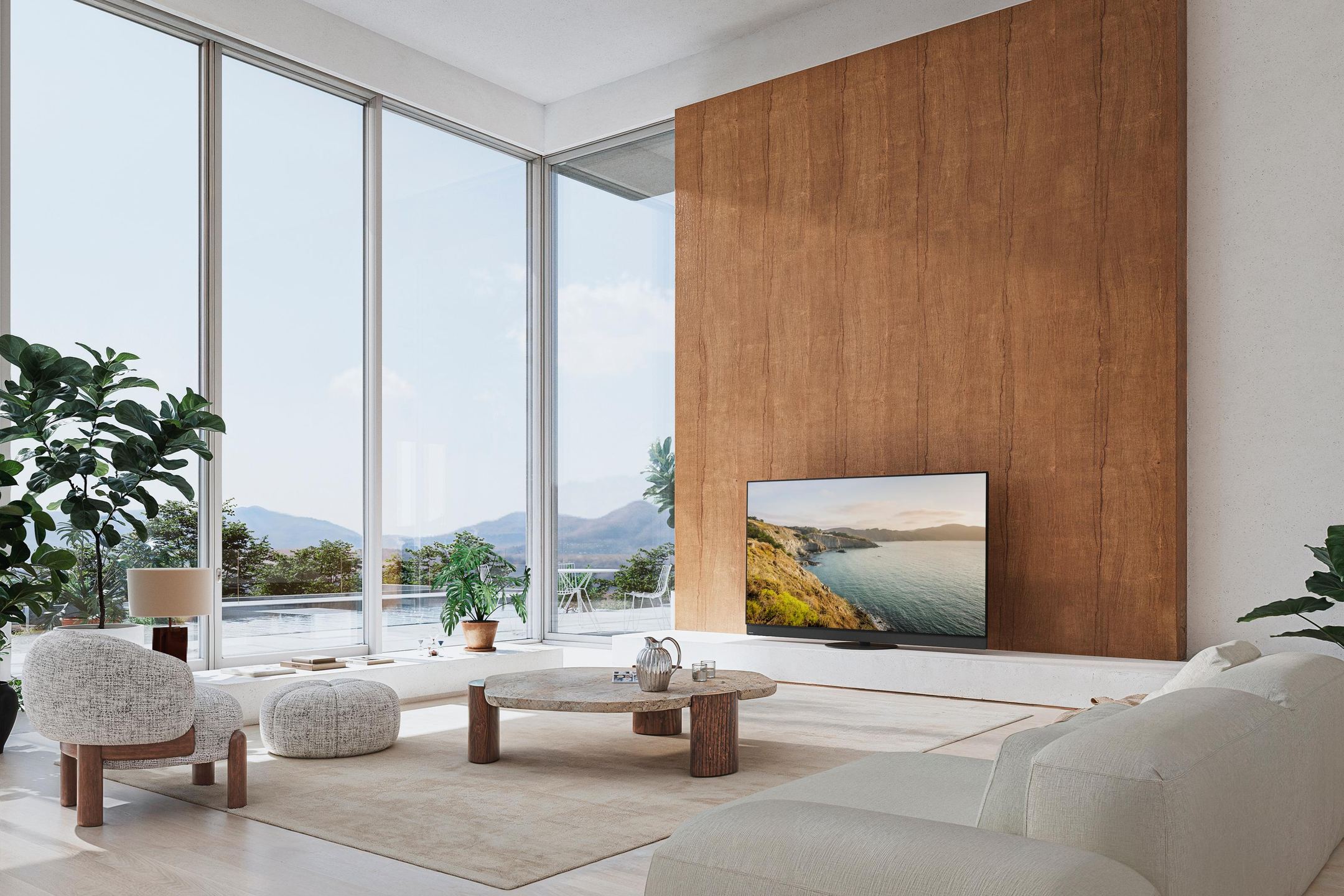
At 122.7 cm wide and 5.2 cm deep without the stand, the TV-55Z95BEG fits on most TV units. Its central swivel stand, measuring 38.8 × 34.8 cm, needs only a narrow surface, whereas feet positioned at either end would require a unit almost as wide as the screen. It also lets you angle the picture towards the sofa or kitchen. The weight drops from 23.5 kg with the stand to 19 kg for wall mounting, with a VESA mounting pattern of 300 × 300 mm. The supplied remote control is a premium Panasonic-specific model, with dedicated buttons, rather than the standard Fire TV remote. In 2026, the TV-55Z95BEG remains the flagship model in Panasonic’s OLED range.
Technology: 4K Primary RGB Tandem OLED display with ThermalFlow, for enhanced brightness and contrast, vibrant colors and deep blacks
Resolution: 4K Ultra HD, 3840 × 2160 pixels
Refresh rate: up to 144 Hz
Motion handling: Smooth Motion Drive Pro
Contrast: Ultimate Contrast
Color gamut: wide color gamut
HDR formats: HDR10+ Adaptive, HDR10, HLG, Dolby Vision IQ
Processor: HCX Pro AI MKII, with automatic AI-powered picture optimization
Picture modes: Auto AI, Dynamic, Normal, Cinema, True Cinema, Filmmaker with intelligent sensor, Custom, Professional 1, Professional 2, Sport, Game, True Game, Dolby Vision Vivid / IQ / Dark / Game, Netflix Adaptive Calibrated Mode, Prime Video Calibrated Mode
ISF mode: yes
Audio
Sound system: Technics-tuned 360° Soundscape Pro, compatible with Dolby Atmos
Total output power: 160 W
Front speaker array: 70 W
Side speakers: 2 × 15 W
Up-firing speakers: 2 × 15 W
Subwoofer: 30 W
Configuration: 7 channels and a mono subwoofer with 2 passive radiators
Automatic AI-powered sound optimization: yes
Sound modes: Auto AI, Standard, Music, Speech, Stadium, FPS, RPG, User
Smart TV and services
Smart TV platform: Fire TV, with smooth navigation and personalized content
Google Assistant: compatible
Alexa: hands-free control, works with Alexa
Fire TV Ambient Experience: yes
Apple AirPlay, Apple Home: yes
Home network: client
TV streaming over the SATIP / DVB-IP home network: server and client
Screen mirroring: yes
Media player: yes
Gaming
Game Mode Extreme: enhanced gaming control panel
Connections and networking
Built-in wireless LAN: yes
Bluetooth: yes
HID / HOGP profiles: keyboard and mouse
A2DP profile: stereo audio input and output
Bluetooth Audio Link: yes
HDMI inputs: 4, all side-mounted
HDCP: version 2.3
eARC, enhanced audio return channel: input 2
ALLM, auto low-latency mode: all inputs
VRR, variable refresh rate up to 144 Hz: inputs 1 and 2
4K HFR, high frame rate: inputs 1 and 2
AMD FreeSync Premium, G-Sync compatibility: inputs 1 and 2
Power Link via HDMI signal: yes
USB ports: 3, including 2 on the side and 1 underneath the unit; 1 USB 3.0 port and 2 USB 2.0 ports
Ethernet port: 1
Common Interface: 1 CI Plus slot, version 1.4, ECP
Optical digital audio output: 1, underneath the unit
Headphone output: 1, underneath the unit, switchable to subwoofer output
Dimensions without stand, width × height × depth: 1227 × 764 × 52 mm
Dimensions with stand, width × height × depth: 1227 × 787 × 348 mm
Stand dimensions, width × depth: 388 × 348 mm
Weight without stand: 19.0 kg
Weight with stand: 23.5 kg
VESA mounting: yes, 300 × 300 mm hole spacing
Packaged unit dimensions, width × height × depth: 1590 × 886 × 228 mm
Total packaged weight: 31 kg
Power supply: 220 to 240 V AC, 50 / 60 Hz
Included accessories
Premium remote control
Frequently asked questions
How does it differ from its predecessor, the Z95A?
+
The Z95A used a microlens OLED panel that focused light toward the viewer. The Z95B switches to a four-layer Primary RGB Tandem panel and introduces ThermalFlow cooling. For audio, the speakers have been redesigned and repositioned to widen the soundstage, while subwoofer power has increased from 20 to 30 W. The HCX Pro AI MKII processor remains unchanged from one generation to the next.
Can you add an external subwoofer without using an amplifier?
+
Yes. The headphone jack, located underneath the TV, can be configured as a subwoofer output. Simply connect a powered subwoofer to boost the bass from the built-in speakers, which continue to handle the rest of the frequency range.
Do I need a satellite receiver to receive satellite TV?
+
No, the built-in DVB-S2 tuner accepts the coaxial cable from the satellite dish directly. For pay-TV packages, the CI Plus 1.4 slot accommodates the module and card supplied by the provider.
How do I connect a home theater receiver?
+
Connect the receiver to HDMI 2, the only input that supports eARC. This connection sends audio from apps and sources connected to the TV to the receiver, including uncompressed multichannel audio and Dolby Atmos. Then disable the built-in speakers in the audio settings, and reserve HDMI 1 for the console or PC that uses 144 Hz or 4K at a high frame rate.
Can the TV be professionally calibrated?
+
Yes. It supports automatic calibration with Calman software and ISF-certified settings. The results are saved in Professional 1 and Professional 2 modes, which can be used, for example, for separate daytime and nighttime settings.
Can I watch a movie with headphones without disturbing the rest of the household?
+
There are two options. Wired headphones plug into the headphone jack under the TV, provided it has not been configured as a subwoofer output. Wireless headphones connect via Bluetooth using the Bluetooth Audio Link feature.
Which USB ports should I use for a recording drive?
+
The TV has three USB ports: two on the side and one underneath. Only one supports USB 3.0, which offers faster transfers, while the other two use USB 2.0. The port underneath the TV lets you keep a drive plugged in permanently, with the cable hidden, when the TV is wall-mounted.
User reviews
Review highlights
Reviews are highly enthusiastic: 4.9/5, with 20 top ratings out of 22.
Picture quality is praised by a large majority of buyers: sharp definition, strong contrasts, rich and realistic colors.
The sound, considered outstanding for built-in speakers, also impresses in more than half of the reviews.
Several buyers highlight careful delivery and friendly, responsive service.
No flaws emerge from the reviews overall.
Based on reviews from customers who purchased this product, summarised by AI
Francisco Javier
Incredible product, incredible price, and excellent purchasing, customer service, and delivery service
Comment from 28 March 2026 — Experience from 14 December 2025
Automatically translated — Show original (Spanish)
Increíble producto, increible precio y excelente servicio de compra, atención y entrega
Michele
Fantastic TV! I can confirm everything positive that’s being said online about this product, top-notch audio/video quality! Fully satisfied with the purchase, especially considering the extremely competitive price.
Comment from 28 January 2026 — Experience from 17 January 2026
Automatically translated — Show original (Italian)
Televisore fantastico! Confermo tutto quello che si dice di buono in rete su questo prodotto, qualita' audio/video al top! Pienamente soddisfatto dell'acquisto anche considerato il prezzo estremamente vantaggioso.
Thierry
I am very satisfied with this Panasonic TV: superb picture and stunning sound. Delivery was perfect, with great packaging and a very friendly driver. Thank you.
Comment from 25 January 2026 — Experience from 20 December 2025
Automatically translated — Show original (French)
je suis très satisfait tv panasonic: superbe image ,un son époustouflant .
L'envoi a été parfait emballage et le livreur très sympa.
merci
Eco-contribution of €12.67 included in the sale price.
To better understand our visitors, measure marketing effectiveness and personalise ads, we and our partners use cookies and mobile advertising identifiers on your device. This data makes it possible to display personalised and non-personalised ads and measure their performance. Some cookies, which are technically necessary, are exempt from consent. You can accept those that require your consent, refuse them by clicking “Reject”, or customise your choices via “More options”.
To find out how Google uses the data collected once you have given your consent, see Google’s Business Data Responsibility site (opens in a new window).
You can change or withdraw your consent at any time via the “Cookies” link. Your choices will apply on our site for 12 months.