

Projector screen or white wall: which solution for your projector?
May 08, 2026
Contents
You have just acquired a video projector, and the question always comes up: do you need a projection screen, or is a white wall enough? The answer depends on your room, your equipment, and your level of image quality expectations. Here are the figures, the trade-offs to know, and the cases where each solution makes sense.
What technically separates a white wall from a projection screen
Projection is based on a simple principle: the light emitted by the projector hits a surface, which reflects it back toward the viewers. The amount of light returned is measured by a value called gain. A magnesium carbonate panel is the 1.0 reference used by manufacturers to calibrate this parameter.
A wall painted in standard-quality matte white has a gain between 0.7 and 0.9 according to measurements published by screen specialists. A dedicated matte white screen reaches 1.0 to 1.3. Technical ambient light rejecting (ALR) screens designed for long-throw projectors can reach up to 2.4, more than double the reflectivity of an ordinary wall.
Three other parameters separate the two surfaces:
- Flatness: a wall always has micro-irregularities, paint texture, or plaster defects that scatter light unevenly.
- Color neutrality: common wall paints contain pigments that alter white balance, whereas a dedicated screen preserves color accuracy.
- Black borders: absent on a wall, they frame the projected image and improve the perception of contrast by absorbing light overspill.
When a white wall really is enough
Projecting onto a wall can produce a perfectly watchable result, provided several strict criteria are met. The room must be able to be plunged into complete darkness, with no windows letting daylight through. The wall must be smooth, with no wallpaper texture or coarse plaster. The paint must be as neutral a matte white as possible: an off-white or cream will distort colors, and a satin or glossy finish will create visible hot spots (hotspots) in the image.
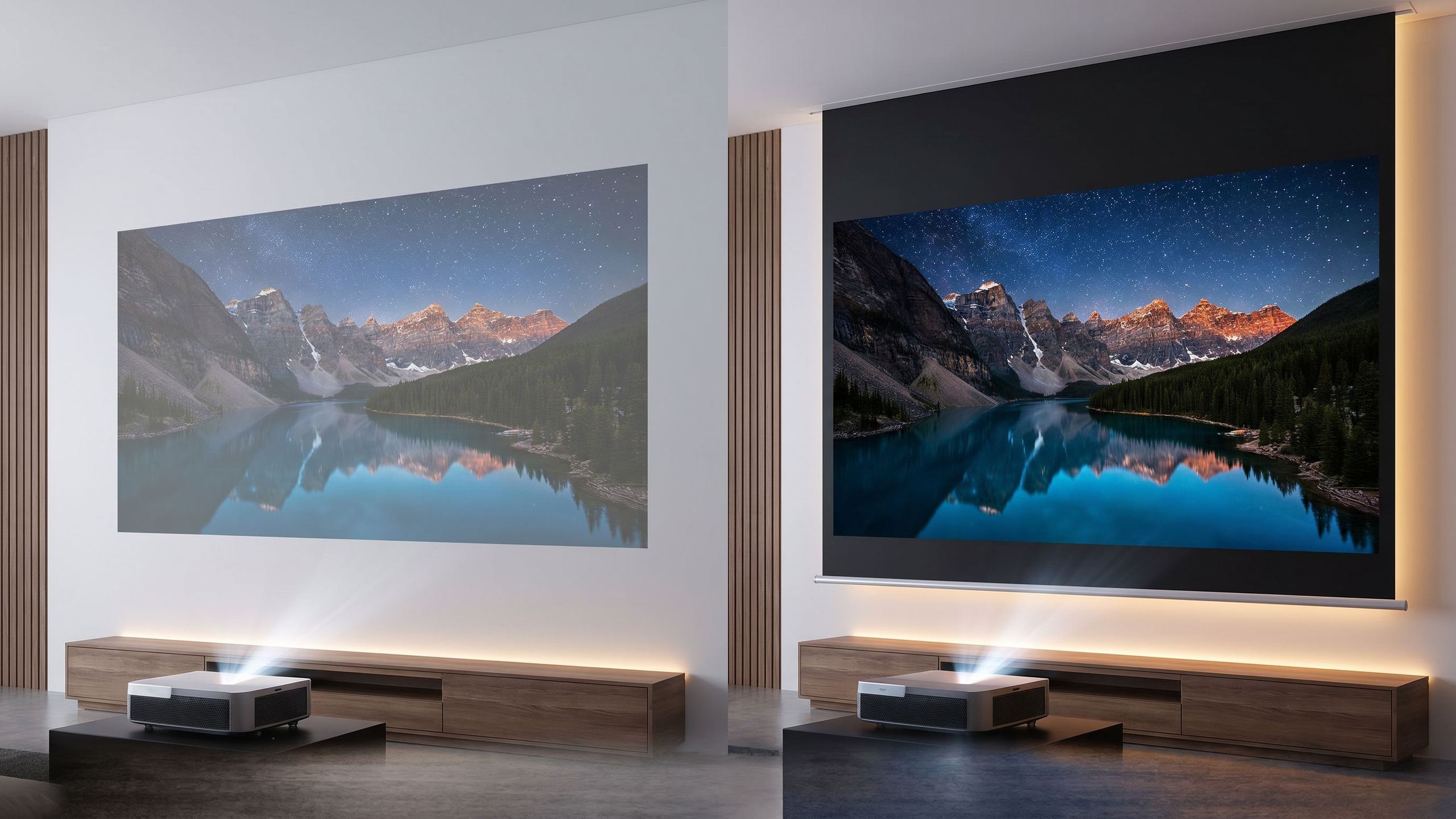
This setup works well for occasional use or a tight budget. It mainly becomes a problem when ambient light comes into play. Walls are diffuse reflectors: they send light in all directions, including light coming from windows, lamps, or light-colored side walls. This scattering washes out blacks and turns contrast gray. Tests carried out with a 6000 ANSI lumen laser projector show that the image on a white wall remains 35 to 45% less bright than with an equivalent ALR screen, despite the device’s raw power.
Integration is the wall’s second advantage. No casing to hide, no screen to roll down, no motorization to maintain. For a multipurpose living room where the projector comes out once a week, that is a real argument.

The real advantages of a projection screen
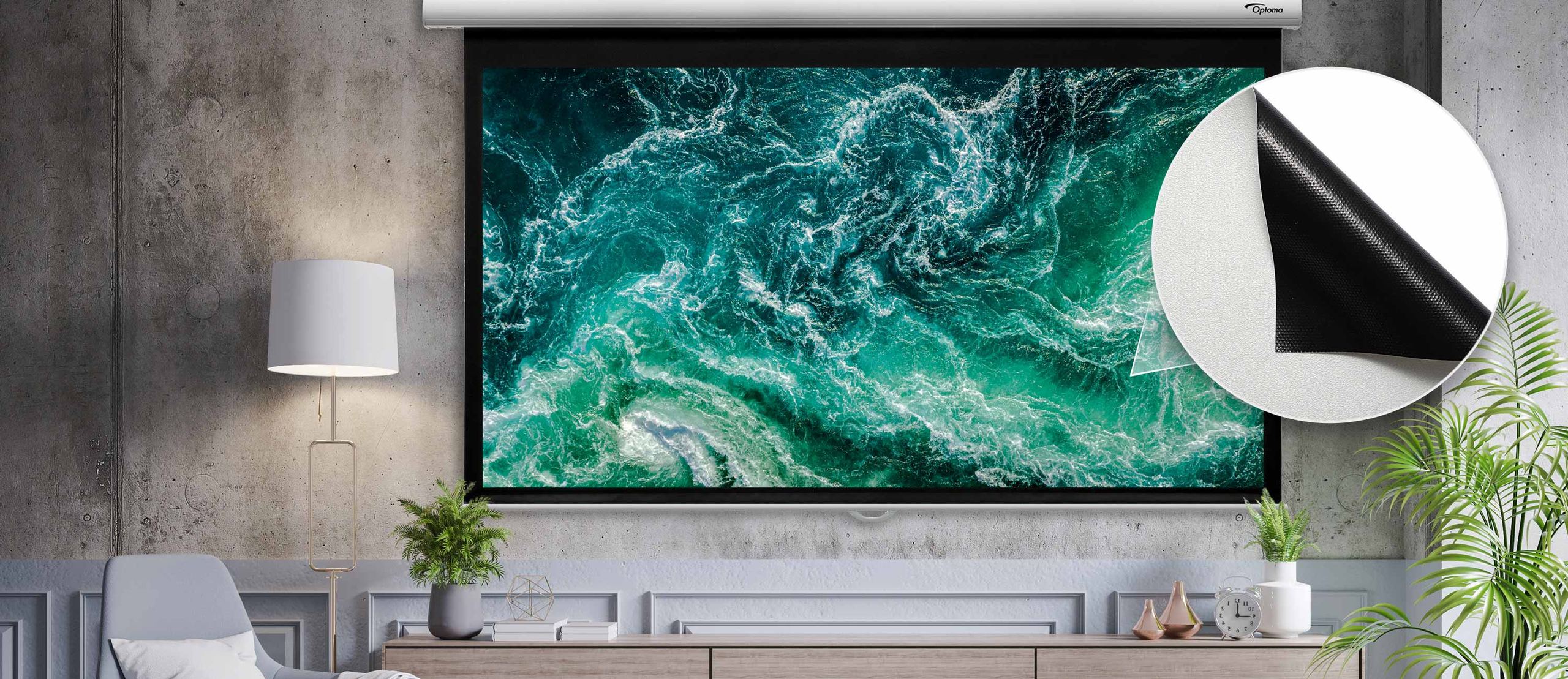
A projection screen provides what no standard paint can reproduce: an optical coating designed to reflect light evenly and directionally. The fabric structure, often made of fiberglass, guarantees perfect flatness and greater longevity than paint, which yellows over time.
For living spaces exposed to ambient light, ALR (Ambient Light Rejecting) screens change the game optically. They incorporate lenticular microstructures or optical layers that accept light from the projector at a precise angle and reject stray light coming from other directions. Perceived contrast can be multiplied by up to 100 compared with a standard matte white screen, and colors retain their saturation even with residual lighting in the room.
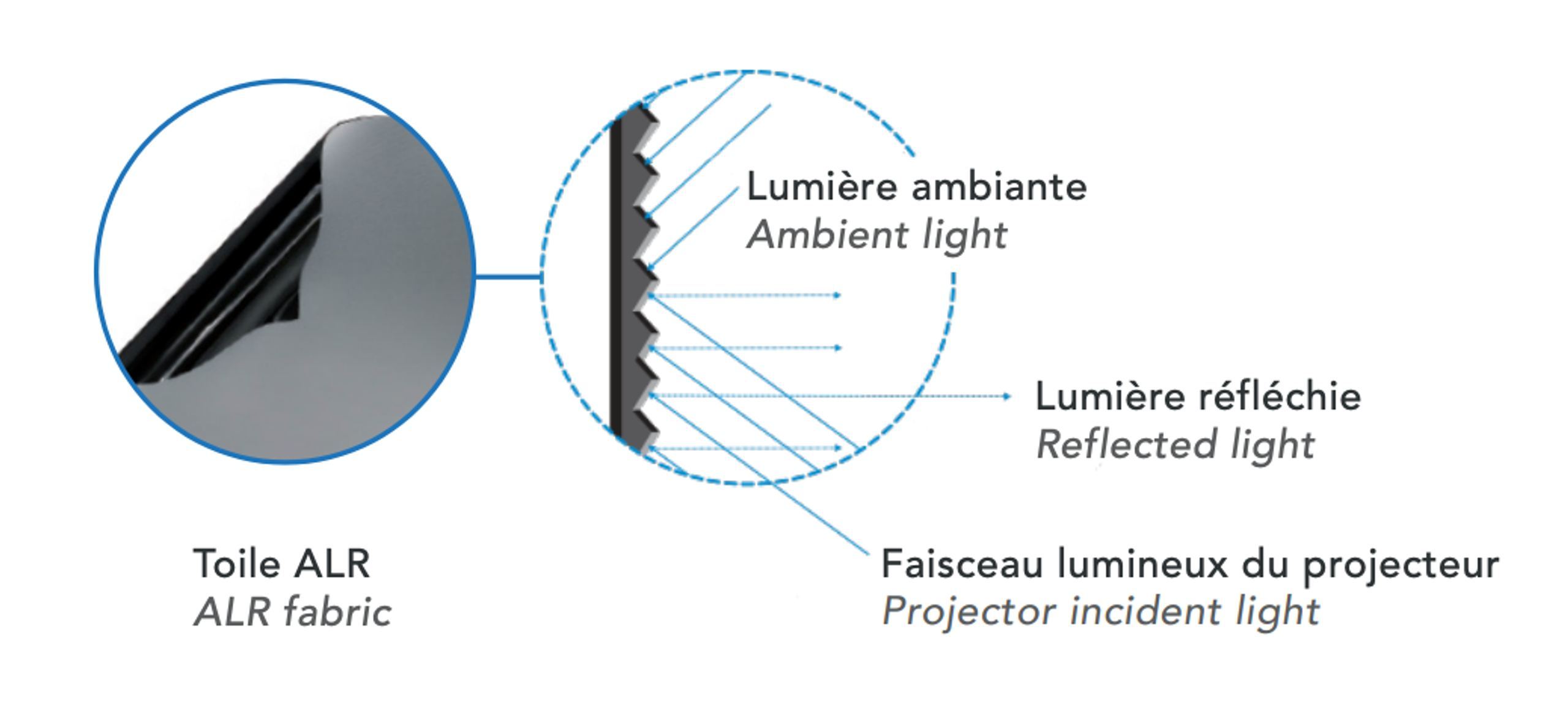
Two families of ALR screens coexist, each suited to a specific type of projector:
ALR screens for long-throw projection are designed for standard video projectors placed several meters from the screen, ceiling-mounted or positioned at the back of the room. Their gray technical surface rejects lateral ambient light while reflecting the projector’s light. They generally offer a viewing angle between 140° and 180°, allowing several viewers to enjoy a uniform image from different positions. To fully take advantage of this type of screen, a projector of at least 1300 to 2500 ANSI lumens is recommended depending on the chosen gain.
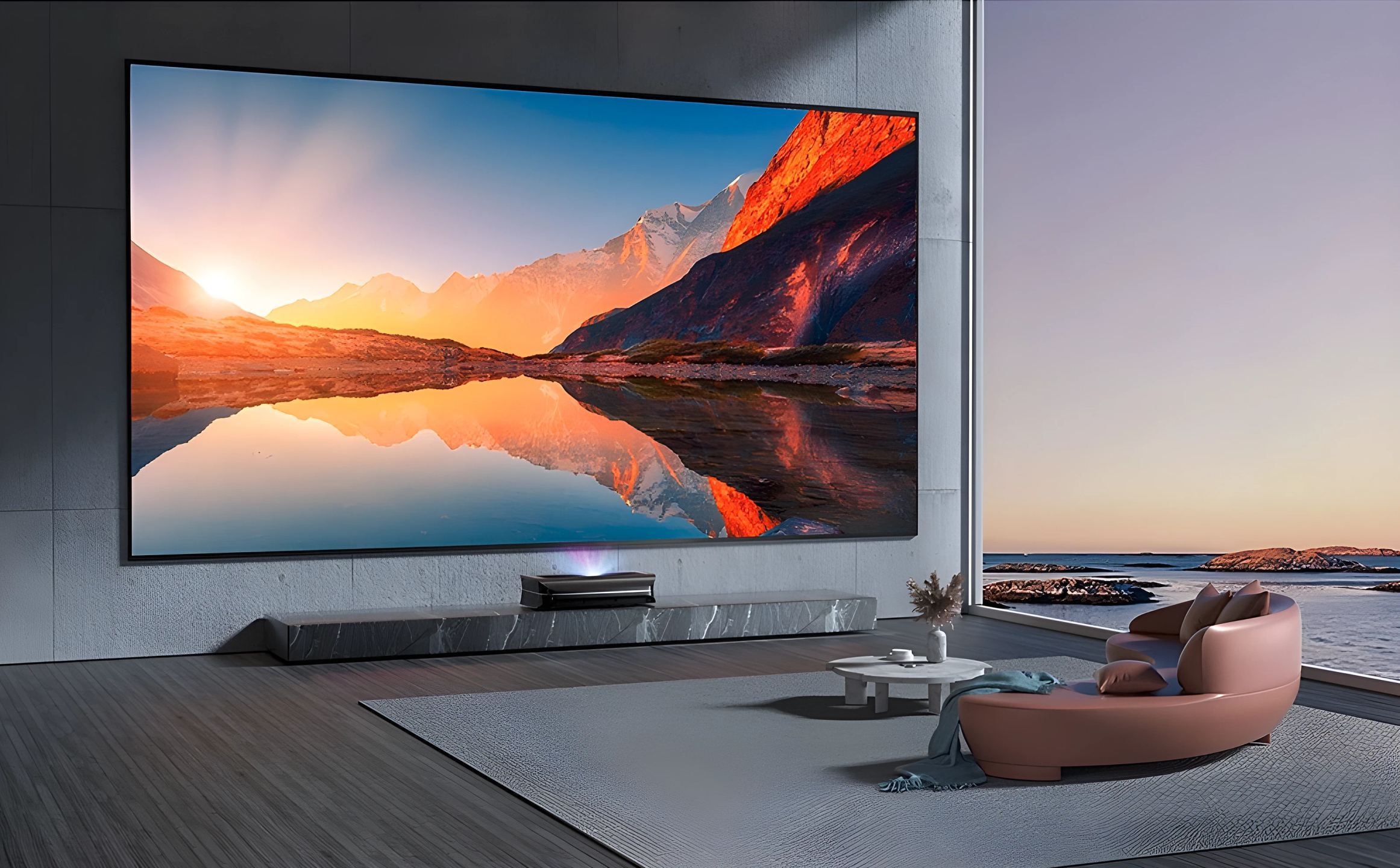
ALR screens for ultra-short-throw projection incorporate a radically different technology, sometimes called CLR (Ceiling Light Rejecting). Their coating optimized against overhead light is mandatory with a UST projector placed just a few centimeters from the wall: the slightest ripple creates visible shadow areas due to the shallow beam angle, and a white wall will always produce a washed-out result. This type of screen is almost inseparable from a modern ultra-short-throw video projector.
The perfect flatness of tensioned fixed-frame screens remains a decisive argument for dedicated setups. Motorized roll-up models can ripple over time, a defect absent from screens tensioned with metal cables. For a living room, motorized screens offer a compromise: rolled up into the ceiling during the day, deployed in the evening, they free up wall space when not needed.
Special projection paint: alternative or false friend?
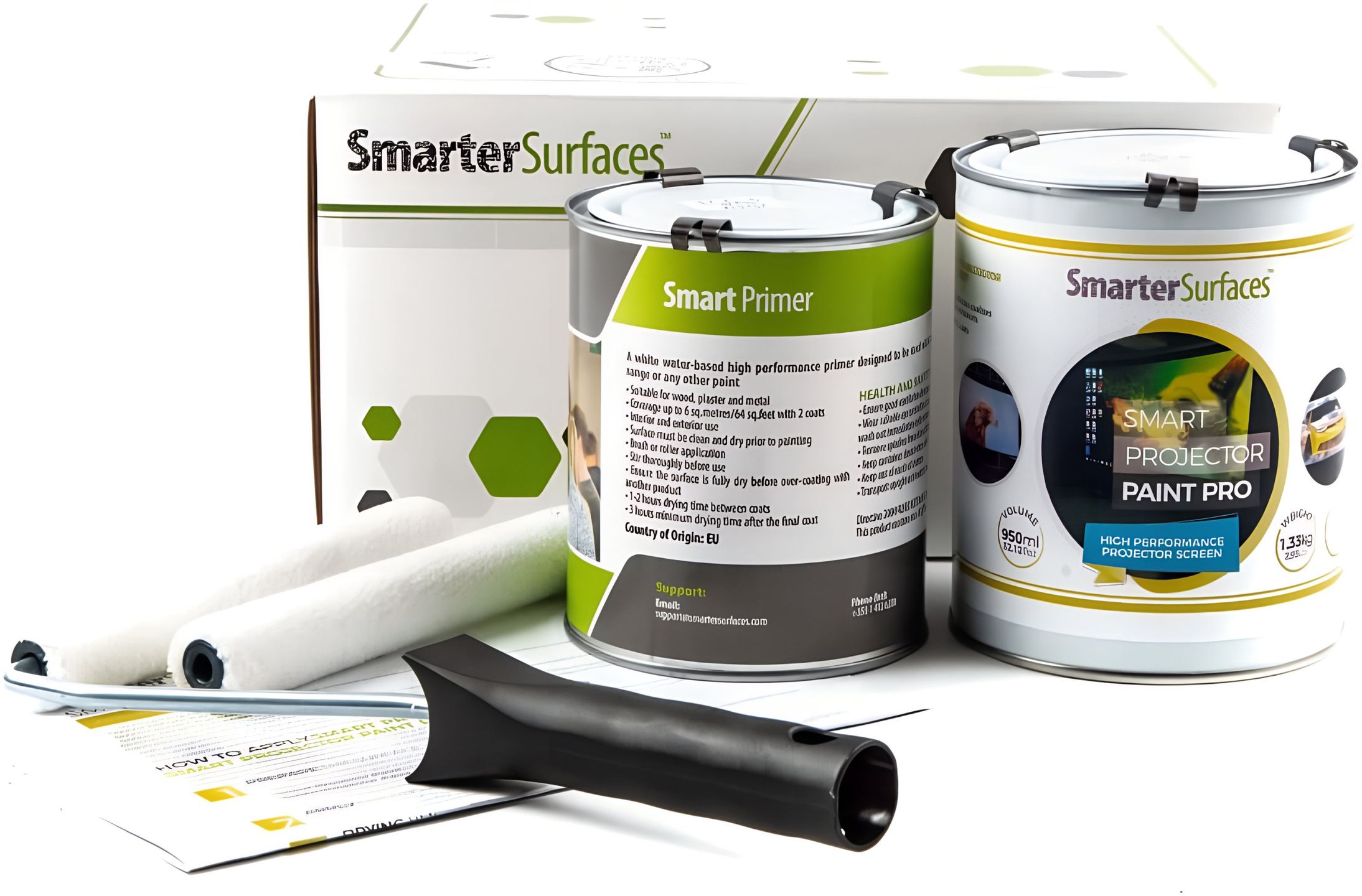
Paints such as Smart Projector Paint, Screen Goo, or barium sulfate-based references offer a middle path. They achieve a gain close to 1.0, or even higher, and provide a large surface without the constraints of a casing.
However, the cost of specialized paint is close to that of an entry-level screen. Expect to pay €80 to €200 to cover 5 to 10 m² of usable surface, to which must be added primer, application tools, and above all preparation time. The wall must be perfectly sanded, filled, sanded again, then painted in several coats without leaving the slightest roller mark. Successful projection on special paint requires rigorous preparation, otherwise every defect will be amplified in the projected image.
Some knowledgeable users achieve excellent results with a very high-quality standard white acrylic paint, such as Levis Lak Mat blanc 001, comparable to an entry-level vinyl screen. The result still falls short of a properly chosen technical screen, but may suit occasional home cinema in a completely darkened room.
Comparison table: white wall, special paint, projection screen
| Criterion | Standard white wall | Special paint | Projection screen |
|---|---|---|---|
| Typical gain | 0.7 to 0.9 | 1.0 to 1.5 | 0.8 to 2.4 (depending on technology) |
| Flatness | Variable, never perfect | Very good if surface is prepared | Excellent (tensioned screen) |
| Color neutrality | Poor to good | Good | Very good to excellent |
| Ambient light | Poor performance | Limited | Effective ALR/CLR screens |
| Black borders | None | None | Yes, improved perceived contrast |
| Cost (100 inches) | €0 to €50 (standard paint) | €80 to €250 + preparation | €170 to more than €8000 depending on model |
How to choose between a projection screen and a white wall
First question: can you achieve complete darkness in the room? If yes, a smooth, well-painted white wall will give an acceptable result with a Full HD projector. If ambient light remains partially present, a screen becomes necessary to preserve contrast: a standard tensioned matte white screen is enough in a room that can be partially darkened (shutters closed, curtains drawn), while an ALR screen is essential as soon as daylight or supplementary lighting remains on during projection.
Second question: is your projector suited to free projection? Short-throw and ultra-short-throw models require a dedicated screen, otherwise the slightest wall texture will be amplified on the screen. Long-throw projectors are more forgiving of a prepared wall.
Third question: how often will you use it, and what level of integration are you looking for? For weekly use in a dedicated room, a fixed-frame tensioned screen remains the most cost-effective investment over ten years. For a multifunction living room where the projector coexists with other uses, a motorized screen combines performance and discretion.
For setups where the equipment must disappear completely when not in use, all-in-one solutions dedicated to ultra-short-throw video projectors exist. The NorStone Eden Vision 240 integrates in a single piece of furniture a niche for the UST projector, the Lumene Eden Extra Bright 240C motorized screen with ALR fabric (240 cm base, 100 inches diagonal), and compartments with acoustic fabric fronts to conceal a soundbar or speakers. Once the session is over, the screen retracts into the furniture and the living room regains its classic appearance.
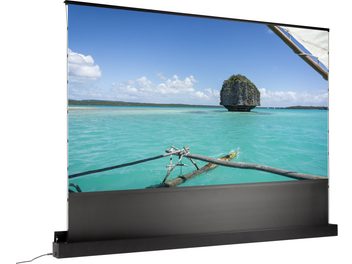
In the same vein, the Oray ALR Série 2 motorisé ascendant works on the opposite principle of ceiling-mounted screens: the screen deploys vertically from a casing placed on the floor or integrated into low furniture. Available in 221 and 265 cm widths, its gray ALR surface is optimized for UST projectors. Once retracted, the upper bar hermetically seals the casing, protecting the screen from dust and preserving the room’s aesthetics. This approach is particularly suitable for installations where the ceiling cannot accommodate a descending screen.
Frequently asked questions
Does a white wall work with a 4K video projector?
Yes, provided the wall is perfectly smooth, painted in neutral matte white, and the room can be darkened. 4K resolution requires a surface without micro-irregularities, otherwise details are lost in the wall’s defects. A 4K projector displays more information than an ordinary wall can faithfully reproduce.
What paint should you choose to project onto a wall?
Choose a high-end matte white acrylic paint without colored pigments. Specialized paints based on barium sulfate or with reflective beads give better results. Avoid satin or velour finishes, which create stray reflections. Preparing the wall (sanding, filler) matters as much as the paint itself.
Is an ALR screen really worth the price?
For a room that cannot be darkened, yes: an ALR screen preserves readable contrast in daylight, where a white wall or matte screen fades away. For a dedicated room plunged into darkness, the extra cost is not justified, and a tensioned matte white screen will produce a better result for less money.
What is the difference between gain 1.0 and gain 1.5?
A gain of 1.0 reflects as much light as a magnesium carbonate reference panel, with a wide viewing angle. A gain of 1.5 sends 50% more light toward the center of the room, but reduces the viewing angle and can generate a visible hot spot. High gain is suitable for small rooms with centered seating, while neutral gain suits wide living rooms.
What image size should you prioritize for a home theater?
A diagonal of 100 to 120 inches (254 to 305 cm) suits most French living rooms, provided a viewing distance of between 1.5 and 2.5 times the image width is respected. Beyond 80 inches, a screen becomes significantly more economical than an equivalent television and better preserves the cinema look.
You may also like to read
 Projection Screen Gain: How to Make the Right Choice for Optimal Image QualityHi-fi and home cinema news
 Oray: 7 Decades of French Excellence in High-Performance Projection Screen ManufacturingHi-fi and home cinema news
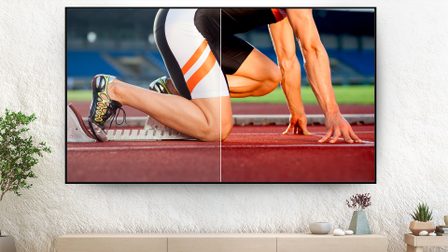 Long-throw ALR screens: vivid and high-contrast images, even in daylightComparisons and buying guides
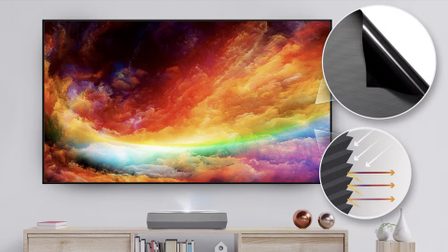 What is an ALR screen? Discover its advantagesConcepts and technologies
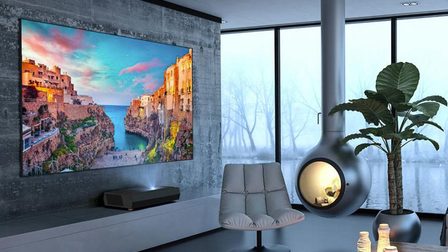 The ALR Screen: The Art of Projection in Broad DaylightConcepts and technologies




