CD Players, Turntables & Audio Sources
Audio sources are the starting point of any hi-fi chain. This category includes CD and SACD players, turntables, network audio players (streamers), digital-to-analog converters (DACs), digital transports, and tuners. Each type of source suits specific uses and media: vinyl records, physical CDs, high-resolution dematerialized files, streaming services, or radio. The quality of the source directly determines that of the entire audio chain. Learn more

Best sellers
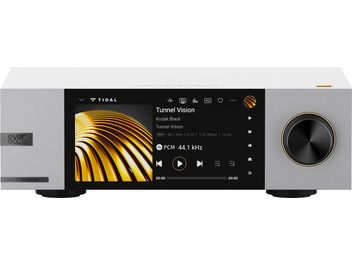
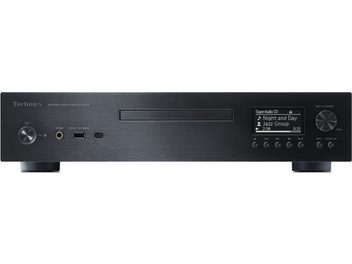
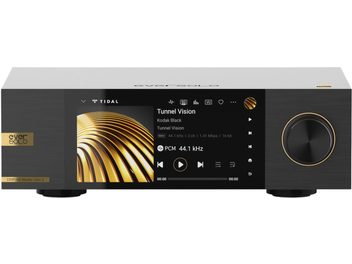
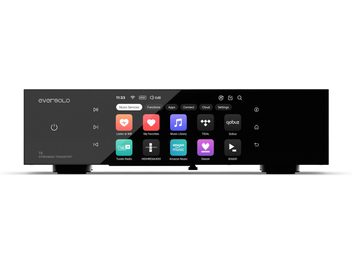
CD and SACD Players
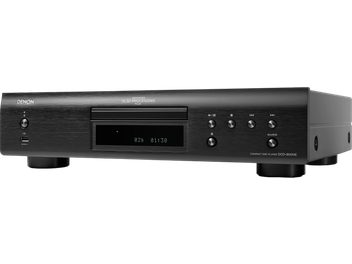
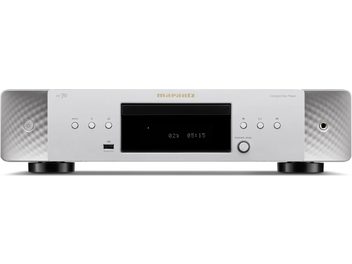
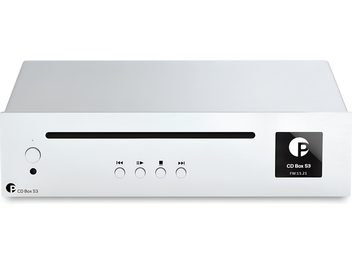
The CD player remains a high-performance source for enjoying a compact disc collection. Despite being over 40 years old, this format still offers reliable listening quality with 80 minutes of program time and an appropriate data rate. Modern CD players feature precision mechanisms, high-quality digital-to-analog converters (DACs), and carefully designed analog output stages that greatly contribute to the musicality of the reproduced signal. High-end models use audiophile-grade components to reduce jitter and improve the openness of the soundstage.
Some models also read the SACD (Super Audio CD) format, which offers higher resolution than standard CDs, as well as MP3 and WMA digital files burned onto CD-R/RW or stored on a USB flash drive. Connectivity varies by model: analog RCA or XLR outputs, and coaxial or optical digital outputs for connection to an external DAC. Recent players sometimes include streaming features or Bluetooth connectivity to complement the playback of physical media.
CD and Network Transports
A CD transport differs from a full player by the absence of a built-in digital-to-analog converter. Dedicated solely to extracting the digital signal from the disc, it sends that signal to an external DAC via a coaxial, optical, or AES/EBU link. Separating transport and conversion allows each link to be optimized and achieves a higher level of performance, appreciated in the most demanding audiophile setups. The transport focuses on the mechanical quality of the reading mechanism and the precision of data extraction.
Network transports follow the same principle: without a DAC, they receive digital streams from the local network or the Internet and pass a pure digital signal to an external converter of choice. This modular approach offers great flexibility for building an upgradeable chain where each component can be replaced or improved independently.
Turntables
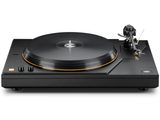
The turntable is enjoying a revival among music lovers of all generations. Unlike entry-level models that are often packed with automation, hi-fi turntables favor a clean, stripped-back design to focus on the essentials: accurate groove tracking. Two types of drive coexist: belt drive, which isolates the platter from the motor and limits transmitted vibrations, and direct drive, which offers excellent rotational stability and strong torque.
The phono cartridge plays a decisive role in sound reproduction. Moving magnet (MM) cartridges are the most common, offering a good balance of performance and accessibility. Moving coil (MC) cartridges generally deliver more finesse and detail but require a suitable phono preamplifier capable of handling their low output level. The tonearm, whether straight, S-shaped, or tangential, must ensure perfect groove tracking with precise geometry and careful setup.
Every turntable requires a phono preamplifier (also called an RIAA stage) to amplify and equalize the signal from the cartridge. This preamp may be integrated into the turntable itself, into the amplifier, or be a dedicated external unit for the most demanding setups. The quality of the phono preamp directly affects the final sound.
Network Audio Players
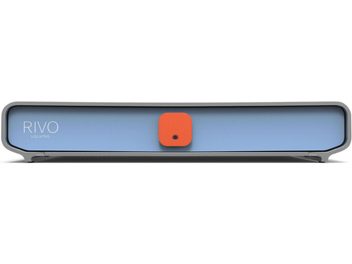
The network audio player (or streamer) is the natural evolution of digital sources in the age of dematerialization. Connected to the home network via Ethernet or WiFi, it provides access to several types of content: audio files stored on a computer, a NAS, or a local server (MP3, AAC, FLAC, ALAC, WAV, DSD), music streaming services (Qobuz, Tidal, Deezer, Spotify, Apple Music), Internet radio, and wireless streams via AirPlay, Bluetooth, or Chromecast.
Network players come in two main categories: models with a built-in DAC, which provide analog RCA or XLR outputs for direct connection to an amplifier, and pure streamers that require an external DAC. The former offer a complete and simplified solution, while the latter let you freely pair the network transport with the converter of your choice. High-end models integrate sophisticated DACs supporting high resolutions (24-bit / 192 kHz, or even 32-bit / 384 kHz or DSD).
Most network players are controlled via a dedicated mobile app (iOS or Android), making it easy to browse music libraries and manage playback. Some are compatible with third-party solutions like Roon, which provides a particularly refined management and listening experience. The player’s power supply should be of high quality to preserve signal integrity: high-end models favor linear power supplies over switching bricks.
DAC Audio Converters
The external DAC (Digital to Analog Converter) is a key component for getting the most from digital sources. Placed between a digital source (computer via USB, CD transport via coaxial, network player via optical) and the amplifier, it converts the digital signal into analog with higher quality than basic built-in converters. Audiophile DACs stand out for the quality of their conversion chips (ESS Sabre, AKM, Burr-Brown), the precision of the internal clock (jitter management), and the care given to their analog output stages.
High-end DACs support high-resolution formats far beyond standard CD: PCM 24-bit / 192 kHz or higher, DSD64/128/256, sometimes MQA. They generally offer multiple digital inputs (USB, coaxial, optical, AES/EBU) to connect various sources. Some models also include a preamplifier with volume control, allowing direct connection to a power amplifier, or a headphone output for high-fidelity headphone listening.
Tuners and Radio Receivers
The tuner lets you receive radio broadcasts in frequency modulation (FM), longwave AM (AM/LW), or digital radio (DAB/DAB+). Although tuner use has declined with the rise of the Internet, it remains appreciated by radio enthusiasts for its simplicity and the quality of FM reception. High-end tuners are distinguished by their sensitivity (ability to pick up weak stations), selectivity (ability to isolate a station from adjacent frequencies), and the quality of their analog output stage.
Digital radio DAB+ offers higher sound quality than analog FM and can display textual information about the current program. Many network players now include access to Internet radio, offering an almost unlimited selection of stations from around the world without requiring an antenna.
Servers and Storage Solutions
To manage a large collection of dematerialized music, audio servers or NAS (Network Attached Storage) provide a centralized storage solution. These devices, equipped with high-capacity hard drives, host music files and share them over the local network to be played by network players or computers. Some integrated audio servers, such as those from Aurender or Innuos, combine storage, network playback, and audiophile optimizations in a single chassis.
Some models also offer a “ripper” function to automatically extract audio CDs and store them in FLAC or other formats, thus making it easier to dematerialize a physical collection. The advantage of a dedicated server lies in its operating system optimized for audio playback, minimizing background processes and electromagnetic interference.
Choosing Your Source Based on Your Use
The choice of a source depends primarily on listening habits and available media. To enjoy a vinyl collection, a turntable is the natural choice, paired with a suitable phono preamp. CD owners will favor a quality player or transport. Those who have embraced dematerialization will opt for a network player, with or without a DAC depending on their setup. It’s also possible to combine multiple sources: a turntable for audiophile pressings, a CD player for an existing disc library, and a streamer to discover new music via online services.
In all cases, the quality of the source determines that of the entire system. An excellent amplifier and high-end speakers can only reveal their potential with a source to match. Investing in a suitable player or turntable ensures you get the most out of your amplification system and speakers. Consistency between components remains the key to a successful hi-fi setup.