Home Theater Receivers & Amplifiers
The home theater receiver centralizes your audio-video setup by distributing multichannel sound to your speakers. Capable of handling configurations from 5.1 to 13.2 channels, it decodes Dolby Atmos, DTS:X, Dolby TrueHD and DTS HD Master Audio formats to reproduce movie sound with precision. The 4K/8K HDMI connectivity ensures transmission of sources to your TV or projector. Learn more
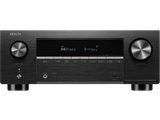
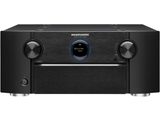
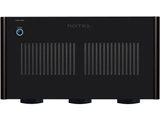
Best sellers
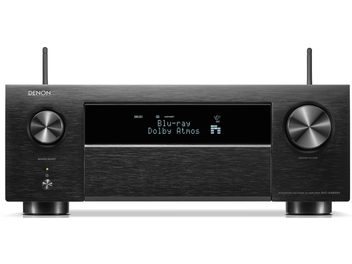
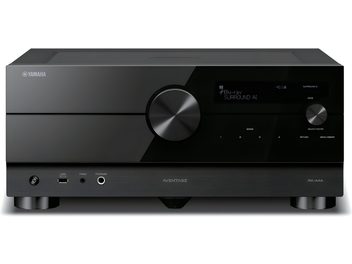

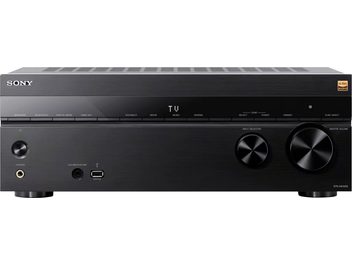
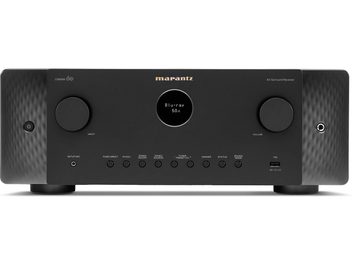

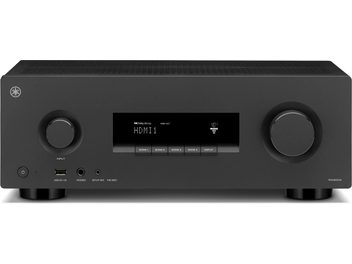
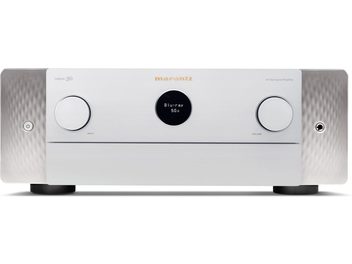
The heart of your home theater system
The audio-video receiver forms the nerve center of a home theater setup. It receives signals from all your sources (Blu-ray player, game console, TV box), decodes them according to the format used, then amplifies and distributes them to each speaker. Unlike a stereo amplifier limited to two channels, a home theater receiver simultaneously manages multiple outputs to create an enveloping spatial sound environment for the viewer.
The number of amplified channels determines the possible configurations. A 5.1 receiver powers five speakers plus a subwoofer, a 7.1 handles seven, while 9.2 or 11.2 models allow complex Dolby Atmos installations with multiple height speakers and two subs. High-end units can drive up to 13 channels accompanied by multiple subwoofers for immersive Auro-3D or DTS:X Pro configurations.
Audio formats and decoding capabilities
All modern home theater receivers decode Dolby TrueHD and DTS HD Master Audio formats found on Blu-ray discs. These lossless 24-bit/96 kHz 8-channel formats deliver multichannel playback equivalent to production studio masters. They also handle Dolby Digital and DTS Surround 5.1 formats from DVDs and broadcast TV with ease.
More advanced models support immersive Dolby Atmos and DTS:X formats, which add a vertical dimension to sound via in-ceiling speakers or Atmos modules. These technologies create a three-dimensional sound field where effects move around and above the listener. Built-in upmixing systems also adapt stereo content to multichannel to make use of all the system’s speakers.
Power and speaker compatibility
Power is expressed in watts RMS per channel at a given impedance, generally 8 ohms. A minimum of 50 to 80 watts per channel is suitable for an average-sized living room with speakers of standard sensitivity. Large rooms or low-sensitivity speakers require more powerful models, exceeding 100 watts per channel.
Power must be matched to the speakers used. Compact, high-sensitivity speakers will be fine with an entry-level receiver, while large floorstanders with big woofers will demand more substantial amplification. An undersized receiver can cause distortion and damage speakers when pushed. Speaker impedance (4, 6, or 8 ohms) also affects available power.
Connectivity and source management
HDMI inputs (generally 4 to 7) centralize video and audio sources, allowing you to connect Blu-ray players, consoles, set-top boxes, and media players. These inputs support 4K/60p and 8K/60p resolutions with HDR, Dolby Vision, and gaming formats like VRR and ALLM. Some models offer two HDMI outputs to send the image simultaneously to a TV and a projector.
The HDMI ARC or eARC audio return channel lets you send your TV’s sound back to the receiver without an extra cable. Digital audio inputs (optical, coaxial) and analog inputs (RCA, XLR on high-end models) round out the connectivity. Pre-outs let you connect external power amplifiers to boost performance or expand the number of channels.
Network and multiroom features
Modern receivers include comprehensive network functions: Wi-Fi streaming, Bluetooth, AirPlay 2, Chromecast, and access to music platforms like Spotify Connect, Tidal, Deezer, or Qobuz. The DLNA protocol enables playback of files stored on a computer or NAS over the local network.
Multiroom systems manage multiple independent listening zones via proprietary technologies like HEOS (Denon/Marantz), MusicCast (Yamaha) or DTS Play-Fi (Onkyo/Pioneer). This allows different sources to be played in multiple rooms with independent volume settings. Amazon Alexa and Google Assistant voice assistants make voice control easier.
Automatic acoustic calibration
Automatic calibration systems analyze the room’s acoustics using a supplied measurement microphone. Technologies like Audyssey (Denon/Marantz), YPAO (Yamaha), Dirac Live (NAD/Arcam) or AccuEQ (Onkyo) adjust distances, levels, crossover frequencies and EQ to optimize sound at the listening position. These corrections compensate for room acoustic flaws and harmonize the response of all speakers.
Advanced versions such as Audyssey MultEQ XT32, YPAO R.S.C. or Dirac Live offer more precise calibration with multiple measurement points and correction over a wider frequency range. Some systems allow customization of the target curve via a mobile app.
Home theater preamps: the high-end solution
The home theater preamp (or audio-video processor) separates the processing section from amplification. It receives and modifies the electrical signal before sending it to one or more external power amplifiers. This setup offers more flexibility than an integrated receiver and lets you choose the processor and power amps separately based on their respective characteristics.
The preamp handles volume control, tone adjustment, source selection, audio format decoding, and possibly video processing with 4K or 8K upscaling. It ensures an optimal signal-to-noise ratio for maximum sound quality. Electronic components are rigorously selected: low-noise op-amps, multiple low-jitter DACs with dedicated clocks, high-performance DSP processors.
This modular approach makes technological upgrades easier. When new sound formats or new connectors appear, you can replace the preamp without touching the power amps that continue to drive the speakers. Home theater processors target demanding cinephiles seeking outstanding performance, with budgets ranging from €2000 to over €10000 for models from Anthem, Arcam, Lyngdorf, Trinnov, or McIntosh.
Choosing based on your setup
For a living space with a TV and a compact 5.1 system, an entry-level 5- or 7-channel model is sufficient. A dedicated room with a projector and floorstanding speakers calls for a more powerful receiver, ideally Dolby Atmos compatible. Music lovers will favor models with a refined preamp section and audiophile-grade components.
Brands like Denon, Marantz, Yamaha, Onkyo and Pioneer dominate the market with comprehensive ranges from €300–€400 at entry level to over €5000 for high-end references. Anthem, Arcam, NAD and Primare target premium installations with superior audio performance. Ensuring coherence between the receiver, speakers, and listening room remains the key to a successful system.