

In-Ceiling, In-Wall Speakers
Distribute sound throughout the room without any speaker being visible: that is what in-ceiling speakers offer. Only the front grille remains visible, and it can be painted the same color as the ceiling so it blends in. They are installed in a living room, kitchen, bathroom, or home theater room, for background music as well as overhead sound effects. Learn more
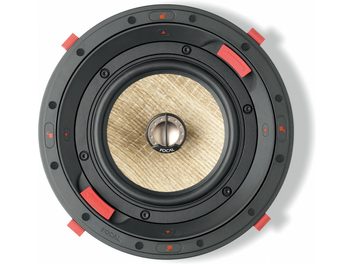
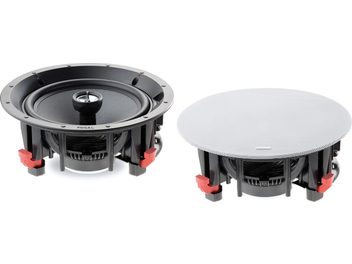
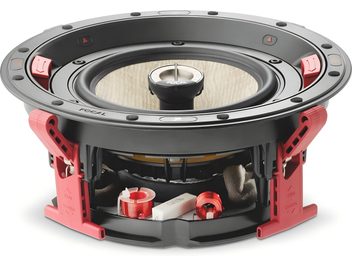
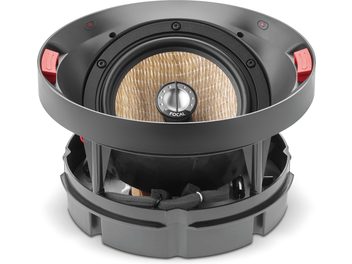
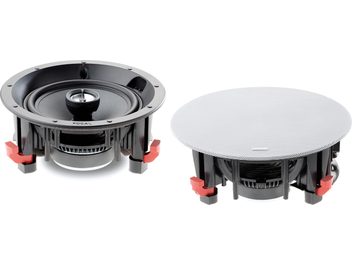
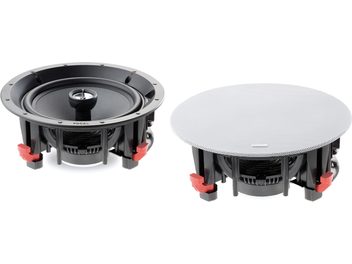
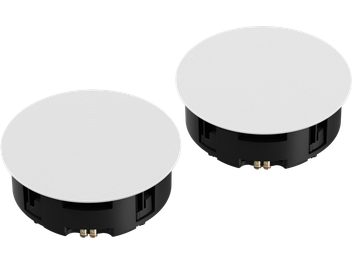
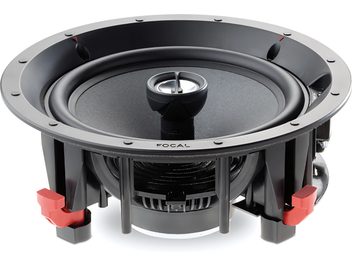
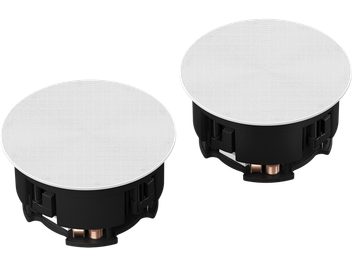
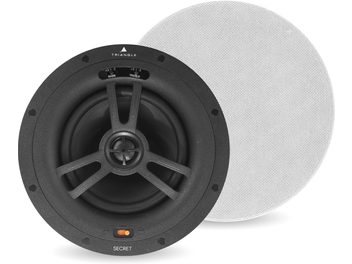
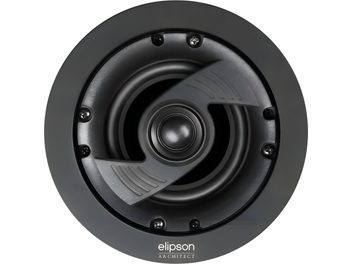
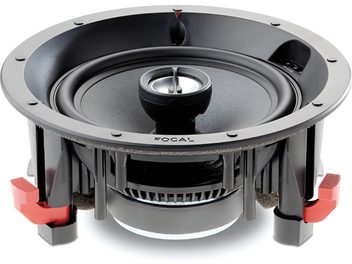
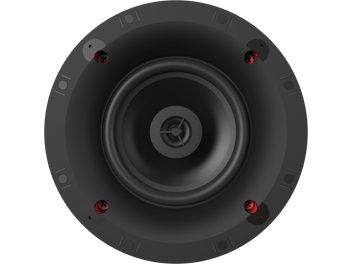
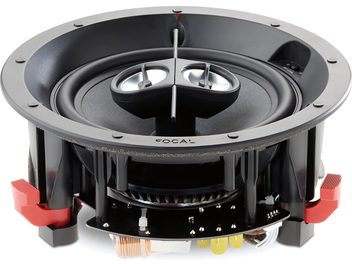
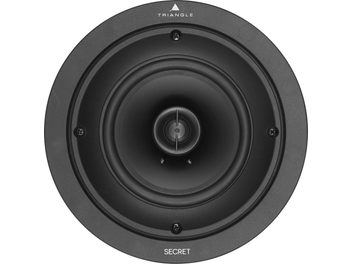
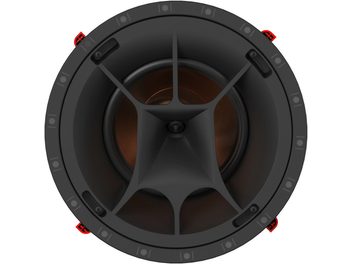
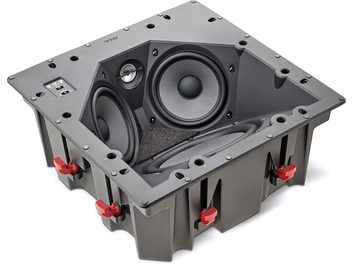
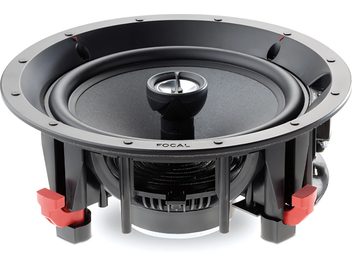
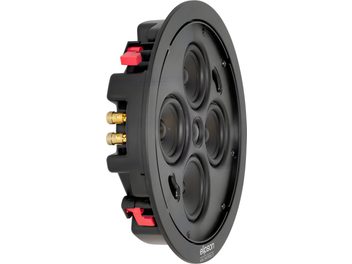
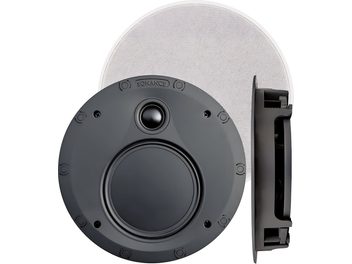
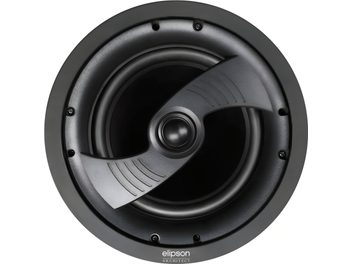

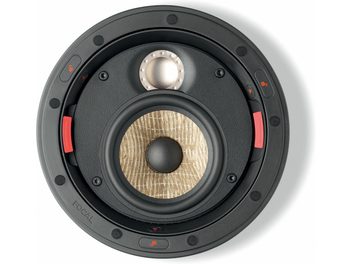
The principle of in-ceiling installation
The in-ceiling speaker, also called an “in-ceiling” speaker, fits into the ceiling cavity and projects sound downward. Once the grille is painted the same color as the surface, the whole assembly blends into the ceiling and frees up both floor and wall space. This kind of integration is appealing when floorstanding or bookshelf speakers take up too much room, or when décor comes first.
The sound travels downward in a cone that widens as it moves away from the driver. The higher the ceiling, the more surface area a given speaker covers before the sound waves reach the ear. Ceiling height therefore plays a role in calculating the number of speakers needed and the spacing between them.
Two main everyday uses
The first use is background music distribution. One pair per room is enough to provide sound in a living room, kitchen, or hallway, and several pairs spread throughout the house form a multiroom system controlled by the same amplifier or by separate zones.
The second use concerns home theater. Spatial audio formats such as Dolby Atmos, DTS:X, or Auro 3D add a vertical dimension to the soundtrack. Speakers placed in the ceiling, above and slightly in front of or behind the listening area, reproduce sounds meant to come from overhead: rain on a roof, a helicopter flying by.
These speakers are also used to provide sound in shops, restaurants, or meeting rooms, where discretion matters just as much as even coverage, more than the pursuit of deep bass.
Technical criteria to examine
The diameter of the woofer-midrange driver largely determines sound output and bass extension. Compact models around 13 cm are suitable for a small room or a hallway, while 16.5 cm and 20 cm models can handle a living room or a home theater room. This diameter corresponds to two installation measurements: the cutout diameter, which determines the size of the hole to drill, and the outer diameter of the trim, which covers the edges of the cutout.
Mounting depth deserves to be checked before any purchase. A plasterboard false ceiling leaves some margin, while a concrete slab or a thin ceiling requires shallow speakers. The dimension stated by the manufacturer must remain compatible with the available cavity above.
Two driver designs coexist. Coaxial models place the tweeter at the center of the woofer-midrange and deliver coherent sound from a single point. Models with separate two-way drivers aim for better definition. An adjustable tweeter, when present, can be aimed toward the listening area to compensate for less-than-ideal placement.
The back box changes a lot. Without a back box, the speaker relies on the volume of air present in the ceiling, whose size and insulation are not controlled: performance varies from one installation to another. A closed back box, integrated or added, stabilizes bass and limits sound transmission to the floor above or the neighboring room.
On the performance side, sensitivity is expressed in decibels and indicates the level obtained for a given power. Impedance, expressed in ohms, is most often around 8 ohms for home use and matches the majority of amplifiers. Frequency response indicates the reproduced range, with one known limitation: once installed in the ceiling, these speakers rarely go very low in the bass. A subwoofer completes the system when more foundation is needed, for music as well as movies. For large installations spread over long distances or multiple zones, 100-volt line replaces low impedance and simplifies the wiring of a large number of speakers.
Humidity, bathroom, and outdoor use
A bathroom, laundry room, veranda, or covered terrace exposes the speaker to humidity. So-called tropicalized models use cones and treatments resistant to water vapor and condensation, which protects them in these spaces.
The IP rating indicates this resistance. Its first digit concerns protection against dust, the second water resistance: the higher the latter, the more the speaker withstands splashes and jets. For an outdoor installation with no shelter, you need all-weather waterproof models, fitted with rustproof grilles and enclosures treated against sunlight.
Placement and installation in the ceiling
The in-ceiling speaker is installed in a hollow partition: plasterboard (placo, BA13), wood panel, or false ceiling. The manufacturer provides a template to mark the cutout, made with a drywall saw. The cable runs through the ceiling cavity to the amplifier, then screw-mounted clamps grip the partition from the front and adapt to its thickness. A removable grille finishes the installation.
Placement matters just as much as the equipment. It is better to space the speakers evenly, keep at least 60 cm from walls and corners, and avoid fixing a speaker directly above a dining table or sofa, otherwise the sound may be too direct. Planning cable runs during construction or renovation avoids a lot of trouble later on.
A pair for stereo listening or a simple room remains within the reach of a careful DIYer. A multiroom system, or a calibrated home theater room, benefits from using an installer who determines the number, size, and position of the speakers according to the surface area and acoustics.
Maintaining sonic consistency
Each manufacturer gives its speakers a signature sound. By equipping several rooms with the same brand, or even the same series, you keep a consistent tonal character when moving from one space to another. Mixing models with very different sonic characters breaks this continuity, something to watch out for as a system expands over time.
Frequently asked questions about these speakers
Are in-ceiling speakers enough for listening to music?
They deliver clean, even sound throughout the room, with total discretion. Downward sound projection and limited bass place them one step below speakers positioned at ear level when it comes to stereo image precision. For background music and multiroom use, they perform their role perfectly. A subwoofer adds the foundation they lack in the low end.
Do you need a specific amplifier?
A standard hi-fi amplifier or home theater amplifier can drive them, as long as power and impedance match. In a large multi-zone installation, a 100-volt line and a dedicated amplifier simplify the connection of a large number of speakers.
Can they be installed in a bathroom?
Yes, provided you choose a tropicalized or IP-certified model, placed away from direct water splashes. The IP rating indicated by the manufacturer confirms resistance to humidity.
How many speakers should you plan for a room?
One pair covers a small or medium-sized room. A large area, or even coverage from one end to the other, requires more speakers distributed at regular intervals. Ceiling height is part of this calculation, since a high ceiling widens the area covered by each speaker.
Is installation within the reach of a DIYer?
A simple pair can be installed without difficulty with a bit of method and the right tools. A multiroom system or a calibrated home theater room benefits from using an installer, who handles placement, wiring, and phase alignment.




