Chario Constellation Cygnus MK2 (pack of 2)
This product is no longer available for sale!
Similar products from Chario

Overview
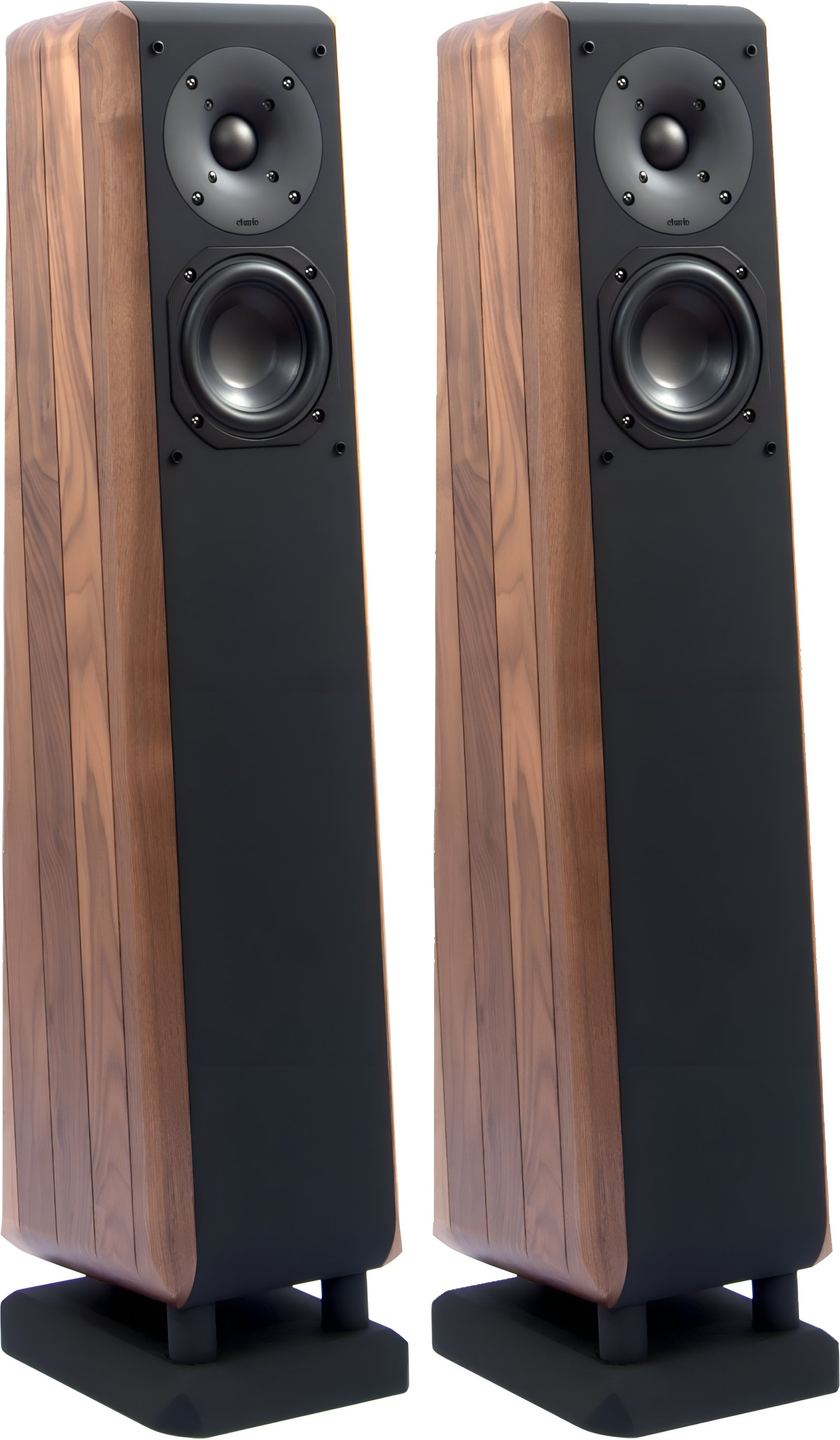
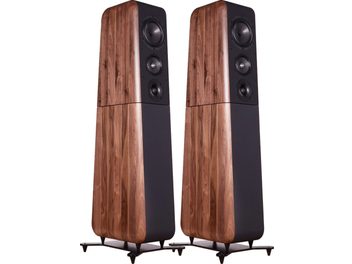
The Chario Constellation Cygnus MK2 floorstanding speaker is designed and handcrafted near Milan. This 3-way speaker stands out for its innovative technical configuration and its ability to deliver highly refined sound in a relatively compact format. With its exclusive NRS (Near Reflective Surface) system and unique driver arrangement, it offers a listening experience that is both precise and musical, true to Chario’s sonic philosophy.
Sophisticated Design in Service of Acoustics
The Constellation Cygnus MK2 combines visual elegance with advanced acoustic engineering. Its cabinet, made from high-density fiberboard clad in solid Italian walnut, is not just for aesthetics but actively helps control unwanted resonances. With its modest dimensions (955 x 200 x 270 mm) and weight of 17 kg, it fits harmoniously into a variety of living spaces while delivering remarkable performance.
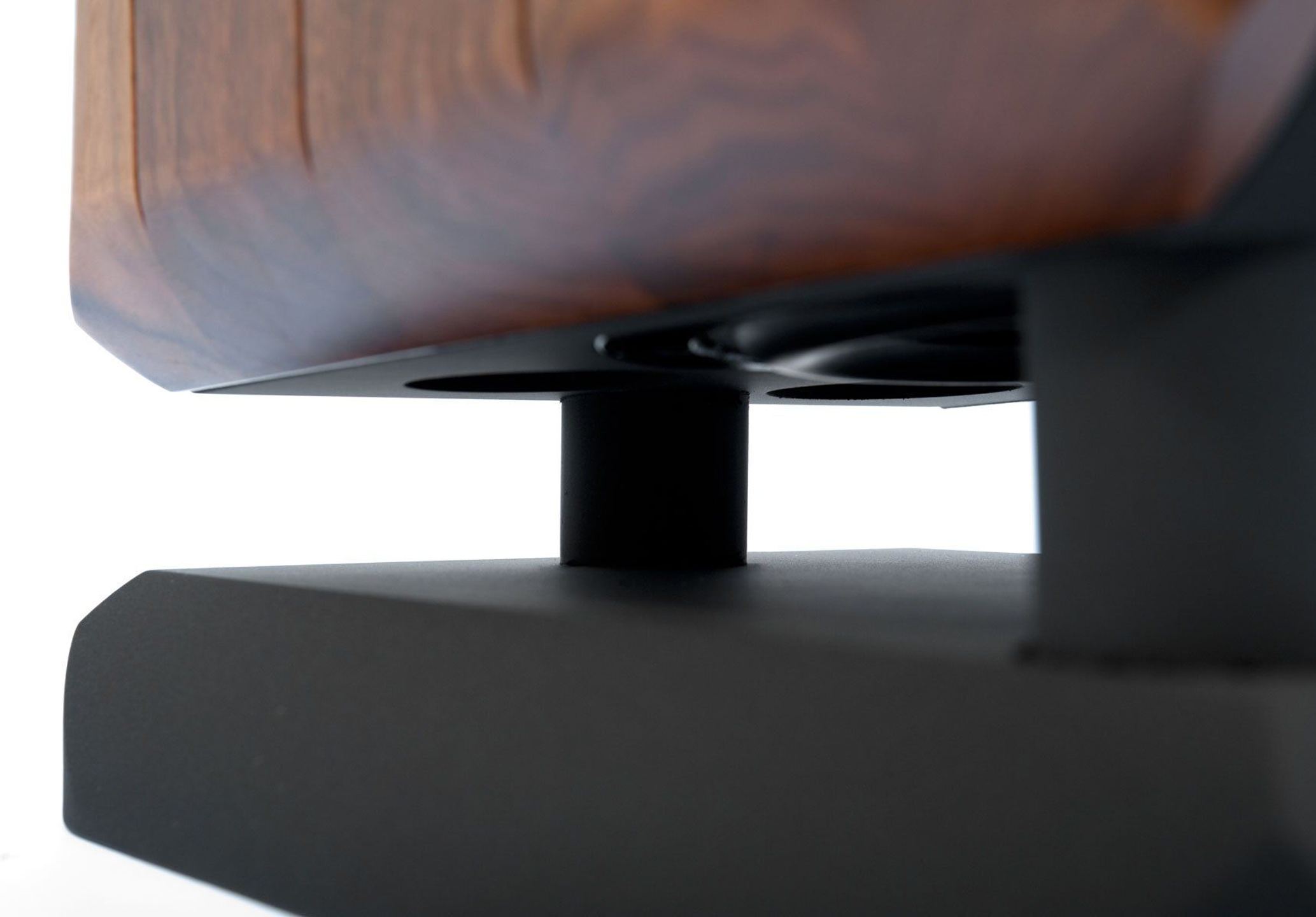
The visual hallmark of this speaker lies in its backward tilt, achieved through mounting rods of different lengths connecting the speaker to its base—4 cm at the front and 2 cm at the rear. This tilt is not merely an aesthetic choice but a technical decision aimed at optimizing sound dispersion and the time alignment of the various drivers.
The Cygnus MK2 features a distinctive silhouette with its downward-firing woofer, which uses the base as a reflective surface, creating a visual signature as unique as its acoustic philosophy.
NRS Technology: An Innovative Approach to Bass Frequencies
At the heart of the Cygnus MK2’s innovation is NRS (Near Reflective Surface) technology, a different approach to bass reproduction. Unlike traditional rear-ported bass-reflex systems, the Cygnus MK2 uses a 130 mm downward-firing woofer that directs sound toward the speaker’s base. This setup creates a reflective surface effect that significantly enhances bass response and extension, allowing the speaker to reach a low frequency of 50 Hz despite its modest size.
The main advantage of this technology is twofold: it allows for greater placement flexibility compared to conventional rear-ported speakers, and it frees up the front 130 mm woofer to focus on midrange reproduction. This division of labor results in increased articulation and a notable reduction in listening fatigue, even during extended sessions.
NRS technology also provides more precise management of internal acoustic pressure, limiting unwanted noise and improving impulse response for bass that is cleaner and better defined than the cabinet size would suggest.
Refined Three-Way Sound Architecture
The Constellation Cygnus MK2 features a carefully orchestrated three-way configuration. At the front, a 38 mm T38 soft dome tweeter with a waveguide handles high frequencies with a 60-degree dispersion angle. This controlled directivity limits unwanted reflections while maintaining a wide enough spread to create a stable and coherent soundstage.
The front 130 mm paper-composite woofer is primarily responsible for midrange frequencies, while the lower woofer of the same size, also paper-composite but downward-firing, is dedicated to bass. This division of acoustic roles ensures remarkable tonal coherence, with crossover points at 170 Hz and 1500 Hz carefully chosen to provide smooth transitions between registers.
The originality of this architecture lies in the complementarity of the directivities: while the tweeter operates with a precise angle, the lower woofer radiates omnidirectionally (360°). This combination helps create a sound field that is both precise and enveloping, with a stable stereo image that is not limited to a single listening spot.
A Refined and Authentic Sound Signature
Listening tests reveal the true character of the Cygnus MK2. From the very first notes, the speaker impresses with its transparency and its ability to extract a remarkable amount of detail from recordings. The tonal balance is slightly rich but never excessive, lending a natural warmth to voices and instruments, while the soundstage unfolds with breadth and precision.
The midrange is one of this speaker’s strengths, offering highly intelligible vocal reproduction and faithful rendering of instrumental timbres. The highs, meanwhile, have that characteristic Chario smoothness—detailed and airy without ever becoming harsh or metallic. This quality allows you to fully appreciate the richness of upper harmonics without listening fatigue, even during long sessions.
In the bass, the Cygnus MK2 demonstrates remarkable precision and articulation rather than extreme extension. The distinction between electric bass and kick drum is clearly perceptible, with textures and dynamic nuances preserved. The absence of unwanted resonances or overhang gives the rhythmic foundation a solid and well-defined base, without the artificial effect sometimes found in systems that favor quantity over quality.
The overall coherence of the sound is particularly impressive, creating an orderly and elegant presentation where every element finds its place without confusion. This exceptional clarity allows you to rediscover nuances previously unnoticed in familiar recordings.
Acoustic Optimization and Integration
To fully benefit from the qualities of the Cygnus MK2, a few installation considerations are necessary. The ideal placement is about one meter from the rear wall to achieve the best bass balance. A slight toe-in toward the listening position is also recommended to optimize stereo imaging.
A notable recommendation is to use a rug or carpet in front of the speakers. This is not a trivial suggestion: it aims to dampen early reflections from the floor that could interfere with the direct sound. This simple measure significantly helps preserve the integrity of the soundstage and the precision of the stereo image.
As for amplification, the Cygnus MK2 has a sensitivity of 87 dB and a nominal impedance of 4 ohms. An average power of 60 to 80 watts into 4 ohms is generally recommended to comfortably drive these speakers in rooms from 6 to 18 m² with a standard height of 2.5 m. The speaker rewards the use of quality electronics capable of delivering stable and generous current, but does not require excessively powerful amplifiers.
Technical Specifications
Acoustic Design
- 3-way configuration for optimal frequency separation
- Tweeter capable of handling very high sound pressure levels and very low crossover frequencies
- Enhanced tonal cohesion between the different drivers
NRS Technology (Near Reflective Surface)
- Utilizes the nearby surface to reinforce low frequencies
- Reduced distortion thanks to minimized diaphragm movement
- Optimized reproduction between 50 Hz and 170 Hz
- 3 dB gain for the same distortion level
Bass Reflex System
- Optimized ducts to maintain constant internal pressure
- Limits airflow noise even at speeds of 130 km/h
- Hydraulic analogy: maintains pressure to preserve the power of the sound flow
- Improved dynamics and precision in low frequencies
Drivers
- Tweeter:
- 1 x 38 mm (T38) at the front
- Soft dome with waveguide
- Directivity: 60° beam
- Main woofer:
- 1 x 130 mm at the front
- Paper composite diaphragm
- 360° omnidirectional radiation
- Secondary woofer:
- 1 x 130 mm downward-facing
- Paper composite diaphragm
- Reduces front load and enhances dynamics
Acoustic Performance
- Bass extension: down to 50 Hz
- NRS system frequency range: 50 Hz - 170 Hz
- Dynamic capacity: high
- Sound quality:
- Superior detail and comfortable extended listening
- Natural and detailed soundstage
- High resistance to listening fatigue
- Enhanced articulation and detail
Technical Specifications
- Low-frequency loading: NRS port
- Sensitivity: 87 dB SPL / normalized at 1 m / 2.83 Vrms
- Measured with decorrelated pink noise L / R
- Compliant with ITU-R BS 1116-1 standard for listening rooms
- Low cutoff frequency: 50 Hz at -3 dB
- Crossover frequencies: 170 / 1500 Hz - 4th order LKR
- Nominal impedance: 4 Ω module (min 3.0), argument ± 36°
Physical Characteristics
- Materials: solid walnut and high-density fiberboard
- Structure: includes two enclosures
- Dimensions (H x W x D): 955 x 200 x 270 mm
- Weight: 17 kg
- Functional design:
- Optimized airflow, internal pressure, and impulse response
- Sturdy construction minimizing resonances
- Refined aesthetics serving acoustic performance
Usage Recommendations
- Listening environment:
- Speaker orientation: angled inward facing the listener
- Optimal listening distance: over 3 m
- Recommended setup: carpeted floor in front of the speakers
- Positioning: side and rear walls at least 1 m from the front baffle
- Recommended amplification: average power: 120 W at 4 Ω
Frequently Asked Questions
What is special about the NRS technology used in the Cygnus MK2?
The Near Reflective Surface technology uses a downward-firing woofer that utilizes the speaker’s base as a reflective surface. This design improves bass extension and precision while reducing distortion, thanks to reduced cone excursion. It also offers greater placement flexibility compared to traditional rear-ported bass-reflex systems.
Are these speakers suitable for all types of music?
Thanks to their natural tonal balance, transparency, and good dynamics, the Cygnus MK2 is versatile across different musical genres. They excel particularly in reproducing vocals, acoustic instruments, and orchestral ensembles, but also convincingly handle contemporary music with moderate bass demands.
How important is speaker orientation?
A slight toe-in toward the listening position is recommended to optimize stereo imaging and focus. This orientation allows you to fully benefit from the tweeter’s controlled directivity (60°) while maintaining even dispersion to create a stable and precise soundstage.
Can they be combined with a subwoofer?
Although the Cygnus MK2 offers satisfying bass reproduction down to 50 Hz, adding a quality subwoofer can be considered for fans of electronic music, organ, or cinema who require deeper extension. A well-integrated musical subwoofer, with a crossover frequency around 60-70 Hz, would complement these speakers harmoniously without compromising their tonal coherence.
- Eco-contribution included in the sale price.
- Manufacturer reference: A3C3CYGWW