Cayin RU6


Complementary products


Specifications and features


Overview
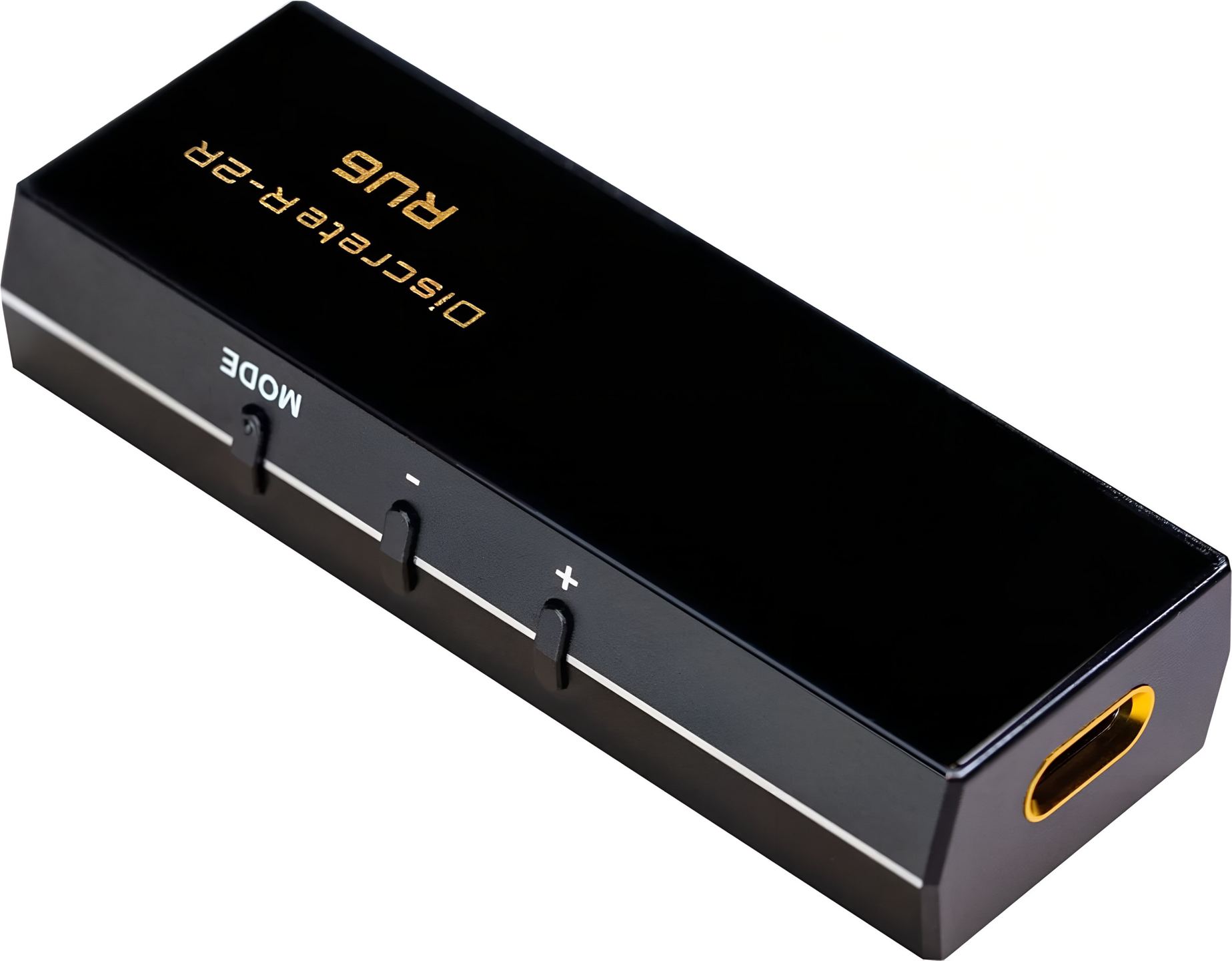
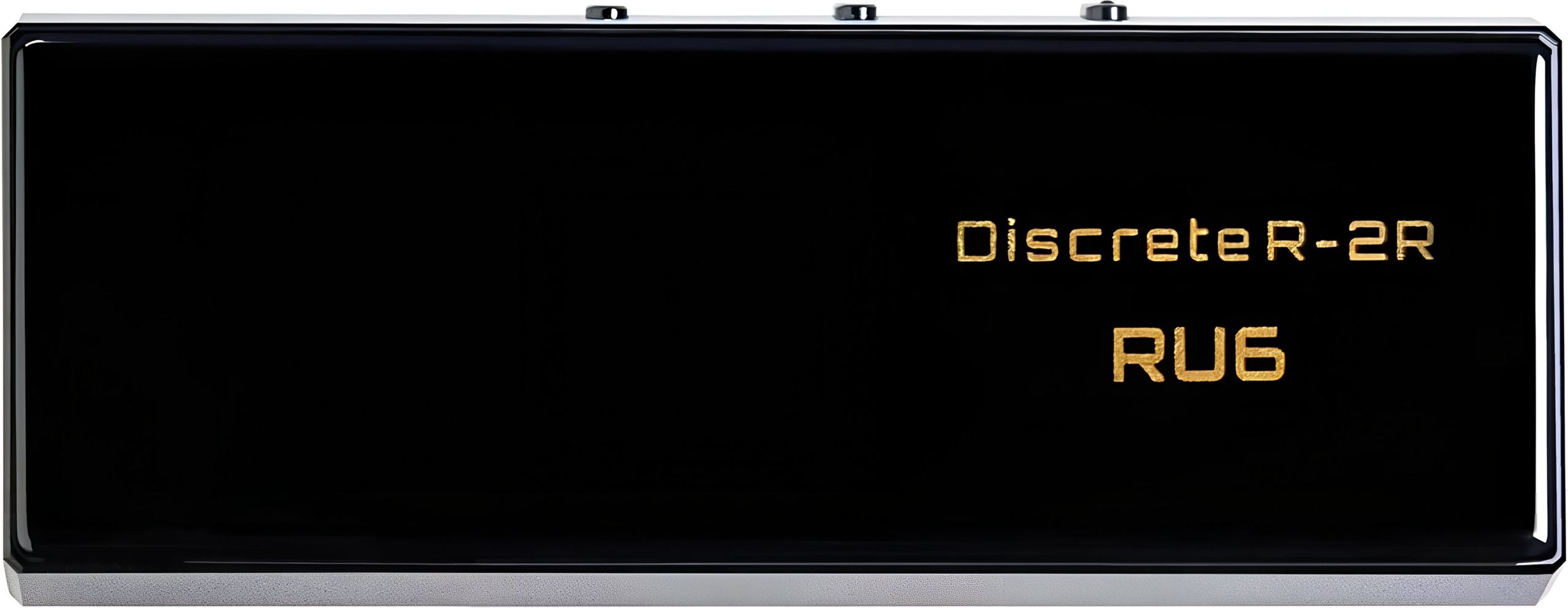
The world’s first portable USB converter to use discrete R-2R technology, the Cayin RU6 incorporates no fewer than 96 high-precision resistors for exceptional audio conversion. Compact yet powerful, this 28-gram device offers dual headphone outputs, 99-level analog volume control, and broad compatibility with high-resolution audio formats up to 24-bit/384 kHz and DSD256.
Discrete R-2R Technology: A Game Changer
The Cayin RU6 fundamentally stands out from other portable DACs thanks to its conversion architecture. Instead of using the ubiquitous Texas Instrument, ESS, or AKM chips found on the market, Cayin goes back to basics with a discrete R-2R converter.
This approach implements a network of 48 resistors per channel (23 R resistors and 25 2R resistors), totaling 96 resistors to ensure complete stereo conversion. These components are not chosen at random: Cayin uses high-precision thin-film resistors (0.1% tolerance) with a low temperature coefficient (TCR) to guarantee stability and consistent performance, even during thermal variations.
This unique design enables a more natural and realistic audio reproduction than conventional DACs, with a sound coloration often described as “analog” or “tube-like.”
Dual Sound Personality: OS and NOS
One of the RU6’s distinctive features is its ability to operate in two different conversion modes: oversampling (OS) and non-oversampling (NOS).
In OS mode, the converter oversamples audio data to 384 kHz via digital filters. This technique improves resolution, reduces noise, and perfects anti-aliasing of the digital signal. The result is a more detailed listening experience, with optimized frequency extension and an especially quiet background.
Conversely, NOS mode maintains the original sampling rate without applying digital filtering. This approach preserves perfect signal synchronization, minimizing phase distortion and jitter. Many listeners prefer this mode for its musical and organic character, closer to traditional analog listening.
This duality allows each user to tailor the RU6’s sound signature to their listening preferences and the type of music being played.
Sophisticated Hardware Architecture
To maximize audio quality, Cayin split the RU6’s circuitry into two separate 6-layer PCBs, physically separating the digital and analog sections. This design significantly reduces interference and ensures the integrity of the audio signal.
Volume control is another technical feat. Unlike most USB DACs that rely on the smartphone’s digital control (resulting in loss of resolution), Cayin developed an analog volume control system using a resistor network. This device offers 99 precise adjustment levels via 9 resistor segments and switching relays.
This technology, usually reserved for high-end preamplifiers, guarantees maximum transparency without signal degradation. The relay momentarily mutes the output during volume adjustments to prevent any clicking, which explains the slight delay when changing levels.
Distinctive Sound Quality
The Cayin RU6 offers a sound signature that many reviewers describe as “unique” and “natural,” with a subtle warmth reminiscent of tube amplifiers but without sacrificing transparency.
The midrange is the RU6’s strong point, with particularly successful reproduction that enhances vocals and acoustic instruments. The treble is slightly more laid-back compared to some competitors, which helps prevent listening fatigue during long sessions.
In the bass register, the RU6 delivers visceral and warm lows, while maintaining good definition and tight control. Attack and decay are convincing, as is the dynamic contrast.
The soundstage is wide and immersive, creating a generous spatial presentation that contributes to the captivating listening experience. Imaging, while slightly less precise than some competing models, remains coherent and natural.
A notable quality of the RU6 is its ability to improve the timbre of balanced armature (BA) earphones, which are often criticized for their sometimes artificial sound. The RU6’s analog signature effectively compensates for this tendency.
Power and Versatility
Despite its small size, the Cayin RU6 does not lack power, delivering up to 138 mW at 32 ohms via its single-ended output (3.5 mm jack) and 213 mW at 32 ohms via its balanced output (4.4 mm jack). This power reserve allows it to efficiently drive a wide variety of headphones, from sensitive in-ear monitors to more demanding over-ear models.
Successful tests have been conducted with notoriously difficult models such as the Sennheiser HD660S and Focal Clear Mg, demonstrating the RU6’s versatility despite its ultra-compact format.
For very sensitive earphones, the switchable gain function is particularly useful, allowing precise adjustment of output power and avoiding any hiss or distortion.
Everyday Practicality and Ergonomics
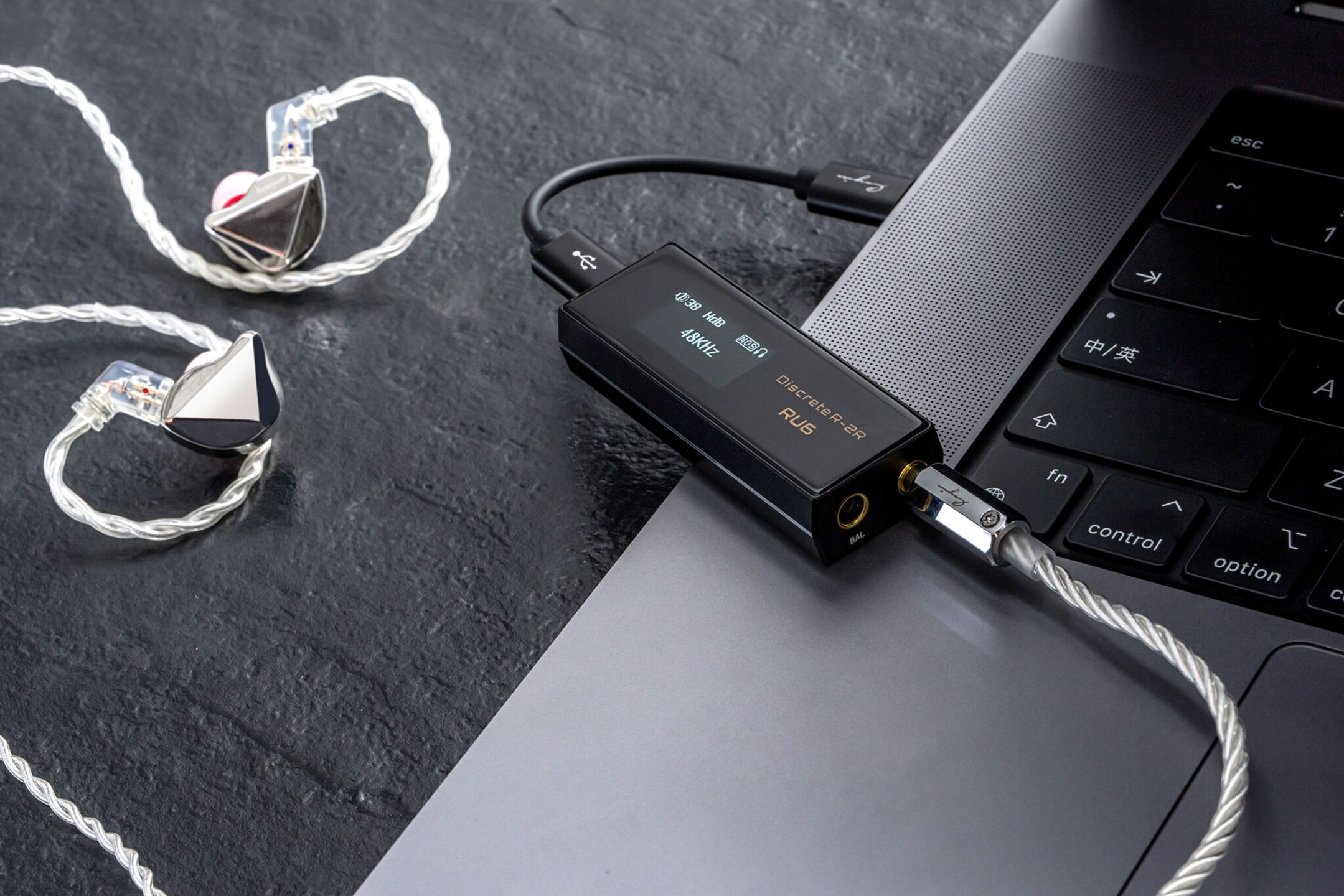
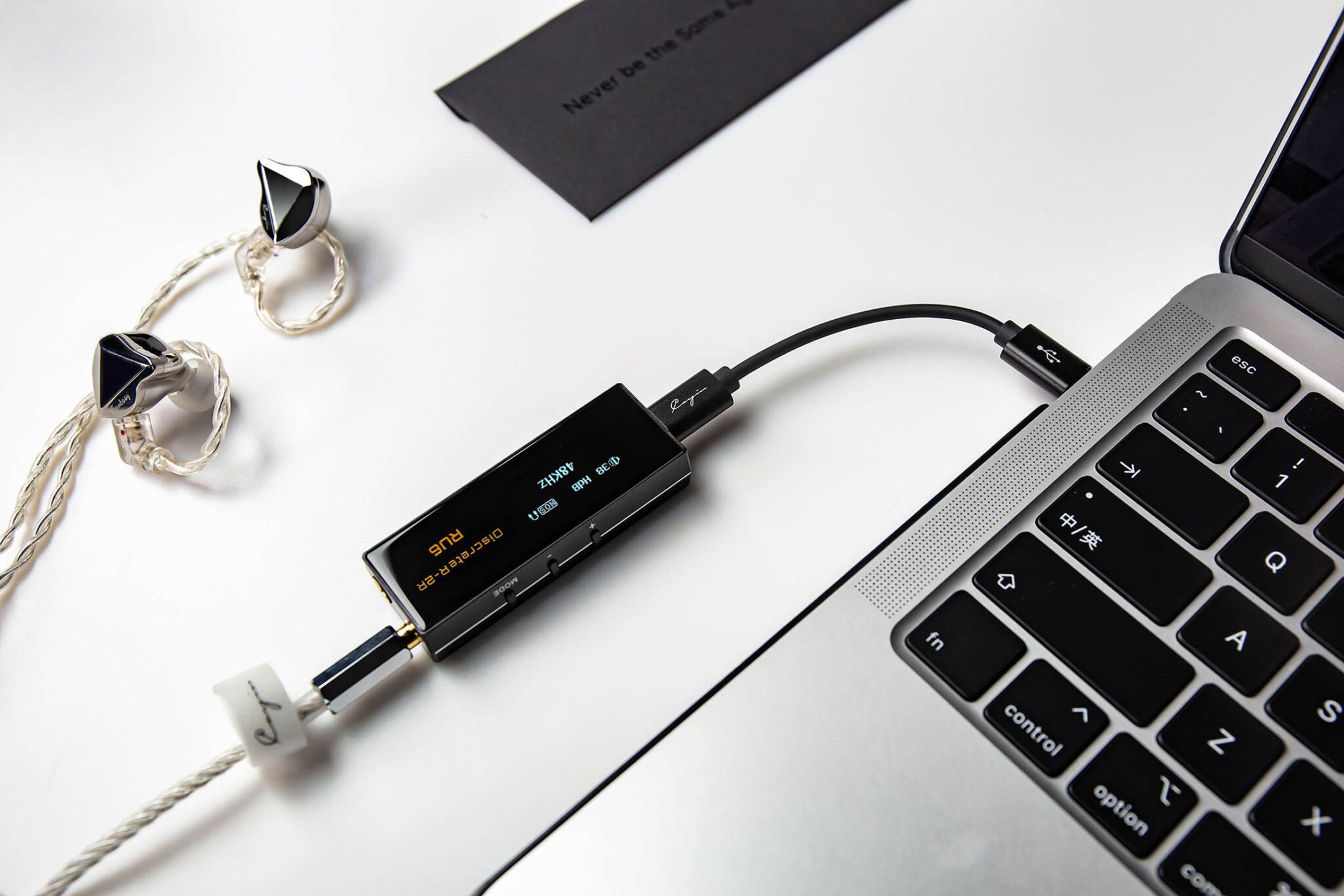
The RU6 stands out with its 0.96-inch OLED screen, which clearly displays essential information: file format and sampling rate, active conversion mode (OS or NOS), and volume level. This visual interface greatly enhances the user experience compared to portable DACs without a display.
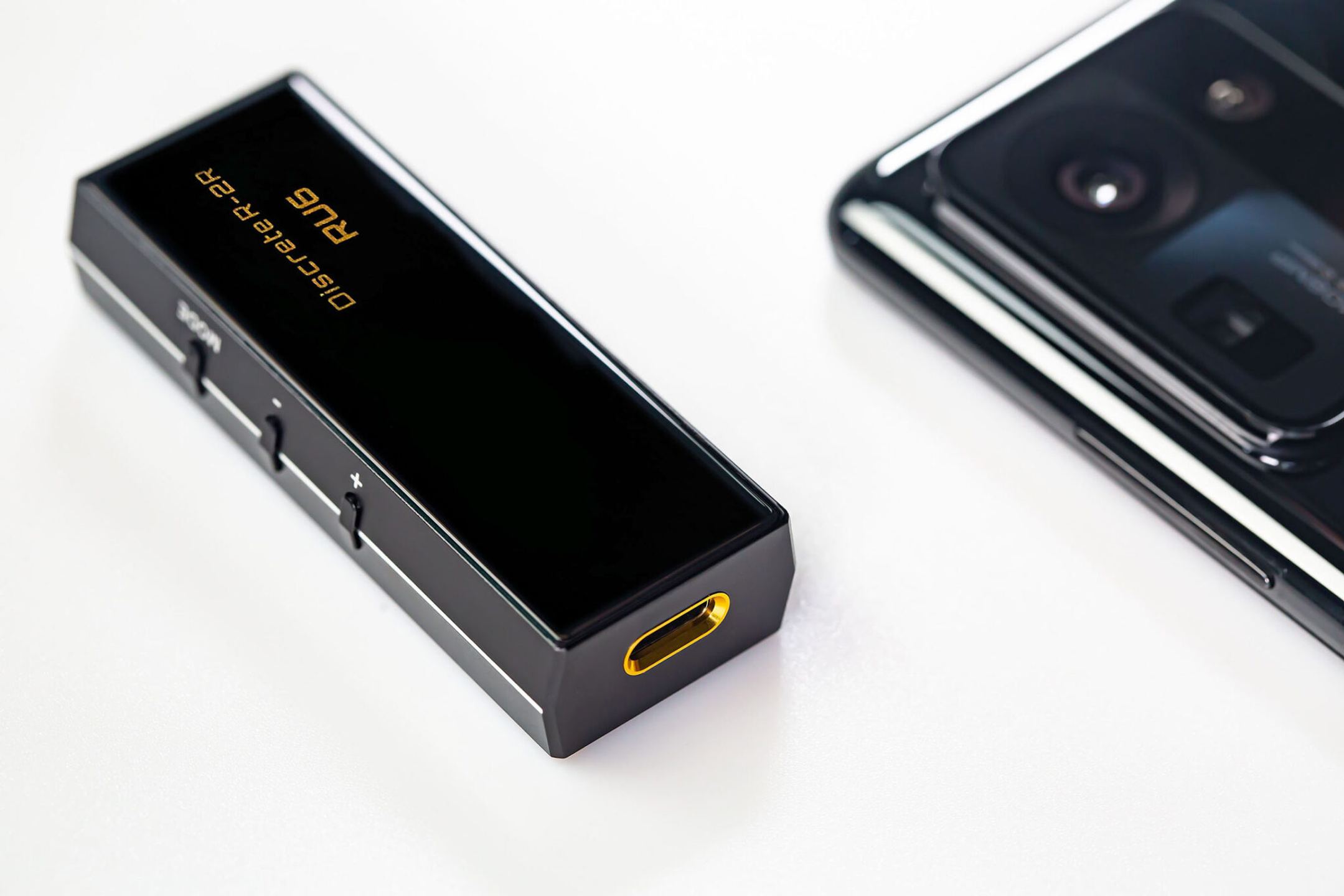
Physical controls, located on the side of the device, allow you to adjust the volume, switch between OS and NOS modes, and change other settings without having to handle the source device. This independent control is a real advantage for mobile use.
As for power, the RU6 draws its energy directly from the USB port of the connected device. Its overall consumption is low and only marginally affects the source’s battery life. This design, with no internal battery, helps reduce weight and eliminates the need to recharge an additional device.
Broad Compatibility
The Cayin RU6 easily integrates with a wide range of digital devices: Android smartphones, tablets, Windows and Mac computers. Once connected, it supports not only playback of locally stored files, but also processing of audio streams from services like Tidal, Qobuz, Spotify, or Deezer.
For optimal experience, Cayin recommends using playback apps compatible with “Bit Perfect USB” mode, allowing full use of the RU6’s analog volume control.
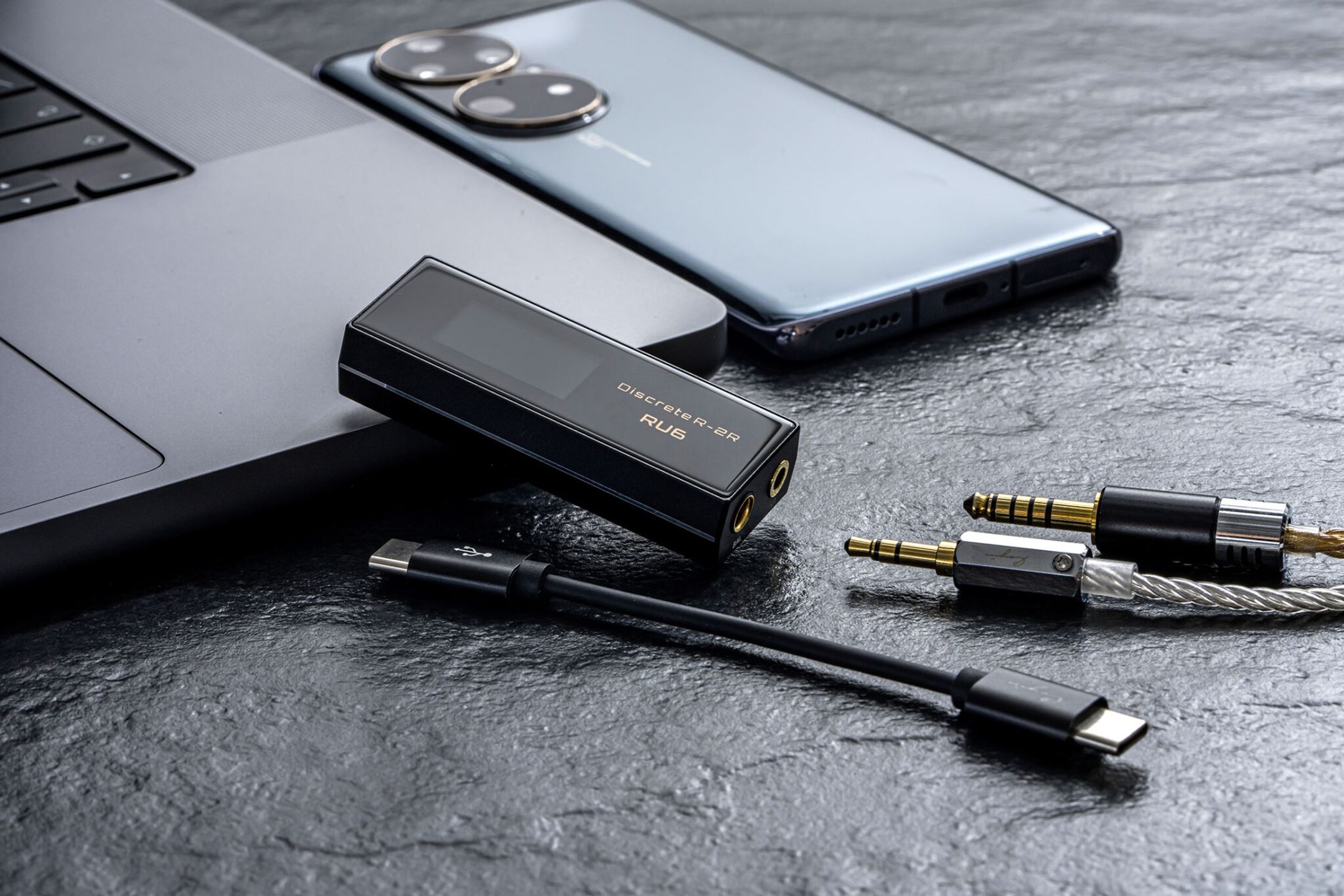
To facilitate connection with various devices, Cayin includes a USB-C to USB-C cable and a USB-A to USB-C cable in the box. A Lightning to USB-C adapter, sold separately, also allows the RU6 to be used with Apple devices.
Technical Specifications
General Features
- Portable digital-to-analog converter and headphone amplifier
- 24-bit R-2R converter with 96 resistors
- Audio format compatibility:
- PCM up to 24-bit / 386 kHz
- DSD256
- OLED control display
- High-Resolution Audio certified
- Adjustable volume with 99 levels
Audio Performance
Unbalanced output (3.5 mm jack)
- Power: 138 mW at 32 ohms
- Frequency response: 20 Hz – 20 kHz (±0.5 dB)
- Total harmonic distortion + noise (THD+N): 0.032%
- Dynamic range: 109 dB
- Signal-to-noise ratio: 113 dB
- Output impedance: 0.5 ohm
Balanced output (4.4 mm jack)
- Power: 213 mW at 32 ohms
- Frequency response: 20 Hz – 20 kHz (±0.5 dB)
- Total harmonic distortion + noise (THD+N): 0.04%
- Dynamic range: 110 dB
- Signal-to-noise ratio: 114 dB
- Output impedance: 1 ohm
Connectivity
- 1 x USB-C
- 1 x 3.5 mm mini-jack headphone output (unbalanced)
- 1 x 4.4 mm jack headphone output (balanced)
Included Accessories
- USB-C to USB-A cable
- USB-C to USB-C cable
- User manual
Dimensions and Weight
- Dimensions: 25.4 x 65 x 13.7 mm
- Weight: 28 g
Frequently asked questions
What is the concrete difference between an R-2R DAC like the RU6 and a traditional chip-based DAC?
An R-2R DAC uses a matched resistor network to convert the digital signal to analog bit by bit, while a chip-based DAC generally employs a delta-sigma architecture with heavy oversampling. R-2R technology is often perceived as producing a more natural and analog sound, with an organic and musical texture, whereas chip-based DACs can offer more micro-detail and higher technical precision. This fundamental difference explains the RU6’s distinctive character.
Can the RU6 really drive demanding headphones?
Yes, with an output power of 138 mW single-ended and 213 mW balanced at 32 ohms, the RU6 can efficiently drive a wide range of headphones, including relatively demanding models. Successful tests have been conducted with headphones like the Sennheiser HD660S and Focal Clear Mg. For very high-impedance headphones (600 ohms and above), its limits may become apparent.
Does the RU6 work with iPhones?
Yes, the RU6 is compatible with iPhones and iPads, but requires a specific Lightning to USB-C adapter (not included in the box). Once this adapter is connected, operation is identical to that with other devices, allowing you to enjoy the RU6’s sound quality with Apple products.
How does the RU6 compare to the FiiO KA3, its main competitor?
The RU6 and FiiO KA3 represent two very different approaches. The KA3 uses a traditional chip-based DAC, potentially offering more micro-detail, more precise imaging, and a more direct impact. The RU6, with its R-2R technology, delivers a more natural, organic, and warm sound reminiscent of analog. In terms of power, they are comparable (the KA3 also features discrete current rectification, making it completely silent). The choice between the two will mainly depend on your sound preferences.
- Eco-contribution included in the sale price.
- Manufacturer reference: CAYRU62021NR
- GTIN / EAN: 6957914911578