Cayin RU9
Specifications and features


Overview
The Cayin RU9 marks a bold step forward in the evolution of portable audio converters. This 150-gram portable DAC/amplifier integrates tube technology for the first time in a compact format, thanks to a fifth-generation Korg Nutube 6P1 tube. Offering three distinct sound signatures, power up to 1 watt at 32 ohms, and extensive connectivity including Bluetooth 5.1, the RU9 is redefining the possibilities of high-resolution portable audio.
A Concentration of Technologies in a Machined Aluminum Chassis
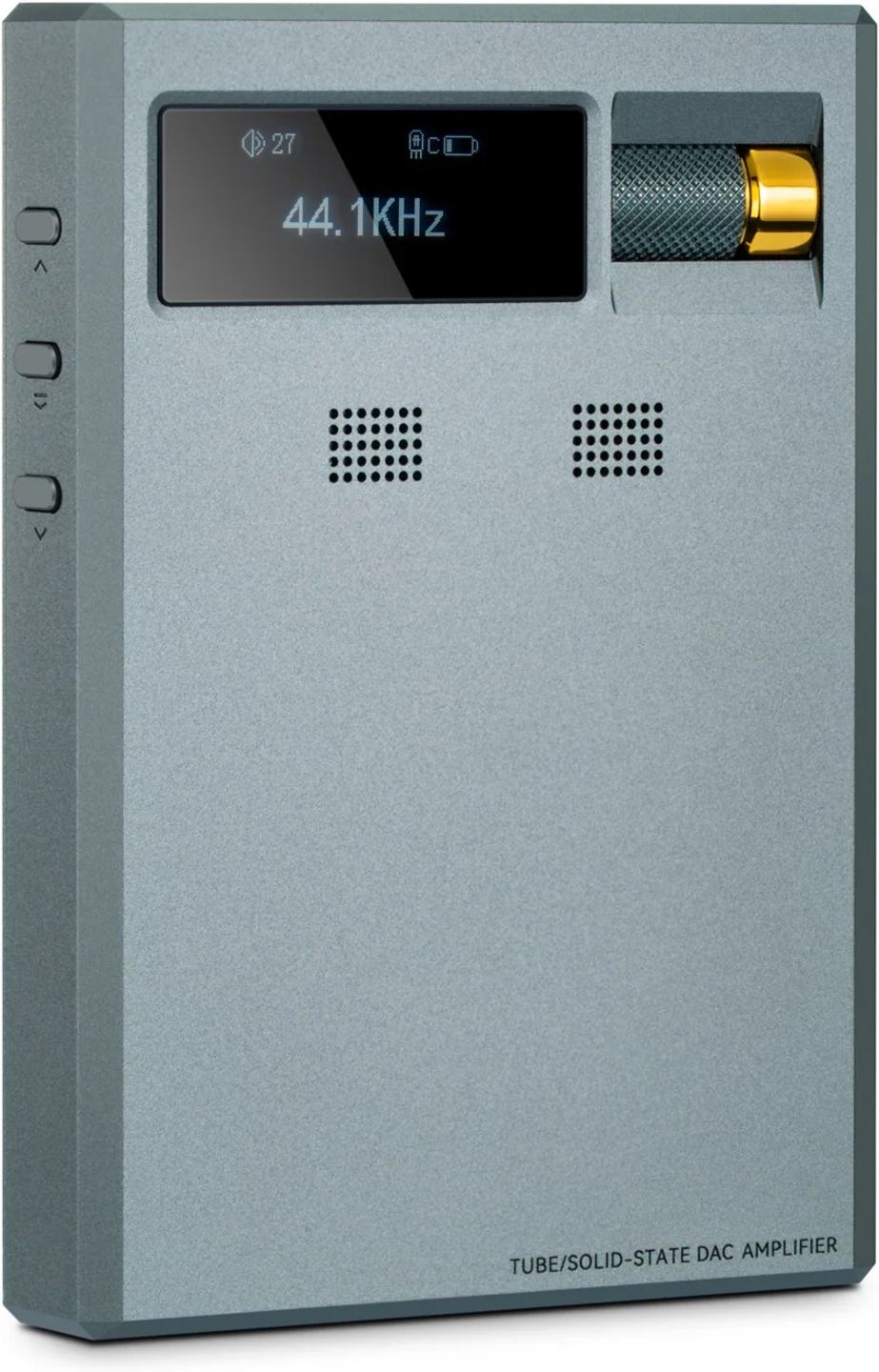
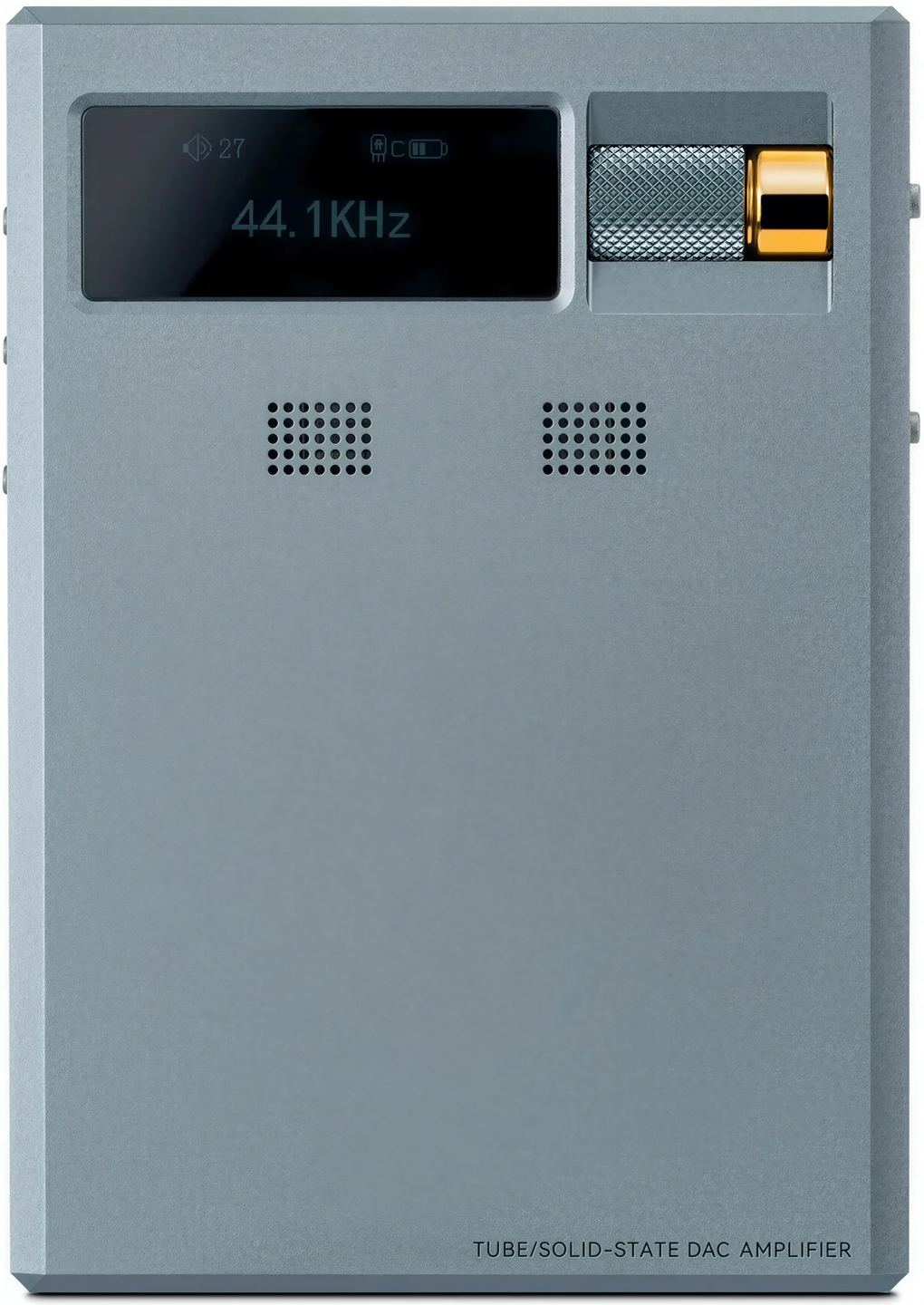
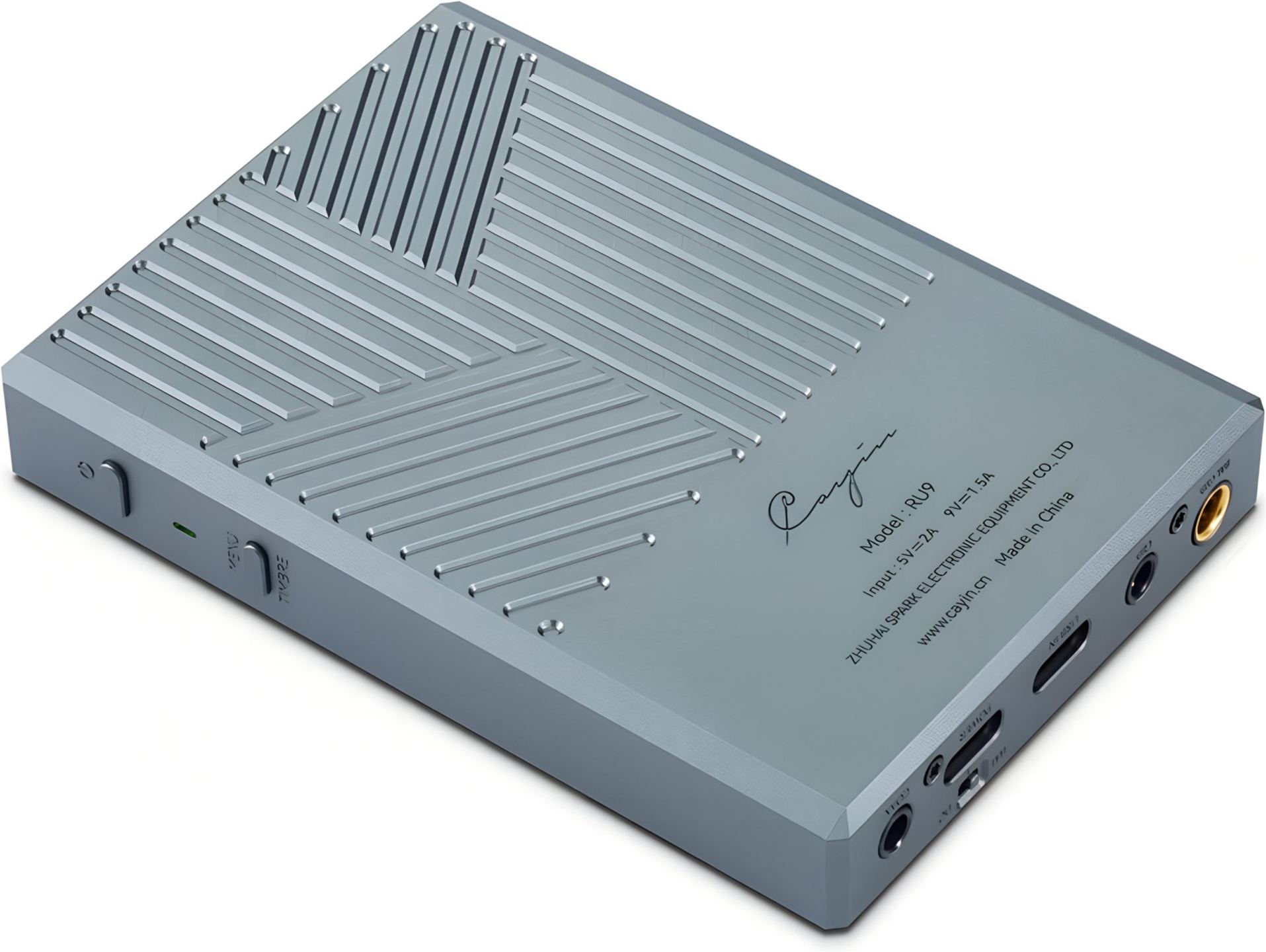
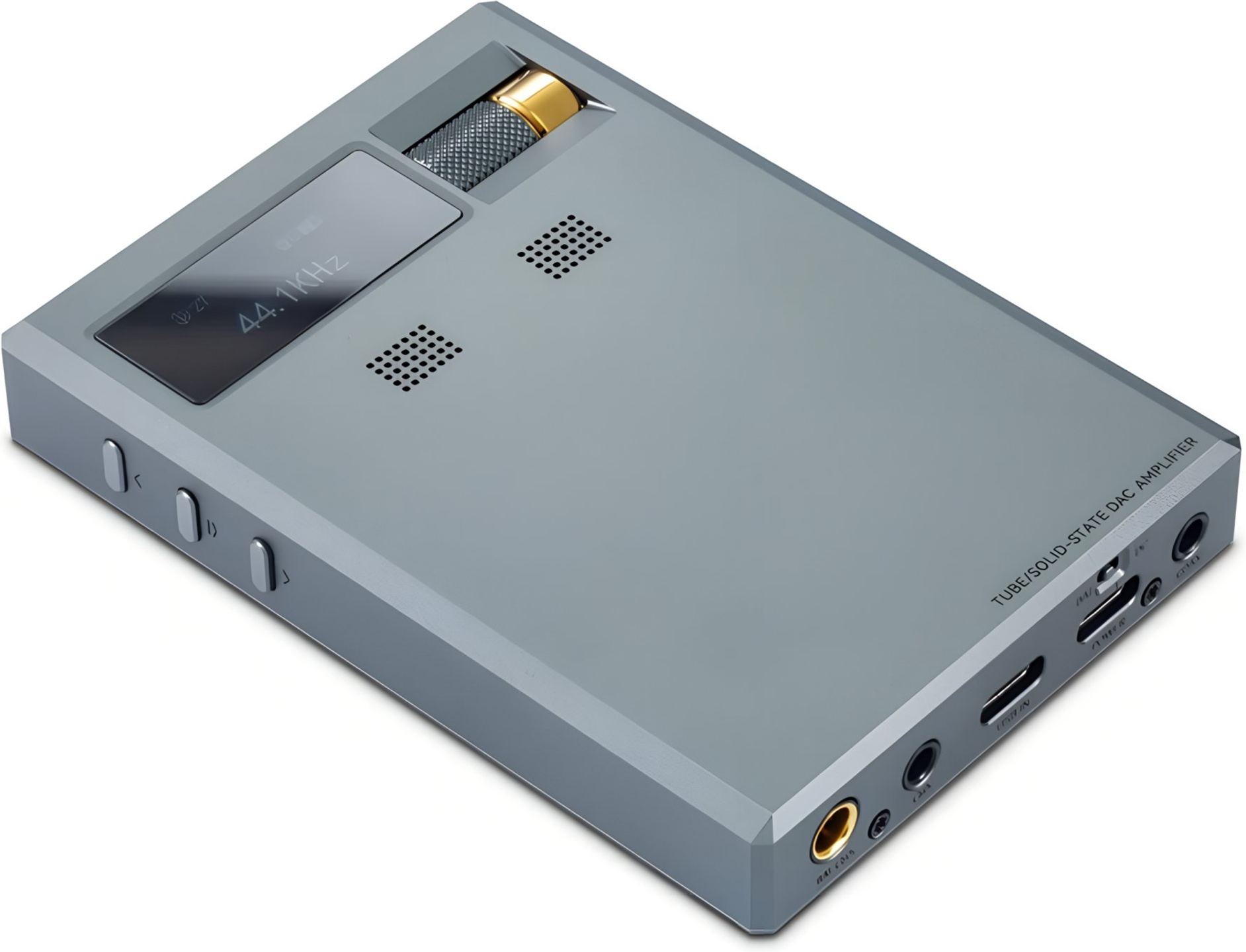
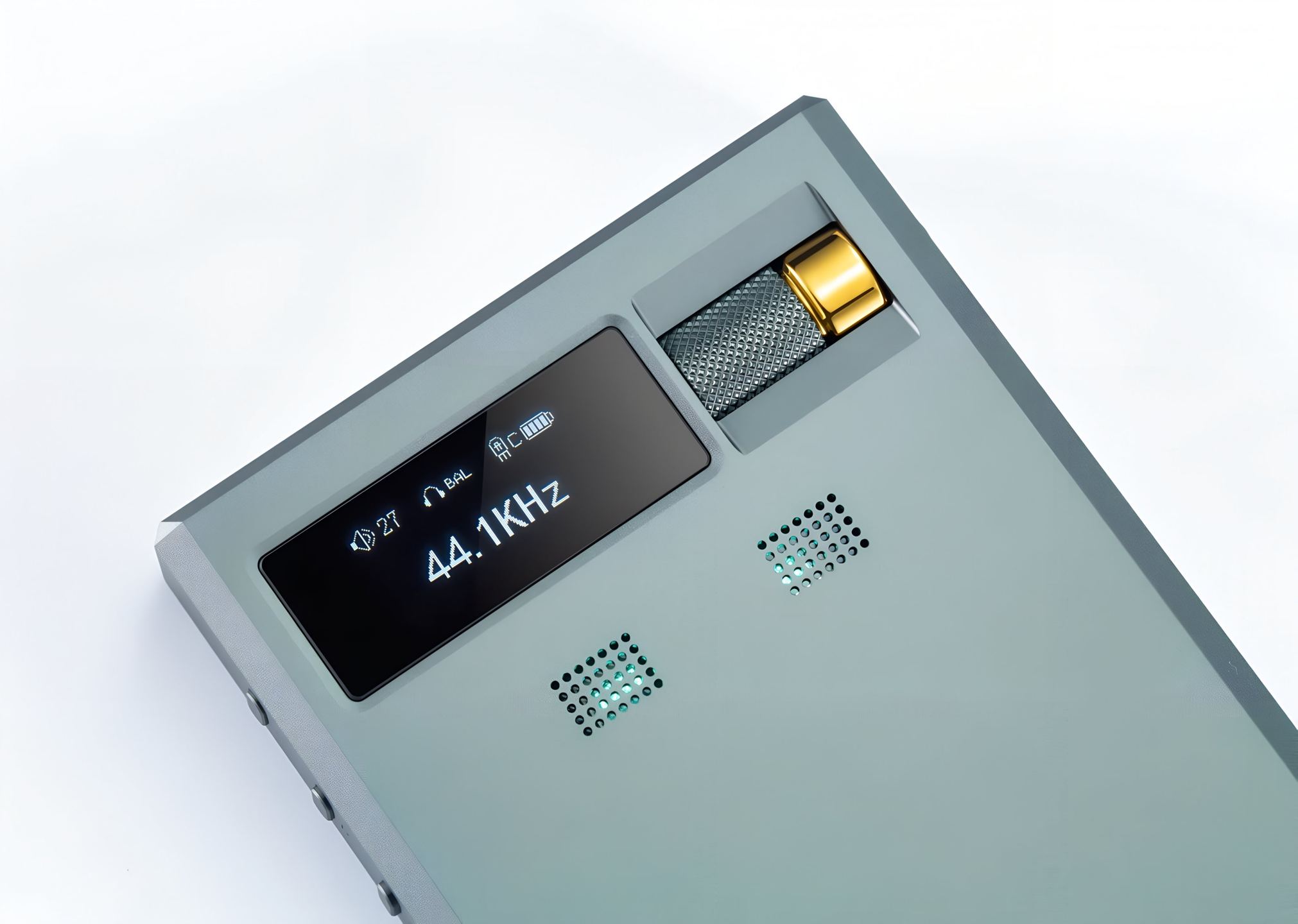
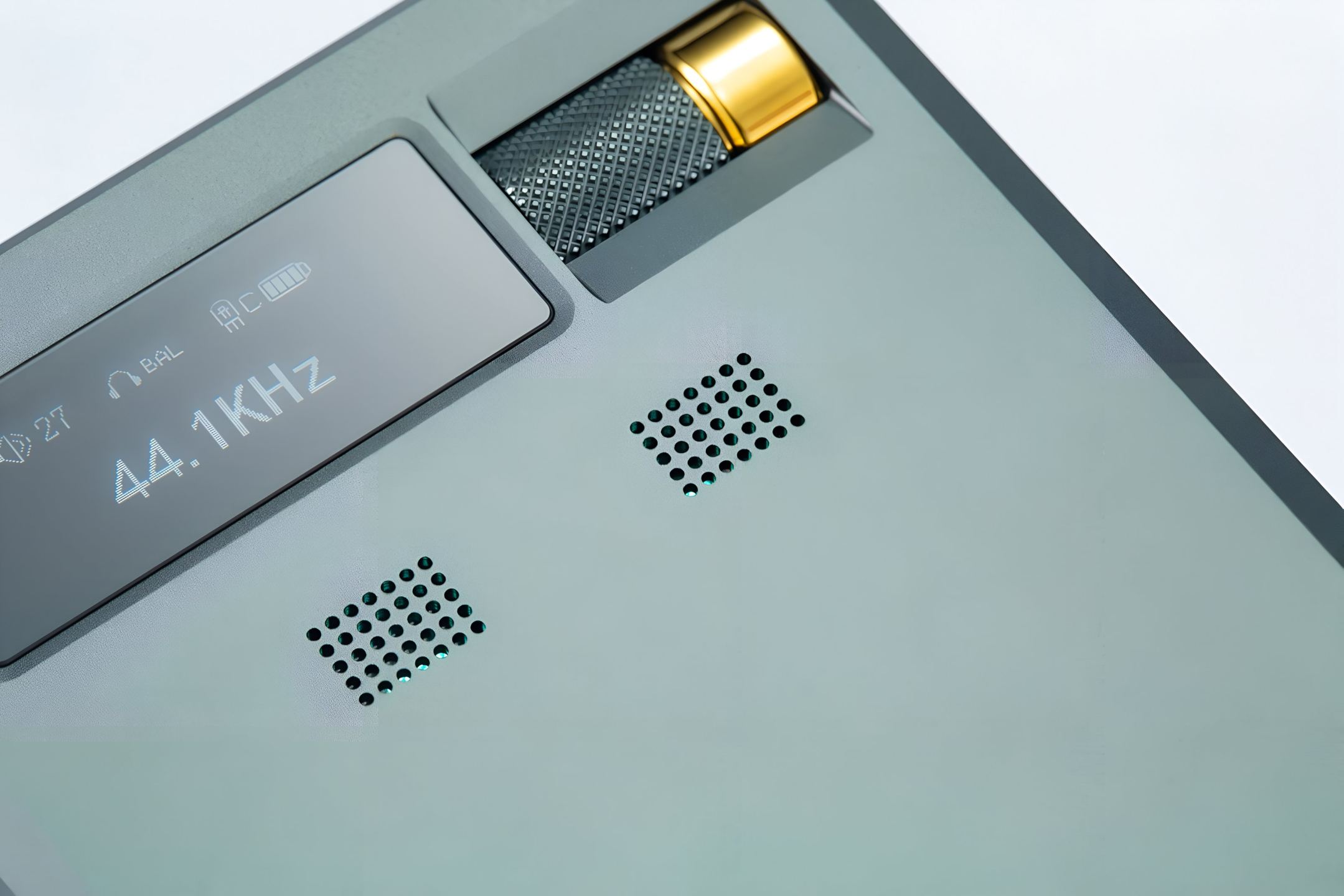
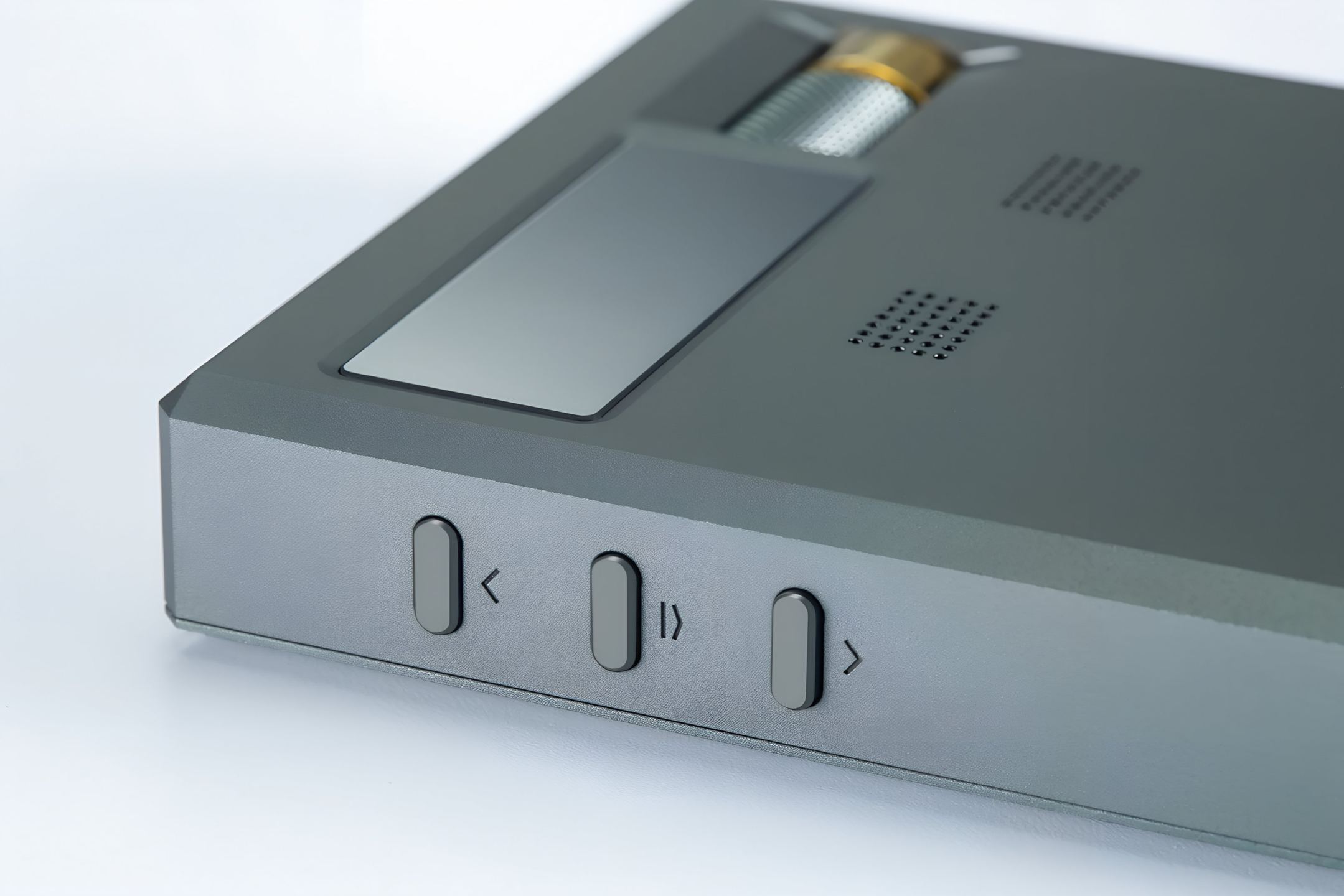
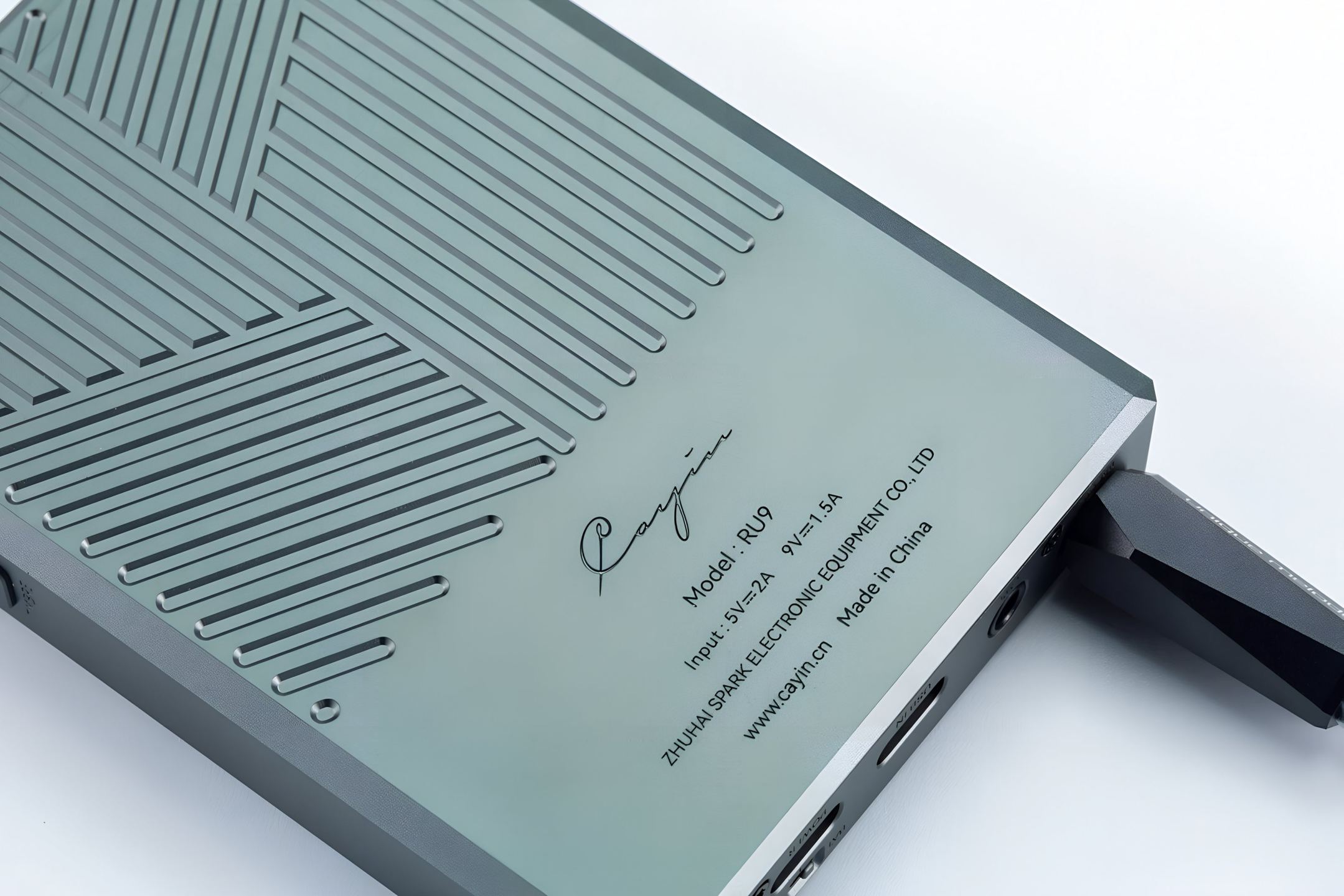
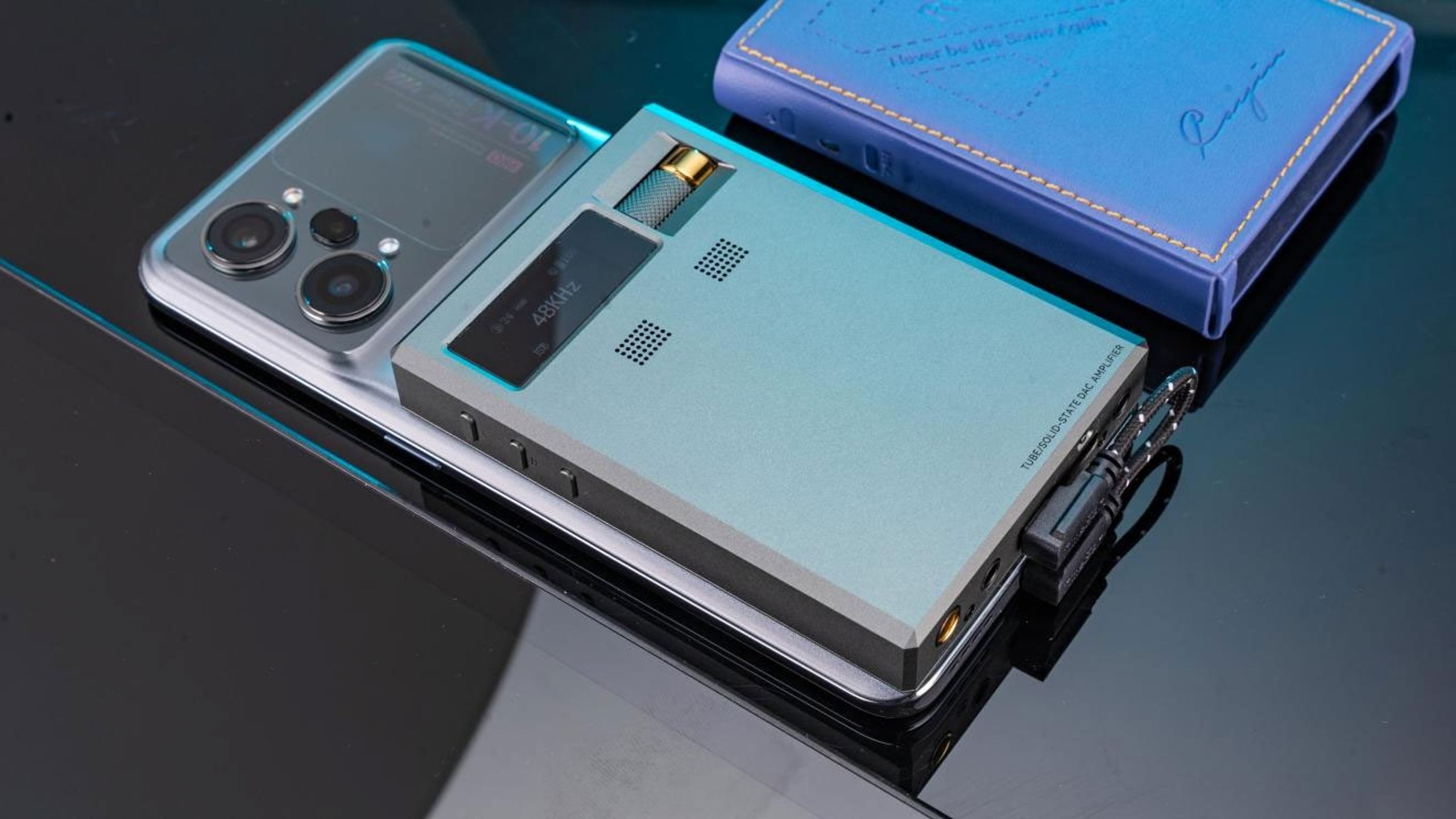
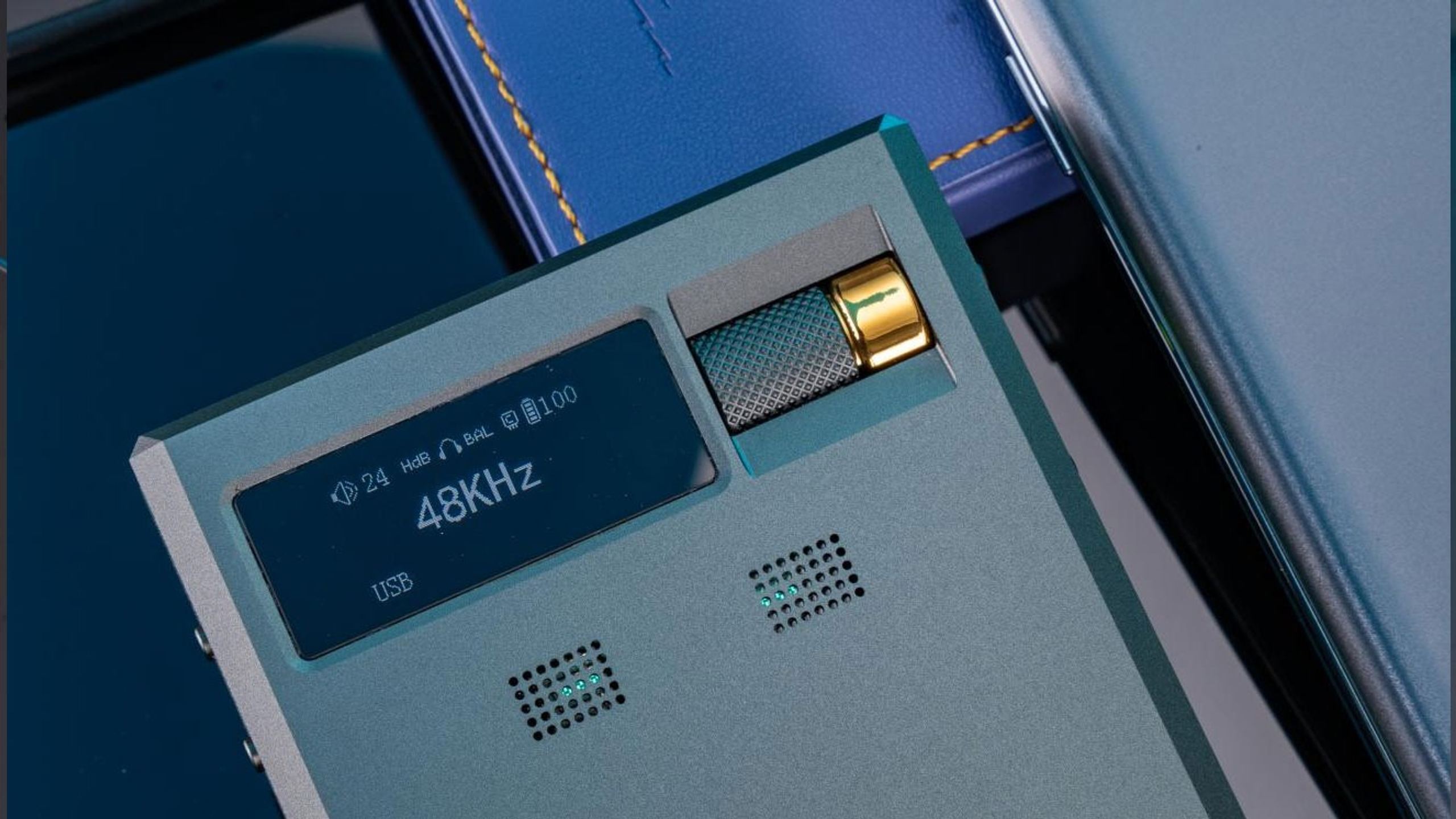
The RU9 adopts a rectangular format of 100 x 70 x 15 mm, resembling more a miniature audiophile player than a simple dongle. Its monoblock chassis, made of black anodized aluminum and CNC-machined, provides a solid grip despite its featherweight. The front features a 0.96-inch OLED screen framed by a notched metal volume wheel. The latter, with finely calibrated resistance, allows precise volume adjustment across 100 steps.
The construction reveals meticulous attention to detail, with chamfered edges, scratch-resistant finishes on the top and bottom panels, and a glass insert on the upper part enabling Bluetooth transmission. The Nutube tube, visible through small side windows, emits a characteristic blue-white glow when current flows, subtly reminding you of the presence of this unusual technology in a portable device.
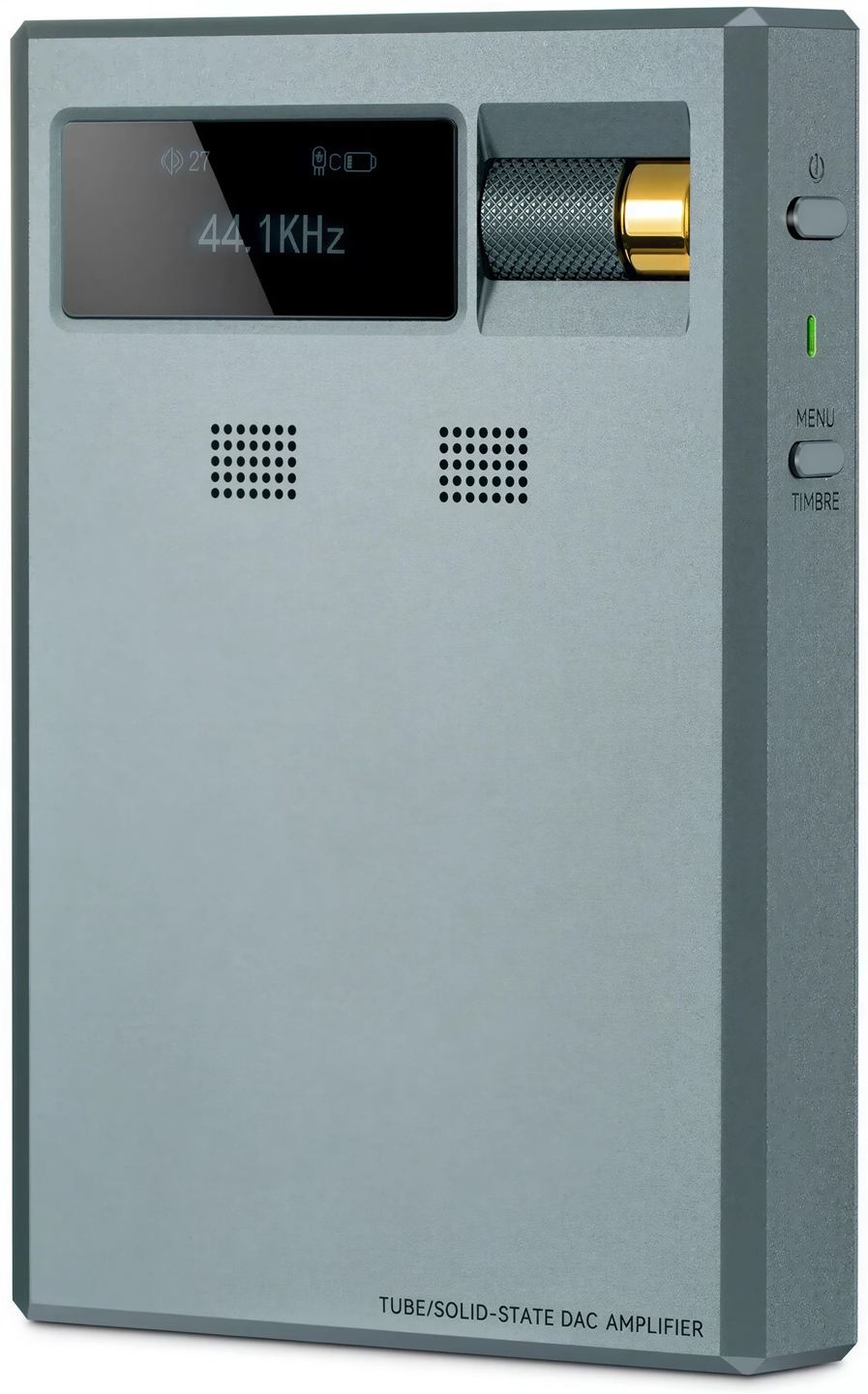
Ergonomics have been particularly well thought out, with physical buttons on the right side: power and timbre mode selection. The connectors, grouped on the bottom, include two headphone outputs (3.5 mm single-ended and 4.4 mm balanced), a bidirectional SPDIF port, two separate USB-C ports (one for audio, the other for power), and a BAT/DC switch to toggle between battery power and “Hyper” mode on mains.
The Nutube Revolution: When VFD Technology Meets Audio
At the heart of the RU9 beats a Korg Nutube 6P1, the result of a collaboration between Korg and Noritake Itron, a specialist in vacuum fluorescent displays. This miniature dual triode retains the classic anode-grid-filament structure of a traditional tube but uses VFD screen manufacturing processes to achieve reduced dimensions and 50 times lower power consumption.
The Nutube operates with a filament voltage of only 700 mV and a plate dissipation limited to 1.7 mW per triode, compared to several watts for a conventional tube. This energy efficiency allows its integration into a portable device powered by a 2000 mAh battery, while preserving the sought-after harmonic characteristics of tubes: even-order harmonic distortion, natural compression, and that distinctive sonic warmth.
Cayin has mounted the Nutube on a specially designed anti-vibration silicone platform, drastically reducing the microphonics inherent to directly heated tubes. The amplification circuit adopts a three-stage architecture, combining six Toshiba 2SK209 JFET transistors selected for audio and the Nutube configured as a voltage stage. This topology allows full exploitation of the tube’s qualities while maintaining a sufficiently low output impedance to efficiently drive headphones and earphones.
Triple Sound Personality and Cutting-Edge Digital Conversion
The RU9 stands out with its three selectable amplification modes at the press of a button. The “Solid State” mode completely disables the tube for a neutral and transparent sound, favoring dynamics and precision. The “Classic” mode activates the tube without negative feedback, delivering a smooth and warm sound with the natural compression characteristic of vintage tube amplifiers. The “Modern” mode introduces slight negative feedback (NFB), combining the tube’s harmonic coloration with better linearity and increased bass control.
The digital section relies on two AKM AK4493SEQ chips configured in dual mono, with each channel benefiting from its own converter to minimize crosstalk. This symmetrical architecture, combined with the latest-generation 16-core XMOS XU316 USB processor, ensures smooth handling of high-resolution audio streams up to 32-bit/768 kHz PCM and native DSD512. The digital and analog circuits are physically separated on two 6-layer PCBs, limiting interference and preserving signal integrity.
The output stage uses ultra-low-noise OPA1662 operational amplifiers coupled with four Nexperia audio power transistors. This configuration achieves remarkable power for a device of this size: up to 1000 mW per channel at 32 ohms in DC mode on the balanced output, enough to comfortably drive the majority of headphones on the market, from the most sensitive in-ear monitors to power-hungry circumaural headphones.
Modern Connectivity and Practical Everyday Use
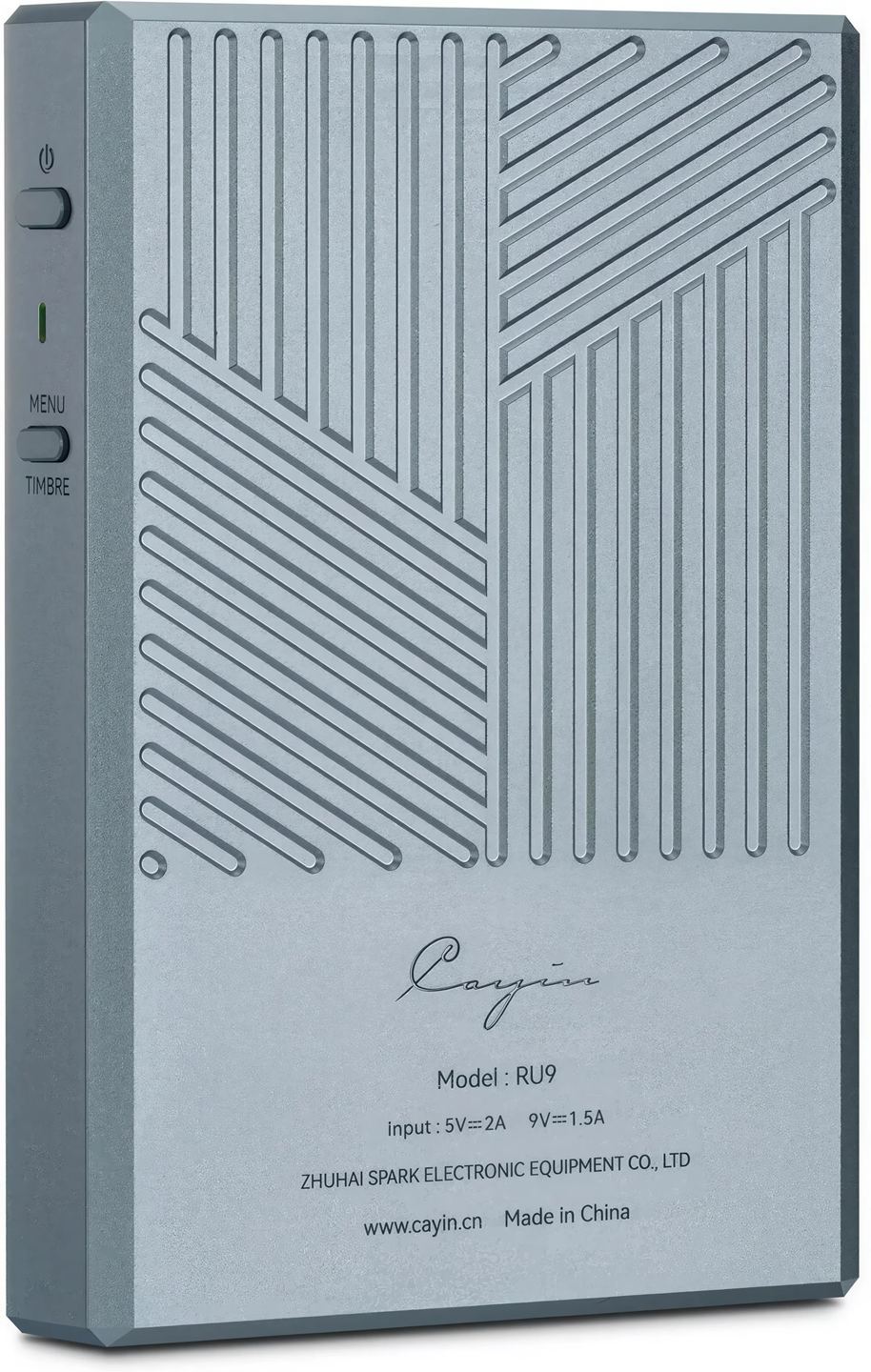
The most visible innovation of the RU9 lies in its MagSafe-compatible magnetic mounting system. The magnetized back of the device allows it to be attached directly to recent iPhones or any smartphone equipped with the supplied magnetic ring. This elegant solution eliminates unsightly rubber bands and keeps the smartphone-DAC assembly perfectly aligned, making mobile use easier.
Bluetooth 5.1 connectivity, managed by a Qualcomm QCC5125 chip, transforms the RU9 into a high-quality audio receiver supporting LDAC codecs (up to 990 kbps), aptX HD, aptX Low Latency, as well as AAC and SBC for iOS compatibility. The range reaches about 6–7 meters in open space, though interference may occur if the transmitting smartphone is too far away, especially if the device remains in a pocket.
The bidirectional SPDIF port is a rare asset in this category. Configured as an input, it allows connection of external digital sources up to 24-bit/192 kHz. As an output, it turns the RU9 into a digital converter, routing the USB signal to an external DAC. The PO (Phone Out) and LO (Line Out) modes on each headphone output offer maximum flexibility, with line mode providing a fixed level of 1.2 V RMS (3.5 mm) or 2.4 V RMS (4.4 mm) for connection to an external amplifier.
The supplied hand-stitched leather case deserves special mention. Beyond the protection it offers, its magnetic back enhances grip on smartphones while adding a metal plate to the front, allowing you to attach a MagSafe external battery to recharge the RU9 on the go. The precise cutouts ensure access to all ports and controls without removing the case.
Technical Specifications
Amplification and Audio Processing
- Tube amplification (Korg Nutube 6P1) or transistor-based
- Dual AKM AK4493SEQ digital-to-analog converter
- High resolution up to 32-bit / 768 kHz
- DSD512 compatible
- Three customizable amplification modes
- Transistor mode: for greater dynamics
- Classic tube mode: smooth and warm sound reproduction
- Modern tube mode: optimized clarity and precision
- Easy selection via dedicated button
- Three-level adjustable gain
Audio Performance
- Maximum output power: 1000 mW at 32 ohms
- Detailed power by mode
- 3.5 mm unbalanced output: 310 mW (battery), 420 mW (mains)
- 4.4 mm balanced output: 620 mW (battery), 1000 mW (mains)
- Frequency response: 20 Hz – 32 kHz
- Total harmonic distortion + noise: < 0.6%
- Signal-to-noise ratio: > 114 dB
- Channel separation: up to 86 dB
Audio Compatibility
- USB-C
- PCM up to 32-bit / 768 kHz
- DSD up to DSD512
- SPDIF (input / output)
- PCM up to 24-bit / 192 kHz
- Bluetooth 5.1
- Supported codecs: SBC, AAC, aptX, aptX HD, aptX Low Latency, LDAC
Power Supply and Battery Life
- 2000 mAh lithium battery
- Battery life depending on usage
- Up to 4.7 h in transistor mode (3.5 mm output)
- Up to 3.1 h in tube mode (4.4 mm output)
- Mains power mode: optimized output
- Compatible with external power supply
Connectivity
- 1 x 3.5 mm unbalanced headphone/line output
- 1 x 4.4 mm balanced headphone/line output
- 1 x 3.5 mm SPDIF port (input and output)
- 1 x USB-C audio port (digital-to-analog converter function)
- 1 x USB-C power port
Design and Ergonomics
- Aluminum chassis: robust and interference-resistant
- Volume knob with 0.96-inch LCD screen
- Display: audio resolution, battery level, mode, gain
- Magnetic smartphone mount
- Leather case included
Dimensions and Weight
- Dimensions: 100 x 15 x 70 mm
- Weight: 150 g
Frequently asked questions
What is the actual battery life of the Cayin RU9?
Battery life ranges from 3 to 4.7 hours depending on the mode used and the type of output. In transistor mode on the 3.5 mm output, expect about 4.7 hours. In tube mode on the 4.4 mm balanced output, battery life drops to about 3.1 hours. The screen and Bluetooth also reduce battery life. The DC mode with external power bypasses these limitations.
Can the RU9 really be considered a "dongle"?
Despite Cayin’s marketing label, the RU9 is more akin to a portable amplifier than a traditional dongle. Its dimensions (100 x 70 x 15 mm) and weight (150 g) place it in an intermediate category. It remains pocket-transportable but is bulkier than a classic dongle like models from FiiO or iBasso.
How does the RU9’s sound compare to previous RU6 and RU7 models?
The RU9 offers a warmer and more colored signature than the RU7 while maintaining better resolution than the RU6. The Classic mode is close to the musicality of the RU6 R2R with more detail. The Modern mode combines the precision of the RU7 with the harmonic richness of tubes. The Solid State mode remains the most neutral and analytical of the three.
Which headphones can the RU9 drive effectively?
With up to 1 W at 32 ohms in DC mode, the RU9 comfortably drives demanding headphones such as the Focal Clear, Sennheiser HD660S2, or Audio-Technica ATH-R70x (470 ohms). In-ear monitors benefit from the perfectly silent background and precise volume control. The three-level adjustable gain optimizes adaptation to each transducer.
- Eco-contribution of €0.85 included in the sale price.