

Cayin C9 II
Complementary products

Overview
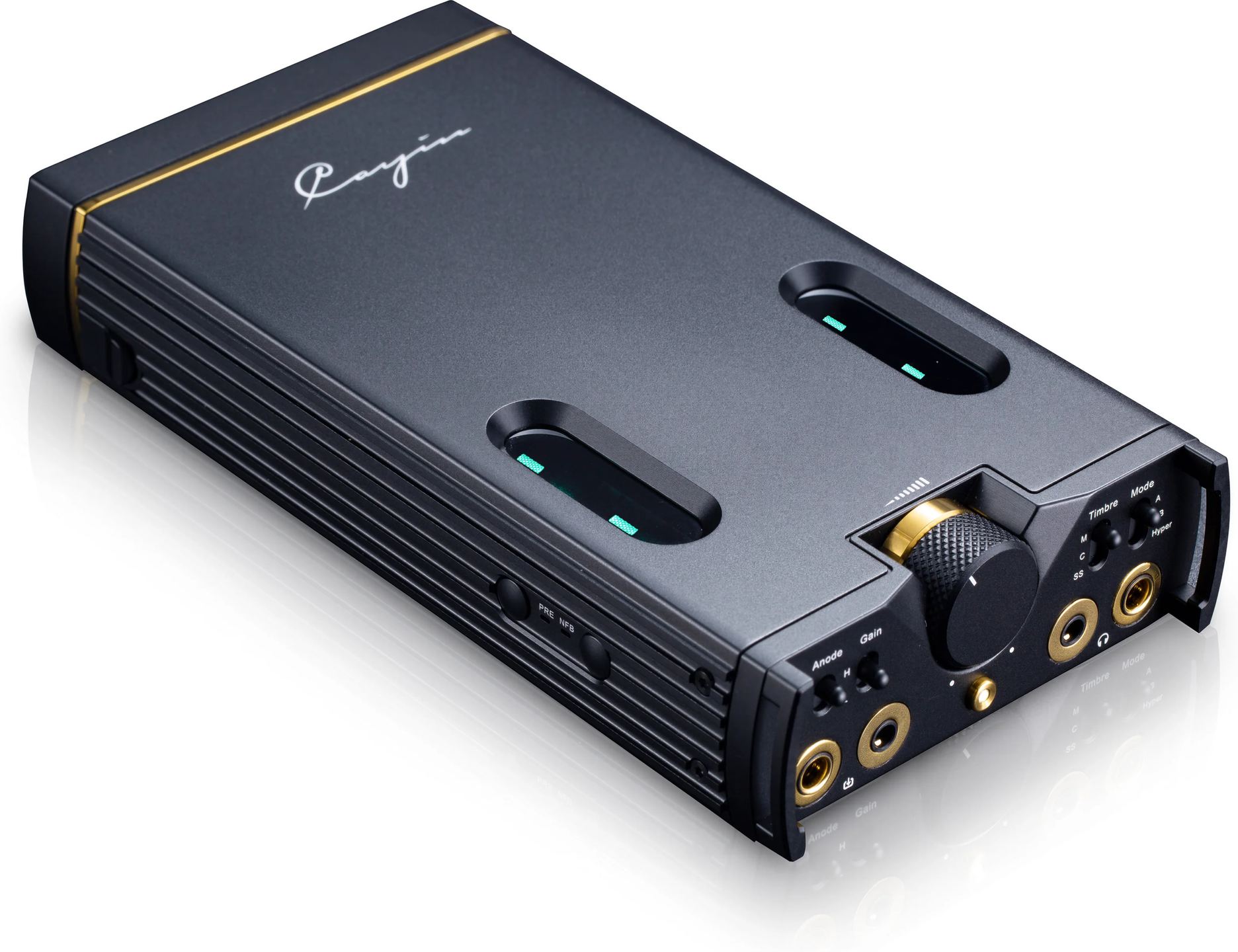
The C9 II is a portable amplifier utilizing Nutube Gen5 technology. It offers three timbre modes, compared to two on the previous model. This hybrid tube-transistor amplifier delivers a maximum power output of 4.1 W in balanced mode and features several operating options: three amplification classes, adjustable anode voltage, and dual independent feedback loops. It is equipped with a quick-release modular battery tray and a fully CNC-machined chassis, designed for portable use.
Nutube Gen5 Technology
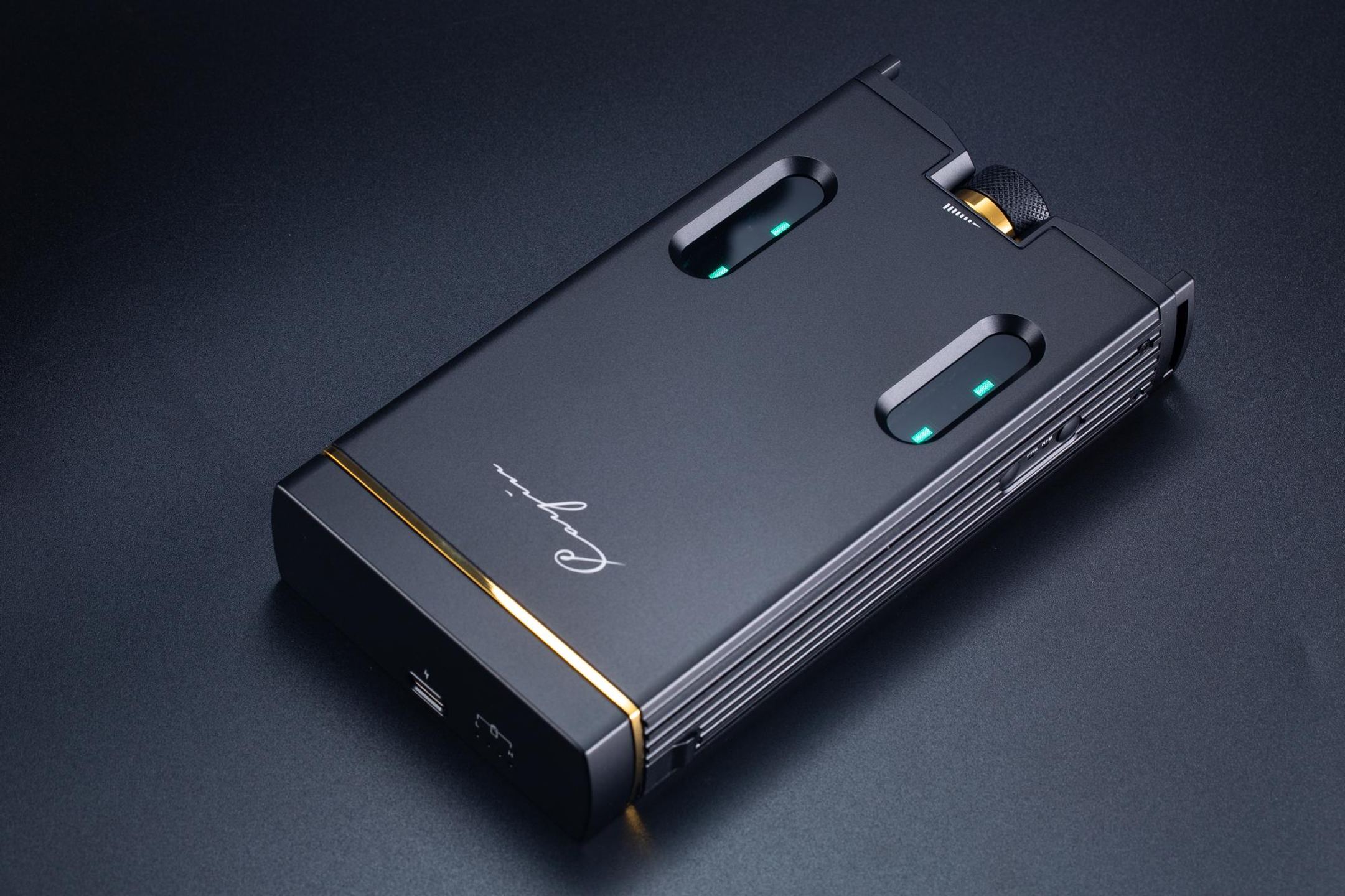
The C9 II uses two Nutube 6P1 tubes, developed by Korg and Noritake Itron. Unlike conventional tubes, the Nutube adopts technology similar to VFD (Vacuum Fluorescent Display) displays. It is a directly heated triode whose filament, powered at 700 mV, emits electrons without generating visible heat.
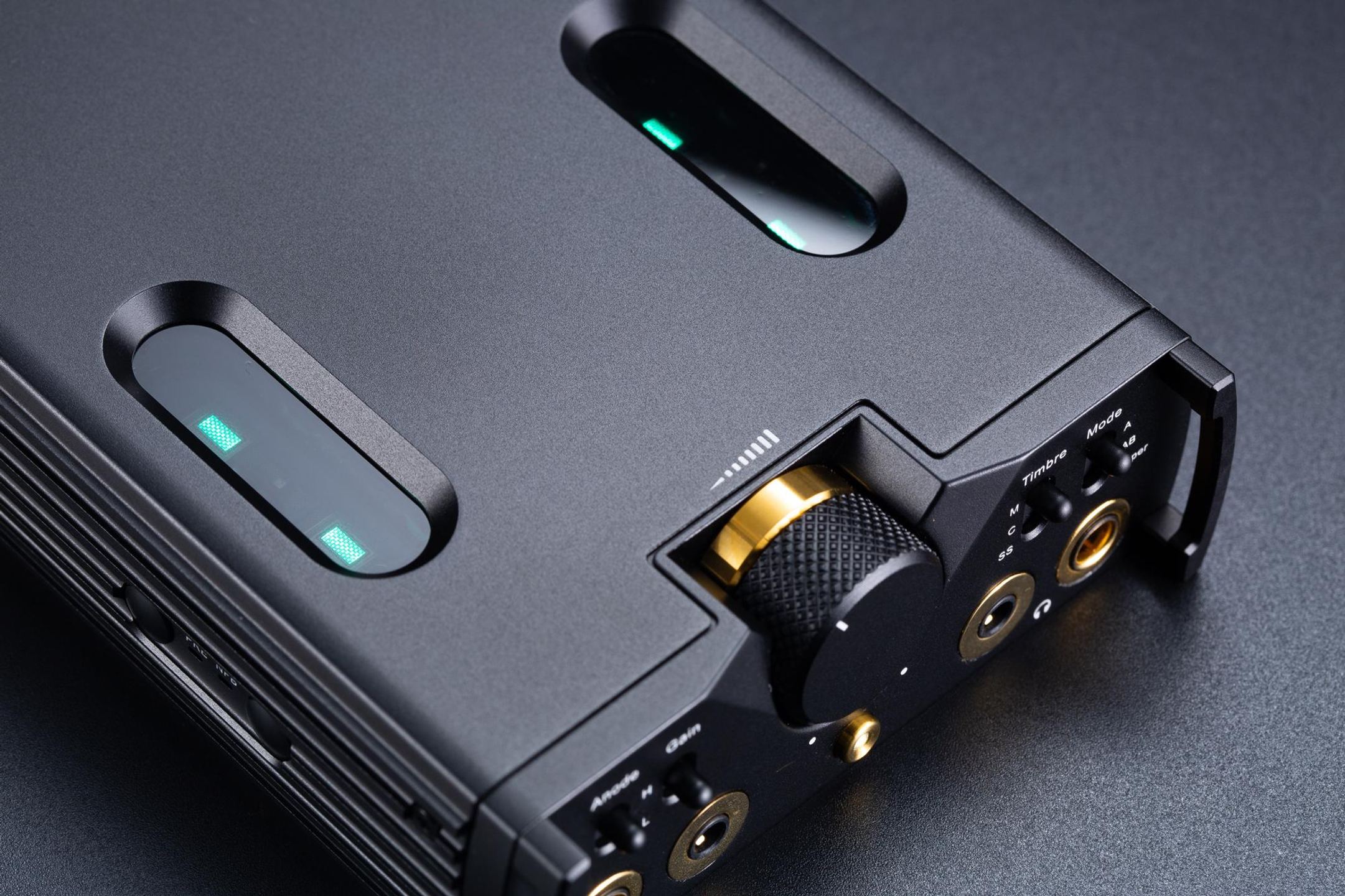
The grid consists of a fine mesh, and the plate, coated with phosphor like in a VFD, emits a blue-white glow when current passes through it, visible through the oval windows in the chassis. This design enables low power consumption: 12 mW per filament and 1.7 mW of plate dissipation, approximately 2% of the energy of a traditional tube. The Nutube occupies less than 30% of the volume of a conventional tube and can be mounted directly on a high-density printed circuit board.
For the C9 II, Cayin developed a Gen5 circuit integrating the Nutubes in a three-stage amplification topology, with Toshiba 2SK209 JFET transistors as buffers before and after the tubes. Compared to the Gen2 circuit of the original C9, the Gen5 generation offers a dynamic range superior by 5 to 9 dB and an improved signal-to-noise ratio.
Three Timbres, Five Variations
The C9 II distinguishes itself from the original model with the addition of a third timbre mode. Where the C9 offered only tube or transistor, the C9 II now provides three options via its front selector:
Modern mode introduces an extended negative feedback loop across multiple stages, significantly reducing total harmonic distortion. Thermal noise decreases, the sonic signature leans toward a contemporary style with a slightly more transparent tube rendering. This configuration adopts the principles of the original C9’s NFB circuit.
Classic mode takes a different approach, with a harmonic distribution characteristic of traditional tube amplification circuits. Thermal noise becomes more pronounced, the presentation is warmer, in line with the N8 player. Cayin thus responds to users who felt the C9 sometimes lacked that “tube flavor” some expect.
Solid-state mode uses four Toshiba 2SK209 JFET transistors in Class A in a discrete circuit. This option offers a precise and linear alternative, allowing a switch to a more analytical signature while maintaining the Cayin character, recognizable by its organic and full-bodied presentation.
To these three modes is added a major innovation: adjustable anode voltage on two levels (High/Low). By modifying the voltage applied to the tube plates, their operating point is altered, which influences audio linearity and adjusts the superposition, spectrum, amplitude, and ratio of second-order harmonics. This functionality applies only to tube modes. The result: four distinct tube timbre variants (Modern High/Low, Classic High/Low) plus transistor mode, for five possible sonic colorations compared to two in the C9.
A Fully Balanced Three-Stage Amplifier
Cayin completely redesigned the headphone amplification section of the C9 II. While both generations employ a fully discrete and differential four-channel circuit, the C9 II adopts a fully balanced topology deployed in three stages:
First stage: common-source differential amplifier with symmetrical JFETs (LSK489 × 4 + LSJ689 × 4) providing differential input.
Second stage: common-emitter push-pull differential voltage amplifier with symmetrical bipolar transistors (BJT), responsible for voltage amplification.
Third stage: common-collector push-pull current amplifier with symmetrical parallel BJTs (emitter-follower configuration), which delivers the current required by the transducers.
This symmetrical design ensures optimal stereo separation and precise soundstage. An integrated precision control circuit allows the amplifier to operate in different modes: NFB (Negative Feedback) or LFB (Local Feedback), Class A or Class AB, plus a recently added Hyper mode, in single-ended or balanced configuration.
Volume control relies on two MUSES72320V electronic circuits offering 130 discrete steps via a resistive ladder. This approach ensures precision and repeatability superior to traditional analog potentiometers.
Amplification Modes and Versatility of Use
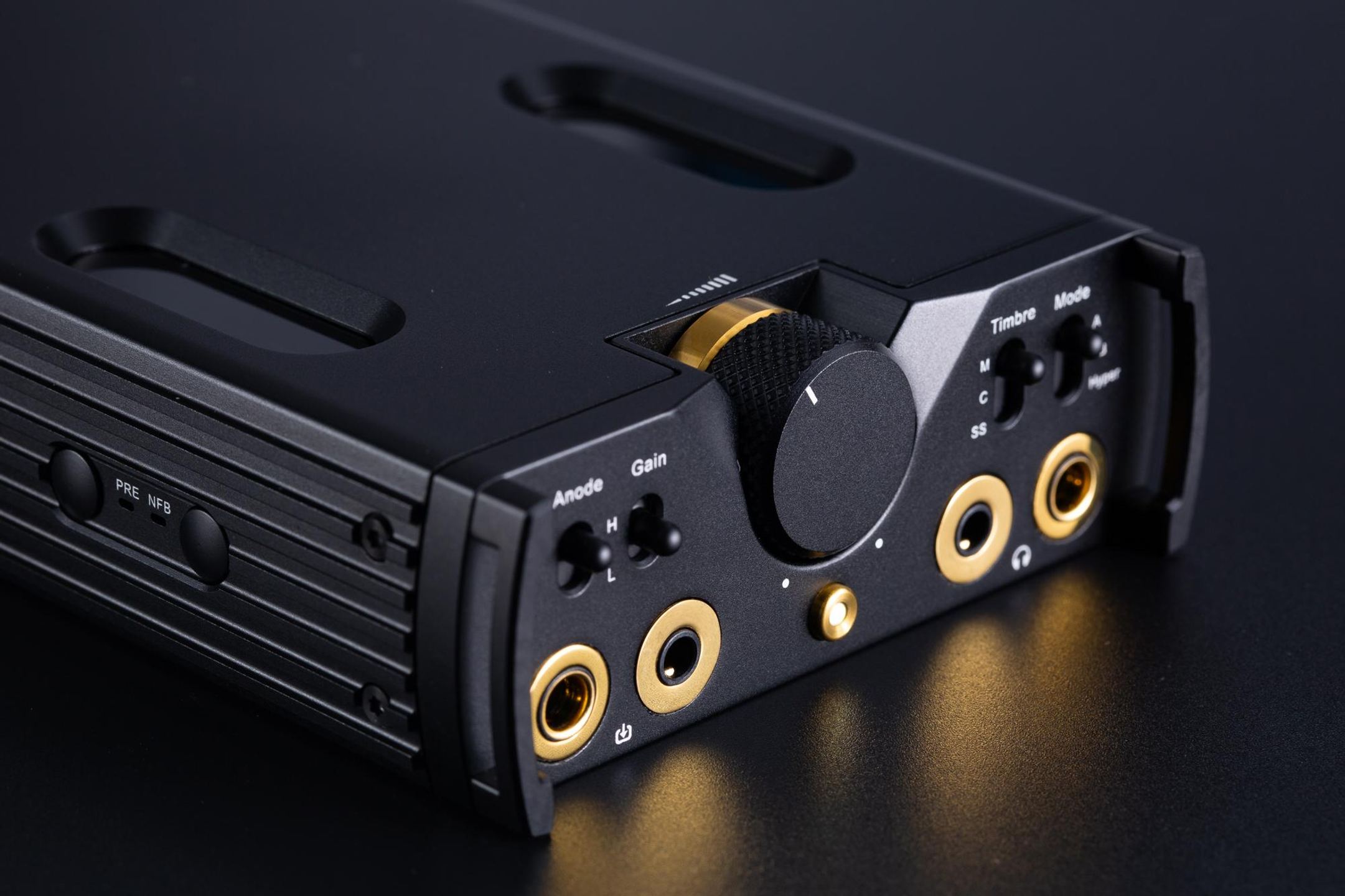
The C9 II offers three amplification classes selectable via a front switch. Class A keeps the output transistors constantly conducting, eliminating crossover distortion at the cost of higher power consumption. Class AB turns off the transistors during low signal phases, improving efficiency while maintaining high sound quality. Hyper mode, new to the C9 II, increases the supply voltage to deliver greater power with superior dynamic headroom.
Added to this is a lateral NFB (Negative Feedback) switch. When activated, it applies local feedback to the amplification circuit, producing a fuller sound compared to standard mode. This functionality combines with other settings, multiplying customization possibilities.
The C9 II operates in two input modes: LINE (standard line input) and PRE-AMP (pure preamplifier mode). In PRE-AMP mode, activated via a lateral button combined with the front selector, the amplifier bypasses the internal volume control to function solely as a power stage, ideal when using the volume control of a digital audio player or external preamplifier.
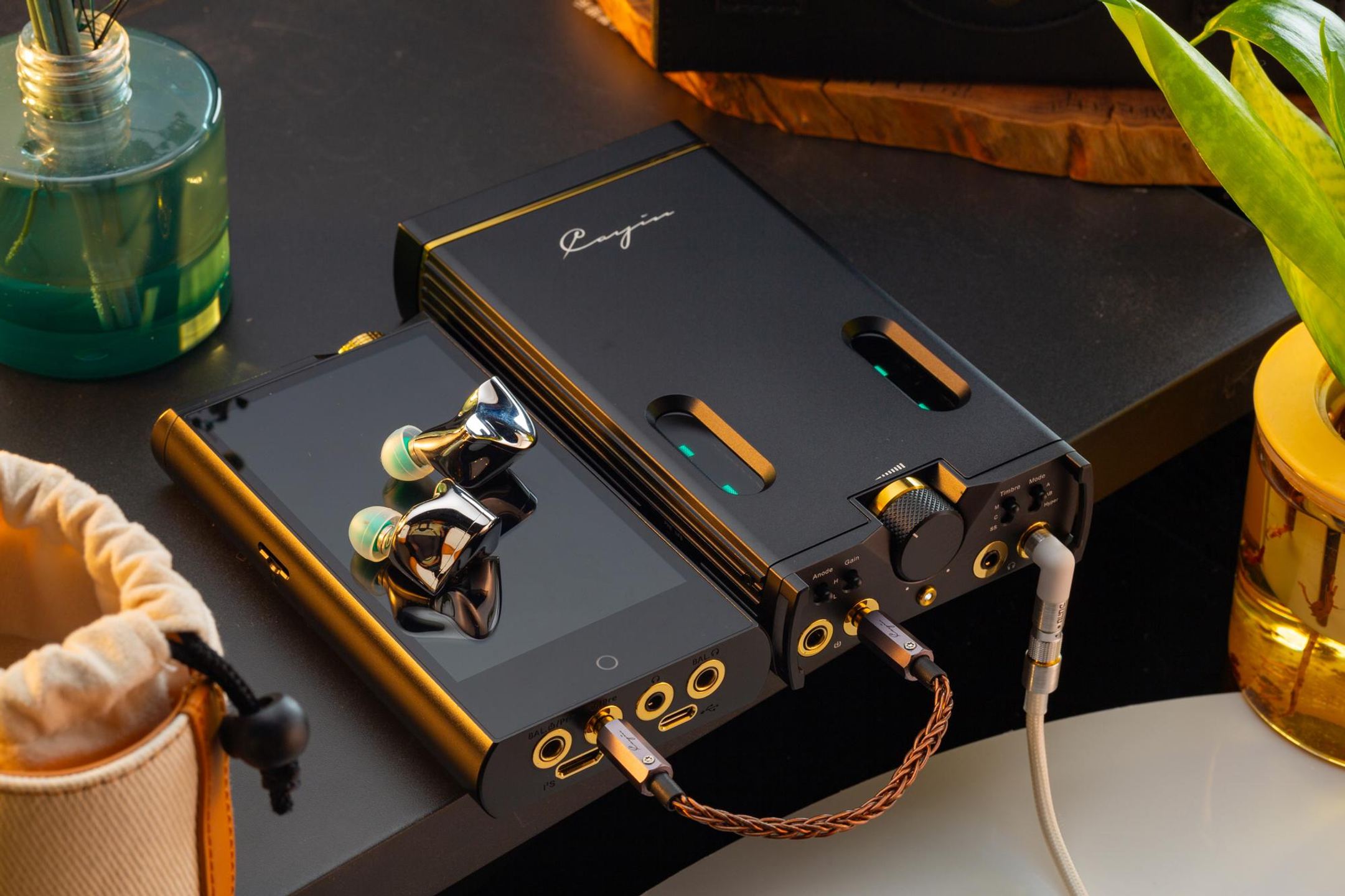
Four front jacks (two inputs, two outputs) accept 3.5 mm TRS single-ended and 4.4 mm TRRRS balanced formats. A single-ended input is automatically converted internally to take advantage of high-power balanced amplification, an appreciable technical subtlety. The 4.4 mm connectors have been spaced further apart on the C9 II to reduce congestion around the volume potentiometer, taking into account that this jack is more frequently used.
Battery Life and Modular Battery System
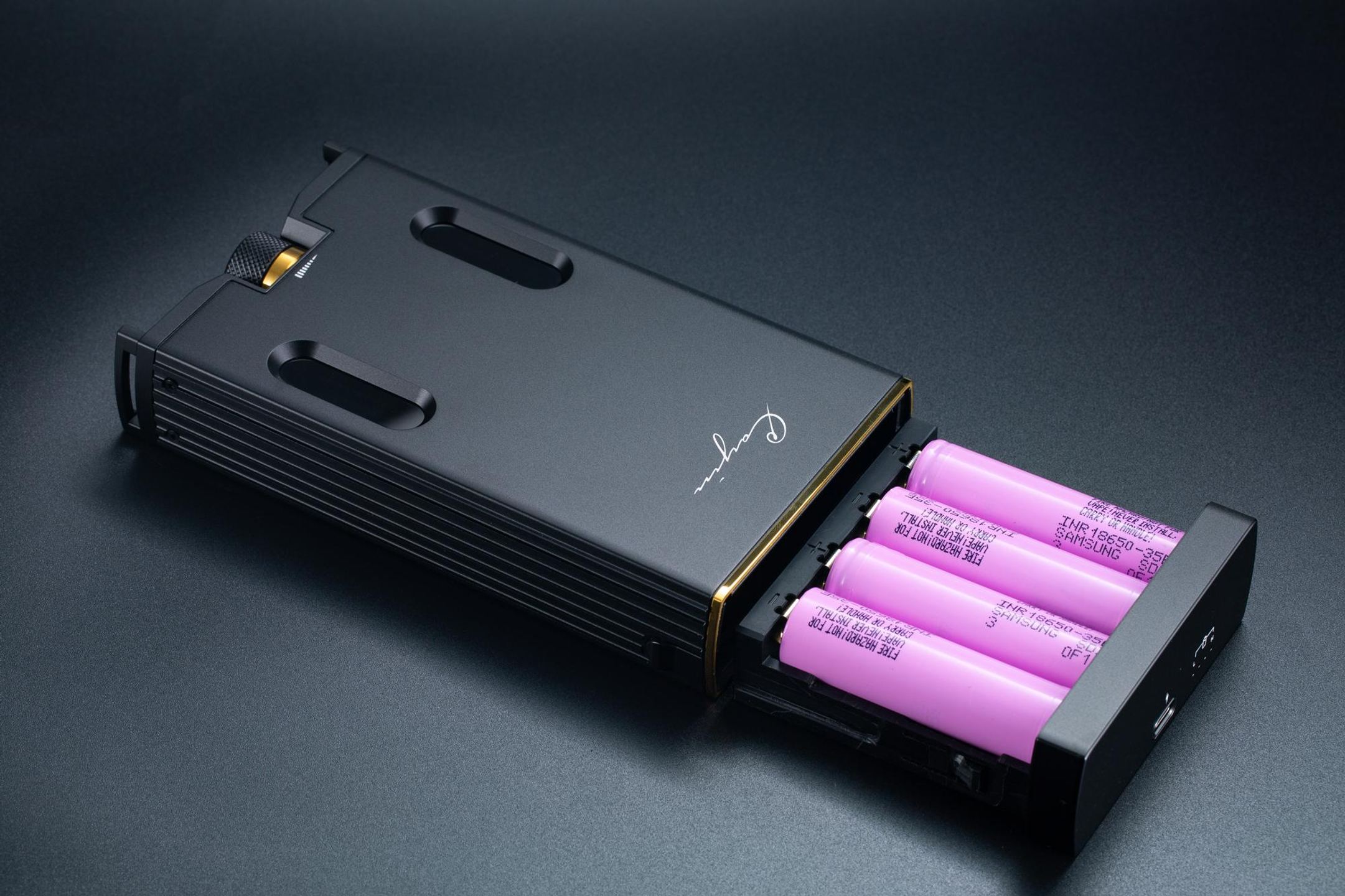
The C9 II incorporates four Samsung INR18650-35E cylindrical batteries of 3400 mAh mounted in series, providing direct ±8.4 V power without DC-DC conversion—an approach that preserves signal purity. Cayin preferred 18650s to newer 21700 cells after finding that the ±8.4 V power from four 18650 batteries suited the C9 perfectly, and instead focused efforts on improving the power management circuit.
The battery tray now detaches via a quick-lock mechanism on each side, much more convenient than the hex screws of the C9. Slight effort is required initially, but the system loosens after a few manipulations. Adhesive rubber stickers are provided to protect contact surfaces. The tray can also serve as a standalone 18650 charger, a practical feature for those with spare batteries.
Charging is performed via USB Type-C compatible with QC3.0 and PD2.0 (9 V-2 A), with a full charge time reduced to 3.5 hours—significantly faster than the original C9. LED indicators on the rear display the charge level. Battery life varies considerably depending on the mode used and output selected. In solid-state Class AB mode on single-ended output, approximately 17.5 hours is achieved, a figure that drops to 8 hours in Tube Modern Hyper mode on balanced output, the most power-hungry configuration. For extended sessions, an additional battery tray constitutes a wise investment.
Cayin advises against using the C9 II while charging, not due to technical impossibility, but to avoid ground loop risks if the amplifier and source are powered by the same charger. If this use proves necessary, separate power sources should be employed. The device automatically shuts off once charging reaches 100%, a protection integrated into the batteries.
Technical Specifications
Architecture and Technology
- Nutube 6P1 ×2 tubes: compact, power-efficient, warm and rich sound
- Adjustable anode voltage: High / Low to personalize tone and linearity
- Dual independent negative feedback loop:
- Modern (M): detailed and dynamic
- Classic (C): warm and musical
- Discrete solid-state circuit: 4 Toshiba 2SK209 JFETs
- Balanced amplifier: precise stereo imaging, optimal separation
- Modes: feedback, Class A/AB, Hyper, single-ended, balanced
Connectivity
- Inputs
- 3.5 mm TRS (single-ended)
- 4.4 mm TRRRS (balanced)
- Outputs
- 3.5 mm TRS (single-ended)
- 4.4 mm TRRRS (balanced)
- Single-ended input converted internally to take advantage of high-power balanced amplification
Components
- Input differential amplifier: LSK489 × 4 + LSJ689 JFET × 4
- Electronic volume control: MUSES72320V × 2
- Solid-state timbre: 4 × Toshiba 2SK209 JFETs for high-performance constant current
- Independent negative feedback circuits for fine-tuning tube timbre
Build and Design
- CNC-machined chassis: premium metal finish with VFD windows to view the Nutubes
- Gold-plated potentiometer with PVD coating, CNC mirror polishing
- Optimized cooling: graphene heat spreaders and aluminum heatsinks for evenly distributed heat
Dimensions and Weight
- Dimensions: 165 × 88.5 × 30 mm
- Weight: 650 g (± 5 g)
Key Features
- Gen5 Nutube circuit: dual tube with Classic, Modern, or solid-state timbres
- Fully balanced 3-stage headphone amplifier
- Quick-release battery tray: direct ±8.4 V power, no DC conversion
- Design: industrial, elegant, and functional
- Universal compatibility: all headphones and portable analog applications
Power and Battery Life
- Built-in battery: 4 × Samsung INR18650-35E (3400 mAh)
- Charging: USB Type-C (QC3.0 / PD2.0 9 V-2 A)
- Battery life varies by mode and output
| Mode / Output | 3.5 mm single-ended | 4.4 mm balanced |
|---|---|---|
| Solid-state Class AB | approx. 17.5 h | approx. 13.5 h |
| Solid-state Class A | approx. 15 h | approx. 10.5 h |
| Solid-state Hyper | approx. 14.7 h | approx. 10.2 h |
| Modern Tube Class AB | approx. 12.5 h | approx. 9.5 h |
| Modern Tube Class A | approx. 11.5 h | approx. 8.2 h |
| Modern Tube Hyper | approx. 11.2 h | approx. 8 h |
- Modular battery tray: detachable, robust, and quick to replace, also functions as a standalone 18650 charger
Frequently asked questions
What is the main difference between the C9 II and the original C9?
The C9 II brings several notable improvements: three timbre modes instead of two (Modern, Classic, and solid-state), adjustable High/Low anode voltage creating five sonic variations versus two, an additional Hyper mode, an NFB switch, and a Nutube Gen5 circuit offering a dynamic range superior by 5 to 9 dB. The chassis is entirely aluminum (versus glass back for the C9), the battery system adopts quick-locking, and fast charging reduces charge time to 3.5 hours.
How does Nutube technology work and how does it differ from conventional tubes?
The Nutube uses vacuum fluorescent display technology rather than traditional tube manufacturing. It consumes only 2% of the energy of a conventional tube (12 mW per triode for the filament), occupies less than 30% of the volume, and generates very little heat. Despite these construction differences, it functions as a true directly heated triode with anode, grid, and filament, producing the characteristic harmonics of tubes. The visible glow comes from the phosphor on the plate, similar to VFD screens.
Can the C9 II be used with all types of headphones and earphones?
The C9 II suits a wide range of transducers thanks to its single-ended (up to 1.2 W at 16 Ω) and balanced (up to 4.1 W at 16 Ω) outputs, as well as its High/Low gain selector. Sensitive in-ear monitors and inefficient planar headphones are both accommodated, though the latter benefit more from the balanced output. High-impedance headphones (300 Ω) receive 320 mW in balanced and 80 mW in single-ended. Slight hiss may appear with very sensitive earphones.
What battery life can be expected from the C9 II in different modes?
Battery life varies from 8 hours to 17.5 hours depending on the mode and output used. In solid-state Class AB mode on single-ended output, approximately 17.5 hours is obtained, while in Tube Modern Hyper mode on balanced output, battery life drops to approximately 8 hours. Tube modes consume more than transistor modes, and Class A more than Class AB. An additional battery tray allows extended use without interruption, and USB-C fast charging brings the device to 100% in 3.5 hours.
Can the batteries be replaced and can other brands of 18650 cells be used?
The battery system is fully modular. The tray detaches via lateral pressure locks, allowing easy replacement of the four supplied Samsung INR18650-35E cells. Other brands of high-performance 18650 batteries can be used, with some users reporting subtle sonic differences depending on the cells chosen. The tray can also serve as a standalone 18650 charger. A second tray with a spare set of batteries eliminates listening interruptions, one recharging while the other powers the amplifier.
- Eco-contribution included in the sale price.
- Manufacturer reference: CAYC9II
- GTIN / EAN: 6957914912049