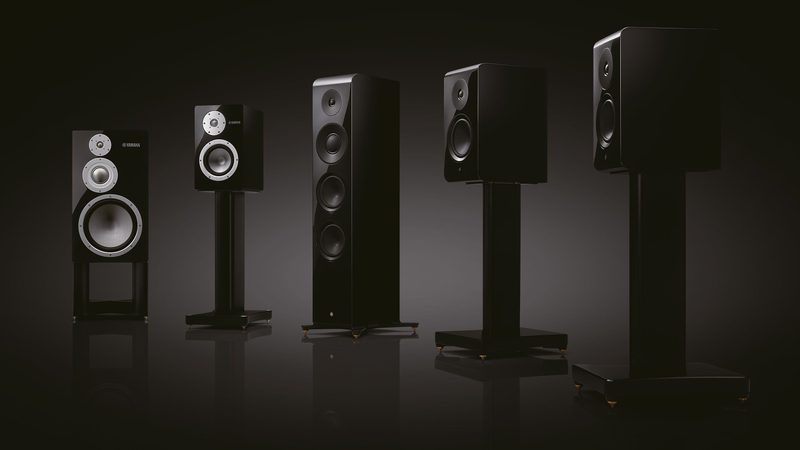
Yamaha NS-5000 (pack of 2)
Complementary product
Overview
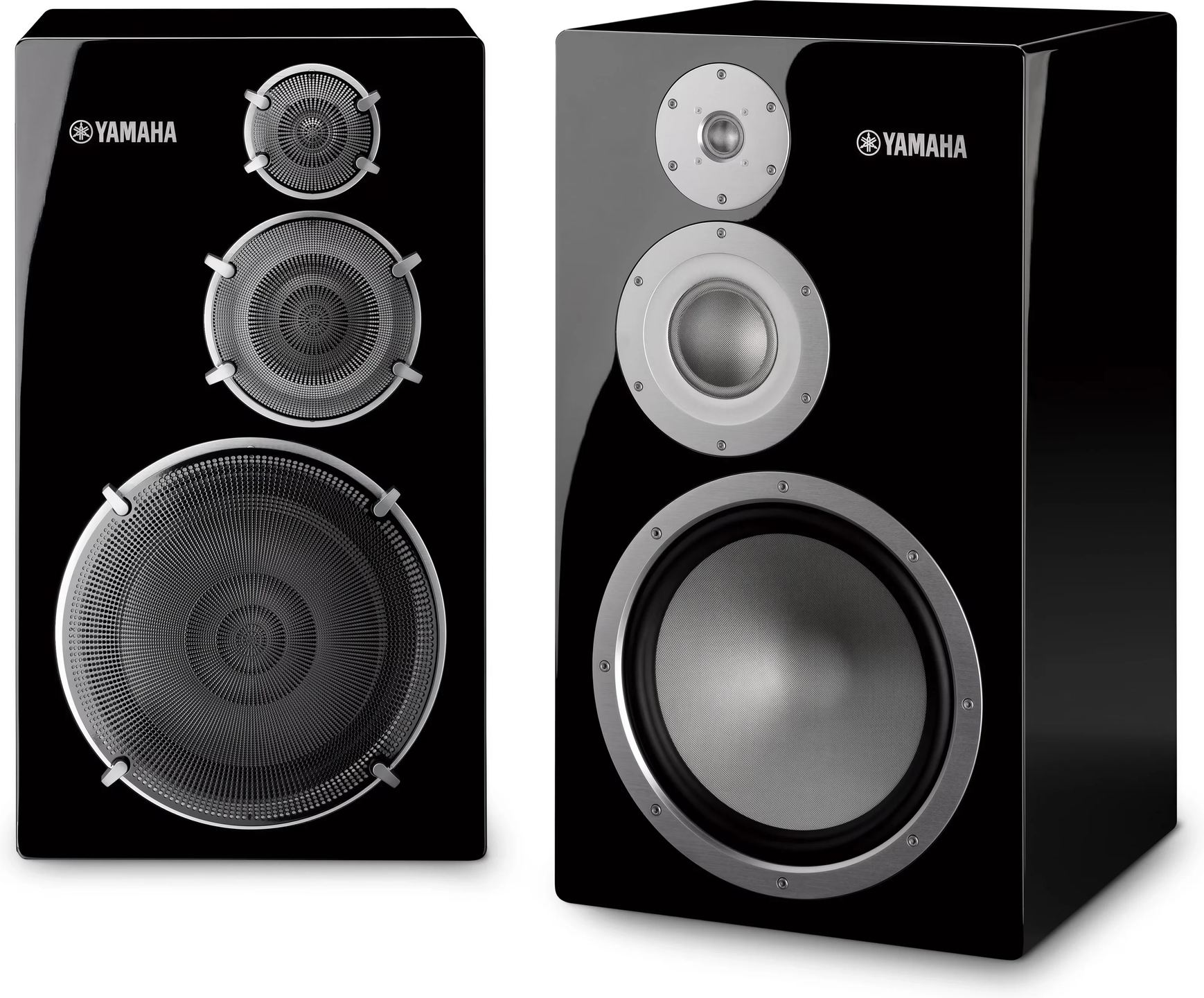
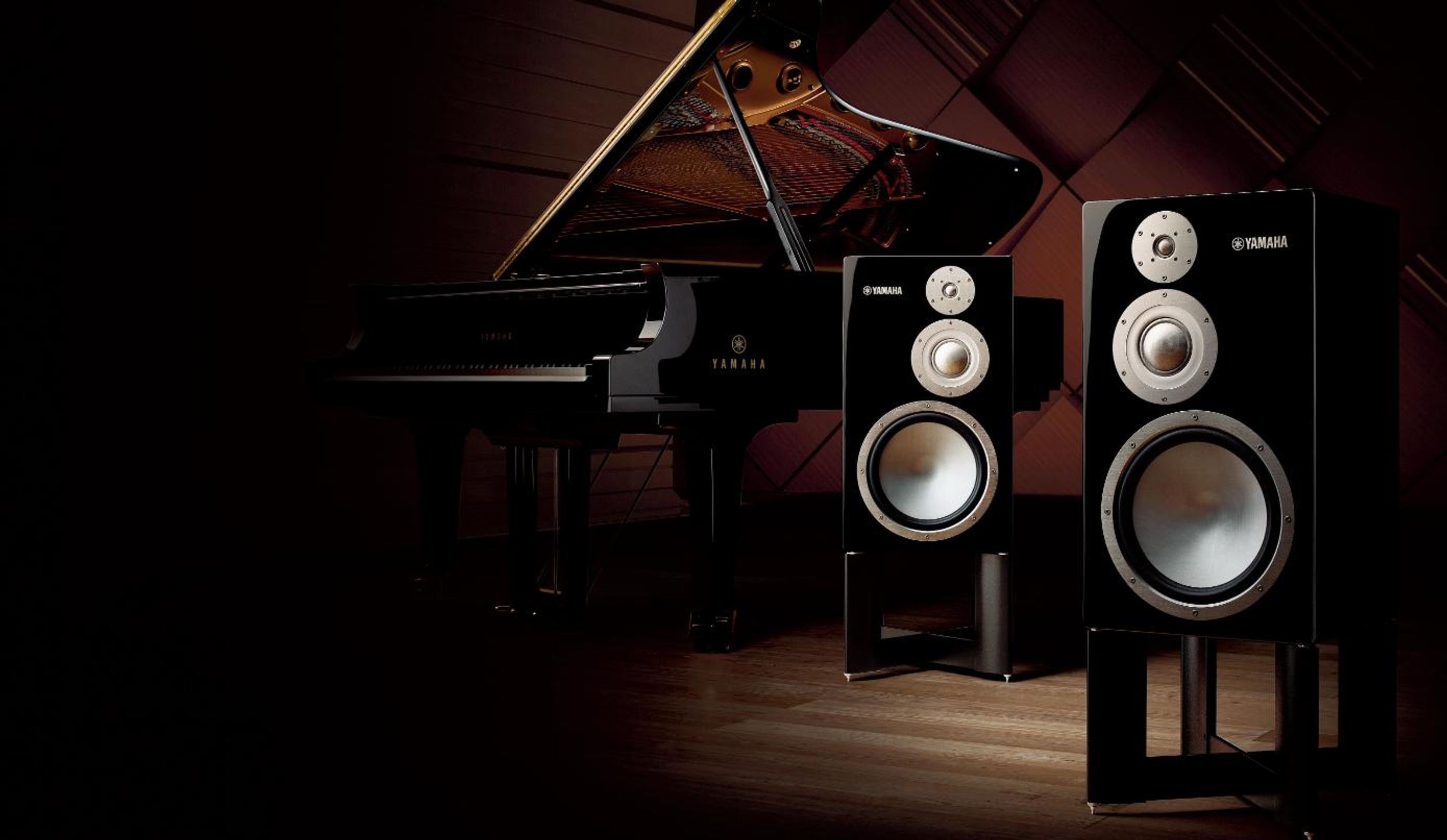
The Yamaha NS-5000 are bookshelf speakers designed for high-fidelity music reproduction. They use ZYLON diaphragms and meticulous engineering to deliver a precise, detailed response to the audio signal.
ZYLON diaphragms that redefine acoustic possibilities
At the heart of the NS-5000 are its three transducers made entirely from ZYLON, a synthetic fiber developed in Japan and considered the strongest in the world. This technological feat, the result of eight years of research initiated in 2008, marks a world first in the exclusive use of this material for all drivers in a three-way system.
The 8 cm JA-08B5 soft-dome midrange deserves special attention. Exceptionally large for a dome driver, it forms the cornerstone of the system. The dome configuration enables virtually lossless motion transmission, as the distance between the voice coil and the diaphragm is significantly reduced compared to a conventional cone design. This 8 cm diameter is the maximum size feasible given current production constraints, providing optimal directivity and a remarkably rich sound field.
The 3 cm JA-05K6 tweeter, despite its modest dimensions, benefits from the same one-piece molding technology as the midrange. The square copper wire voice coil maximizes electro-acoustic efficiency while minimizing transmission losses. ZYLON’s acoustic velocity rivals that of beryllium—historically considered an ideal diaphragm material—while eliminating the resonance peaks characteristic of rigid materials.
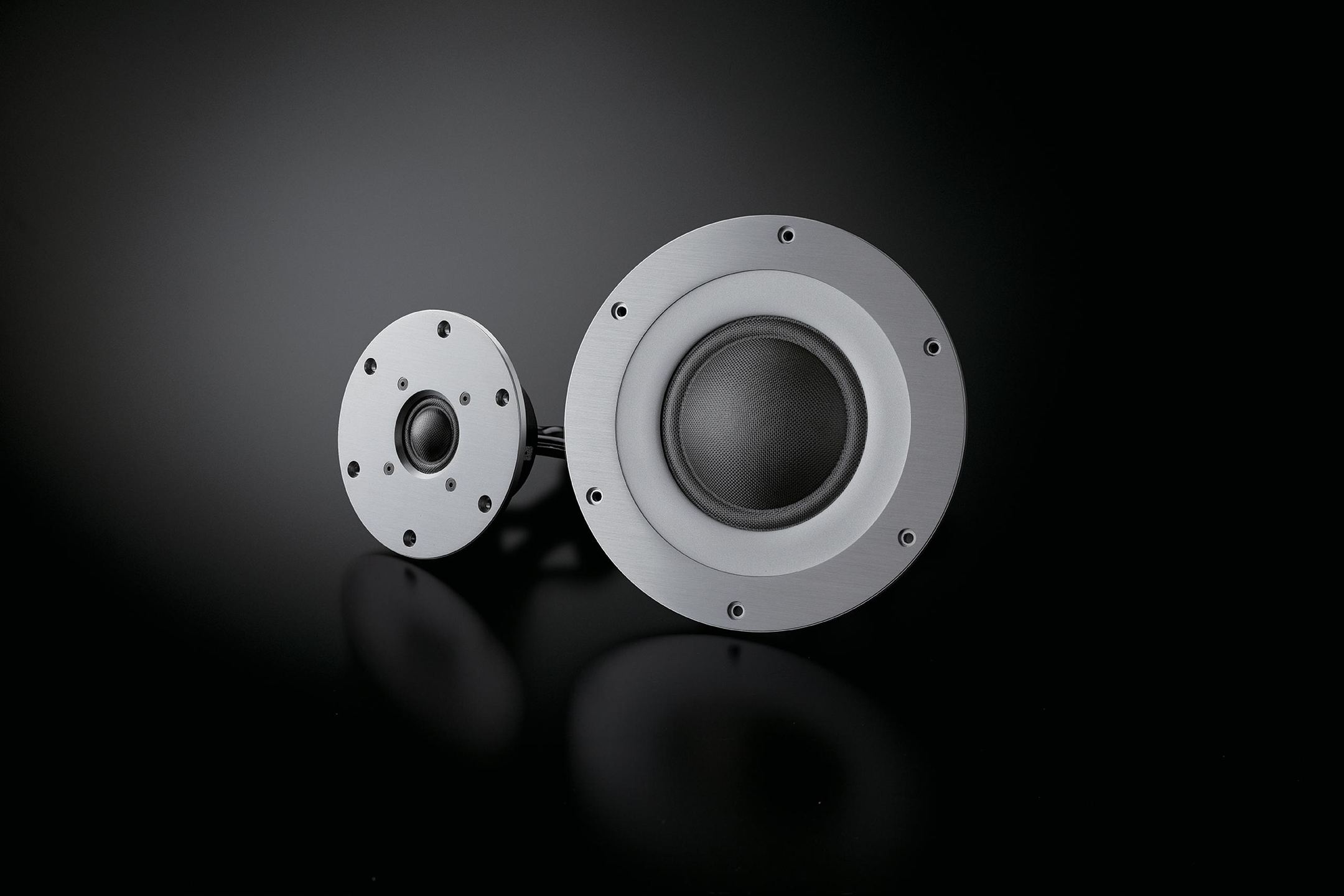
The 30 cm JA-3132 woofer completes this technological trinity. Its dust-cap-free design and die-cast aluminum frame, optimized through FEM analysis, ensure exemplary rigidity while minimizing aerodynamic resistance. The tonal continuity among the three transducers reaches a level rarely observed, creating the illusion of a single full-range driver.
To protect ZYLON from potential degradation caused by UV rays, each diaphragm receives a monel alloy vapor-deposited surface treatment composed of 63% nickel and 30% copper. This invisible protection preserves the material’s exceptional acoustic properties while ensuring longevity.

R.S. chambers: an innovative approach to managing parasitic resonances
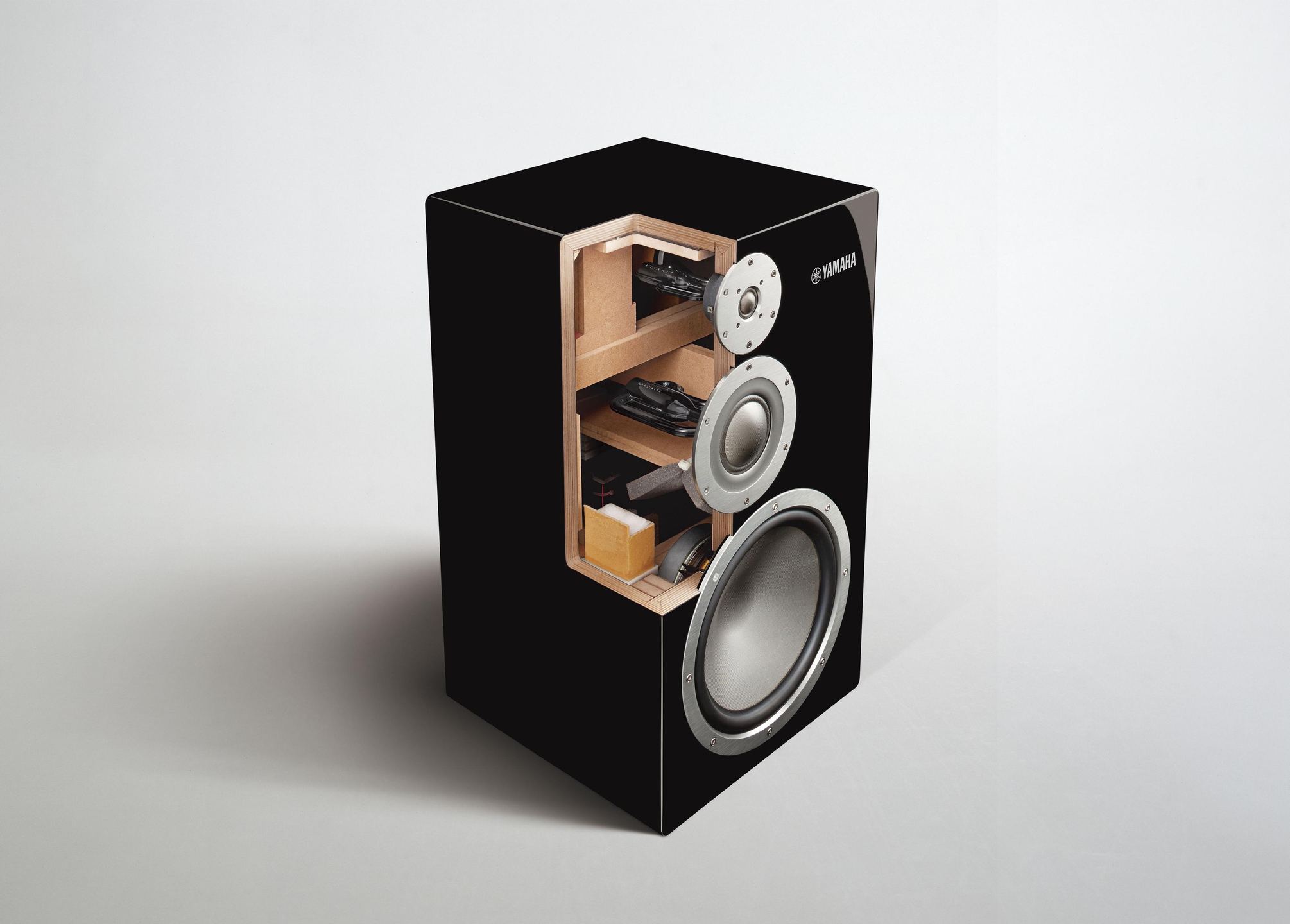
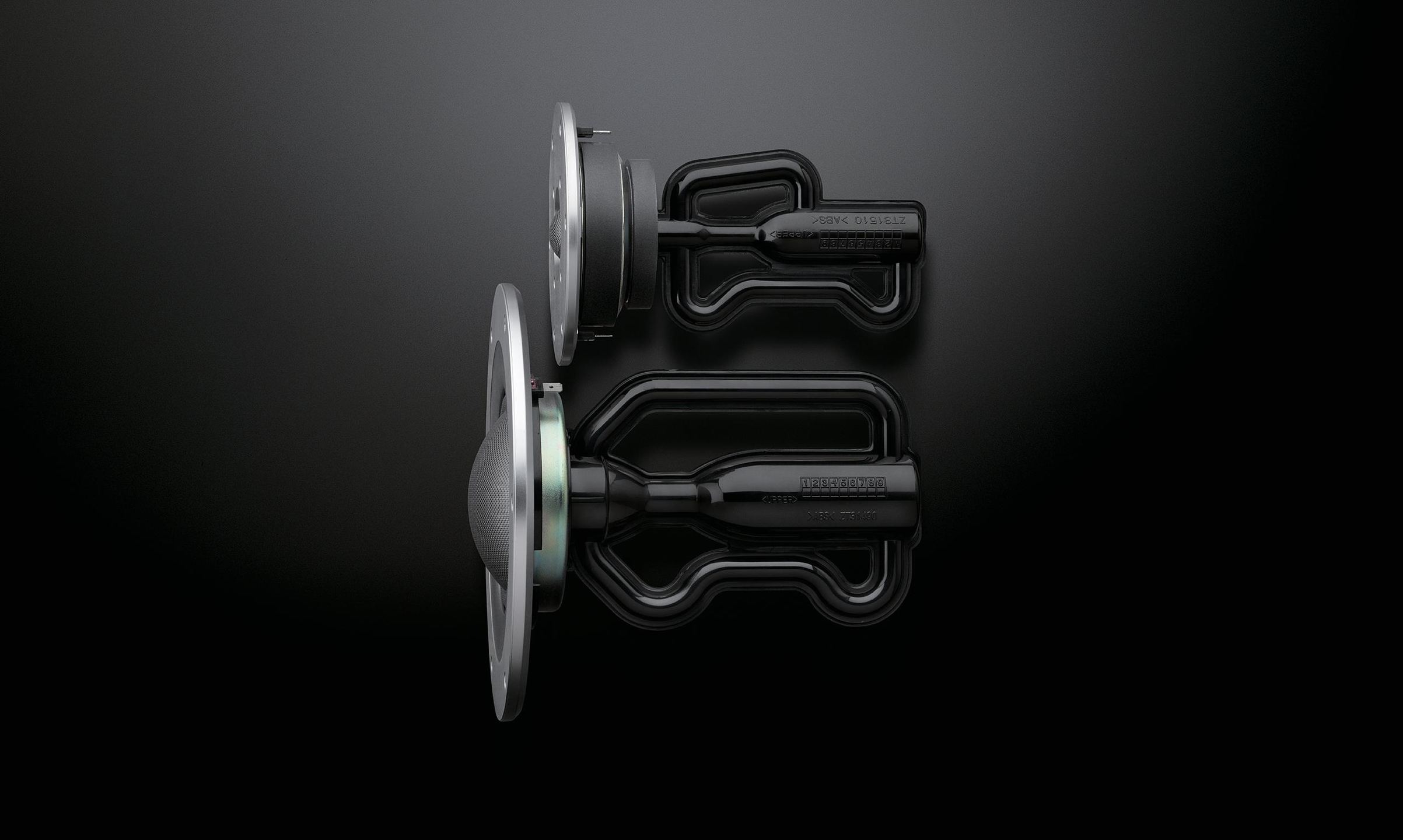
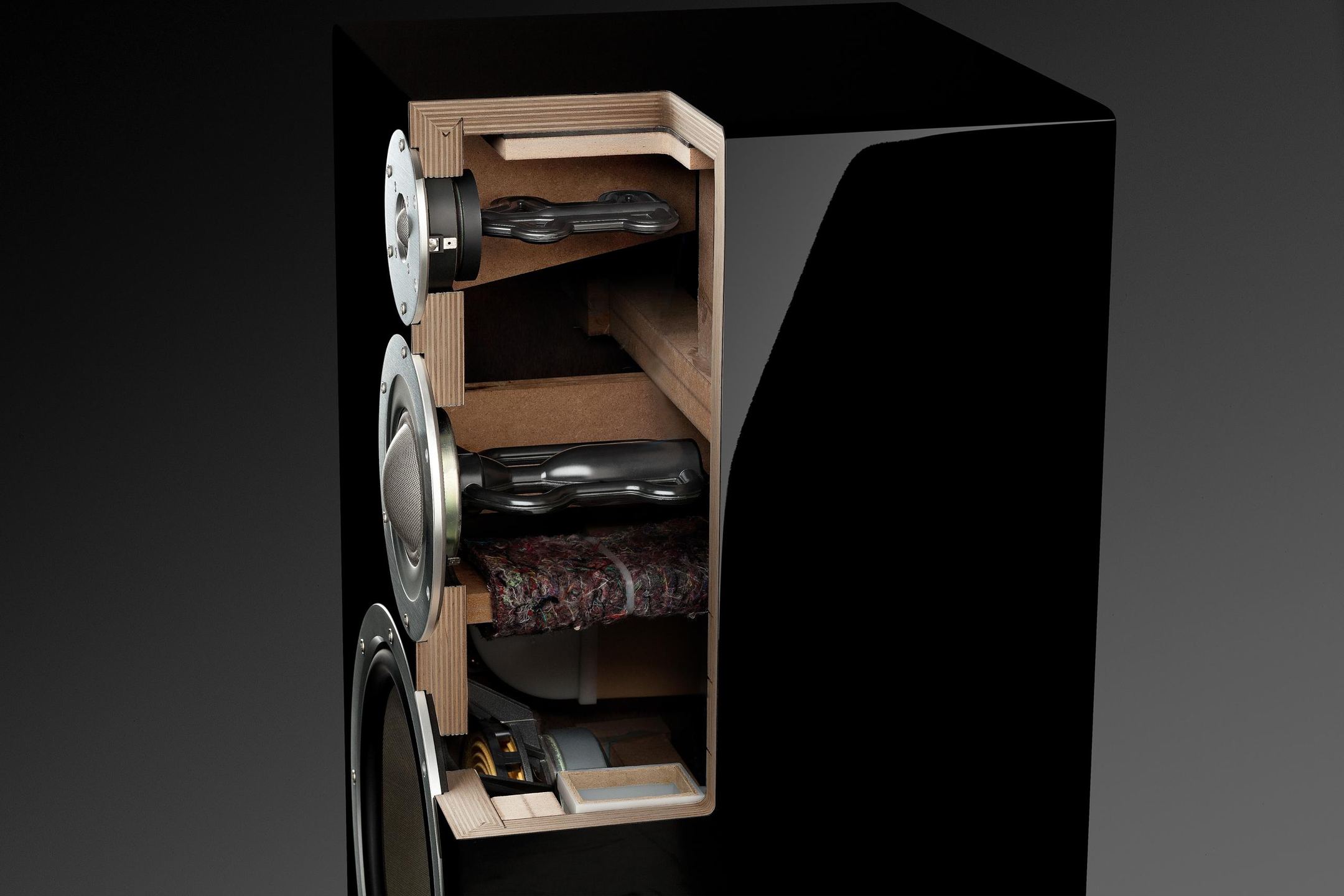
Innovation doesn’t stop at the diaphragms. The patented Resonance Suppression (R.S.) Chambers represent a major advance in managing the rear waves generated by the tweeter and midrange. Unlike traditional approaches that require large amounts of absorbent materials, these chambers use a principle of active resonance cancellation.
Each R.S. chamber incorporates two tubes of different lengths that create distinct acoustic paths. When the waves recombine, the resonance frequencies cancel each other out, eliminating the need for damping materials that tend to smooth the frequency response and mask the subtle nuances of music. This technology allows the transducers to retain their native frequency characteristics, preserving micro-details and exceptional signal articulation.
Cabinetmaking that transcends mere function
The enclosure itself showcases Yamaha’s legendary woodworking expertise. Laminated white birch plywood from Hokkaido—selected after extensive studies of the mechanical and acoustic properties of numerous materials—forms the base structure. Each piece of wood undergoes meticulous treatment to remove any knots or imperfections, ensuring exceptional durability.
The 29.5 mm-thick front baffle and the five other 20 mm-thick panels create an optimally rigid structure. Construction employs the traditional triple-miter joint technique, reinforced by internal braces strategically positioned based on FEM analysis with laser measurements. This scientific approach to construction effectively eliminates cabinet resonances while preserving the wood’s natural musical character.
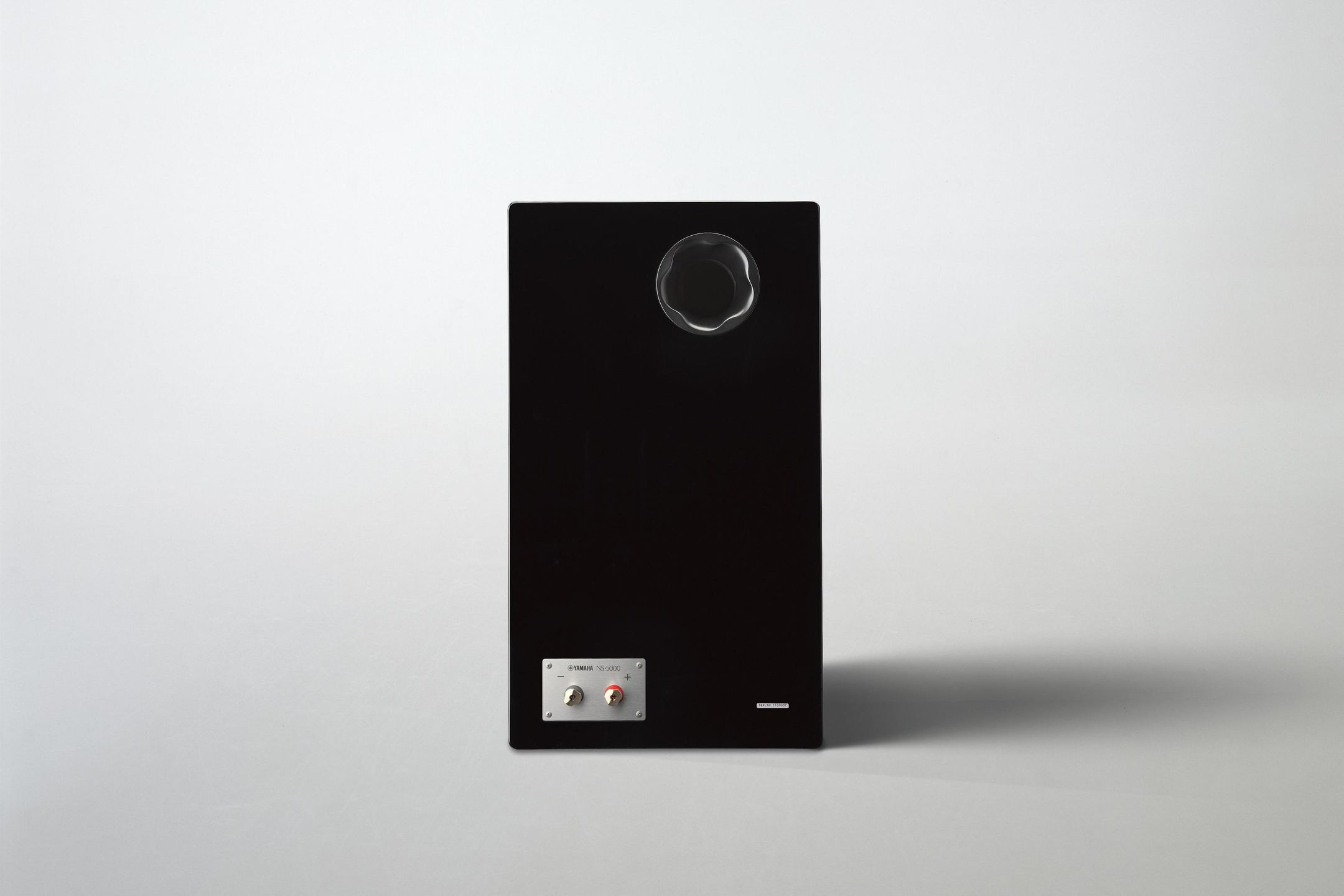
The 65-liter internal volume represents the minimum possible size for a three-way configuration with a 30 cm woofer, optimizing the balance between performance and footprint. The bass-reflex design—a deliberate departure from the acoustic suspension of the historic NS-1000M—significantly improves sensitivity and ease of amplification.
A Twisted Flare Port and revolutionary acoustic absorbers
The bass-reflex port incorporates Yamaha’s proprietary Twisted Flare technology, eliminating unwanted noise typically produced at the ends of conventional vents. This design improves low-frequency resolution while optimizing the signal-to-noise ratio.
Two patented acoustic absorbers shaped like a J replace the large quantities of absorbent materials traditionally used. These compact resonant tubes target and suppress standing waves at specific frequencies, thus preserving the natural acoustic resonance of the music. This approach ensures remarkable tonal continuity between the woofer and the midrange, unlike conventional speakers where excessive absorption can dampen high-frequency energy generated by the woofer.
An uncompromising crossover network
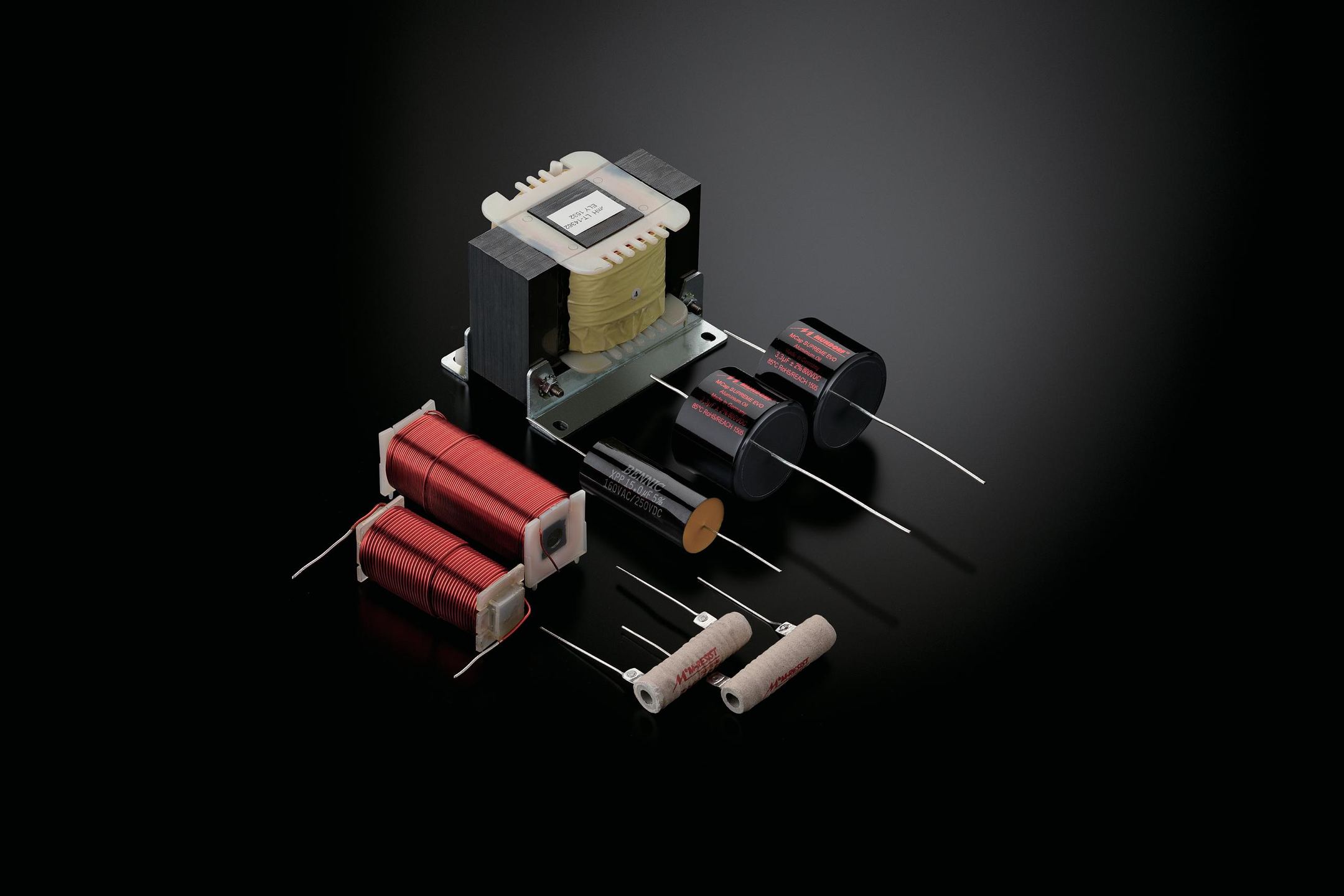
The crossover—crucial yet often overlooked—receives special attention. All transducers are connected in positive phase with simple wiring, ensuring optimal temporal coherence. The crossover components are mounted on a double-sided PCB with extra-thick 140 μm copper traces, minimizing signal loss.
The crossover points at 750 Hz and 4.5 kHz were judiciously chosen to avoid the ear’s most sensitive range. Gentle 12 dB/octave slopes promote seamless integration between drivers.
The components used represent the pinnacle of quality: Mundorf MCap SUPREME EVO capacitors, regarded as the absolute reference in audio capacitors; Mundorf MResist SUPREME attenuators; and a 1.6 kg inductor for the woofer. This meticulous component selection ensures signal transmission without coloration or loss of information.
Documentation
French
Technical specifications
Drivers and technologies
3 cm soft-dome tweeter JA-05K6
- 100% ZYLON diaphragm, molded in a single piece
- Diaphragm tailored for high frequencies, delivering an excellent signal-to-noise ratio
- High-resolution reproduction rich in detail
- Square-section copper voice coil maximizing electroacoustic efficiency and reducing transmission losses
8 cm soft-dome midrange JA-08B5
- 100% ZYLON diaphragm, molded in a single piece
- Dome shape reducing the distance between the voice coil and the diaphragm
- Wide soundstage and optimal directivity
- Crossover frequency set at 750 Hz to fully exploit the material’s speed and acoustic density
30 cm cone woofer JA-3132
- 100% ZYLON diaphragm, without a center cap
- Wide bandwidth ensuring perfect tonal continuity between bass, midrange, and treble
- Die-cast aluminum frame providing rigidity and low air resistance
- Design optimized through finite element analysis
Acoustic technologies
- Resonance suppression chambers
- Suppression of unwanted resonances in the mid and high registers
- Effective reduction of stray acoustic radiation at the rear of the tweeter and midrange driver
Electroacoustic specifications
- Type: 3-way bass-reflex bookshelf speaker
- Crossover frequencies: 750 Hz, 4.5 kHz
- Frequency response: 26 Hz to 40 kHz (-10 dB), up to 100 kHz (-30 dB)
- Rated power: 200 W
- Maximum power: 600 W
- Sensitivity: 88 dB for 2.83 V at 1 m
- Nominal impedance: 6 Ω (minimum impedance 3.5 Ω)
- Diaphragm and voice coil materials: ZYLON, square-section copper wire
- Magnetic shielding: non-magnetic on tweeter, midrange driver, and woofer
Dimensions and weight
- Speaker
- Dimensions (W x H x D): 395 × 690 × 381 mm
- Depth with binding posts: 422 mm
- Weight: 35 kg
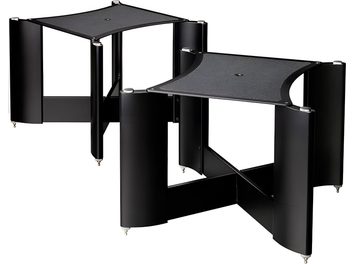
- SPS-5000 stands (optional)
- Dimensions: 393 mm × 304 mm × 376 mm (with spikes)
- Materials: aluminum and steel
- Weight: 8 kg
Included accessories
- Independent protective grilles for each way
- Port plugs
- User manual
- Mounting screws
Frequently Asked Questions
What is the fundamental difference between ZYLON and the beryllium used in the NS-1000M?
ZYLON offers acoustic velocity comparable to beryllium while exhibiting the natural damping characteristics of soft materials. Unlike beryllium, which can show resonance peaks typical of rigid materials, ZYLON combines the best of both worlds: the speed of hard domes and the smoothness of soft domes.
Why did Yamaha choose a bass-reflex design rather than acoustic suspension like on the NS-1000M?
The bass-reflex choice substantially improves sensitivity (88 dB) and makes amplification easier. With a recommended power of 200 watts and a maximum capacity of 600 watts, the NS-5000 adapts more readily to a wide variety of amplifiers while maintaining a nominal impedance of 6 ohms that never drops below 3.5 ohms.
Are the R.S. chambers really more effective than traditional damping?
R.S. chambers use a principle of active resonance cancellation through phase shifting rather than passive absorption. This approach preserves the micro-details and natural articulation of the signal that absorbent materials tend to mask, while effectively eliminating parasitic resonances.
How does Hokkaido white birch affect the sound?
Hokkaido white birch, harvested through ecoforestry techniques, offers an optimal balance between mechanical rigidity and acoustic properties. With a century of expertise in piano manufacturing, Yamaha has an intimate understanding of how wood contributes to the overall sonic character, bringing warmth and natural resonance that are impossible to achieve with synthetic materials.
Does the Twisted Flare Port make an audible difference compared to a conventional vent?
This technology eliminates aerodynamic turbulence at the vent ends, which is particularly audible at high volume on bass-heavy passages. The result is increased low-frequency definition and superior dynamic capability without compression or distortion, even at high sound levels.
- Eco-contribution of €0.75 included in the sale price.