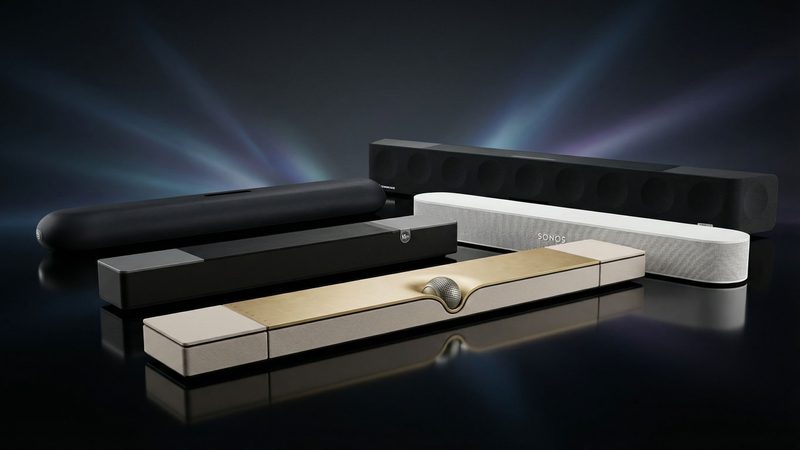
Klipsch Flexus Core 300 + Sub 100





Specifications and features


Overview
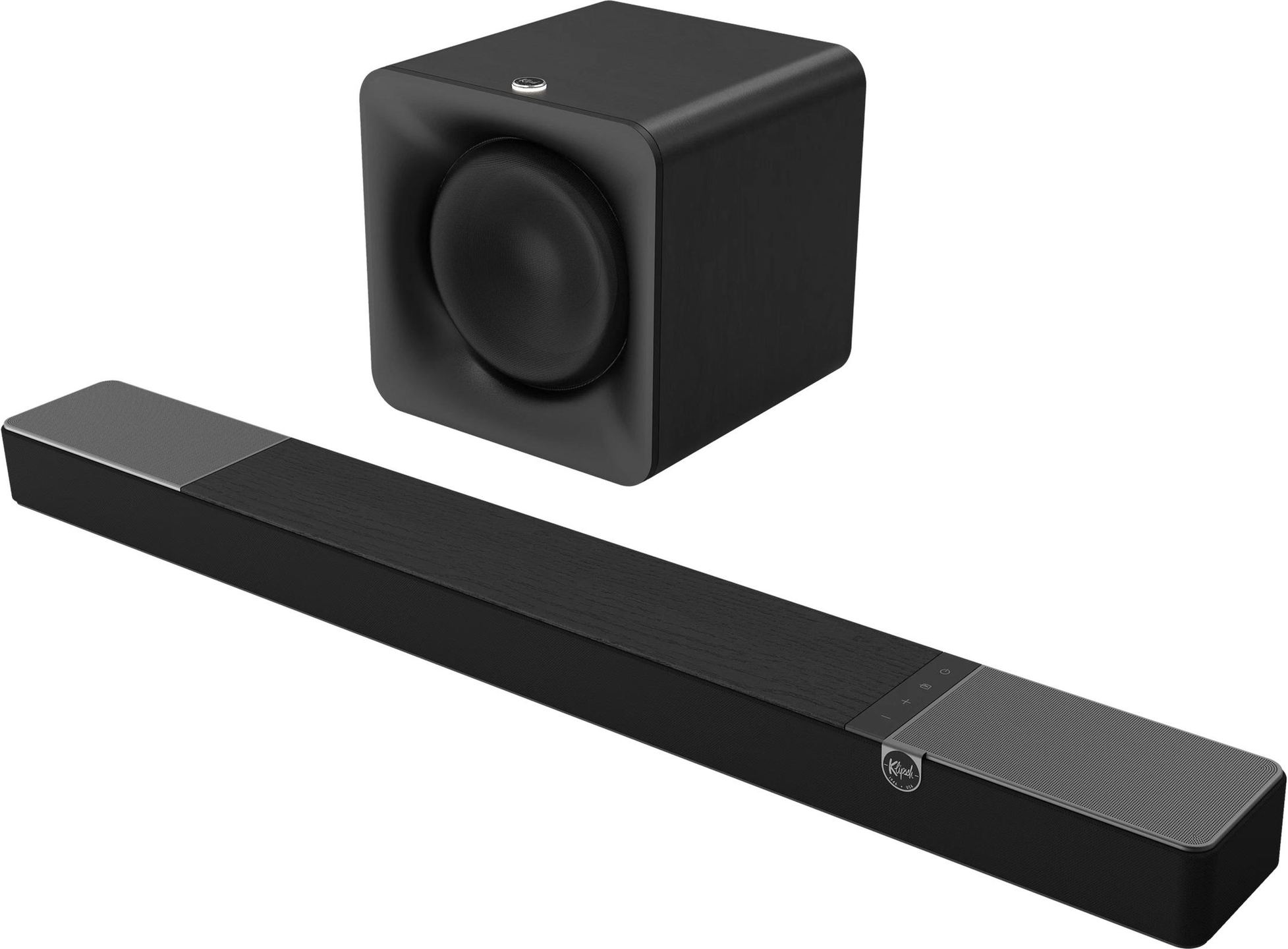
This soundbar 5.1.2 integrates Dirac Live room correction for the first time, a system usually reserved for high-end amplifiers. Developed by Klipsch in partnership with Onkyo, it features 13 drivers, a signature horn tweeter, and four integrated 10 cm subwoofers. The Flexus Sub 100 delivers an additional 80 W RMS via a 25.4 cm driver in a compact cabinet. The whole system is controlled via the Klipsch Connect Plus app and offers HDMI 2.1, network streaming, and proprietary wireless transmission.
Dirac Live: first integration in a soundbar
The Flexus Core 300 is the world’s first soundbar to incorporate Dirac Live, a room correction system previously reserved for high-end AV amplifiers and processors. Developed by Swedish company Dirac Research, founded in 2001, this software analyzes the acoustics of the listening room to correct flaws introduced by the room’s dimensions, shape, furniture, and reflective surfaces.
Unlike conventional calibration systems that merely adjust sound levels and frequency balance, Dirac Live also acts on the system’s impulse response. It corrects time delays between different frequencies and phase issues, which are often responsible for a muddled soundstage or lack of cohesion between speakers. This approach takes into account how sound waves propagate and interact with the environment, then applies complex digital filters to compensate for these interactions.
Calibration is carried out via the Klipsch Connect Plus mobile app for iOS and Android. The user launches a series of test signals that the smartphone microphone captures at different points in the listening area. The software then builds a complete acoustic model of the space and generates a suitable correction profile. Users who want to go further can download the Dirac Live software on PC or Mac to access advanced settings: defining custom correction ranges by speaker group, creating custom target curves, and saving up to 10 different configurations to adapt the sound to content or listening preferences.
Dirac Research states that its technology is used in professional recording studios, movie theaters, and certain premium cars (BMW, Volvo). Integration into the Core 300 represents a significant democratization of this technology, which is usually sold as a separate license costing several hundred euros for amplifiers that offer it as an option.
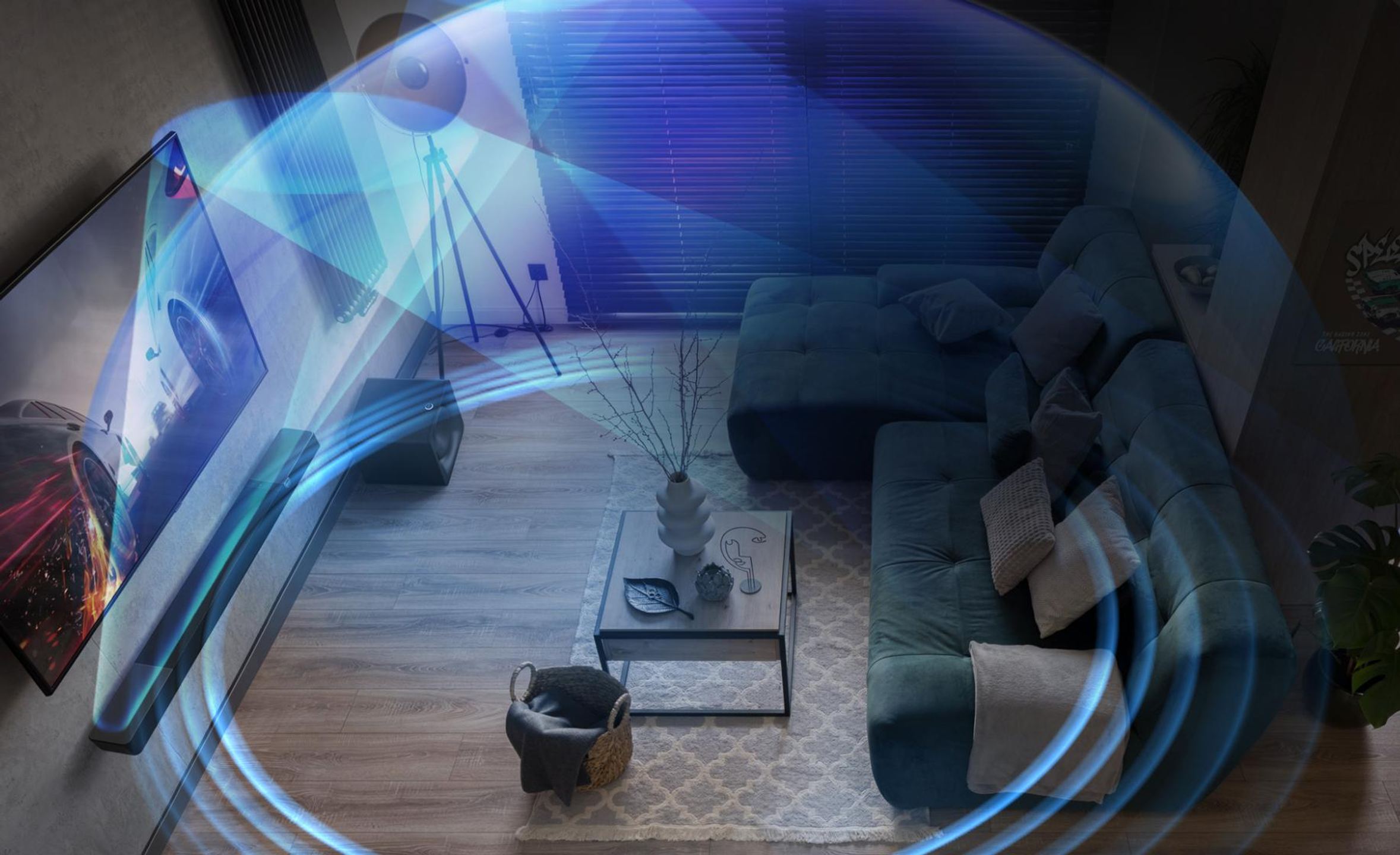
5.1.2-channel configuration and speaker architecture
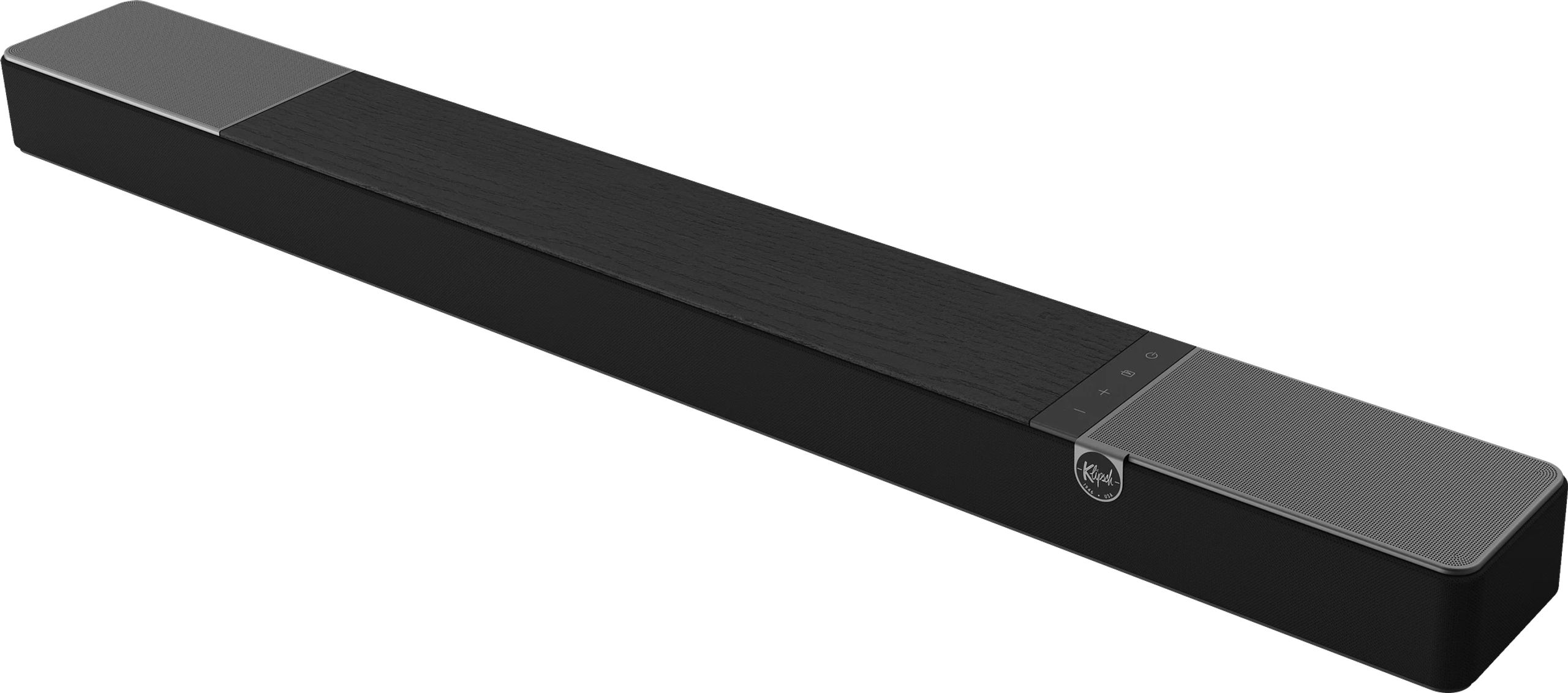
The Flexus Core 300 houses 13 transducers inside its 137.2 cm-wide cabinet. The front panel holds four 5.7 cm paper-cone drivers handling the left and right channels, flanking a 1.9 cm horn tweeter for the center channel. This horn tweeter has been Klipsch’s acoustic signature since the Klipschorn in 1946. The horn, a cone- or trumpet-shaped structure placed in front of the transducer, lets you control sound directivity and increase efficiency: less electrical power is needed to achieve a given sound level, which reduces distortion and preserves nuances.
On the sides of the cabinet, two 5.7 cm drivers angled at 90° reproduce the surround channels to create a wider sound envelope. This physical side-firing layout generates more convincing spatial effects than systems that try to simulate surround sound purely through digital processing from front-firing speakers.
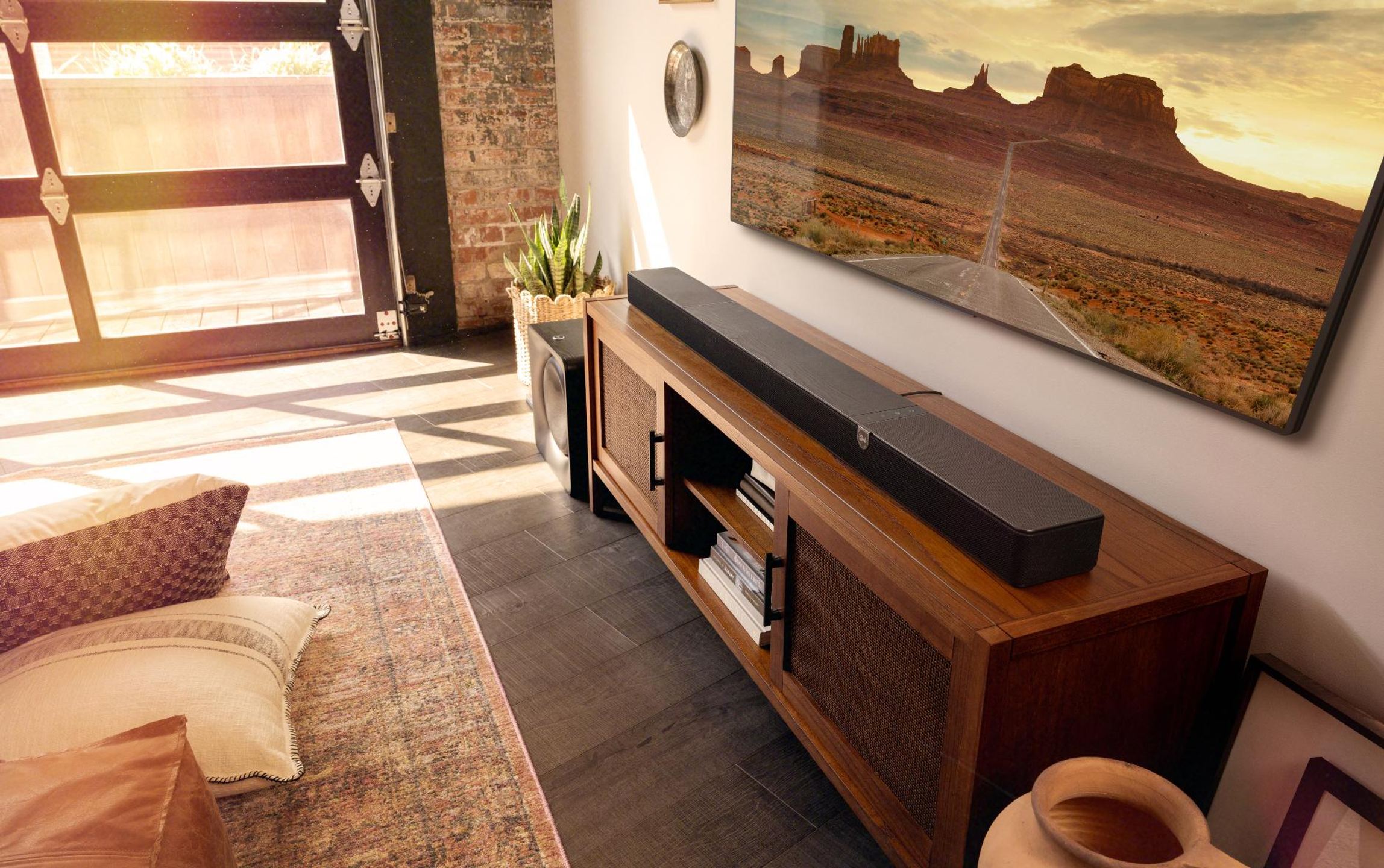
The top section integrates the elements dedicated to Dolby Atmos: two 10.2 cm woofers and two 5.7 cm full-range drivers aimed at the ceiling. These transducers project sound upwards so it reflects off the ceiling and back down into the listening area, creating the illusion of height channels. The effectiveness of this setup depends on ceiling height (ideally between 2.40 m and 3 m) and ceiling type (smooth, reflective surfaces work better than textured or absorbent ceilings).
Finally, four 10 cm subwoofers are integrated into the soundbar cabinet. Here, Klipsch uses a bass distribution technique: instead of concentrating all low-frequency reproduction in a single location, four medium-sized transducers spaced along the bar deliver a more even response throughout the room and reduce resonance hot spots. These paper-cone woofers, mounted on compliant surrounds to maximize excursion, cover a range from 43 Hz to 20 kHz according to the manufacturer. The bar can therefore operate on its own without an external subwoofer, although adding the Sub 100 allows extension down to 26 Hz and relieves the built-in drivers to gain midrange clarity.
The whole system is powered by electronics developed jointly with Onkyo. Maximum output reaches 106 dB SPL, enough to fill rooms from 40 to 60 m². The cabinet uses a sealed (plastic and metal) design, which avoids unwanted port resonances from bass-reflex systems at the cost of slightly lower low-frequency efficiency.
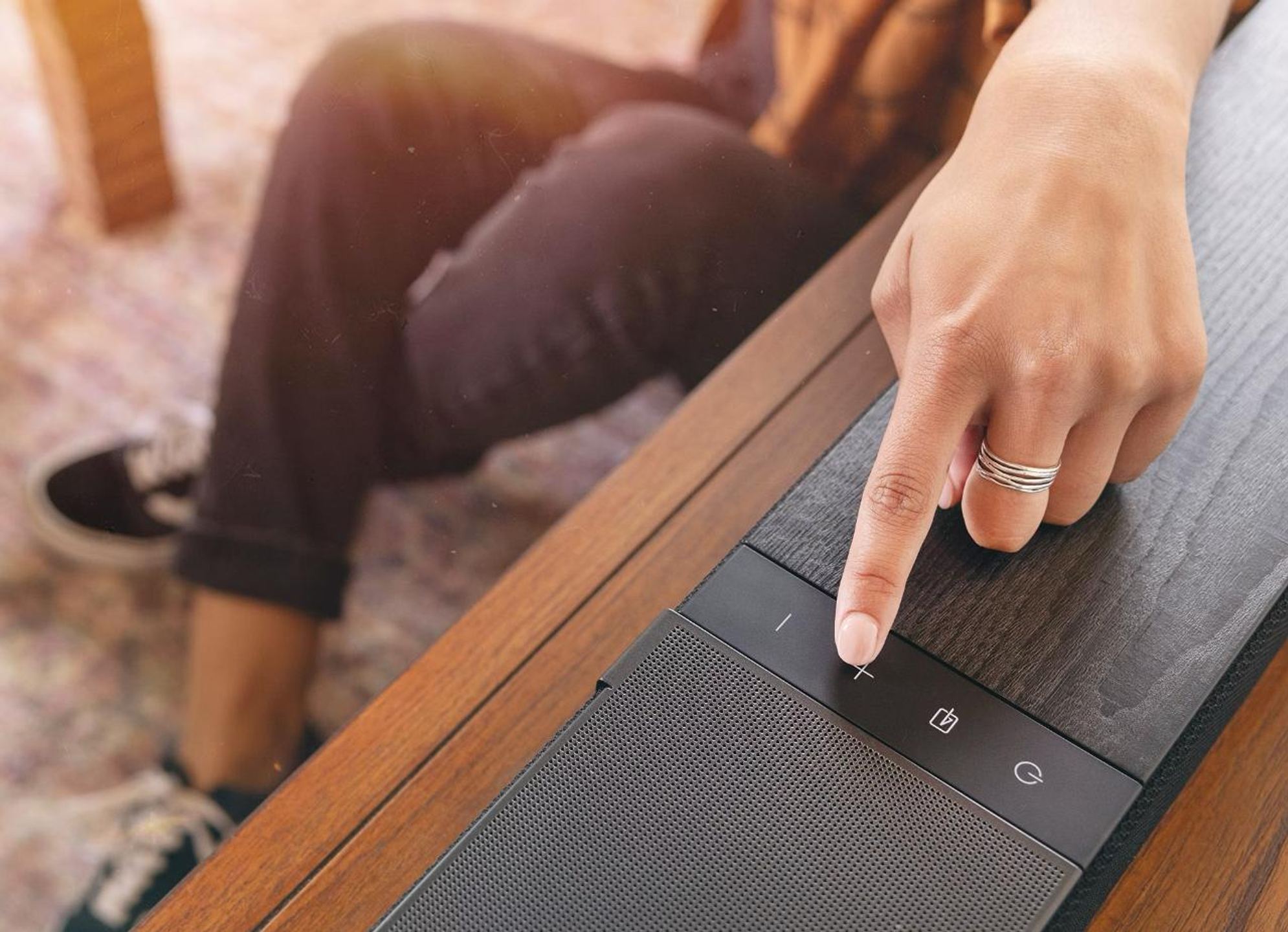
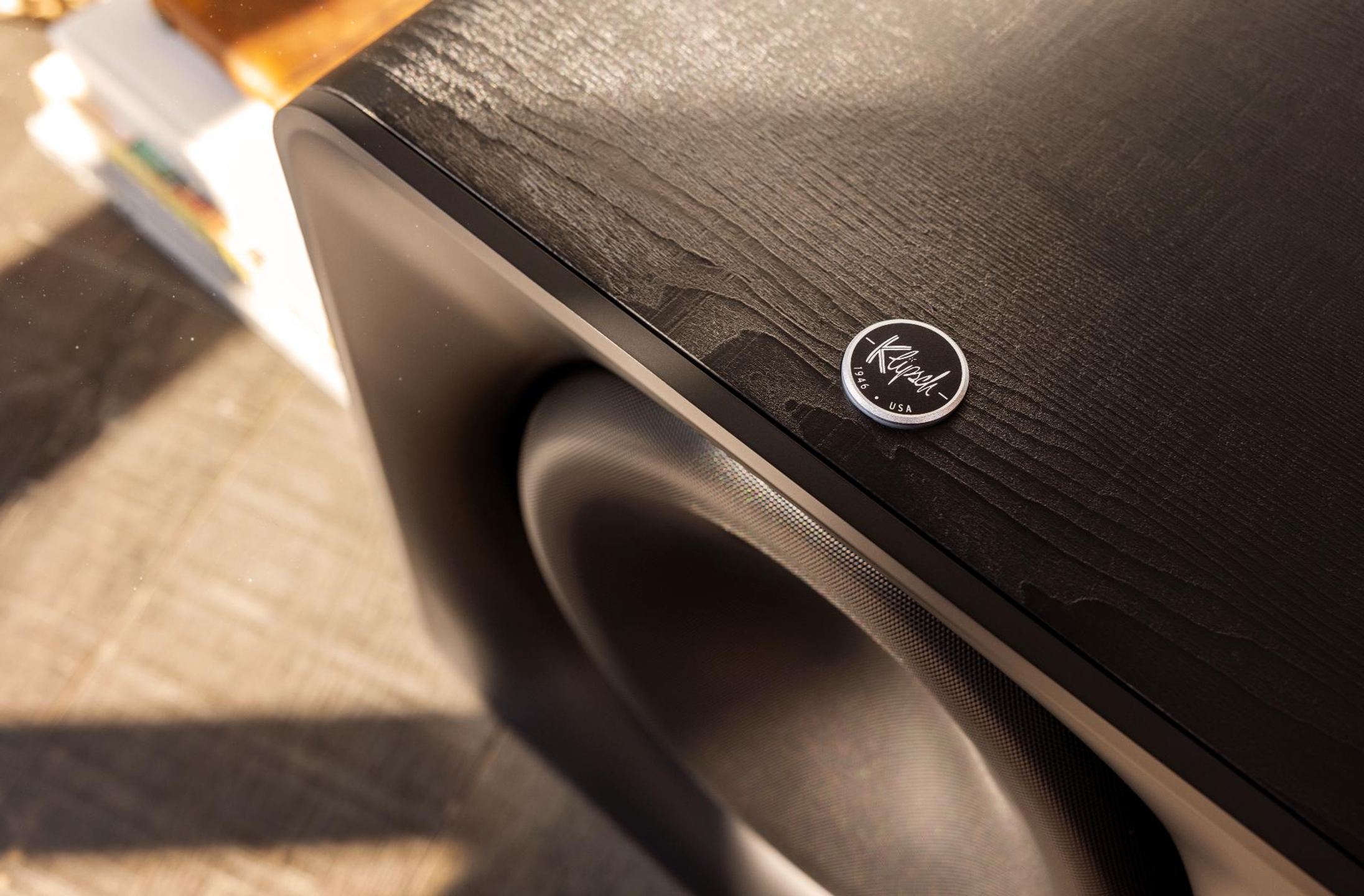
Flexus Sub 100: compact subwoofer
The Sub 100 uses a 254 mm (10-inch) paper-cone driver with a compliant surround. The choice of paper as a cone material is deliberate: this natural material offers a good balance between rigidity and inherent damping, limiting unwanted resonances and supporting a linear frequency response. The woofer’s long excursion enables it to move a significant volume of air despite its moderate diameter.
A Class D amplifier delivers 80 W RMS in continuous operation and up to 160 W peak during the most demanding passages. Class D amplification, as opposed to traditional Class AB, offers better energy efficiency (less wasted heat) and allows more power to be housed in a compact chassis. Frequency response extends from 26 Hz to 250 Hz (± 3 dB), covering most of the fundamentals in a movie soundtrack or music recording. Maximum sound pressure level reaches 103.7 dB.
The cabinet measures 34 cm high, 33.5 cm wide, and 34.9 cm deep, with a weight of 9.4 kg. This almost cubic shape makes placement easier in various setups: on the floor beside the TV stand, under a console, or even behind a sofa. The MDF (Medium Density Fiberboard) panel construction provides the mass and rigidity needed to contain woofer vibrations. Klipsch has opted for a sealed enclosure rather than a ported (bass-reflex) system. A sealed sub typically delivers faster, tighter transient response, as the air trapped inside acts like a spring that controls cone movement. The absence of a port also makes it easier to place the sub directly against a wall or in a corner without disturbing the tuning.
Connection to the soundbar is wireless via Klipsch Transport technology operating in the 2.4 GHz band. A pre-paired USB dongle is supplied and plugs into the dedicated port on the back of the Core 300. This proprietary link promises lower latency than standard Bluetooth, which is important for precisely synchronizing low frequencies with the rest of the spectrum. For those who prefer a wired connection, an RCA/LFE input allows the sub to be connected via coaxial cable. This input also lets you use the Sub 100 with other soundbars or a traditional home cinema amplifier.
A switch on the back of the sub defines its role (main or secondary) when two Sub 100 units are used simultaneously. This dual configuration, made possible by the same Transport dongle, brings two benefits: in large rooms (over 30–35 m²), it increases available power and improves spatial coverage; in medium-sized rooms, it reduces resonance modes by creating multiple low-frequency sources spread throughout the space, which evens out perceived response at different listening positions.
Subwoofer volume can be adjusted from the Klipsch Connect Plus app or from the soundbar’s remote control. The app also offers EQ presets and lets you fine-tune the sub’s response curve to match the room’s acoustics and your personal taste. The matte ebony vinyl finish resists fingerprints and blends discreetly into most interiors.
What the press says
The Klipsch and Onkyo Flexus Core 300 soundbar is a great success. It delivers well-defined, full-bodied and balanced sound, even without Dirac calibration, at least in our test environment. Music listening with the screen off is entirely possible without hesitation: the result lives up to expectations. In cinema mode, the soundbar alone performs very well in reproducing a realistic front soundstage, supported by articulate bass. [...] In the same price range as its competitors, the Flexus Core 300 is an alternative option that we strongly recommend listening to before buying.
Automatically translated — Show original (French)
The Klipsch Flexus Core 300 is ideal for mixed use. It supports all audio formats (Dolby Atmos, DTS:X, Dolby Digital Plus, etc.), with HDMI 2.1-compatible video passthrough. This lets you watch most media without downmixing and use it as an entertainment platform.
Automatically translated — Show original (French)
Soundbar: Klipsch Flexus Core 300
Audio system
- Configuration: 5.1.2 soundbar with Dolby Atmos
- Maximum sound output: 106 dB
- Frequency response: 43 Hz – 20 kHz
- Speaker type: sealed speaker (plastic and metal)
Speakers and drivers
- Front speakers: 4 × 5.7 cm, 1 × 1.9 cm horn-loaded tweeter
- Upward-firing speakers: 2 × 10.2 cm woofers, 2 × 5.7 cm full-range drivers
- Side speakers: 2 × 5.7 cm
Audio processing technologies
- Dirac Live: room acoustic correction via mobile app
- Dolby Atmos: precise three-dimensional rendering with height and side channels
- DTS:X: native decoding for full immersion
- Klipsch and Onkyo technology: US / Japan acoustic partnership for exceptional precision
Connectivity
- Inputs: HDMI eARC, HDMI 2.1 pass-through, USB-C, optical, Bluetooth
- Outputs: HDMI Out, subwoofer output (RCA)
- USB port: 1 × USB-A (system updates, MP3 playback)
Network streaming
- Supported protocols: AirPlay, Google Cast, Spotify Connect, Tidal Connect, QPlay, Bluetooth
Control
- Klipsch Connect Plus app: audio settings, multi-device management, firmware updates
- Included remote control: backlit, BLE (Bluetooth Low Energy)
Dimensions and weight
- Width: 137.2 cm
- Height: 7.8 cm
- Depth: 12.6 cm
- Weight: 8.5 kg
Klipsch Flexus Sub 100 subwoofer
Components
- 25.4 cm long-throw paper-cone driver
- Amplification: Class D
Performance
- Power: 80 W RMS, 160 W peak
- Frequency response: 26 Hz - 250 Hz ± 3 dB
- Maximum sound pressure level: 103.7 dB
Construction
- Material: medium-density fiberboard (MDF)
- Type: sealed subwoofer
Connectivity
- Inputs
- RCA line / LFE
- Flexus Transport 2.4 GHz wireless
Dimensions and weight
- Height: 340 mm
- Width: 335 mm
- Depth: 349 mm
- Weight: 9.4 kg
Finish and accessories
- Finish: ebony vinyl
- Included accessories
- 2 angled 2.0 m mains power cords (depending on region)
- 1 wireless dongle with Klipsch Transport technology
- 1 user manual
Frequently asked questions
How much space is needed between the soundbar and the ceiling for Dolby Atmos effects to work properly?
The Core 300’s up-firing speakers project sound towards the ceiling so it reflects back into the listening area. A ceiling height between 2.40 m and 3 m yields the best results. Beyond 3.20 m, the sound loses intensity before it comes back down. A smooth ceiling (plaster, painted wood) reflects better than a textured or beamed ceiling. Suspended ceilings with absorbent acoustic tiles are not suitable for this type of setup.
Can the Sub 100 work with soundbars other than the Flexus Core models?
Yes, thanks to its RCA/LFE input. You can connect the Sub 100 via a wired connection (RCA coaxial cable) to any soundbar or home cinema amplifier that has a subwoofer output. However, the proprietary Klipsch Transport wireless connection only works with the Flexus Core 100, 200, and 300 soundbars. A wired connection to another brand also means you lose volume control from the Klipsch Connect Plus app: you’ll then need to adjust the level directly on the subwoofer.
What’s the difference between Dirac Live calibration via smartphone and via computer?
The mobile version in the Klipsch Connect Plus app guides the user through the measurements and automatically applies an optimized correction profile. It’s the easiest and quickest way to benefit from Dirac Live. The PC/Mac software offers advanced options: manual definition of correction ranges by speaker group, modification of the target curve to adjust tonal balance to your preferences, detailed visualization of measurements before/after correction, and saving of up to 10 different profiles that you can load depending on content type or mood.
Can the Core 300 be used for stereo music listening, or is it designed only for home cinema?
The Core 300 is perfectly suitable for music playback. Its four front drivers and horn tweeter reproduce stereo recordings with Klipsch’s dynamic sonic signature. High-resolution streaming services (Tidal, Qobuz via AirPlay or Google Cast) are supported. For music listening, you can disable spatial effects via the app and set the bar to pure stereo mode so only the left and right channels are used. The four integrated subs already offer solid low-end support for pop, rock, or electronic music, while adding the Sub 100 is ideal for bass-heavy genres (hip-hop, electronic music, jazz with double bass).
How long does Dirac Live calibration take, and does it need to be repeated regularly?
Calibration via the mobile app takes about 15 to 20 minutes to perform measurements at multiple positions in the listening area, then a few minutes of processing to generate the correction profile. You should redo calibration if you significantly move the soundbar or subwoofer, if you change the room layout (new furniture, different curtains), or if you add surround speakers. In normal use, a single initial calibration is enough. Some users like to create several profiles via the PC software according to their listening position (sofa, side armchair) and switch between them via the app.
Can the Core 300 replace a system of separate speakers and a traditional home cinema amplifier?
That depends on your expectations and priorities. The Core 300 cannot fully replace the physical separation and optimal placement of true left/right front speakers and a center speaker spaced several meters apart. However, it comes close thanks to its physical side channels and Dirac Live, which partly compensates for placement constraints. For someone who values easy installation, no visible cabling, and a compact footprint, while wanting sound far superior to that of a TV, the Core 300 is a compelling compromise. With the addition of the Sub 100 and Surr 200 speakers, the system comes close to a traditional 7.1.4 setup, while retaining the advantages of wireless connectivity and a single control point.
- Eco-contribution included in the sale price.