Bryston BR-20
Overview
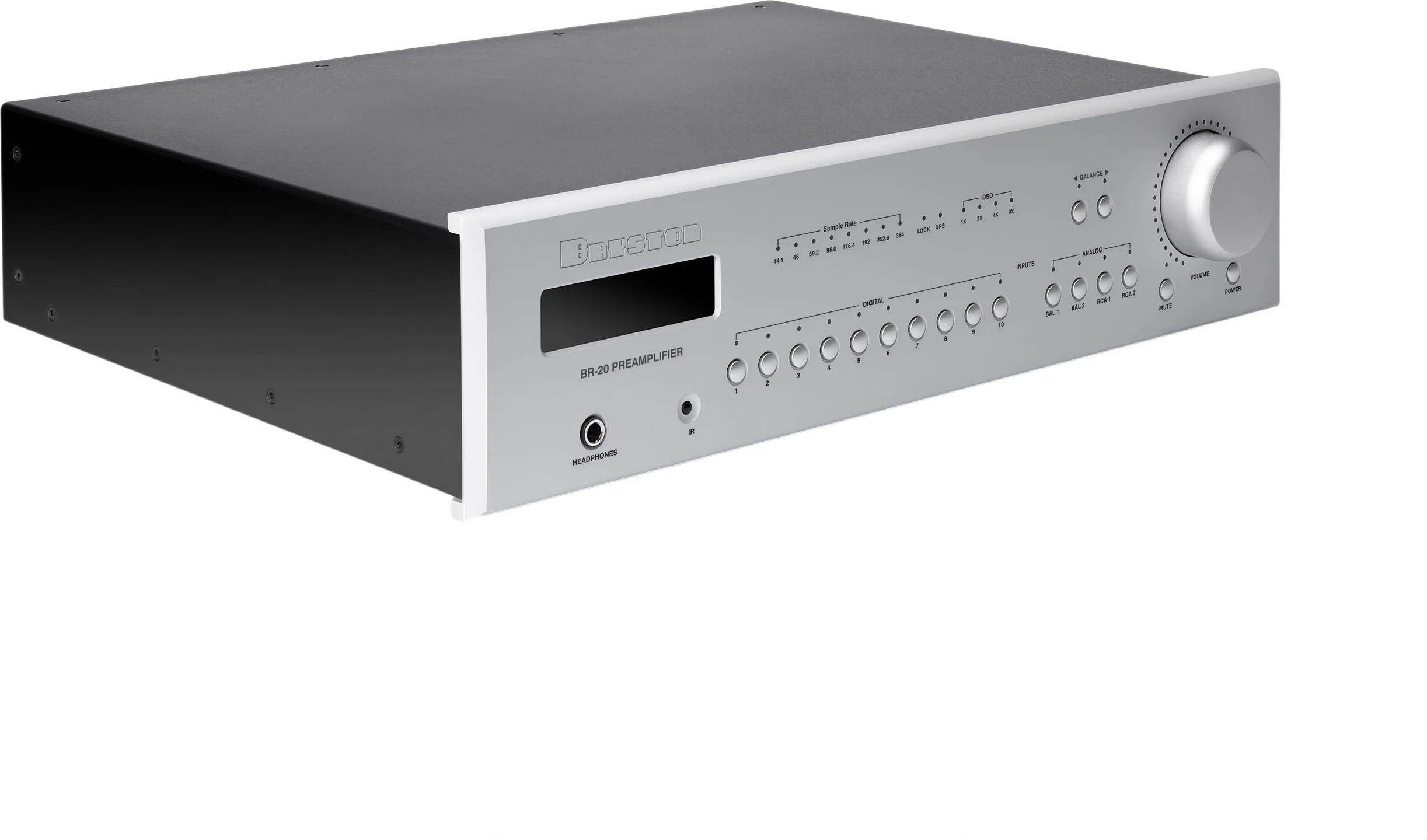
Four functions combined in a single chassis: analog preamplifier, digital-to-analog converter, network player, and headphone amplifier. The BR-20 brings together technologies that Bryston has refined over several decades in a format that simplifies installation without sacrificing quality. Its name pays tribute to Brian Russell, former president of the Canadian brand, who passed away in 2020 as the product’s development was nearing completion.
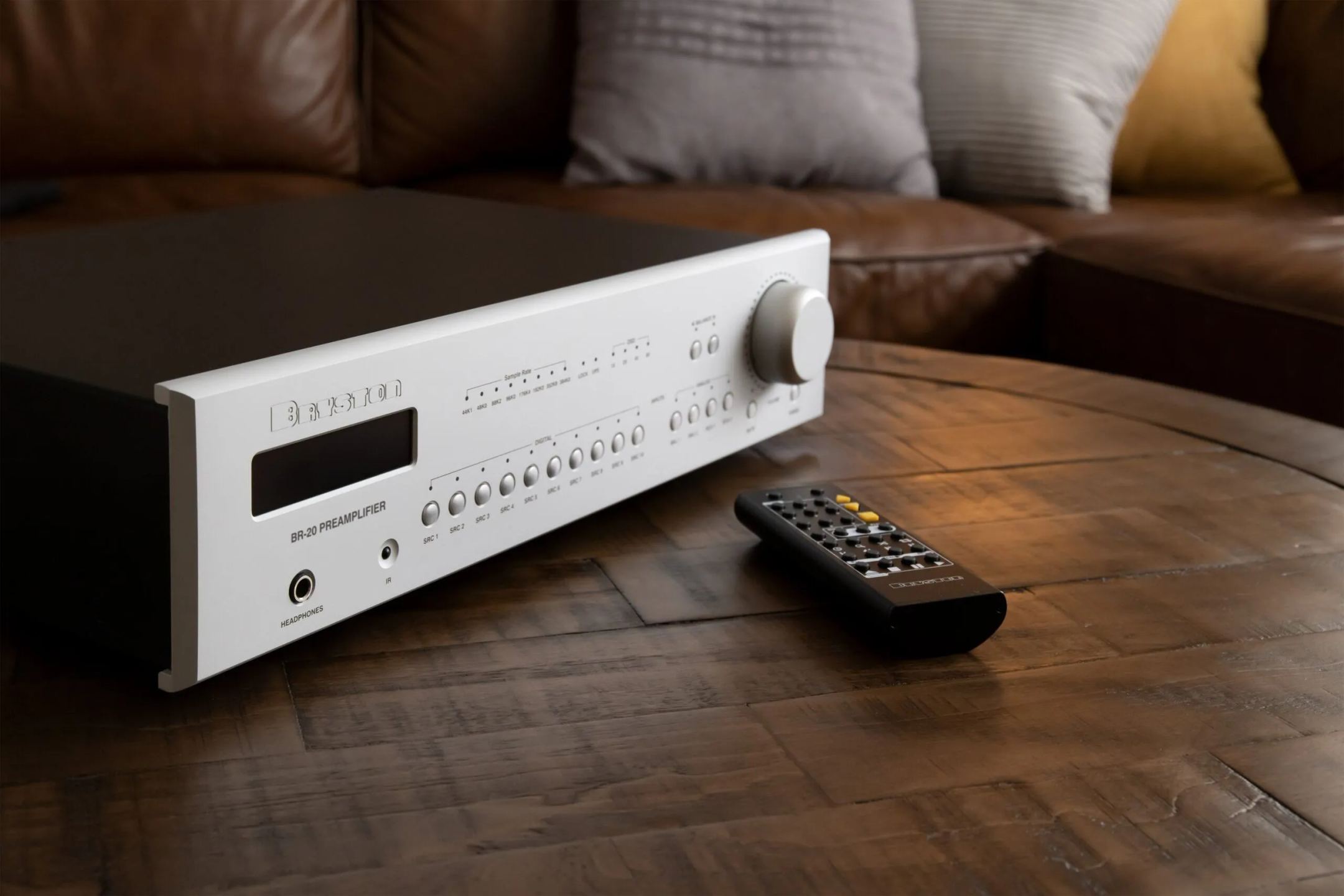
An analog section completely redesigned from the ground up
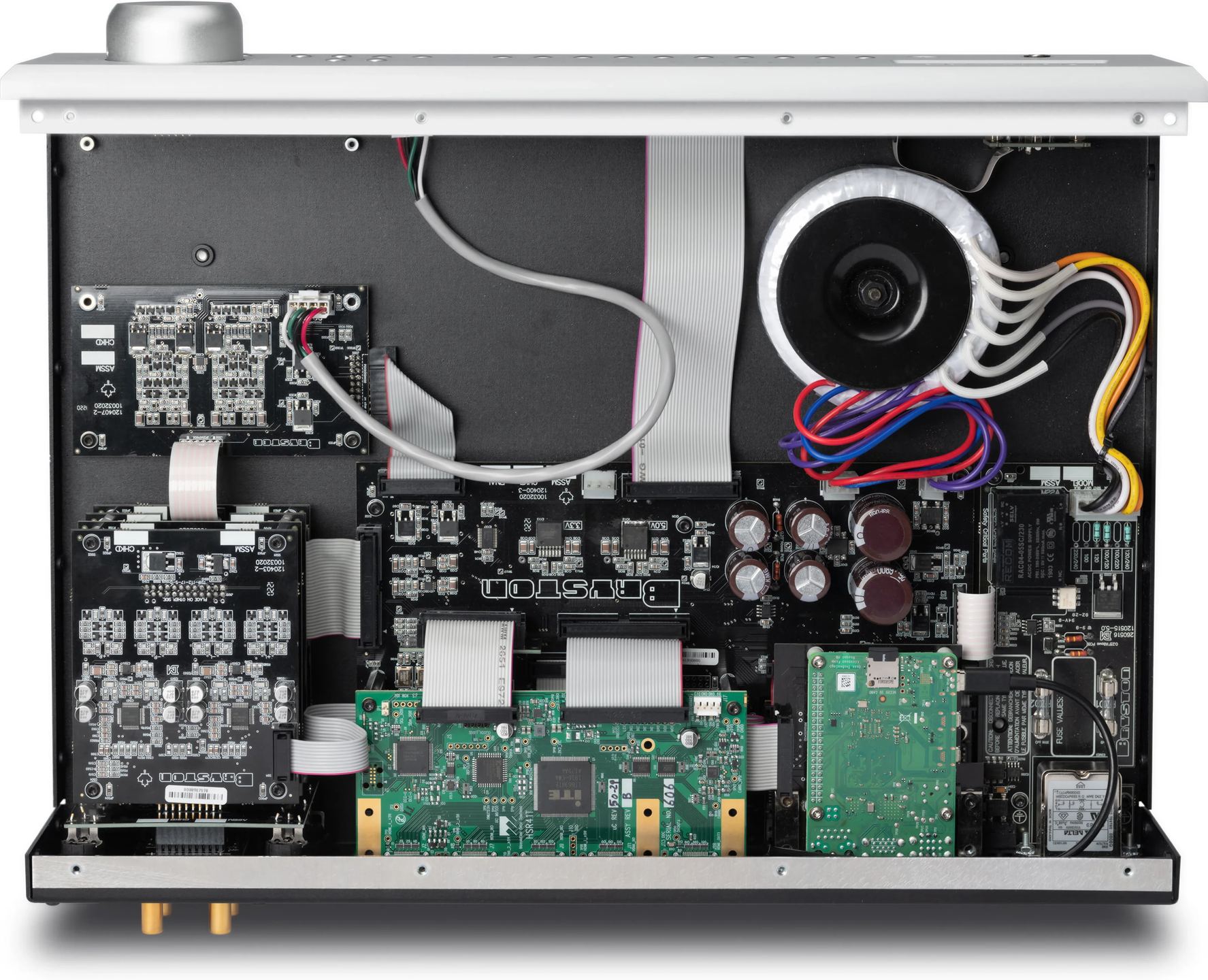
The BR-20’s preamplifier section represents a break from previous generations. The fully balanced circuit is based on discrete operational amplifiers developed specifically for this model, abandoning integrated components in favor of a custom architecture. This approach made it possible to achieve a total harmonic distortion rate below 0.0006%, the lowest ever measured on a Bryston product in more than forty years of operation. The 110 dB signal-to-noise ratio contributes to an almost imperceptible noise floor, even when listening on headphones or with very sensitive speakers.
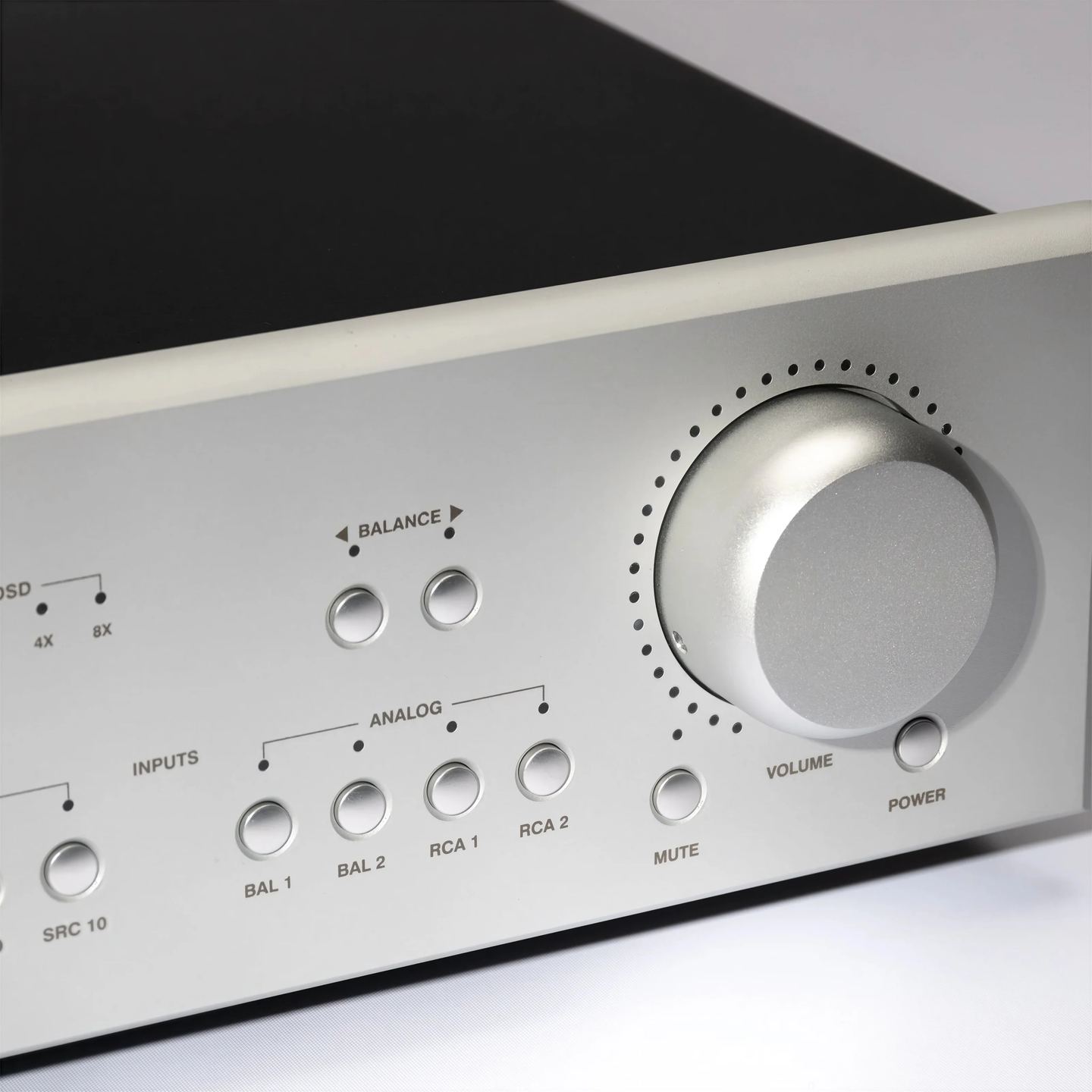
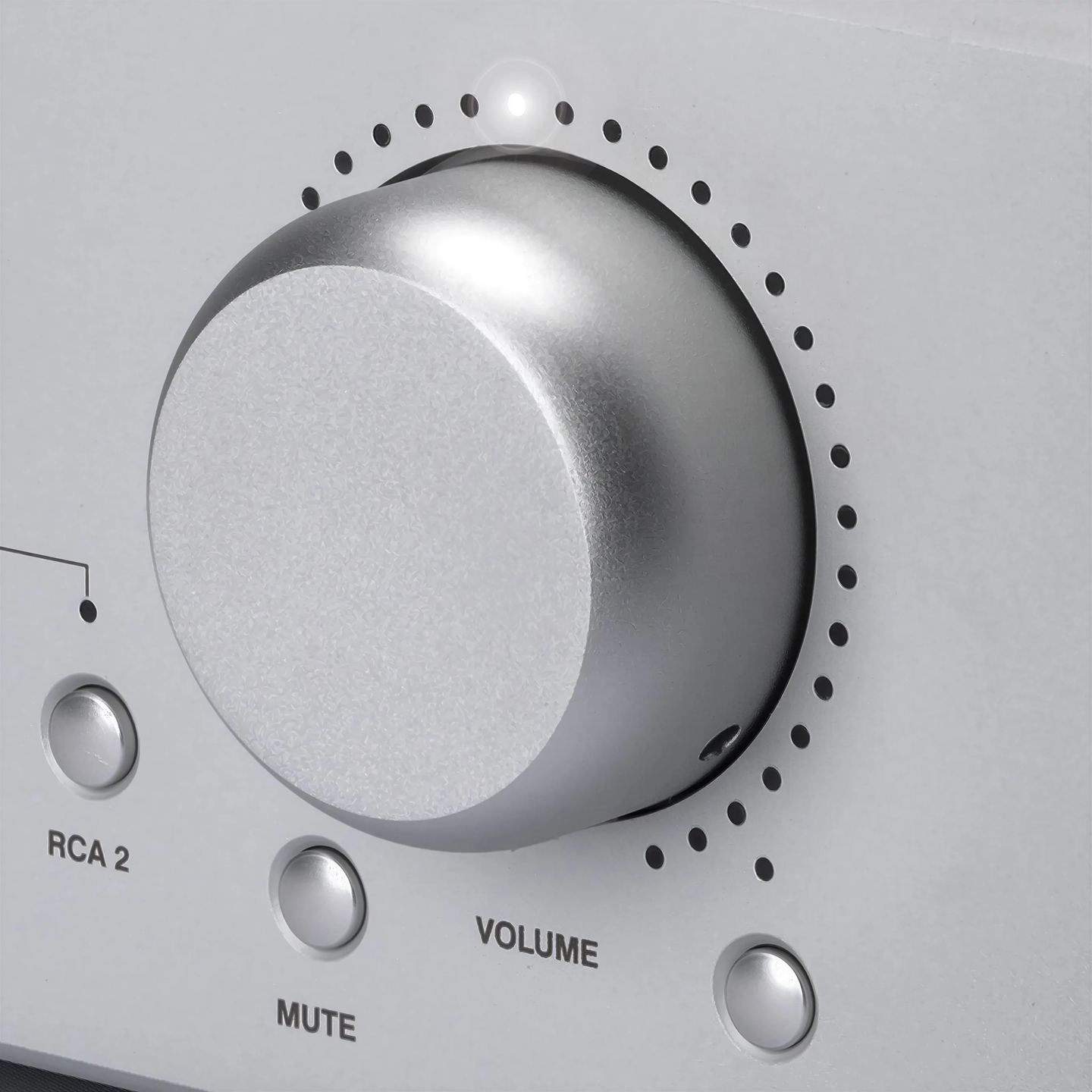
The volume control deserves special attention. Entirely analog and genuinely balanced, it uses a network of precisely matched resistors over the entire dynamic range. 0.5 dB steps allow for fine adjustment, while an LED ring around the rotary knob visually indicates the level from the listening position. Input switching is handled by relays, eliminating potentiometers and integrated circuits from the signal path.
The BDA-3 converter at the heart of the system
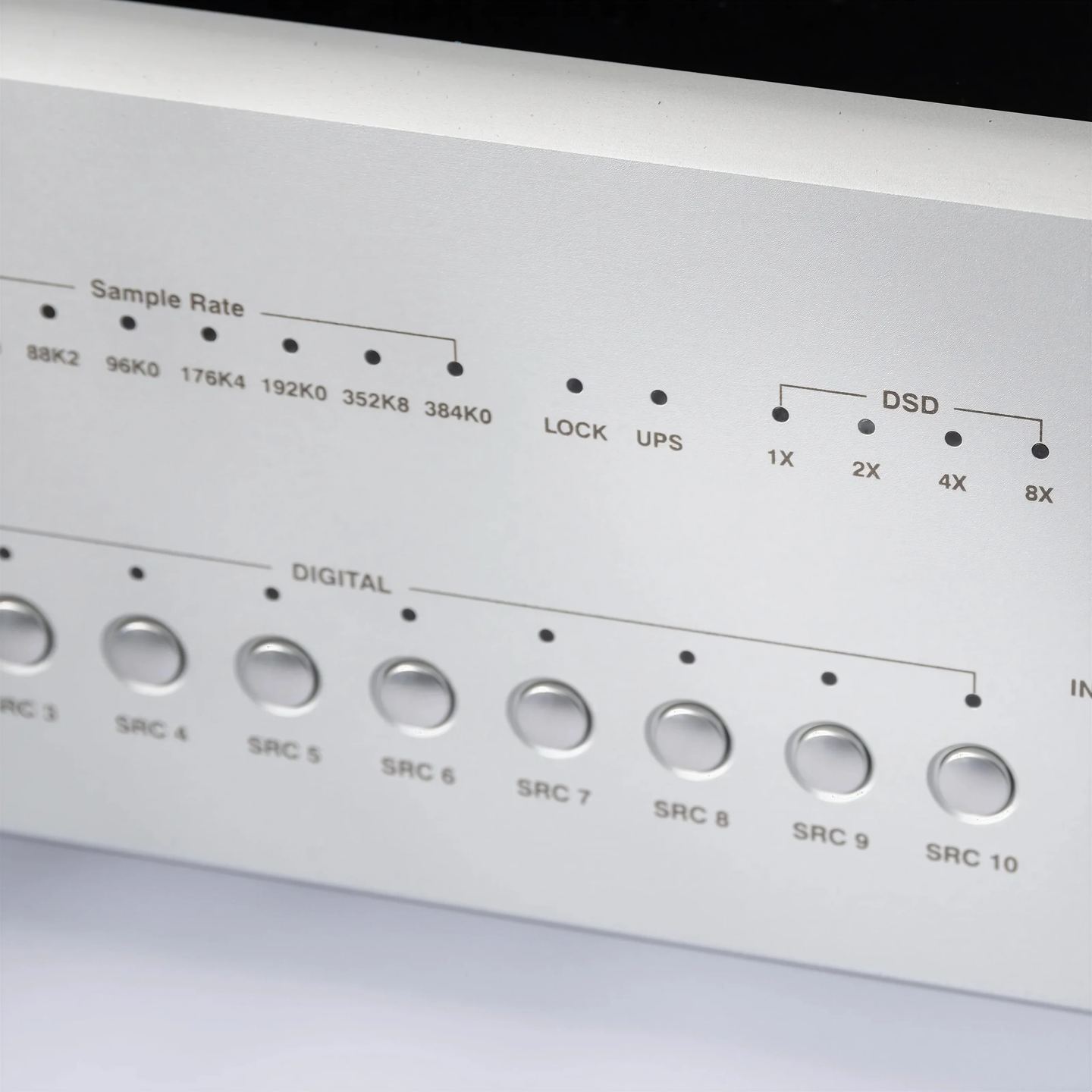
Bryston has integrated into the BR-20 the same conversion architecture as its standalone BDA-3 converter. Two 32-bit AKM 4490EQ chips operate in differential mode to improve the signal-to-noise ratio and reduce crosstalk between channels. PCM processing extends up to 384 kHz in 32 bits via USB and the network playback module, while DSD is supported up to DSD256 (quad-speed).
A reclocking circuit extracts the clock signal from the incoming data and resynchronizes it with the internal master clock, significantly reducing jitter induced by external sources, particularly when playing from a computer via USB. PCM and DSD processing paths are kept separate all the way to the converters, preserving the integrity of each format without intermediate conversion.
The digital inputs cover a wide range of connections: two balanced AES/EBU, two coaxial S/PDIF, two optical Toslink, and one asynchronous USB. Adding the optional HDMI board brings the total to ten digital inputs, with the ability to receive native DSD from a SACD player equipped with an HDMI output.
Network playback and software compatibility
The integrated network player is based on a Raspberry Pi 4 board with more memory and Gigabit Ethernet connectivity compared to previous generations. This hardware platform enables file playback from a USB hard drive or a NAS, as well as access to Qobuz and Tidal streaming services via the Manic Moose web interface.
Roon Ready certification offers an alternative to the proprietary interface. Users of this software can control the BR-20 directly from their usual application, with automatic device recognition on the network. Four USB 3.0 ports on the rear panel accept external storage drives, while a dedicated Ethernet port ensures network connectivity. Bryston recommends a wired connection rather than using a Wi-Fi adapter to preserve the preamplifier’s performance.
A low-impedance headphone amplifier
The BR-20’s headphone section features an output impedance lower than 5 ohms, sufficiently low to properly drive low-impedance headphones whose response can vary depending on the amplifier’s characteristics. The available power exceeds that of previous versions, allowing it to power planar magnetic models or high-impedance headphones that require more voltage.
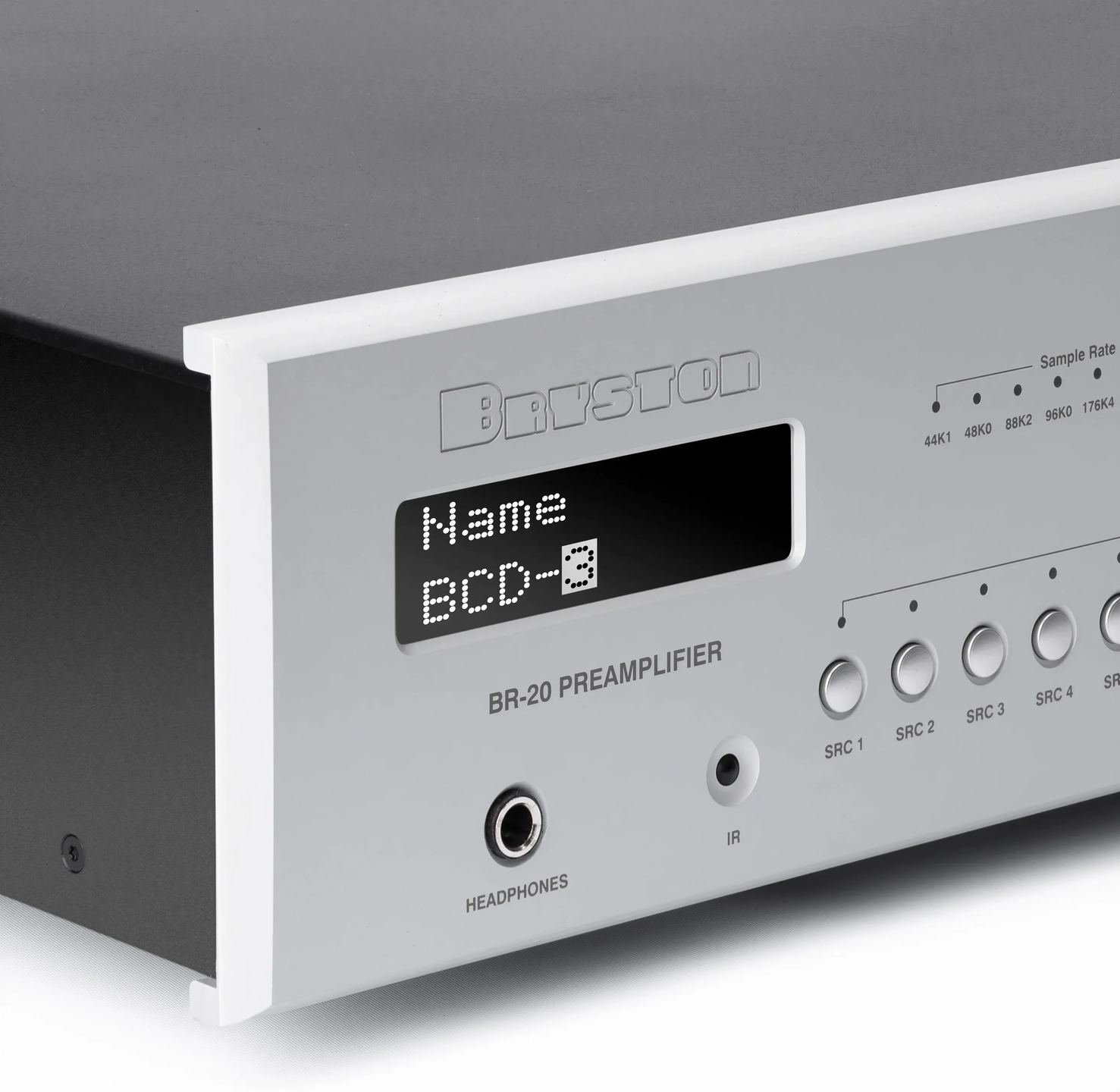
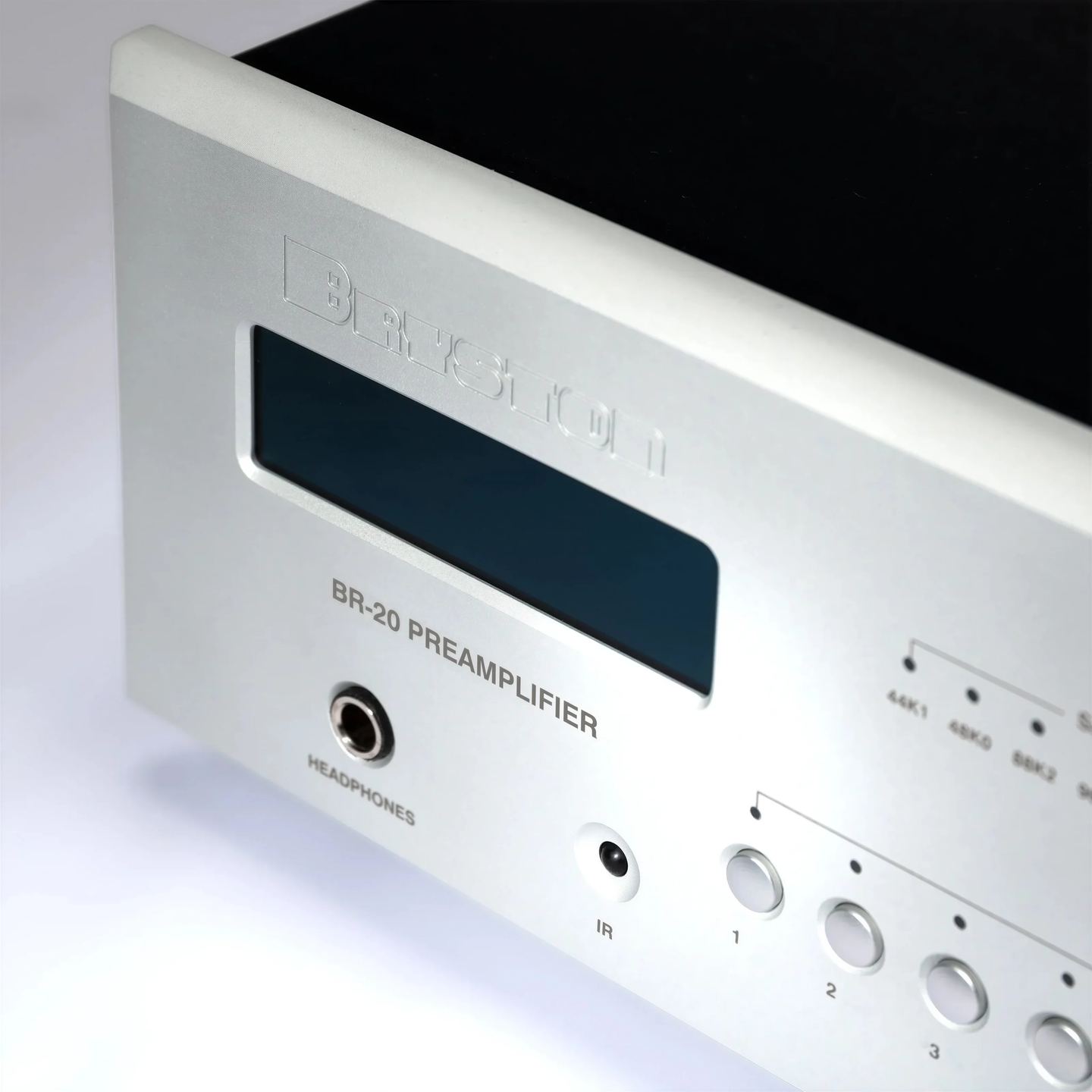
The 6.35 mm jack headphone output is located on the front panel, next to the monochrome LCD screen that displays the volume level, the name of the selected source, and metadata for the tracks currently playing.
Connectivity and expansion options
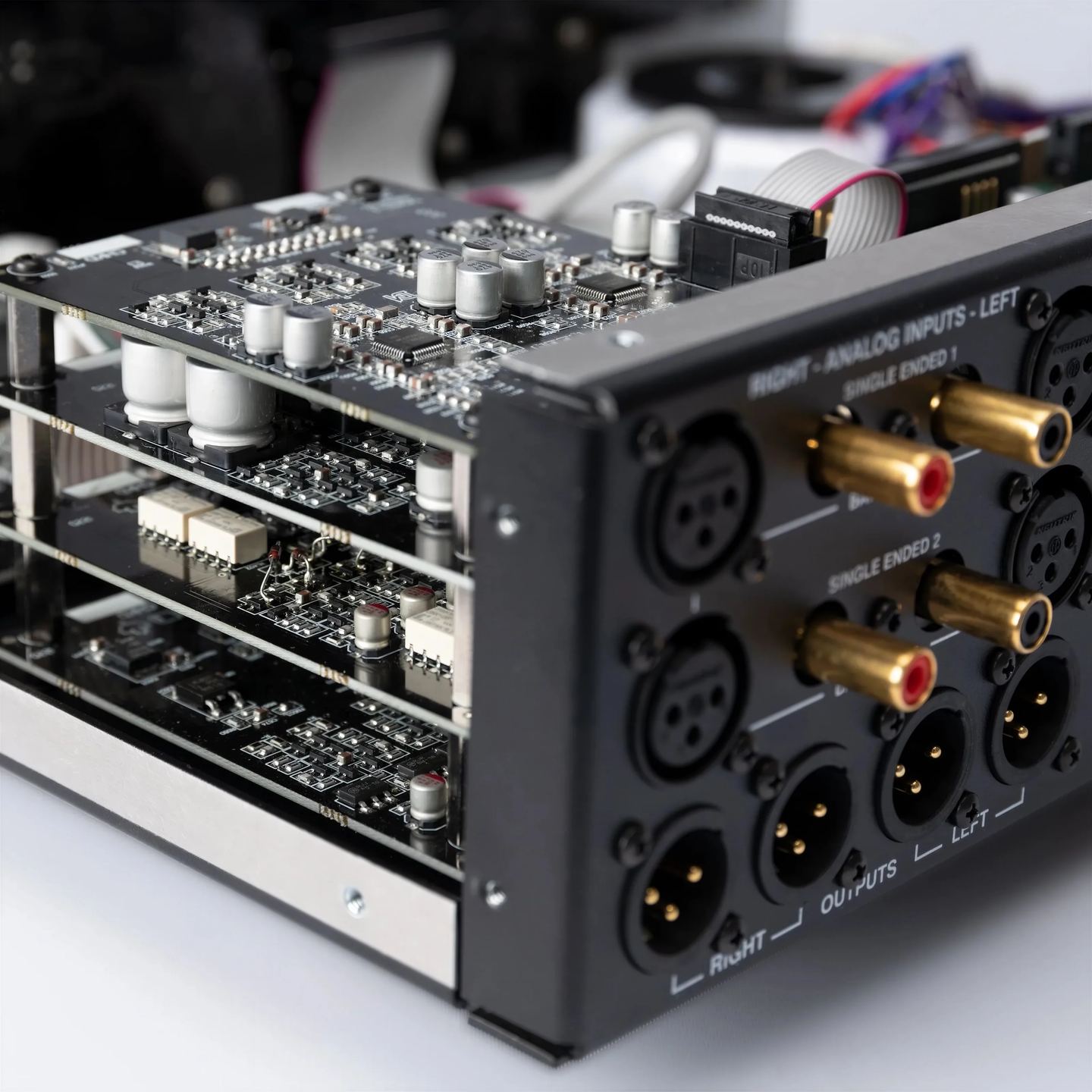
The rear panel prioritizes balanced connections. The four analog inputs are split between two pairs of RCA and two pairs of XLR, while the outputs are exclusively in XLR format. This configuration naturally directs the BR-20 toward a fully balanced system, even though adapters make it possible to connect to single-ended amplifiers.
Two expansion options extend the BR-20’s capabilities. The HDMI board adds four inputs and one output compatible with 4K HDR, turning the preamplifier into a switching hub for an audio-video system. The moving-magnet (MM) phono preamp replaces one of the analog RCA inputs for vinyl enthusiasts who wish to avoid an additional box.
The chassis is available in two widths (17 or 19 inches) and several finishes: black, silver, champagne, white, or gunmetal grey. These options are offered at no extra cost.
Technical specifications
Inputs and outputs
- Analog inputs: 4 in total
- 2 unbalanced RCA inputs
- 2 balanced XLR inputs
- One RCA input can be replaced by an optional MM phono preamplifier
- Digital inputs: up to 10 high-resolution inputs
- 2 AES/EBU inputs
- 1 TOSLINK input
- 1 coaxial RCA S/PDIF input
- 1 USB input
- 4 additional HDMI inputs (with optional module)
- Outputs: 2 balanced outputs
- Headphone output: low-impedance amplifier capable of driving all headphones, even the most demanding ones
Digital conversion and supported formats
- Built-in high-resolution digital-to-analog converter
- Supported PCM formats: up to 384 kHz / 32-bit depending on the interface type
- Supported DSD formats: up to DSD x4 depending on the interface type
- High-resolution streaming player: compatible with almost all file formats at their native resolution
- Optional HDMI module: 4K / HDR and DSD compatible, 4 inputs / 1 output
Analog circuitry and performance
- Total harmonic distortion: less than 0.0006%
- Fully discrete class A analog circuitry
- Fully balanced analog section for crystal-clear musical reproduction
- Independent power supplies for analog and digital circuits
- Relay switching on all inputs
Control and features
- Software-controlled, balanced-action volume control
- LED ring around the volume control to display the sound level from the listening position
- Custom source assignment: ability to name each digital input and associate it with a front-panel or remote-control button
- Control via web interface accessible from smartphone, tablet, or computer
Options and customization
- Front panel available in silver or black finish
- Available in 17” or 19” format, non-rack-mountable
- Optional internal HDMI module: 4 inputs / 1 output, 4K / HDR and DSD compatible
- Optional internal MM phono preamplifier: replaces one analog RCA input
Frequently asked questions
Can the BR-20 replace a separate preamp, DAC, and network player setup?
Yes, that is precisely its purpose. The BR-20 integrates a preamplifier in the lineage of the BP-17³, a BDA-3-class converter, and a network player derived from the BDP series. This consolidation reduces the number of cables and power supplies while shortening the signal path. The sections share a carefully regulated yet electrically isolated power supply.
Which phono cartridges are compatible with the optional phono preamp?
The internal phono module is compatible exclusively with moving-magnet (MM) cartridges. Moving-coil (MC) cartridges require an external phono preamplifier connected to one of the BR-20’s line inputs.
Does the HDMI board support Audio Return Channel (ARC or eARC)?
No, the HDMI board does not support ARC or eARC. It operates in 4K HDR video passthrough mode and can receive PCM or DSD audio from Blu-ray or SACD players equipped with HDMI outputs.
Does the BR-20 operate without a network connection?
Absolutely. A network connection is only required for streaming and firmware updates. The analog and digital inputs (USB, S/PDIF, AES/EBU) operate independently of the network. A USB hard drive can be connected directly for local playback.
What is the maximum resolution accepted by each type of input?
USB and the network player accept up to 384 kHz/32-bit PCM and DSD256. The AES/EBU, coaxial, and HDMI inputs go up to 192 kHz/24-bit, while the Toslink optical input is limited to 96 kHz/24-bit due to the bandwidth constraints of the format.
Are the outputs exclusively balanced?
Yes, the BR-20 has only XLR outputs. To connect an amplifier with RCA inputs, you must use an XLR-to-RCA cable or adapter. This conversion does not significantly degrade the signal, even though the benefits of balanced transmission are then lost.
Can the BR-20 be used only as a DAC, without the preamp function?
The BR-20 does not have a full bypass mode, but the gain can be set to a fixed level to simulate this behavior. However, the quality of the preamplifier section makes this type of use of limited interest in most setups.
- Eco-contribution included in the sale price.