Bryston BDP-3


Specifications and features


Overview
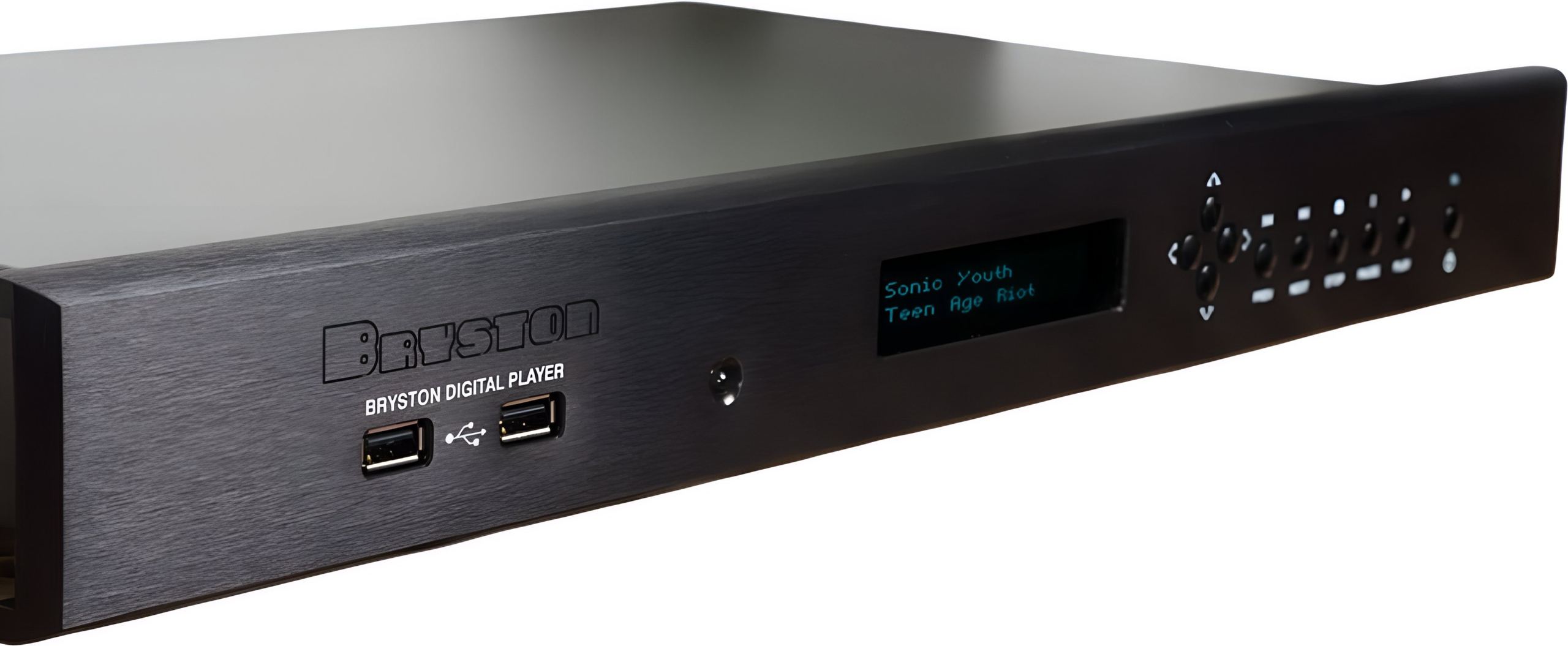
A network audio player that bridges the gap between the precision of the professional world and the demands of home listening. The BDP-3 is the culmination of several years of development at Bryston, from the BDP-1 in 2011 to this third generation launched in 2017. The Canadian manufacturer, renowned since the 1970s for its amplifiers used in numerous recording studios, applies the same philosophy here: playback that is faithful to the source file, without unnecessary processing, supported by robust construction.
A power supply and architecture designed for audio
The BDP-3 is built around a motherboard equipped with a quad-core Intel Celeron processor, backed by 8 GB of RAM. This processing power ensures smooth navigation, even within very large music libraries containing several tens of thousands of tracks. The Linux operating system, customized by Bryston, is exclusively optimized for audio playback, eliminating the superfluous processes that typically burden conventional computers.
The linear power supply is a central element of the design. A toroidal transformer feeds a diode bridge mounted directly on the bottom of the chassis, which serves as a heat sink. 6800 μF electrolytic capacitors work in tandem with regulators capable of delivering up to five amperes of perfectly stable current. This oversized power stage isolates the audio circuits from mains fluctuations and helps lower the device’s noise floor.
The IAD board: an in-house digital output
One of the BDP-3’s technical strengths lies in its proprietary audio board called IAD (Integrated Audio Device). Developed in-house by Bryston, it replaces the third-party sound cards used in previous generations. The IAD converts the internal USB signal into coaxial S/PDIF and balanced AES/EBU outputs, both transformer-coupled and impedance-matched. This meticulous design reduces temporal jitter to levels Bryston describes as almost undetectable even by the most precise measuring instruments.
USB digital outputs are also provided for connecting an external converter via this interface. The BDP-3 features two separate USB buses: the first groups the front and rear USB 2.0 ports, while the second is dedicated to two isolated USB 3.0 ports. This separation allows the use of certain demanding converters that need to be alone on their USB bus, such as models compatible with Ayre or Berkeley Audio Design’s Streamlength protocol.

Formats and sources: from local files to streaming
The player supports PCM files up to 384 kHz in 32-bit, as well as DSD up to DSD128 (DSD64 x2). All common formats are recognized: FLAC, WAV, AIFF, Apple Lossless, MP3, M4A, and OGG. Playback is bit-perfect, with no conversion or upsampling: the digital stream sent to the external converter is an exact replica of the source file.
Music can come from multiple sources. The BDP-3 can play files stored on directly connected USB media (USB drives, external hard disks) or on a NAS accessible via the local network thanks to its UPnP/DLNA compatibility. Roon Ready certification allows it to be integrated into a Roon system as an endpoint, benefiting from that software’s rich graphical interface. Tidal and Qobuz streaming services are directly accessible from the player’s interface, in lossless and high-resolution quality depending on your subscription. An Internet radio section called bRadio, based on the Shoutcast directory, completes the offering with the ability to search by genre or directly enter a stream URL.
Control and home automation integration
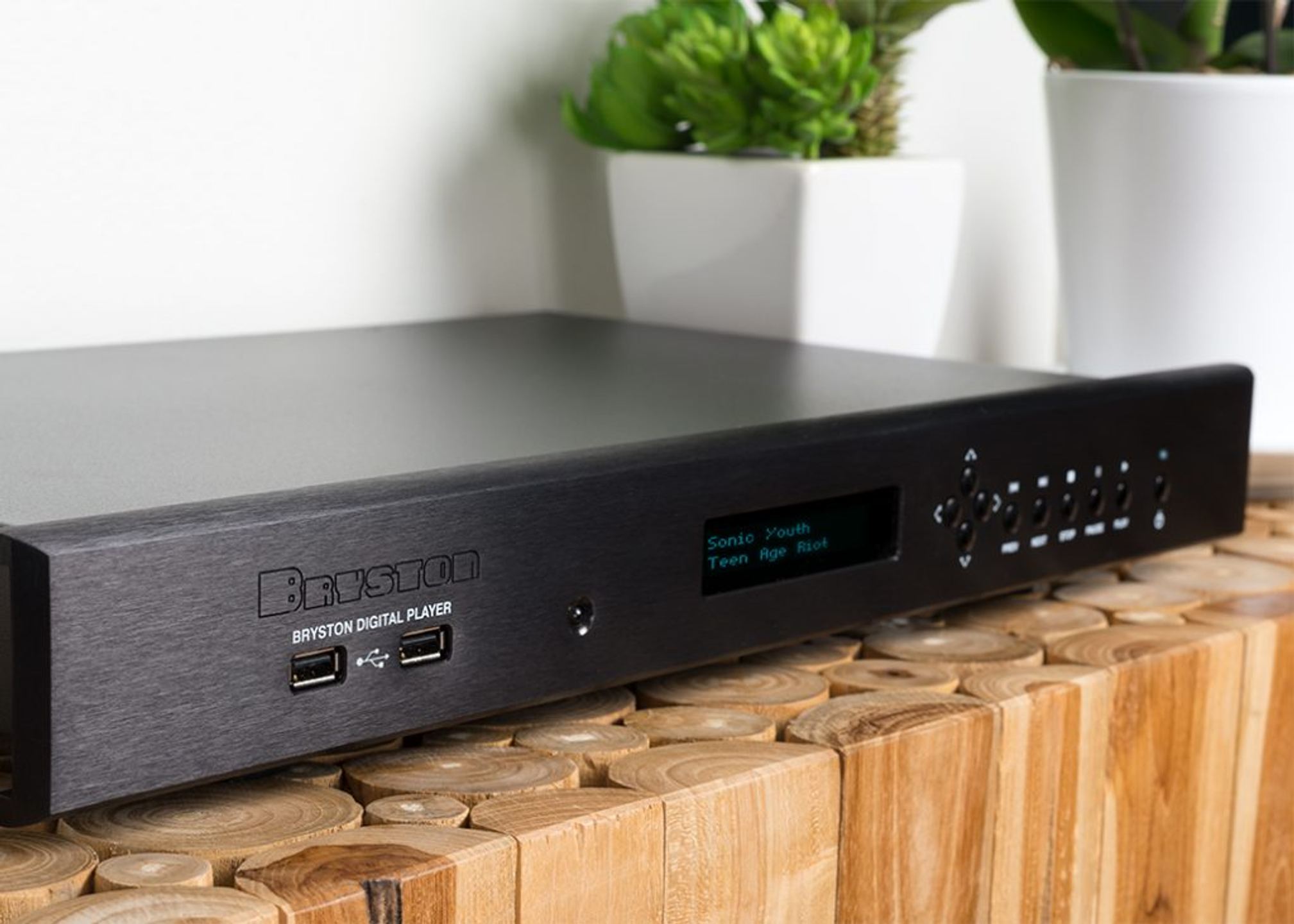
Several control interfaces coexist. On the front panel, a display accompanied by transport buttons enables standalone operation: play, pause, and queue navigation. This ability to control the device without a smartphone or tablet remains appreciated for quick everyday use.
The Manic Moose web interface, accessible from any browser at my.bryston.com, offers full control from a tablet, smartphone, or computer running iOS, Android, macOS, or Windows. Other third-party applications compatible with MPD (Music Player Daemon) also work, including Rigelian and Soundirok on iOS, or M.A.L.P. and Droid MPD Client on Android.
For integration into a home automation system, the BDP-3 offers an RS232 input compatible with AMX or Crestron systems, as well as a 12V trigger input for automatic power-on. An optional infrared remote control allows for more traditional operation from the sofa.
Build and customization options
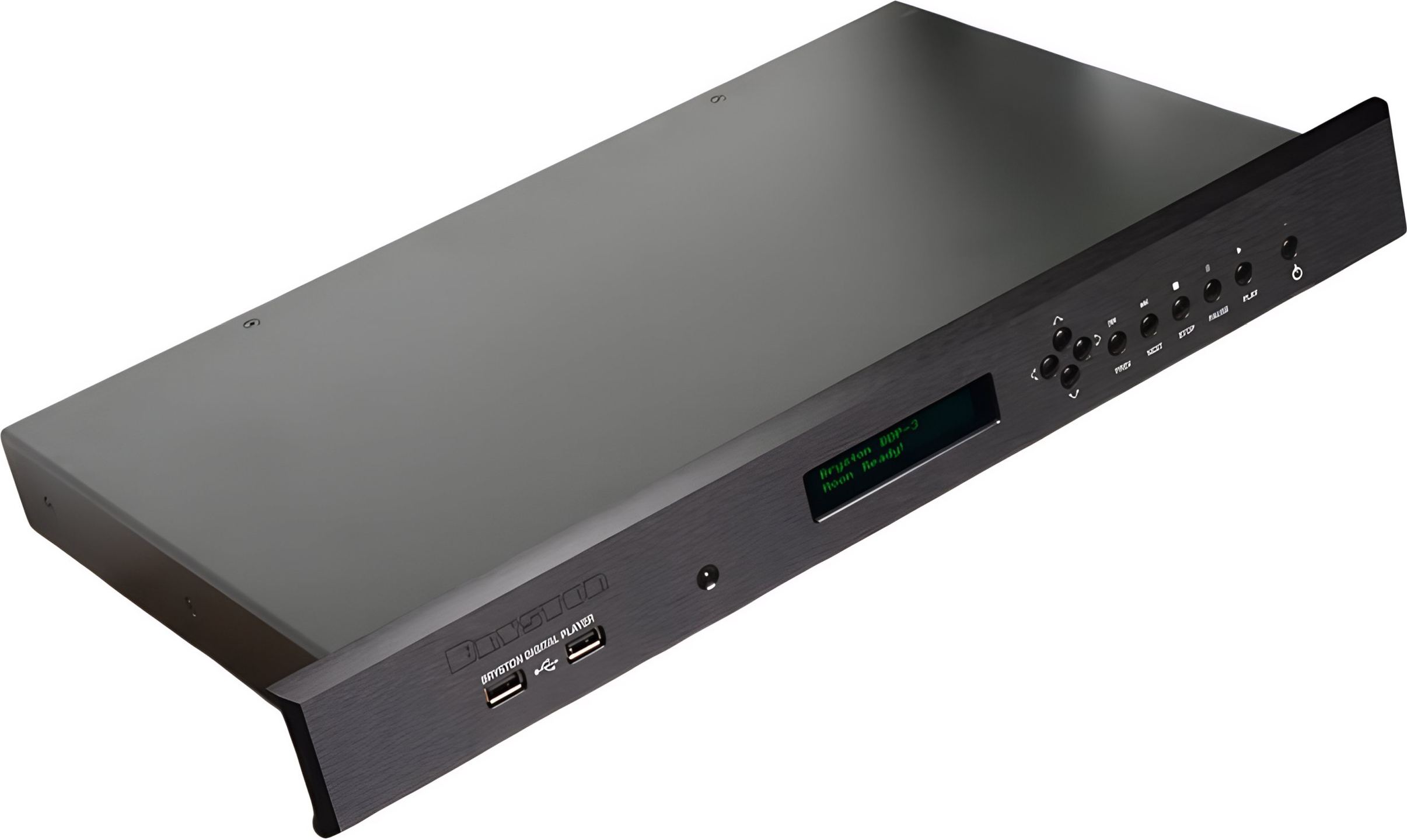
The steel chassis, topped with a machined and anodized aluminum front panel, follows the visual identity of other Bryston components. Black or silver finishes adapt to different environments. Two front panel widths are available: 17 inches in standard hi-fi format, or 19 inches with optional rack ears for bay installation.
The Gigabit Ethernet port ensures a high-performance wired network connection. For setups where network cabling is not feasible, an internal Wi-Fi option can be factory-installed, or an external USB Wi-Fi adapter can be added later. An internal bay also allows for the installation of a hard drive or SSD to store part of the music library locally.
The unit weighs around 7 kg and measures 43 or 48 cm wide depending on the chosen front panel, 7 cm high, and 30 cm deep. Bryston’s warranty covers digital products for five years.
Technical specifications
Audio formats and resolution
- PCM support: up to 384 kHz / 32-bit
- DSD output: up to DSD-128 (x2)
Connectivity and outputs
- Digital outputs: USB, AES/EBU, S/PDIF
- USB ports: USB 2.0 and 2 separate USB 3.0 buses
- Network connectivity: Gigabit Ethernet
- Wi-Fi:
- Optional internal Wi-Fi
- Optional external Wi-Fi via USB adapter
Audio sources
- Playback from USB drives, NAS servers, Tidal, Qobuz, Internet radio, Roon compatible and other sources
Power supply
- Linear power supply for optimal audio quality
Control and operation
- Full control via infrared, RS-232, 12 V trigger, or web app
- Web app compatible with iOS, Android, macOS, Windows and other platforms
Configuration options
- Width: 43.2 cm or 48.3 cm
- Optional rack ears on 43.2 cm units
- Internal storage: hard drive or SSD
General information
- Steel chassis with machined and anodized aluminum front panel
- Dimensions: 43.2 cm or 48.3 cm W x 7 cm H x 30.5 cm D
- Weight: 7 kg
Frequently asked questions
Does the BDP-3 include a digital-to-analog converter?
No, the BDP-3 is strictly a digital player and transport. It requires an external DAC to convert the signal to analog. This separation of functions lets you choose the converter best suited to your system and makes future upgrades easier without replacing the whole setup.
Which apps can be used to control the BDP-3 from an iPhone or iPad?
The Manic Moose web interface works via Safari or any other browser. Third-party apps compatible with MPD can also be used, notably Rigelian, Soundirok, or the Roon app if you have a subscription to that service. The Bryston app automatically searches for devices present on the local network.
Can the BDP-3 be used without a network connection?
Yes, by connecting a USB storage device (flash drive or hard disk) directly to one of the available ports. Navigation and playback are then handled from the front-panel controls or via the optional Wi-Fi adapter, which creates its own local network to access the control interface.
What is the difference between the BDP-3’s USB 2.0 and USB 3.0 ports?
The USB 3.0 ports offer higher throughput for external drives and are on a separate bus. This isolation is necessary for certain USB DACs using the Streamlength protocol (Ayre, Berkeley Audio Design, Wavelength) that must be alone on their bus to operate correctly.
Can the BDP-3 play MQA files?
No, Bryston has not implemented MQA decoding in the BDP-3. MQA files are played as standard FLAC files without unfolding. To benefit from MQA decoding, you need to use a compatible DAC downstream.
Is it possible to upgrade a BDP-2 to a BDP-3?
Yes, Bryston offers an upgrade program that converts a BDP-2 into a BDP-3 at the factory. This option includes replacing the motherboard and power supply, and adding the new USB 3.0 ports.
- Eco-contribution included in the sale price.