

Tonewinner SW-D8000
This product is no longer available for sale!

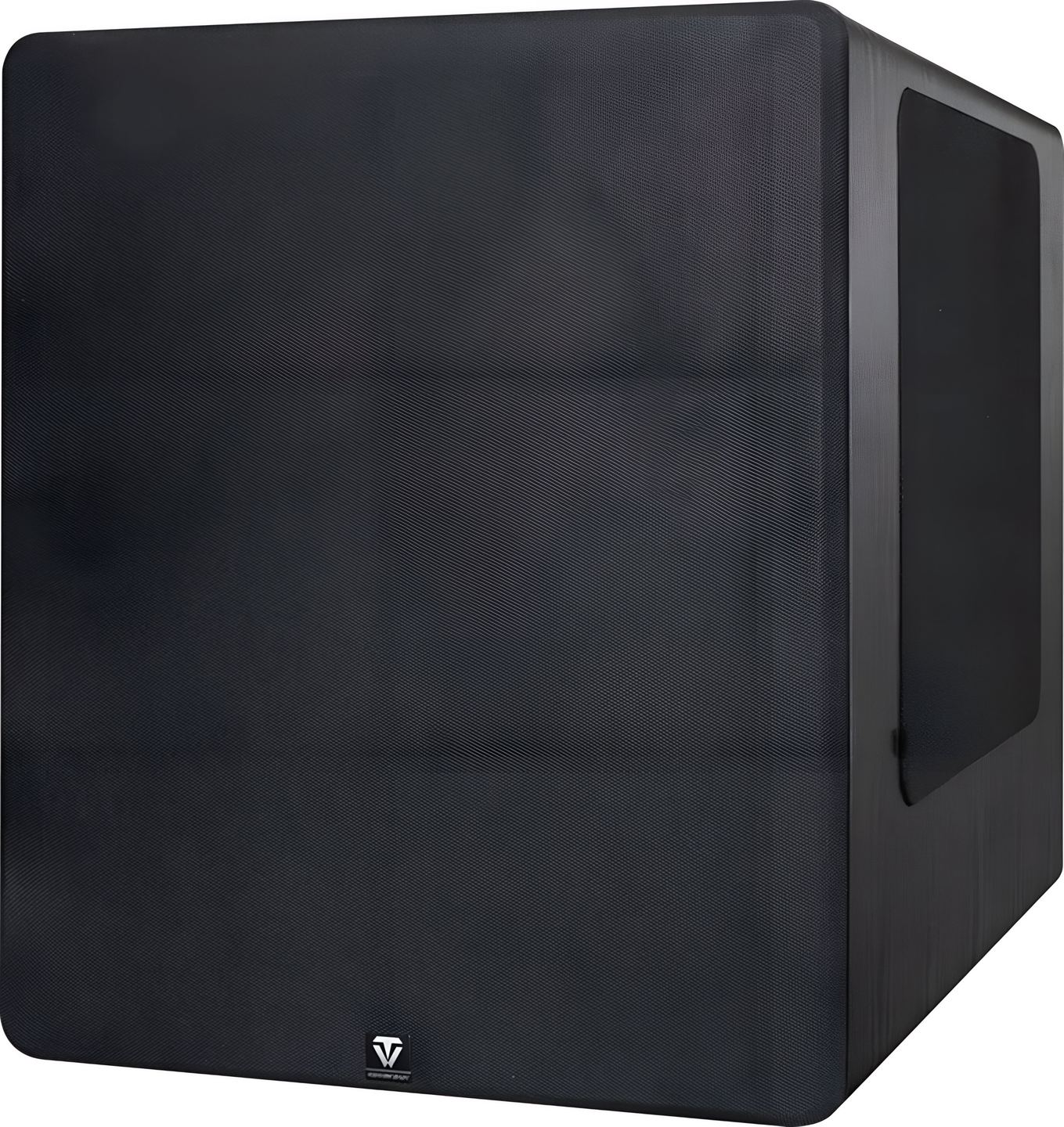
Overview
Two 38 cm transducers mounted in opposition, a 1500 W RMS Class D amplifier, a claimed extension down to 15 Hz: the SW-D8000 is the flagship of Tonewinner’s subwoofer range. This Chinese manufacturer, active since 1992 and long remaining in the shadows as an OEM supplier for other Western brands, here offers a subwoofer that fully embraces its imposing size (77 kg on the scale) in exchange for an uncommon power reserve in this category.
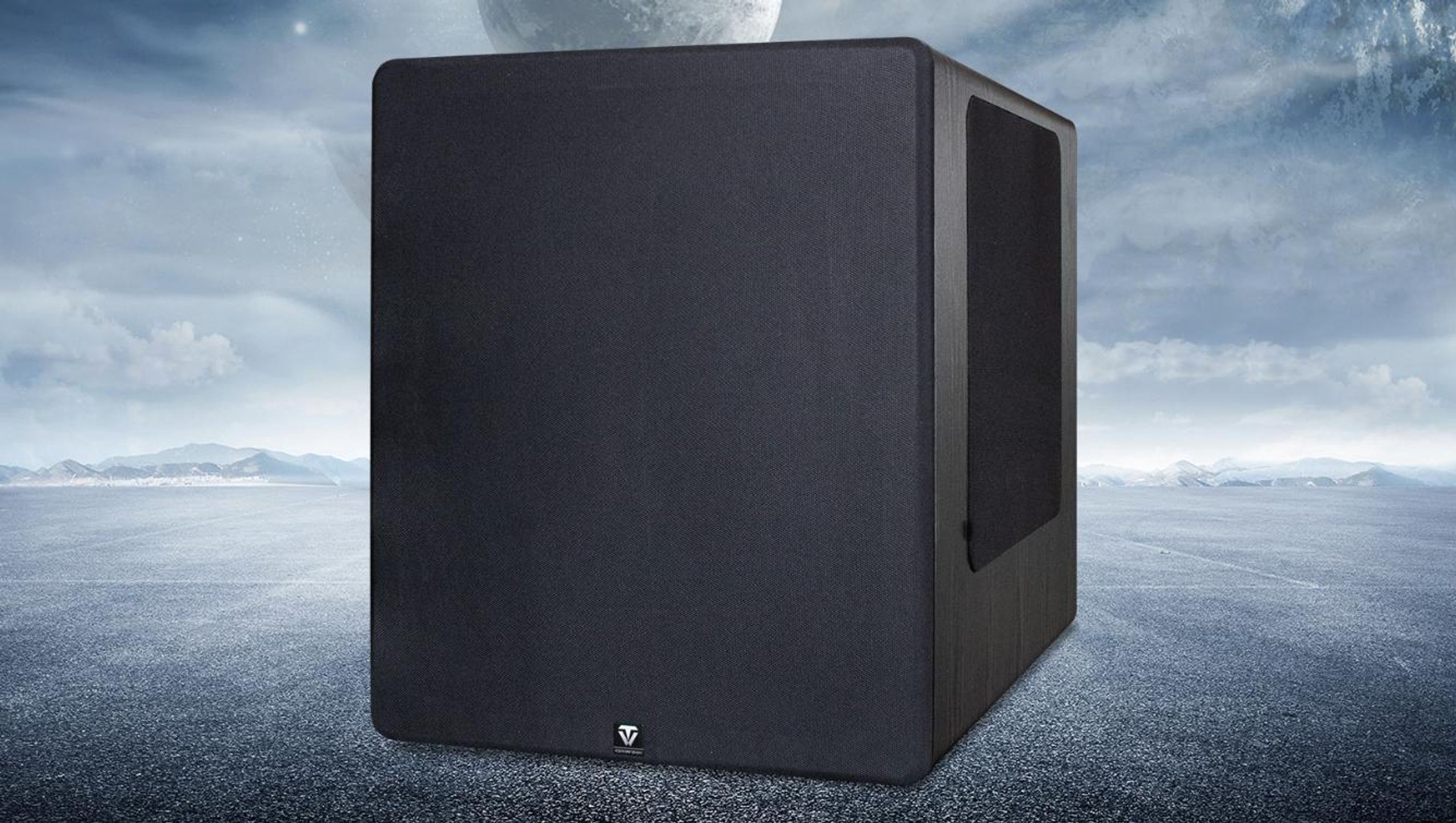
A master craftsman of bass: construction and design
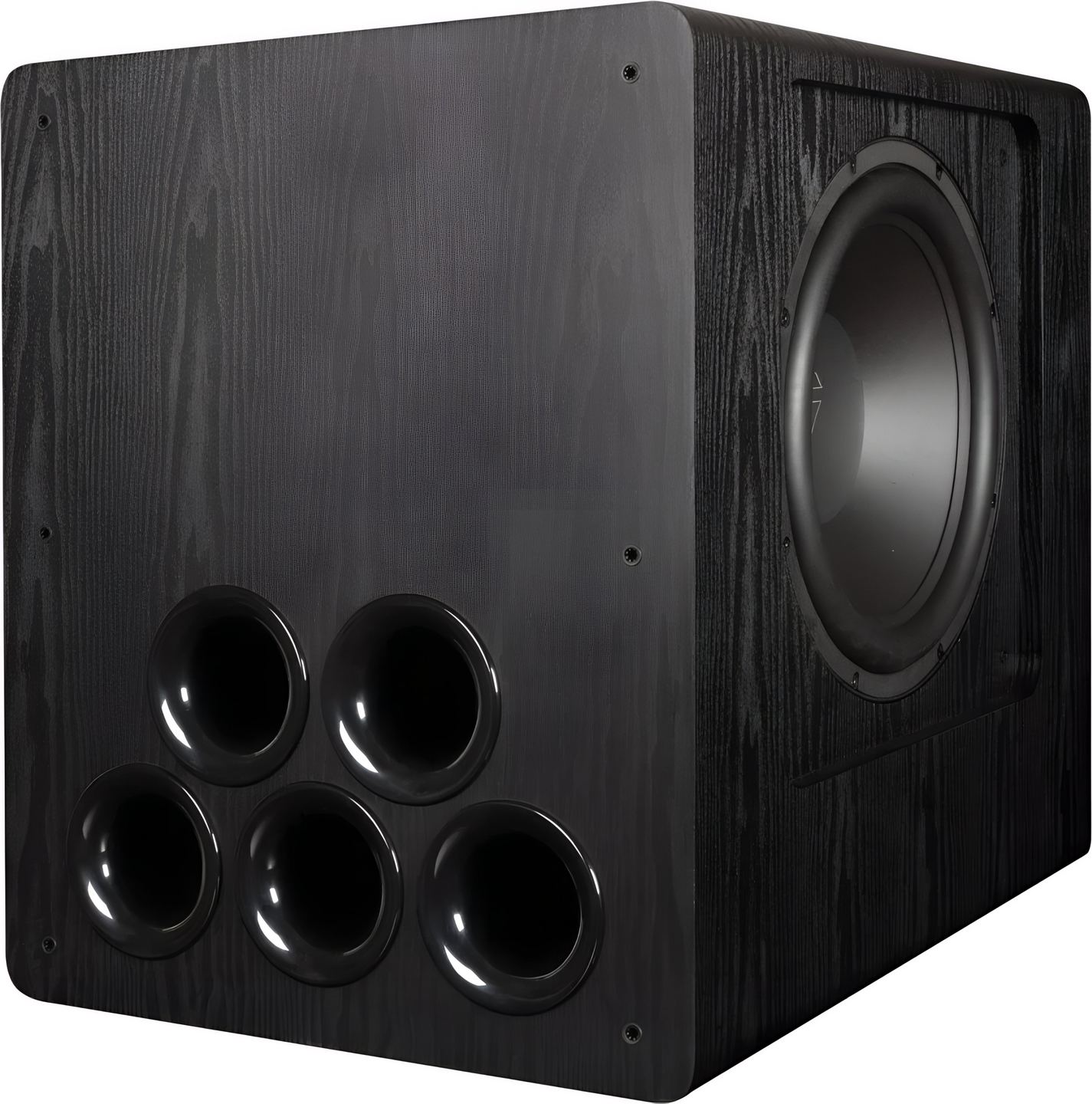
The SW-D8000 adopts a vertical configuration where the two 38 cm drivers are mounted face to face, separated by the cabinet. This opposing layout aims to mechanically cancel the vibrations generated by the movement of the cones, reducing unwanted transfer to the floor and walls. The MDF cabinet, finished with an oak-effect veneer and rounded corners, hides an internal structure designed to limit standing waves.
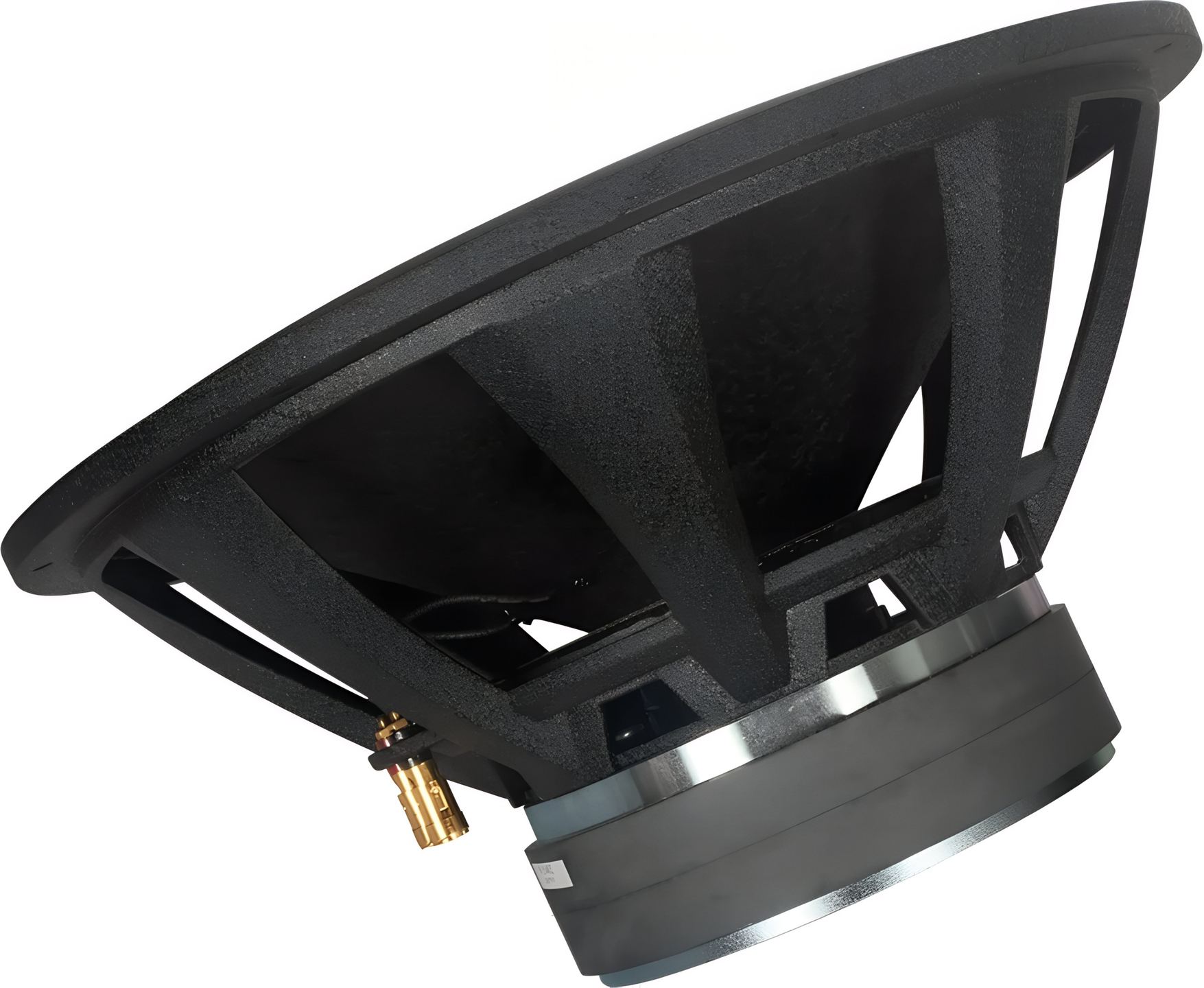
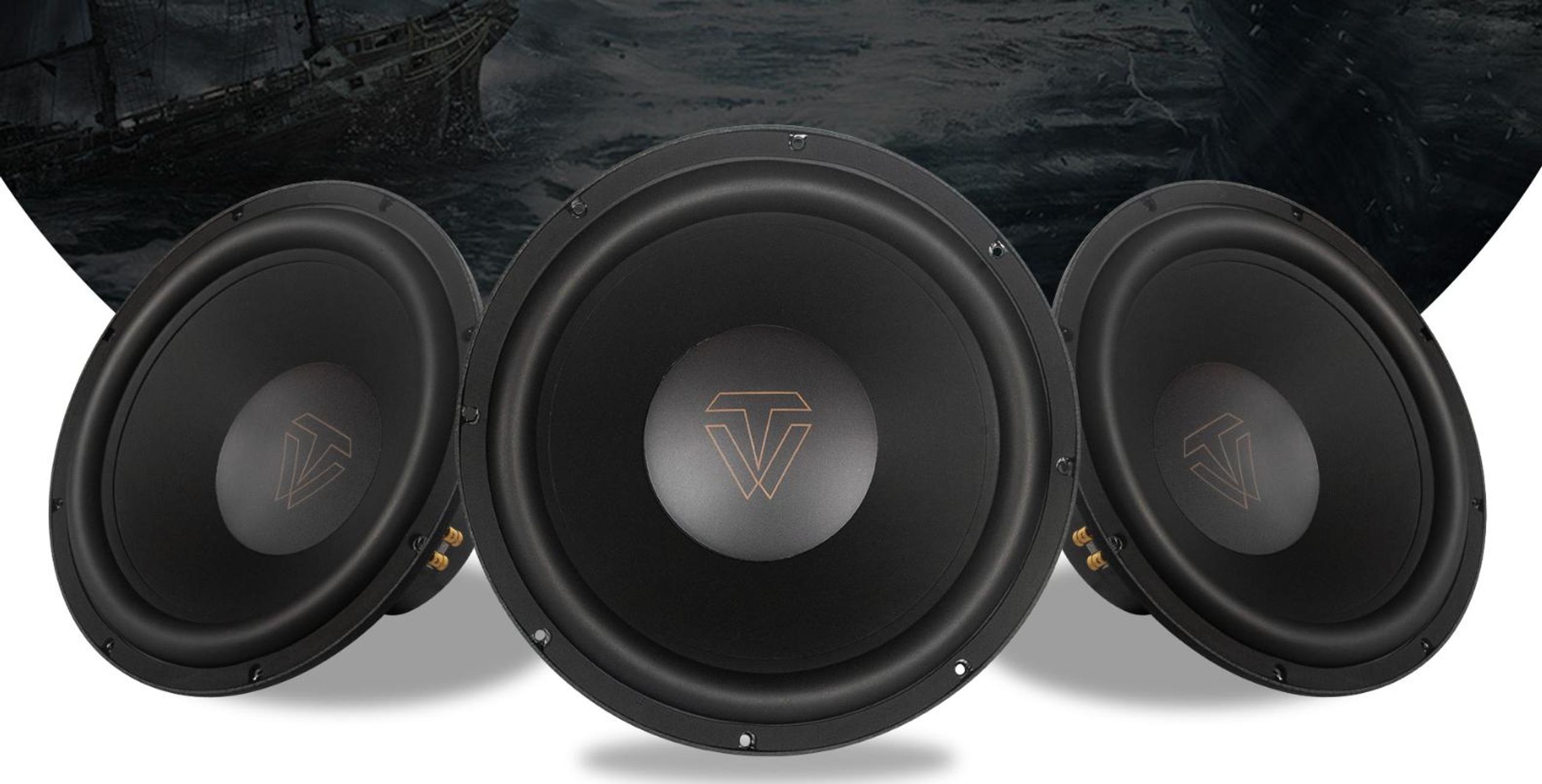
The transducers themselves are built on a robust construction: treated paper pulp cone, high-elasticity rubber surround, 75 mm OFC copper voice coil, and dual-magnet system. The high linear excursion (Xmax) allows the cones to move a substantial volume of air without entering compression prematurely, a key criterion for maintaining linearity in the infra-bass.
Five ports, two acoustic personalities
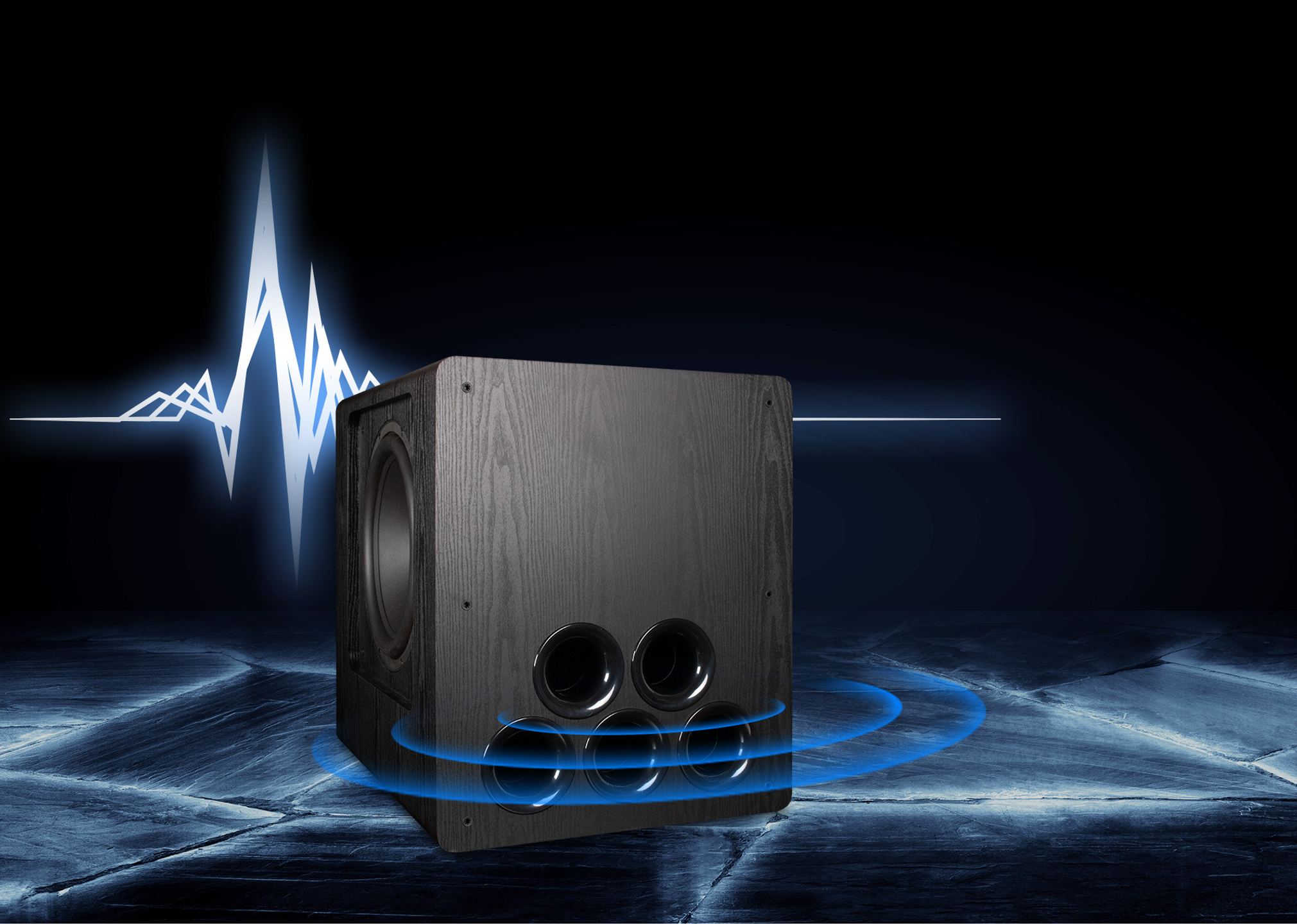
The front panel of the subwoofer features five bass-reflex ports, an unconventional configuration that has sparked some reactions in enthusiast circles. This multiplication of openings allows the airflow to be spread out and turbulence noise to be reduced at high levels. Tonewinner supplies foam plugs to block some or all of these ports and switch to sealed operation.
The bass-reflex mode favors low-frequency extension and overall efficiency, while the sealed mode tightens transient response at the cost of a slightly higher low cut-off point. The mobile app lets you select the profile corresponding to the chosen acoustic loading type, preventing a mismatch between DSP settings and physical configuration.
Amplification and power reserve
The amplification stage uses a Class D module delivering 1500 W RMS into 3 Ω, with a claimed peak capacity of 8000 W. These figures need to be put into context: peak power, measured on brief transients, reflects the power supply’s ability to handle occasional bursts rather than continuous power. It is nonetheless an indicator of the dynamic headroom available to reproduce cinematic impacts or kick drum hits without clipping.
Circuit protection includes safeguards against overheating, overvoltage, overload, and short circuit. These protections automatically cut or reduce the signal before the electronics are damaged, a reassuring point given the power involved.
DSP control and mobile app
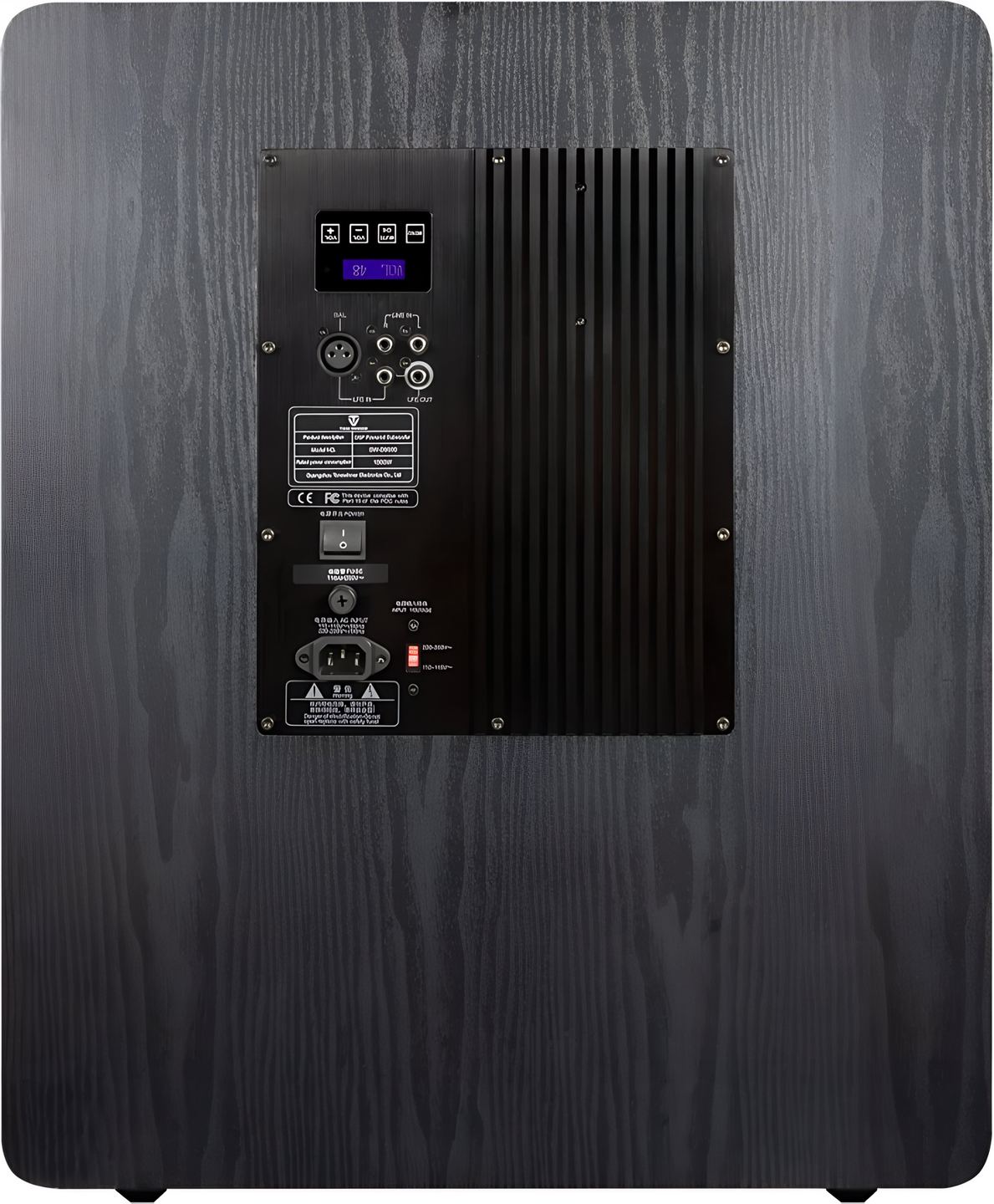
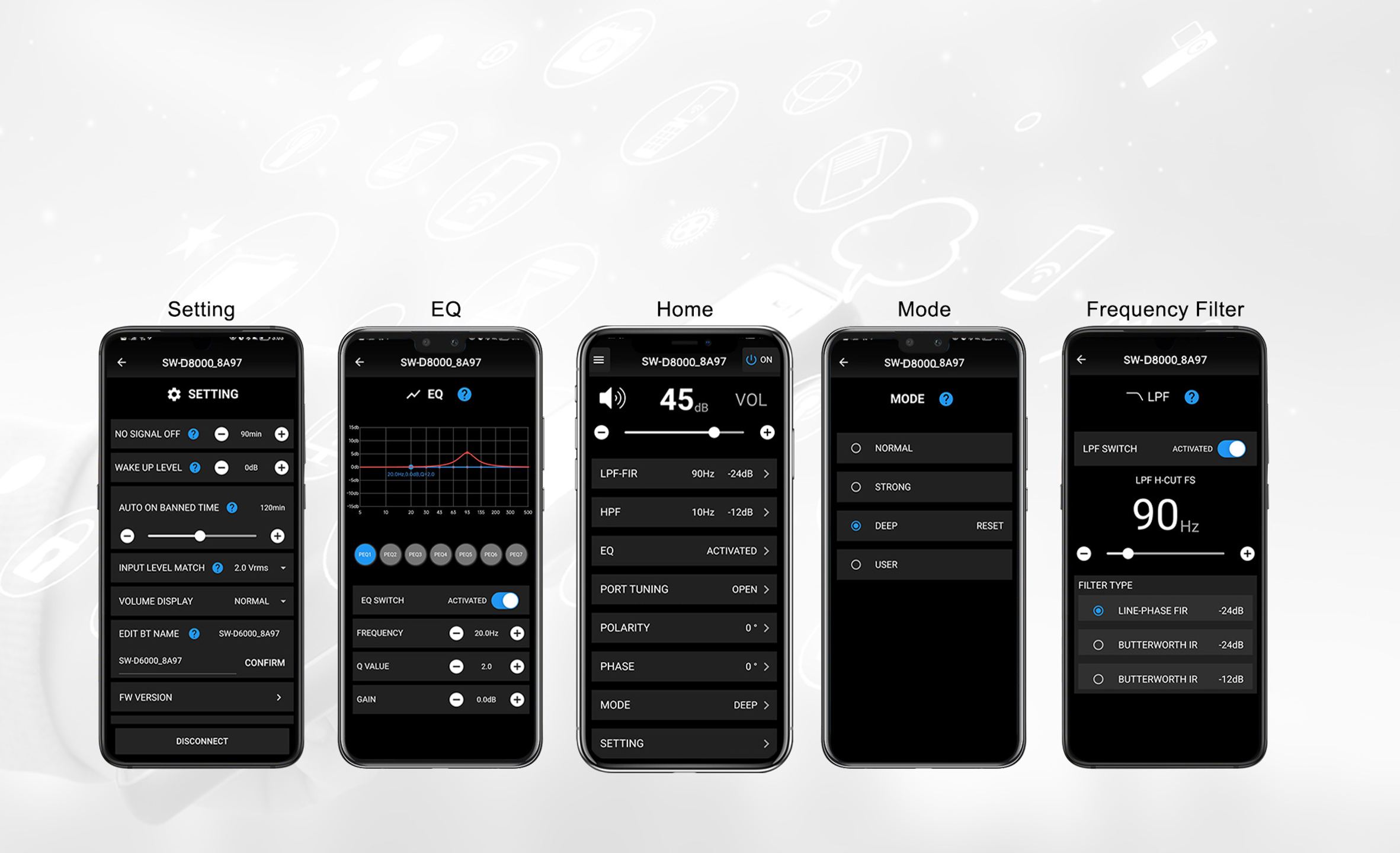
The touchscreen LCD, positioned on the rear panel and angled upward to make it easier to read without moving the subwoofer, provides access to essential settings: volume, crossover frequency, phase, listening modes. But it’s the mobile app (iOS and Android) that unlocks the full potential of the onboard DSP.
The 7-band parametric equalizer allows room modes to be corrected with enough granularity for serious work. Each band offers control of center frequency, Q factor, and gain. For those who have a measurement microphone and analysis software, this function turns the SW-D8000 into a tool that can be adapted to a variety of acoustic environments.
The four preset modes serve distinct uses. Deep mode lowers the crossover frequencies to favor infra-bass at the expense of impact. Loud mode does the opposite. Normal mode offers a middle-ground compromise, while User mode gives access to manual settings without predefined EQ.
Connectivity and system integration
The rear panel offers a balanced XLR input, two RCA inputs (line level and LFE), and an RCA output to daisy-chain a second subwoofer. The presence of the XLR input facilitates long-distance connections with high-end preamplifiers or processors, reducing the risk of hum or interference. The power supply accepts 110–115 V and 220–230 V, a practical detail for import.
The trigger function allows automatic power-on synchronized with the rest of the system, and the low-power standby mode switches off the amplifier after a configurable period of inactivity.
Positioning in the Tonewinner range
The SW-D8000 sits between the SW-D6000 (a single 15-inch, 800 W RMS) and the SW-D8000 Pro, which uses a configuration where the two transducers are mounted side by side rather than in opposition, in a wider cabinet. The D9000, equipped with a single 18-inch transducer, rounds out the lineup at the high end. The choice between these models depends as much on budget as on acceptable footprint and the type of sound signature sought.
Technical specifications
Speakers
- 2 long-throw 38 cm (15-inch) drivers
- Aluminum frame
- 75 mm OFC copper voice coil
- Frequency response: 15 – 220 Hz
- Extension into the infra-bass down to 15 Hz
Amplification
- Type: active (amplified)
- RMS power: 1500 W at 3 Ω
- Peak power: 8000 W at 3 Ω
- Digital amplification
Acoustic loading
- Type: bass-reflex with 5 ports
- Can operate in sealed enclosure (sealed mode)
- Foam plugs supplied for port blocking
Signal processing (DSP)
- 7-band parametric equalizer
- Available settings: volume, phase, low-pass filter
- Four listening modes
- Deep
- Loud
- Normal
- User
Connectivity
- Inputs
- Line-level RCA
- RCA LFE
- XLR LFE
- Outputs
- RCA LFE for daisy-chaining multiple subwoofers
Control and connectivity
- Integrated LCD touchscreen
- Mobile app compatible with iOS / Android
Protections
- Overheating protection
- Overvoltage protection
- Overload protection
- Short-circuit protection
Power supply
- Input voltage: AC 110-115 V / 220-230 V
Dimensions and weight
- Dimensions (W × H × D): 520 × 628 × 780 mm
- Weight: 77 kg
Supplied accessories
- Foam plugs for ports
- Power cable
- Quick start guide
Frequently Asked Questions
Can the SW-D8000 be used for hi-fi music listening, or is it reserved for home cinema?
Both uses are possible. Normal mode and the parametric EQ make it possible to obtain a relatively linear response suitable for music, while Deep and Loud modes favor cinematic effects. The quality of the transducers and the generous amplification do not limit this subwoofer to cinema-only use.
Is the mobile app essential for configuring the subwoofer?
No. The basic settings (volume, 0/180° phase, listening mode) are accessible via the touchscreen and the buttons on the rear panel. The app becomes necessary to access the 7-band parametric EQ, variable phase, and firmware updates.
What is the concrete difference between the SW-D8000 and the SW-D8000 Pro?
The driver layout. On the D8000, the two transducers are mounted in opposition (face to face) in a vertical cabinet. On the D8000 Pro, they are side by side, which significantly increases cabinet width but concentrates acoustic projection. Power and frequency specifications remain similar.
Can multiple SW-D8000 units be daisy-chained together?
Yes. The RCA LFE output allows a second subwoofer to be connected in cascade. This configuration is common in large rooms where a single subwoofer is not enough to smooth resonance modes or maintain an even level across the entire listening area.
Does switching to sealed mode (ports plugged) significantly reduce available power?
Sealed mode does not reduce the amplifier’s power but changes the acoustic behavior: the low cut-off frequency rises slightly and transient response becomes tighter. The sensation of extreme depth decreases in favor of more articulate bass. It’s a trade-off, not a limitation.
- Eco-contribution included in the sale price.
- Manufacturer reference: TONSWD8000
- GTIN / EAN: 6942550341636




