Rega Mercury

Specifications and features


Overview
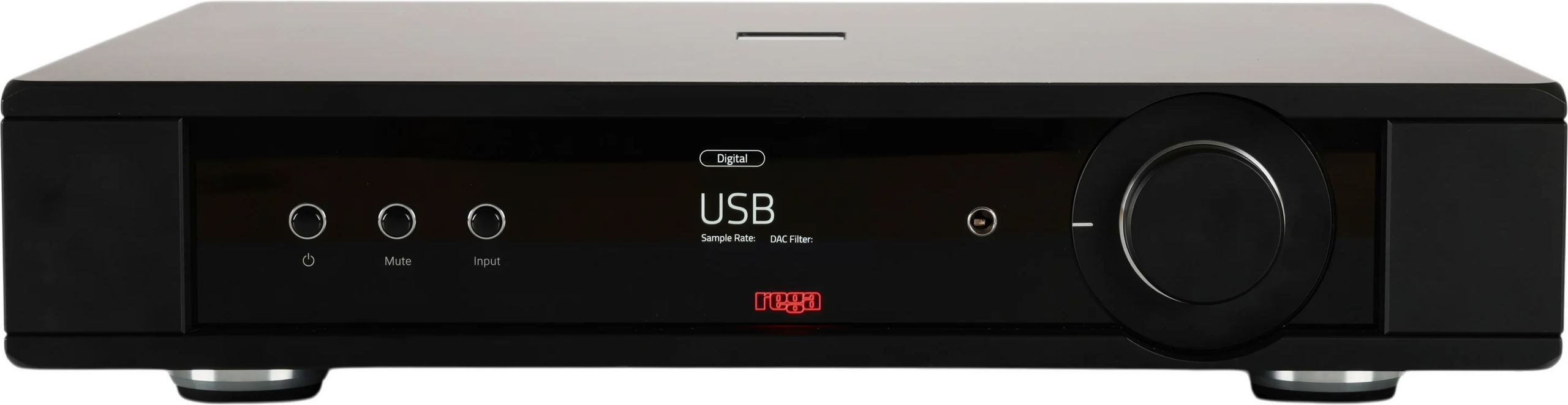
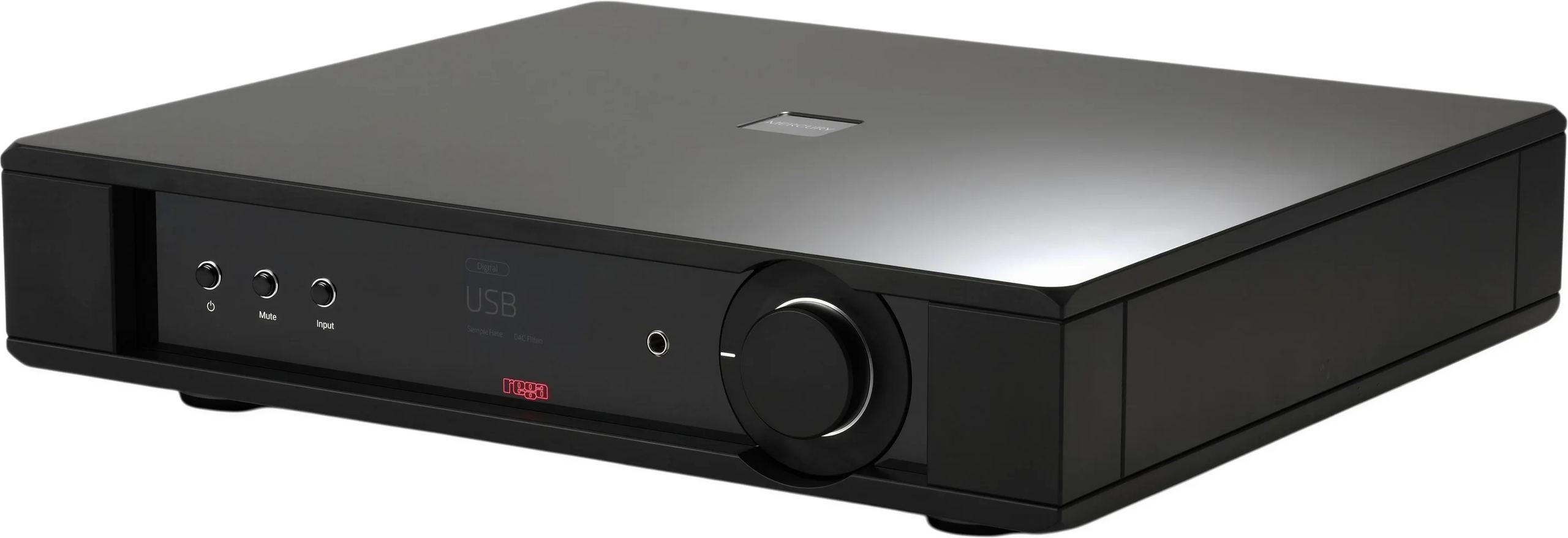
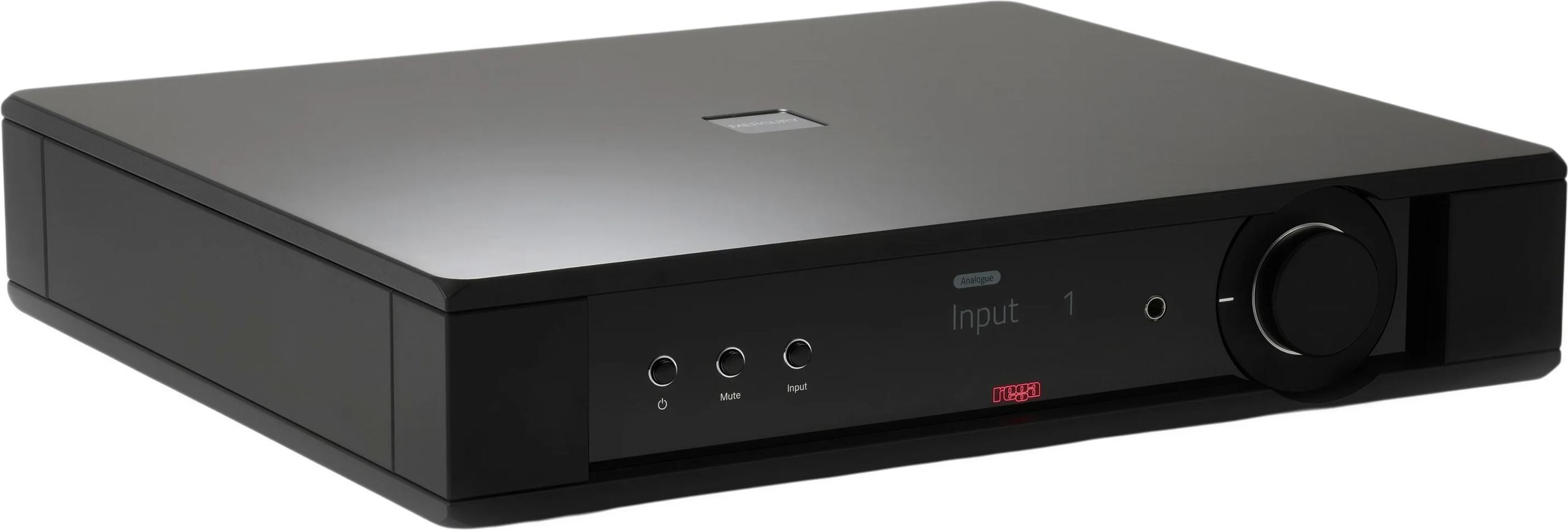
Four decades of transistor electronics development at Rega, and here is the Mercury: a preamplifier that combines three functions in a single enclosure. The British manufacturer set out to create the most ambitious electronic device in its history, with a record number of components. Hand-built in England in a CNC-machined aluminum chassis, this reference preamp is designed to work with the Solis power amplifier or any other high-end amplifier.
A circuit inherited from Rega references
The origins of the Mercury circuit go back to the first Rega Elicit, around 1990. Rega’s approach has remained the same since that time: a fully discrete, balanced signal path, without relying on prefabricated modules.
The amplification stages use ultra-low-noise Linear Systems FET transistors in a four-transistor differential configuration, a topology also found in the Aura MC phono preamp. The Alps Blue Velvet RK27 volume potentiometer, the same one used in the Osiris, is paired here with balanced common-base driver amplifiers. This active configuration around the potentiometer provides the voltage and current needed to drive the next stage without signal degradation.
The main outputs are DC-coupled to avoid coupling capacitors, which can alter bass response. A protection circuit monitors DC levels to prevent any issues.
A generous power supply for dynamics
The power supply uses a voltage 60% higher than what is usually found in this type of preamp. This additional reserve translates into the ability to handle musical peaks without compression.
The oversized toroidal transformer feeds a discrete linear power supply with balanced regulation. Each section of the circuit has its own local capacitance, multiplier supply, and LED-referenced current generators. The control circuits, display, and protections also have their own dedicated power supply, isolated from the audio section.
Integrated DAC: a deliberate technical choice
Rega deliberately chose two Wolfson WM8742 chips mounted in parallel, even though this DAC was launched in 2009. The engineers believe these chips offer the best balance between measured performance and sound reproduction, a choice that prioritizes listening over figures on paper.
The asynchronous USB input is galvanically isolated with its own dedicated power supply, and benefits from extensive re-clocking of the PCM and DSD clocks. Two high-stability oscillators generate low-jitter clocks for the 44.1 kHz and 48 kHz families. The S/PDIF inputs go through a Wolfson receiver with PLL to recover low-jitter data and clocks.
The DAC supports PCM up to 32-bit/192 kHz and DSD64 in DoP. Five digital filters are selectable for PCM and four for DSD, with detailed descriptions in the manual. For those who want more exotic formats such as high-speed DSD, an external converter will be required.

Headphone amplifier up to the task
The headphone amplifier works like a mini-Solis: it uses the same balanced common-base topology as the power amplifier. With an output of 2.5 W at 33 Ω and 0.5 W at 240 Ω, it can drive both low-impedance headphones and more demanding models.
The measured distortion (0.0035% THD+N at 1 kHz) and current capability place this headphone section on the level of dedicated high-end amplifiers. It is a substantial addition, not a troubleshooting feature.
Extensive connectivity but no phono preamp
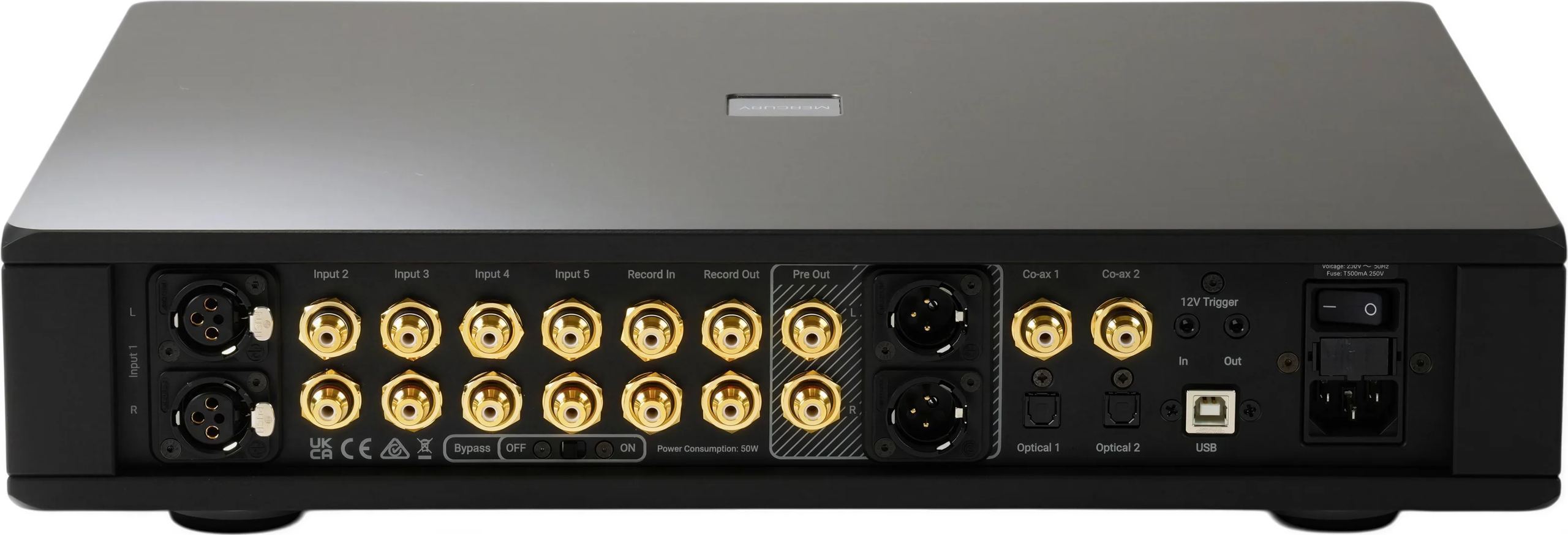
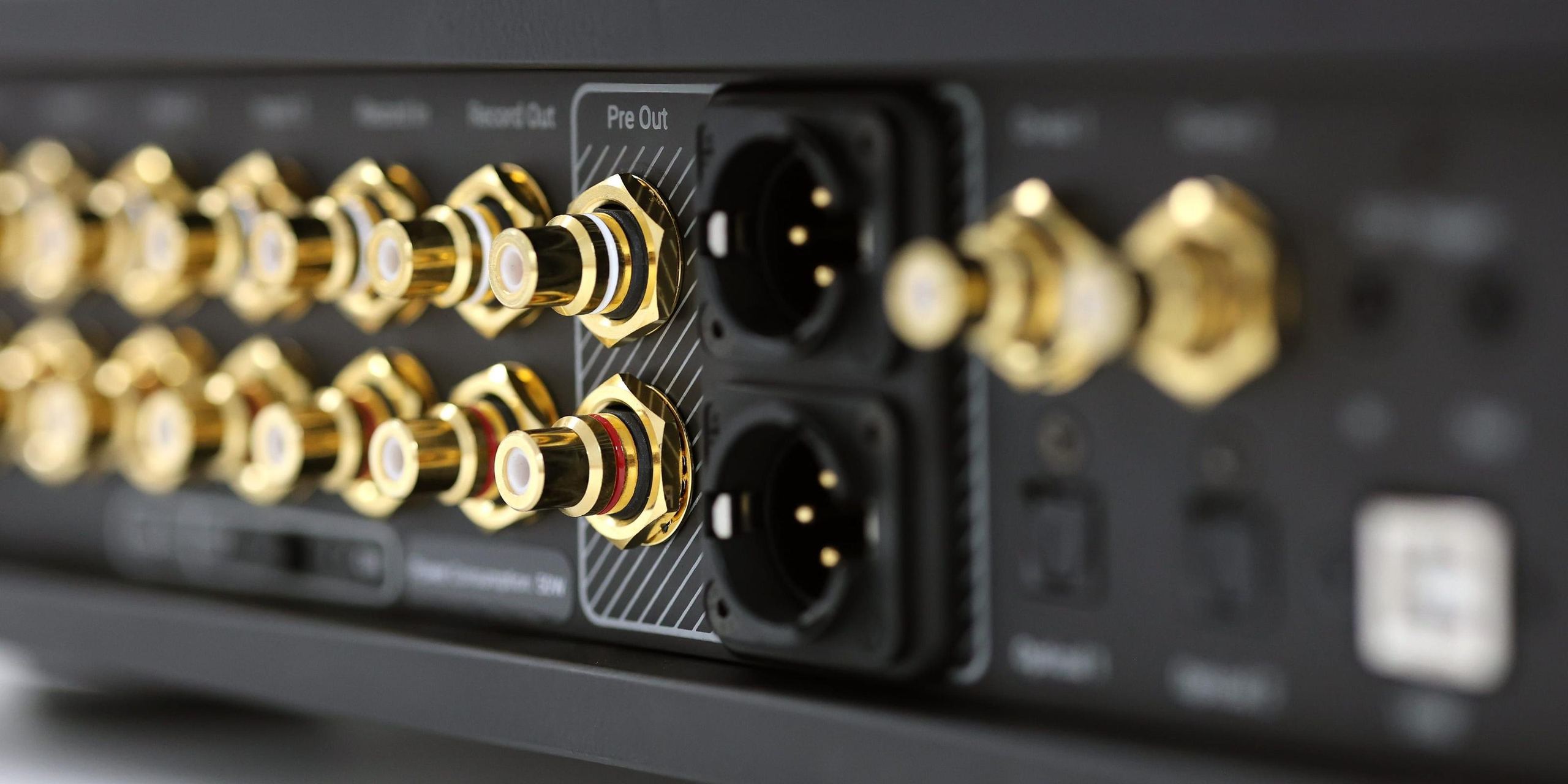
The Mercury offers five RCA line inputs plus one balanced XLR input, as well as a recording loop. On the digital side: two coaxial inputs, two optical inputs, and one USB Type-B. Outputs include RCA and XLR pairs.
The absence of a phono preamp may be surprising for a manufacturer that built its reputation on turntables. According to designer Ashton Wagner, there was not enough room in the enclosure to integrate a phono preamp of sufficient quality without considerably increasing the dimensions. Rega offers the external Aura MC for this function.
RCA unbalanced connections are recommended by Rega for optimal sound quality in a domestic environment. The Mercury’s internal circuits are unbalanced; the XLR inputs and outputs therefore require additional circuitry that adds a slight amount of noise and distortion to the signal. Balanced connections remain available for installations that need them, especially in the case of long cable runs.
Interface and everyday ergonomics
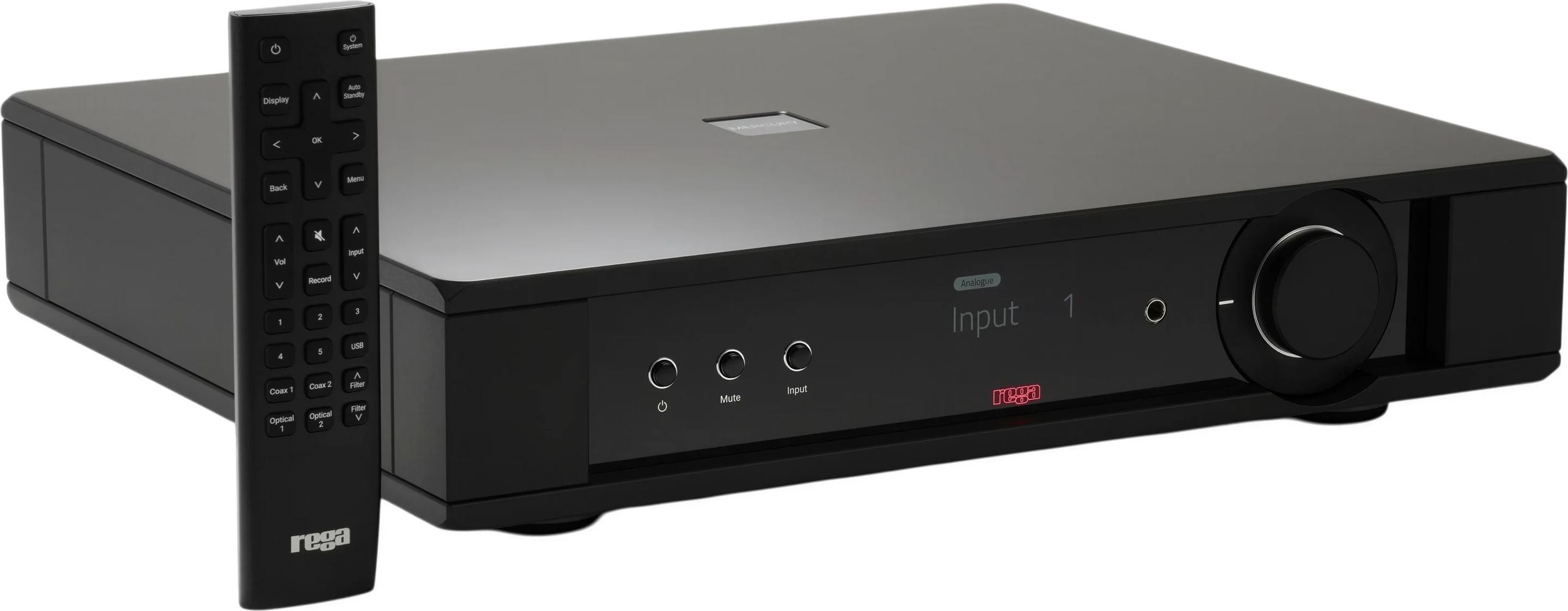
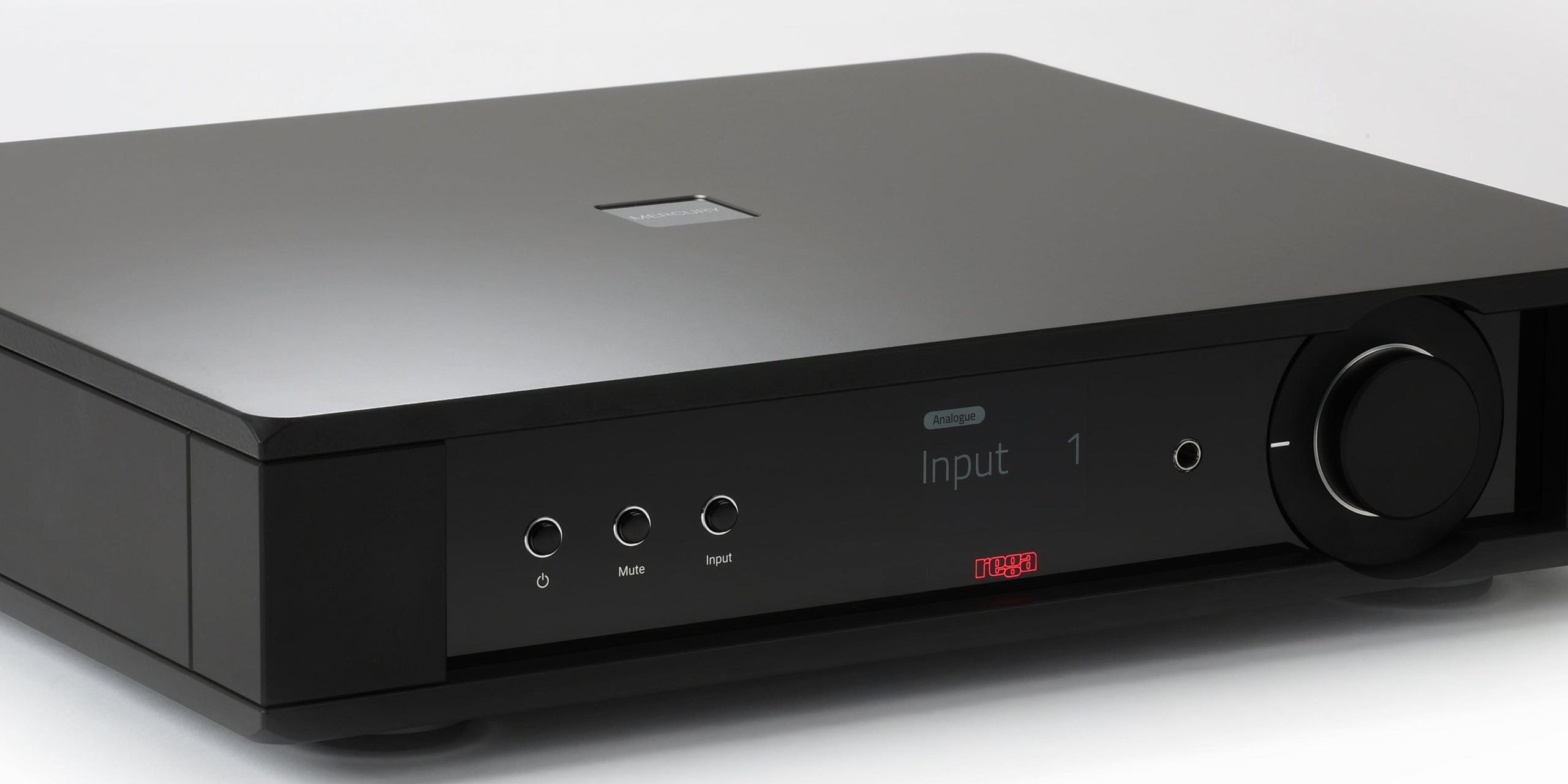
The color IPS display shows the selected source and volume level. Its backlighting uses an adjustable linear DC power supply to avoid introducing noise into the circuit. The backlit Orbit remote control with motion detector allows control of volume and source selection.
Automatic standby mode can be disabled via the menus, a useful option for systems that need to remain powered on. The microprocessor-controlled soft start limits inrush current to the transformer.
Documentation
French
Technical Specifications
Design and Architecture
- High-end preamplifier designed for ultra-low noise floor
- Fully discrete and balanced signal path architecture
- Design derived from nearly 40 years of Rega expertise in analogue amplification
- Audiophile-grade components
- Polypropylene capacitors
- High-quality relays
- Alps Blue Velvet RK27 volume control
- Ultra-low noise FET transistor analogue stages (Linear Systems)
Power Supply
- Oversized toroidal transformer
- Discrete linear power supply with symmetrical regulation
- Low-noise voltage references and dedicated current generators
- Supply voltage 60% higher than average to maximise dynamics
- Independent power supply stages for each section
Digital Section (DAC)
- Dual Wolfson DACs mounted in parallel
- Digital inputs: coaxial S/PDIF, optical, asynchronous USB
- Galvanically isolated USB with dedicated power supply and advanced re-clocking
- Dual high-stability oscillator for jitter reduction
- Supported formats
- PCM up to 32-bit / 192 kHz
- DSD64 (DoP)
Analogue Section and Preamplification
- Common-base balanced circuit for maximum transparency
- Extended frequency response and high linearity
- Analogue stages optimised to preserve micro-details and dynamics
Headphone Amplifier
- Design derived from the Rega Solis power amplifier
- High drive capability (high voltage and current)
- Compatible with low and high impedance headphones
- Discrete balanced architecture operation
Connectivity
- Digital inputs: coaxial, optical, USB
- Preamplifier outputs
- RCA (unbalanced)
- XLR (balanced)
- High-power headphone output
- Backlit Orbit remote control
Interface and Features
- Colour IPS display with noise-free linear backlighting
- Automatic standby mode after 20 minutes without signal
- Microprocessor-controlled soft start
- Comprehensive protection circuits (outputs and power supply)
Audio Performance
- Preamplifier
- THD+N: 0.001% at 1 kHz (2 V RCA / 4 V XLR)
- Frequency response: 8 Hz – 28 kHz (-0.5 dB)
- DAC
- THD+N: 0.0045% at 1 kHz (0 dBFS)
- Headphone amplifier
- 33 Ω: 9 V / 2.5 W at 0.1% THD+N
- 240 Ω: 10.85 V / 0.5 W at 0.1% THD+N
- THD+N: 0.0035% at 1 kHz
Power Consumption and Dimensions
- Power consumption: 50 W
- Standby: 0.4 W
- Dimensions (W x H x D): 435 x 97 x 380 mm
- Weight: 14 kg
Frequently asked questions
Can the Mercury be used with a power amplifier from another brand?
The Mercury works with any power amplifier. Rega has optimized the Mercury/Solis pairing for maximum synergy, but the preamp outputs (RCA and XLR) are compatible with all power amplifiers. Rega also mentions compatibility with its Aethos integrated amplifier used in power amp mode.
What audio formats are supported by the integrated DAC?
The DAC accepts PCM from 16 to 32 bits with sampling rates from 44.1 kHz to 192 kHz (depending on the input), and DSD64 in DoP mode via USB. DSD128 and higher formats are not supported. For the majority of files available on streaming and download platforms, these limits are not a problem.
Are XLR inputs preferable to RCA?
Rega recommends unbalanced connections (RCA) for standard domestic installations. The Mercury’s internal circuit is unbalanced, and the XLR inputs/outputs require additional conversion circuitry. XLR connections remain useful for long cable runs or in environments where electromagnetic interference is problematic.
Which headphones are compatible with the headphone output?
The 6.3 mm jack headphone output can drive headphones from 33 Ω to 240 Ω and beyond. Current-hungry planar magnetic headphones such as low-impedance audiophile models work properly. The available power (2.5 W at 33 Ω) exceeds what most preamps with a built-in headphone output offer.
- Eco-contribution included in the sale price.