STAX SR-009D


Overview
Discontinued from the STAX catalogue after the arrival of the SR-X9000, the SR-009 released in 2011 defined the following decade with its transparency and response speed, to the point that its price on the secondary market regularly exceeded its launch price. The Japanese manufacturer responds to this persistent demand with the SR-009D, a faithful reissue of the original, complemented by a few practical improvements that users had long been waiting for.
The Return of a Reference Model
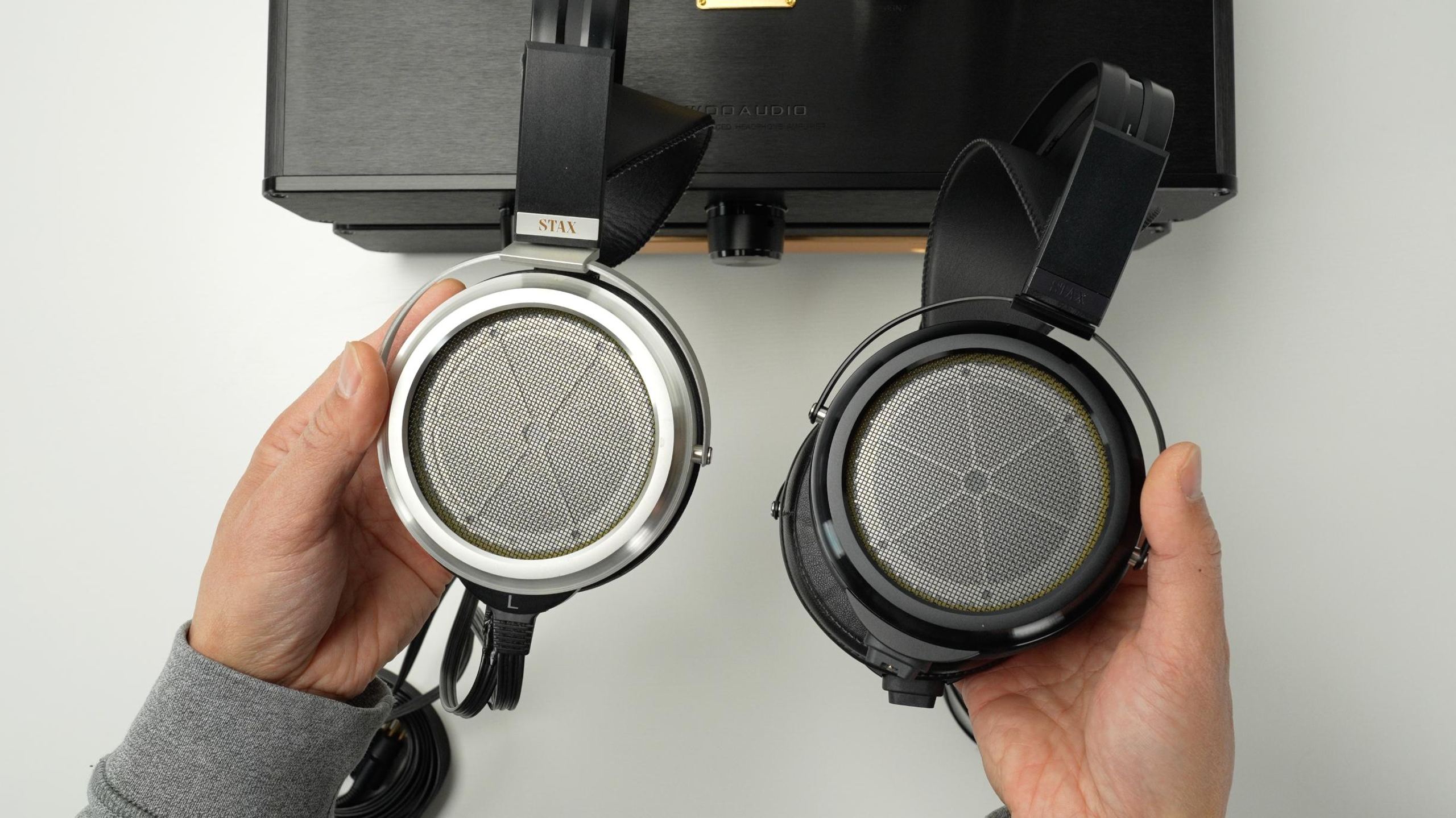
Founded in 1938 in Japan, STAX built its reputation on electrostatic headphones, which it prefers to call “Earspeakers.” The SR-009, launched in 2011, introduced the MLER electrode technology that has since been carried over to current high-end models such as the SR-X9000. The SR-009D retains the design of the original model with a few targeted refinements. In the current lineup, it occupies the entry point into the sonic signature of the higher models, while remaining technically very close to the headphone that established that signature.
The MLER Transducer in Detail
MLER stands for Multi-Layer Electrode. Three stainless steel plates, etched by photoengraving, are assembled by vacuum thermal diffusion bonding — without any adhesive — to form an atomic-scale bond. The result is a fixed electrode with very tightly controlled flatness and minimal parasitic resonances. This flatness directly determines the cleanliness of reproduction: the electrostatic membrane, just a few microns thick, vibrates against a perfectly uniform surface. The SR-009D returns to the stainless steel of the original model. The SR-009S from 2018 uses gold-plated electrodes (MLER2 variant), with a treble that is reputed to be smoother. The two headphones are thus distinguished by a slightly different sonic signature, despite their obvious technical kinship.
Push-Pull Design and Open Acoustics
The transducer operates in push-pull: the membrane is pulled and pushed by two electrodes in opposite phase, which limits even-order harmonic distortion and promotes a very fast transient response. The large circular shape of the diaphragm contributes to a homogeneous sound dispersion across the entire transducer surface. The open housing, with no external isolation, opens up the soundstage and avoids coloration caused by internal reflections. The stated frequency response extends from 5 Hz to 42 kHz, impedance reaches 145 kΩ, and sensitivity is 101 dB. The bias voltage remains fixed at 580 V DC, the brand’s Pro Bias standard for several decades.
A Cable That Is Finally Detachable
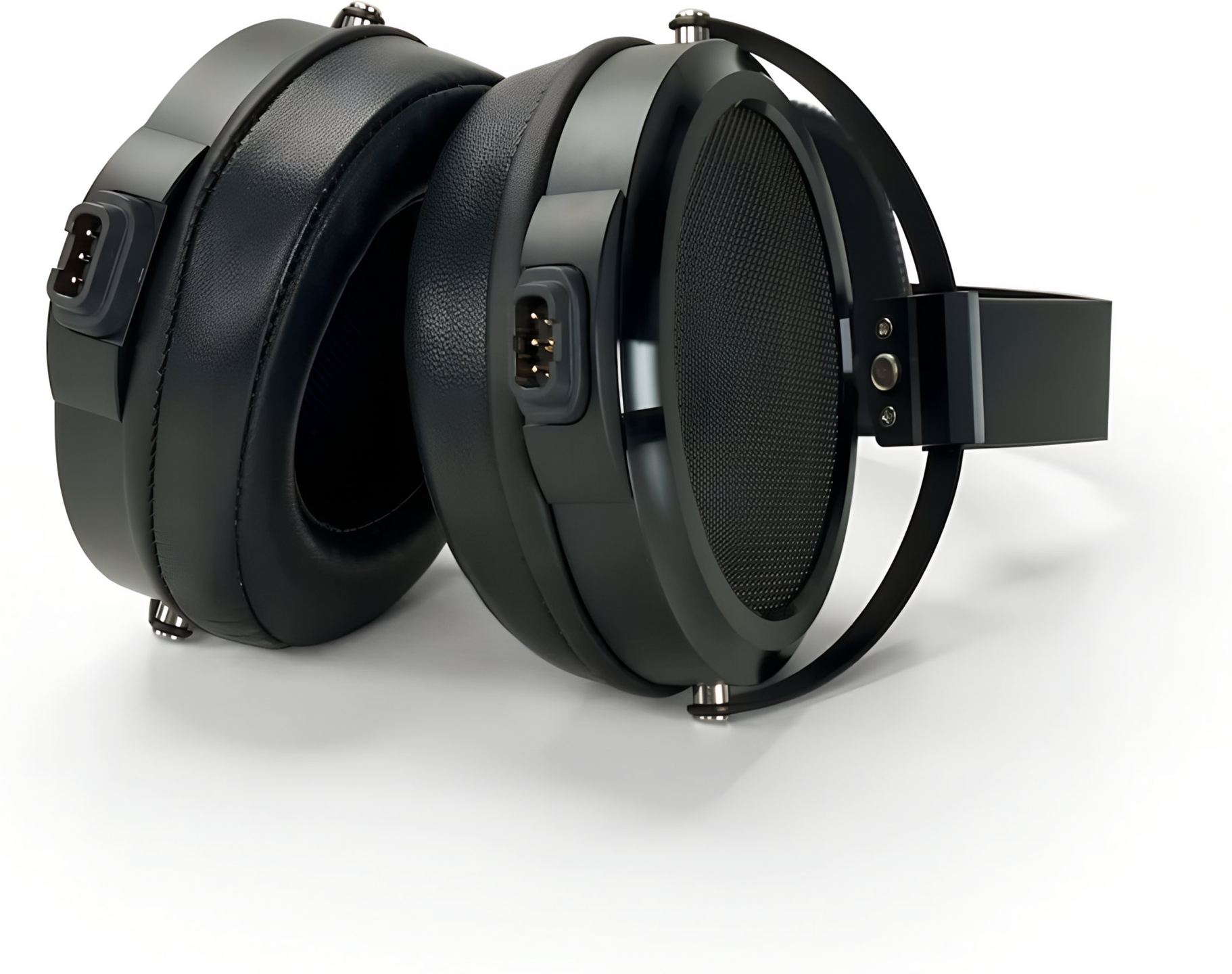
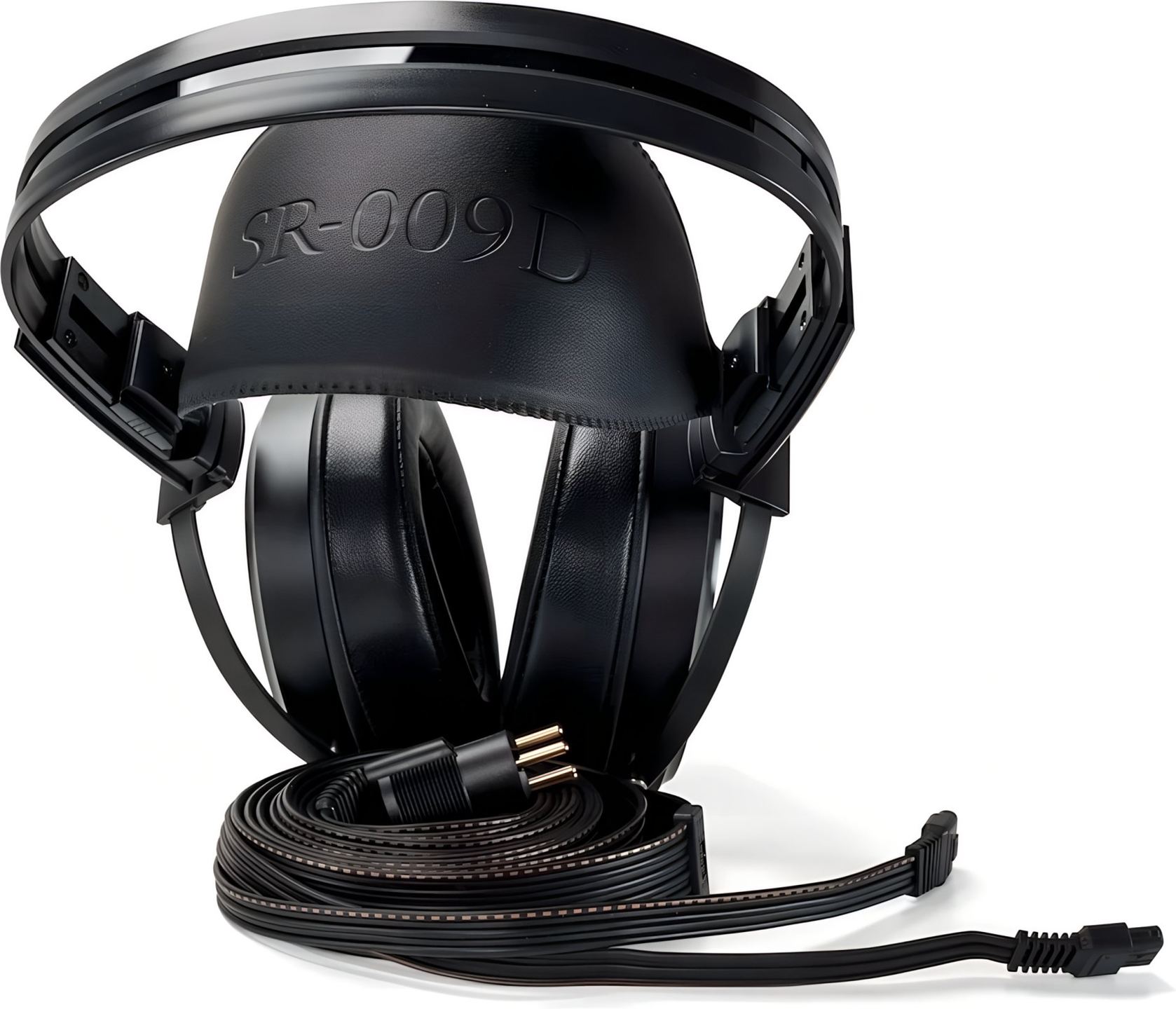
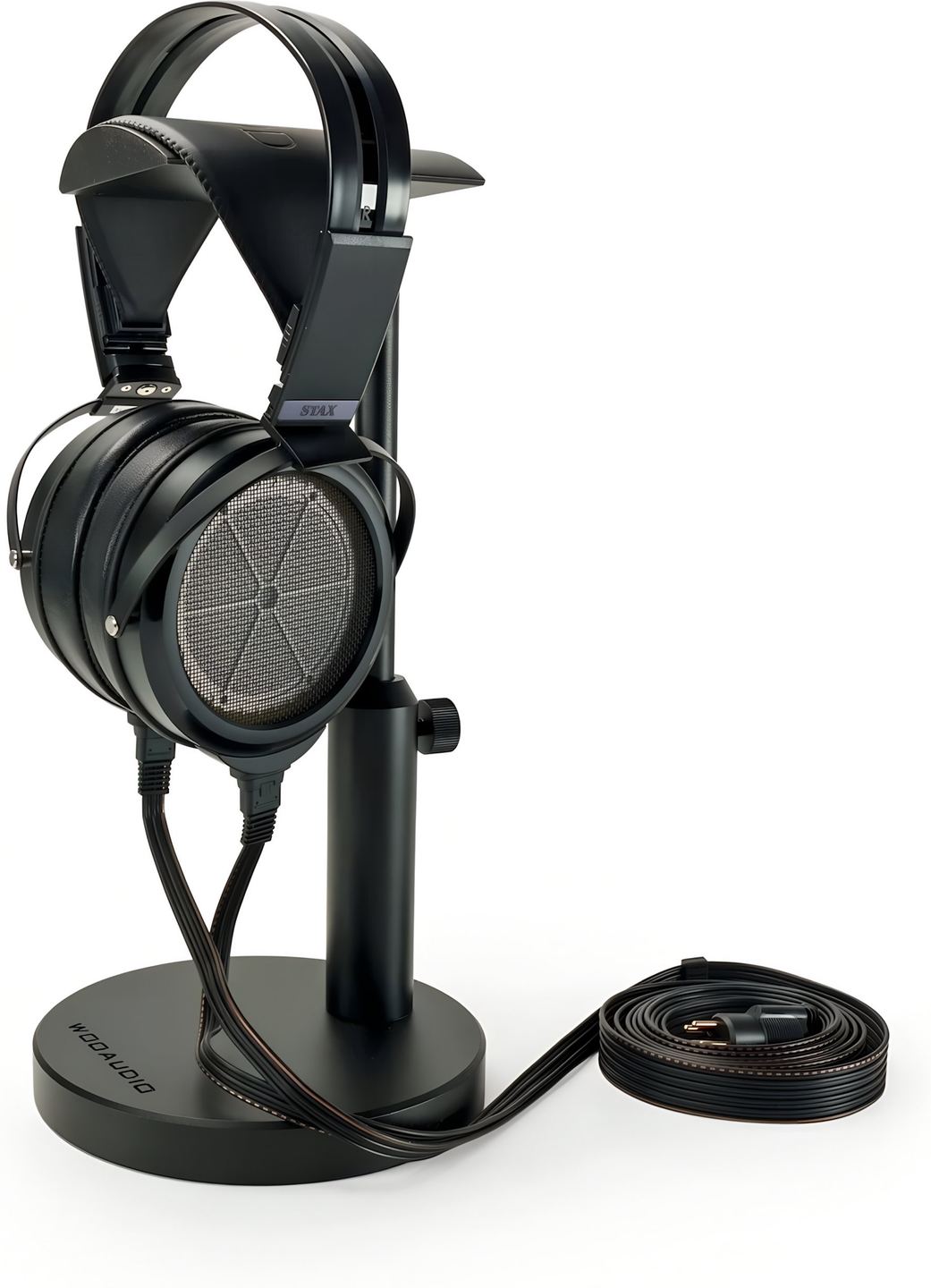
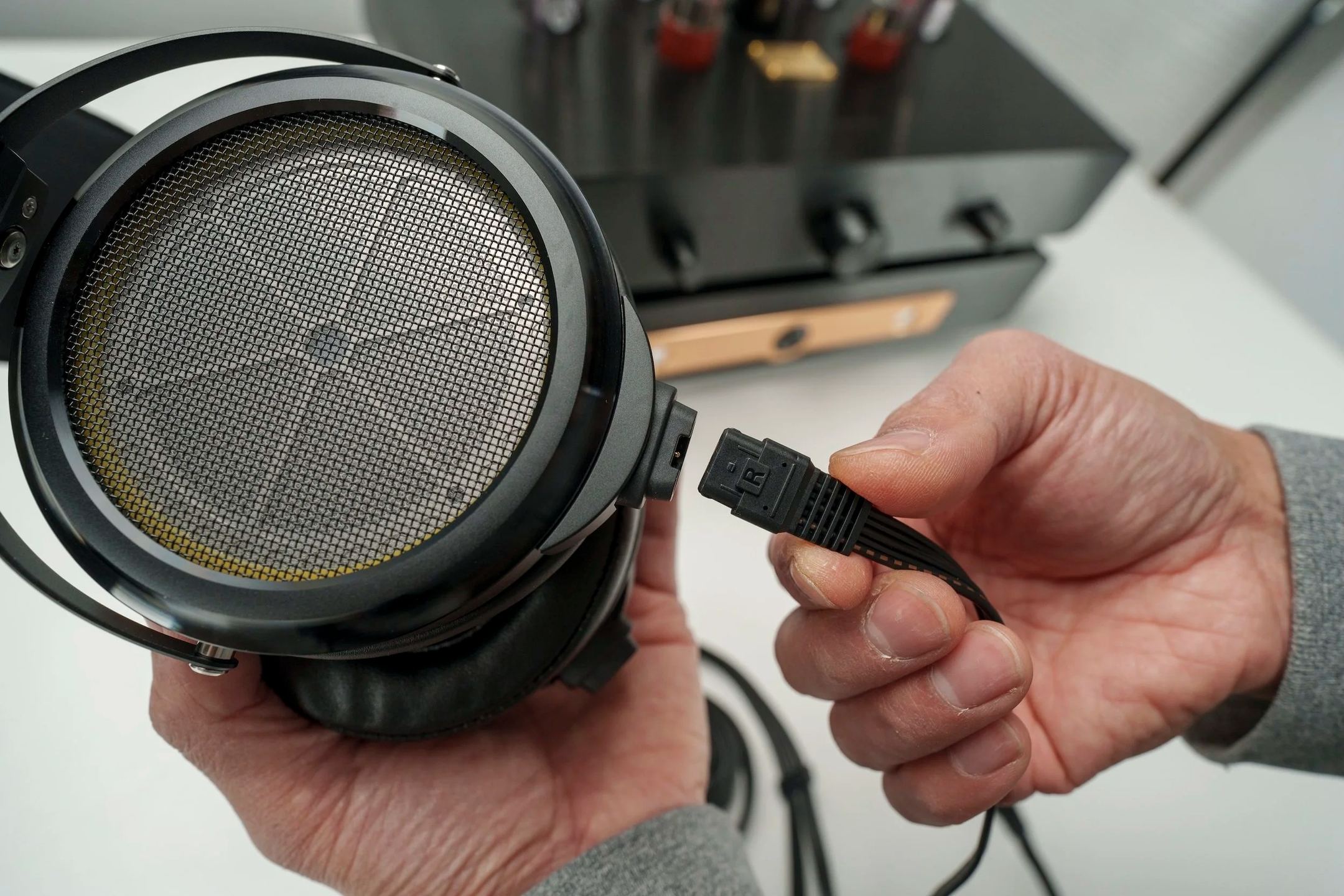
On the original SR-009, the cable was permanently attached to the housing, meaning any wear required a costly repair. The SR-009D adopts a detachable cable, now standard across the current lineup. The supplied cable is a six-strand parallel OFC copper design with low capacitance, measuring 2.5 metres in length. Low capacitance is an important specification in electrostatics: an overly capacitive cable unnecessarily loads the amplifier and clips dynamics in the upper frequency range. The detachable design also opens the door to premium third-party cables and simplifies maintenance in the event of an incident.
Comfort, Finish, and Accessories
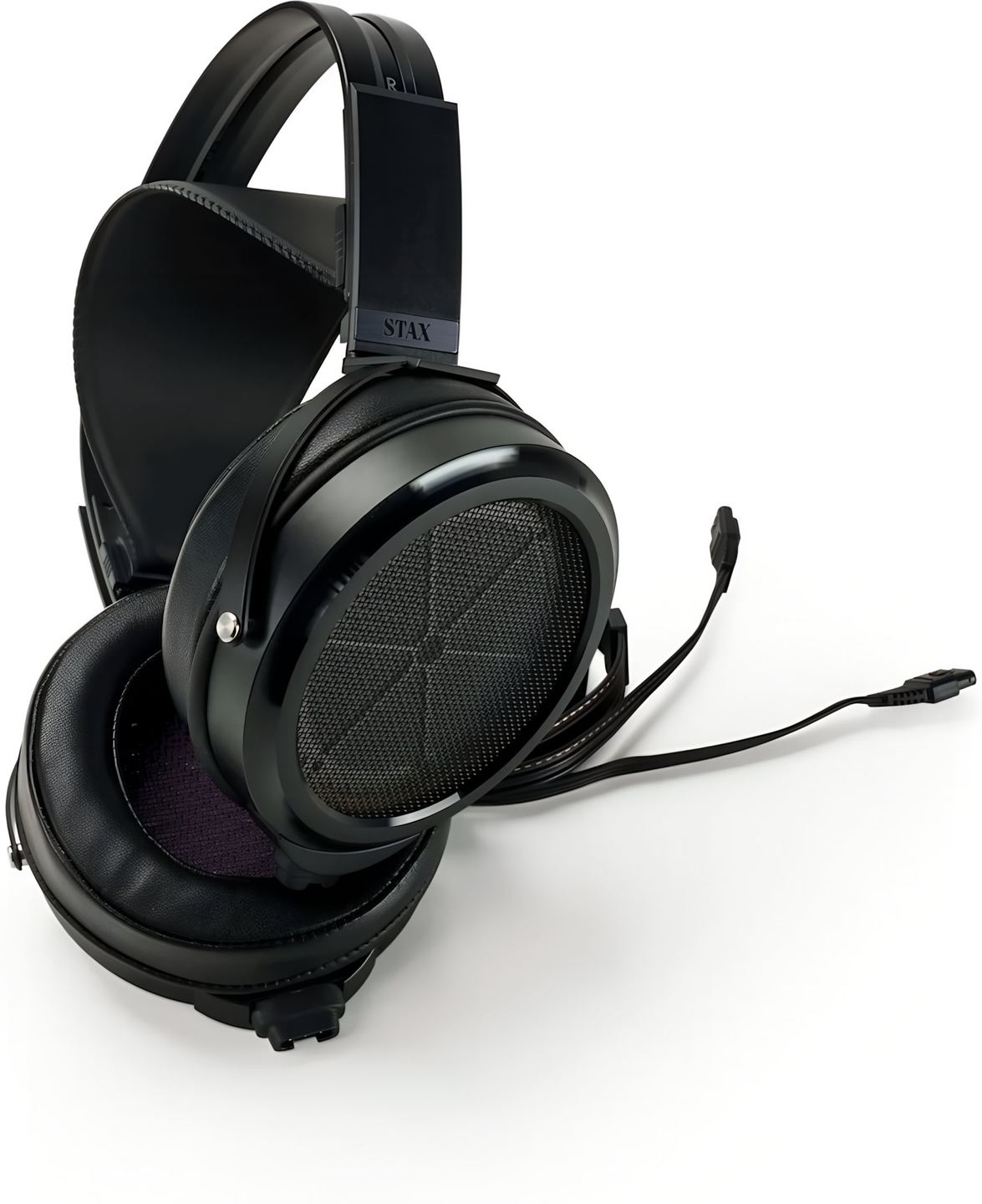
Weight remains modest at 452 g without the cable, a figure comparable to that of other electrostatic models from the brand, whose design requires no heavy magnets. The earpads combine genuine sheepskin leather on the skin-contact area with synthetic leather on the outer section, a useful compromise for breathability. The headband is adjustable in notched increments, ensuring reproducible positioning from one listening session to the next. The housing colour has been revised compared to the glossy black of the original SR-009, though the brand has not communicated the exact colour. The headphone is delivered in an injection-moulded aluminium case, lighter than the wooden box of the SR-009, and more resistant to both impacts and dust.
The STAX Amplifier: A Prerequisite
An electrostatic headphone cannot be plugged into a standard headphone output. The SR-009D requires a dedicated amplifier in the five-pin Pro Bias format, capable of supplying the 580 V bias voltage and the audio signal at high voltage. STAX offers several compatible amplifiers, both solid-state and tube-based, sold separately. A number of third-party manufacturers also offer amplifiers that comply with this standard. Listening takes place in a stationary setting, at a dedicated station, with an audio source and an electrostatic amplifier. The total cost of a complete system therefore significantly exceeds the price of the headphone alone — a point to factor in before making a purchase.
Positioning and Listening Contexts
The SR-009D sits below the current top-of-the-range models, such as the SR-X9000, while sharing MLER technology with them. It is the most accessible option for entering the 009 lineage when a compatible electrostatic amplifier is already in place. The headphone is most at home during attentive indoor listening, with well-produced recordings: acoustic music, classical, jazz, solo vocals, or any musical material where the transient speed of the electrostatic transducer reveals micro-details that other technologies struggle to reproduce. Fans of physical, visceral bass will find satisfaction with this type of transducer, though the sensation remains closer to a loudspeaker than a dynamic headphone in that register.
Technical specifications
Drivers and acoustic performance
- Type: push-pull electrostatic headphones
- Design: open (open-air)
- Driver shape: large circular
- Frequency response: 5 Hz – 42 kHz
- Electrostatic capacity: 110 pF
- Impedance: 145 kΩ
- Sensitivity: 101 dB
- Bias voltage: 580 V DC
Integrated technologies
- MLER technology (Multi-Layer Electrode)
- Vacuum thermal diffusion process fusing the metal electrodes at the atomic level
- Perfect electrode flatness
- Drastic reduction of resonances
- Optimal transmission of sound waves
- Exceptional level of detail and transparency
- Push-pull electrostatic architecture
- Extremely faithful signal reproduction
- Unmatched response speed
- Near-total absence of distortion
- Large circular diaphragm for better sound diffusion
- Open design for a wide and natural soundstage
Cable
- Type: OFC (oxygen-free copper)
- Structure: parallel 6-strand, low capacitance
- Length: 2.5 m
- Connector: STAX-specific (dedicated amplifier required)
- Detachable design
- Compatibility with high-end cables
- Easier maintenance in case of wear
Design and comfort
- Earpads
- Skin contact: genuine leather (sheepskin)
- Structure: synthetic leather
- Weight: 452 g (without cable)
- Finish: new shade and optimized structure
- Improved ergonomics compared with the previous model
Compatibility
- Requires a STAX electrostatic amplifier (sold separately)
Frequently asked questions
Can the SR-009D work with a standard headphone output?
No. The five-pin Pro Bias connector, the high bias voltage (580 V DC), and the very nature of the transducer all require a dedicated electrostatic amplifier. No reliable adapter exists to bypass this requirement using a standard headphone or line output.
Which STAX amplifiers are compatible?
STAX amplifiers with the Pro Bias standard accept the SR-009D, from entry-level solid-state references such as the SRM-D10 II to tube models like the SRM-T8000. The 101 dB sensitivity presents no particular challenge for amplification, and older brand electronics retaining the Pro Bias connector remain usable.
What is the practical difference compared to the SR-009S?
The SR-009S from 2018 uses gold-plated MLER2 electrodes, aimed at further reducing resonances and softening the treble. The SR-009D returns to the stainless steel of the original SR-009, with a signature that is generally more taut and more dynamic. Both headphones benefit, however, from the detachable cable that was absent from the original SR-009.
- Eco-contribution included in the sale price.
- GTIN / EAN: 4996476001091