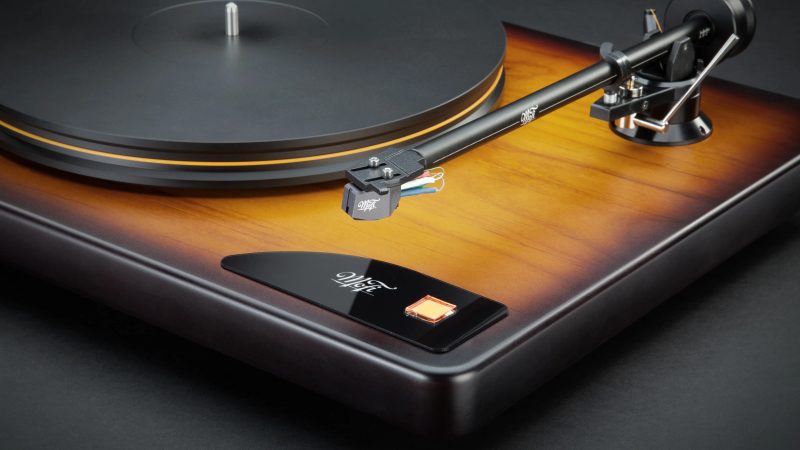
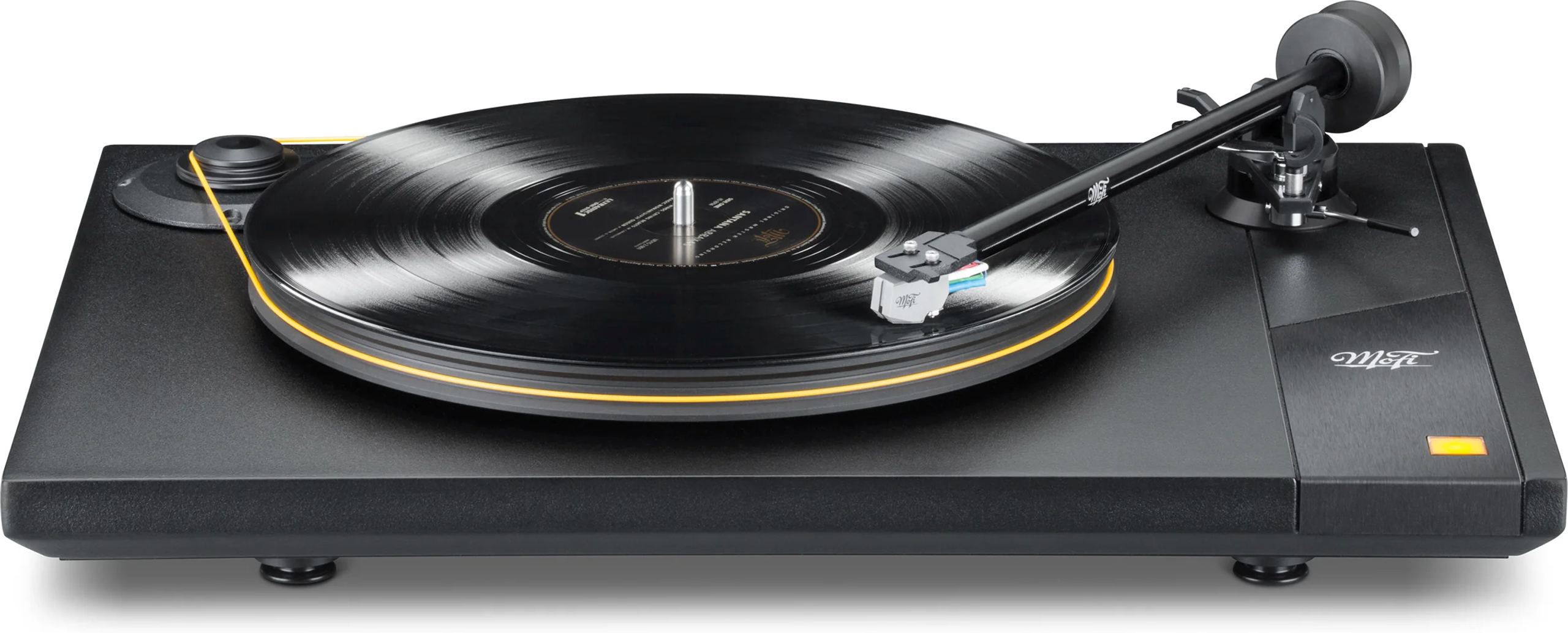
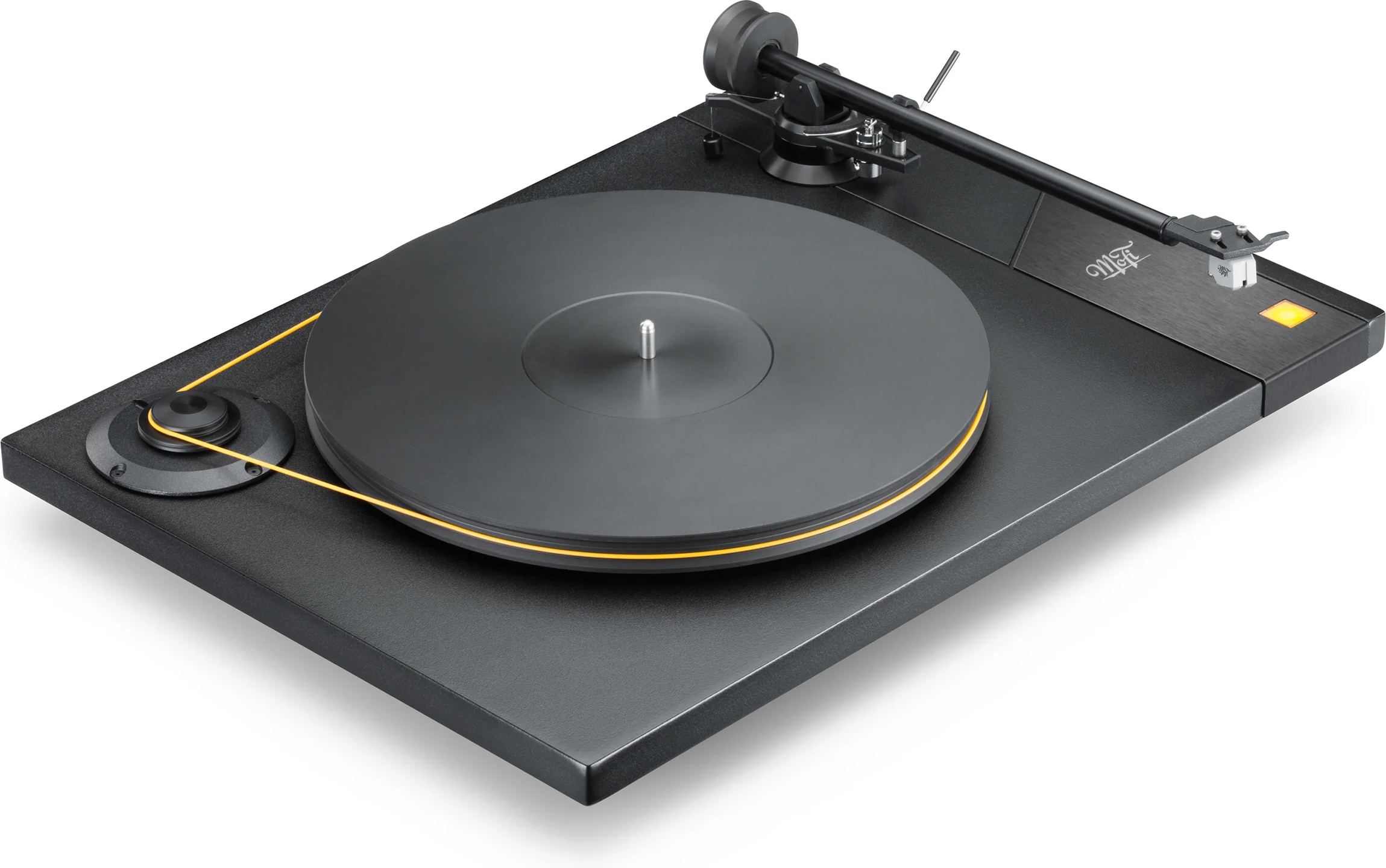
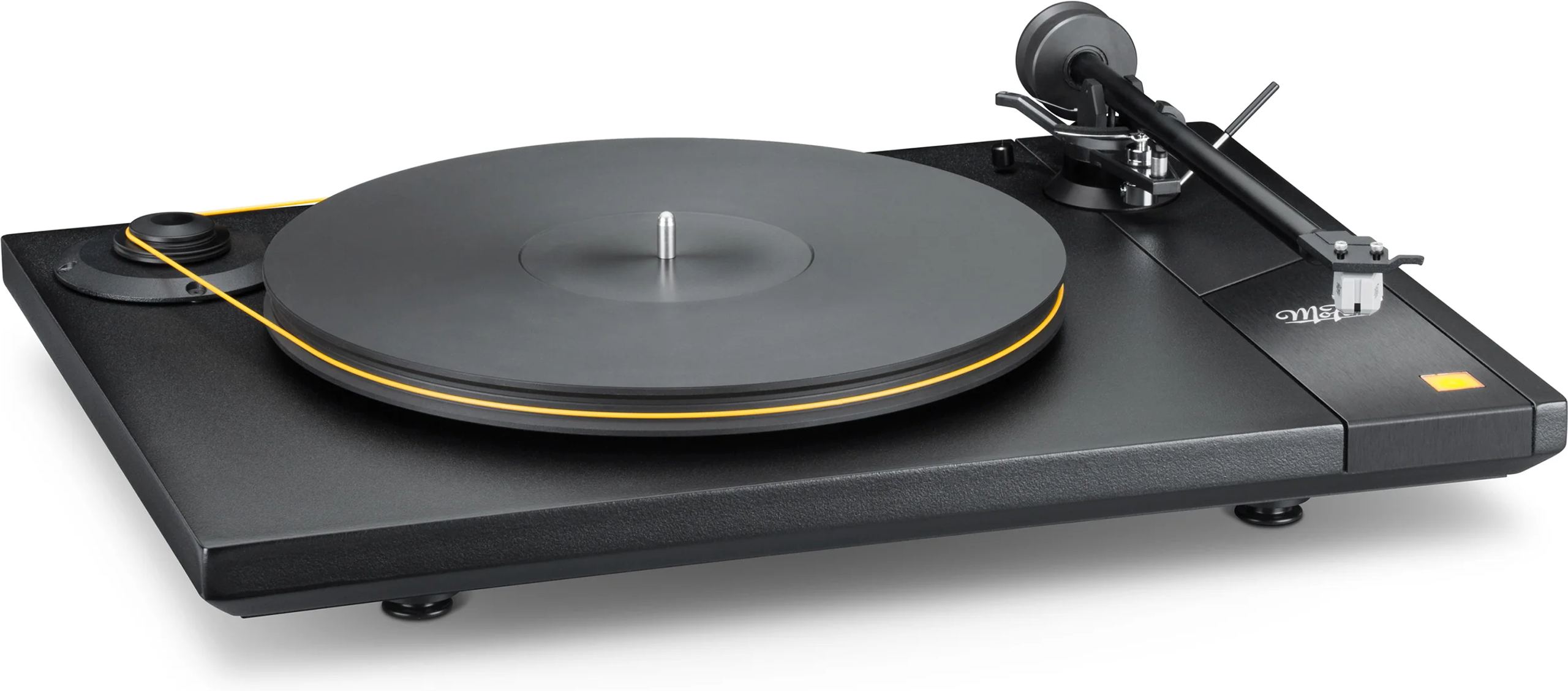
Mofi Electronics StudioDeck
Buy as a bundle and save
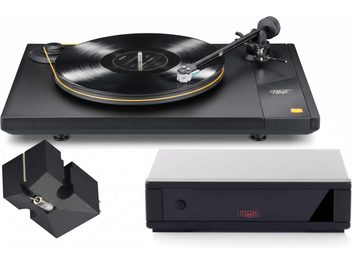
- Mofi Electronics StudioDeck
- Denon DL-103
- Rega Fono MC MK4 black
Overview
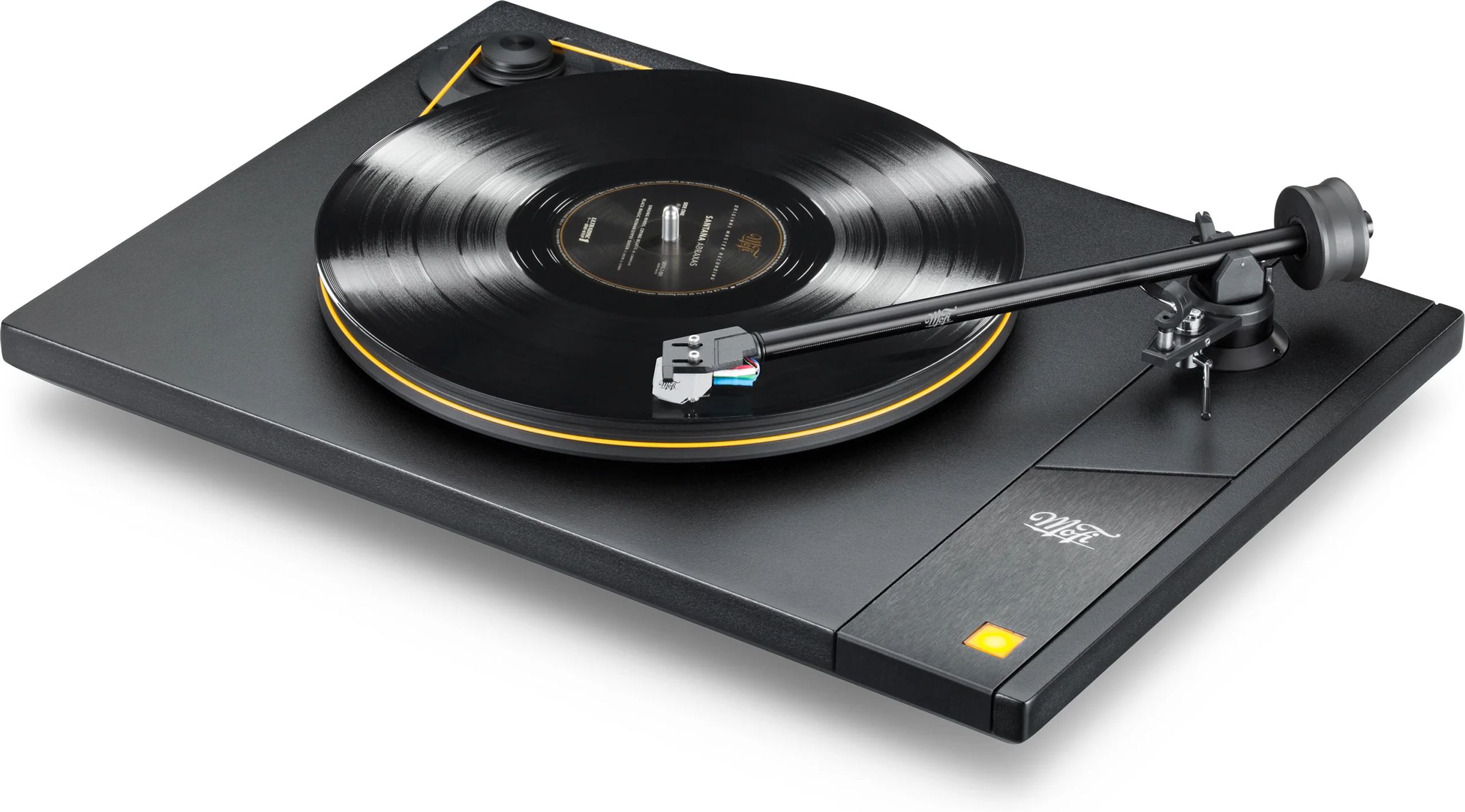
When an audio pressing label starts making turntables, the result can range from a simple badge stuck on a generic product to deep engineering work. MoFi Electronics has clearly chosen the latter path. The StudioDeck, the first model in the range, was developed over two years with Allen Perkins, founder of Spiral Groove, whose turntables sell in the five-figure range. The design brief: bring the requirements of the Mobile Fidelity Sound Lab mastering studio into a home audio component.
A design engineered against vibrations
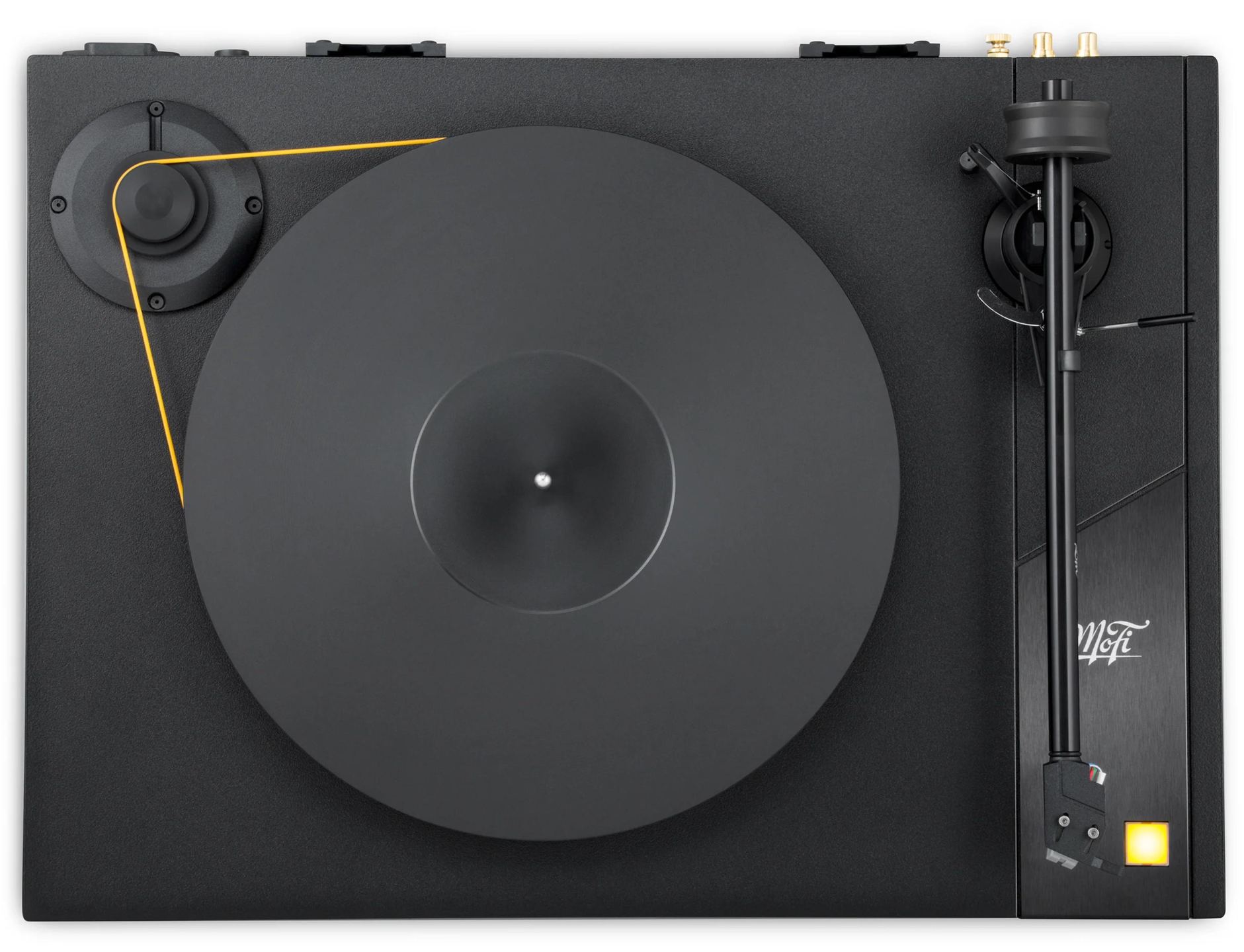
The fight against unwanted vibrations shapes the entire design of the StudioDeck. The chassis sits on a 35 mm thick MDF base, topped with a bonded brushed aluminum plate. This combination of materials works through constrained-layer damping: the MDF absorbs resonances while the aluminum adds mass and rigidity. The result is a plinth that does not color the signal.
The four feet deserve special attention. They were developed by Michael Latvis, chief engineer at Harmonic Resolution Systems (HRS), a company specializing in vibration isolation for audio, aviation, and defense. Each foot incorporates a calibrated spring system: the rear feet, which are firmer, offer travel of about 1 mm, while the front ones are softer with about 5 mm of travel. This mechanical decoupling isolates the turntable from vibrations transmitted through the floor or the furniture.
The Delrin platter and its inverted bearing
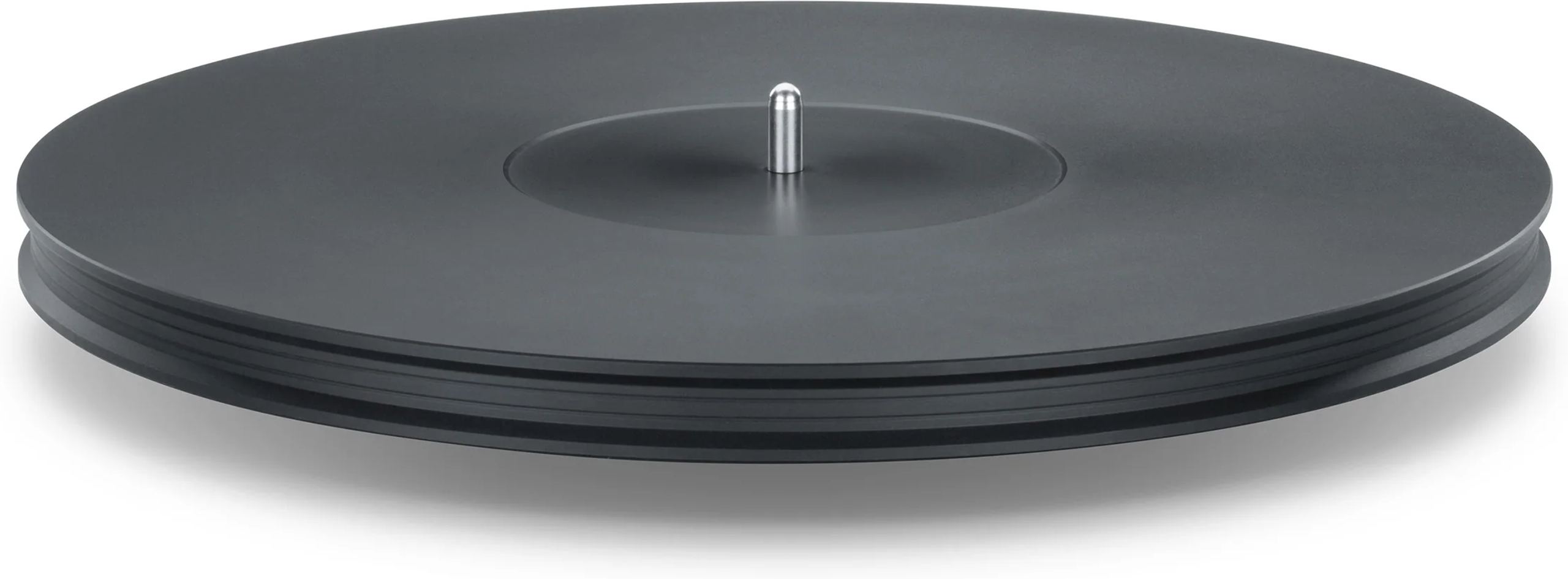
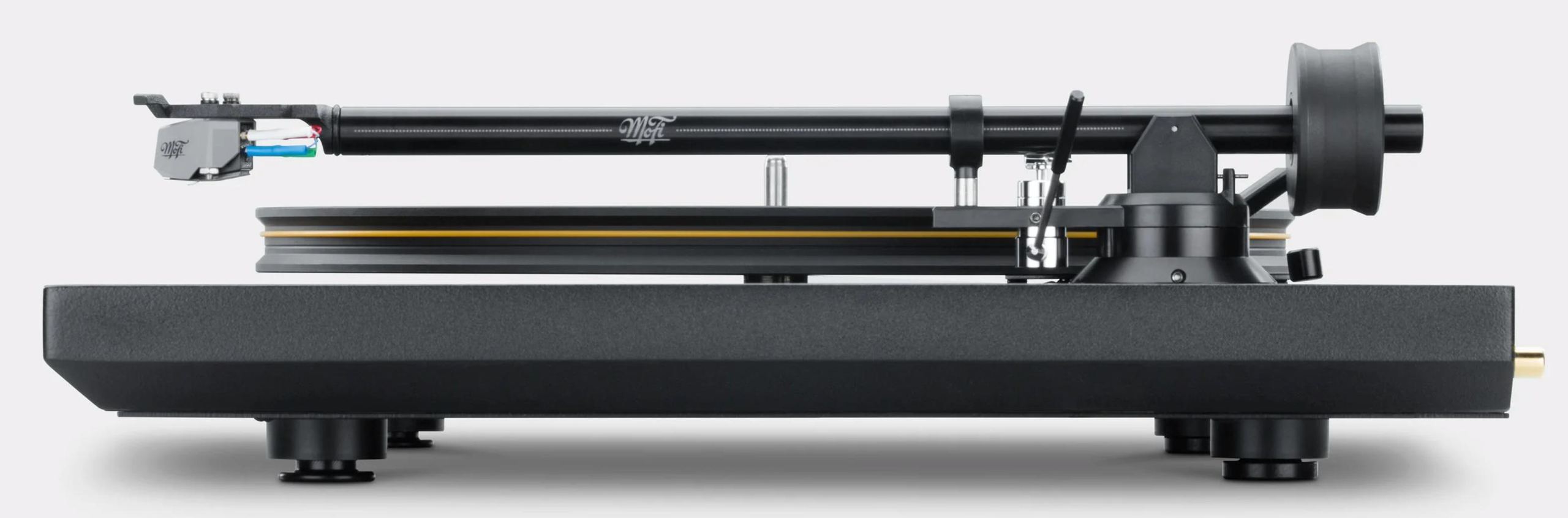
The platter is machined from a block of Delrin (polyoxymethylene), an engineering polymer developed by DuPont. At 19 mm thick and weighing 1.76 kg, it offers higher density than MDF and a characteristic that interests turntable designers: its mechanical impedance is close to that of vinyl. The record placed on the platter thus forms a close acoustic coupling, which reduces unwanted micro-vibrations at the groove level.
The bearing is of the inverted type: a fixed hardened steel shaft enters a bronze sleeve with a Teflon thrust plate. This configuration, found on much more expensive turntables, ensures stable and silent rotation. On the UltraDeck, the higher model in the range, the Teflon thrust plate is replaced with sapphire, but the principle remains the same.
A 10-inch tonearm, longer than the norm
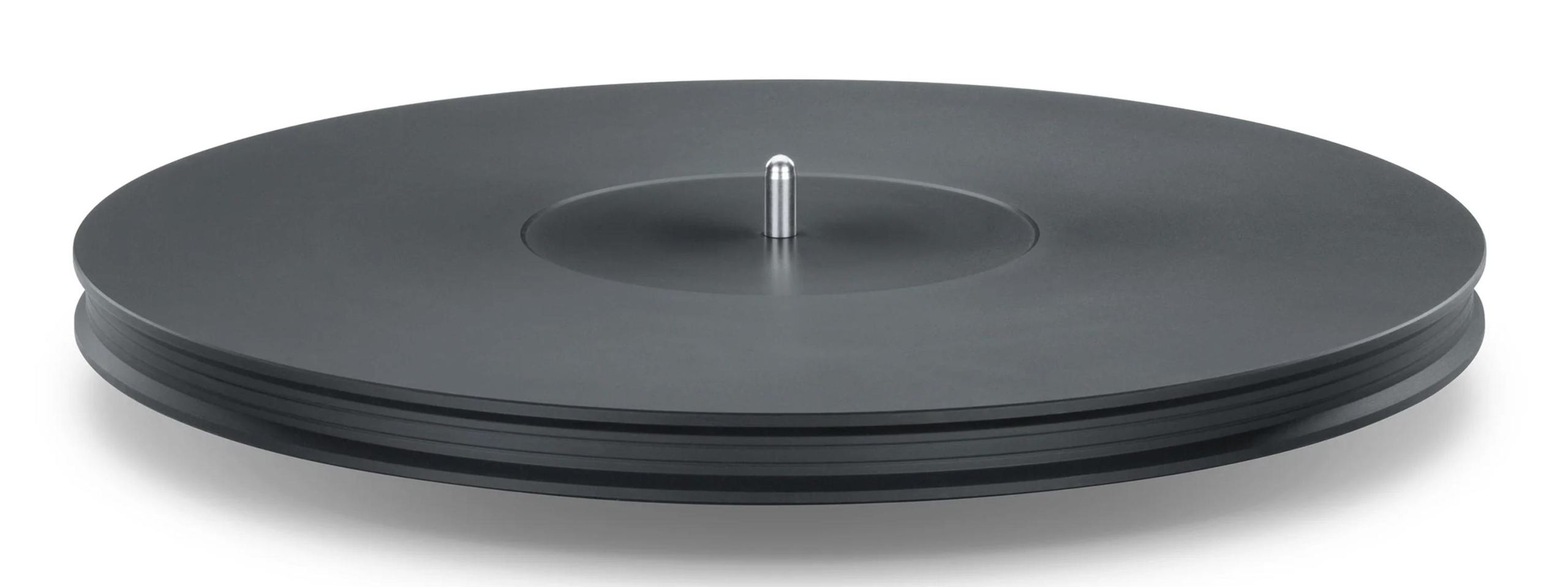
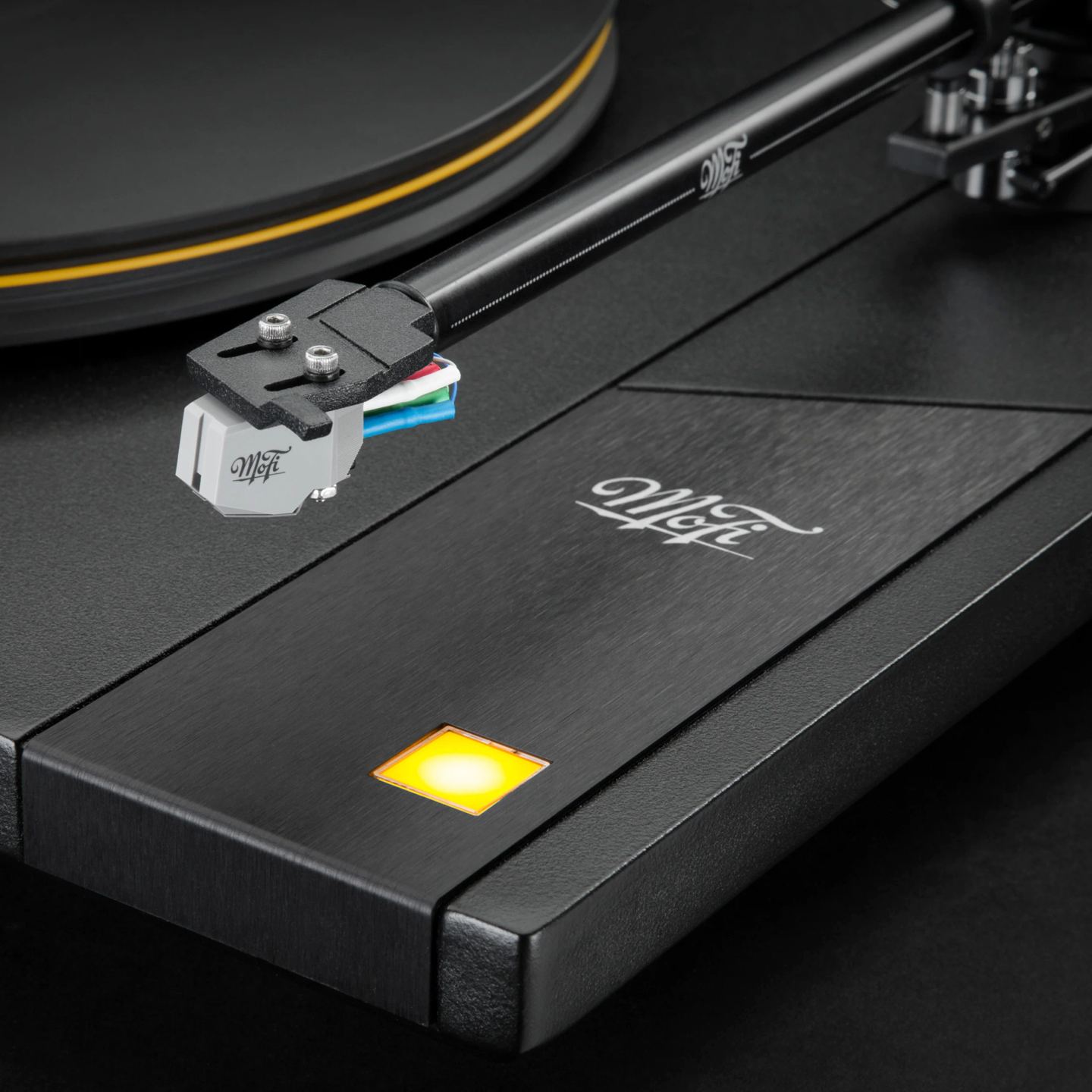
Most turntables in this price range use 9-inch tonearms. MoFi chose a straight 10-inch (25.4 cm) aluminum tonearm, designed and manufactured in the United States. The benefit of a longer tonearm is geometric: by increasing the distance between the pivot and the stylus, tangential tracking error is reduced. The trade-off is on the effective mass side, which reaches 35 g (± 0.5 g). This is a heavy tonearm, which works best with low- to medium-compliance cartridges, between 5 and 10 g.
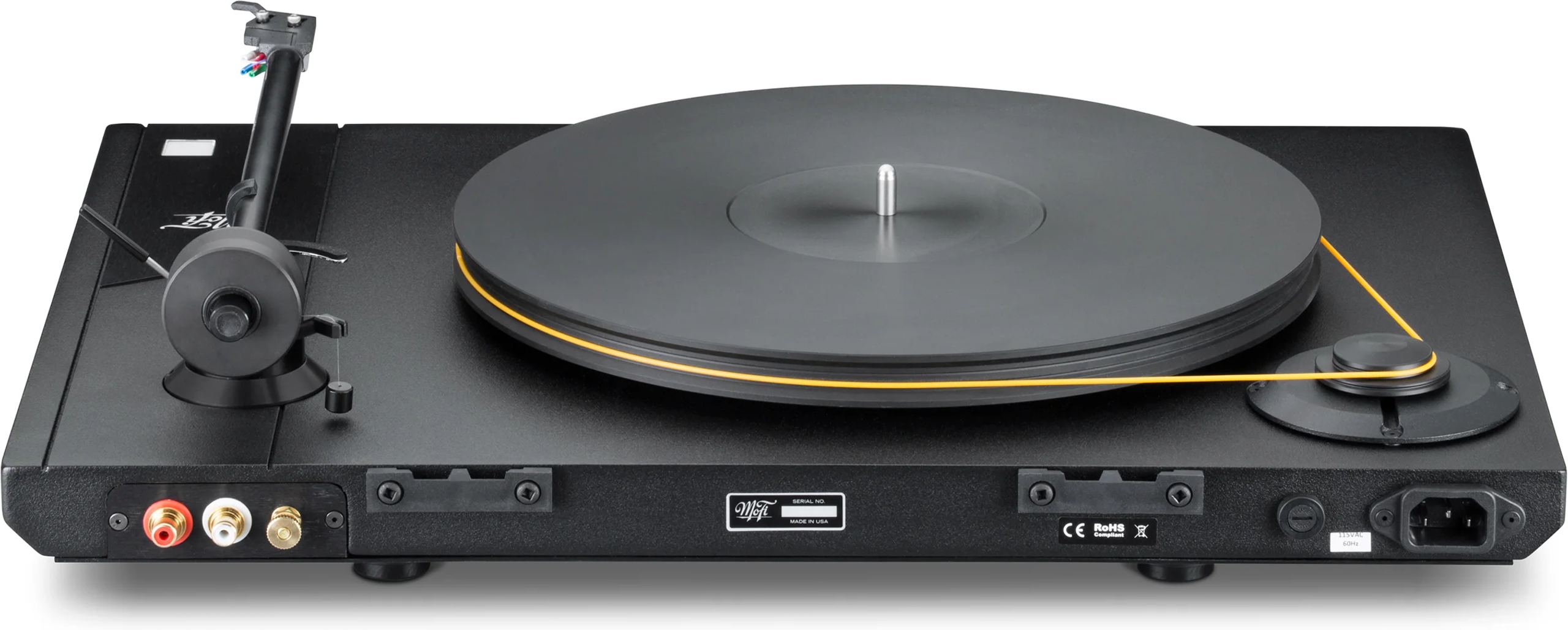
The tonearm pivots on gimbal bearings and offers adjustments for tracking force, anti-skating, VTA (vertical tracking angle), and azimuth. The internal wiring uses oxygen-free copper (OFC). Output is via gold-plated RCA connectors at the rear of the turntable: the user chooses their own interconnect cables, which leaves room for upgrades.
Decoupled motor drive and belt drive
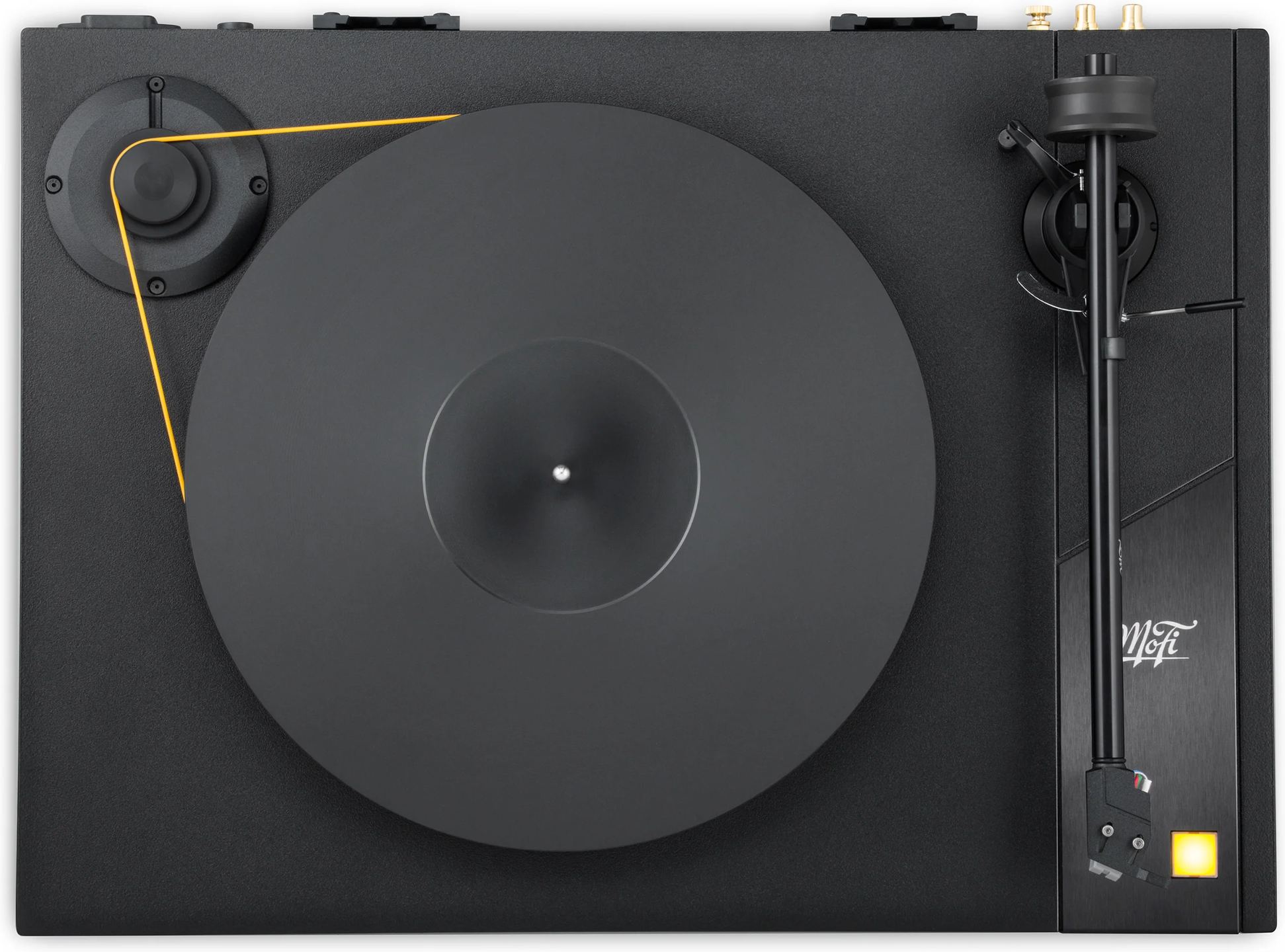
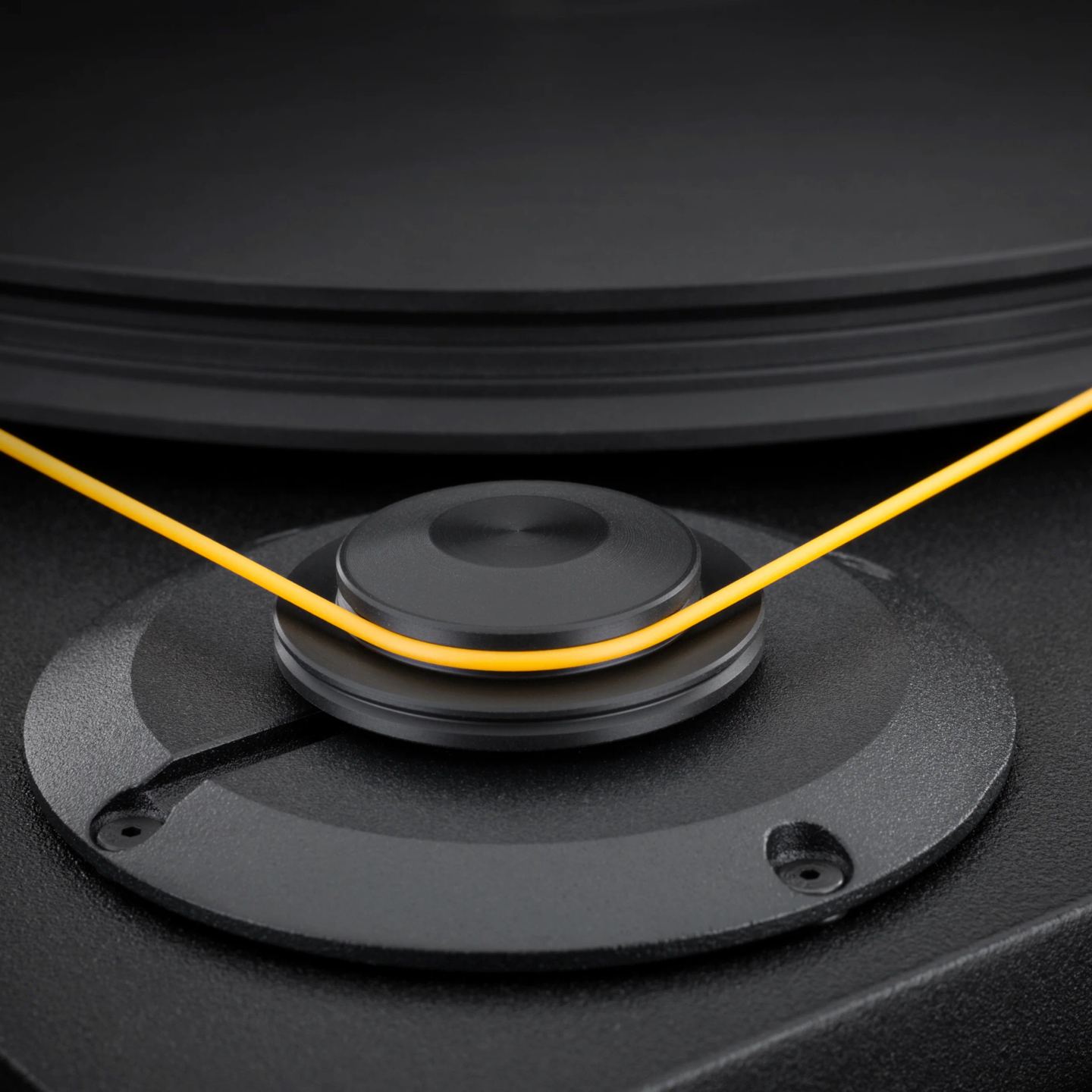
The motor is an AC synchronous motor rotating at 300 rpm, positioned back from the platter, at about the “10 o’clock” position when viewed from above. It is physically decoupled from the chassis by damping materials, which prevents transmission of its own vibrations to the groove. The connection to the platter is via a belt and a two-step Delrin pulley: one for 33 ⅓, the other for 45 rpm. Speed change is done manually by moving the belt.
Wow and flutter measurements are 0.017% and 0.025% respectively, respectable values for this range. The signal-to-noise ratio is 72 dB. Power consumption remains modest, under 5 W.
Sound reproduction and listening character
The StudioDeck does not try to flatter. Its signature is analytical, faithful to the content of the groove. Bass is controlled and precise rather than generous, the midrange remains natural, and the treble unfolds with detail without aggressiveness. Background noise is low.
This neutral character is consistent with the philosophy of Mobile Fidelity Sound Lab, which has worked since 1977 to reproduce master tapes without coloration. The StudioDeck adopts the same approach: it adds nothing. On a quality pressing, this transparency reveals micro-details that more colored turntables can mask. On a poorly recorded record, it hides nothing either. It is a deliberate choice, which may surprise when compared with turntables that deliver a warmer or more dynamic sound.
Variants and upgrade potential
The StudioDeck comes in several configurations. The base version is supplied without a cartridge. The “+” versions include one of the three MoFi cartridges: StudioTracker (entry-level, elliptical stylus), UltraTracker (dual magnet, refined elliptical stylus), or MasterTracker (purer copper, finer stylus, 3 mV output). All are manufactured in Japan to MoFi specifications, with a dual V-twin magnet generator that reproduces the geometry of the groove-cutting head.
The turntable can also accommodate cartridges from other manufacturers, provided the weight range (5 to 10 g) is respected and medium- to low-compliance models are preferred. The RCA connectors at the rear allow you to choose your interconnect cables. The Super HeavyWeight record weight (367 g, sold separately) improves vinyl/platter coupling and further reduces background noise. The HRS anti-vibration feet can be replaced by Ultra Low Noise Feet, a higher-end accessory.
Documentation
Technical specifications
Drive system and performance
- Drive system: AC synchronous 300 RPM
- Speeds: 33 ⅓ and 45 RPM
- Wow & flutter: 0.017% – 0.025%
- Signal-to-noise ratio: 72 dB
- Power consumption: < 5 W
Platter
- Material: high-density Delrin
- Thickness: 3 / 4” (≈ 19 mm)
- Advantages:
- Excellent inertia
- Noise reduction
- Better vinyl / platter coupling
Tonearm
- Type: 10” straight aluminum tonearm
- Design and manufacturing: United States
- Gimbal bearings
- Overhang: 18 mm
- Offset angle: 22.8° (± 2° adjustable)
- Compatible cartridges: 5 g – 10 g
Dimensions and weight
- Dimensions (W × H × D): 50.0 × 13.7 × 36.2 cm
- Weight: 8.66 kg
Key technologies
- Isolated AC motor
- 300 RPM motor decoupled from the chassis
- Speed stability
- Reduction of parasitic vibrations
- Better rhythmic precision
- High-precision belt drive
- Multi-layer damping structure
- Combination of aluminum and MDF
- Elimination of resonances
- Neutral and faithful reproduction
- HRS anti-vibration feet
- Developed with Harmonic Resolution Systems
- Advanced mechanical isolation
- Reduction of floor vibrations
Highlights
- High-precision belt drive
- 10” tonearm designed and manufactured in the United States
- High-density Delrin platter
- AC motor isolated from vibrations
- Anti-vibration feet developed with HRS
- Rigid structure with multi-layer damping
Design
- Sleek and rigid chassis
- Minimalist audiophile finish
- Professional studio aesthetics
Sound signature
- Precise and stable playback
- Clean and controlled bass
- Natural midrange
- Detailed highs without harshness
- Very low background noise
Frequently asked questions
Does the StudioDeck include a phono preamp?
No. An external phono preamp is required. MoFi offers two models in its range (StudioPhono and UltraPhono), but any compatible MM phono preamp will do.
Can a moving coil (MC) cartridge be used on the StudioDeck?
Yes, provided the cartridge weighs between 5 and 10 g and has low to medium compliance. Several MC cartridges from Ortofon, Audio-Technica, Hana, or Denon work with this tonearm. An MC phono preamp will then be required.
How is the speed changed between 33 ⅓ and 45 rpm?
Manually, by moving the belt from one groove to the other on the motor pulley. You need to lift the platter to access the pulley. It is not the quickest operation, but it is simple.
Are the diamond styli on MoFi cartridges user-replaceable?
No. MoFi cartridges do not have a replaceable stylus. When the stylus is worn, the cartridge must be replaced. MoFi offers a trade-in program when purchasing a new cartridge.
What are the differences between the StudioDeck and the UltraDeck?
The UltraDeck uses a thicker Delrin platter (33 mm, more than 2.7 kg), a sapphire bearing thrust plate instead of Teflon, Cardas internal tonearm wiring instead of OFC copper, and a more elaborate multilayer-damped chassis with three separate aluminum plates.
- Eco-contribution included in the sale price.
- Manufacturer reference: 00032671