Mofi Electronics StudioTracker MM
Overview
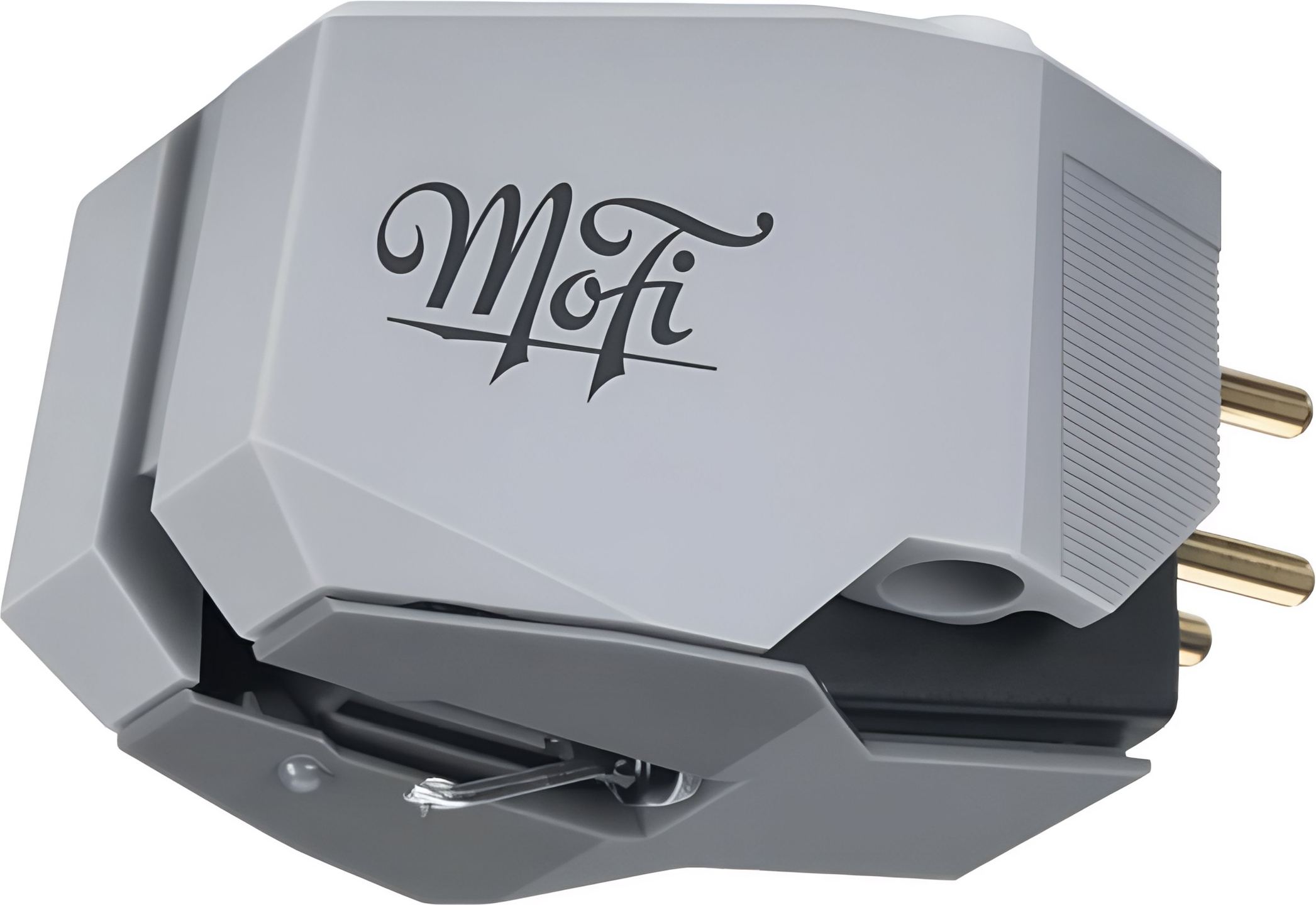
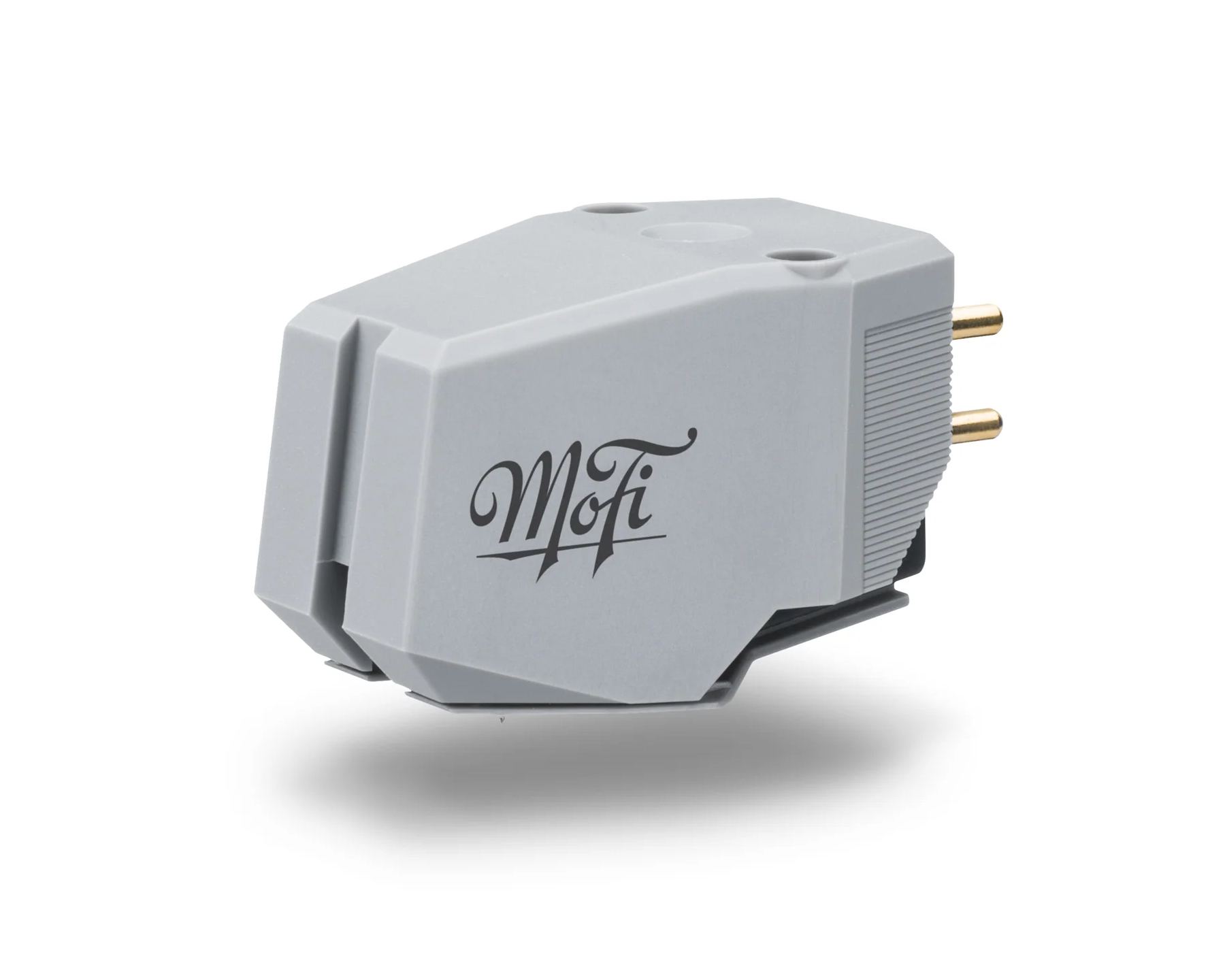
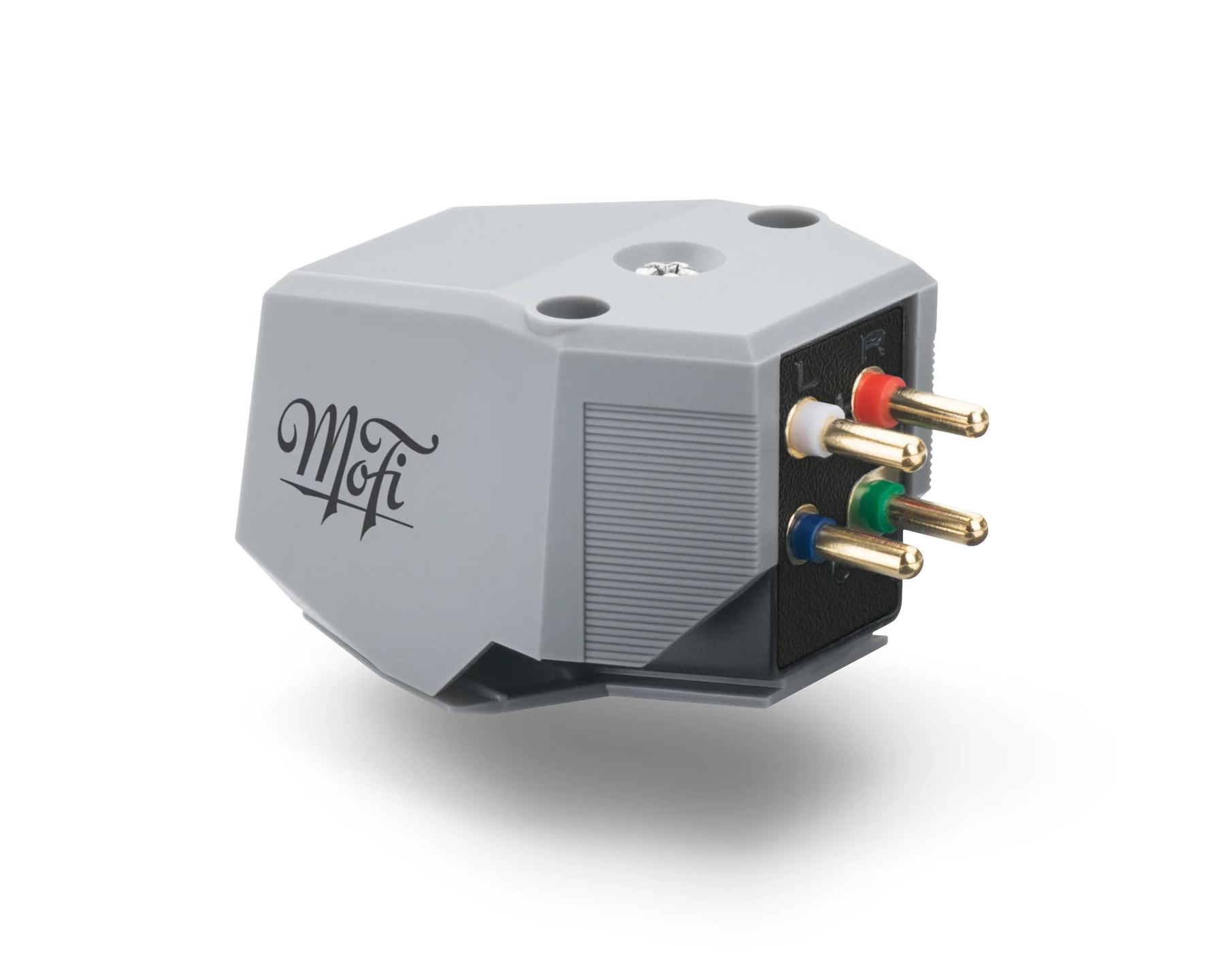
When Mobile Fidelity entrusts Allen Perkins, founder of Spiral Groove, with designing an entry-level moving magnet cartridge, the brief is crystal clear: reproduce what is engraved in the groove, nothing more, nothing less. The StudioTracker, made in Japan, adopts the philosophy and V-Twin generator shared across the entire MoFi Tracker range. It is the gateway to a dense, balanced sound found in the brand’s more expensive models.
A generator modeled on the cutting head
The design principle behind MoFi cartridges is based on a simple idea: the playback transducer should work like the inverse of the cutting transducer. The StudioTracker incorporates a so-called “V-Twin” generator made up of two lightweight magnets arranged in a V shape, parallel to the record’s stereo grooves. This layout mirrors that of the cutting head used in the mastering studio, including at Mobile Fidelity Sound Lab in Sebastopol, California.
The practical benefit is good separation between the left and right channels, and a signal more faithful to the original than what a conventional single-magnet generator can provide. MM cartridges with a single magnet generate one magnetic field shared by both channels; here, each channel has its own magnet, which reduces crosstalk.
A forgiving and precise elliptical stylus
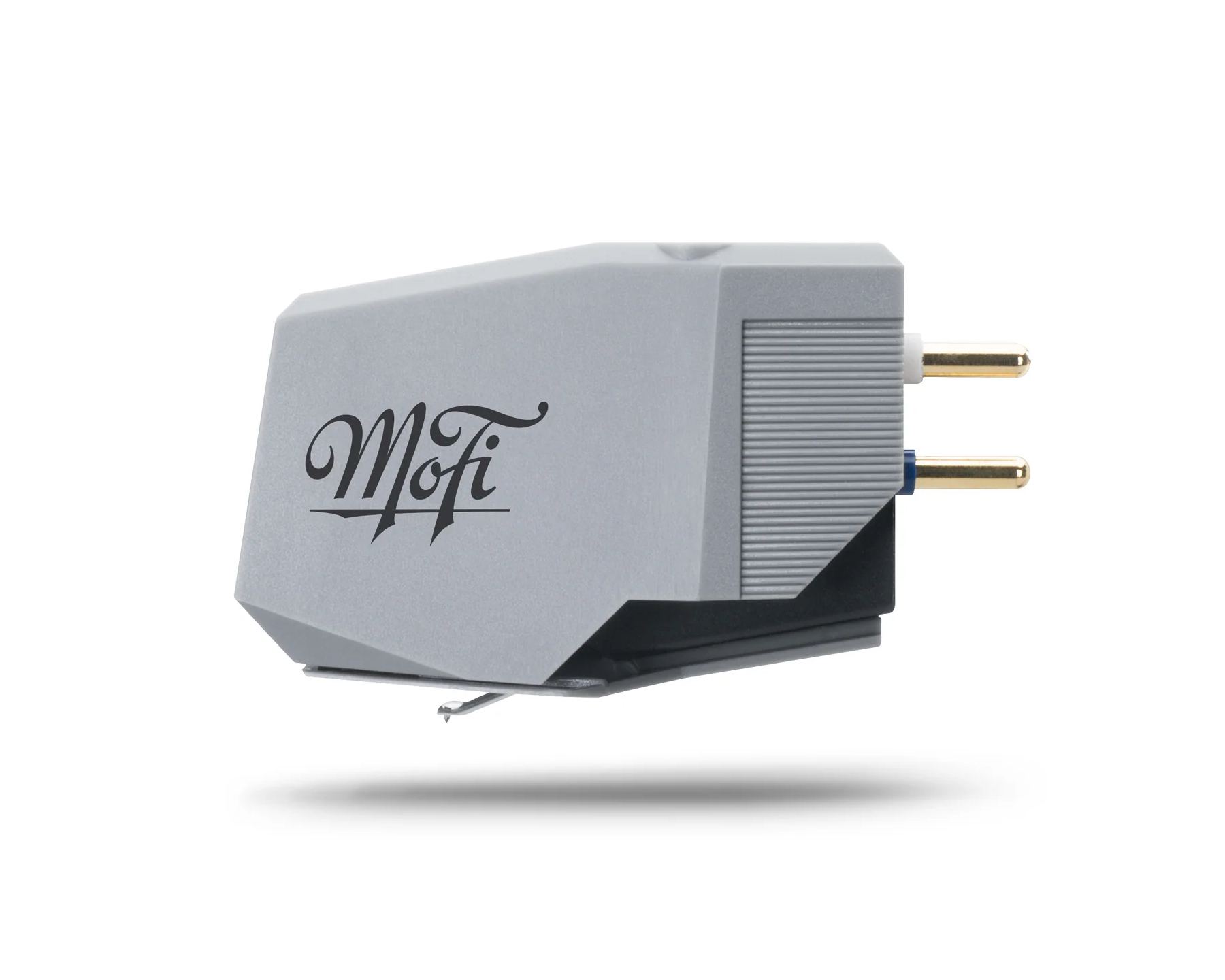
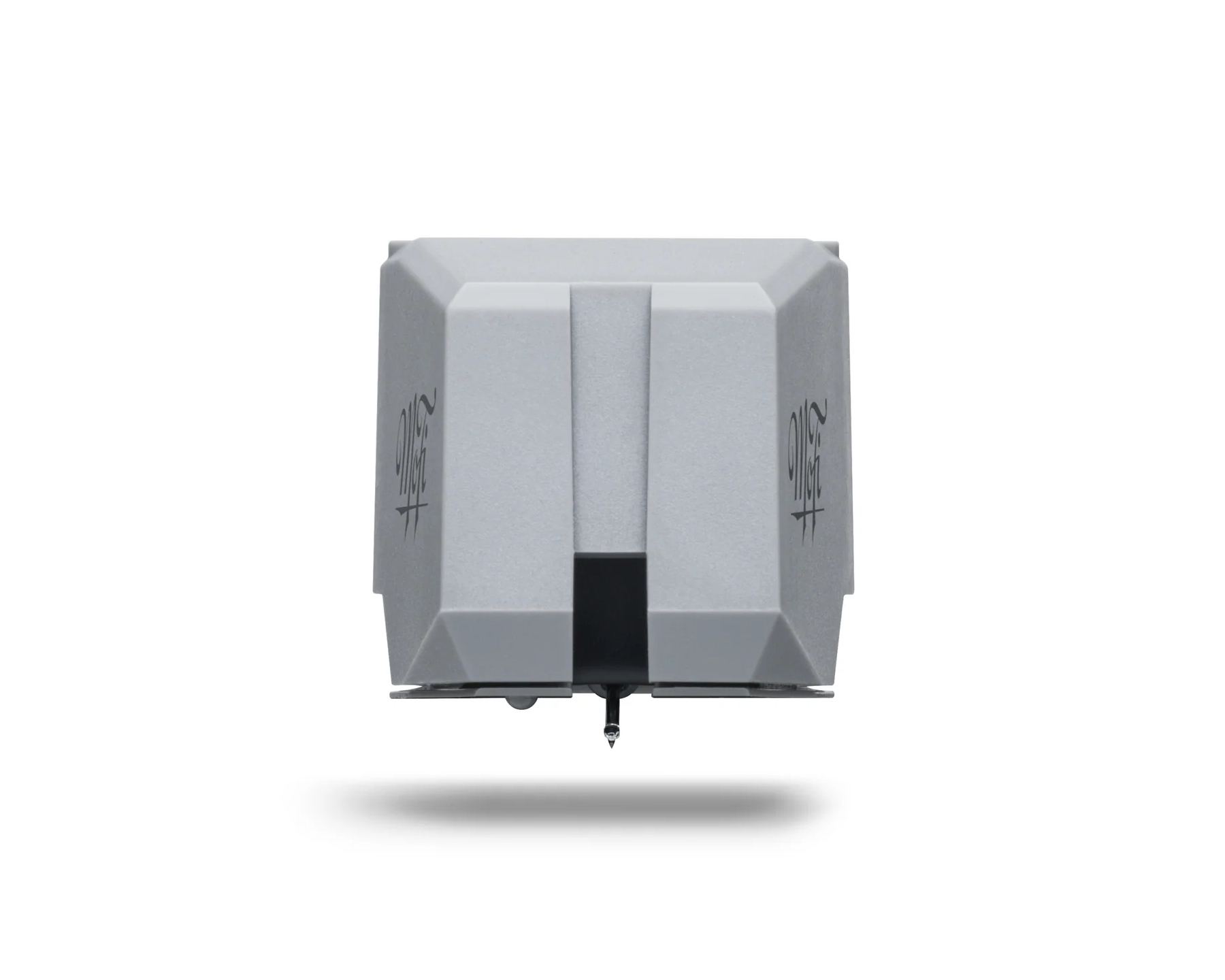
The StudioTracker is fitted with an elliptical-profile stylus. This type of cut offers a larger contact surface with the groove than a spherical (conical) stylus, which improves retrieval of high-frequency information and the micro-details engraved in the groove walls. Tracking remains reliable, even on somewhat worn or average-quality pressings.
The recommended tracking force is between 1.8 and 2.2 g, a fairly wide range that makes setup easier. With a dynamic compliance of 8 × 10⁻⁶ cm/dyne and a weight of 6.4 g, the cartridge mounts easily on most medium-mass tonearms, which covers the vast majority of common turntables.
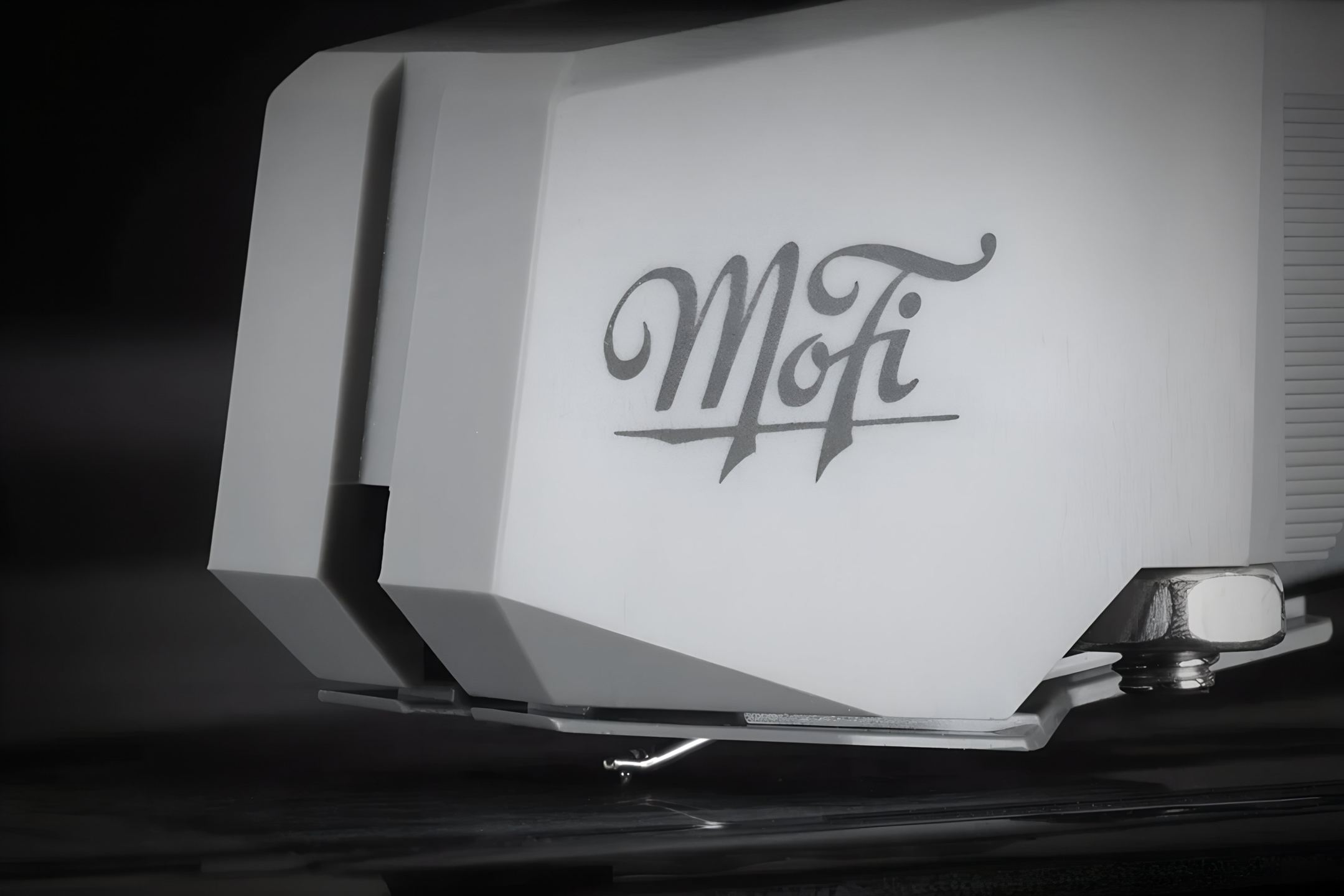
A polymer body designed to limit resonances
Where the UltraTracker and MasterTracker, the two higher-end models in the range, use a body machined from a block of 6061 aluminum, the StudioTracker uses a polymer body. This choice is not merely a budget compromise: MoFi states that a proprietary material is applied inside the shell to damp unwanted vibrations. Allen Perkins devoted significant development work to damping the stylus/cantilever/generator assembly, work that is reflected, to varying degrees, across the entire Tracker range.
The result is a lightweight (6.4 g) and rigid structure that limits mechanical coloration. The polymer absorbs some of the resonances that denser, harder aluminum would tend to transmit, which contributes to the smooth character of the upper range.
Musical reproduction, not clinical
The StudioTracker delivers a balanced sound, with full-bodied mids and a slightly rounded treble range. This gentle softening in the upper range makes listening comfortable during long sessions, without losing detail. The bass is controlled, with good definition.
This is not an analytical cartridge. Its signature leans more toward musicality and fluidity than toward cold dissection of the signal. With acoustic jazz, vocals, and chamber classical music, it shows its strengths in timbre and coherence. With rock or electronic music, the bass remains solid, even if the higher-end cartridges in the series (UltraTracker, MasterTracker) offer more attack speed and greater finesse in transients.
Straightforward electrical compatibility
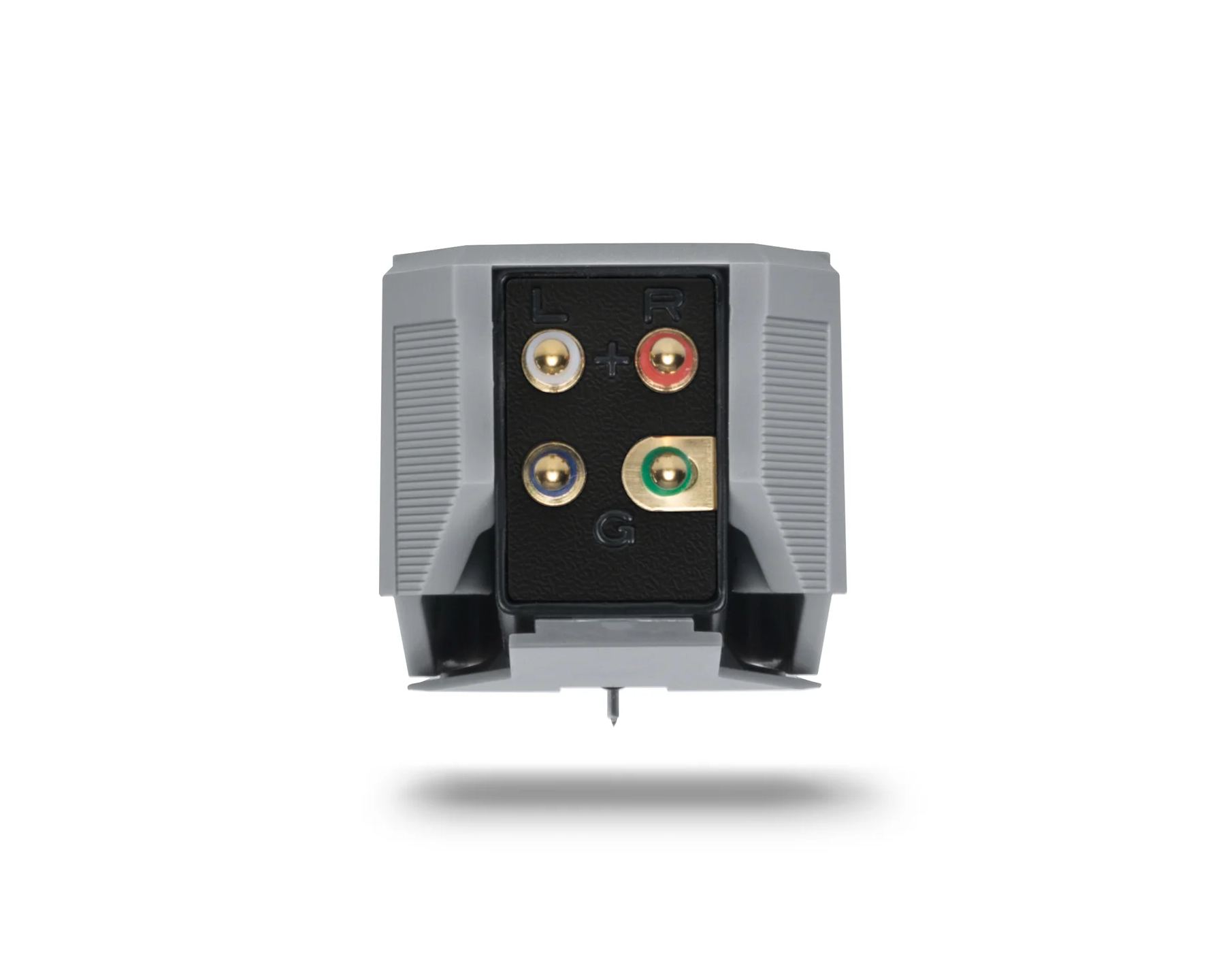
With an output voltage of 3.5 mV, the StudioTracker works with any standard MM phono preamp, with no need for a step-up transformer or MC preamp. The recommended load impedance is the usual 47 kΩ, and the 100 pF capacitance leaves some headroom: you simply need to take into account the capacitance of the interconnect cable and the phono input to stay within spec. Frequency response covers 20 Hz to 20 kHz.
The Tracker range: three cartridges, one shared philosophy
The StudioTracker opens the MoFi Tracker range. The UltraTracker, one step above, moves to a machined aluminum body and a nude elliptical stylus (mounted directly on the cantilever, with no metal shank). The MasterTracker, at the top of the MM range, features a Micro-Line stylus, Ohno copper coils, and even lighter magnets. All three models share the V-Twin generator and the collaboration with Allen Perkins. Moving up the range brings greater finesse in the upper range, more precision in the bass, and more incisive attacks.
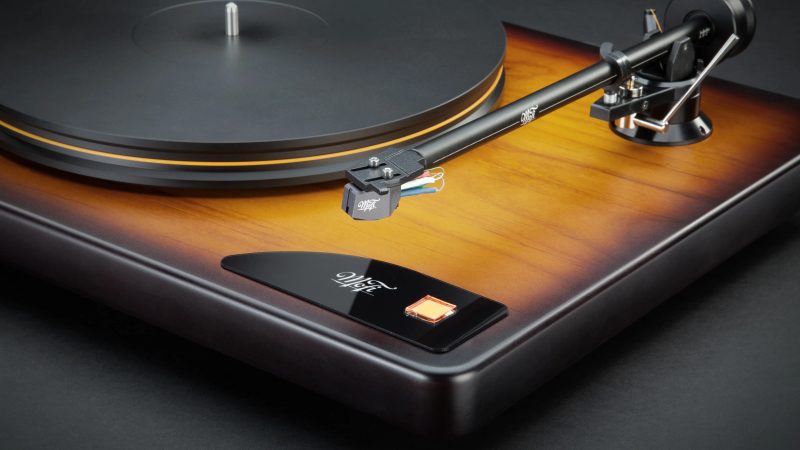
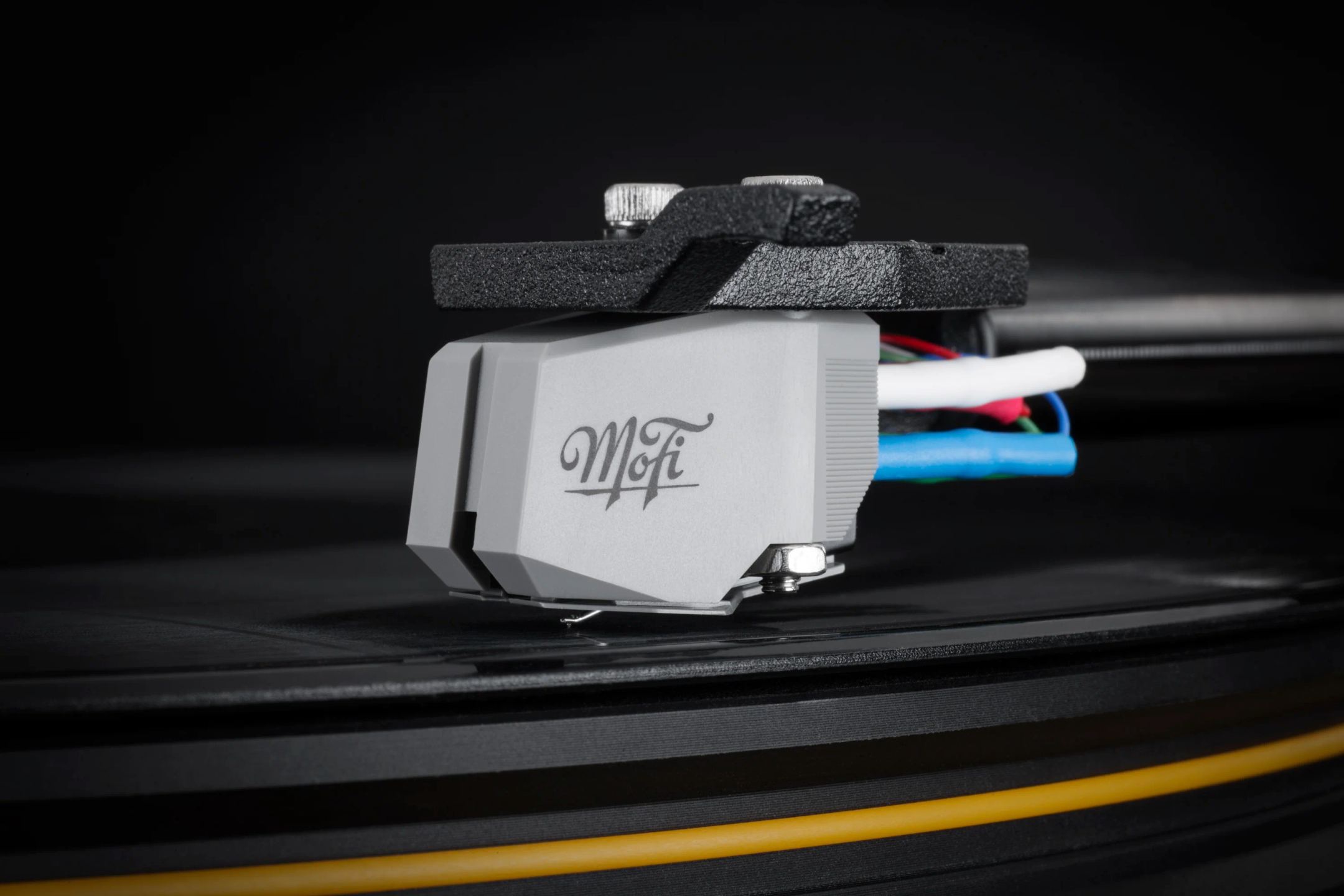
The StudioTracker is also the cartridge supplied as standard with MoFi’s StudioDeck and StudioDeck Foundation turntables, where it comes pre-mounted and factory-aligned.
Documentation
Technical Specifications
Electrical and Mechanical Specifications
- Type: Dual-magnet stereo Moving Magnet (MM)
- Output voltage: 3.5 mV
- Frequency response: 20 Hz – 20 kHz
- Impedance: 47 kΩ
- Recommended capacitance: 100 pF
- Weight: 6.4 g
Stylus and Playback
- Stylus type: elliptical
- Recommended tracking force: 1.8 – 2.2 g
- Advantages:
- good groove tracking
- precise detail retrieval
- increased tolerance on pressings
Key Technology
- V-Twin dual-magnet generator
- two magnets aligned in a V configuration
- parallel arrangement to stereo grooves
- faithful reproduction of the original signal
- Benefits:
- improved channel separation
- more accurate and natural reproduction
Construction
- Polymer body
- Lightweight and rigid structure
- Reduction of parasitic resonances
Sound Signature
- Balanced and musical sound
- Rich and natural midrange
- Smooth and slightly forgiving highs
- Good detail clarity
- Fluid and enjoyable listening experience
Recommended Uses
- Entry-level / mid-range audiophile
- Replacement or upgrade of an MM cartridge
- Versatile hi-fi systems
- Long listening sessions without fatigue
Frequently asked questions
Is the StudioTracker stylus user-replaceable?
Yes. The stylus assembly can be removed and replaced without tools. MoFi sells the replacement elliptical stylus separately. It is not possible to fit a stylus from another model in the Tracker range onto the StudioTracker: each cartridge has its own stylus assembly.
Do I need a dedicated phono preamp to use this cartridge?
You need a phono preamp with an MM input (or an integrated amplifier with an MM phono input). The 3.5 mV output voltage is sufficient for any standard MM phono stage. An MC preamp is neither necessary nor suitable.
Which tonearms are compatible?
The StudioTracker weighs 6.4 g and has a dynamic compliance of 8 × 10⁻⁶ cm/dyne. It works well on tonearms with medium effective mass (10-20 g), which covers the vast majority of tonearms available on the market, from Rega to the tonearms on Technics SL-1200/1500 turntables.
Does the 100 pF capacitance include the connection cable?
No. The 100 pF corresponds to the recommended total load capacitance, including the interconnect cable and phono input. Most phono cables add between 50 and 150 pF per meter. You need to add the cable capacitance and the phono input capacitance of the amplifier to check that the total remains close to 100 pF.
What tracking force setting should be favored within the 1.8-2.2 g range?
A good starting point is 2.0 g, in the middle of the range. Increasing slightly (toward 2.1-2.2 g) can improve tracking on highly modulated records. Lowering toward 1.8 g reduces contact pressure and can refine the highs, but at the cost of less secure tracking on difficult passages.
- Eco-contribution included in the sale price.
- Manufacturer reference: 00032684