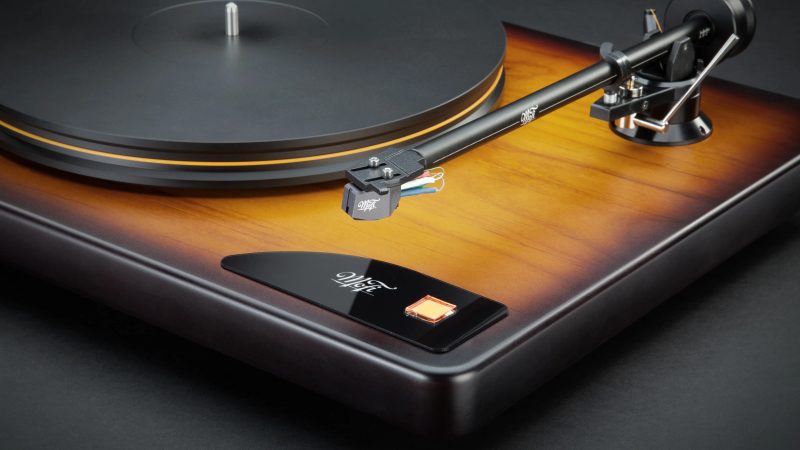
Mofi Electronics StudioSilver MC

Overview
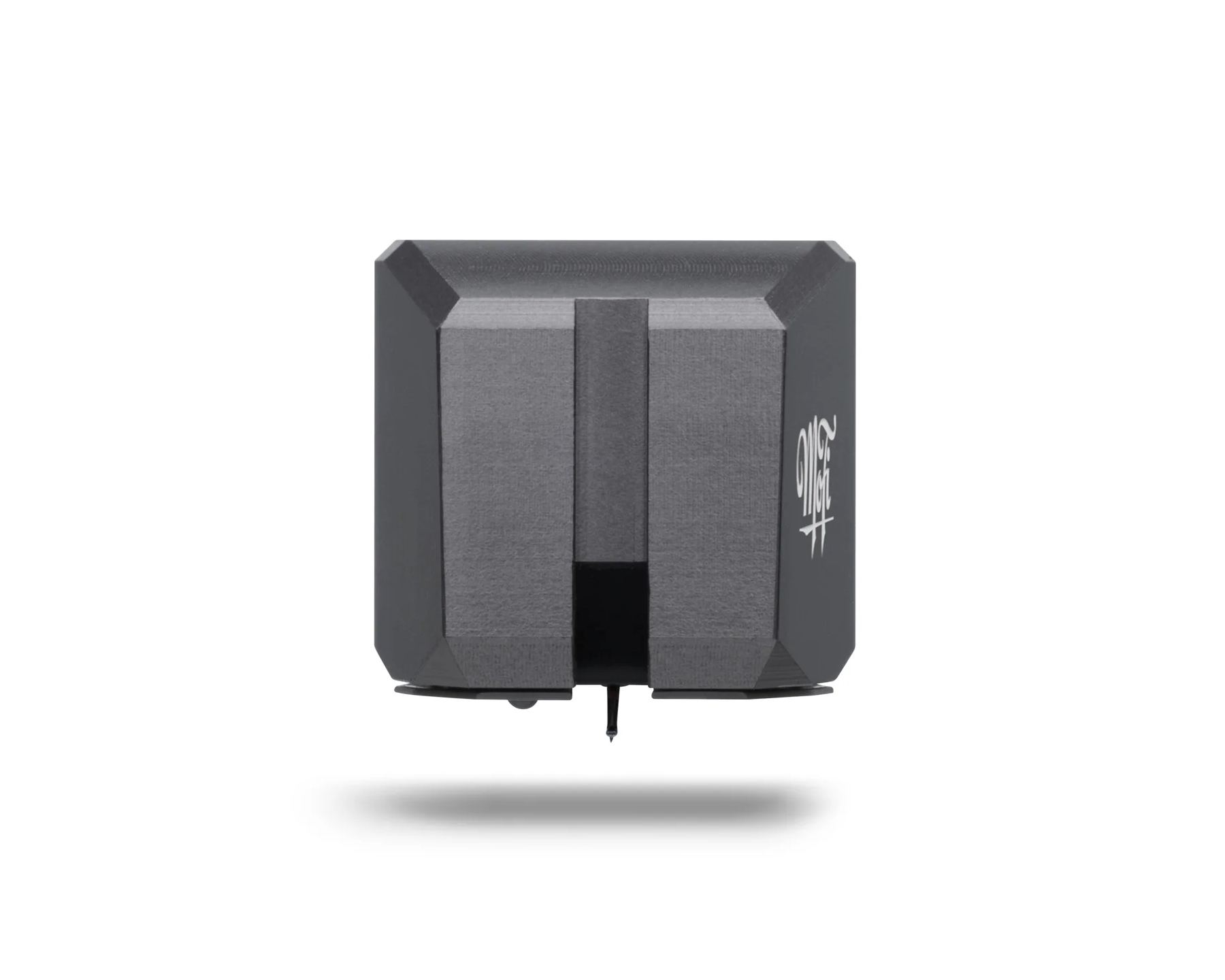
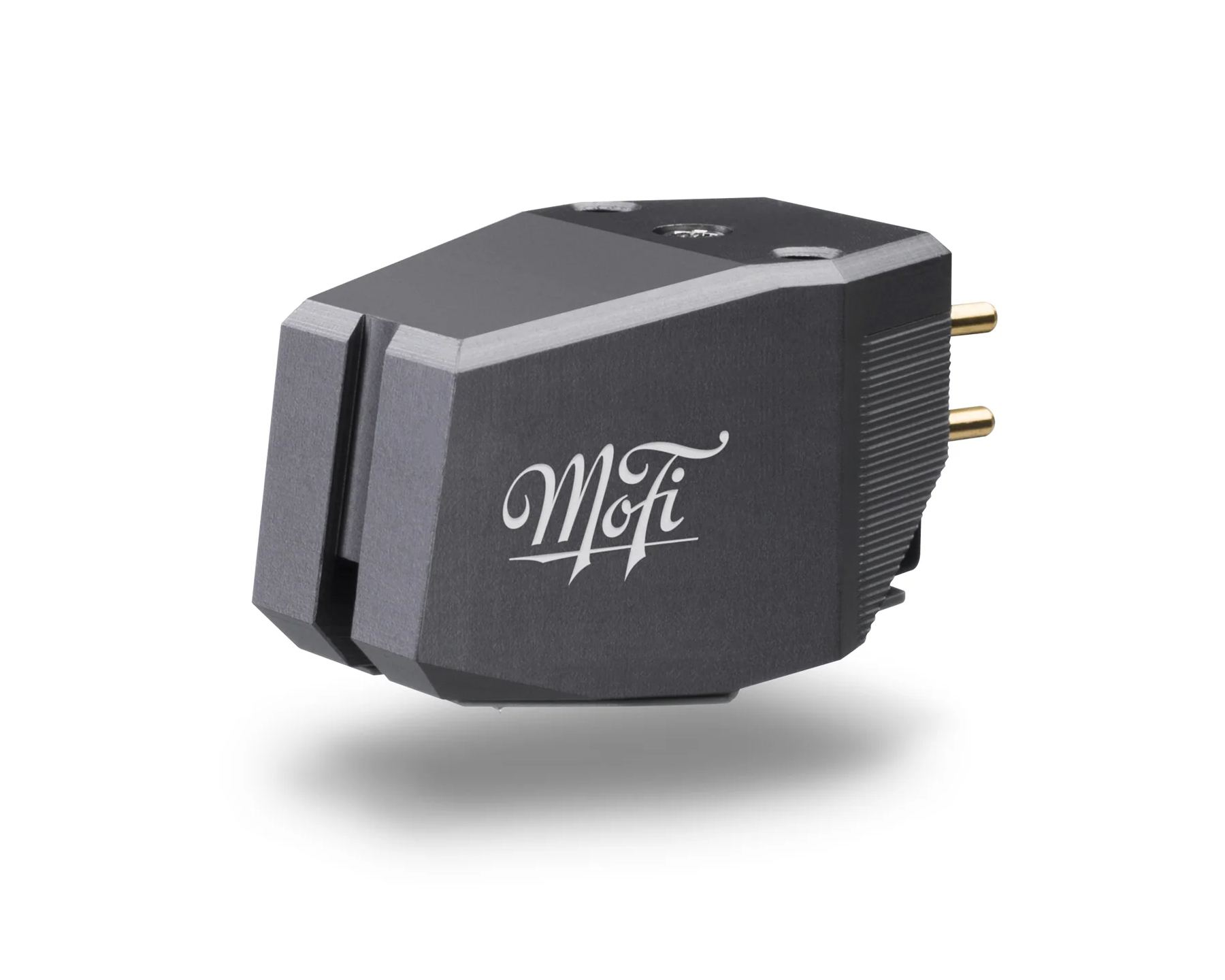
Three moving magnet cartridges make up the MoFi Electronics Tracker range, all developed with Allen Perkins, founder of Spiral Groove. The UltraTracker sits in the middle, between the entry-level StudioTracker and the MasterTracker. Compared with its little sister, it gains a machined aluminum body, a nude elliptical diamond, and an extended frequency response up to 25 kHz. A clear qualitative step up, without crossing into moving coil cartridge territory.
A generator modeled on the cutting head
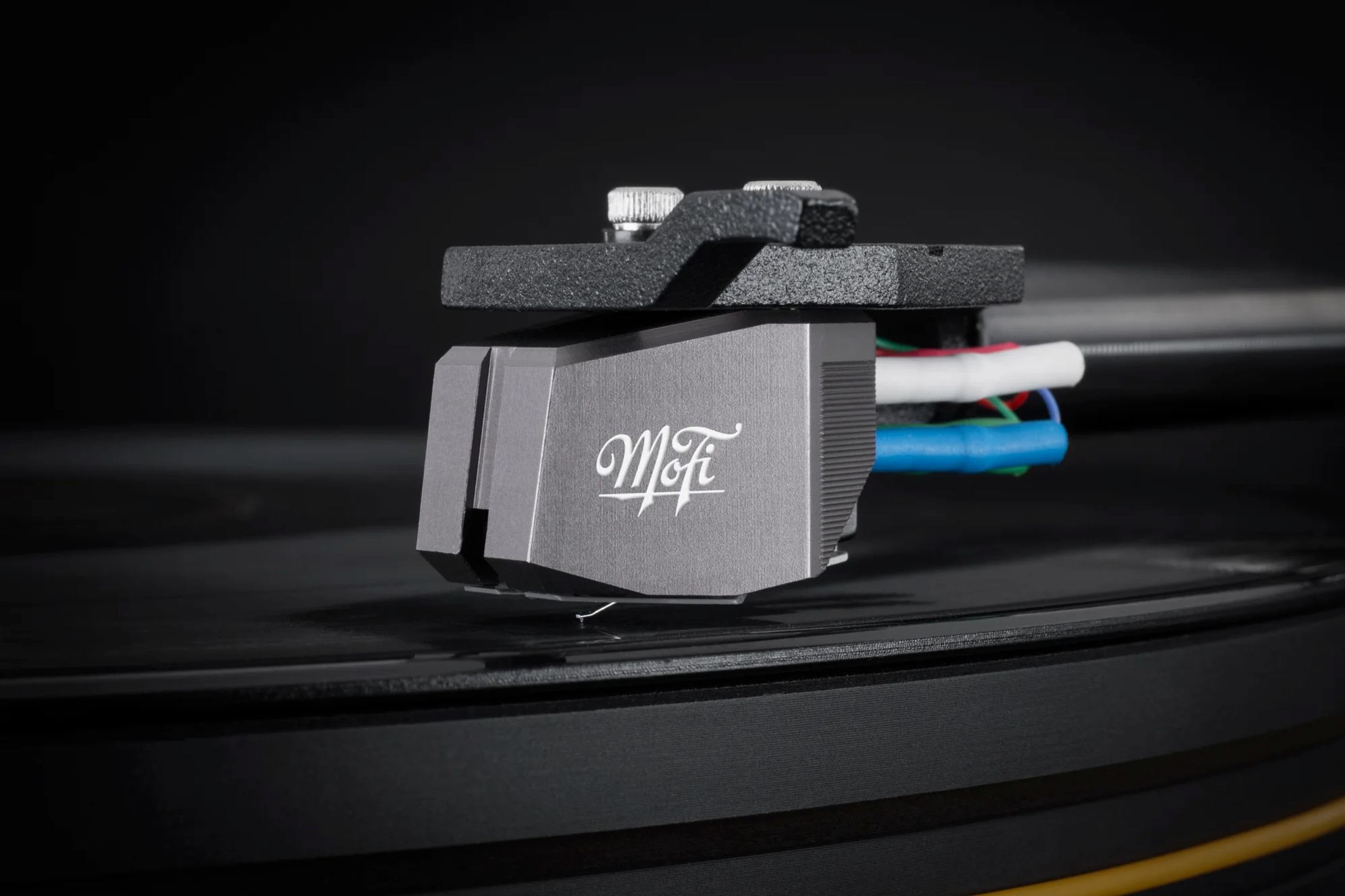
The design principle behind MoFi cartridges is based on a simple idea: reproduce the geometry of the cutting head used in the studio to cut the grooves of a vinyl record. The UltraTracker’s V-Twin generator uses two lightweight magnets arranged in a V, aligned parallel to the stereo grooves. This symmetrical layout promotes good channel separation and stable groove tracking, including in the most heavily modulated passages.
The 3.5 mV output voltage is sufficient to drive any standard MM phono preamplifier, with a recommended load impedance of 47 kΩ and capacitance of 100 pF. On this last point, the capacitance of the interconnect cable between the tonearm and the preamplifier must be taken into account: a cable with too much capacitance could alter the treble response.
Machined aluminum body: mass and damping
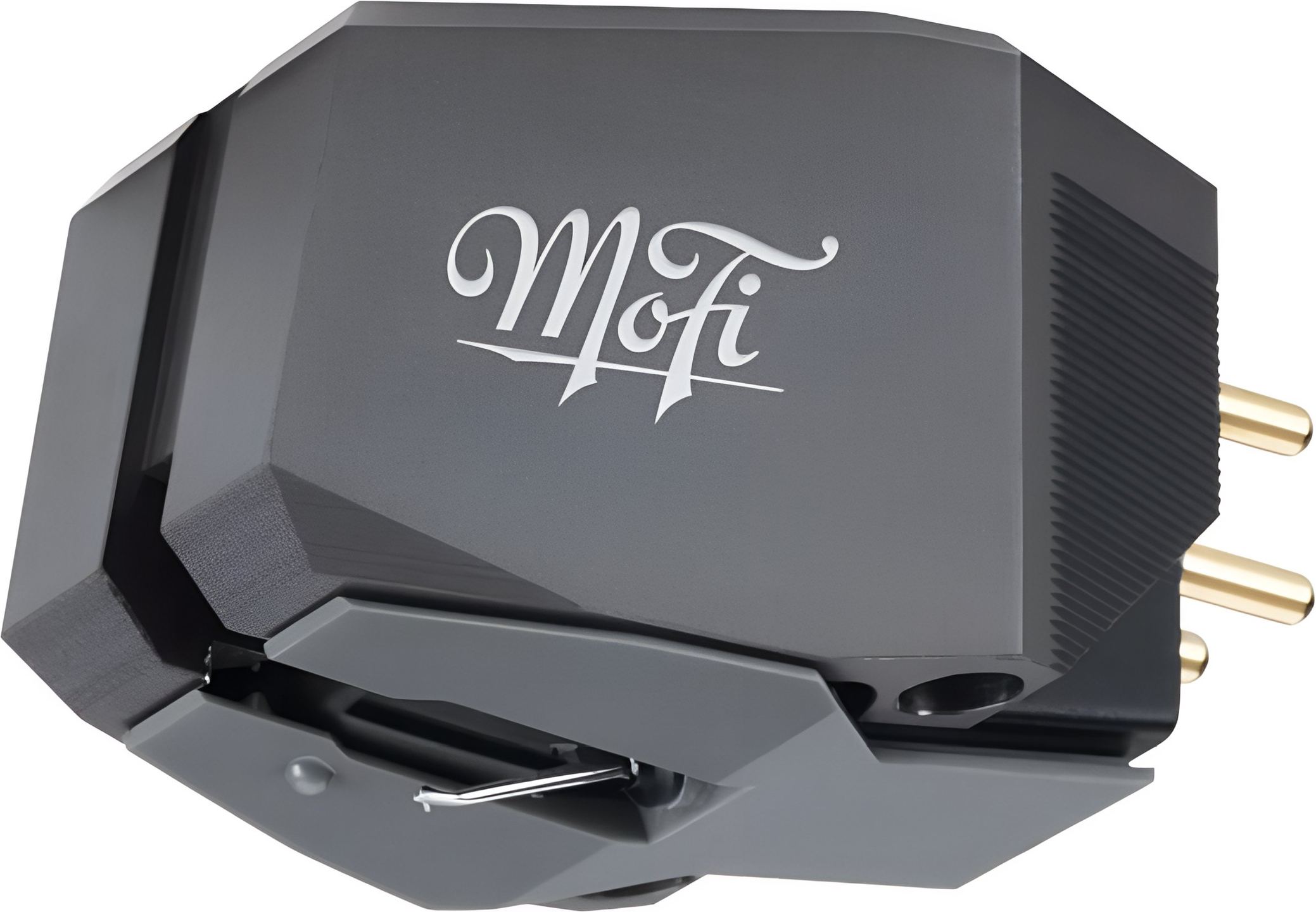
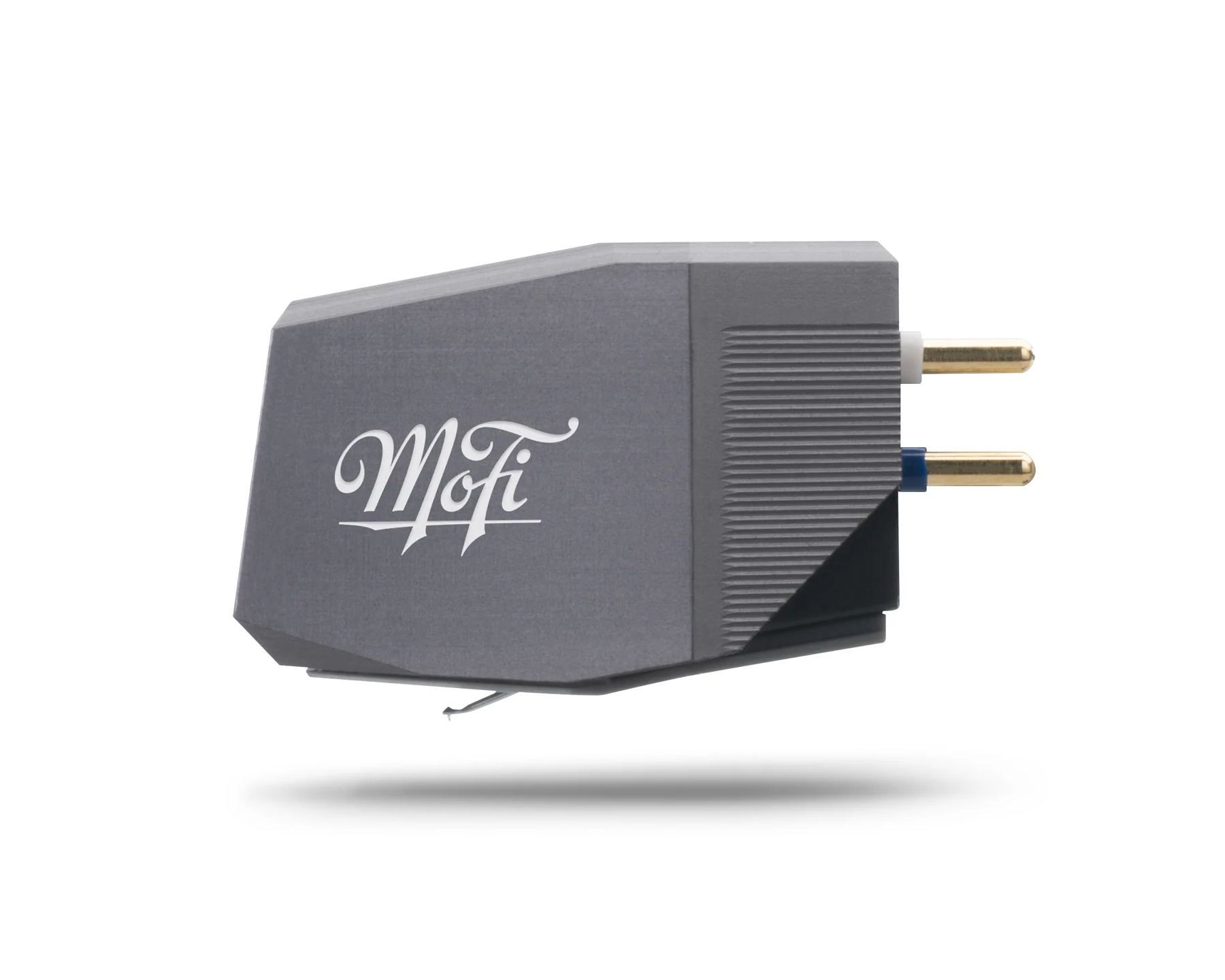
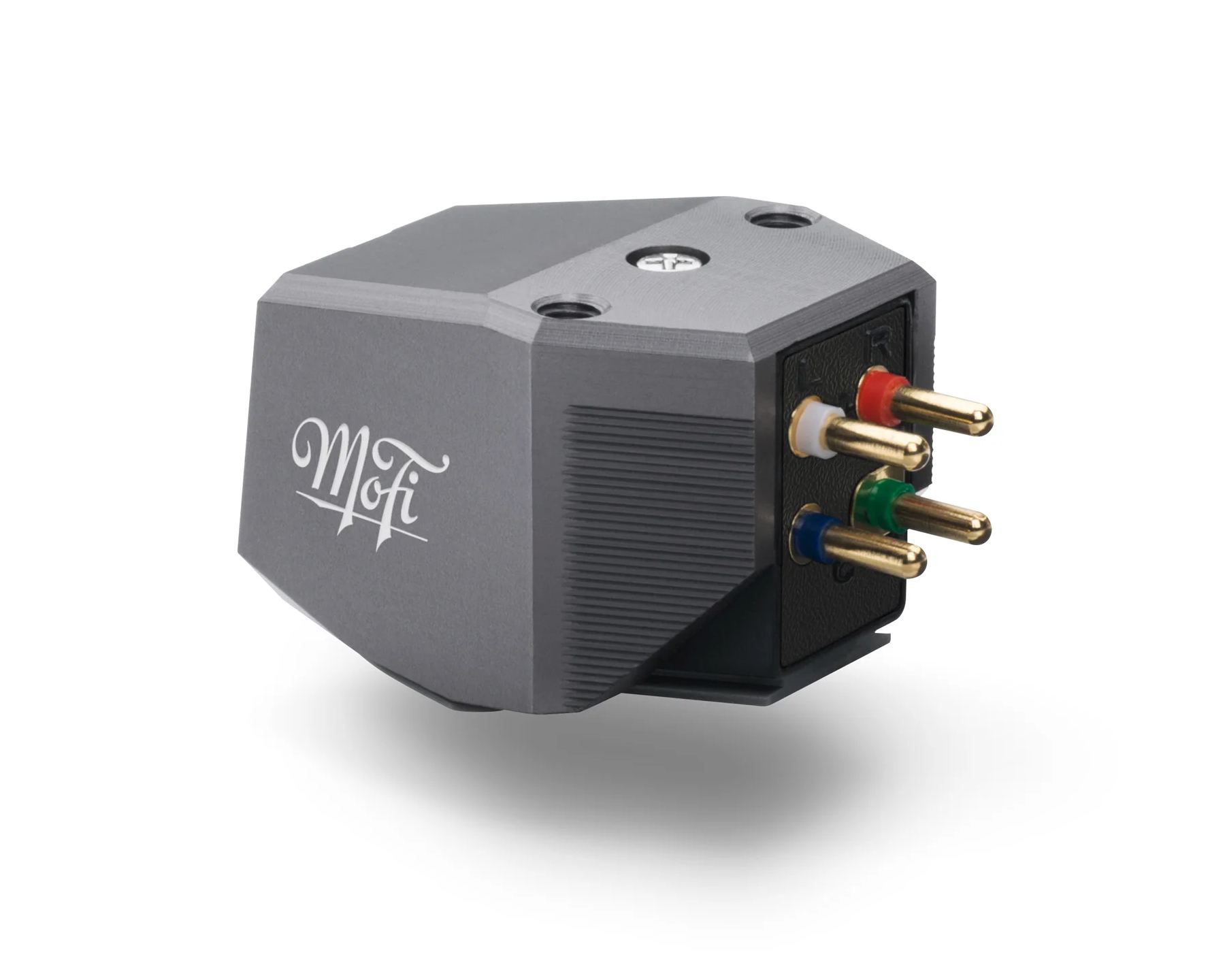
The most visible difference between the StudioTracker and the UltraTracker lies in the body material. The StudioTracker uses a polymer housing treated with a proprietary damping material. The UltraTracker moves to a solid billet-machined aluminum block, significantly heavier: 9.7 g versus 6.4 g for the StudioTracker.
This choice has direct consequences for mechanical behavior. Solid aluminum offers greater rigidity and better control of parasitic resonances. Bass gains firmness and definition, and the stereo image appears sharper. The higher weight does, however, require checking compatibility with the tonearm: most modern medium- to high-mass tonearms will accept a cartridge of this size without difficulty, but a very lightweight arm could pose a resonance problem.
The mounting holes are threaded, which makes installation on the headshell easier compared with the StudioTracker and its nuts that must be screwed on from underneath.

Nude elliptical diamond and groove tracking
The UltraTracker is equipped with a nude elliptical diamond. “Nude” means that the diamond tip is bonded directly to the cantilever, without an intermediate shank. This construction reduces the moving mass at the end of the cantilever, which improves tracking ability in fast transients and heavily modulated passages.
The elliptical profile reads a wider contact surface in the groove than a spherical (conical) tip, making it possible to extract more recorded information, with less distortion in the high frequencies. The stated frequency response extends from 20 Hz to 25 kHz, or 5 kHz more than the StudioTracker, which tops out at 20 kHz.
The recommended tracking force is between 1.8 and 2.2 g. A setting around 1.9 to 2.0 g is a good starting point, then to be adjusted by ear depending on the tonearm and turntable.
Manufacturing between Japan and the United States
The Tracker cartridges are hand-assembled in Japan. The UltraTracker’s aluminum body is machined in the United States, in MoFi’s workshops in Michigan. Allen Perkins supervised the damping work and acoustic tuning, with care taken to reduce internal resonances.
Like all cartridges in the Tracker range, the UltraTracker does not have a user-replaceable stylus. When the tip is worn, the entire cartridge must be replaced. MoFi offers a reduced-price exchange program to offset this drawback. This design choice, shared with Rega in this price range, aims to guarantee optimal and permanent alignment between the diamond, the cantilever, and the generator.
Sound reproduction and musical character
Compared with the StudioTracker, the UltraTracker delivers a more open and more detailed sound. The StudioTracker has a slightly warm and forgiving side, with somewhat rounded treble and generous bass. The UltraTracker tightens the low end: the bass is tauter, better defined, without the slight roundness of its junior sibling. The midrange gains articulation, and the more extended highs reveal information that the StudioTracker leaves in the shadows.
Dynamics also improve, thanks to the combination of the rigid aluminum body and the low-mass nude diamond. Micro-variations in intensity are reproduced more faithfully, resulting in a more lifelike presentation on acoustic recordings and carefully made recordings. On heavily modulated records (rock, symphonic music), groove tracking remains stable and free of audible distortion even in the densest passages.
The sonic character remains musical and not clinical. The UltraTracker is not a cold or analytical cartridge: it retains body and density in the timbres, while gaining transparency compared with the StudioTracker.
Compatibility and setup
The UltraTracker mounts on any tonearm that accepts a standard-mount cartridge (half-inch). At 9.7 g, it is suitable for medium-mass tonearms, which represent the vast majority of the market. MoFi tonearms (Studio and Ultra, in 10 inches) are obviously designed to accommodate it, with vertical tracking angle (VTA) and azimuth factory preset when the cartridge is purchased with a MoFi turntable.
On a third-party tonearm, the usual adjustments will be required: stylus alignment (Baerwald or Stevenson protractor depending on the tonearm geometry), tracking force, antiskating, and VTA. The integrated threads make the operation easier.
Documentation
Technical Characteristics
Design and technology
- Dual-magnet V-Twin generator
- Architecture inspired by a studio cutting head
- V-shaped magnet alignment following the stereo grooves
- Excellent tracking ability
- Precise extraction of musical micro-details
- Extremely faithful reading of vinyl grooves
Body and structure
- Machined solid aluminum body (billet aluminum)
- Damped structure (damped body)
- Reduction of internal vibrations and unwanted resonances
- Cleaner, tighter bass
- More stable sound image
- Improved playback stability
Stylus
- Micro-Line diamond
- Profile inspired by disc cutting heads
- Extremely precise tracking of groove walls
- Reduced distortion in complex passages
- High resolution in the treble
Sound signature
- Open and detailed sound
- Excellent instrument separation
- Precise, solid bass
- Extended treble without harshness
- Great sense of space and naturalness
Technical specifications
- Type: stereo moving magnet (MM)
- Output voltage: 3 mV
- Frequency response: 20 Hz – 25 kHz
- Weight: 9.7 g
- Recommended tracking force: 1.8 – 2.2 g
- Impedance: 47 kΩ
- Capacitance: 100 pF
- Static compliance: 40 x 10⁻⁶ / dyne
- Dynamic compliance: 10 x 10⁻⁶ / dyne
Key points
- V-Twin generator inspired by vinyl cutting machines
- Ultra-precise Micro-Line stylus
- Damped aluminum body for stable playback
- Excellent reproduction of micro-details
- Compatible with a wide range of tonearms
Intended audience
- Audiophiles looking for a detailed yet natural cartridge
- Mid- to high-end hi-fi systems
- Vinyl enthusiasts wanting to improve resolution without harshness
- Analytical and musical listening
Frequently asked questions
Is the UltraTracker compatible with my phono preamplifier?
Yes, provided it accepts moving magnet (MM) cartridges. The input must have an impedance of 47 kΩ. The recommended load capacitance is 100 pF, but you must add the capacitance of your phono cable. If your cable adds 100 to 150 pF, the total remains within a reasonable range for most preamplifiers. Total capacitance that is too high (above 300 pF) can cause a peak in the treble.
Can the stylus be replaced when it is worn?
No. The stylus is not user-replaceable. The entire cartridge must be exchanged. MoFi offers a reduced-price trade-in program. This design choice allows for more rigorous assembly, but requires buying a complete cartridge again after about 1,000 hours of listening (indicative lifespan depending on conditions of use).
What is the main difference between the UltraTracker and the MasterTracker?
The MasterTracker uses a Micro-Line diamond (instead of the nude elliptical) and OCC copper coils (Ohno Continuous Cast). The Micro-Line diamond more faithfully reproduces the shape of the cutting head and reads even more information from the groove, with slower stylus wear. The MasterTracker produces a more refined sound in the extreme treble and a more three-dimensional soundstage.
Is the UltraTracker suitable for a lightweight tonearm?
At 9.7 g, the UltraTracker is heavier than the average MM cartridge. A tonearm with very low effective mass (under 8 g) could place the resonance frequency outside the ideal 8 to 12 Hz range. A quick calculation using the cartridge’s dynamic compliance and the tonearm’s effective mass makes it possible to check compatibility before purchase.
Does it require break-in?
Like most moving magnet cartridges, the UltraTracker benefits from a break-in period of around twenty hours. The diamond and the mechanical suspension gradually stabilize, and the sound becomes smoother and more open after this period.
What antiskating should be set?
A good starting point is to set antiskating to a value equal to or slightly lower than the tracking force. With a tracking force of 2.0 g, start with antiskating at 1.8 to 2.0 g, then adjust by listening for any distortion on the inner (right) channel.
Does the UltraTracker work with 78 rpm records?
No. The nude elliptical diamond is cut to read 33 and 45 rpm microgroove records. 78 rpm records use wider grooves and require a suitable tip (generally a 3 mil spherical one). Using the UltraTracker on a 78 rpm record would risk damaging the diamond and producing very degraded sound.
- Eco-contribution included in the sale price.
- Manufacturer reference: 00032687