

iFi Audio OTG Type C

Overview
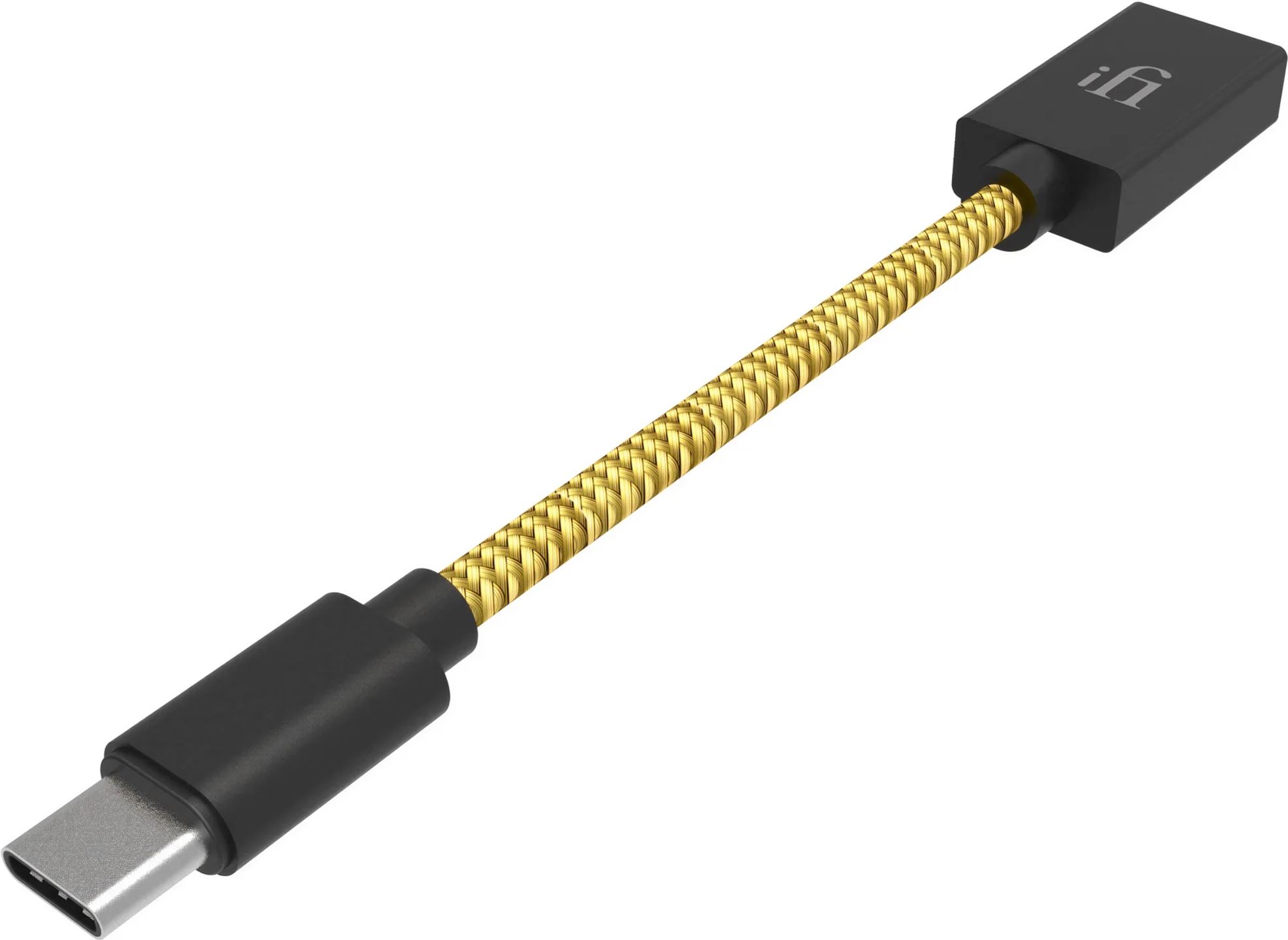
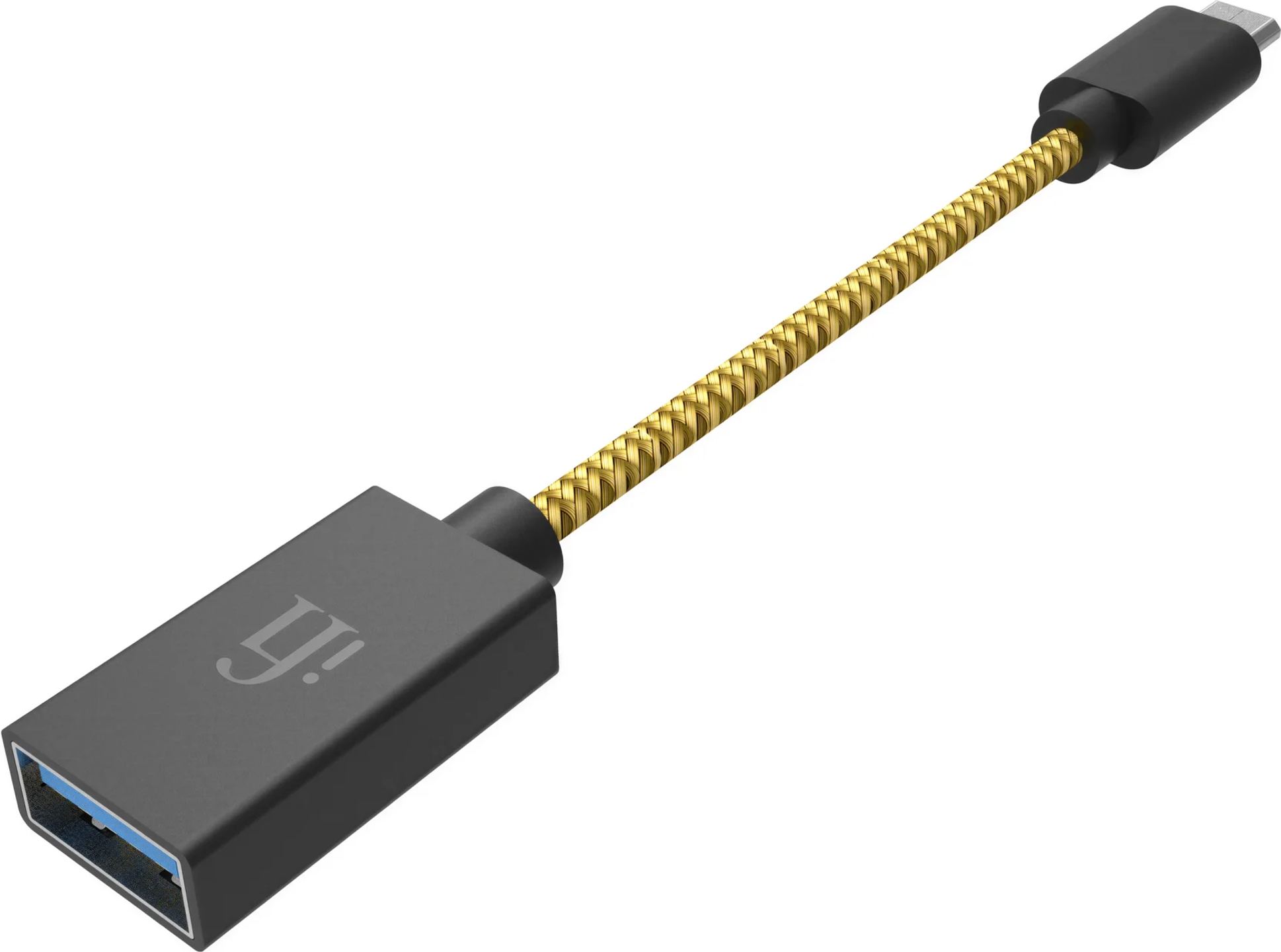
Connecting a USB DAC to a recent smartphone assumes two things: that the device switches to host mode, and that the physical connection holds up well while on the move. The British manufacturer offers here a short adapter, ending in a female USB-A connector, which links a USB-C source to an iFi DAC with a traditional USB-A input, in a pocket-sized format consistent with everyday mobile use.
Why use an OTG cable rather than a standard USB cord
USB On-The-Go is an extension of the USB standard that allows a phone or tablet to behave like a host and control an external DAC. The switch happens thanks to a resistor placed on one pin of the connector, which signals the operating system to enter host mode. A consumer USB-C/USB-A cable does not always include this signaling, which prevents the DAC from being recognized on Android. The iFi cable includes it, and ends the connection with a female USB Type-A connector that directly accepts iFi DACs with a flat plug (iDSD nano BL, iDSD micro BL, xDSD), with no intermediate cable.
Construction and material choices
The conductors are made of continuously cast OFHC (Oxygen Free High Conductivity) copper, a classic material in high-end audio that limits oxygen inclusions in the metal and preserves conductivity along the cable’s length. The outer jacket uses a ceramic finish over a braided cable, more resistant to abrasion from a bag or pocket than the usual PVC coverings. The cable remains short, around a dozen centimeters or so, which limits the risk of accidental disconnection when the phone moves but requires stacking the two devices.
Compatibility and prerequisites
On the source side, the cable works with any USB-C device capable of host mode: recent high-end Android devices, iPhone 15 and later, iPad Pro and Air, Mac laptops since 2016, USB-C Windows computers. On Android, USB host mode must be supported by the phone, and manual activation may be required in the settings (on Pixel: Settings > OTG storage). On the DAC side, the female USB-A connector directly accepts the iFi DACs mentioned above, and accepts any other DAC with a standard USB-A input by means of an adapter cable if needed.
Technical specifications
Overview
- Product type: USB-C OTG audio cable
- Recommended use: portable high-fidelity listening with external DAC
- Application: direct connection between smartphone, tablet, or laptop and DAC / headphone amplifier
Connectivity
- Configuration: USB-C male to USB-C male
- Compatibility: USB-C OTG-compatible portable DACs and amplifiers
- Compatible models: iFi Audio GO Link, xDSD Gryphon, and other USB-C DACs
Audio performance
- Transmission: stable, lossless digital audio signal
- Conductors: high quality with interference shielding
Design
- Format: compact, lightweight, and flexible
- Connectors: robust design for increased durability
Box contents
- iFi Audio Type-C OTG Cable
Frequently Asked Questions
What is the difference compared with a standard USB-C / USB-A cable?
Several elements distinguish this model from a generic cable: the OTG resistor integrated into the USB-C connector that forces the switch to host mode on Android, the female USB-A format that plugs directly into iFi DACs with a flat plug, and the quality of the OFHC conductors and braided shielding that limits high-frequency noise fed back to the digital source.
My DAC has a USB-C input, is this cable suitable?
No, the cable ends in a female USB-A connector. For a DAC with a USB-C input (iFi GO Link, xDSD Gryphon, for example), you need a USB-C male to USB-C male cable. iFi offers a 90° Type-C OTG model in its range for this use case, with angled connectors.
My Android phone does not recognize the DAC, what should I do?
Check that USB host mode is enabled in the phone settings (on Pixel: Settings > OTG storage). Then make sure that the playback app properly supports USB audio output; some streaming apps have an explicit setting for this. If nothing works, the phone probably does not support USB host audio, regardless of the cable used.
Does the cable work with a Lightning iPhone?
No. The source connector is USB Type-C, and iPhones up to model 14 use a Lightning port that requires a different cable. Starting with iPhone 15, the USB-C port accepts this cable directly.
- Eco-contribution included in the sale price.
- Manufacturer reference: IFI0041
- GTIN / EAN: 5060738781973




