Thierry
Amazing! I didn't believe it, but it works.
Comment from 13 October 2026 — Experience from 2 October 2026
Automatically translated — Show original (French)
Bluffant ! Je n'y croyais pas mais c'est efficace.






A global reference, What Hifi? is one of the most comprehensive magazines covering Home Cinema and Hifi. The "5 stars" award distinguishes the highest quality products, according to this British magazine.
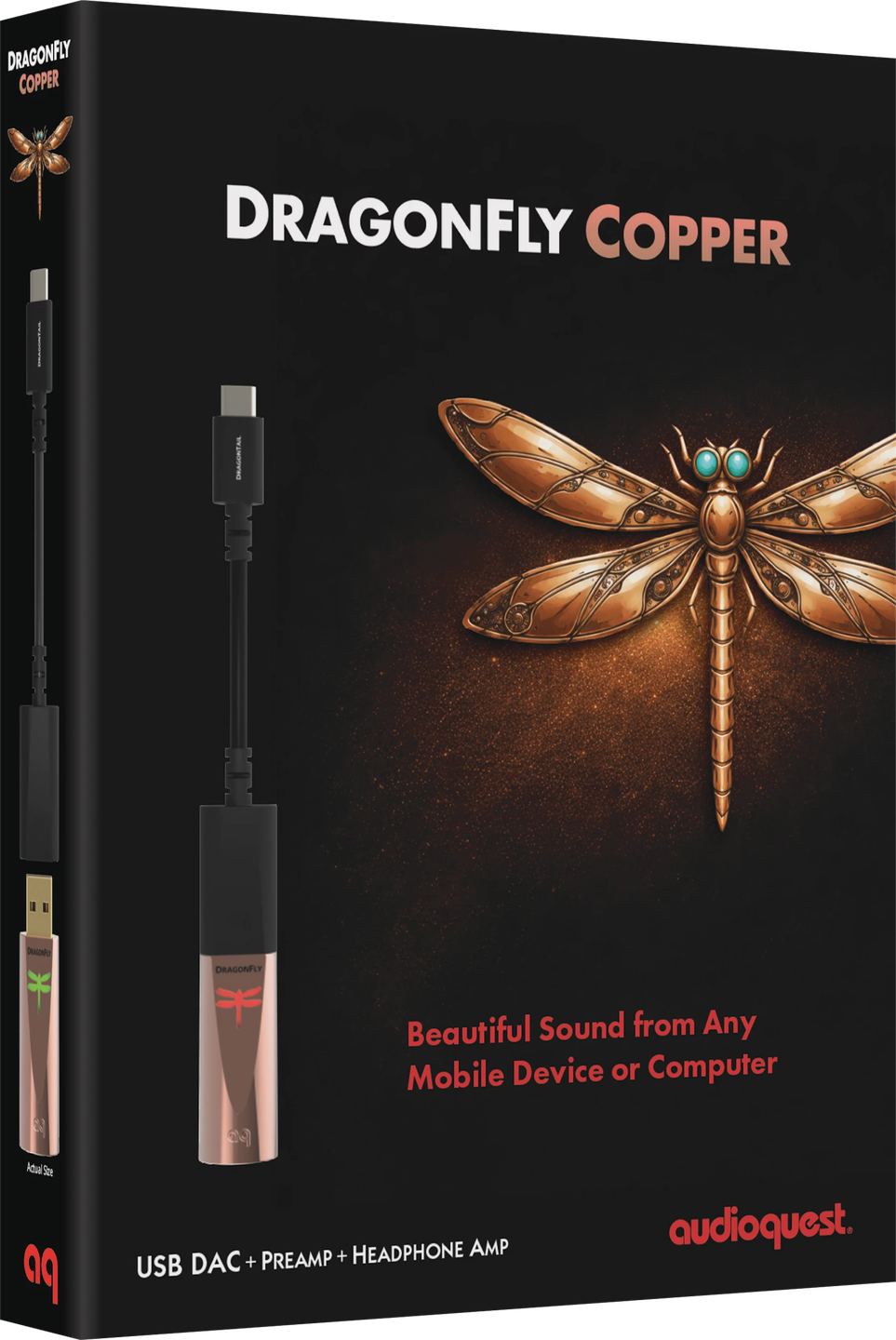
The sound coming out of a computer or smartphone depends on a built-in conversion circuit, rarely given much attention by manufacturers. The DragonFly Copper takes over from this circuit: a digital-to-analog converter the size of a USB stick, which slots between the source and the headphones to deliver a cleaner signal. AudioQuest presents it as its most powerful and most energy-efficient converter to date.

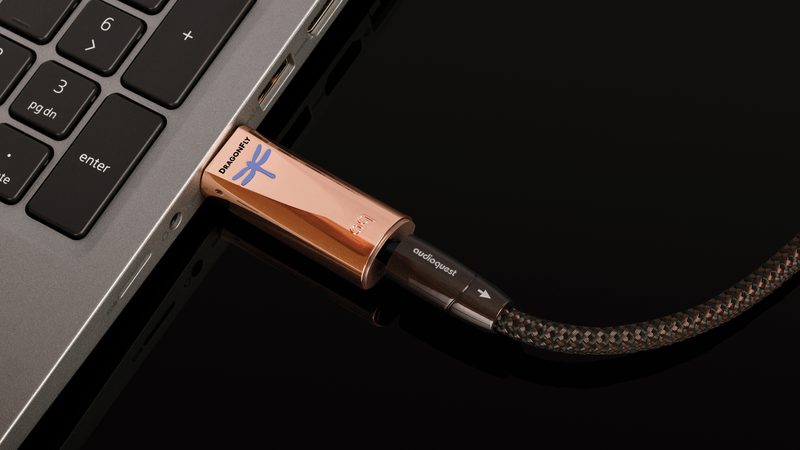
At first glance, nothing sets the DragonFly Copper apart from an ordinary USB stick. The housing fits in a pocket, plugs directly into a USB-A port, and requires no external power supply: it draws the necessary current from the source device. This compactness comes with a trade-off. Since the connector is USB-A, a device with only USB-C ports will need the DragonTail adapter included in the box.
The copper housing serves a technical purpose. The plated metal drains the radio-frequency interference that disrupts the audio signal, an approach borrowed from the RF-dissipating connectors used on AudioQuest’s Mythical Creatures cables. Signal conversion takes place in a less noisy environment.
The DragonFly Copper is built around a 32-bit ESS Sabre converter. This chip processes the digital stream and transforms it into an audible analog signal, bypassing the conversion circuit of the computer or phone. The benefit is tangible: the audio components built into consumer devices are often calibrated for cost, not precision. By bypassing them, the Copper reduces distortion and brings out details that the original source left in the shadows.
It handles everything from a compressed MP3 to a high-resolution file, with no special settings required.
Compared to previous DragonFly generations, the Copper doubles its output power. In practice, it drives demanding headphones more easily and holds the volume without struggling on the most complex passages. A Microchip-branded microprocessor reduces current consumption by approximately 25%. AudioQuest describes it as the most powerful and most efficient converter it has ever designed.
This efficiency matters on mobile, since the DragonFly Copper draws its power from the phone or tablet battery. Controlled consumption limits the impact on battery life, without eliminating it entirely.
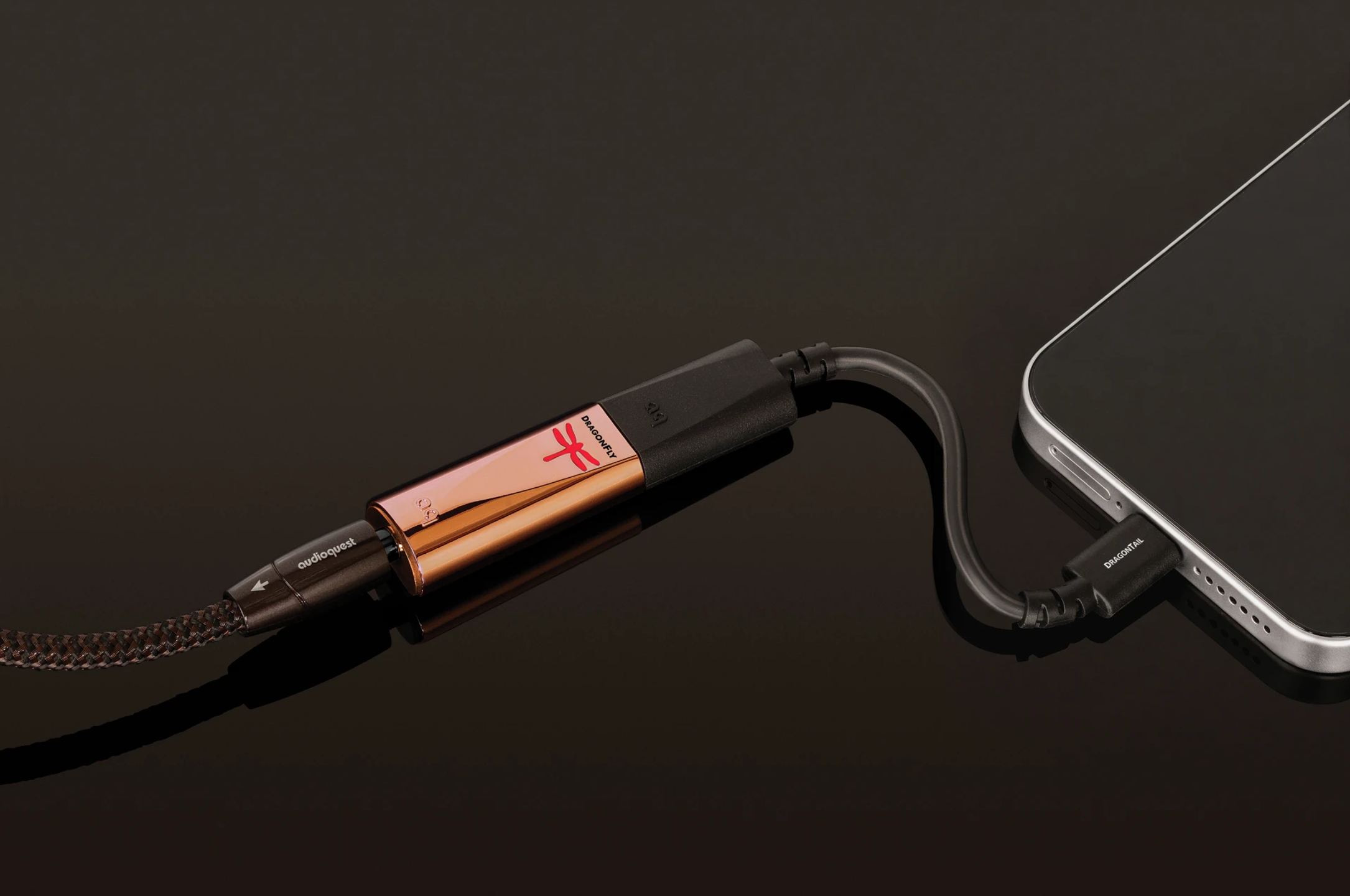
The DragonFly Copper works with computers running Windows and macOS, iOS and Android devices, and also under Linux, without official technical support from AudioQuest on that last system. It complies with USB Audio Class standards, making it recognizable without driver installation: plug it in and the operating system detects it.
In terms of use, the Copper powers a wired headphone, but its output also serves as a source for a preamplifier, amplifier, or active speakers. Plugged into a car stereo’s auxiliary input, it improves audio playback in the car. Volume control remains managed from the smartphone, tablet, or computer, with no knob on the housing.
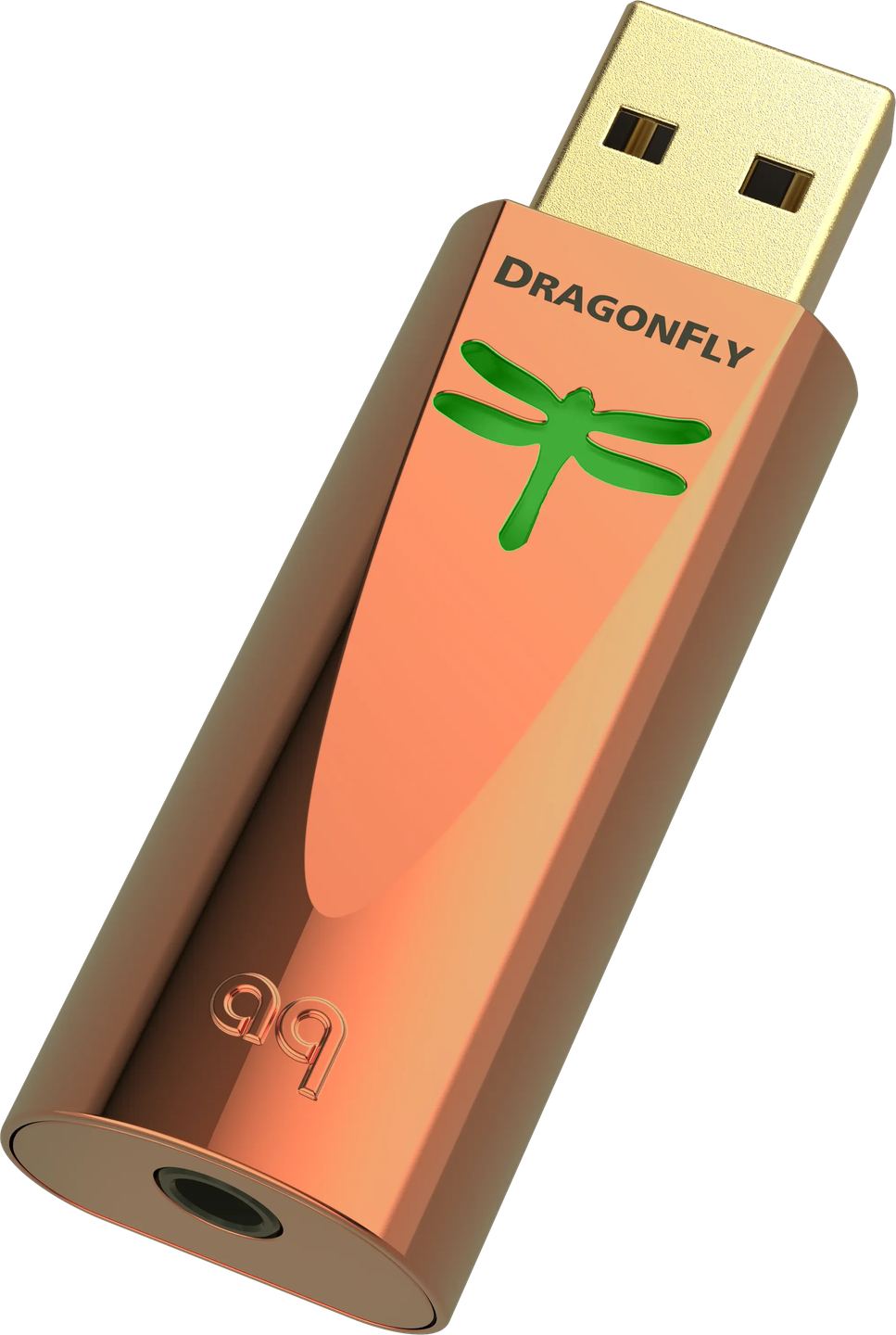
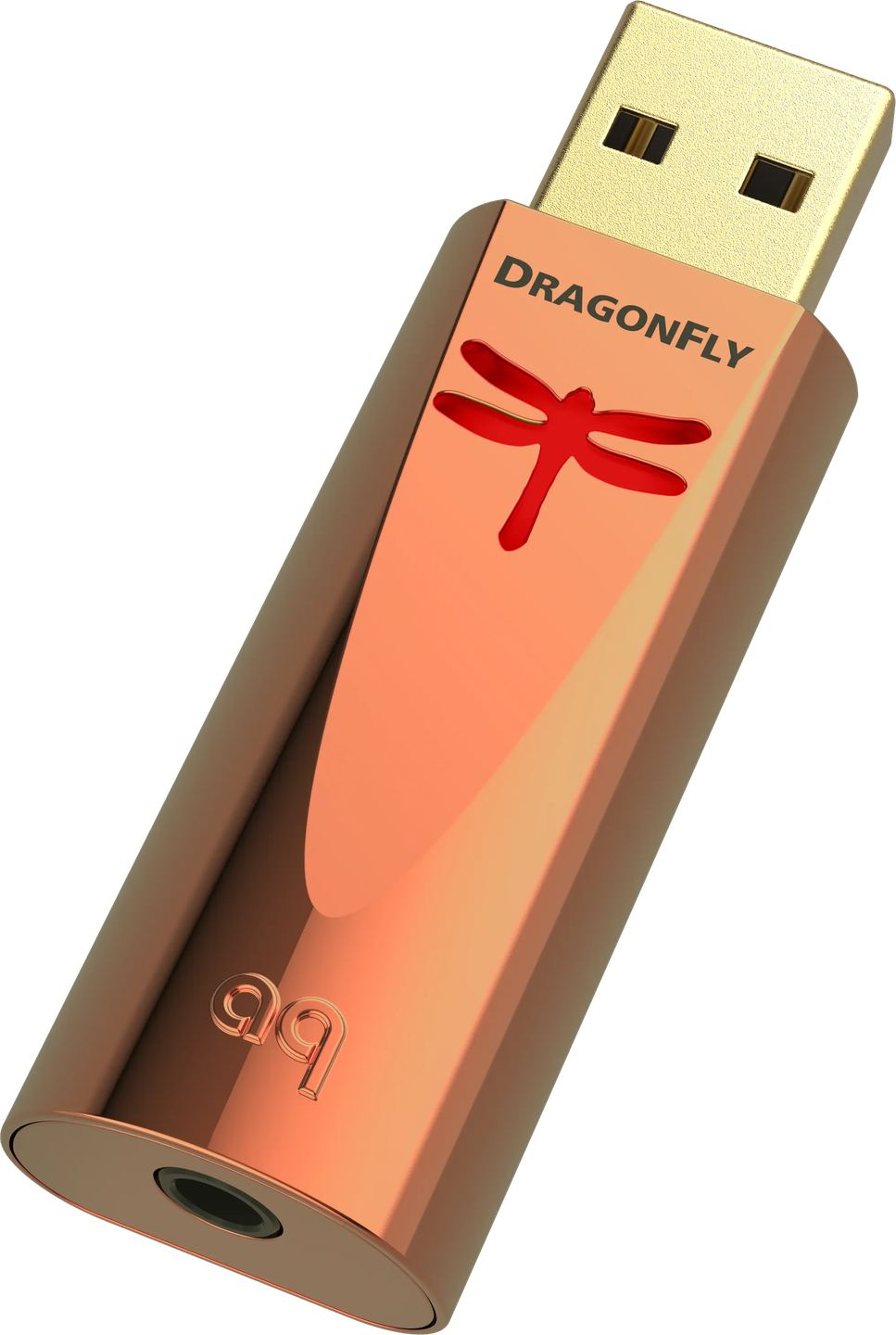
The only visible element on the DragonFly Copper is its dragonfly-shaped logo, which lights up in a different color depending on the device’s status. Red indicates standby. Green corresponds to a 44.1 kHz stream — the frequency of audio CD — and blue to 48 kHz. High-resolution files are identified by yellow for 88.2 kHz and light blue for 96 kHz. This indicator saves you from digging through settings to verify that a source is actually playing the correct format.
No. The converter complies with USB Audio Class standards, natively recognized by Windows, macOS, iOS, and Android. Simply plug it in and the system detects it as an audio output device and makes it available for selection. Under Linux, operation relies on the same compliance, but AudioQuest does not provide technical support for that system.
Its output power, doubled compared to previous DragonFly models, covers the vast majority of portable and home headphones. However, models with very high impedance or very high current demands may reach its level limits. For that type of headphone, a dedicated amplifier remains more comfortable.
The DragonFly Copper terminates in a USB-A plug, the traditional format for computer ports. Phones and many recent laptops now only have USB-C ports. The included DragonTail adapter bridges the two: it sits between the converter and the device’s USB-C port, without altering the signal or performance.
Yes, up to a sample rate of 96 kHz, as confirmed by the light indicator, which turns light blue at that value. It also handles intermediate rates (44.1, 48, and 88.2 kHz) and compressed formats such as MP3. Conversion is handled by the ESS Sabre chip, regardless of the quality of the original file.
Yes, provided the car stereo has an analog auxiliary input. The Copper connects to the source (smartphone or tablet) and sends a converted signal to that input. The result is cleaner than the phone’s direct headphone output. However, it does not replace a Bluetooth or native USB connection on the car stereo, as it occupies the wired input.
The plated copper is used to drain the radio-frequency interference present around a computer or phone. These disturbances can degrade the audio signal even before conversion. By channeling them away, the housing contributes to a quieter background. The effect is subtle in isolation, but it adds to the converter’s other internal optimizations.
Yes, since it has no battery of its own and draws its power from the source device. Its microprocessor reduces consumption by approximately 25% compared to previous versions, which limits the impact on a smartphone or tablet’s battery life. During a long mobile listening session, the drain remains noticeable but moderate.
Thierry
Amazing! I didn't believe it, but it works.
Comment from 13 October 2026 — Experience from 2 October 2026