Ortofon MC Vertex
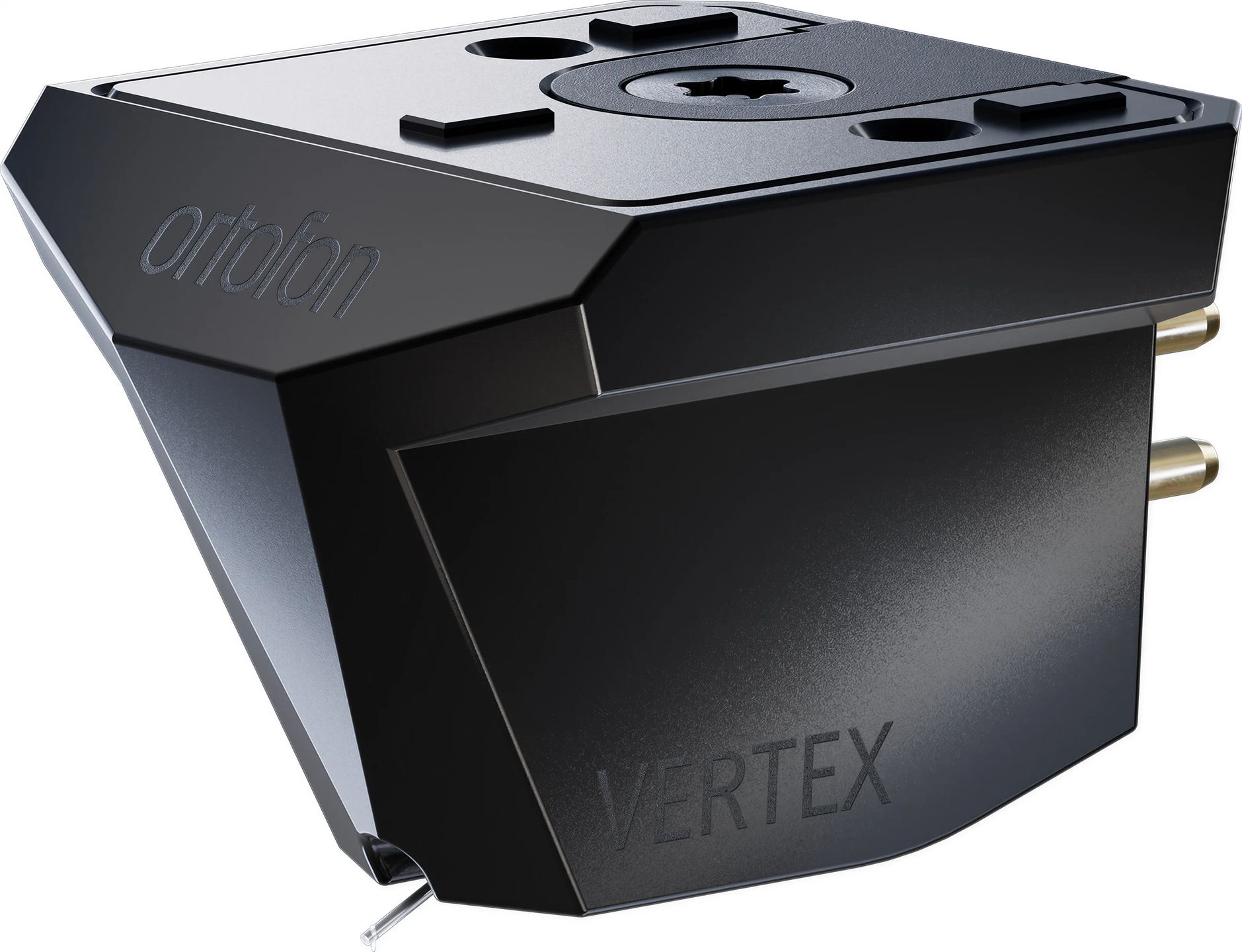
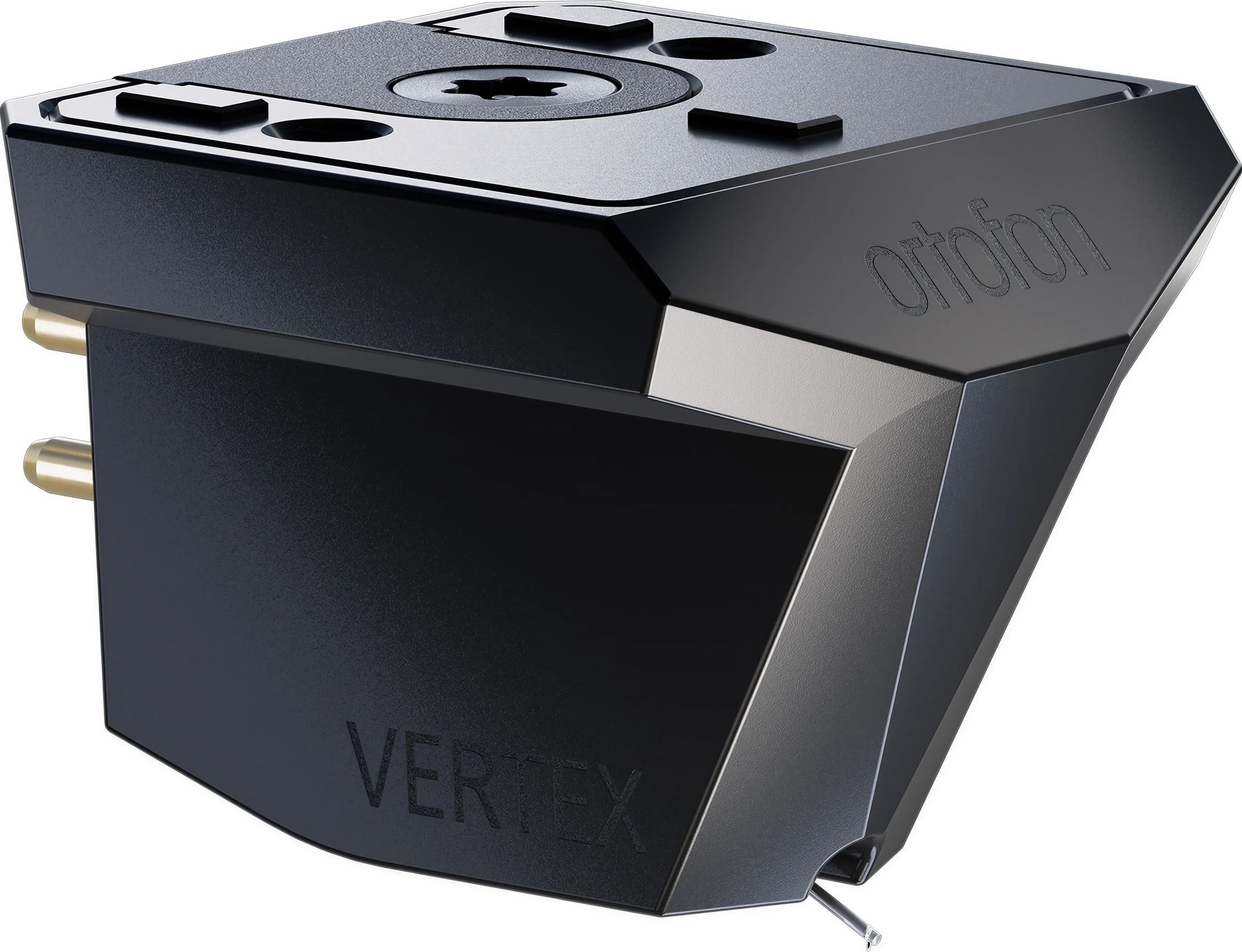
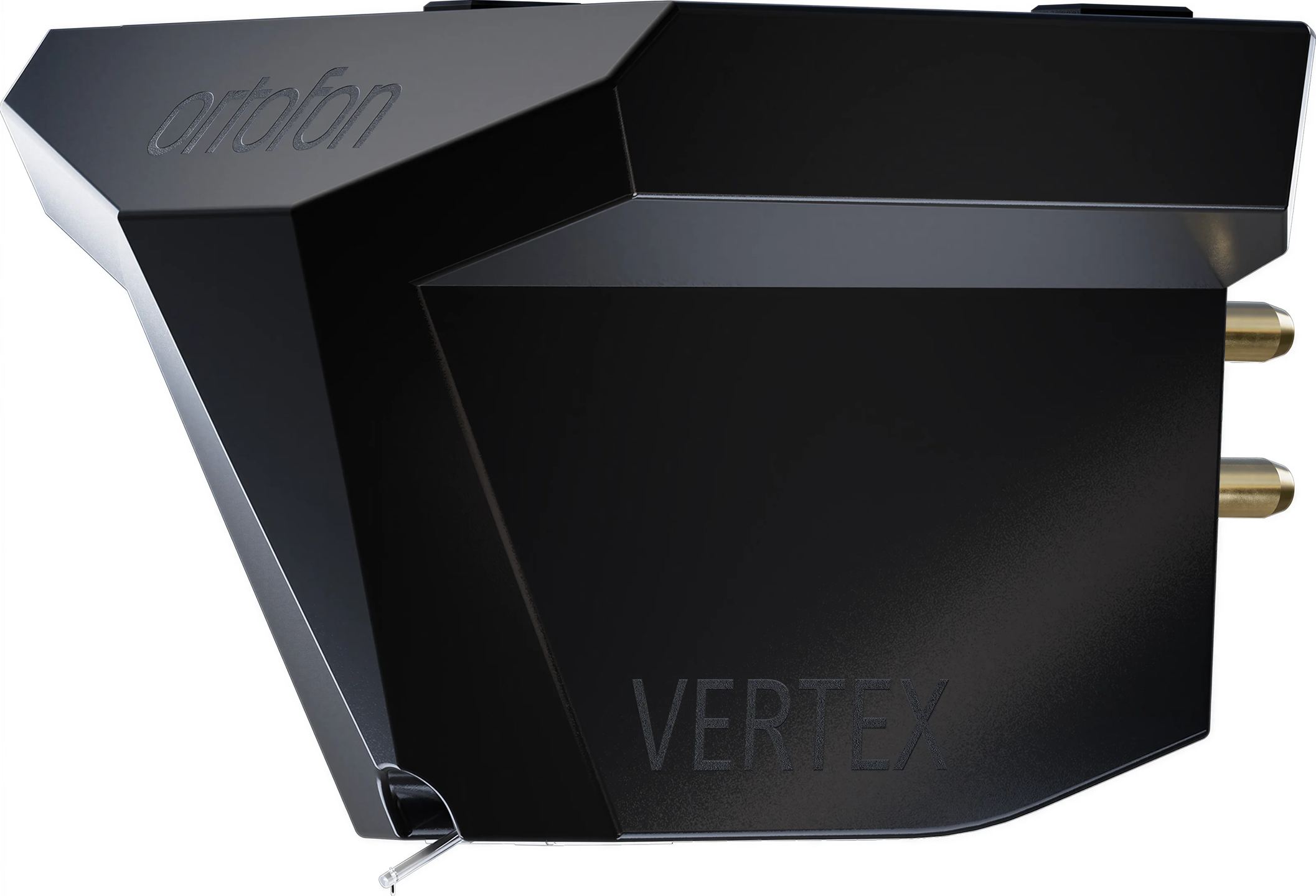

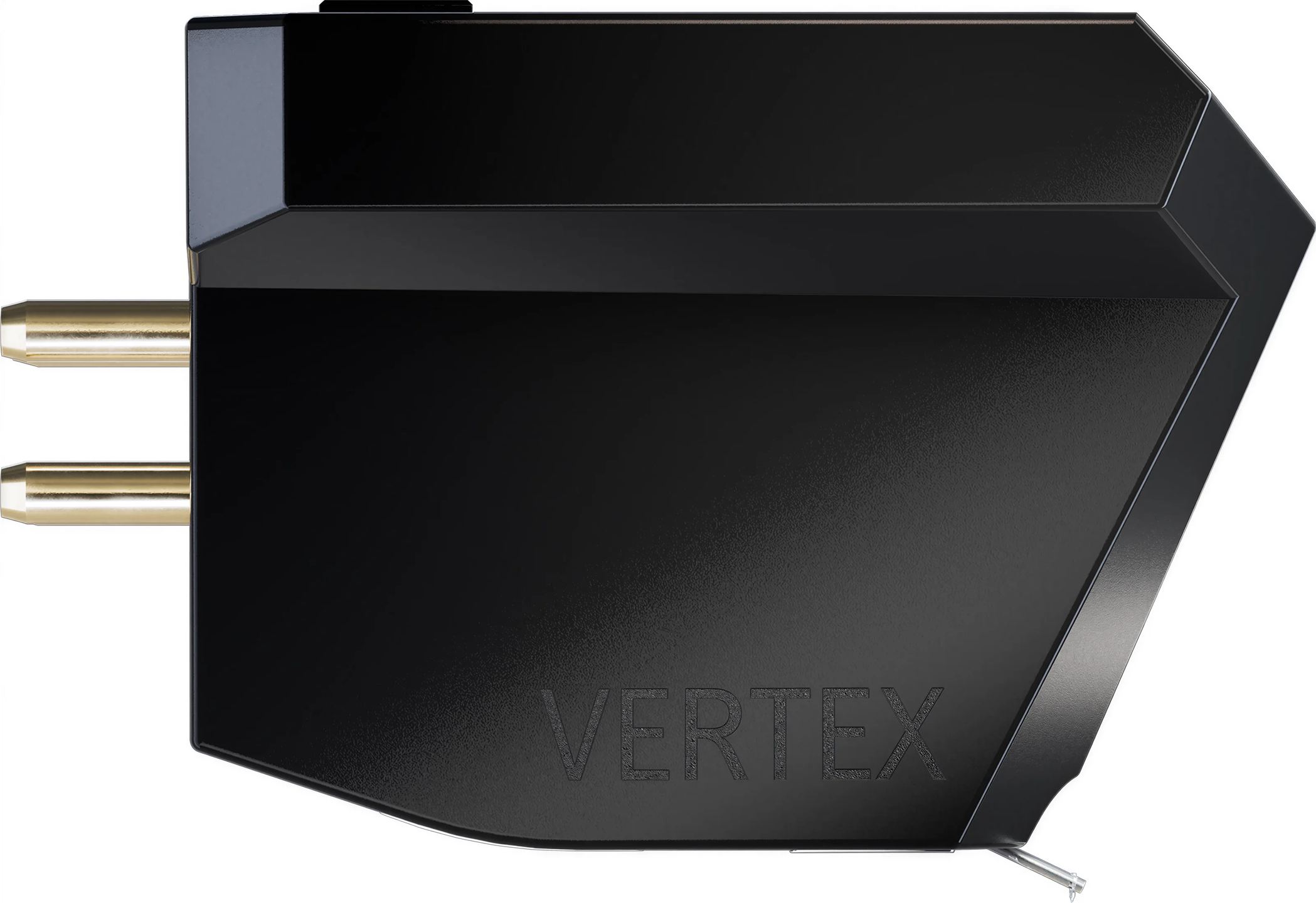
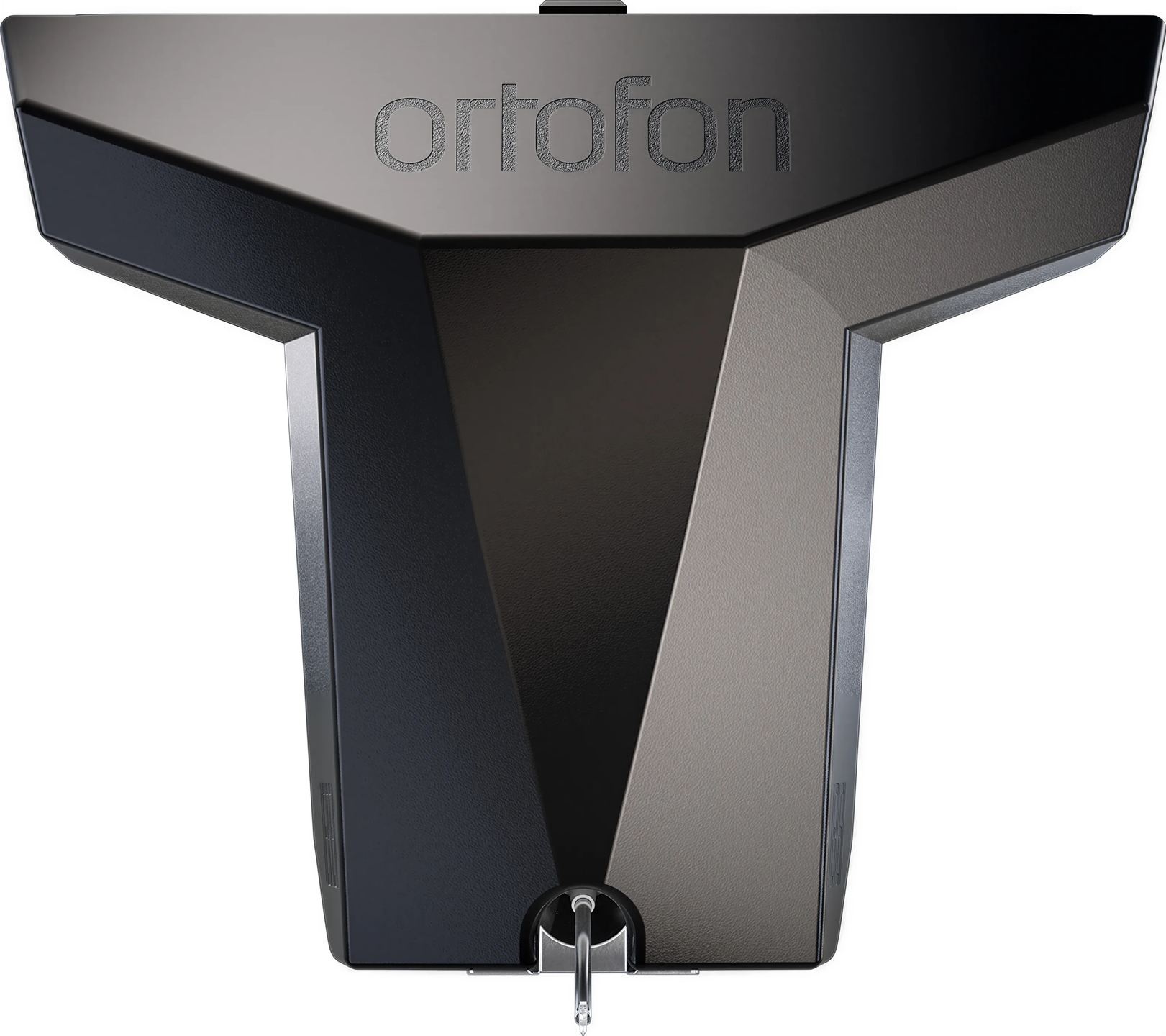


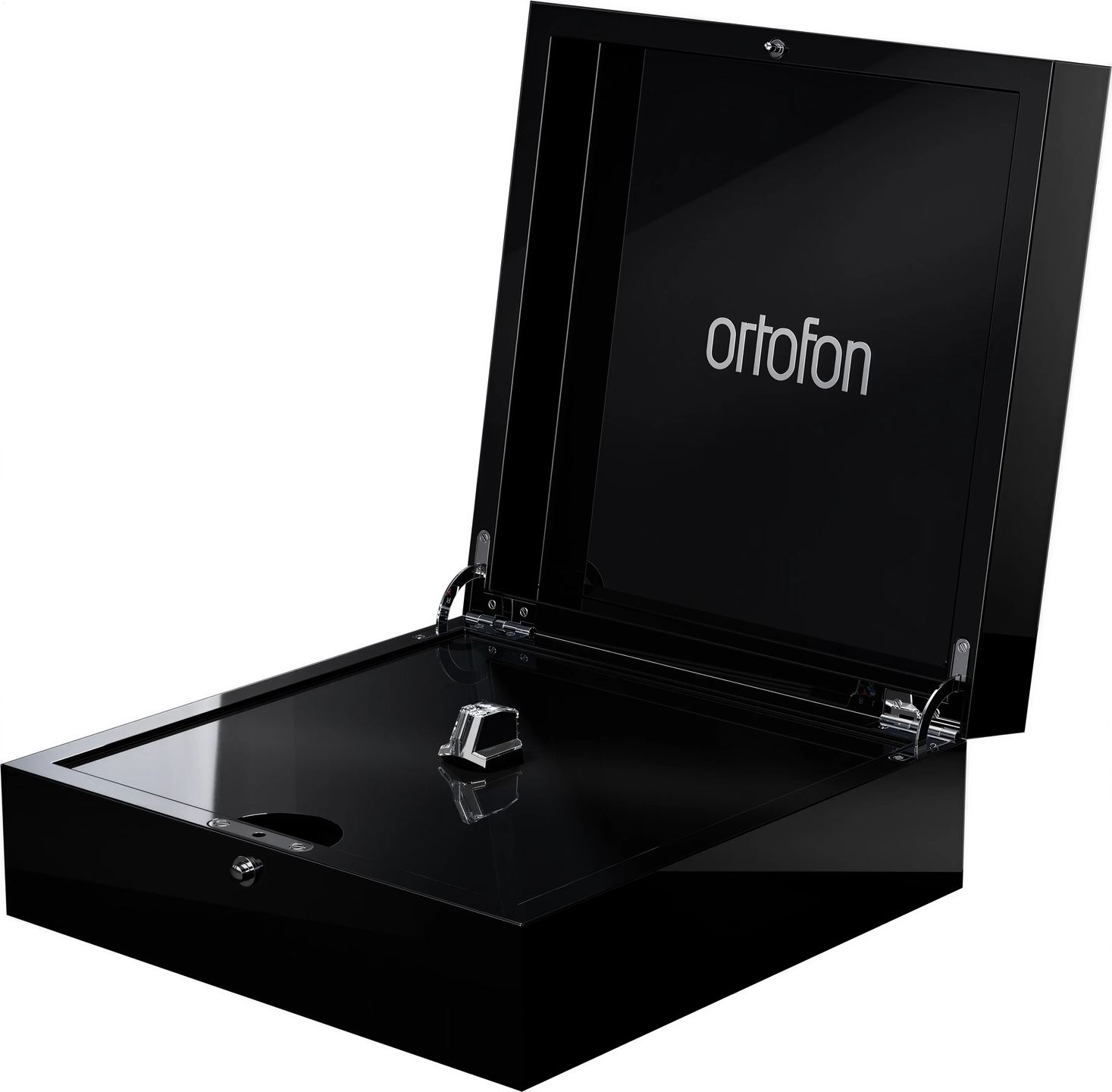
Ortofon MC Vertex: the flagship cartridge of the Exclusive series
For more than ten years, the Replicant 100 diamond topped Ortofon’s most ambitious cartridges. The MC Vertex turns that page: the Danish manufacturer replaces it with a brand-new diamond profile, the Vertex, and rethinks the mechanical chain that connects the groove to the coils. Unveiled at the High End show in Vienna 2026, it becomes the new pinnacle of the Exclusive series, where every part has been designed to work in harmony with the others.
A diamond cut to fit the groove
The line-contact profile is nothing new at Ortofon, but the Vertex diamond offers a new interpretation of it. Its geometry features a scanning radius of 4 µm and a contact radius extended to 110 µm, meaning a contact surface with the groove walls that is broader than with conventional cuts. The benefit is tangible: by distributing pressure over a wider area, the stylus tracks the groove with greater stability, causes less wear to the vinyl, and maintains consistent contact in the most demanding passages, where a diamond with a small contact surface can lose its grip.
The cantilever, too, is made of solid diamond
Having a diamond followed by a rod also made of diamond follows simple logic: the stiffer and lighter the cantilever, the more the energy captured by the stylus reaches the coils without being lost along the way. Ortofon mounts the Vertex diamond in a laser-cut micro-drilled hole, with tight tolerances that fix the alignment and make it reproducible from one cartridge to another. The rod is then laser-polished to remove surface irregularities likely to disrupt groove tracking. The whole forms a short and stable interface between the stylus and the transduction system, which limits losses and parasitic delays.
A laser-printed titanium body
The body and internal core are produced in titanium by selective laser melting (Selective Laser Melting). Rather than machining a part from a solid block, Ortofon builds the structure layer by layer, which gives it control over geometry, mass distribution, and internal damping with a level of precision that conventional machining struggles to achieve. The brand incorporates a damping cavity and works on rigidity so that the body remains inert and sends as few resonances as possible back to the active section. The black finish comes from a DLC (Diamond-Like Carbon) surface treatment, and the markings are laser-engraved.
Silver coils and non-magnetic armature
On the signal-generation side, Ortofon uses a non-magnetic armature. By excluding any magnetic material from the moving part, the cartridge reduces moving mass and eliminates parasitic interactions with the magnet’s field, which helps preserve linear mechanical-to-electrical conversion. Four coils are distributed on split-pole supports, two positive and two negative, wound with high-purity silver wire. The magnetic circuit has been refined for even flux density from one coil to the next. The result claimed by the brand: 30 dB channel separation at 1 kHz and a stable signal from one end of the spectrum to the other.
Controlling resonances across the entire spectrum
Resonance control relies on the Wide Range Damping system, patented by Ortofon. The principle: a platinum disc held between two elastomers with different properties, which damp the armature’s movements across the full width of the audible spectrum rather than over a narrow range. By working on the nature of the two rubbers, developed in-house, Ortofon finely adjusts the absorption of mechanical energy and contains the resonance modes that would otherwise color the signal.
A system tuned for linearity
Taken separately, each technical choice stands on its own merits. Their real value lies above all in the way they complement one another: the diamond profile, cantilever, generator, damping, and body were calculated together so that no link degrades the work of the others. The measurements reflect this consistency. Frequency response stays within a range of ±1 dB between 20 Hz and 20 kHz, channel balance remains at 0.1 dB at 1 kHz, and internal impedance is set at 19 ohms. Output voltage, meanwhile, tops out at 0.3 mV: this is a low-output MC cartridge that requires phono amplification capable of raising it cleanly, a subject we return to below. For setup, Ortofon recommends a tracking force of 2.5 g and a load greater than 100 ohms.
Technical specifications
Cartridge type
- Type: MC (Moving Coil), low output
- Tracking angle: 23°
Stylus
- Vertex diamond, advanced line contact profile (line contact)
- Microscopic groove tracking
- Tracking radius (r): 4 µm
- Contact radius (R): 110 µm (i.e. r / R 4 / 110 µm)
- Extended contact surface for better pressure distribution on the groove walls
- High resolution and stability in complex passages
Cantilever
- Solid diamond cantilever (Solid Diamond Cantilever)
- Laser-polished surface to limit mechanical irregularities
- Rigid and lightweight structure
- Laser-made diamond-cantilever bond, with tight tolerances
- Precision micro-drilling for diamond mounting
- Direct energy transfer, without parasitic loss
Body and structure
- Titanium body made by selective laser melting (Selective Laser Melting, SLM)
- DLC (Diamond-Like Carbon) surface treatment, black finish
- Optimized internal structure with integrated damping cavity
- Laser-engraved markings
- Cartridge weight: 15 g
- Objective: high mechanical inertia and reduced resonance
Transduction system
- 4 coils on split pole piece supports (2+ and 2−)
- Coil wire: high-purity silver
- Non-magnetic armature
- Magnetic circuit optimized for highly linear mechanical-to-electrical conversion
- High channel separation and stable signal
Damping system
- Wide Range Damping technology, patented by Ortofon
- Platinum disc between two elastomers with different properties
- Resonance control across the entire audible spectrum
- Fine adjustment of mechanical energy absorption
- Elastomers developed in-house
Electrical performance
- Output voltage (1 kHz, 5 cm/s): 0.3 mV
- Channel balance at 1 kHz: 0.1 dB
- Channel separation at 1 kHz: 30 dB
- Frequency response: 20 Hz to 20 kHz (±1 dB)
- Internal impedance (DC resistance): 19 Ω
Recommended operating conditions
- Tracking force: 2.5 g
- Load resistance: > 100 Ω
- Lateral dynamic compliance: 9 µm / mN
Frequently Asked Questions
What phono preamplifier should be planned for the MC Vertex?
With an output of 0.3 mV, this is a low-output MC cartridge. Two options work: a dedicated MC phono stage offering high gain, on the order of 60 to 66 dB, or an MM stage preceded by a step-up transformer chosen for an internal impedance close to 19 ohms. In both cases, the amplification must be very low-noise, because even the slightest hiss is noticeable at this signal level.
What value should the load impedance be set to?
Ortofon recommends a value above 100 ohms. In practice, 100 ohms is a good starting floor, and higher values, up to several hundred ohms, remain usable. The load mainly affects the balance of the upper frequency range and electrical damping: a low load tends to soften the treble, while a higher load opens it up. The best approach is to adjust by ear within the recommended range.
What type of tonearm is suitable for it?
Its lateral dynamic compliance of 9 µm/mN is an average-to-low value, and its 15 g mass is above average for a cartridge: the assembly is best suited to tonearms with medium to high effective mass, preferably with precision bearings (gimbal). The cartridge is designed around a vertical tracking angle of 23°, which should be observed when adjusting the VTA and the stylus rake angle (SRA).
Can the stylus or the cantilever be replaced by the user?
No. The Vertex diamond is integrated with a diamond cantilever, forming a single calibrated assembly, with no removable stylus. When the tip reaches the end of its service life or is damaged, replacement is handled through the Ortofon network and not by at-home exchange.
How should you maintain the stylus tip?
Brush the stylus regularly with a soft brush, from back to front, in the reading direction, and never touch it with your fingers. Keep your records clean: dust lodged in the groove accelerates wear, especially with such a large contact surface. A stylus cleaner can be used sparingly, following the manufacturer’s instructions.
Does the cartridge need to be broken in before it performs at its best?
Like most MC cartridges, its suspension stabilizes over the first few hours of use. Allow a few dozen hours of listening for the rubber parts and the suspension to reach their final behavior. No special procedure is necessary beyond normal listening.
What is the cartridge's mechanical mounting?
It uses the standard half-inch (12.7 mm) two-screw mounting, compatible with most headshells and tonearms that accept this format. Prefer a rigid headshell and high-quality hardware to preserve the mechanical chain on which the design relies, and take care with alignment (overhang, azimuth, VTA) in view of the precision of the diamond profile.
- Eco-contribution included in the sale price.
- Manufacturer reference: 9030-MC-VERTEX
- GTIN / EAN: 5705796235593