

OLED TVs, a Constantly Evolving Technology
June 13, 2023
Contents
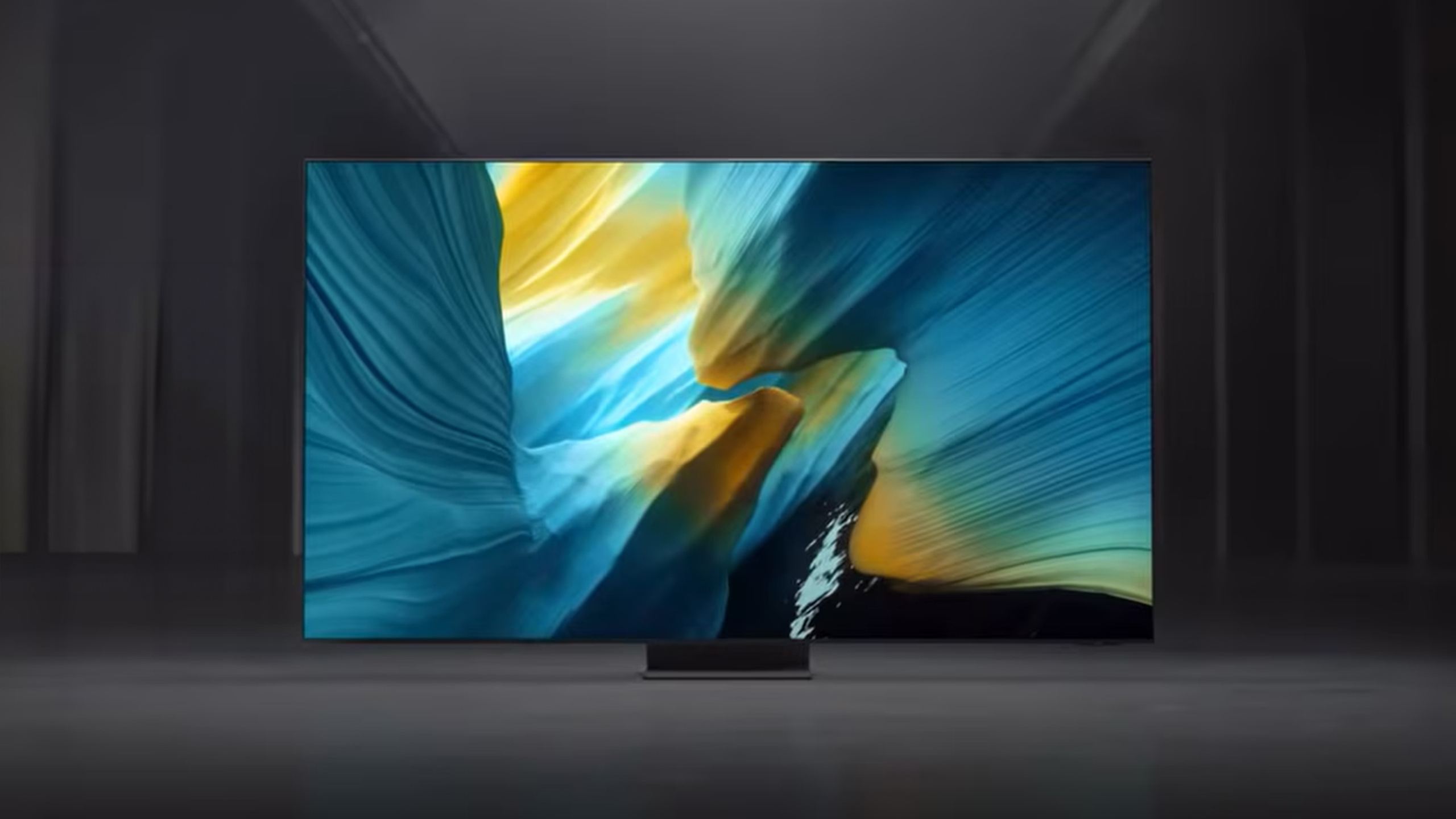
OLED technology has revolutionized the television market by offering unprecedented image quality. With ultra-deep blacks, vivid colors and ultra high definition resolution (UHD 4K), OLED TVs are becoming increasingly popular with discerning consumers. Faced with this popularity, more and more brands are getting into the production of OLED TVs. Traditional major brands in the TV market, such as LG, Sony and Panasonic, were among the first to produce OLED TVs, but other brands like Philips, Hisense or TCL now also offer their OLED models.
This increased competition has also led to a drop in the prices of OLED TVs, making them more affordable. However, it is important to note that not all OLED TVs are equal in terms of image quality (processing, processor…) or features (Android, Tizen …). It is therefore important to do your research before buying an OLED TV, comparing brands and models, or consulting us for advice and recommendations.
If you are looking for a high-end TV that offers an unparalleled cinematic experience, an OLED TV is the perfect choice. We will explore OLED technology, its advantages and how it compares to other types of TVs.
Get ready to discover the next generation of UHD TV, and be amazed by the image quality and exceptional performance of OLED TVs.
Understanding OLED Technology
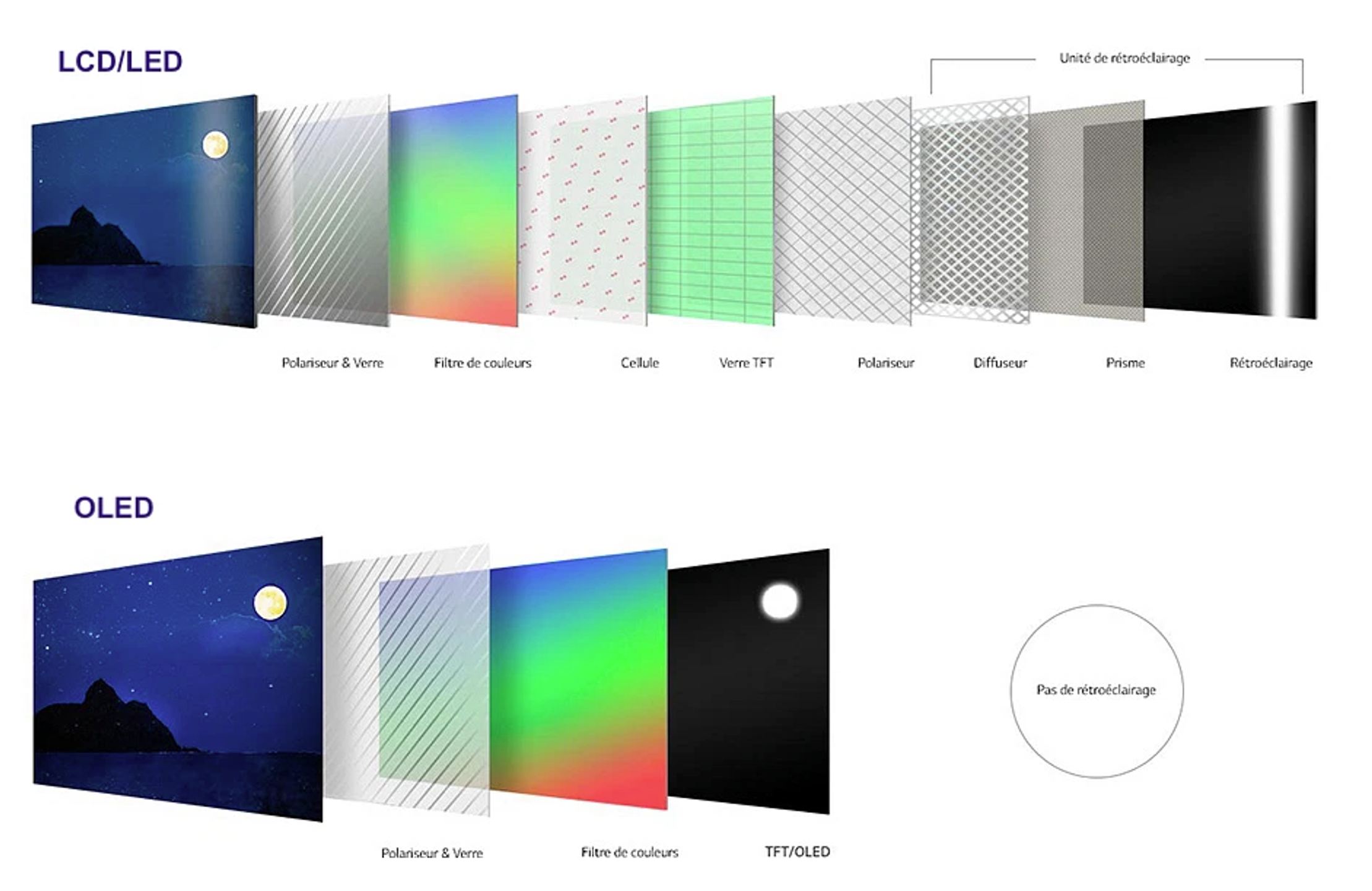
OLED (Organic Light Emitting Diode) technology is a recent advancement in TV screen manufacturing. Unlike LCD TVs, OLED TVs do not need backlighting to produce light. Each pixel on an OLED screen can turn on and off independently, allowing for deep blacks and vivid colors without image distortion. In addition, OLED technology allows for a significantly reduced screen thickness, resulting in ultra-thin and elegant designs.
In short, OLED technology offers superior image quality and an exceptional viewing experience, making it an ideal choice for movie lovers.
Advantages of OLED TVs
Superior image quality: OLED offers superior image quality with deeper blacks and more vibrant colors. This is possible because each pixel on the OLED screen can be turned off individually.
Wide viewing angle: OLED TVs offer a wider viewing angle than LCD TVs. This means you can watch TV from the side or at an angle without losing image quality.
Thin design: Since OLED technology does not require backlighting, OLED TVs can be much thinner than LCD TVs. Additionally, OLED is flexible, allowing for curved screens or other innovative designs.
HDR and OLED TVs
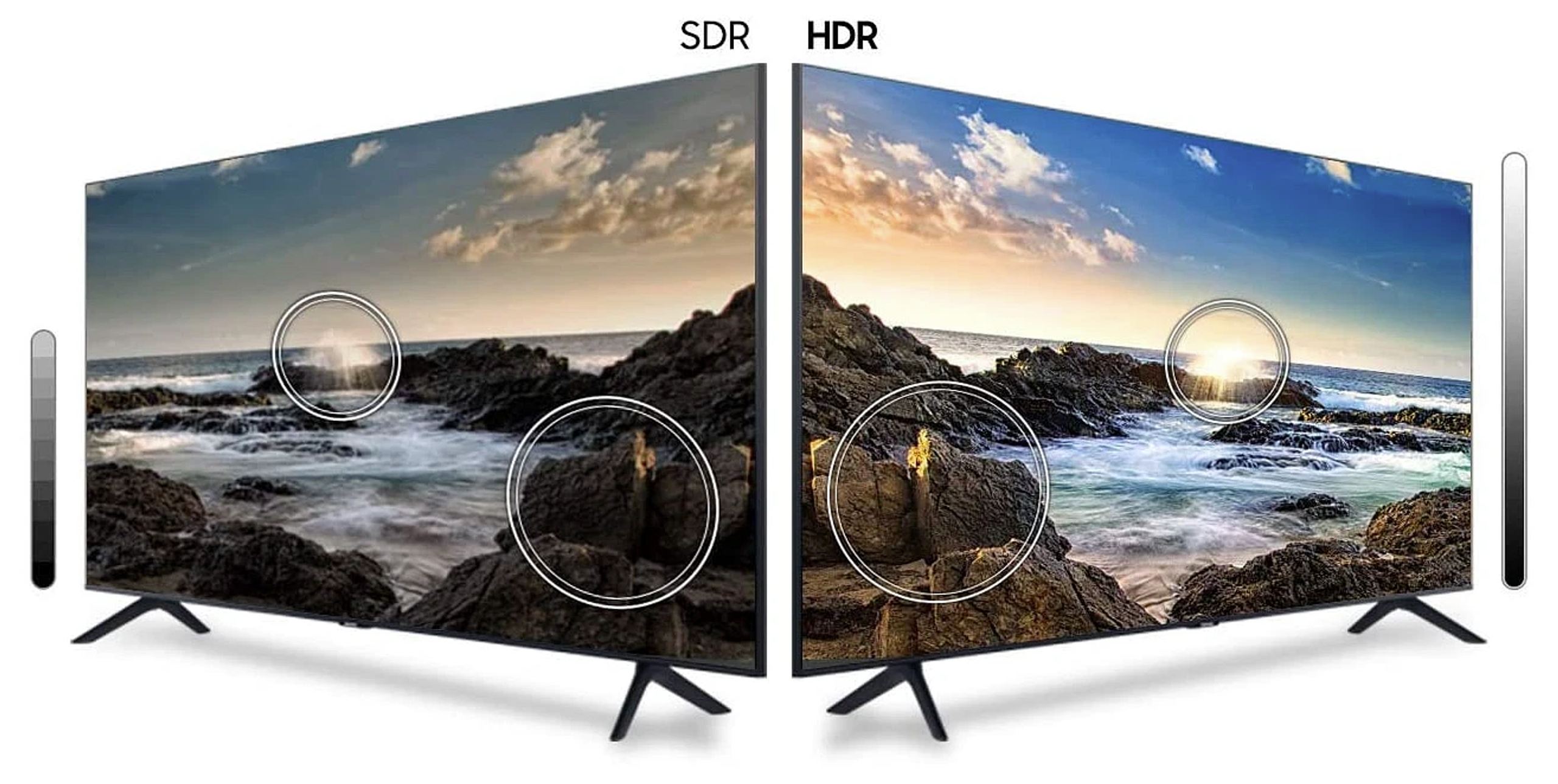
HDR (High Dynamic Range) is a technology that allows for brighter and more contrasted images. OLED TVs are compatible with HDR formats, such as HDR10 and Dolby Vision, which enables them to offer even higher image quality.
Brightness of OLED TVs
With the advent of HDR, HDR10, HDR10+ and Dolby Vision, brightness has become very important for TVs, and OLED has long lagged behind LED or QLED TVs in this regard. Although OLED still falls slightly short today, they are progressing with each generation, and some models achieve peak brightness levels very close to QLED, such as Samsung with its QD-OLED (Quantum Dot OLED) technology or Panasonic with MLA (Micro Lenses Array), a process using convex microlenses that redirect a larger portion of the light produced by the diodes towards the screen.
Can you game with an OLED TV?
OLED TVs offer a more immersive gaming experience thanks to their exceptional image quality. Colors are vivid and rich, contrast is infinite, and response times are fast, allowing gamers to enjoy a smoother and more realistic gaming experience.
OLED TVs are also compatible with advanced gaming technologies such as HDR (High Dynamic Range), ALLM (Auto Low Latency Mode), VRR (Variable Refresh Rate), 4K HFR (High Frame Rate), and AMD FreeSync Premium, enabling gamers to enjoy an even more immersive gaming experience.
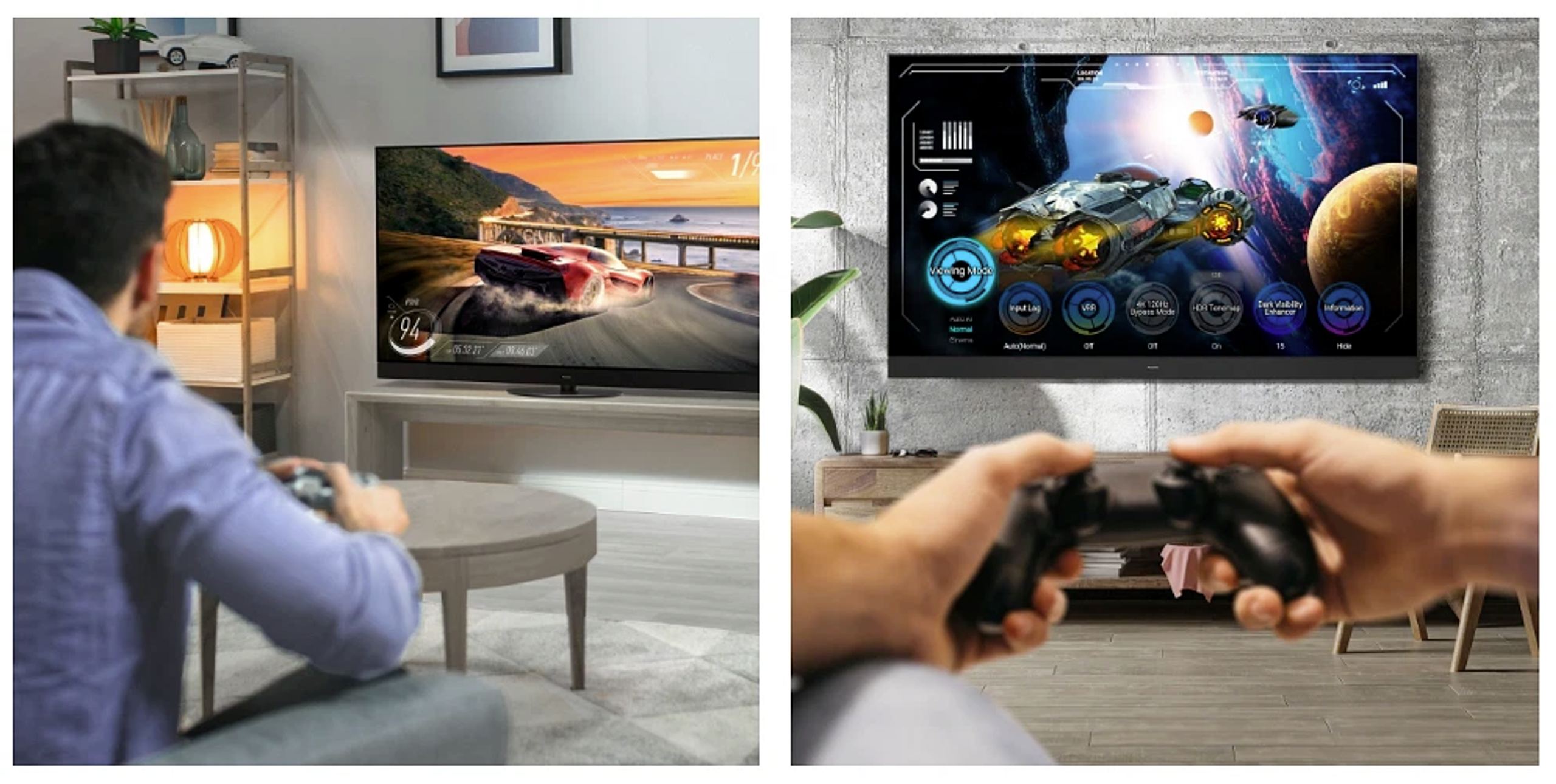
HDR provides a wider dynamic range, with deeper blacks and brighter whites, while VRR synchronizes the screen’s refresh rate with the console’s refresh rate, reducing screen tearing and stuttering. HDMI 2.1, on the other hand, offers higher bandwidth, allowing for higher refresh rates.
In summary, OLED TVs are an excellent choice for gamers seeking an immersive, high-quality gaming experience.
Screen Size
The proliferation of OLED TVs has led to a variety of available screen sizes and a broader price range for consumers. This allows consumers to choose an OLED TV that suits their needs, budget, and living space. Today, OLED TVs come in various sizes, ranging from 42 inches to over 80 inches, with the most popular choices being 55 inches or 65 inches.
Sound Quality
The sound quality of OLED TVs can vary considerably depending on the model and brand. Generally, OLED TVs have similar sound quality to LED TVs, but some brands offer models equipped with built-in soundbars, compatible with Dolby Atmos.
Given the thinness of today’s screens, many consumers opt for soundbars or home theater systems to enhance sound quality. Soundbars can be placed in front of the TV or mounted on the wall, providing superior sound quality without cluttering the living space.
Connectivity
HDMI : HDMI (High-Definition Multimedia Interface) ports allow you to connect devices such as Blu-ray players, game consoles, computers, home theater amplifiers, etc. but also to send audio back to a soundbar or home theater amplifier via the eARC function, such as Dolby Atmos for example. Pay attention to the HDMI standard, to benefit from the latest advances you will need an HDMI 2.1 cable (eARC and 4K/120Hz gaming only work with the HDMI 2.1 standard).
USB : USB ports on an OLED TV allow you to play multimedia files stored on USB flash drives or external hard drives.
Wi-Fi and Ethernet : OLED TVs are often equipped with Wi-Fi and Ethernet features, which allow you to connect to the Internet to access streaming applications such as Netflix, Amazon Prime Video, Disney+ etc.
Bluetooth : OLED TVs can also be equipped with Bluetooth to allow the connection of wireless headphones, speakers or other Bluetooth compatible products.
DLNA : DLNA (Digital Living Network Alliance) technology allows compatible products to connect to a network to share multimedia files, such as photos, videos or music.
Google Chromecast : Some OLED TVs integrate Google’s Chromecast technology, which allows you to stream content from a mobile device or computer directly to the TV.
Voice Assistants
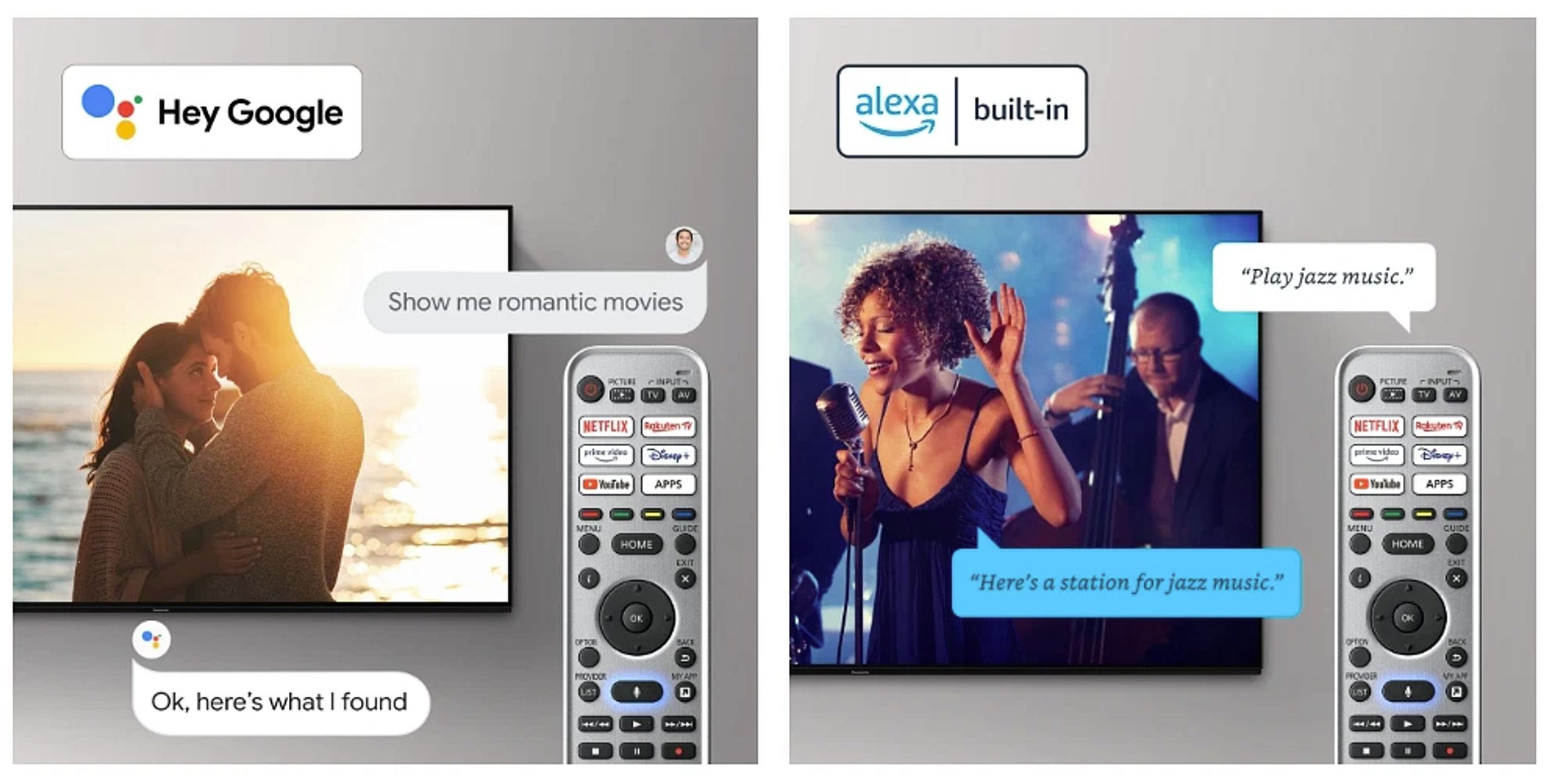
Voice assistants are an increasingly common feature on OLED TVs. Thanks to technologies such as Google Assistant, Amazon Alexa or Apple Siri, users can interact with their TV simply by using their voice. Using a voice assistant can make the viewing experience even more convenient and intuitive, eliminating the need to use a remote control or navigate through complex menus. However, it’s important to note that not all OLED TV brands necessarily include the same range of voice assistants, so it’s important to check the specifications of each model before buying.
In summary, voice assistants are a useful feature for OLED TVs, offering an even more convenient and intuitive viewing experience for users.
Power Consumption
OLED TVs do not require a backlight, unlike LED TVs, which means they consume less power. This is because OLED pixels are self-illuminating, which saves energy by avoiding the need to constantly keep a backlight on, even in parts of the image that are dark. However, it’s important to note that the power consumption of OLED TVs can vary depending on the screen size and brightness level. In general, larger OLED TVs consume more power than smaller models. Similarly, when the brightness of the image is increased, the power consumption of the OLED TV also increases.
In comparison, QLED TVs use LED backlights that can consume more energy than OLED TVs. However, the latest models of QLED TVs use more efficient backlights, such as Quantum Dot backlights, to improve image quality while reducing energy consumption.
Comparison with other types of TVs

LED: LED TVs are cheaper than OLED TVs, but they cannot compete with the image quality offered by OLED. OLED TVs offer deeper blacks, more vivid colors, infinite contrast, and wider viewing angles.
QLED: QLED TVs have similar image quality to OLED TVs, but they use different technology. QLED TVs use liquid crystals to produce light, while OLED TVs use organic light-emitting diodes. OLED TVs offer deeper blacks and wider viewing angles than QLED TVs.
Plasma: Plasma TVs were once very popular, but they have been replaced by LED and OLED TVs. OLED TVs offer better image quality than plasma TVs, with much deeper blacks, more vivid colors, and lower energy consumption.
In summary, OLED TVs offer exceptional image quality with abyssal blacks, more vivid colors, and wider viewing angles than other types of TVs, providing an unparalleled viewing experience.
Future innovations in OLED technology
OLED technology is already incredibly advanced, but it continues to improve at a rapid pace. Recent advancements include flexible screens, transparent screens, and larger panels. These innovations will enable new applications for OLED technology, such as screens that can be folded or rolled up for portable devices or screens that can be integrated into transparent surfaces. OLED technology is constantly evolving, and it is exciting to see how it will continue to transform the display industry in the years to come.
Conclusion
In summary, OLED technology has revolutionized the television market by offering unmatched image quality with incredibly deep and dense blacks, vibrant colors, and ultra-high definition (UHD 4K) resolution, making it an ideal choice for movie enthusiasts. With brightness that continues to improve, matching the best current LEDs, OLED TVs are now capable of getting the most out of UHD 4K content in HDR, HDR 10, HDR 10+, or Dolby Vision. Gamers will not be left out thanks to very short response times and a high refresh rate.
You may also like to read
 Sony and TCL Consider Strategic Partnership for 2027Hi-fi and home cinema news
 PS5 and Xbox Series X: the best HDMI 2.1-compatible TVsComparisons and buying guides
 QLED, OLED, Mini LED, QD-OLED: which TV technology should you choose?Comparisons and buying guides
 Panasonic unveils its 2026 TVs: what are the differences between the W80C, W90C, W92C and W95C?Hi-fi and home cinema news
 IFA 2026: Hisense expands its projector lineup with the C3 and PX4 ProHi-fi and home cinema news
 How high should you mount your TV on the wall (and why everyone mounts it too high)Tutorials and practical guides




