Sonos publicly tests its app’s new navigation
July 28, 2026
Contents
Rarely has a software update been so closely scrutinized. Since the failed overhaul of May 2024, every change made to the Sonos app has been closely watched, both by speaker owners and by the company itself. The brand has just opened testing of a new way to navigate its app to all users, available as a public beta on Android and iOS.
To try it, you need version 87 of the app, then enable enhanced navigation in the settings. The process remains optional: Sonos is gathering feedback for several months before considering a wider rollout, with no firm date, perhaps in the autumn.
The weight of the 2024 fiasco
In May 2024, Sonos replaced its app with a completely redesigned version, launched at the same time as its first headphones, the Sonos Ace. The result turned into a disaster: alarms no longer went off, sleep timers disappeared, volume control malfunctioned, and the music library became inaccessible. Basic features that had been available for years had simply vanished.
Dissatisfaction spread across social media and forums. Sonos estimated the lost revenue at more than €90 million, laid off part of its workforce, and saw several executives leave the company. In January 2025, CEO Patrick Spence stepped down in favor of Tom Conrad, co-founder of Pandora and a longtime board member.
Since then, the company has rolled out fixes, with more than twenty successive versions, and paused its hardware launches for nearly a year to focus on software.
Tab-based navigation and redesigned volume control
The most visible change concerns the app’s structure. Hidden gestures and content cards give way to three fixed tabs: home, system, and search, identical on iOS and Android. This tab-based layout, familiar to anyone using other mobile apps, replaces interactions that many found difficult to understand.
Volume control has been redesigned from scratch. The slider is easier to grab and fine-tune, plus and minus buttons have been added for those who prefer tapping, and a new method lets you synchronize the volume of a group of rooms with a single gesture.
Other adjustments affect everyday use. You can now reorder and sort your systems instead of having to accept their installation order, highlight a specific system, such as the one connected to the TV, remove a track from a playlist with a simple swipe, or benefit from a redesigned Now Playing screen and new iPad views. Sonos also announces the upcoming arrival of controls from the lock screen.
A deliberately cautious rollout
The approach stands in contrast to 2024. Rather than imposing the new feature on everyone at once, Sonos is offering it as an option that can be enabled and disabled at will. Even after a wider rollout, the old navigation will remain accessible for those who do not embrace the new one. The company is giving itself time to make corrections before making this interface the default setting.
A different way of working
Tom Conrad presents this beta as the starting point for a new approach, where the development roadmap is decided through exchanges with customers and the community. According to him, teams spent hundreds of hours observing real users using the app, to identify what gets in the way, what confuses newcomers, and what slows down an action as ordinary as turning up the volume.
The executive publicly acknowledged the original mistake: trying to change everything too quickly. His approach today can be summed up in one simple idea: the best updates are the ones that go unnoticed. Sonos emphasizes this point: this is not a new app, but a new way to navigate the one everyone already has.
Should you enable the beta now?
The question remains for speaker owners: take the plunge right away or wait. A beta always carries a risk of bugs, and nothing requires you to switch immediately. Those who want to influence the final result would benefit from testing it and sharing their feedback, since that is exactly what Sonos says it expects. Others can wait for the stable version without losing anything: the old navigation remains in place.
After two years spent making repairs, Sonos has clearly learned its lesson in terms of process, with an open, reversible, and optional test. As for the substance, the new navigation will have to prove itself in use, and beta users will be the first to judge it.
Popular products
You may also like to read
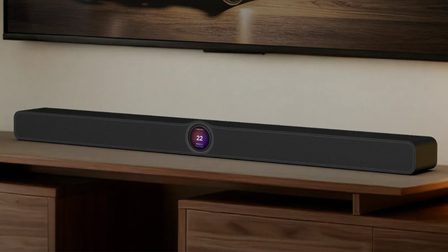 WiiM Bar: a Dolby Atmos 3.0.2 soundbar that challenges the Sonos BeamHi-fi and home cinema news
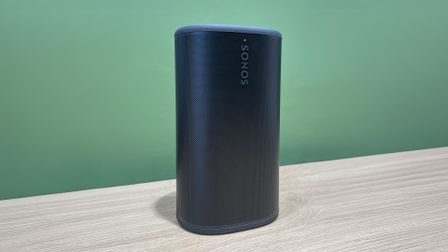 Sonos Play review: the successful compromise between lightness and sound qualityProduct reviews
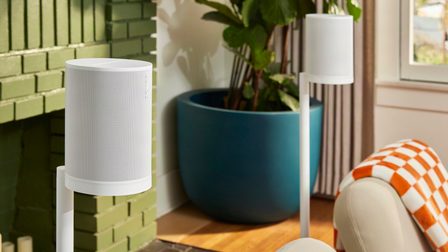 Sonos Era 100 SL vs Era 100: what are the differences between the two speakers?Hi-fi and home cinema news
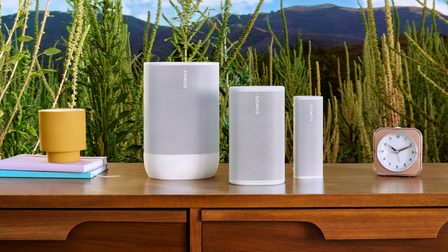 Sonos Play, Move 2 or Roam 2: which portable Sonos speaker should you choose?Comparisons and buying guides
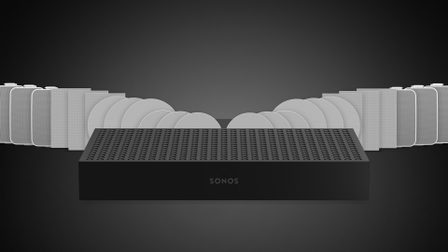 Sonos Amp Multi: the amplifier professional integrators have been waiting forHi-fi and home cinema news
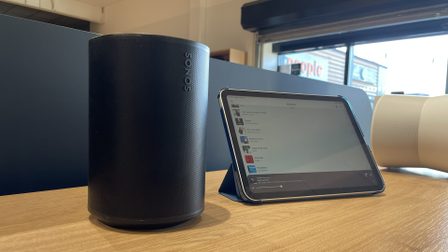 Sonos Era 100 review: full opinion on the Sonos connected speakerProduct reviews