
Contents
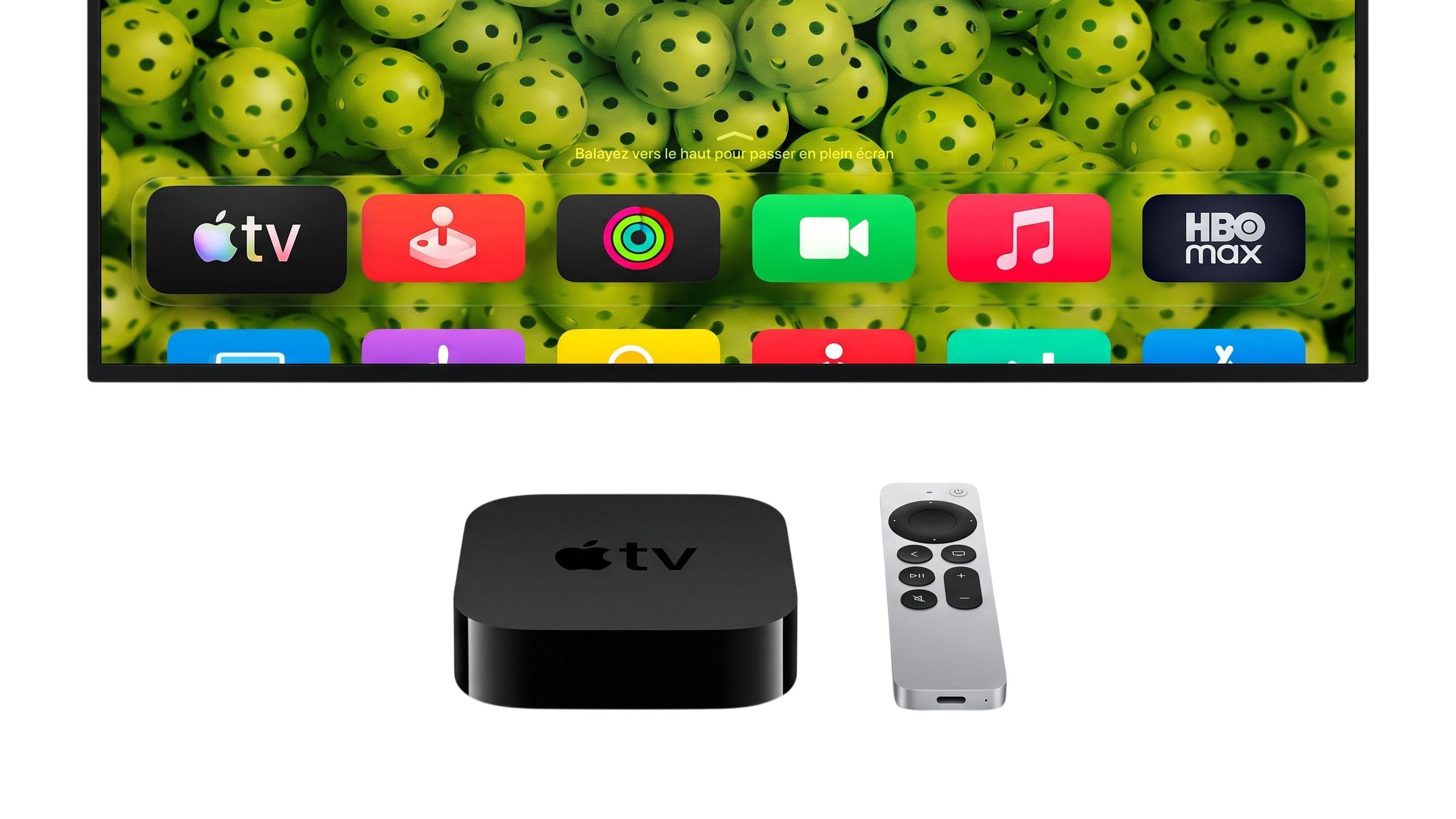
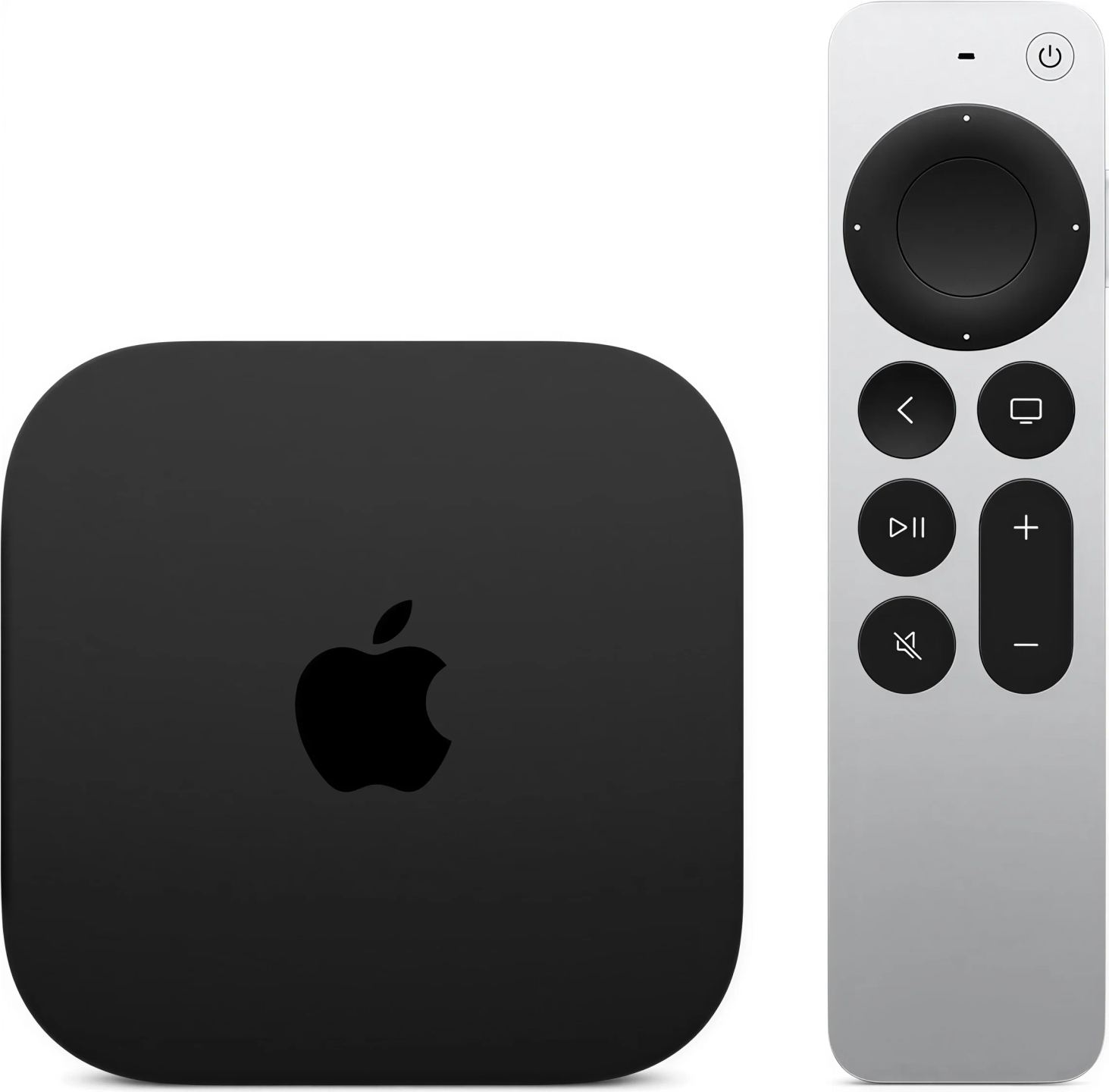
The previous model was released on October 18, 2022: four years have passed, the longest wait between two Apple TV generations. The 4th-generation Apple TV 4K, unveiled on October 13, 2026, retains its small black cube design, 31 mm high with 93.24 mm sides and weighing 217 g, but the internals and surrounding products have changed enough to warrant a closer look. It will be available in France from November 13, 2026, priced at €349, in a single version with 128 GB of storage, Wi-Fi 7 and an Ethernet port, whereas the 2022 model launched at €169 and €189. Three of its selling points are compelling, while two of its limitations are worth knowing before ordering.
Comparison table: Apple TV 4K 2022 and 2026
| Feature | Apple TV 4K 3rd generation (2022) | Apple TV 4K 4th generation (2026) |
|---|---|---|
| Launch price in France | €169 (64 GB, Wi-Fi) and €189 (128 GB, Wi-Fi and Ethernet) | €349 (128 GB, single configuration) |
| Chip | A15 Bionic | A19 |
| Storage | 64 or 128 GB | 128 GB |
| Video output | HDMI 2.1, up to 4K at 60 fps | HDMI 2.1, up to 4K at 60 fps, QMS |
| HDR formats | Dolby Vision, HDR10+, HDR10, HLG | Dolby Vision (profiles 8.1 and 5), HDR10+, HDR10, HLG |
| Hardware AV1 decoding | No | Yes |
| Wi-Fi and Bluetooth | Wi-Fi 6, Bluetooth 5.0 | Wi-Fi 7 (MIMO 2x2), Bluetooth 6 |
| Ethernet and Thread | On the 128 GB version only | Standard (Gigabit Ethernet, Thread) |
| Microphones for Siri | No | Three microphones with voice isolation |
| Surround sound with HomePod | One HomePod or a stereo pair | Up to four HomePod speakers (front and rear) |
| Remote control | Siri Remote USB-C | Siri Remote USB-C, Find My with Precision Finding, Bluetooth 6 |
| Availability | October 18, 2022 | November 13, 2026 (preorders from October 13) |
First improvement: an A19 chip built to last
The A19 chip, the one used in the iPhone 17, replaces the A15 Bionic. Apple claims up to 50% faster CPU performance and up to twice the graphics performance, figures measured by the manufacturer on preproduction units, with hardware ray tracing. Apple does not disclose the amount of RAM.
When watching a film, this extra power is not directly noticeable: the 2022 model still runs streaming apps smoothly. It makes itself felt in the responsiveness of the interface, in games, and above all over time. A box that stays under your television for five years benefits from starting with some headroom, since each version of tvOS eventually drops support for the oldest models. The new conversational Siri also requires a recent chip.
The most tangible benefit for picture quality comes from the integrated AV1 decoder. AV1 is a royalty-free video compression format, more efficient than HEVC, already used by YouTube and Netflix. At the same quality, it requires less bandwidth, which matters with a modest connection or when several screens share the same router. The 2022 model does not support hardware decoding for it.
The new model’s specifications also mention HDMI QMS (Quick Media Switching) technology. It avoids the few seconds of black screen that appear when the television switches frame rates, for example when moving from a 60 Hz menu to a film at 24 frames per second, provided the television supports it.
Second improvement: microphones, networking and remote control
Three far-field microphones are now housed in the box, with voice isolation that distinguishes your voice from the television’s sound, even at high volume. You can start a search or pause playback without looking for the remote, just as with a smart speaker. Those who prefer the familiar gesture still have the Siri button on the side of the remote.
For networking, Wi-Fi moves from standard 6 to standard 7, still with MIMO 2x2, and Bluetooth from version 5.0 to version 6, via Apple’s N1 networking chip. The Gigabit Ethernet port and Thread technology, previously reserved for the more expensive version, are now included as standard. The network port remains the most stable solution for 4K streams, and Thread allows the box to act as a hub for Matter- or HomeKit-compatible smart home accessories.
The fourth-generation Siri Remote retains its aluminum body and USB-C charging, and gains Find My with Precision Finding: a compatible recent iPhone guides you to the remote using an arrow and distance indicator. It retains its infrared transmitter and controls the television or AV receiver via infrared or HDMI-CEC: power on, power off, source switching, volume and mute. In a living room equipped with an AV receiver, a single remote is enough for everyday use. Also sold separately, it remains compatible with older Apple TV models.
Third improvement: surround sound with four HomePod speakers
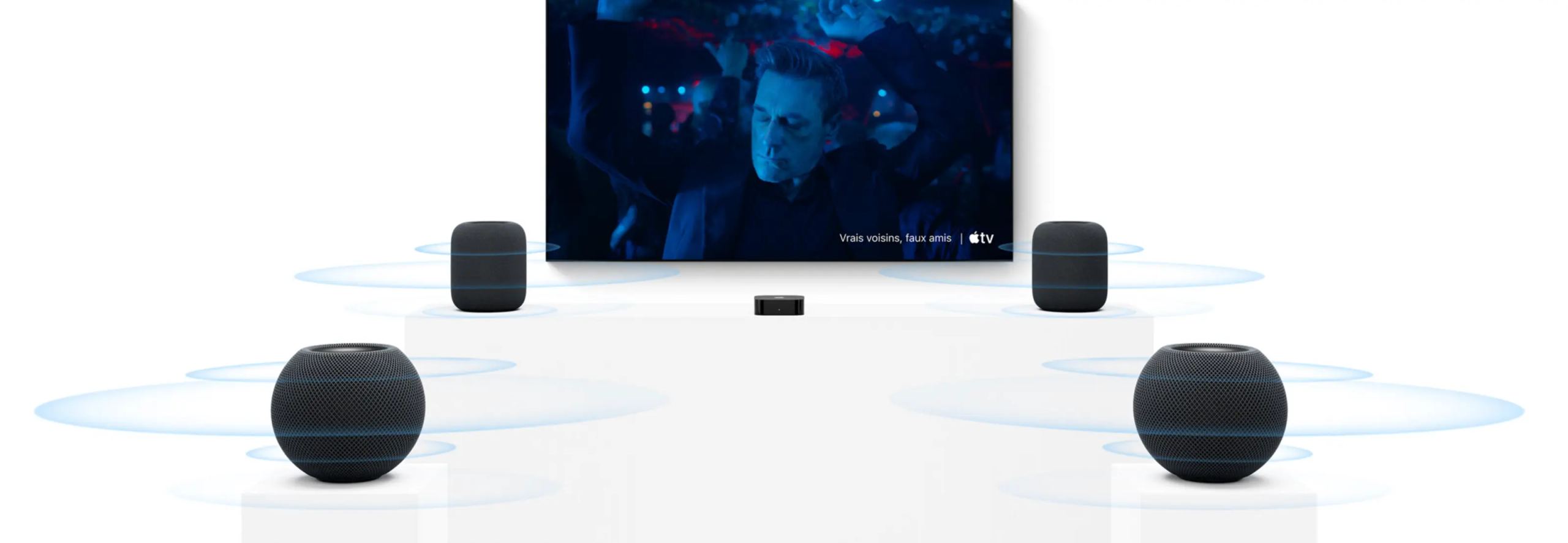
This is the most interesting new feature for sound. Until now, the Apple TV could only pair with a single HomePod or a stereo pair, and multichannel sound was recreated virtually by two speakers placed at the front. The box now supports four speakers, two at the front and two at the rear, using either second-generation HomePod or HomePod mini 2 speakers. Each pair must consist of the same model: four HomePod mini 2 speakers, four HomePod speakers, or two HomePod speakers at the front and two HomePod mini 2 speakers at the rear. Delays and levels between speakers are adjusted automatically. Older Apple TV 4K models, the original HomePod mini and the first HomePod are not compatible.
With the HomePod mini 2, available on October 30, 2026 at €169, the most affordable configuration, four HomePod mini 2 speakers and the box, comes to €1,025. The HDMI port supports ARC and eARC: the television sends sound from other sources connected to it, such as a console or set-top box, back to the HomePod speakers.
It is worth keeping the physical nature of the setup in mind: four speakers, with no dedicated center channel for dialogue, no subwoofer and no height speakers for Dolby Atmos. The appeal lies in its simplicity, with no speaker cables or amplifier. An AV receiver with passive speakers remains more expandable: it allows you to add a subwoofer or height channels and accepts all the sources in the living room.
First limitation: €349 and a Siri unavailable in France
There is no longer an entry-level Wi-Fi-only version: the sole model offered costs €349, almost twice the launch price of the previous model. That is a high price for a streaming box, at a time when most recent televisions include the Apple TV app and the major services. The box’s appeal therefore rests on its responsiveness, long-term updates and integration with the Apple ecosystem.
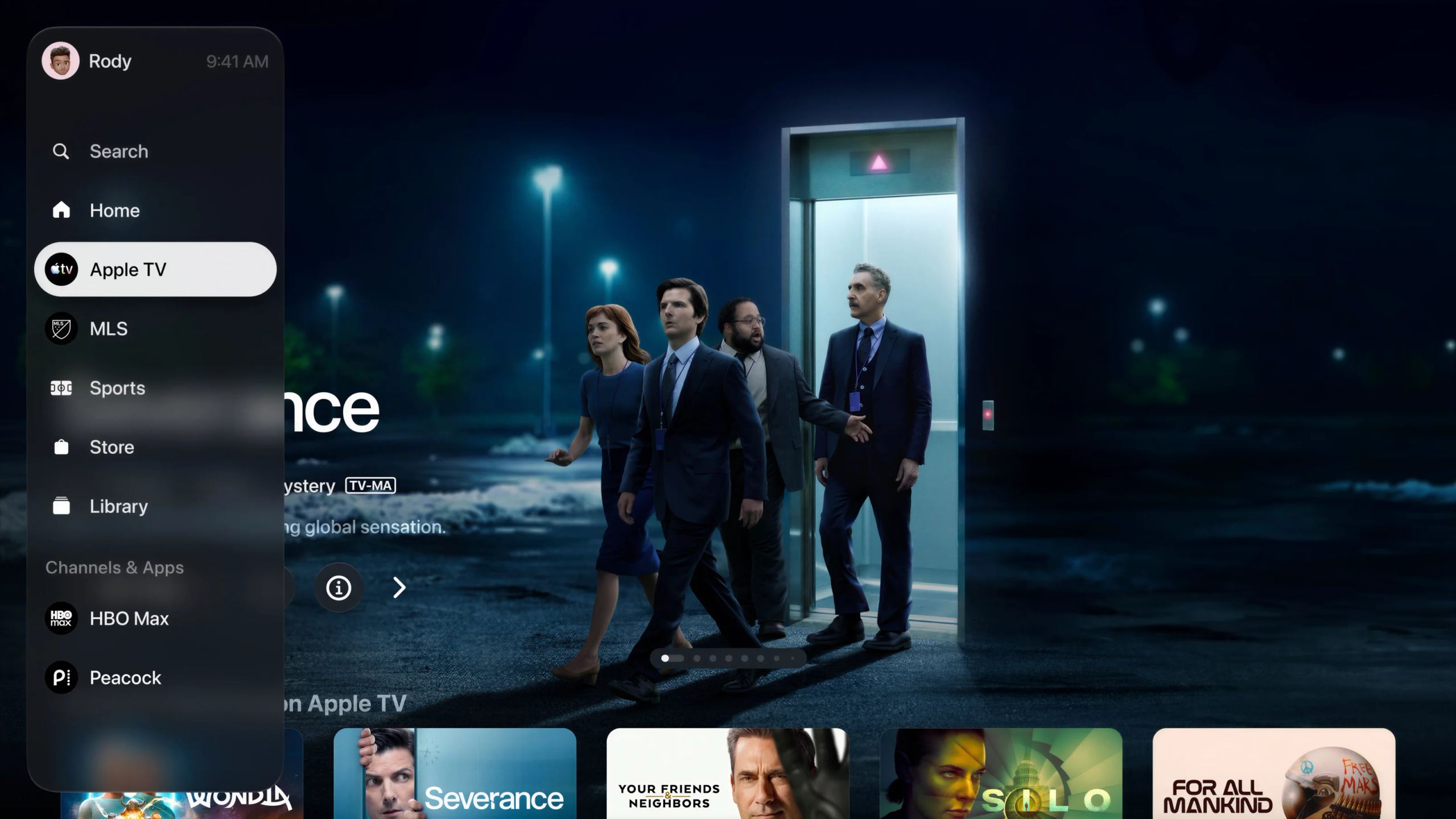
The calculation becomes more complicated in France. The new Siri, a conversational assistant based on Apple Intelligence, appears full-screen when searching for films and series and in a smaller window during playback. It is the selling point highlighted at launch, but it is not currently available in the European Union, with no date announced. In France, the microphones therefore work with the current Siri: French buyers are paying for hardware designed for the new assistant without being able to benefit from it at the time of purchase.
Second limitation: still 4K at 60 frames per second, with no lossless audio
Despite its HDMI 2.1 port, the box tops out at 4K at 60 frames per second for video output. For films, shot at 24 frames per second, this limitation has no consequences. It does matter, however, for games, which the A19’s power made more viable, and for 120 Hz televisions, whose smoothness remains untapped.
The HDR formats remain those used by streaming platforms: Dolby Vision (profiles 8.1 and 5), HDR10, HDR10+ and HLG. Dolby Vision profile 7, the one used on UHD Blu-rays, is not included.
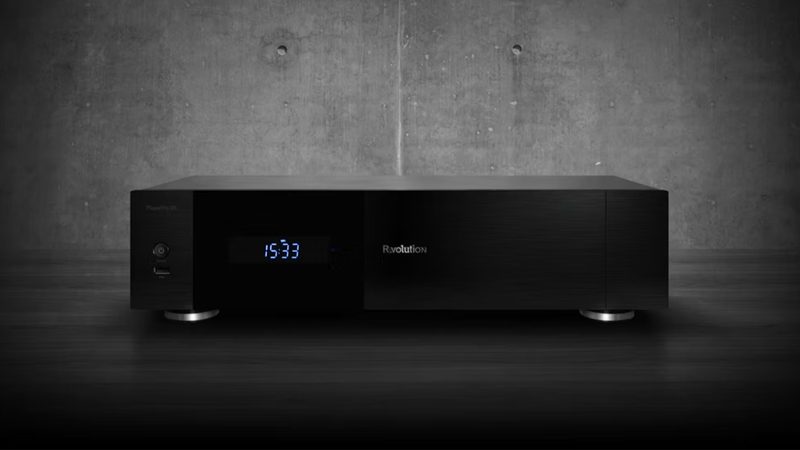
Audio has a similar restriction. The supported multichannel formats are Dolby Digital 5.1, Dolby Digital Plus 7.1 and Dolby Atmos in its Dolby Digital Plus version, the one used by streaming services, with lossy compression. Dolby TrueHD, the lossless format used on Blu-rays, is not on the list, nor is DTS. For Netflix, Disney+ or Apple TV+, this changes nothing. To play a personal video library with its original audio tracks through an AV receiver, a dedicated player such as the R_volution Player Mini or the Zidoo Z9X 8K, or a 4K Blu-ray player for discs, remains necessary.
Should you replace your 2022 Apple TV 4K?
Owners of a 2022 Apple TV 4K will find the same resolution, the same HDR formats and the same ceiling of 60 frames per second: for video streaming, picture and sound remain unchanged. Upgrading is mainly justified by the four-HomePod configuration, which requires the new generation, by AV1 decoding, by the built-in microphones, or by Thread for those who own the 64 GB version that lacked it.
For an older model, and especially a 2017 Apple TV 4K limited to HDMI 2.0, the difference in responsiveness, connectivity and formats is much more pronounced, and the price is easier to justify.
Frequently asked questions
Do you need an HDMI 2.1 cable for the 4th-generation Apple TV 4K?
No. The most demanding signal, 4K HDR at 60 frames per second, works with a Premium High Speed certified cable (18 Gb/s). An Ultra High Speed HDMI cable works perfectly well and prepares the setup for other sources, but it is not essential for this box.
Is it better to connect Apple TV via Wi-Fi or Ethernet?
4K streaming requires no more than a few tens of megabits per second, which Wi-Fi handles easily when the signal is good. An Ethernet cable remains the most stable solution when the device is far from the router or the network is busy, and all models now have an Ethernet port.
Can the Apple TV 4K replace a 4K Blu-ray player?
Not completely. It does not play discs, does not support Dolby Vision profile 7, and does not pass through lossless Blu-ray audio formats. For anyone who still buys discs or keeps backups of them, a 4K Blu-ray player or a high-end media player remains a complementary option.