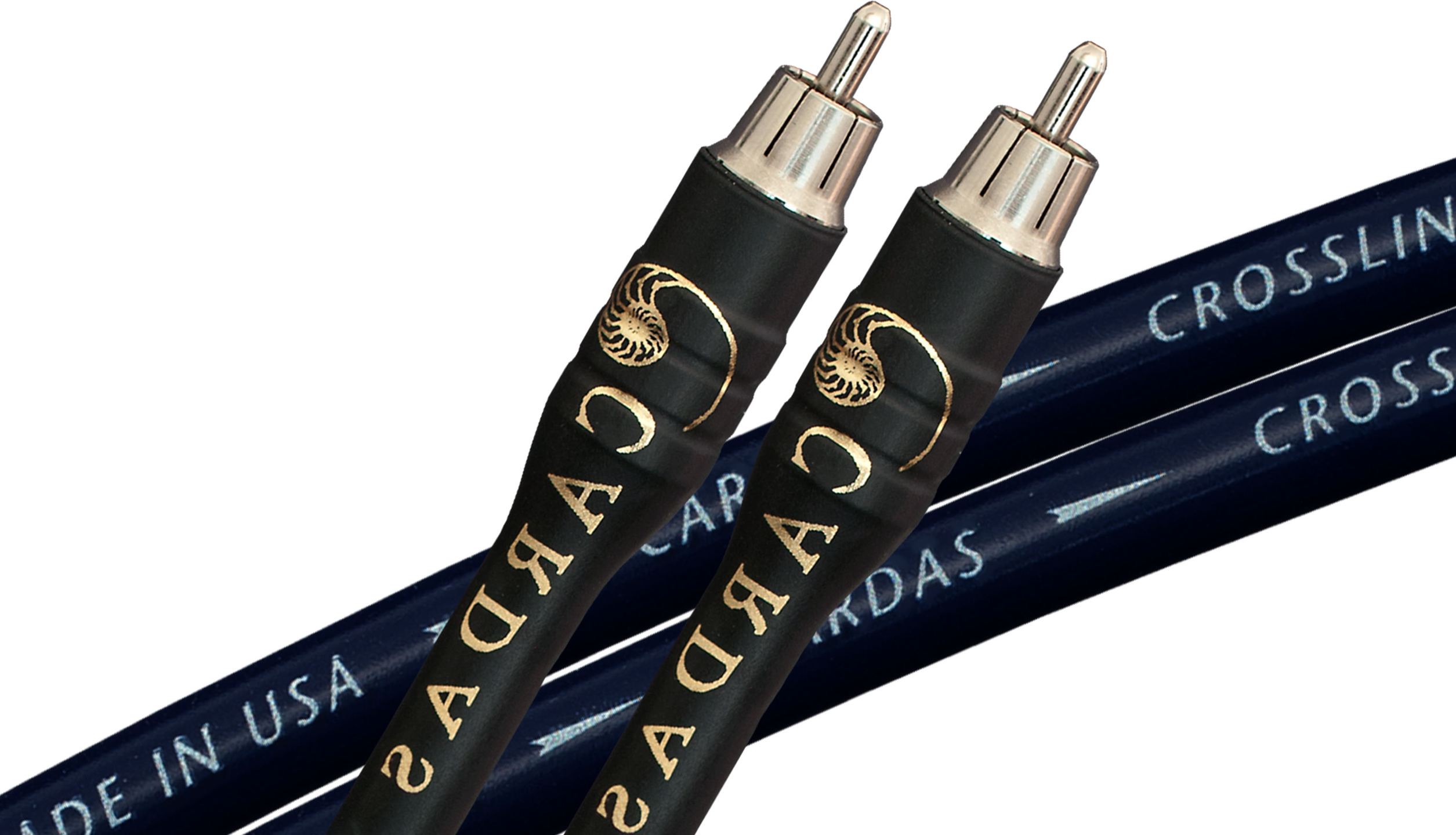
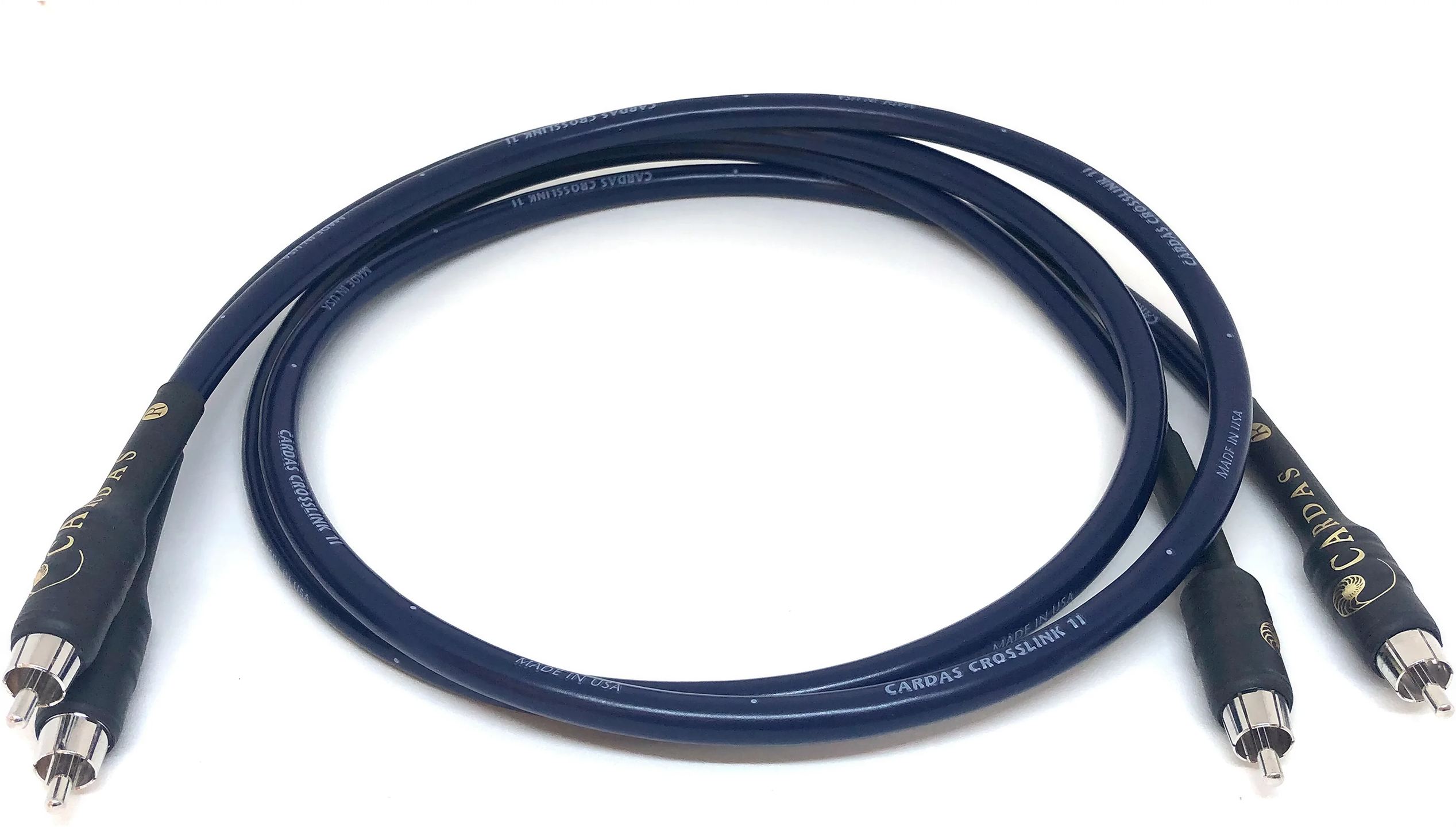
The Crosslink is the entry-level model in the Cardas interconnect range. Far from being a simple loss leader, it incorporates the cabling technologies developed by George Cardas since 1987, in an accessible and versatile format. Manufactured in the Bandon workshop on the Oregon coast, this one-meter stereo cable inherits the in-house expertise applied to the brand’s more expensive models.
A Litz conductor structured according to the Golden Ratio
The distinctive feature of Cardas cables lies in the arrangement of their conductors. George Cardas, a former telecommunications engineer turned audio cable manufacturer, obtained two U.S. patents (4,628,151 and 4,980,517) for his “Golden Section” cabling technique. The principle: arrange 68 copper strands of increasing diameters according to the 1:1.618 ratio, with the thinnest strands at the center and the thickest on the outside. Each layer increases progressively according to this proportion derived from the Fibonacci sequence.
This is more than a mathematical curiosity. When an alternating signal passes through a conductor, it generates micro-resonances between the strands. By preventing two adjacent strands from sharing a common resonant frequency, this geometry dissipates parasitic energy instead of amplifying it. The copper used is Grade 2, oxygen-free with 99.99% purity, coated with a transparent SPN enamel (Litz technology) that insulates each strand individually to limit electrical interactions between conductors.
Dual-shield construction for noisy environments
The Crosslink uses a twisted-pair structure around a natural cotton filler. An FEP tape holds the assembly together, followed by a spiral shield made of tinned copper. The outer PVC jacket protects the whole, for a final diameter of 7.69 mm and a gauge of 2 × 20.5 AWG.
This dual-shield construction (copper and Mylar) effectively isolates the signal from ambient electromagnetic interference. The dielectric combines Teflon and cotton, two materials with complementary properties: Teflon for its electrical insulation qualities, cotton for absorbing mechanical vibrations. The cable’s capacitance reaches 36.9 pF per foot in RCA configuration, a reasonable value that avoids attenuating high frequencies on high-impedance outputs.
Silver–rhodium plated GRCM connectors
The GRCM RCA plugs supplied with this cable are manufactured by Cardas. Machined from non-magnetic brass with a high copper content, they receive a silver plating topped with a thin layer of rhodium on the contact surfaces. The outer shell, gold-colored and screw-on, makes handling easier. Soldering uses the in-house quad-eutectic alloy (Quad Eutectic Solder), known for its fluidity and low resistance.
Rhodium, a metal in the platinum group, resists oxidation and maintains its conductive properties over time. The underlying silver ensures optimal conductivity. This combination of platings is common to Cardas interconnects, including on significantly more expensive models.
A warm and forgiving sound
Cardas describes the Crosslink’s signature as “warm and forgiving”: warm, tolerant, without sacrificing detail or musicality. This cable does not aim to reveal everything with clinical precision. It favors a balance that smooths out the rough edges of less refined digital sources or imperfect recordings.
This sonic character stems in part from the choice of dielectric and conductor geometry. Cardas cables have long been appreciated for their ability to “tame” the harshness of early CD players. The Crosslink follows in this tradition, even though higher-end models (Clear, Parsec) now employ more recent technologies such as matched propagation.
Flexible and versatile installation
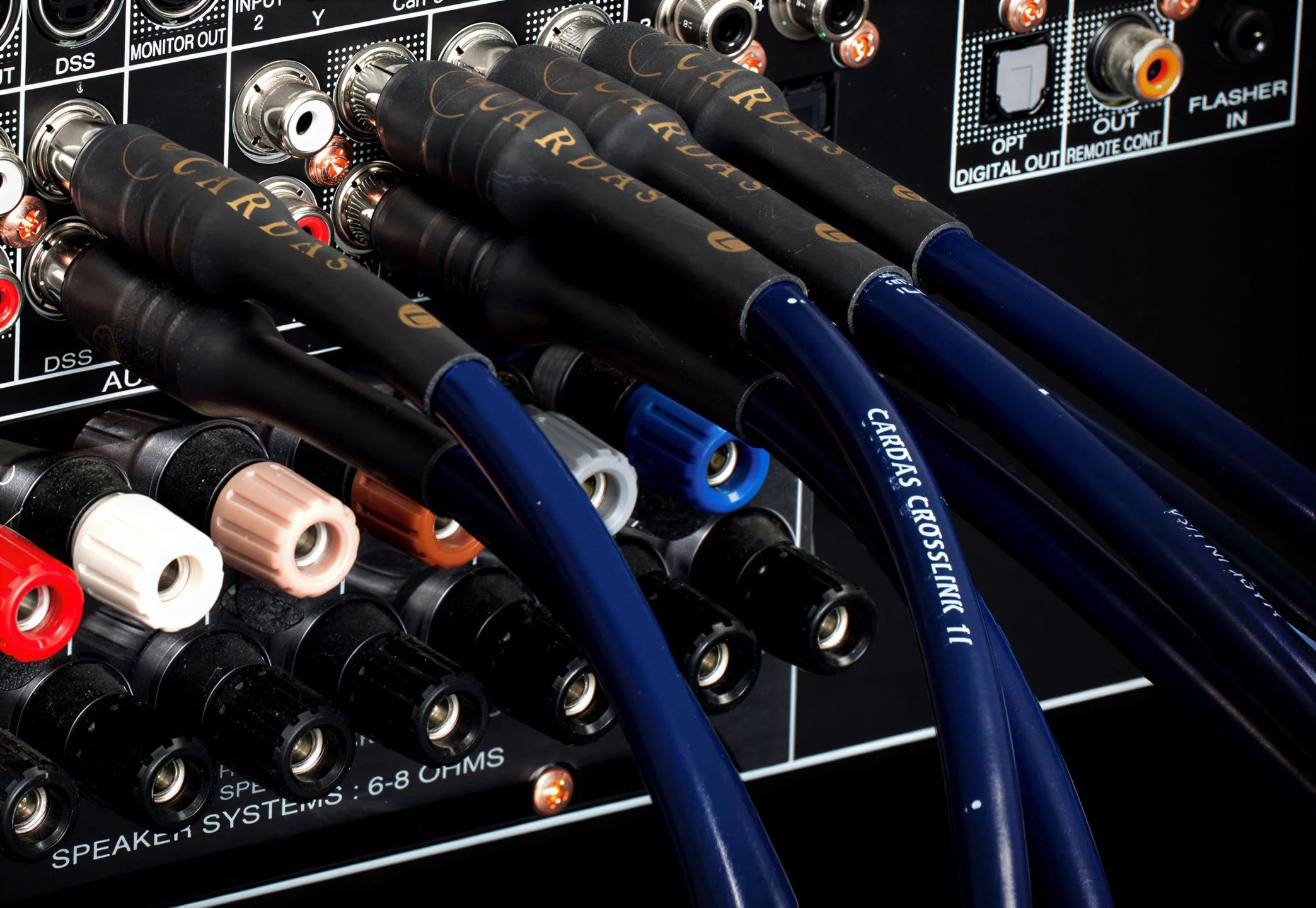
The Crosslink is the only interconnect cable that Cardas also offers by the meter, unterminated, for installers and DIY enthusiasts. This availability highlights its versatile nature: living-room stereo systems, home cinema installations, high-end car audio, in-wall wiring (CL2 certified for in-wall use). Its flexibility and low weight make routing in tight spaces easier.