Pro-Ject X1B lacquered black



Complementary product
Awards

EISA Awards: Award-Winning Product
Each year, dozens of European journalists gather to select the best electronic products of the year. Awarded by a diverse and impartial jury, the EISA (Expert Imaging and Sound Association) awards recognize exceptional products for their performance, design, or ergonomics.
Overview
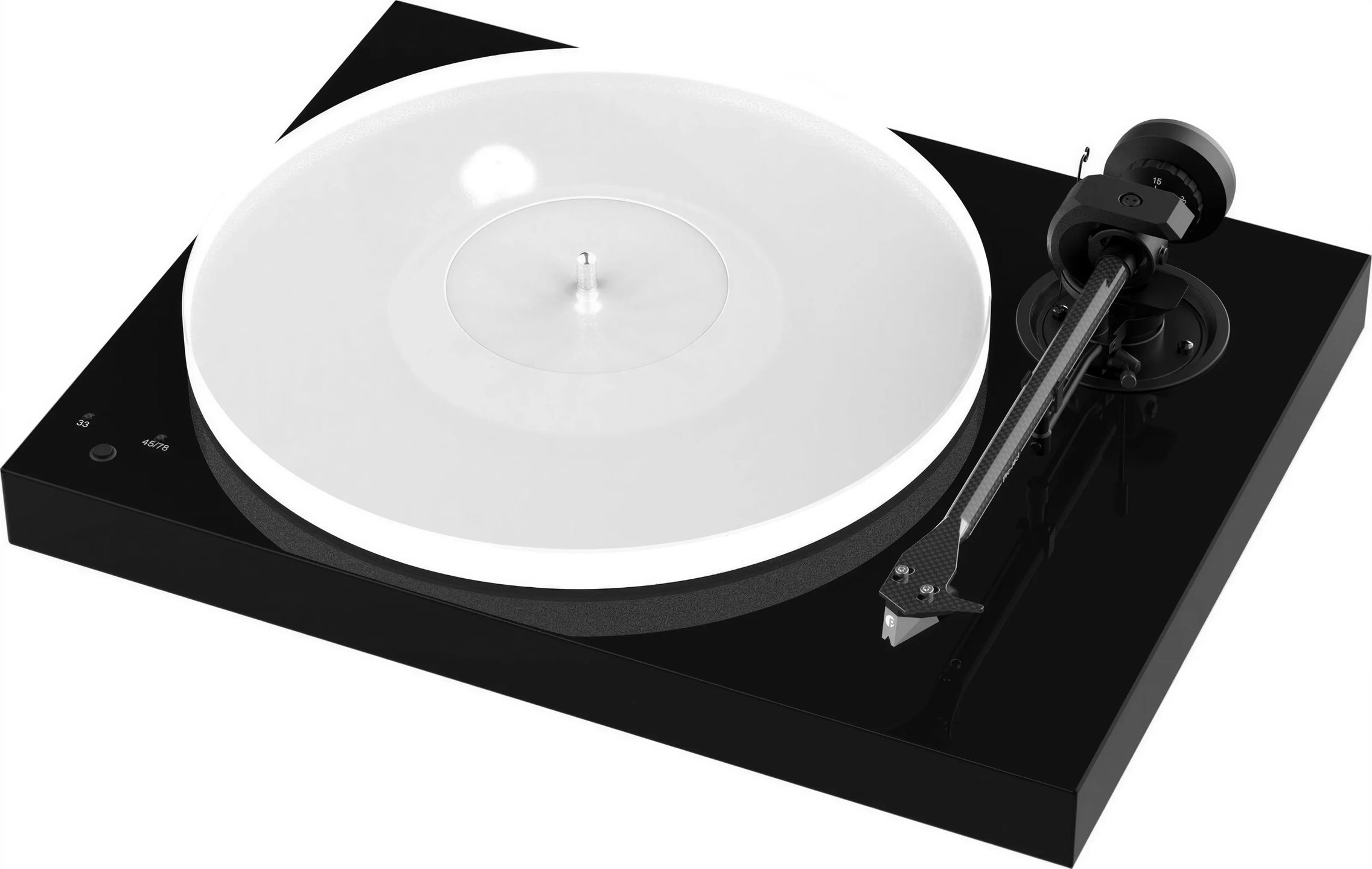
Between the turntable and the amplifier, just a few dozen centimetres of cable are enough to pick up interference from a Wi-Fi router, a phone or a dimmer switch. Pro-Ject responds here with a balanced output, a technique borrowed from recording studios, alongside the usual RCA connection. Around this output, you will find the fundamentals of a carefully designed hi-fi turntable: belt drive, thick acrylic platter, carbon tonearm and factory-set cartridge.

Seven kilograms of MDF resting on three adjustable feet
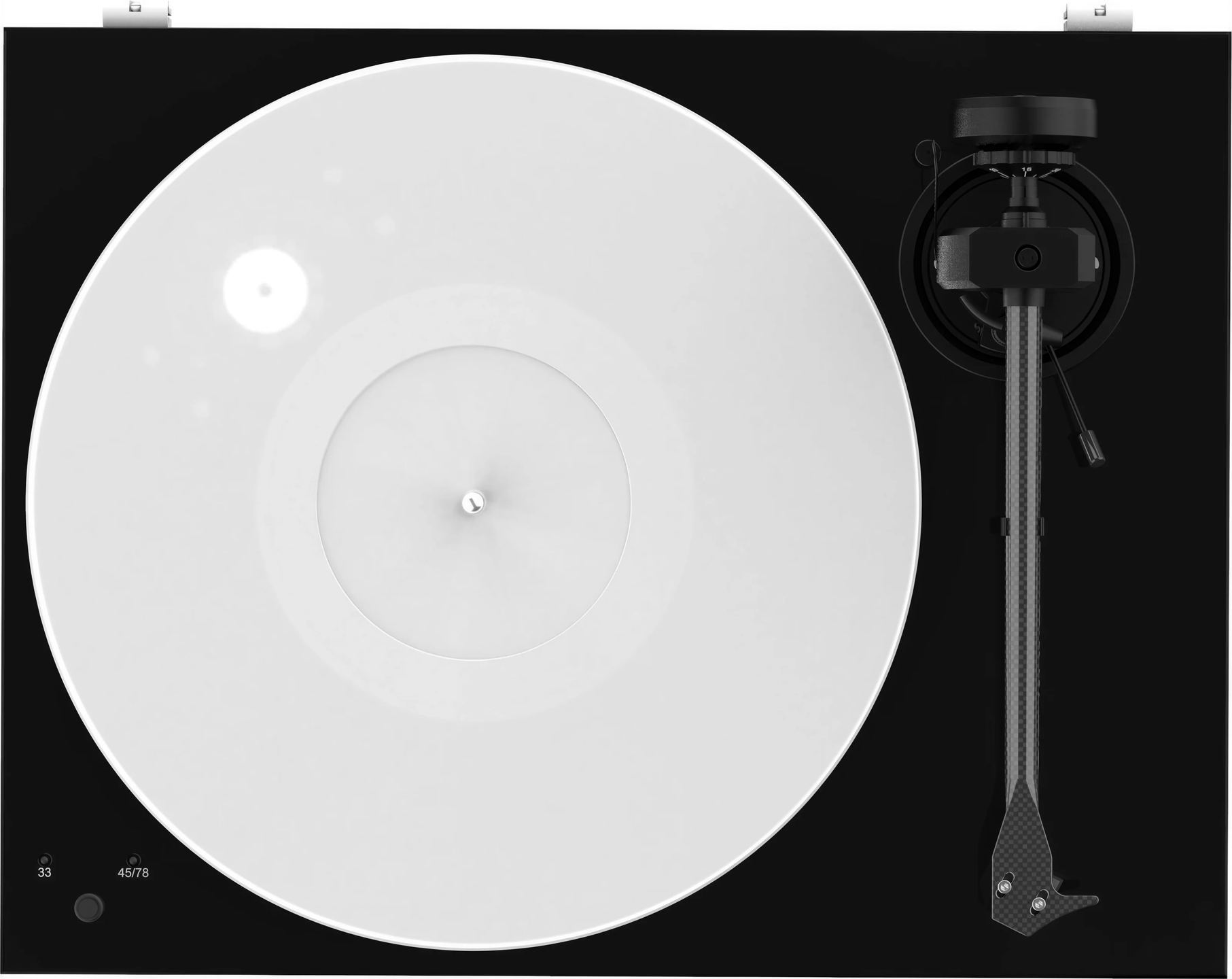
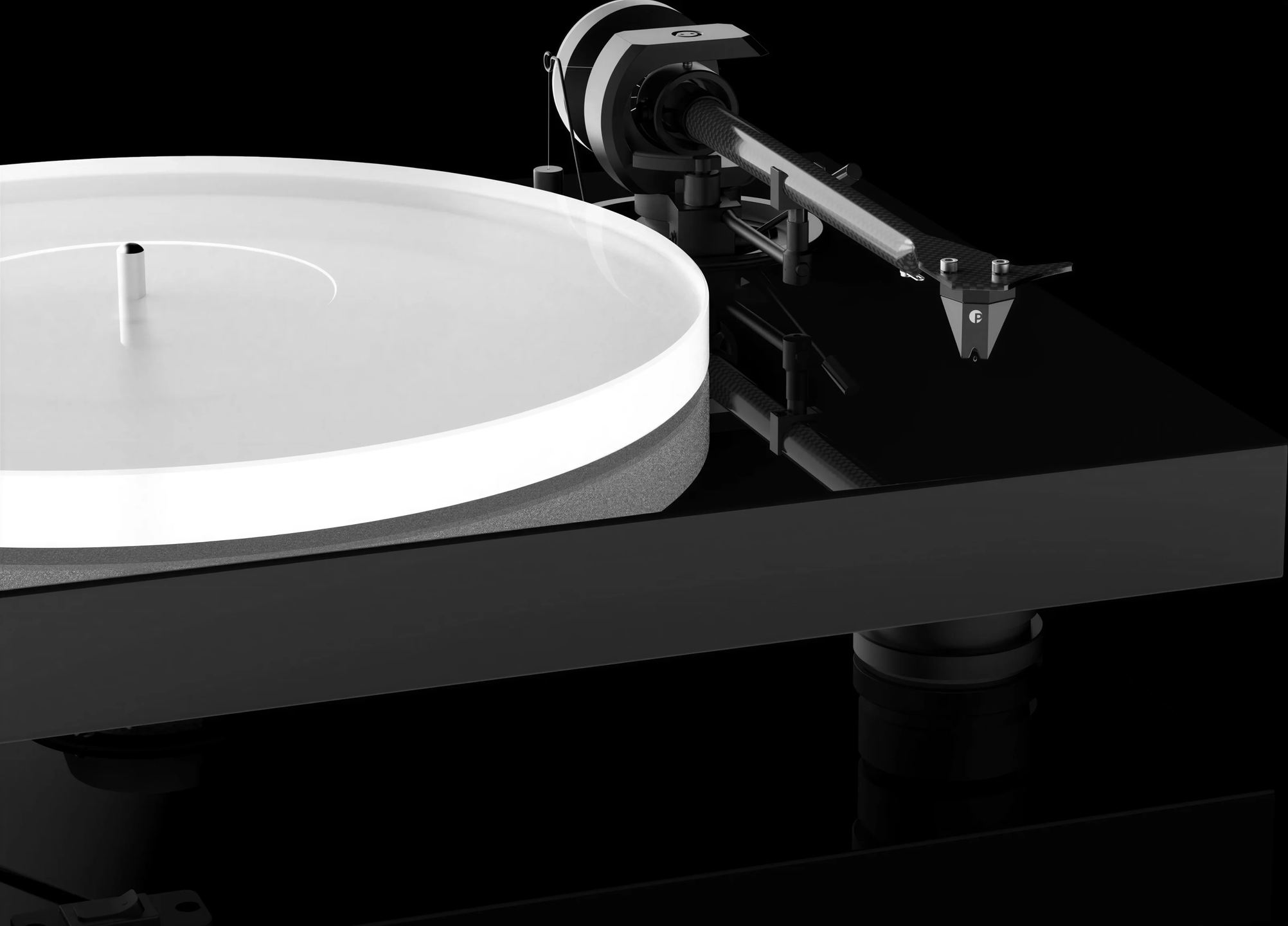
The chassis is a solid MDF block (compressed wood fibre board) machined by CNC. Its mass has a specific purpose: the heavier the plinth, the less likely it is to be set vibrating by the speakers or footsteps in the room. The unit weighs 7 kg and measures 41.5 × 33.5 cm, with a height of 12.5 cm.
The turntable rests on three damped, height-adjustable aluminium feet. Three support points are enough to ensure stable footing, even on slightly uneven furniture, and adjusting each foot allows the platter to be perfectly level. This detail matters: a tilted turntable places more pressure from the stylus on one side of the groove than the other. The damping of the feet also reduces the risk of acoustic feedback, that hum which occurs when speaker vibrations travel back up to the cartridge at high volume. A dust cover is included, and the turntable is handmade in Europe.
A suspended motor and a 1.5 kg acrylic platter
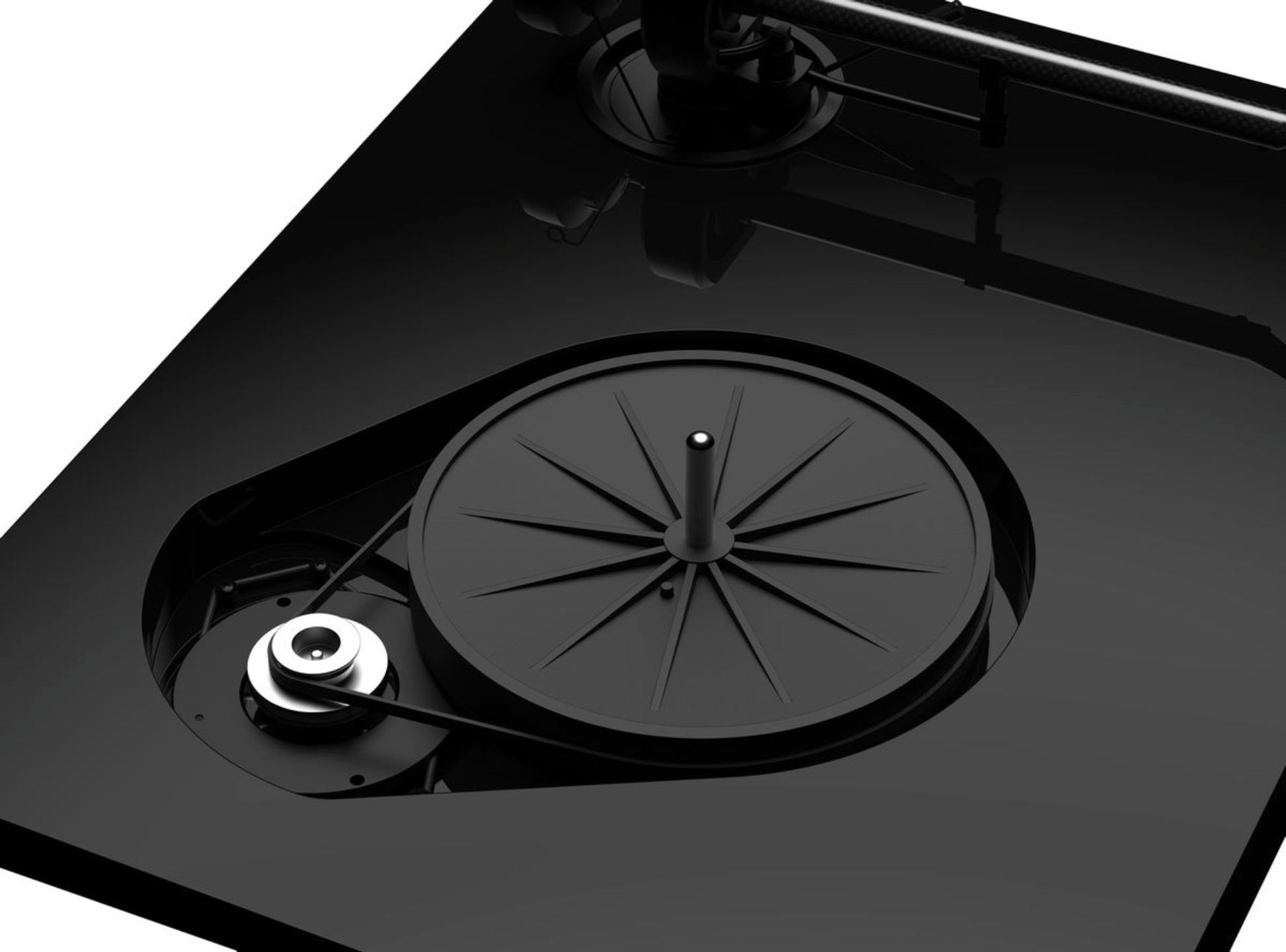
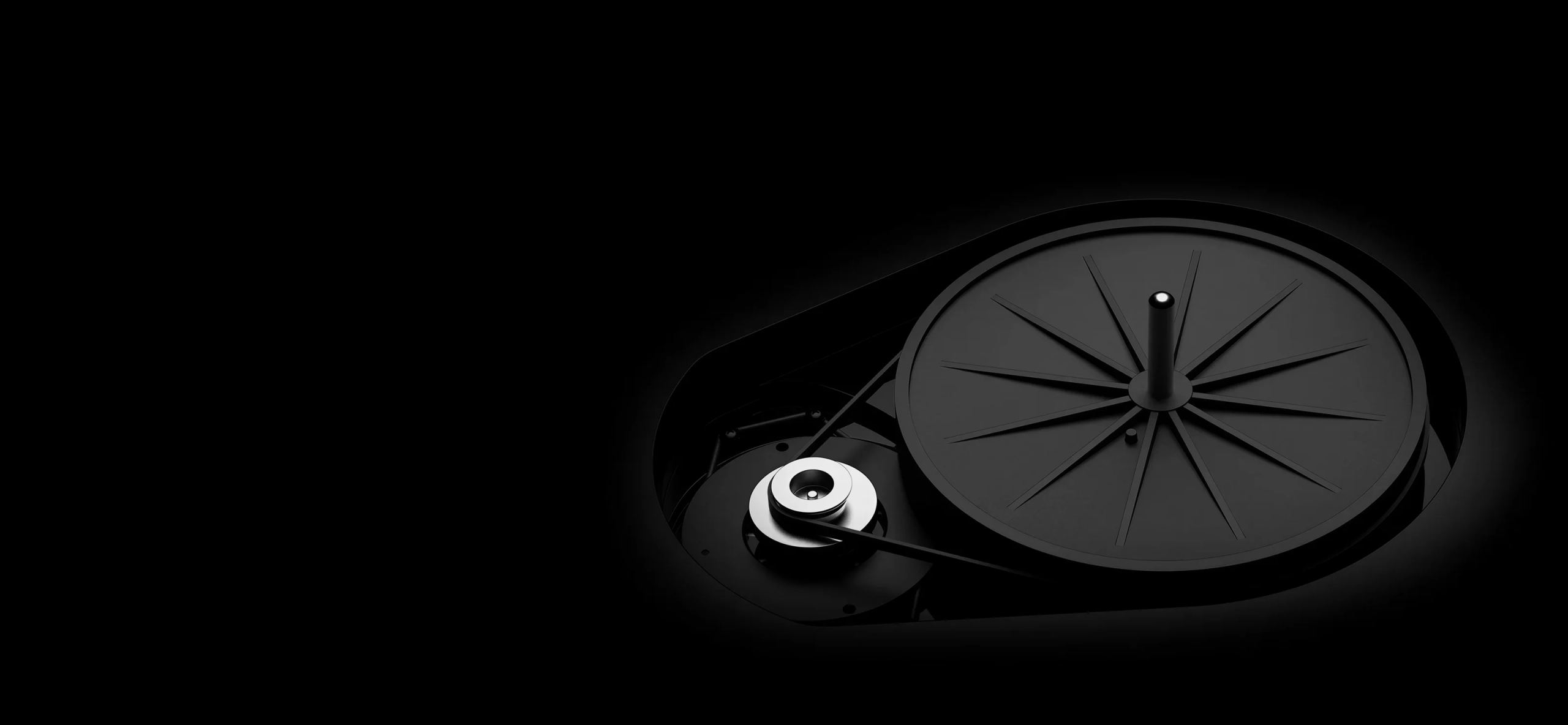
The motor is positioned beside the platter and drives it via a belt. This flexible connection filters motor vibrations before they reach the record. Pro-Ject goes further: the motor itself is suspended on a thermoplastic elastomer (TPE) belt, making it float with no rigid contact with the chassis.
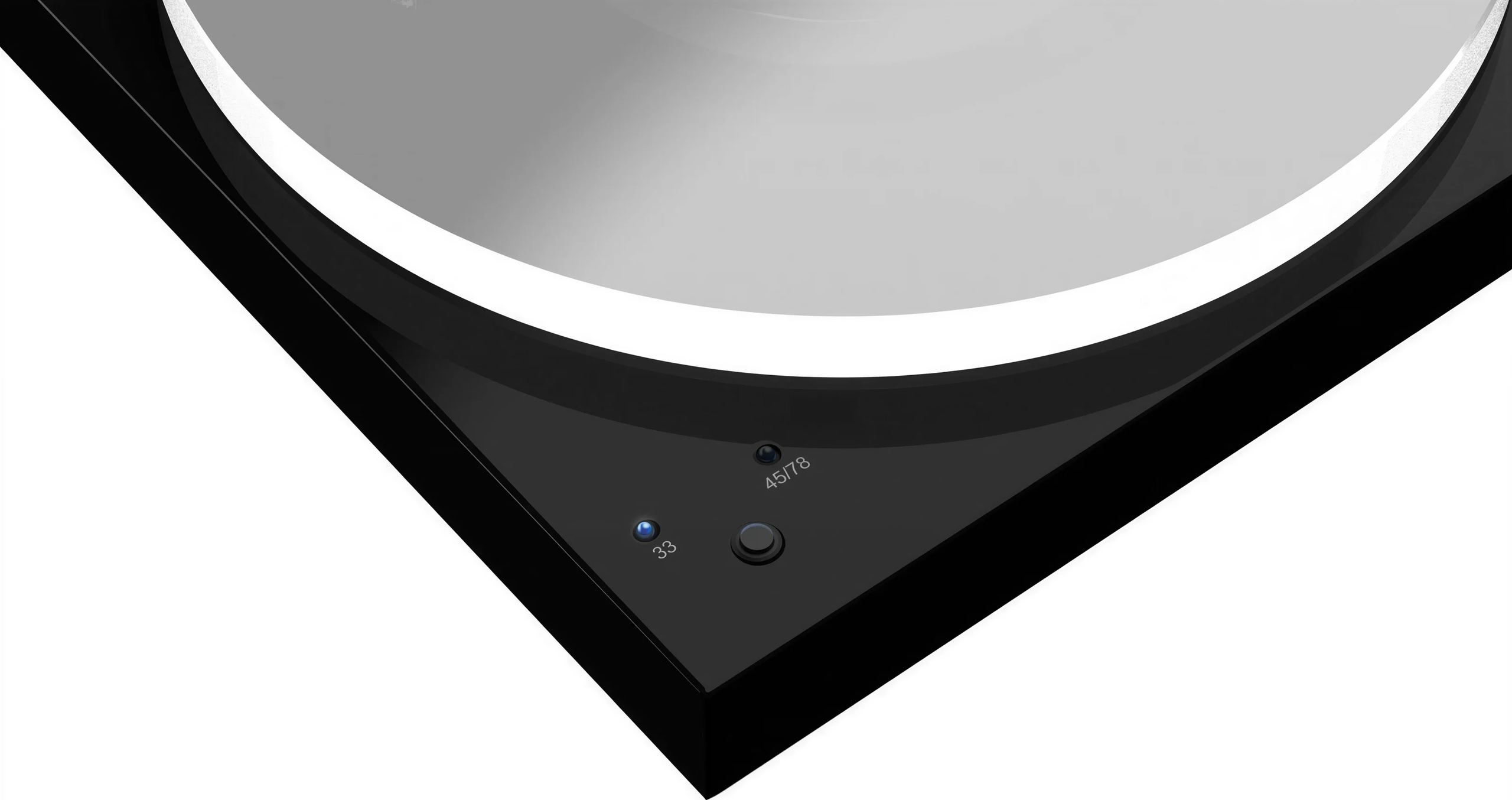
Speed is electronically controlled. A DC/AC generator board converts the direct current from the external power supply (15 V) into clean, stable alternating current for the motor. Switching from 33 to 45 rpm is done with a simple press of a button, without moving the belt. The stated figures are 0.30% speed variation at 33 rpm and 0.15% wow and flutter, meaning small speed fluctuations that result in a slight wavering of pitch, particularly noticeable on piano and sustained notes. These values are respectable for belt drive; direct drive generally performs better on this criterion alone, with other trade-offs.
The acrylic platter is 20 mm thick and weighs 1.5 kg. Acrylic naturally dampens vibrations rather than resonating as metal can, and the platter’s mass acts as a flywheel to stabilise rotation. It rotates on a sub-platter machined to a tolerance of 0.001 mm, guided by a stainless-steel main bearing with a soft brass bushing and Teflon mirrors. The aim is to reduce friction and, with it, bearing noise that the cartridge could pick up. Power consumption remains modest: 5 W maximum and less than 0.3 W in standby.
A one-piece carbon and aluminium tonearm
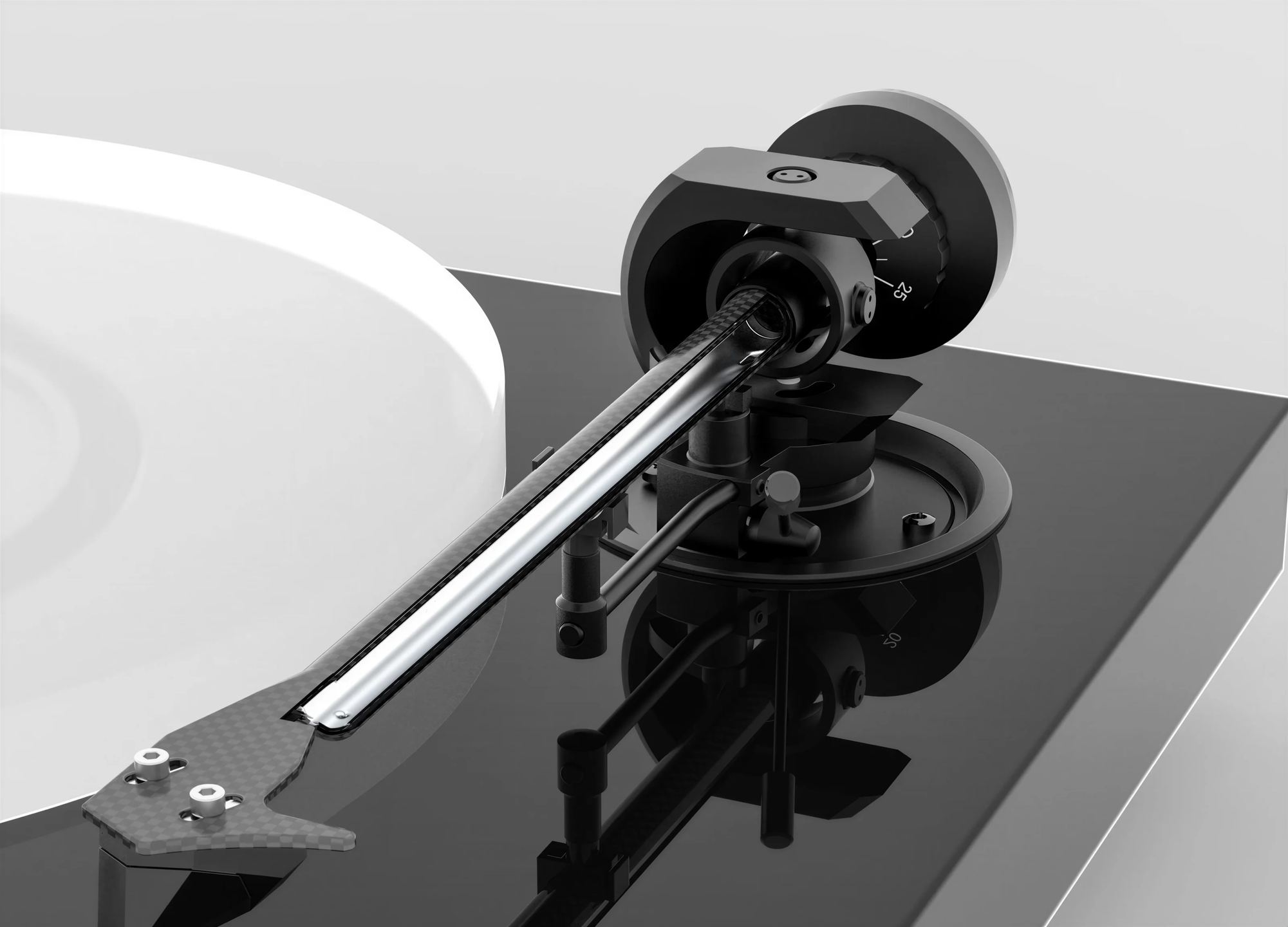
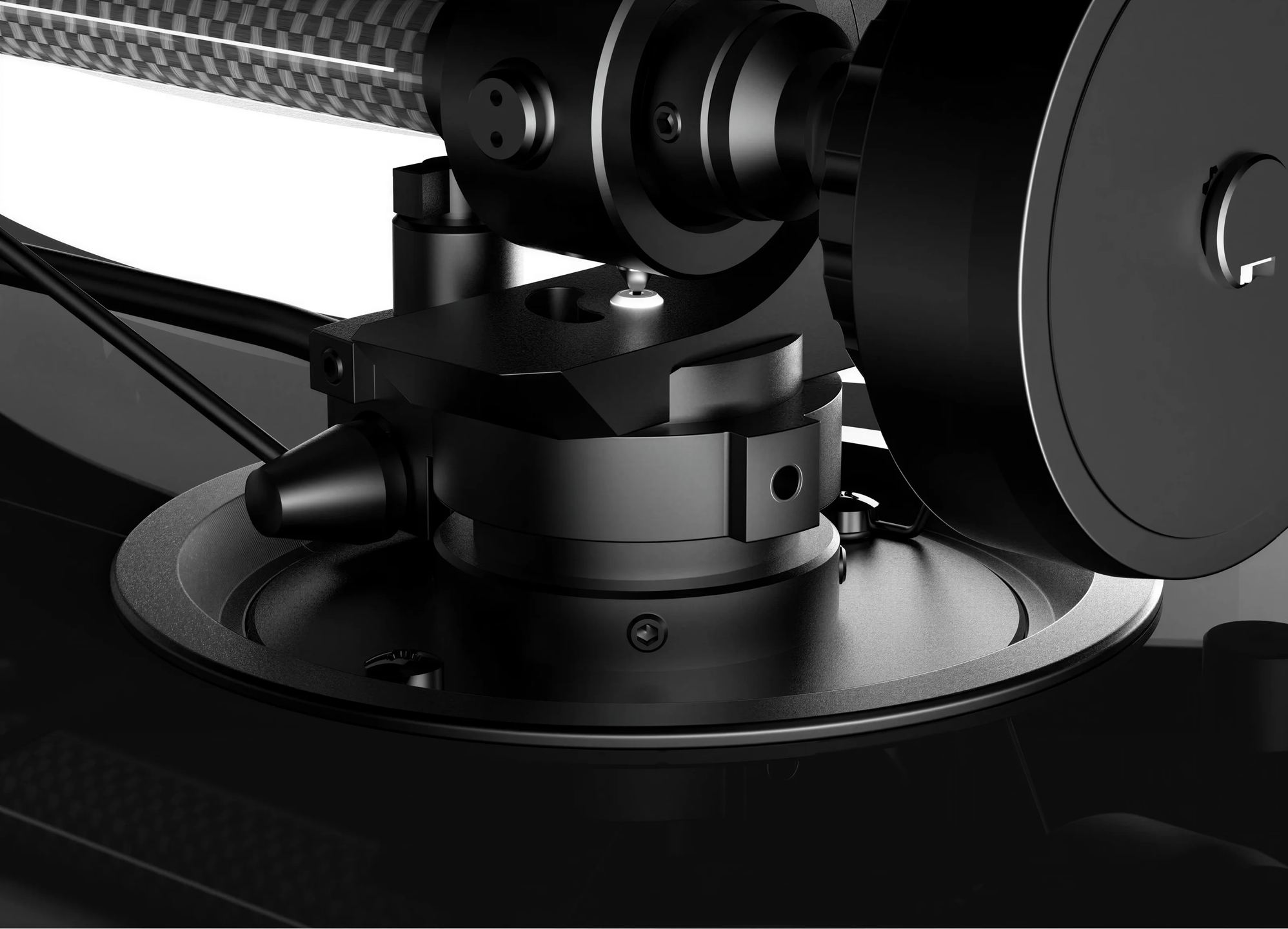
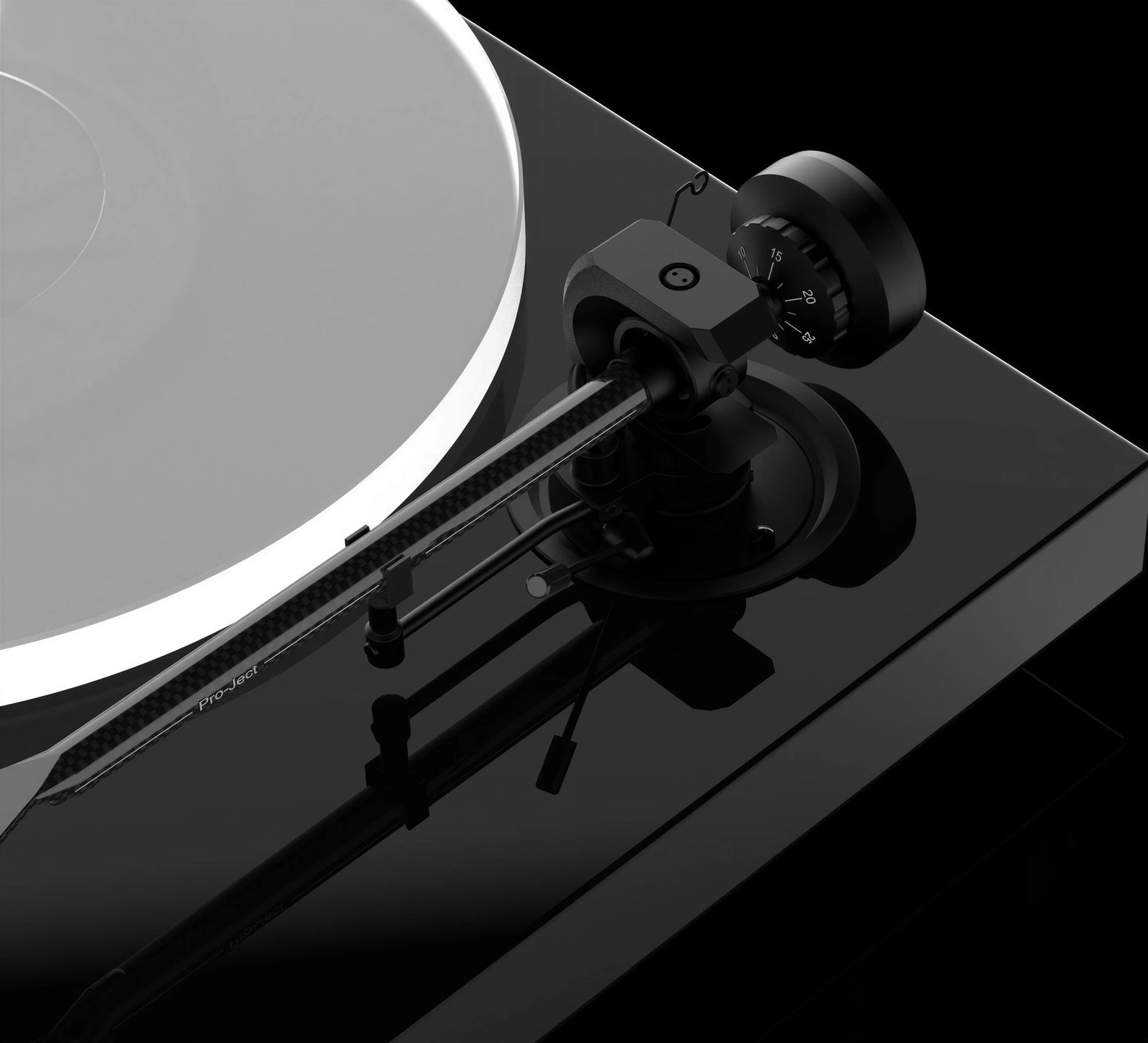
The 8.6-inch tonearm (218.5 mm effective length) combines two materials: an outer carbon layer that provides rigidity, and an inner aluminium tube that damps vibrations. It pivots on a four-point gimbal bearing with very low friction, allowing the stylus to follow the groove without the tonearm hindering its movement. The TPE-damped counterweight reduces resonances between the tonearm and cartridge by up to 50%.
The tube is a one-piece design, without a removable headshell. One less joint means one less source of vibration. In return, you cannot quickly swap two cartridges each mounted on its own headshell: changing the cartridge is done directly on the tonearm, with realignment required.
The aluminium base provides access to two adjustments rarely offered at this level. VTA, which corresponds to tonearm height, sets the stylus’s vertical angle in the groove; it is continuously adjustable by loosening two grub screws, useful when changing cartridges or platter mats. Azimuth corrects the cartridge’s lateral alignment: viewed from the front, it must be perfectly perpendicular to the record, otherwise one channel will be read differently from the other.
With an effective mass of 10 g and adjustable tracking force from 0 to 3 g, the tonearm is suitable for low- to medium-compliance cartridges, a category that includes most moving-coil (MC) cartridges. The turntable therefore leaves room for upgrades.
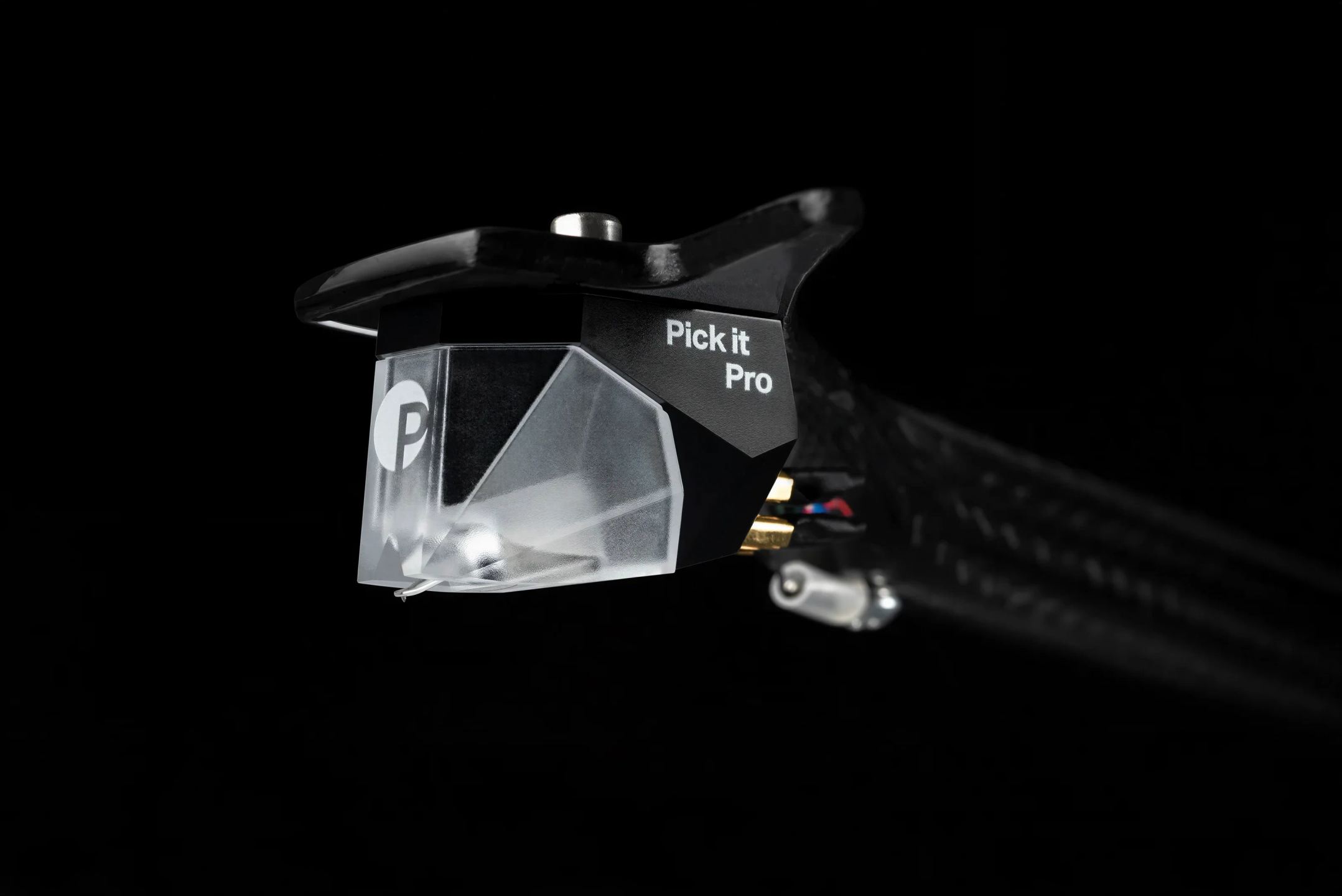
Pick it Pro B, an MM cartridge ready for balanced connection
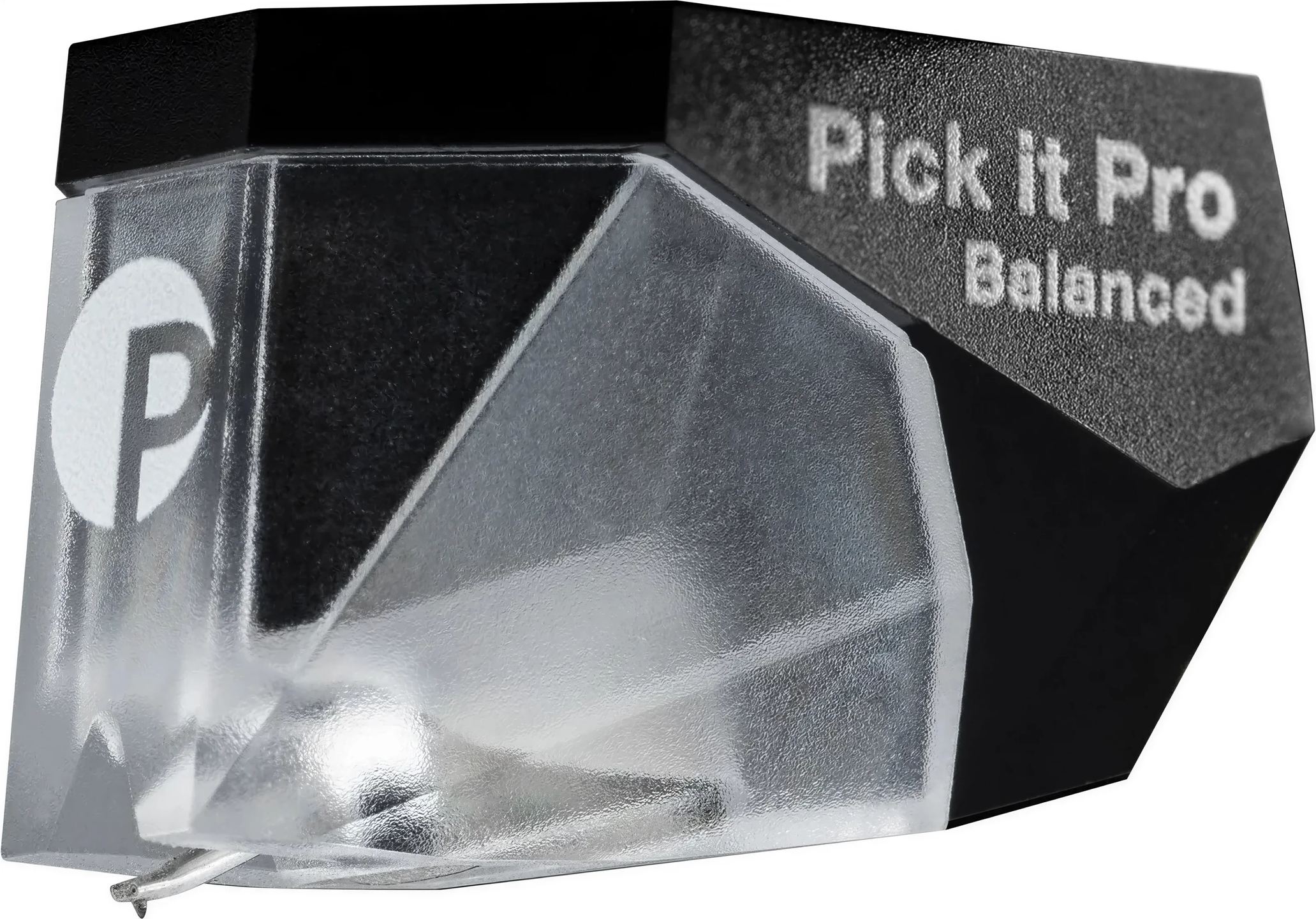
The Pick it Pro B is a moving-magnet (MM) cartridge manufactured in Europe with Ortofon: a tiny magnet attached to the stylus cantilever moves in front of fixed coils and produces the signal. It comes factory-fitted and adjusted, avoiding the most delicate step in setting up a turntable.
Its distinctive feature lies in an internal detail. On most MM cartridges, a shield is connected to the ground of the right channel, meaning the two channels are not electrically identical and cannot be transmitted in balanced mode. Here, this shield is separated from ground: the two channels become strictly equivalent, and the balanced connection starts directly at the cartridge.
The elliptical stylus (8 and 18 µm radii) has a shape closer to the cutting stylus that engraved the record than a conical stylus; it reads groove details more finely, especially at high frequencies and towards the end of each side, where the turns become tighter. The 4 mV output voltage matches the MM cartridge standard and works with any MM phono input. Frequency response extends from 20 to 20,000 Hz (± 2 dB), channel separation reaches 22 dB at 1 kHz, and its 70 µm tracking ability at 315 Hz indicates its capacity to track the widest grooves without losing contact. Its 12 µm/mN compliance, which measures the flexibility of the stylus suspension, matches the tonearm’s mass. Recommended tracking force is 2 g.
An RCA output for now, a balanced output for later
The rear panel features a conventional RCA output and a 5-pin mini XLR output. The former carries the signal from each channel on one conductor, together with ground. The latter uses three wires per channel: ground, the so-called “hot” signal and an inverted copy of this signal, called “cold”. Interference picked up along the way is added in the same way to both wires; at the destination, the preamplifier inverts the cold signal and adds it to the hot one, reinforcing the music and cancelling the interference. For a turntable, the benefit is tangible: a cartridge signal is only a few millivolts, and the phono preamplifier amplifies it around one hundred times, interference included.
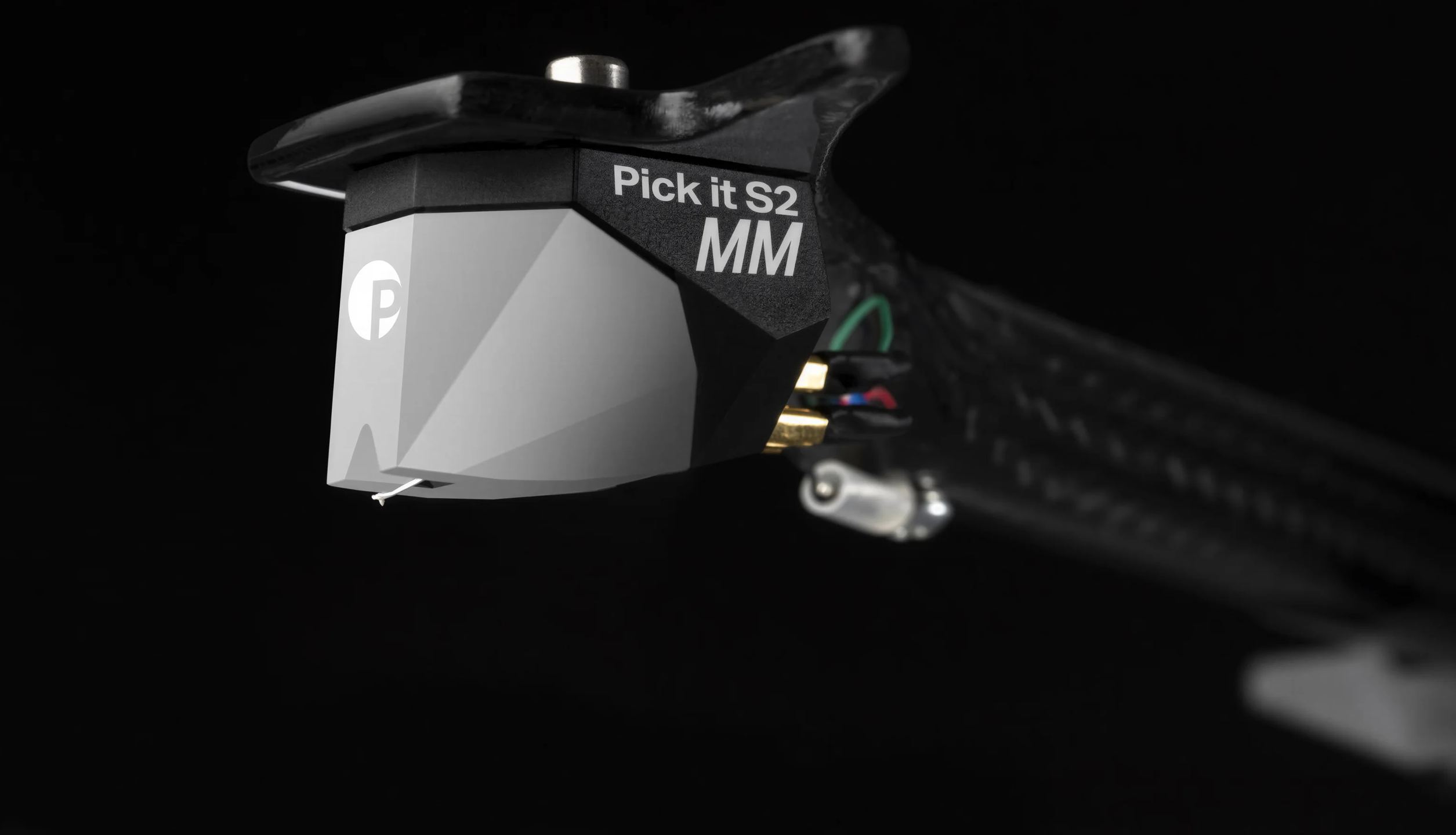
This output is what the B version adds compared with the X1, itself descended from the Pro-Ject 1 with which the Viennese brand began in 1991. The X1 B is the first Pro-Ject turntable equipped with a balanced mini XLR output. Initially supplied with a Pick it S2 MM cartridge, it now features the Pick it Pro B, which makes the chain balanced from end to end.
To take advantage of this connection, you need a dedicated mini XLR cable and a compatible phono preamplifier with balanced input, such as the Phono Box S3 B or DS3 B, sold separately. Out of the box, the turntable can be used via RCA with the supplied Connect it E cable: semi-balanced, low-capacitance and well shielded, it follows the logic of the turntable’s internal wiring, which is also shielded and semi-balanced. You can therefore start with RCA using the amplifier you already own and switch to balanced operation when you change preamplifier.
Technical specifications
Drive and speeds
- Belt drive: the motor is connected to the platter by a belt, isolating it from vibrations
- 33 and 45 rpm speeds, electronic switching by simple button, without touching the belt
- 78 rpm possible by fitting the supplied round belt and using a cartridge suited to shellac records
- Electronic speed control via DC / AC generator
- Speed deviation: 0.30% at 33 rpm, 0.25% at 45 rpm
- Wow and flutter (pitch variations): 0.15% at 33 rpm, 0.13% at 45 rpm
- Isolated motor suspended on TPE belt to decouple its vibrations from the chassis
Platter and bearing
- 20 mm acrylic platter, 1.5 kg, resonance-free: acrylic naturally dampens vibrations
- Stainless steel / brass main bearing, with soft brass bushing and Teflon thrust pads to reduce friction and background noise
- Sub-platter with 0.001 mm bearing tolerance
Tonearm
- 8.6-inch (21.8 cm) carbon / aluminium sandwich-structure tonearm: carbon provides rigidity, aluminium damping
- Effective length 218.5 mm, overhang 18 mm
- Effective mass 10 g
- Tracking force range 0 to 30 mN
- 4-point Kardan bearing, with very low friction
- TPE-damped counterweight, reducing resonances between the tonearm and cartridge
- Azimuth adjustment (lateral alignment of the cartridge) and VTA (vertical tracking angle) via the aluminium base
- One-piece construction, without removable headshell, to limit vibrations
Pick it Pro B cartridge
- Pre-adjusted Pick it Pro B moving magnet (MM) cartridge, compatible with “True Balanced” balanced connection, made in Europe with Ortofon
- Elliptical stylus, r / R radius 8 / 18 µm
- Output voltage 4 mV at 1 kHz
- Frequency response 20 to 20,000 Hz (± 2 dB)
- Channel separation 22 dB at 1 kHz
- Trackability 70 µm at 315 Hz
- Recommended tracking force 2 g (range 1.8 to 2.2 g)
- Compliance 12 µm / mN, i.e. the flexibility of the stylus suspension
- Recommended load 47 kΩ / 150 to 300 pF
- Weight 7.2 g, standard 1 / 2-inch (1.27 cm) threaded-hole mounting
Connections and wiring
- Standard RCA output (unbalanced)
- 5-pin mini XLR output for a “True Balanced” balanced connection: the signal travels through three wires per channel, cancelling interference picked up along the cable
- To use the balanced output, a dedicated mini XLR cable is required, to a compatible phono preamplifier such as the Phono Box S3 B or DS3 B (sold separately)
- Shielded, semi-balanced, low-capacitance internal wiring
Chassis, feet and finish
- Solid CNC-machined MDF chassis
- 3 damped, height-adjustable aluminium feet, for proper levelling and reduced risk of acoustic feedback (howling)
- Available in gloss black (8-layer hand-polished lacquer) and walnut or eucalyptus wood veneer
- Handmade in Europe
Power supply and consumption
- External 15 V DC / 0.8 A power supply
- Maximum power consumption 5 W, less than 0.3 W in standby
Dimensions and weight
- Dimensions: 415 x 125 x 335 mm (width x height x depth)
- Weight: 7 kg net, 9.5 kg packaged
Included accessories
- 15 V DC power supply
- Dust cover
- Connect it E phono cable: RCA, semi-balanced, low-capacitance and well shielded
- Felt mat
Frequently Asked Questions
Do you need a phono preamplifier to use this turntable?
Yes. The X1 B does not include a phono preamp: its output delivers the raw cartridge signal, which is too weak and uncorrected for a standard line input (CD, AUX). It must be connected to an amplifier’s MM phono input or used with an external phono preamp. The cartridge requires a 47 kΩ load and a capacitance of 150 to 300 pF, common values for MM inputs.
My amplifier has XLR inputs: can I connect the balanced output to them?
No. An amplifier’s XLR inputs expect an already amplified line-level signal. The turntable signal must first pass through a phono preamp, which amplifies it and applies RIAA correction (the equalization that restores the record’s bass-treble balance). The mini XLR output should therefore be connected to a phono preamp with a balanced input, which can then be connected to the amplifier via its own outputs.
Can the Pick it Pro B be replaced with a moving-coil cartridge?
Yes, the tonearm is suitable thanks to its effective mass of 10 g. An MC cartridge generally delivers a much lower voltage than an MM cartridge, in the range of a few tenths of a millivolt: the phono preamp must therefore have an MC input. Balanced connection is also naturally suited to MC cartridges, whose coils are not connected to ground.
How do I play 78 rpm records?
The turntable comes with a round belt in addition to the flat belt. Once the round belt is fitted, the speed selector switches between 45 and 78 rpm. You also need a cartridge fitted with a stylus suitable for shellac records, whose groove is much wider than that of a microgroove record; the Pick it Pro B is not suitable for this purpose. As the tonearm does not have a removable headshell, frequently switching between vinyl records and 78s remains cumbersome.
Why does cable capacitance matter with an MM cartridge?
An MM cartridge is sensitive to the total capacitance loading it, i.e. the capacitance of the cable plus that of the preamp input. Beyond the recommended range, the treble may become abnormally pronounced or, conversely, subdued. The supplied Connect it E cable has low capacitance, helping to stay within the recommended 150 to 300 pF range for the Pick it Pro B.
- Eco-contribution included in the sale price.
- GTIN / EAN: 9120129862844