When Shure announced the discontinuation of its legendary M44-7 in 2018, the DJ world was shaken. This iconic cartridge, a true benchmark for generations of turntablists, left a gaping hole in the market. Ortofon, with over a century of expertise in phono cartridge design, rose to the challenge with the VNL: a modern solution that not only fills the void but redefines the standards of the genre. Designed specifically to meet the uncompromising demands of today’s DJs, the VNL embodies the perfect fusion of tradition and technological innovation.
Robust Construction: Ortofon DNA in Service of Performance
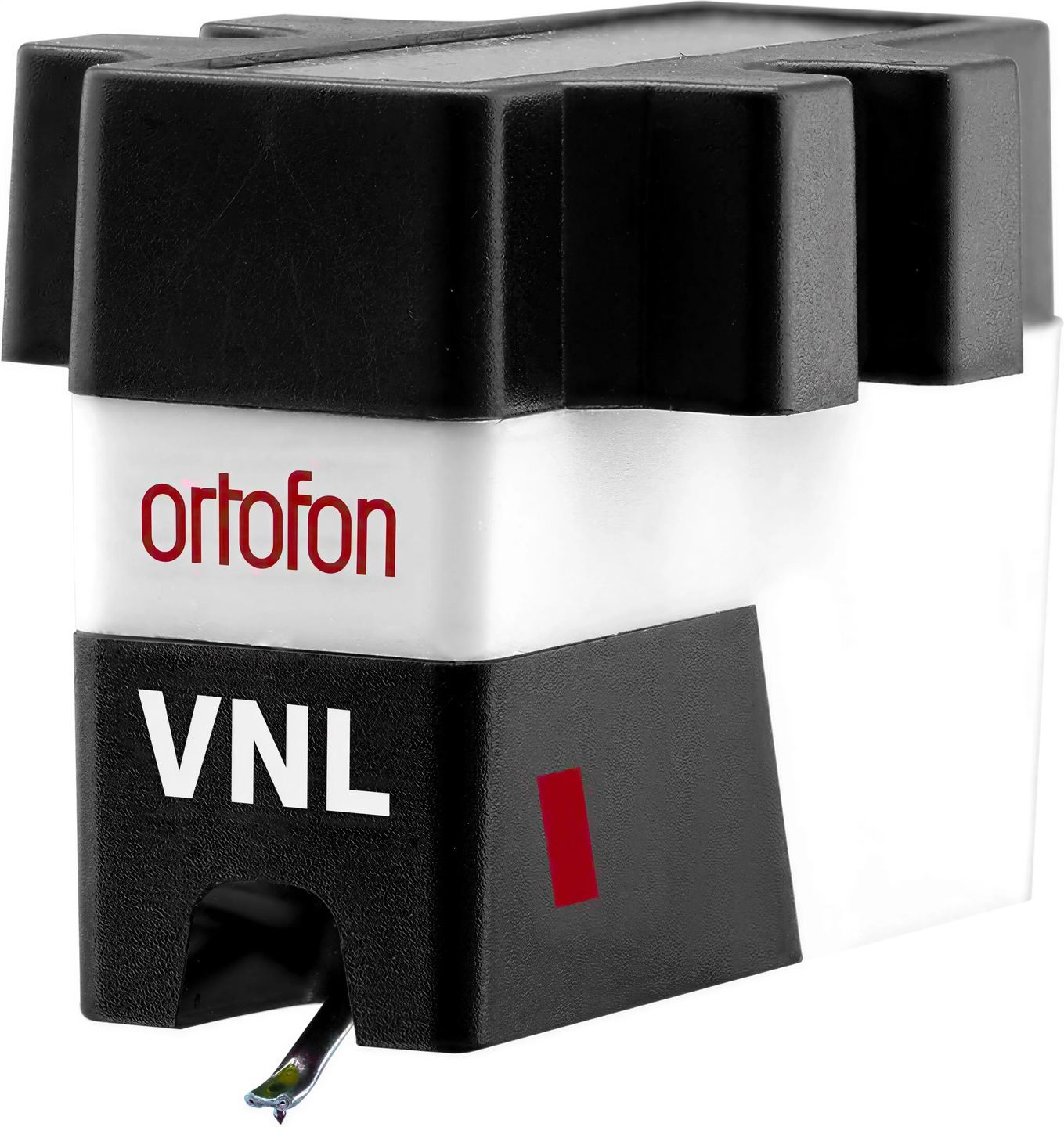
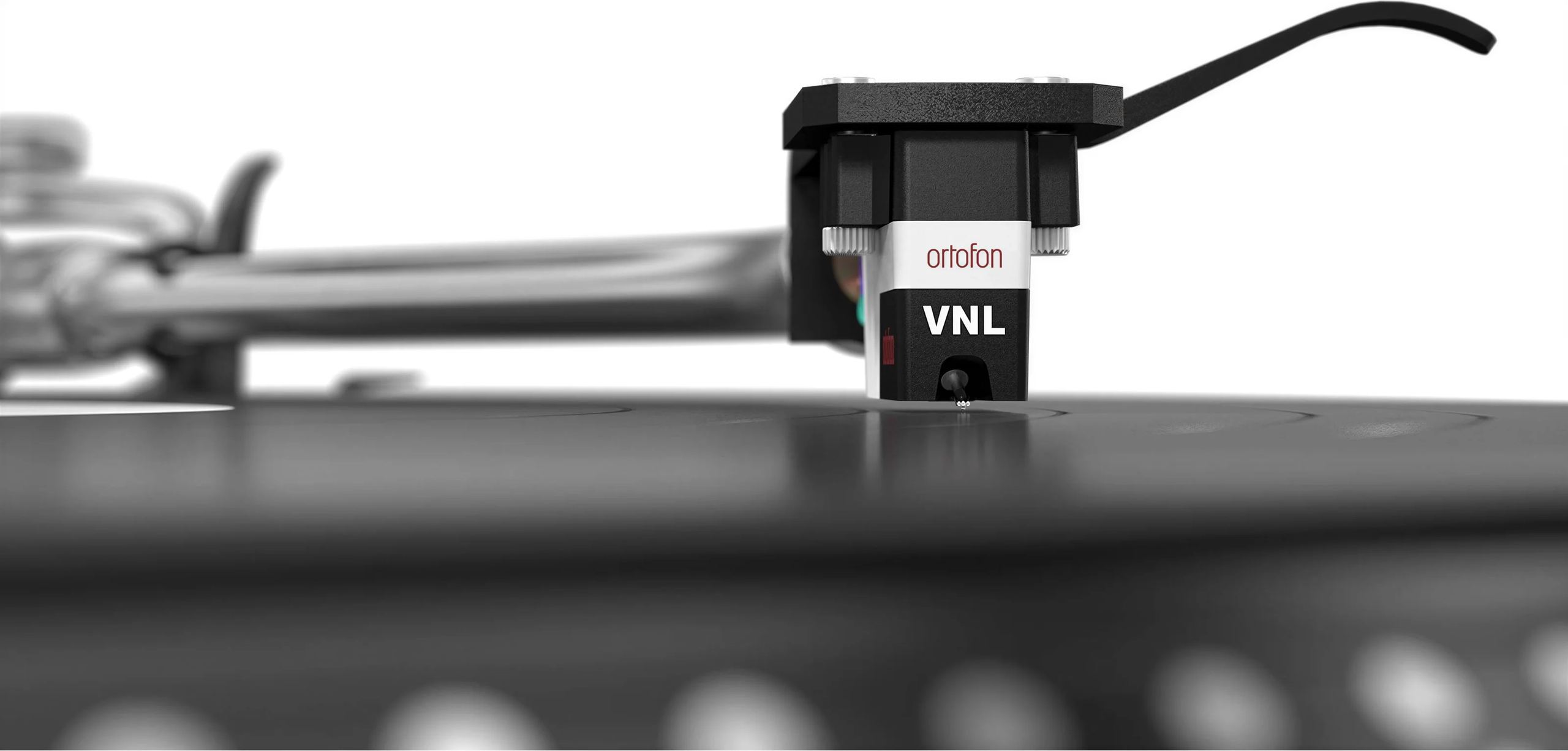
The VNL features a massive and imposing architecture, characteristic of Ortofon’s philosophy. Its high-density polymer body, assembled by ultrasonic welding, ensures exceptional rigidity and total absence of unwanted resonances. This advanced technique, inherited from the aerospace industry, gives the cartridge unparalleled structural cohesion. The meticulously chosen black and white colors are not just aesthetic: they highlight industrial robustness while asserting the product’s DJ identity.
The robotized assembly of the suspension system guarantees micrometric precision and production consistency worthy of the most demanding industrial standards. Each VNL unit thus benefits from remarkable performance uniformity, eliminating the quality variations often found in manual production. The carefully calibrated weight of 6.5 grams offers the ideal balance between groove stability and responsiveness during the most technical manipulations.
Three Diamonds, Three Personalities: Innovation at the Heart of the Concept
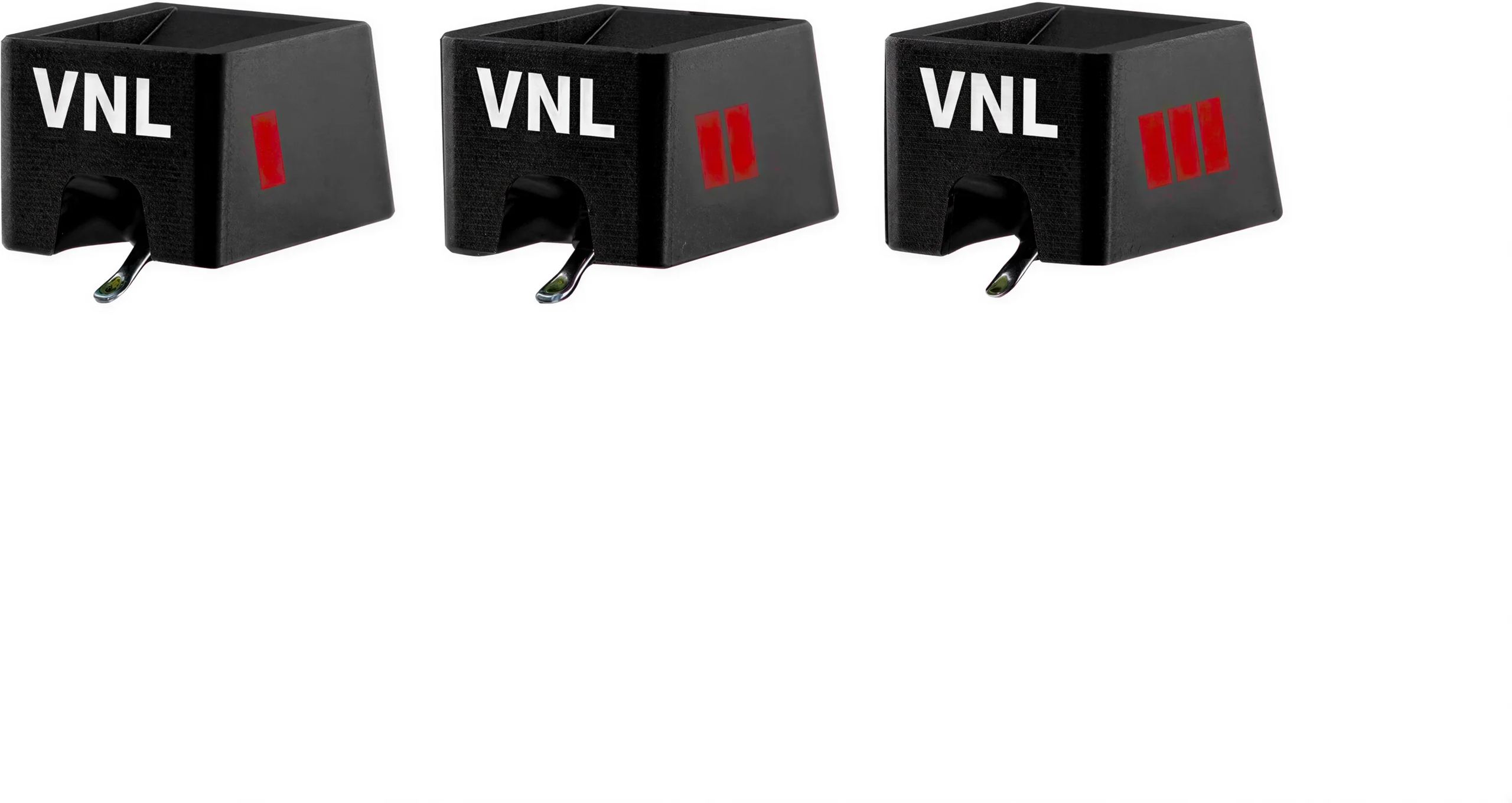
The VNL’s major innovation lies in its unique modular system: three interchangeable styli with distinct characteristics. This revolutionary approach allows every DJ to instantly adapt their cartridge to their style, needs, or even the type of performance. The VNL I, with its 16 μm/mN compliance, offers maximum flexibility, ideal for beat-juggling and delicate handling. The VNL II, pre-mounted by default with its 15 μm/mN, represents the perfect compromise between flexibility and firmness. The VNL III, the stiffest at 14 μm/mN, excels in aggressive scratching and extreme turntablism.
This modularity radically transforms the user experience. A DJ can start the evening with the flexible stylus for harmonic mixing, then switch to the rigid stylus for a wild scratch session, all in a matter of seconds. The magnetic mounting system ensures quick and secure changes, with tactile feedback confirming correct installation. This versatility makes the VNL not just one cartridge, but three in one, perfectly suited to the ever-evolving techniques of modern DJing.
Technical Performance: Balance and Versatility
The VNL delivers an output voltage of 6 mV, placing it in the upper range of DJ cartridges. While this level is lower than the late M44-7’s 9 mV, it still offers a comfortable margin for most phono preamps. The frequency response of 20 Hz to 20 kHz (-2/+4 dB) reflects a balanced sound signature, favoring neutrality over excessive coloration. This approach allows for faithful reproduction of sources, especially appreciated in mixing where sonic transparency facilitates smooth transitions.
The exceptional tracking ability (100 μm for the VNL I, 90 μm for the VNL II and III) guarantees flawless stability even during the most aggressive handling. The 18 μm spherical stylus, a deliberate choice by Ortofon, prioritizes durability and tolerance to lateral movements over reading finesse. This geometry minimizes record wear during scratching and back-cueing, thus preserving precious vinyl collections. The 20 dB channel separation, though modest compared to audiophile standards, remains more than sufficient for DJ applications.
DVS and Traditional Vinyl: Dual Expertise
The VNL particularly shines with its native compatibility with DVS (Digital Vinyl System) setups. Ortofon engineers have optimized the electrical characteristics to ensure a stable and precise timecode signal, essential for software like Serato, Traktor, or Rekordbox. The internal impedance of 750 ohms and inductance of 450 mH ensure optimal transmission of the encoded digital signal, minimizing dropouts and latency.
This dual DVS/traditional vinyl capability perfectly meets the needs of hybrid DJs who juggle between physical collections and digital libraries. Switching between the two modes requires no adjustment, allowing seamless mixing of classic vinyl and digital files. Portablists—those nomadic turntablism artists—will especially appreciate this versatility during performances on portable turntables, where tracking stability becomes crucial in uncontrolled environments.
Installation and Compatibility: Simplicity and Universality
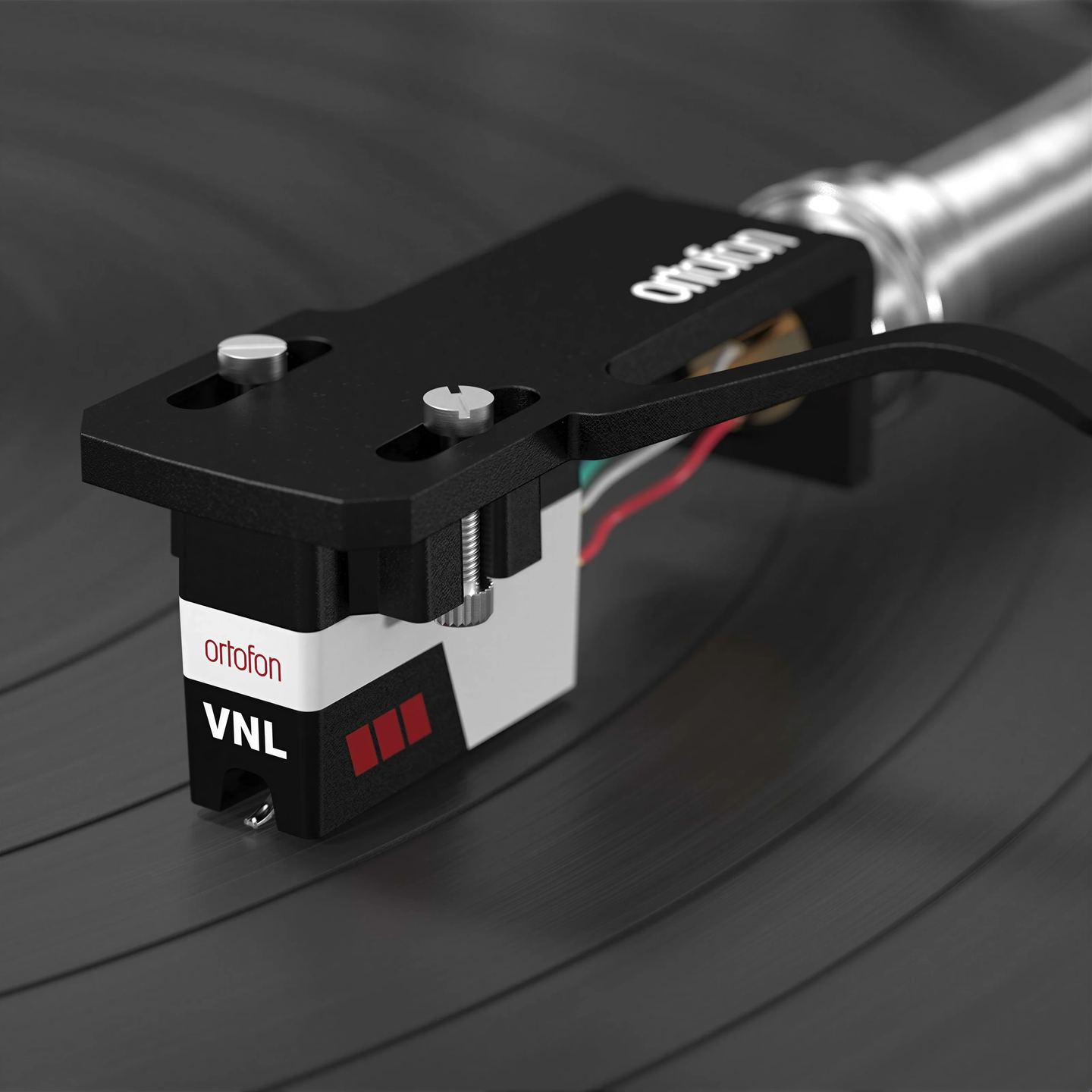
The cartridge body design greatly facilitates installation on a variety of headshells. Gold-plated connectors ensure optimal signal transmission while resisting corrosion. The carefully designed geometry allows precise alignment according to Baerwald or Stevenson standards, crucial for optimizing tracking and minimizing distortion. Ortofon provides high-quality mounting screws, a detail appreciated by professionals who know the importance of every component.
Compatibility extends to virtually all tonearms on the market, from classic S-shaped Technics SL-1200 arms to modern straight arms. The recommended tracking force of 4 grams, within a range of 3 to 5 grams, suits most systems. To optimize back-cueing performance, Ortofon recommends disabling anti-skating—a valuable tip drawn from the field expertise of professional DJs consulted during development.
Against the Competition
Compared to the legendary Shure M44-7, the VNL takes a different approach. While the Shure favored a warm, bass-rich sound, the VNL opts for a more neutral and transparent signature. This neutrality, far from being a flaw, allows for better adaptation to different sound systems and musical styles. The slightly lower output level can easily be compensated via the preamp gain, even offering the advantage of better dynamics.
Compared to the brand’s own Concorde MKII, the VNL stands out with its traditional format and more accessible price. While the Concorde aims for all-in-one integration with its iconic design, the VNL focuses on modularity and adaptability. This approach appeals to DJs attached to their favorite headshells or those wanting to visually harmonize their setup. The value for money becomes unbeatable when considering the three styli included in the starter pack.