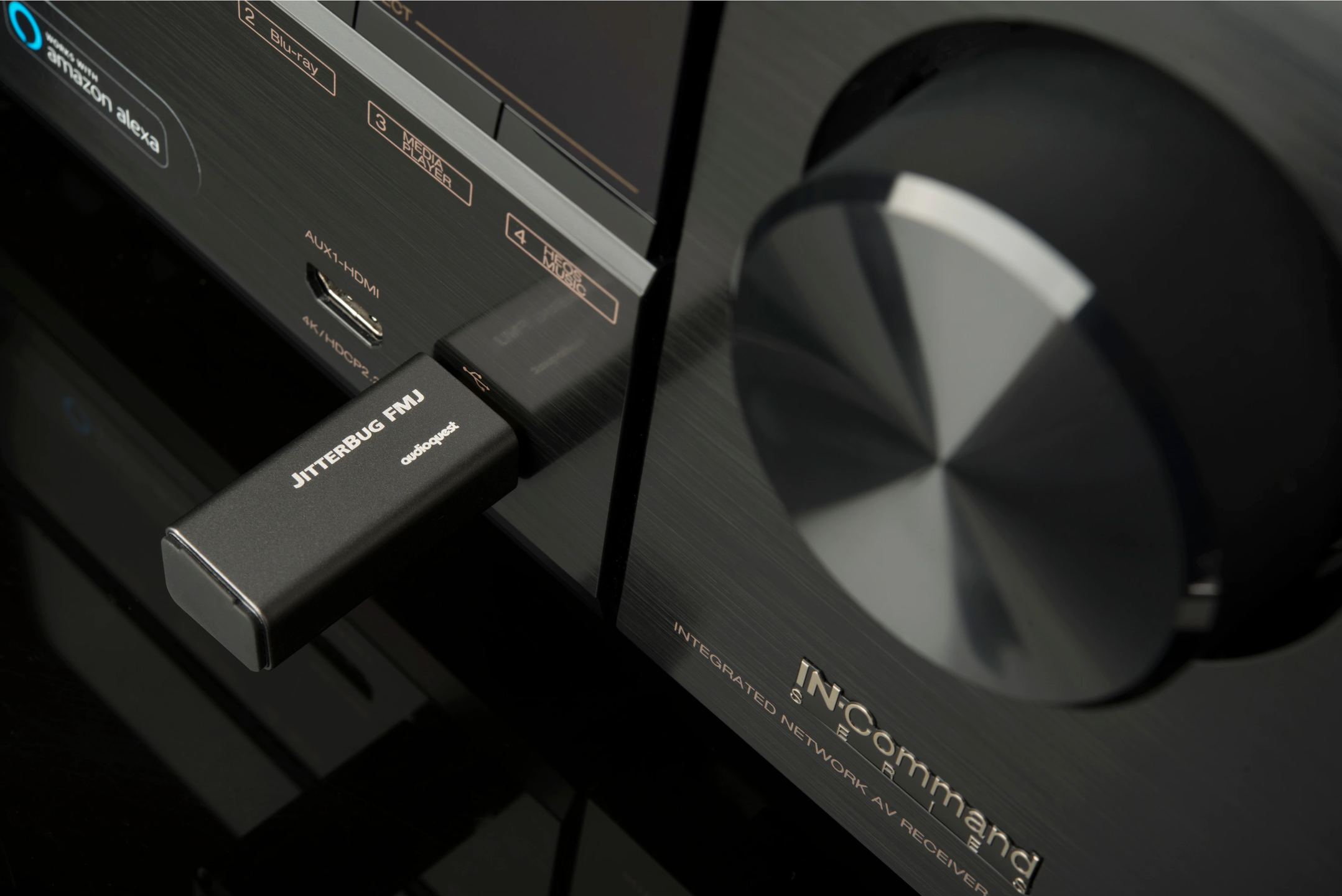
The AudioQuest JitterBug FMJ is a USB filtering device designed to enhance the audio quality of digital systems. As the successor to the original JitterBug, this “Full Metal Jacket” (FMJ) version offers improved performance thanks to its metal casing and upgraded components. This compact device fits between your USB audio source and your digital-to-analog converter (DAC) to eliminate interference and electrical noise, allowing for a purer and more detailed sound reproduction.
Design and Construction
-
Full Metal Casing: The JitterBug FMJ stands out from its predecessor with its entirely metal casing, hence the name “Full Metal Jacket.” This metal shell provides additional protection against external electromagnetic interference (EMI) and radio frequency interference (RFI). The metal shielding acts as a Faraday cage, effectively isolating the internal circuits from surrounding disturbances.
-
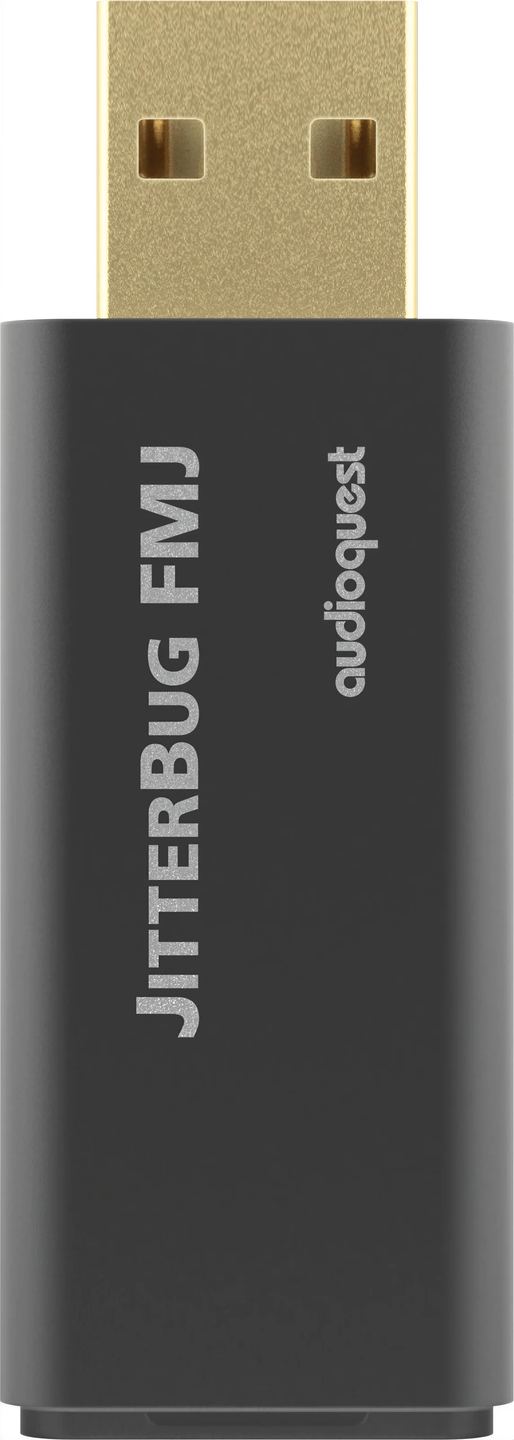
Dimensions and Portability: With its compact dimensions, the JitterBug FMJ easily integrates into any audio setup. Its small size makes it an ideal accessory for portable audio systems or installations where space is limited. The device is lightweight enough not to put excessive strain on USB ports, while being robust enough to withstand daily use.
-
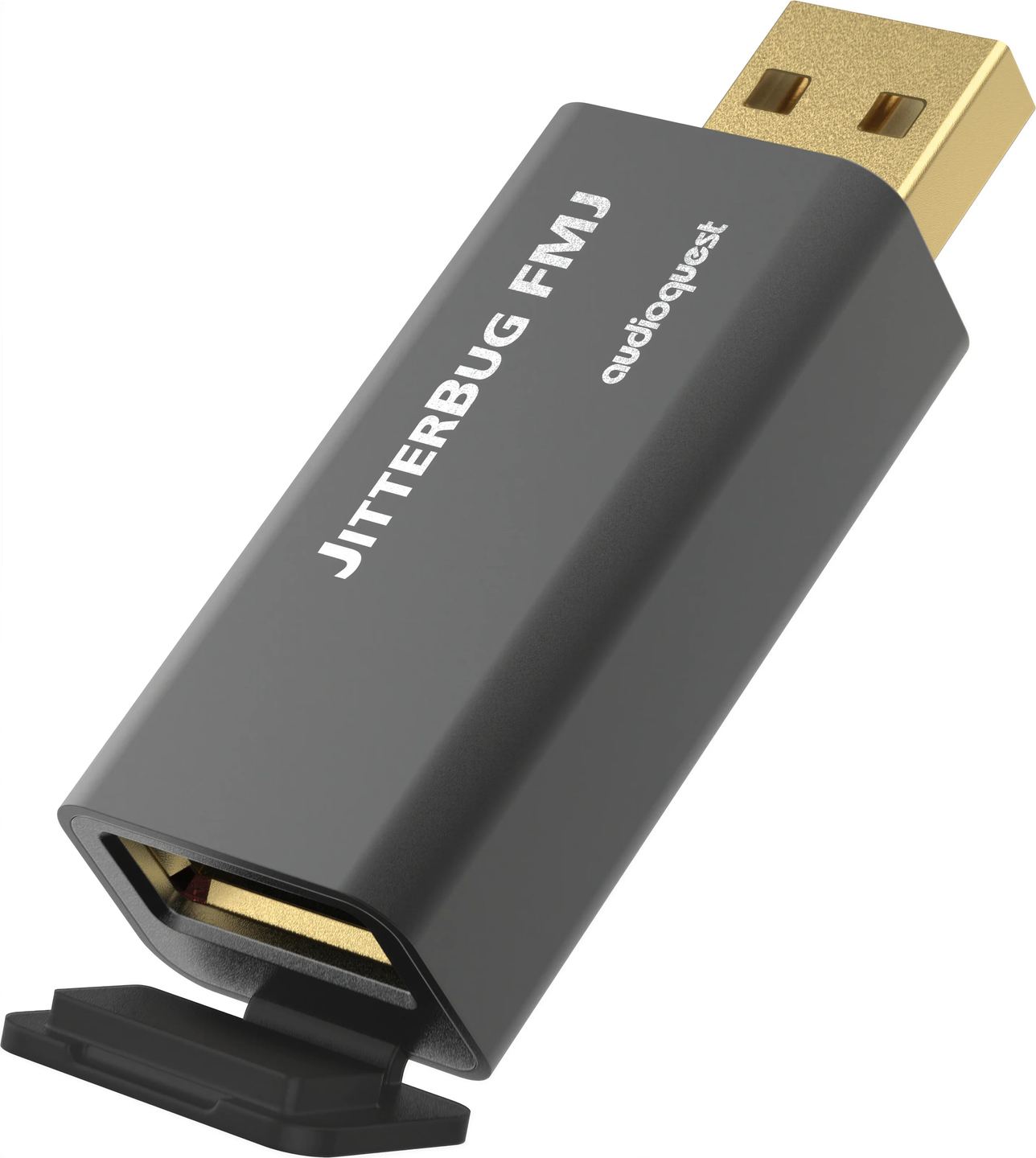
USB Connectivity: The JitterBug FMJ is equipped with a male USB Type-A connector on one side and a female USB Type-A port on the other. This configuration allows for direct insertion between the audio source and the DAC or playback device, without the need for additional cables. The quality of the USB connectors used ensures a reliable and durable connection.
-
Protective Flap: A notable design feature is the small black hinged flap that covers the USB output of the JitterBug FMJ. This seemingly inconspicuous flap actually plays a crucial role in the device’s performance. It is made from a special carbon-based material designed to absorb radio frequencies. When the JitterBug FMJ is used in parallel (in an unused USB port), this flap should be closed to maximize filtering efficiency.
Operation and Technology
The JitterBug FMJ functions as an active filter, targeting both noise on the USB power line (Vbus) and disturbances affecting the data lines. Its action extends over several aspects:
- EMI/RFI Filtering: The device attenuates electromagnetic and radio frequency interference that can propagate along USB cables.
- Jitter Reduction: The JitterBug FMJ helps minimize jitter, those unwanted timing variations that can affect the accuracy of digital-to-analog conversion.
- Signal Conditioning: In addition to filtering noise, the JitterBug FMJ works to optimize the quality of the transmitted digital signal.
Advanced Filtering Circuits
Although AudioQuest does not disclose the exact details of its proprietary technology, the JitterBug FMJ incorporates sophisticated filtering circuits. These circuits are designed to address broadband disturbances, covering a wide spectrum of potentially problematic frequencies.
Passive and Active Processing
The JitterBug FMJ combines elements of both passive and active filtering. Passive components, such as inductors and capacitors, form the first line of defense against high-frequency noise. Active circuits, on the other hand, allow for finer and adaptive signal processing, adjusting to the variable conditions of the USB data stream.
USB Compatibility
The JitterBug FMJ is designed to work with USB 2.0, ensuring maximum compatibility with most modern audio equipment. It supports data rates up to 480 Mbps, making it suitable for transmitting high-resolution audio files.
Applications and Uses
-
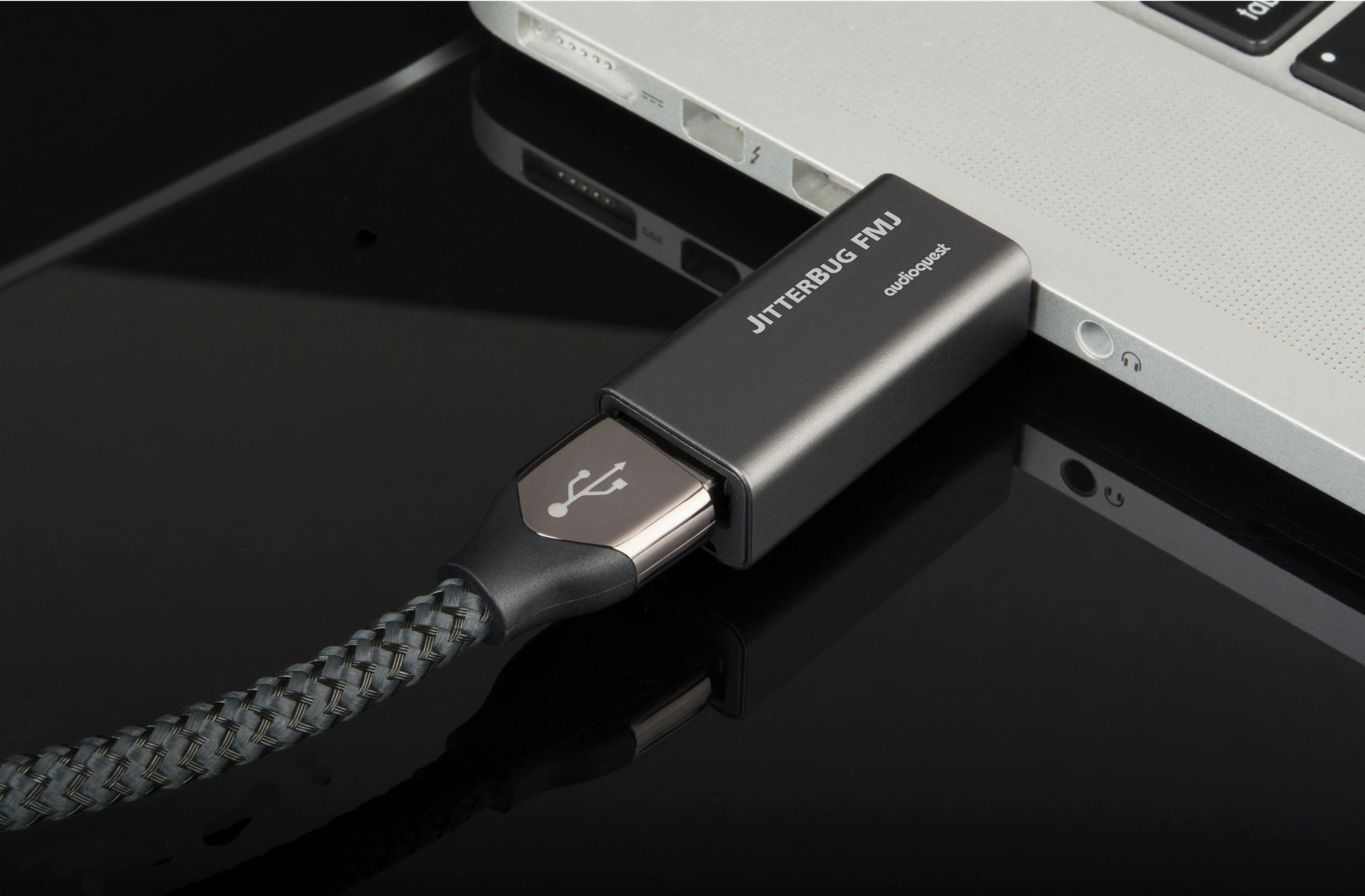
Enhancement of USB DACs: The primary use of the JitterBug FMJ is to optimize the connection between a computer (or any other digital source) and an external USB DAC. By inserting it into this chain, it cleans the signal before it reaches the converter, allowing the latter to operate under optimal conditions.
-
Optimization of Network Players and Streamers: Network players and audio streamers, which often receive their data via USB from a NAS or external hard drive, also benefit from the insertion of a JitterBug FMJ. It helps isolate these devices from disturbances generated by storage devices.
-
Improvement of Embedded Systems: In automotive audio systems using a USB connection, the JitterBug FMJ can significantly enhance sound quality by filtering out parasitic noise generated by the vehicle’s complex electrical environment.
-
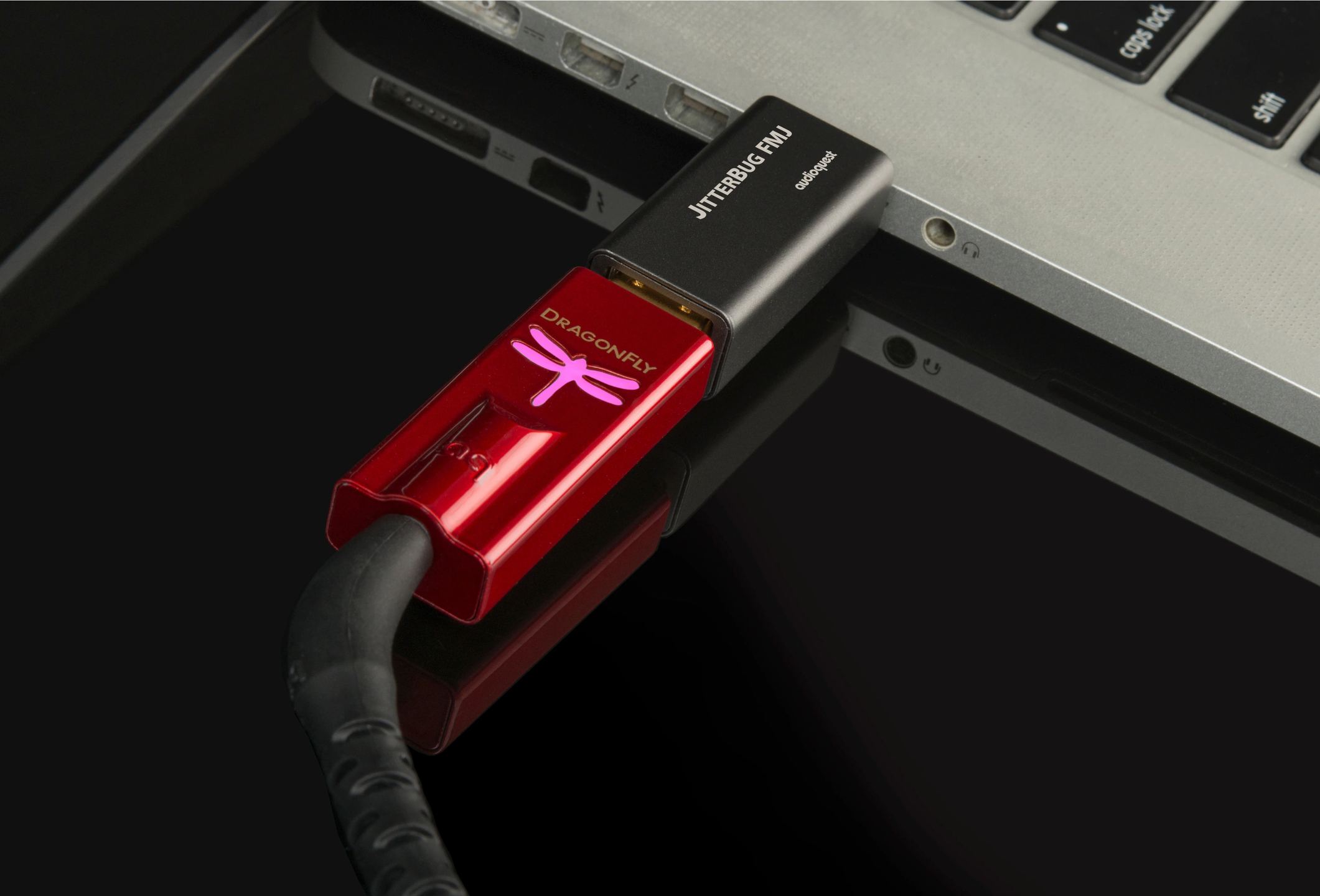
Use with Portable DACs: Portable DACs, like AudioQuest’s DragonFly range, can benefit from the JitterBug FMJ. It is particularly effective when used upstream of these devices, although for the DragonFly Cobalt, which already incorporates some filtering elements, usage should be evaluated on a case-by-case basis.
-
Parallel Configuration: A unique feature of the JitterBug FMJ is the ability to use it in parallel. In addition to a JitterBug FMJ inserted in series in the signal path, a second one can be plugged into an unused USB port of the same device, with its output flap closed. This configuration allows for even more thorough filtering of the device’s overall electrical environment.
Audio Performance and Benefits
-
Improvement of Soundstage: Using the JitterBug FMJ helps to widen and deepen the soundstage. Listeners often report better instrument separation and more precise localization of sound sources in the stereo space.
-
Reduction of Background Noise: By filtering high-frequency interference, the JitterBug FMJ helps lower the background noise level. This results in a deeper “black” between notes, allowing subtle musical details to emerge more clearly.
-
Enhancement of Dynamics: The reduction of noise and interference allows for better reproduction of dynamic contrasts. Soft passages are rendered with more finesse, while crescendos gain impact and authority.
-
Refinement of Details: Users of the JitterBug FMJ often report an improvement in sound resolution. Instrument textures are more palpable, and micro-details, such as natural reverberations or subtle harmonics, are more easily perceptible.
-
Naturalness and Fluidity: By reducing digital artifacts like jitter, the JitterBug FMJ contributes to a more natural and fluid sound reproduction. Music gains coherence and organic quality, closely resembling the experience of live listening.
Compatibility and Versatility
Wide Range of Compatible Devices
The JitterBug FMJ is designed to work with a broad spectrum of USB devices. It is compatible with:
- Computers (Windows, Mac, Linux)
- Smartphones and tablets (via an OTG adapter if necessary)
- Network players and streamers
- NAS and external hard drives
- Desktop and portable USB DACs
Installation and Use
One of the great advantages of the JitterBug FMJ is its ease of use. It is a plug-and-play device that requires no driver installation or software configuration.
For optimal results, the JitterBug FMJ should be placed as close as possible to the signal source (computer, smartphone, etc.). When used with a USB cable, it is best to connect it directly to the source, then plug the cable leading to the DAC into it.
Like many high-quality audio devices, the JitterBug FMJ may benefit from a break-in period. Some users report improved performance after several hours of continuous use.