

NAD MDC USB DSD
Overview
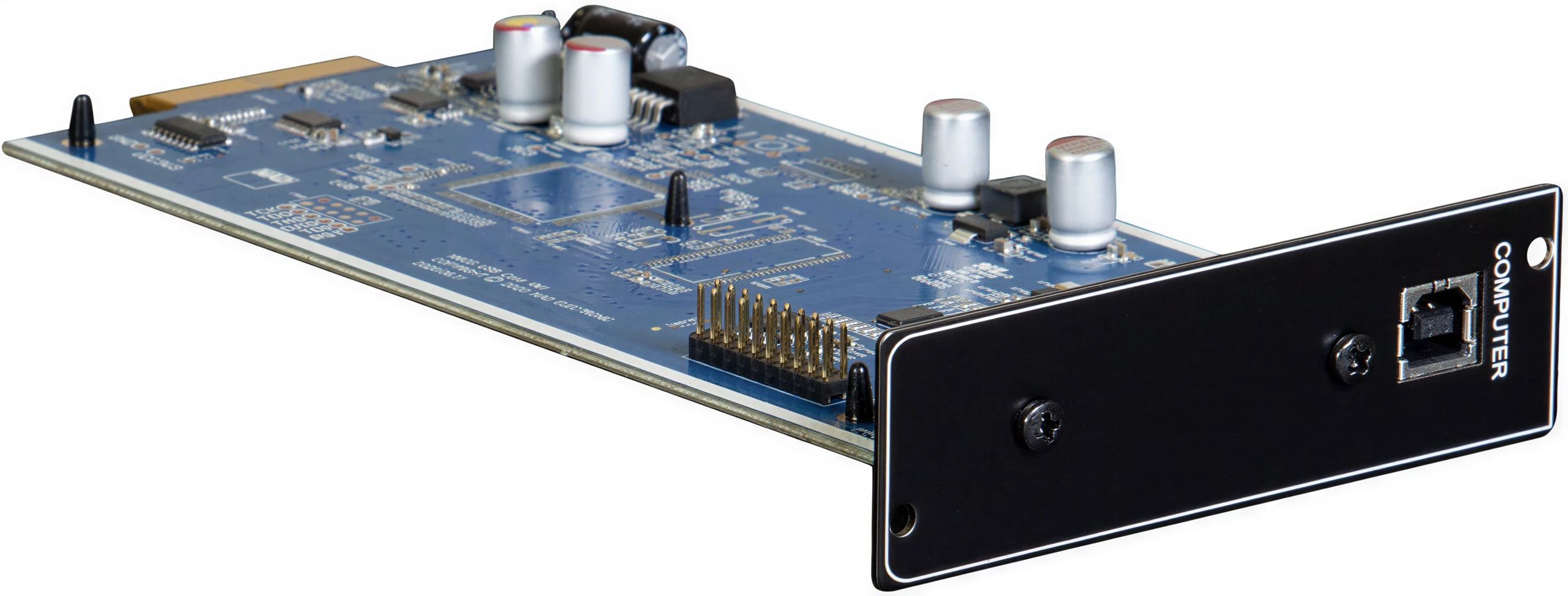
The MDC USB DSD module from NAD allows you to add a high-resolution digital interface to a compatible amplifier. It supports playback of dematerialized audio files, including DSD formats, to enhance the sound quality of connected computer sources.
The MDC Modular Architecture
Since 2005-2006, NAD has been developing its Modular Design Construction (MDC) technology, an innovative approach directly inspired by the computing world. This modular architecture is much more than a mere technical convenience: it embodies the vision of a brand that rejects planned obsolescence. While the audio industry evolves at a breakneck pace, NAD enables its customers to keep their equipment up to date without having to replace their entire system.
The operating principle remains disarmingly simple: expansion cards that slot into dedicated bays, much like graphics cards in a computer. This design has allowed NAD amplifiers dating back to 2007-2008 to accommodate technologies that didn’t even exist at the time of their original design, such as Dolby Atmos or 4K video. The MDC USB DSD continues this tradition by bringing DSD playback capabilities to the brand’s stereo amplifiers.
Technical Design and Module Implementation
The MDC USB DSD comes as a compact electronic card that fits directly into the MDC slot of your NAD amplifier. Once installed, the module adds a USB type B port to the rear of the device, instantly transforming your amplifier into a high-resolution audio receiver for your computer.
The module’s USB Audio 2.0 architecture supports asynchronous data transmission. This technical approach eliminates the synchronization issues (jitter) typical of standard USB connections by allowing the module to control the data flow from the source computer. The circuit completely bypasses the computer’s often mediocre digital-to-analog conversion stages, instead utilizing the high-performance converter built into your NAD amplifier.
DSD file processing deserves special attention. The module uses the DoP (DSD over PCM) method to transmit DSD streams. This technique encapsulates DSD data in a PCM container, allowing transmission via the standard USB interface while preserving the integrity of the original signal. DSD files up to DSD256 format (11.2 MHz) are converted into very high-resolution 24-bit/192 kHz PCM streams, ensuring faithful reproduction of the original recording.
Installation and Configuration: Effortless Implementation
Physically installing the module requires no particular technical skills. Simply turn off the amplifier, remove the MDC slot cover, firmly insert the module until it clicks into place, then power the device back on. The module is immediately recognized and operational.
Software configuration varies depending on your operating system. Mac users benefit from native compatibility starting with macOS Snow Leopard (10.6) and later: the system automatically recognizes the module as “NAD USB Audio 2.0” in the audio preferences, with no additional driver installation required.
For Windows, NAD provides a dedicated driver available for download from its website. After installation, the module appears as “NAD USB Audio” in the audio device settings. It is crucial to uninstall any previous USB audio driver before installing the NAD driver to avoid conflicts.
Playback Capabilities and Supported Formats
The module handles all current digital audio formats with resolutions up to 24-bit and 192 kHz for standard PCM files. This capability more than covers the needs of high-resolution music available on download and streaming platforms.
For DSD files, the preferred format for audiophile recordings, the module supports DSD64, DSD128, and DSD256 resolutions. Although these files are technically converted to 24-bit/192 kHz PCM for processing, this conversion occurs at such a high resolution that the difference from native playback becomes imperceptible.
The module works perfectly with popular streaming services. Whether you use Spotify, Tidal, Qobuz, or any other service accessible from your computer, the audio stream passes through the USB DSD module, thus benefiting from the superior audio processing of your NAD amplifier. Local music libraries, whether stored on the internal hard drive or an external device, are also accessible with the same quality of playback.
Documentation
Technical Specifications
Audio Specifications
- Audio resolution up to 24-bit / 192 kHz
- DSD up to DSD256 (converted to PCM 24-bit / 192 kHz)
Connectivity
- USB 2.0 module
- Asynchronous USB connection
- USB Audio 2.0
Compatibility
Masters Series
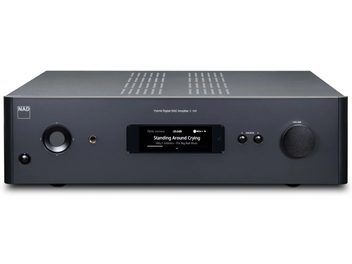
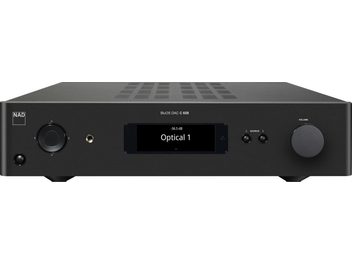
- M12 Preamplifier with direct digital-to-analog converter (DAC)
- M32 Amplifier with direct digital-to-analog converter (DAC)
- M33 BluOS streaming amplifier with digital-to-analog converter (DAC)
Classic Series
- C 388 Hybrid digital amplifier with digital-to-analog converter (DAC)
- C 368 Hybrid digital amplifier with digital-to-analog converter (DAC)
- C 658 BluOS network player with digital-to-analog converter (DAC)
Frequently Asked Questions
Is the MDC USB DSD module compatible with my NAD amplifier?
What is the difference between a standard USB connection and the module’s asynchronous USB?
Asynchronous USB reverses data flow control: the receiver (the MDC module) regulates the rate, not the sender (the computer). This architecture eliminates synchronization issues and drastically reduces jitter, significantly improving the timing accuracy of music playback.
Does the module have its own digital-to-analog converter?
No, the MDC USB DSD module acts as a digital signal reception and processing interface. It utilizes the high-performance converter already present in your NAD amplifier, ensuring sonic consistency with the other digital sources in your system.
How does the module handle native DSD files?
The module uses DoP (DSD over PCM) technology, which encapsulates DSD data in a PCM stream for USB transmission. DSD files are then converted to 24-bit/192 kHz PCM, a resolution high enough to preserve all the nuances of the original DSD recording.
Can I use the module with Linux or other operating systems?
While NAD provides official drivers only for Windows and macOS offers native compatibility, many Linux distributions recognize the module thanks to USB Audio Class 2.0 support. Compatibility may vary depending on your specific distribution and configuration.
Does the module improve the sound quality of streaming services like Spotify?
The module allows streaming services to bypass the variable-quality audio circuits of the computer, instead using the audiophile-grade converter in your NAD amplifier. While the source quality remains limited by the streaming service’s bitrate, the improvement is still noticeable, especially with high-resolution services like Qobuz or Tidal.
- Eco-contribution included in the sale price.
- GTIN / EAN: 786357001494




