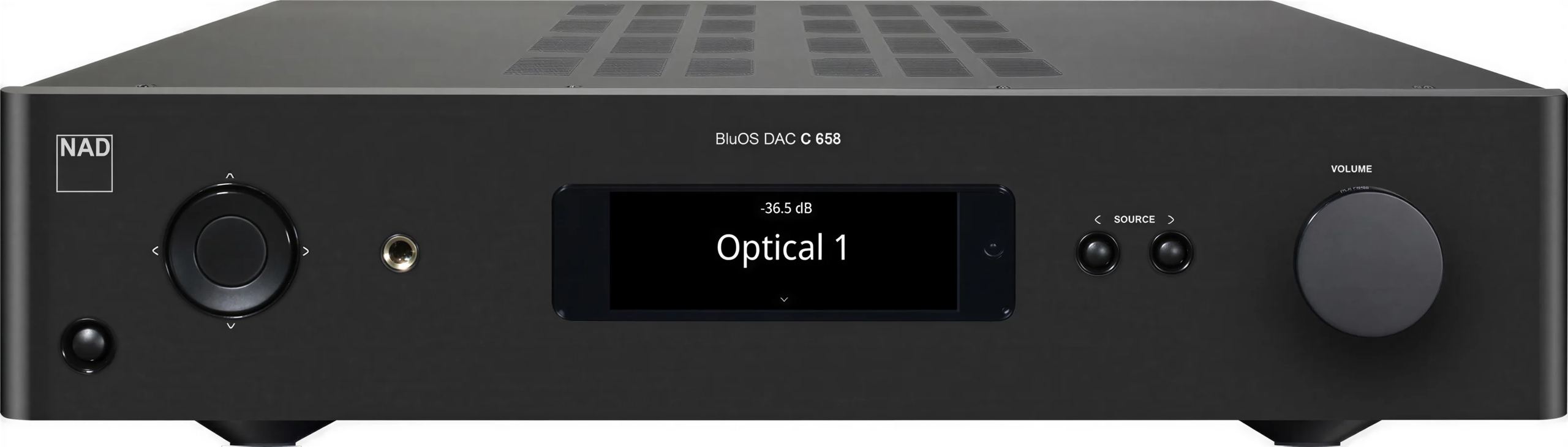
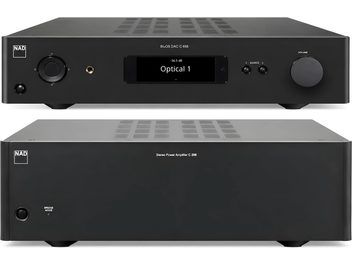
NAD C658: BluOS Streaming Preamplifier
Three devices in a single chassis: the C658 combines a high-resolution network player, a 32-bit ESS Sabre digital-to-analog converter, and a full stereo preamplifier. NAD also adds Dirac Live room correction, a first in the Canadian brand’s Classic range. The whole unit is built on an upgradeable architecture thanks to MDC slots, which allow new features to be added over time without changing the device.
An ESS Sabre DAC at the heart of the system
Digital-to-analog conversion is handled by a 32-bit ESS Sabre chip capable of processing files up to 192 kHz/32-bit. This converter offers a dynamic range of 118 dB and a total harmonic distortion rate of less than 0.005%, figures that place the C658 among the benchmarks in its price category. MQA decoding is natively supported via the BluOS ecosystem, providing access to “Studio Master” recordings offered by Tidal and other streaming services.
Volume control is handled entirely in the digital domain, using technology borrowed from NAD’s Masters series. This approach ensures a very short and identical analog signal path regardless of the chosen volume level, thus limiting resolution loss at low listening levels.
Dirac Live: built-in room correction
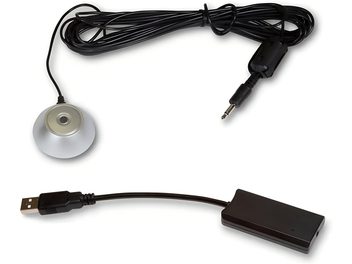
The C658 integrates Dirac Live technology, a correction system that analyzes both the room’s frequency response and the speakers’ impulse response. The calibration process requires a measurement microphone (miniDSP UMIK-1 or equivalent, not included) and the Dirac software installed on a computer. Once the measurements are taken, the C658 applies correction filters that reduce room resonances and optimize the speakers’ transient response.
The included license corresponds to the “Light” version of Dirac Live, limited to frequencies below 500 Hz. To benefit from correction across the entire audible spectrum, you must purchase the “Full Frequency” license separately. This distinction is worth considering when buying, as the difference in sound between the two versions is noticeable on some systems.
BluOS and access to streaming services
The built-in network player uses BluOS, the platform developed by Lenbrook (parent company of NAD and Bluesound). This interface provides access to around fifteen streaming services, including Tidal, Qobuz, Spotify, Deezer, Amazon Music, and internet radio. The dedicated app, available on iOS, Android, Windows, and macOS, serves both as a remote control and as a browser for navigating music libraries.
BluOS also supports files stored on a NAS or DLNA server, with broad compatibility for common formats (FLAC, WAV, AIFF, MP3, AAC, OGG, ALAC) and hi-res formats (DSD, MQA). The platform is also Roon Ready certified, allowing the C658 to be integrated into an existing Roon ecosystem.
The C658 can also act as an entry point for a BluOS multiroom system. It can then stream to other compatible devices (Bluesound Node, Pulse, etc.) while independently managing up to 64 listening zones.
Bidirectional Bluetooth and wireless connectivity
The aptX HD Bluetooth controller works in both directions. For incoming signals, it allows you to stream music from a smartphone, tablet, or computer to the C658 with better quality than standard Bluetooth. For outgoing signals, it enables audio to be sent to a compatible wireless headset, a handy feature for late-night listening.
Connection to the home network is via gigabit Ethernet or dual-band Wi-Fi (802.11a/c/n). NAD recommends a wired connection to ensure optimal stability when playing hi-res files, but wireless connectivity is sufficient for most setups.
Connectivity designed to centralize sources
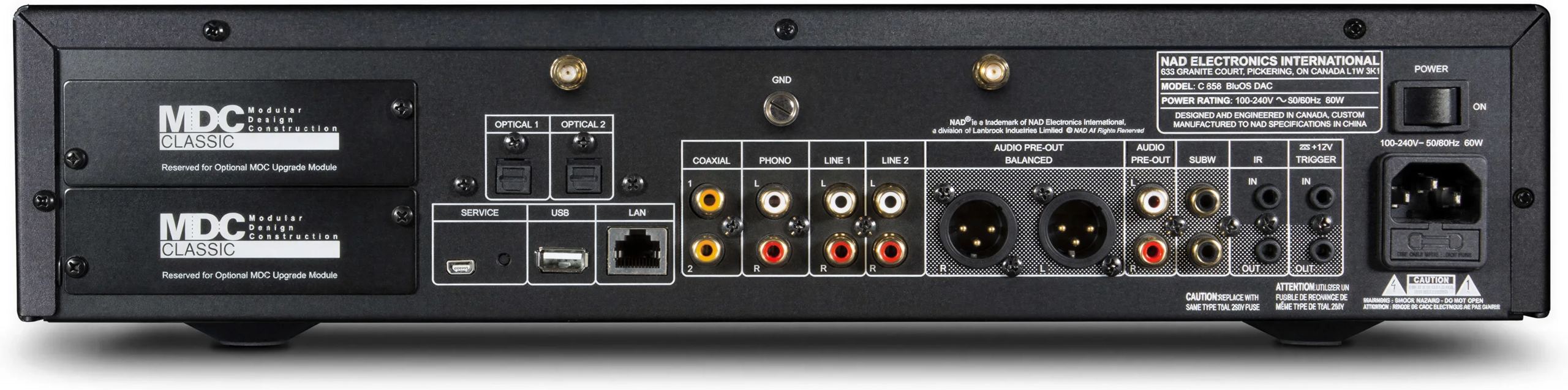
The rear panel of the C658 hosts a range of digital and analog inputs, allowing it to centralize all the sources in a hi-fi system. There are two coaxial inputs and two TOSLINK optical inputs for connecting a CD player, TV, or set-top box. Two RCA line inputs complete the setup, along with a phono input with a built-in preamp for moving magnet (MM) cartridges. Vinyl enthusiasts will appreciate this integration, even if purists may regret the lack of support for moving coil (MC) cartridges.
On the output side, the C658 offers RCA and XLR connectors for connecting a power amplifier, as well as dual subwoofer outputs with adjustable crossover frequency. A 6.35 mm front headphone jack allows wired headphone listening without additional equipment.
MDC architecture: upgrade possibilities
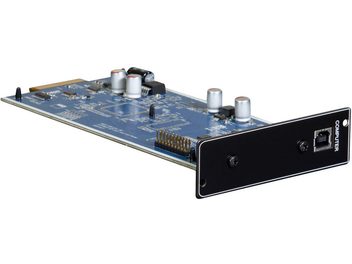
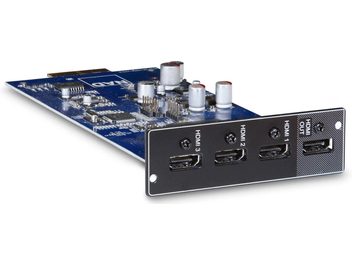
NAD designed the C658 around its Modular Design Construction (MDC) system, which provides two slots for optional modules. The MDC HDM-2 module, for example, adds three HDMI inputs and one HDMI output with support for 4K at 60 frames per second, HDCP 2.2, ARC, and CEC. This extension turns the C658 into an AV hub capable of handling a living room’s video sources (game console, TV box, Blu-ray player) while reproducing their soundtracks in stereo.
Another module, the MDC USB DSD, adds a DSD-compatible USB Audio 2 input for connecting a computer. NAD regularly updates its MDC module catalog, giving the C658 a form of future-proofing against technological changes.
Home automation integration and remote control
The C658 features an RS-232 port and 12 V trigger connectors (input and output) for integration into a home automation system. Drivers are available for Control4, Crestron, RTI, URC, AMX, Savant, Elan, and Lutron systems. The IR input with learning function also allows for programming a universal remote control.
The supplied remote control (SR 9) follows the classic format of NAD accessories, with a fairly densely populated button layout covering essential functions. The BluOS app remains the most convenient control method for everyday use.