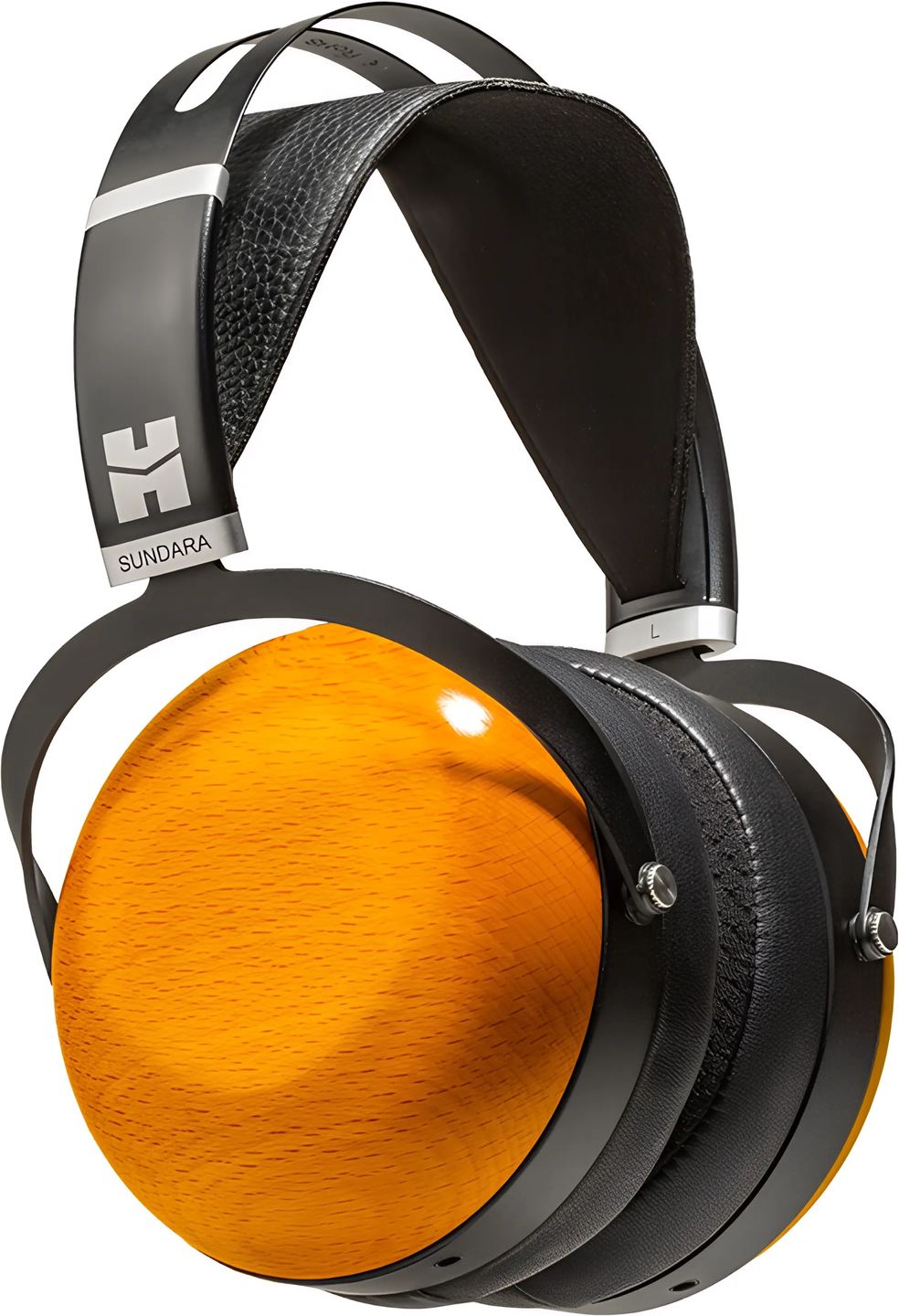
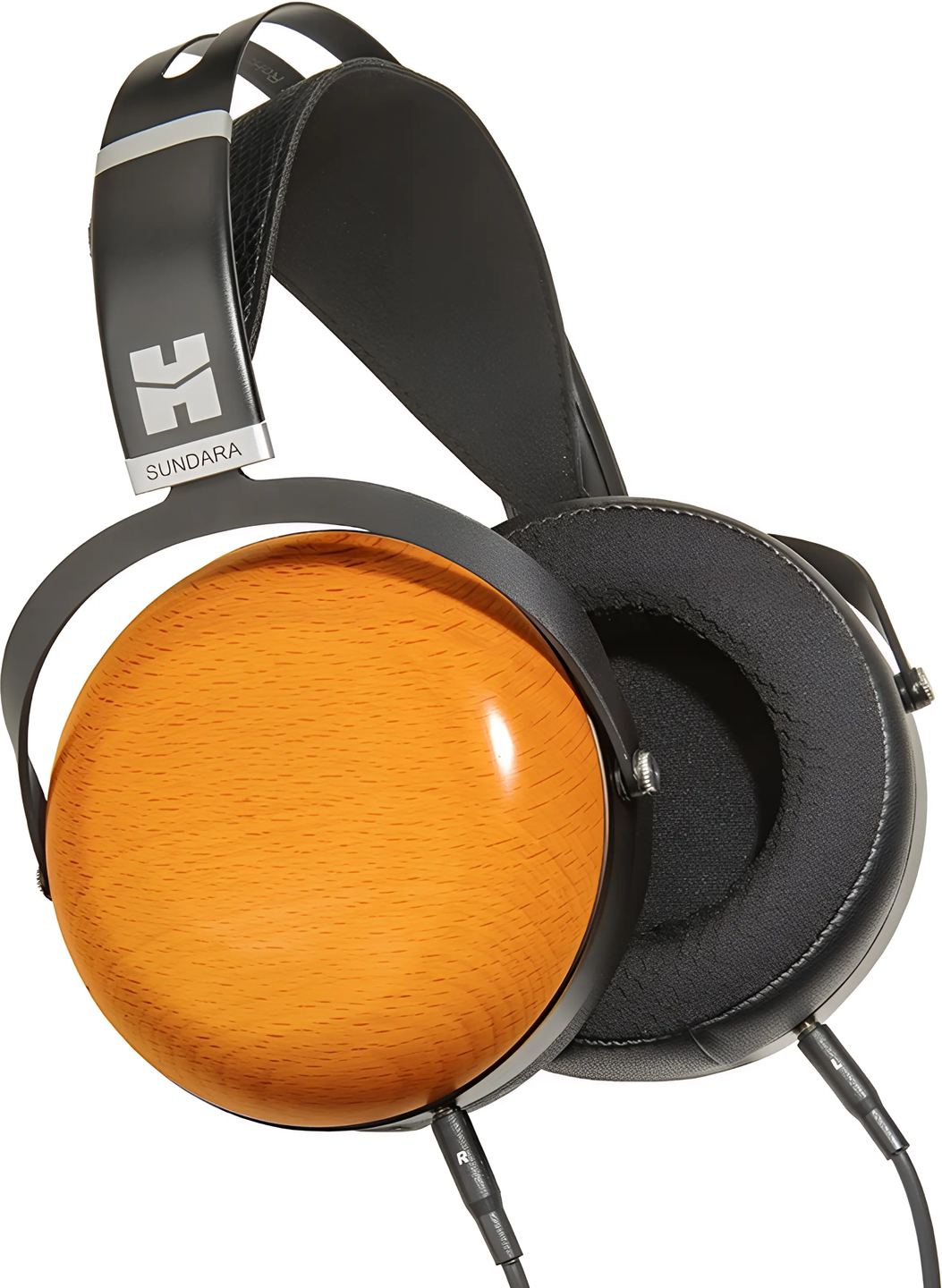
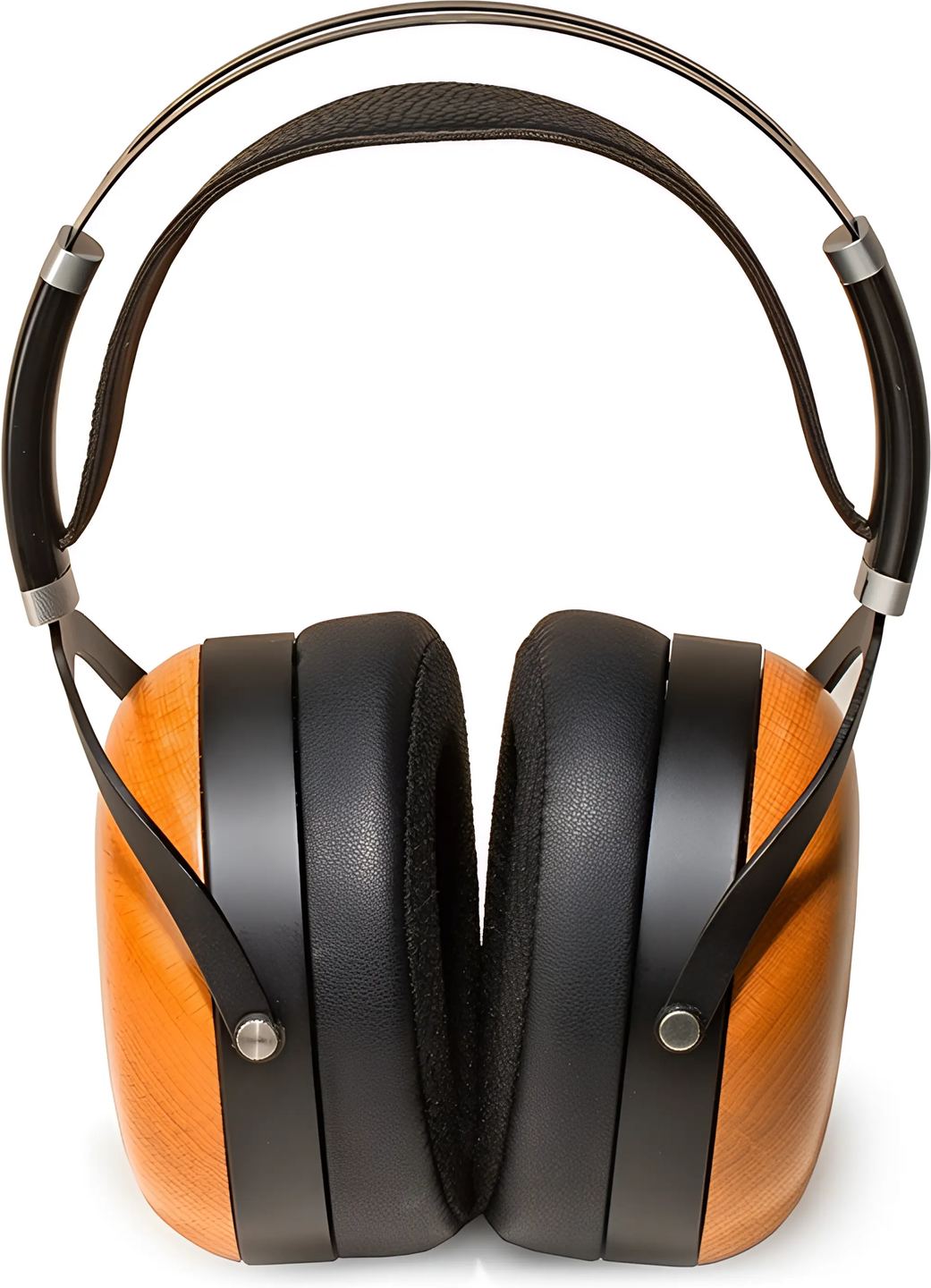
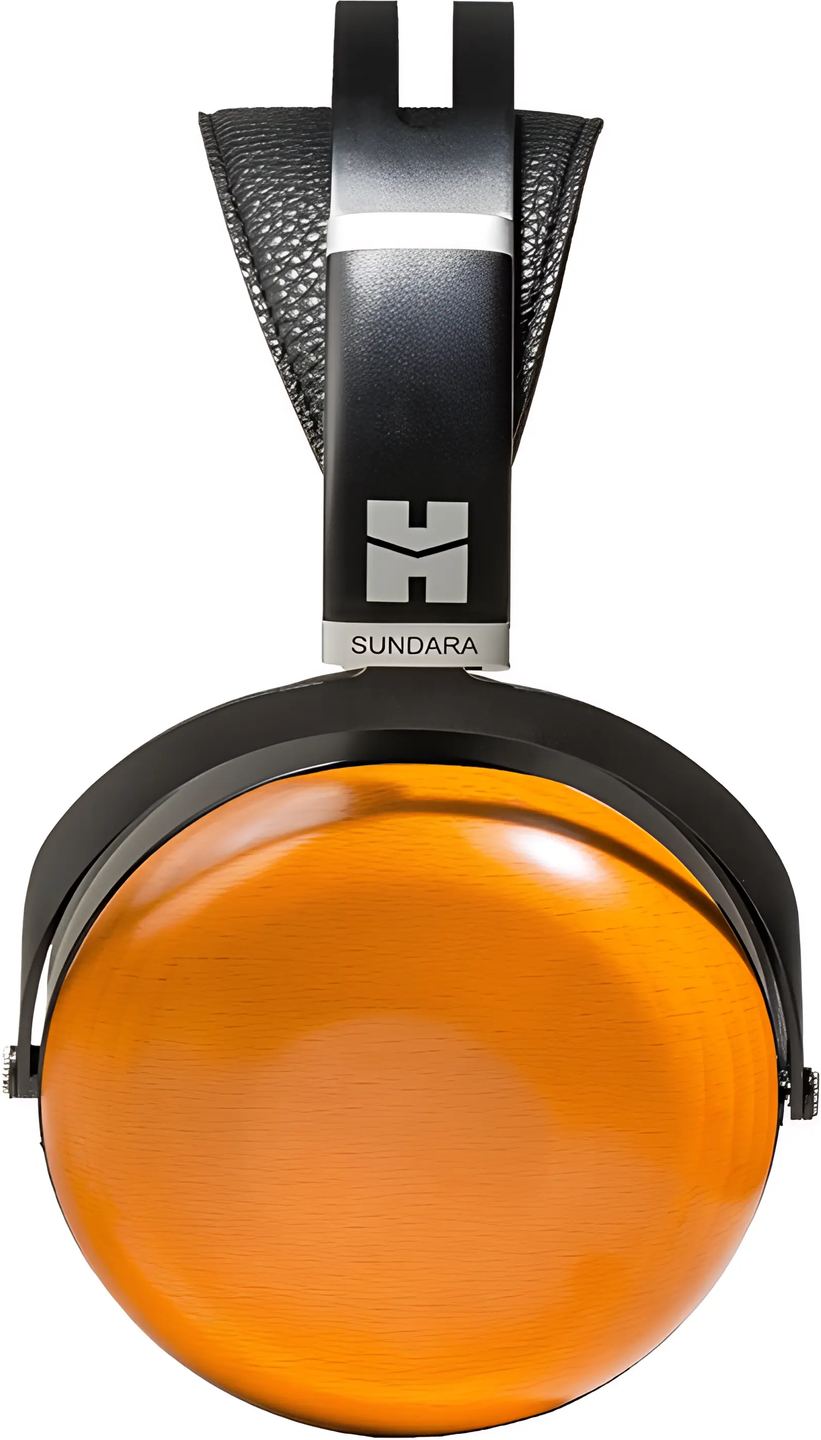
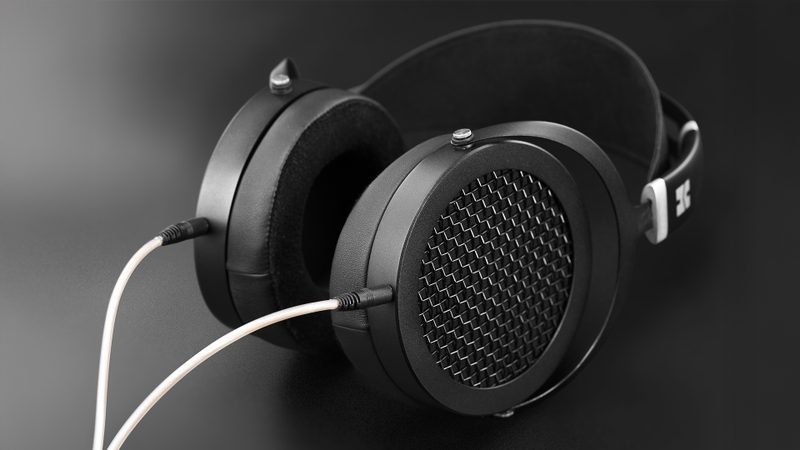
The most visible change lies in the earcups. Where the open version exposed its drivers behind a flat metal grille, the Sundara Closed-Back encloses its cups in solid beech wood, hand-assembled and coated with a satin finish. The golden hue and rounded, then flattened geometry give the headphones a warm appearance, far removed from the brand’s usual austerity. Build quality remains serious without aiming for the refinement of much more expensive models.
The rest of the structure comes directly from the open version: a double aluminum headband and an adjustment strap covered in synthetic leather. Adjustment is made by sliding the earcups along the headband, without mechanical notches. The solid cups, with no visible vent, close off the rear of the driver and provide decent passive isolation, naturally absent from the open model.
A completely redesigned oval driver
Under these cups, Hifiman has not reused the open version’s round driver. The Sundara Closed-Back features an oval planar magnetic driver measuring approximately 80 by 60 millimeters, with magnets positioned on either side of the diaphragm. This elongated surface aims to retain bass substance despite the enclosed cup volume.
Two in-house technologies shape this driver. The “Stealth Magnets,” magnets with a rounded profile that Hifiman presents as nearly transparent to passing sound waves, limit reflections and diffraction at the diaphragm’s output. The latter, the Neo Supernano diaphragm, is around one micron thick, nearly 80% thinner than the diaphragms found in more conventional headphones. Such a lightweight diaphragm responds quickly to signal variations, benefiting the reproduction of micro-details and control in the high frequencies, up to a claimed 50 kHz.
Enhanced bass, narrower soundstage
Closing the cups shifts the tonal balance. Bass gains presence and weight compared with the open version, which is drier and tighter in the lower register. The overall tone becomes warmer, with fuller low mids that give body to voices and low-pitched instruments.
This choice has a trade-off. The soundstage narrows: there is less air and less space between layers than on the open model, where the driver breathes freely outward. The Sundara Closed-Back retains good clarity and respectable width for a closed-back design, but listeners primarily seeking scale and openness will find those qualities in open-back headphones. The choice between the two versions comes down to this compromise between isolation and an open sonic bubble.
Comfort and fit for long listening sessions
The wooden cups add some weight: 432 grams on the scale, more than the open version. The wide adjustment strap distributes this weight across the head and limits pressure points, making long sessions manageable. The size still makes itself felt, however, with moderate pressure on the temples and subtle structural noises when moving the head that may appear over time.
The hybrid earpads, synthetic leather on the outside and velour on the ear side, are deep and surround the ear without crushing it. Passive isolation remains average: the headphones reduce ambient noise without cutting you off from the world. Due to their imposing size and the absence of a carrying case, the Sundara Closed-Back is best suited to a desk or living room.
Cabling and suitable sources
The cabling follows the brand’s usual approach: one 3.5 mm mini-jack connector per earcup, connected by a 1.5-meter Y cable, with a 6.35 mm adapter supplied for home amplifiers. This separate connection for each earcup allows balanced cabling and leaves the door open to replacing the cable with another model.
With 20 ohms of impedance and 98 dB sensitivity, the Sundara Closed-Back can be driven without major difficulty by an audiophile portable player or a small USB DAC/headphone amp. A dedicated headphone amplifier or a more powerful source nevertheless gives it greater control and dynamics, as is often the case with planar drivers. One practical caveat remains: at 1.5 meters, the supplied cable is short for a living-room setup connected to a hi-fi amplifier, where an extension cable quickly becomes useful.