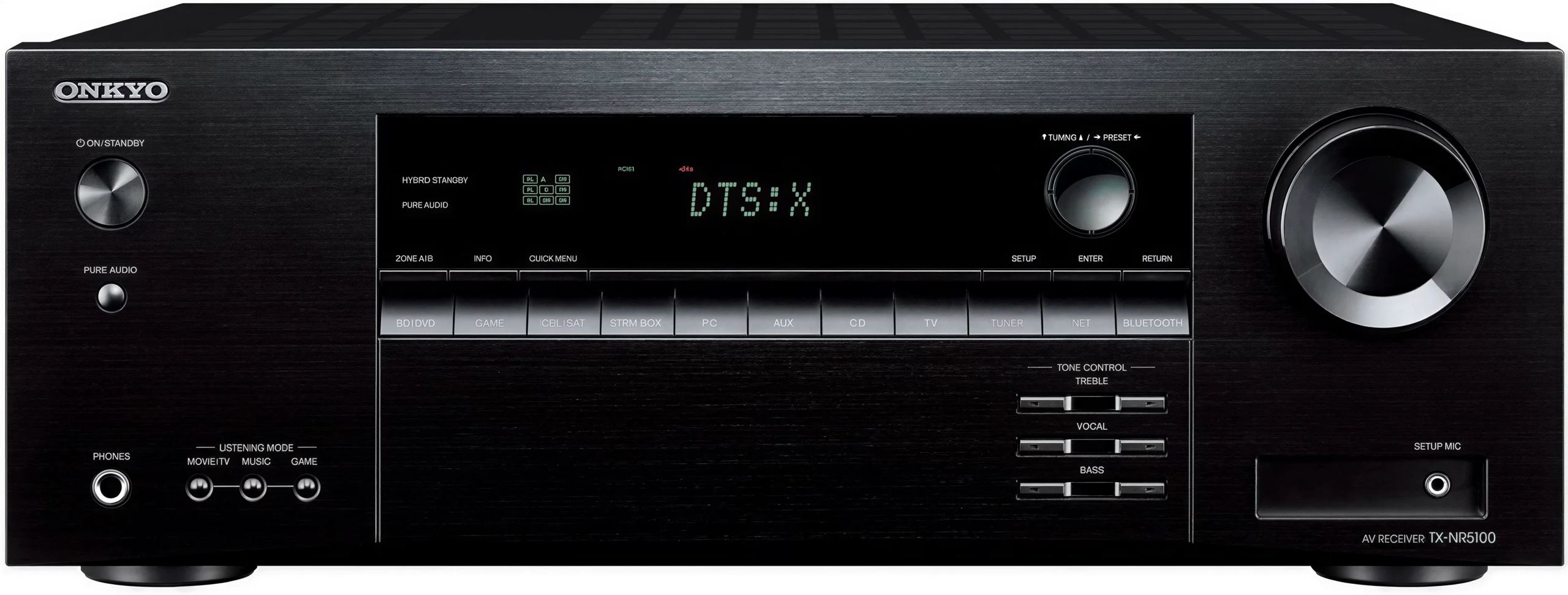
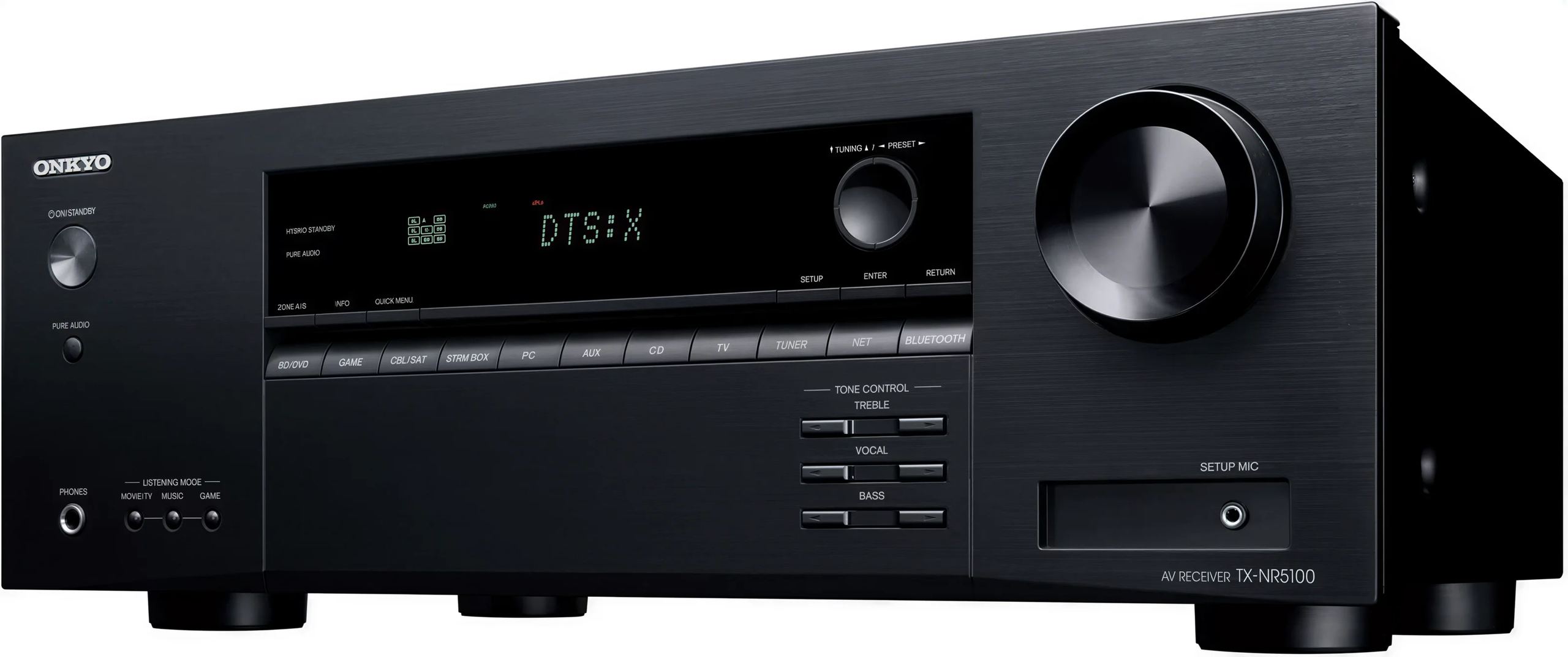
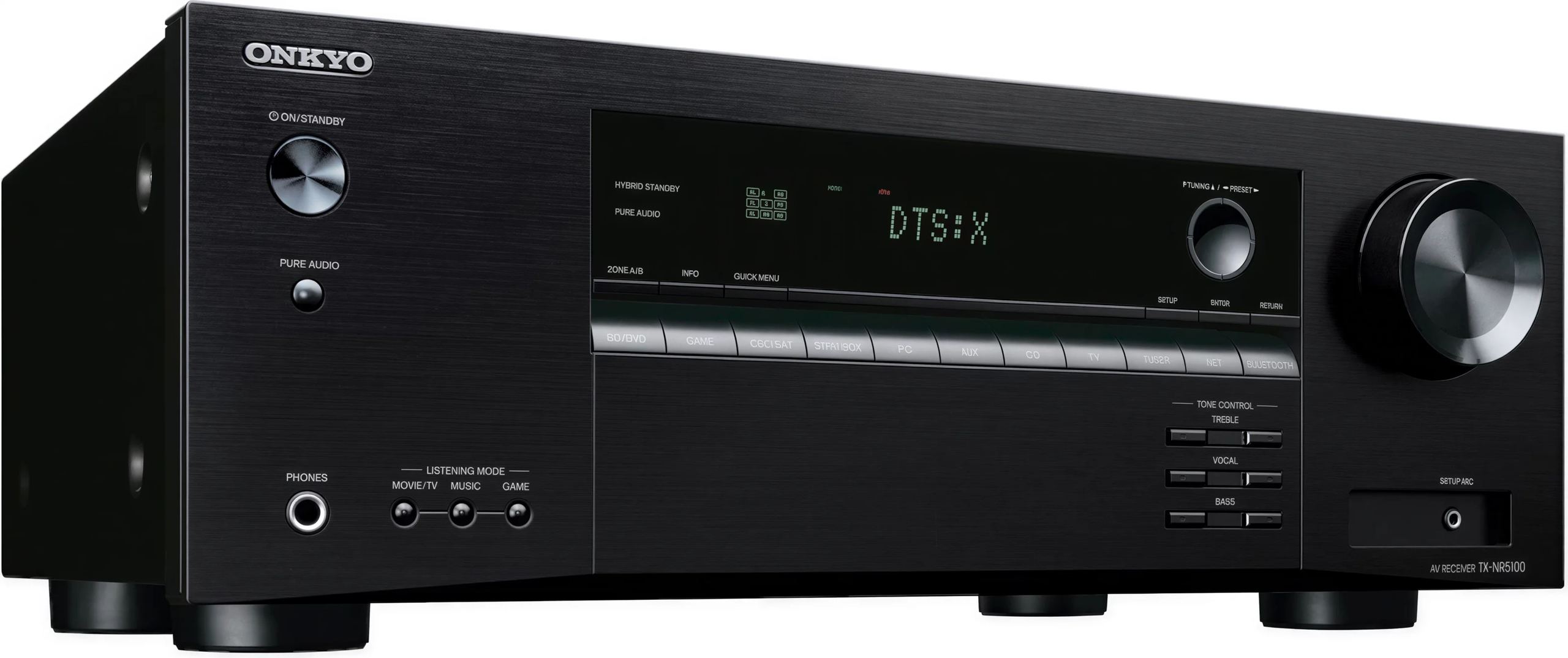
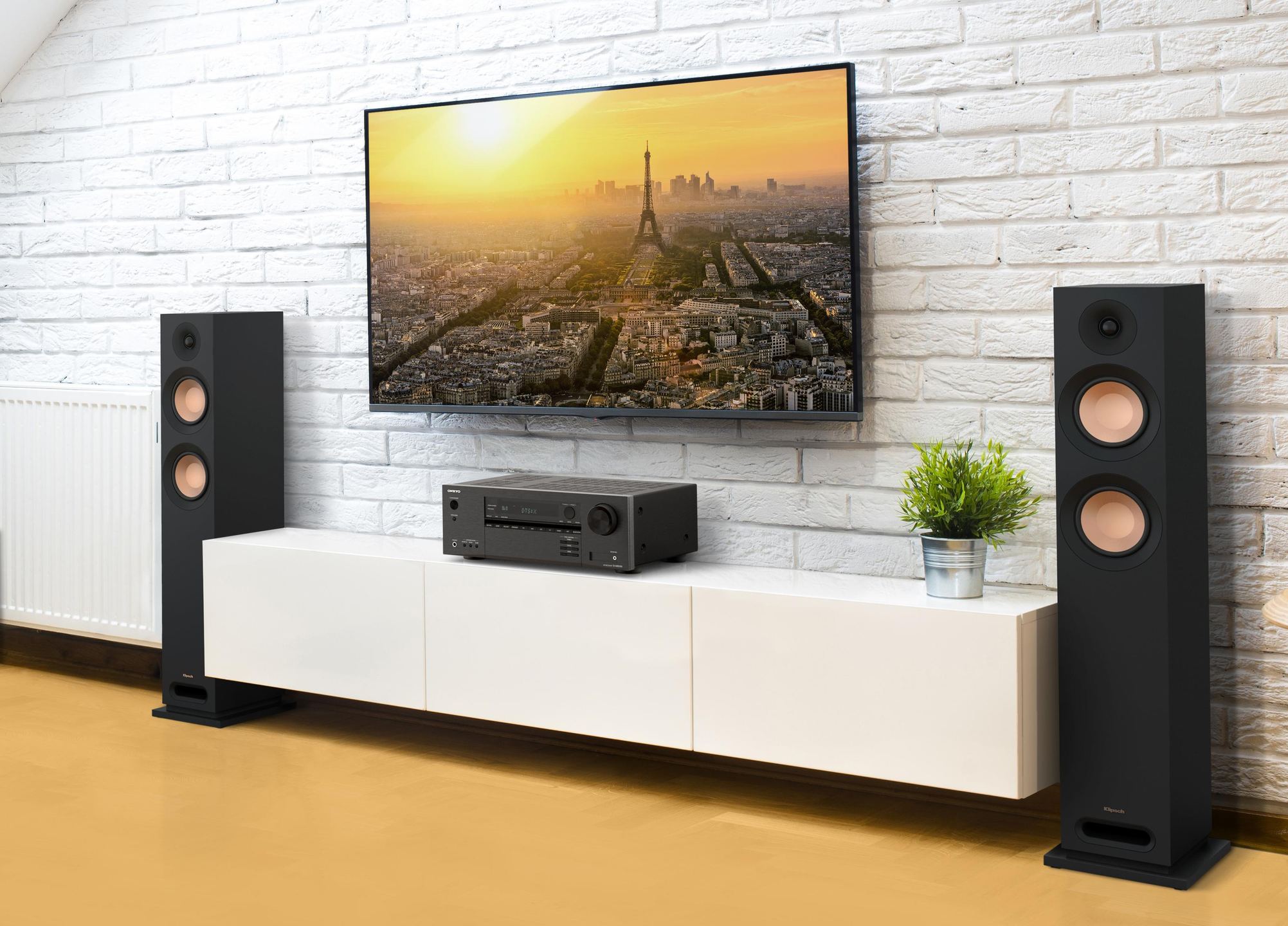
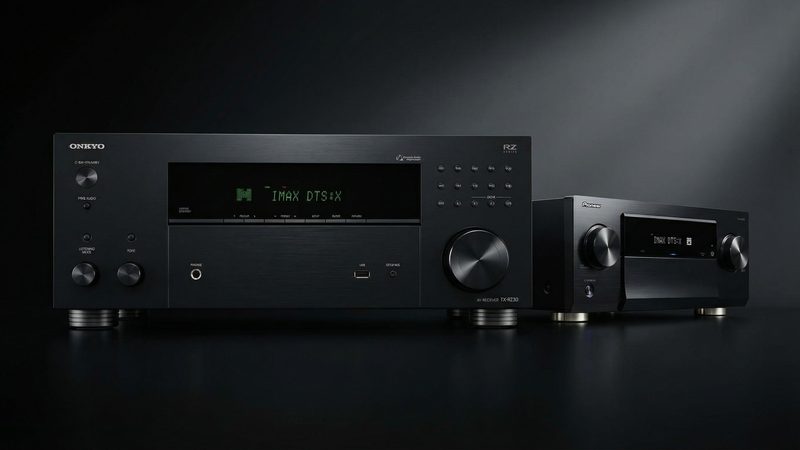
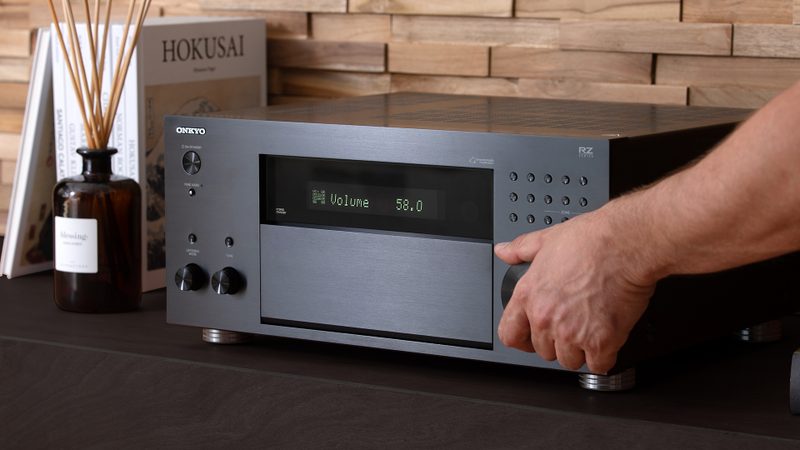
Released in 2021 as part of Onkyo’s new line of 8K-compatible amplifiers, the TX-NR5100 is the gateway to modern home theater. This 7.2-channel model combines the latest technological advances with an accessible price point, all while preserving the sonic DNA that has built Onkyo’s reputation since 1946.
Technical Architecture and Sound Design
The TX-NR5100 is built on a discrete component amplification architecture, capable of driving 4-ohm loads across all 7 channels. At its core, a custom toroidal transformer ensures stable power delivery, complemented by an isolated network module that minimizes high-frequency interference.
With 80 watts per channel (8 ohms, THD 0.08%), it offers substantial dynamic reserves, reaching 165 watts at 6 ohms. This “Dynamic Audio Amplification” architecture prioritizes transient response, which is especially noticeable during explosive moments in modern soundtracks. Digital processing relies on 192 kHz/24-bit converters and anti-jitter PLL technology, with native support for DSD up to 11.2 MHz.
Next-Generation Video and Gaming Capabilities
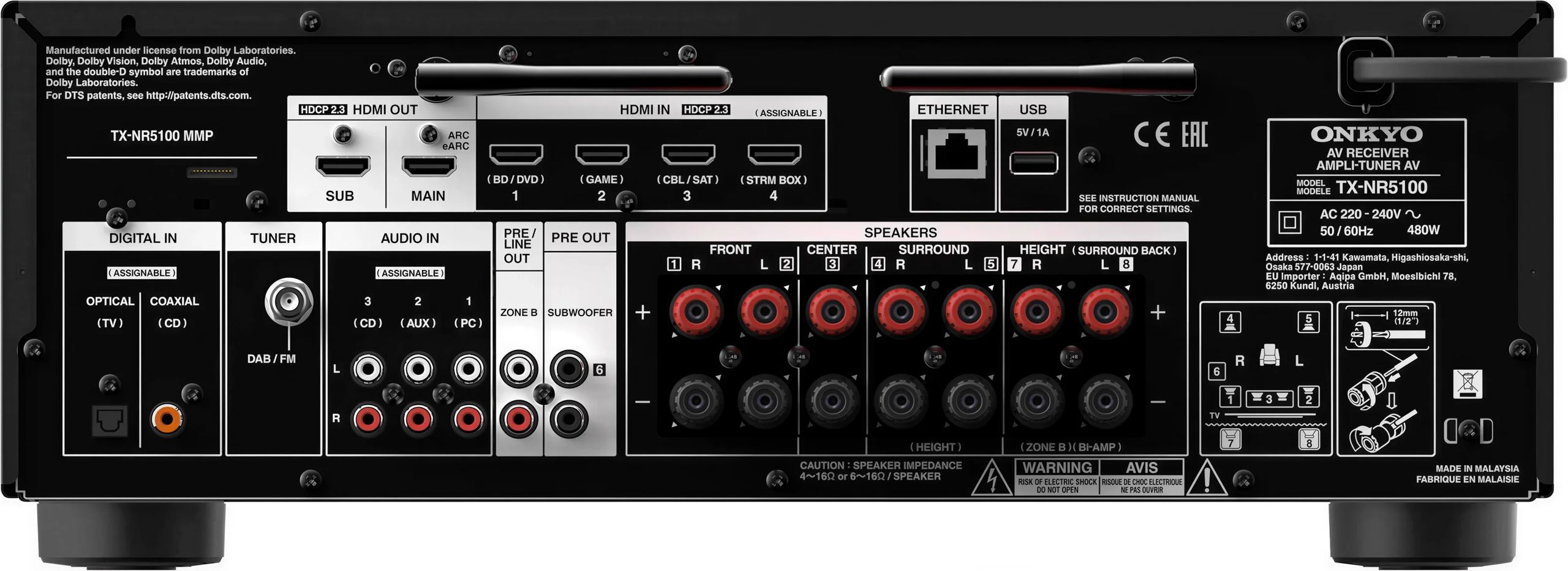
HDMI 2.1 integration is the main highlight, though the 24 Gbps bandwidth does require some compromises. All four inputs accept 4K/120Hz and 8K/60Hz signals, but without HDR at 4K/120Hz—a limitation for owners of the latest gaming consoles.
The amp includes essential gaming features: VRR to prevent screen tearing, ALLM for automatic low latency, and QFT to reduce display lag. HDR support covers Dolby Vision, HDR10+, and HLG with BT.2020 colorimetry. Dual HDMI outputs allow simultaneous connection to both a TV and a projector.
Connectivity and Multiroom Integration
Compatible with major ecosystems (Sonos, Chromecast, AirPlay 2, DTS Play-Fi), the TX-NR5100 fits seamlessly into a multiroom setup. Dual-band Wi-Fi enables high-resolution streaming, with Spotify Connect, Amazon Music HD, Tidal, and Deezer built in. Bidirectional aptX HD Bluetooth allows streaming from a smartphone or to wireless headphones.
Physical connections include three RCA line inputs, one optical, and one coaxial input. The Zone 2 output can power an additional room, either via reassigned surround channels or through a line output.
Acoustic Calibration and Optimization
The AccuEQ system with AccuReflex calculates distances, levels, and crossover frequencies for each speaker. While less sophisticated than Dirac Live, it fulfills its primary purpose. The Klipsch Optimize mode automatically applies optimal settings for speakers from the American brand.
Dolby Atmos Height Virtualizer and DTS Virtual:X technologies simulate height effects without dedicated speakers. While the result doesn’t replace true physical channels, the sense of spaciousness is still noticeable in 5.1 or 7.1 setups.
Compatible with Amazon Music, Deezer, Spotify, Tidal
Bidirectional Bluetooth controller
Compatible with Alexa, Siri, Google Assistant
Physical Characteristics
Power consumption:
Maximum: 490 W
Standby: 0.1 W
Dimensions (W × H × D): 435 × 160 × 328 mm
Weight: 8.4 kg
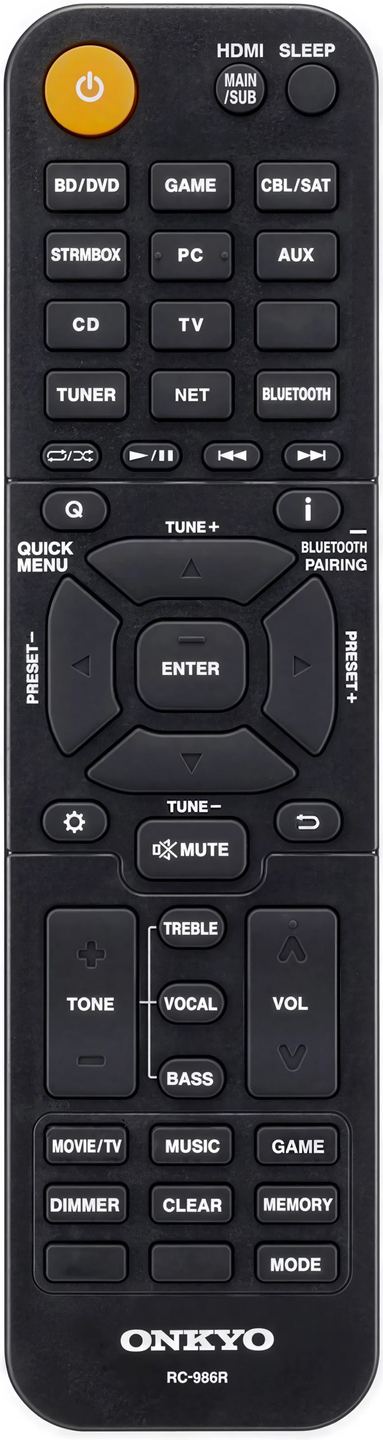
Included accessories: radio antenna, calibration microphone, remote control
Frequently Asked Questions
Can the TX-NR5100 really handle 4K at 120 Hz for gaming?
+
Yes, but with significant limitations. The 24 Gbps HDMI ports allow 4K/120Hz only in 4:2:0 without HDR. To fully enjoy the capabilities of a PS5 or Xbox Series X, you’ll have to choose between maximum smoothness (4K/120Hz without HDR) or richer visuals (4K/60Hz with HDR).
What’s the main difference compared to the TX-NR6100?
+
Beyond the slightly lower power output (80W vs. 100W), the TX-NR5100 lacks THX certification, has fewer HDMI inputs (4 vs. 6), and uses spring-clip speaker terminals instead of binding posts on all channels. The front USB port is also absent.
Is AccuEQ calibration sufficient for good results?
+
For standard home use, AccuEQ does its job well by adjusting distances and levels. The measurements are basic compared to Audyssey or Dirac, but the system correctly detects the setup and applies a suitable correction curve. Purists can always fine-tune manually via the graphic equalizer.
How does Sonos integration work?
+
With a Sonos Port (sold separately), the TX-NR5100 becomes part of the Sonos system. The Volume Pass-Through feature lets you control volume directly from the Sonos app, and the amp automatically wakes up when playback starts. It’s a seamless integration for those already invested in the Sonos ecosystem.
User reviews
Kevin
Great! So many configuration options, including personalized input labels, yet still clear and easy to understand. The sound in combination with a Klipsch Reference 3.1.2 setup is excellent, and 4K120Hz also runs on all connections without any issues. Great value for money and a noticeable upgrade from my Pioneer VSX-827K
Comment from August 21, 2026 — Experience from July 11, 2026
Automatically translated — Show original (German)
Spitze! So viele Konfigurationsmöglichkeiten bis hin zu personalisierten Eingangsbezeichnug und dennoch übersichtlich und leicht zu verstehen.
Klang in Kombination mit Klipsch Referenz 3.1.2 Setup ist klasse und auch 4K120hz läuft auf allen Anschlüssen ohne zu murren. Preis/Leistung ist toll und ein spürbares Upgrade von meinem Pioneer Vsx-827k
Cyrille
Very good product Despite the fan cable rubbing against itself
Comment from August 12, 2026 — Experience from July 27, 2026
Automatically translated — Show original (French)
Très bon produit
Malgré le fil du ventilateur qui frottait contre lui-même
Richard
Hello, very good product, easy to install with microphone and powerful! Excellent advice from the top-notch team! Well done
Comment from August 01, 2025 — Experience from May 24, 2025
Automatically translated — Show original (French)
Bonjour, très bon produit ,facile d'installation avec micro et puissant ! Très bien conseillé par l'équipe au top!
Bravo
To better understand our visitors, measure marketing effectiveness and personalise ads, we and our partners use cookies and mobile advertising identifiers on your device. This data makes it possible to display personalised and non-personalised ads and measure their performance. Some cookies, which are technically necessary, are exempt from consent. You can accept those that require your consent, refuse them by clicking "Refuse", or customise your choices via the settings screen.
To find out how Google uses the data collected once you have given your consent, see Google’s Business Data Responsibility site.
You can change or withdraw your consent at any time via the "Consent and cookies" link. Your choices will apply on our site for 12 months.