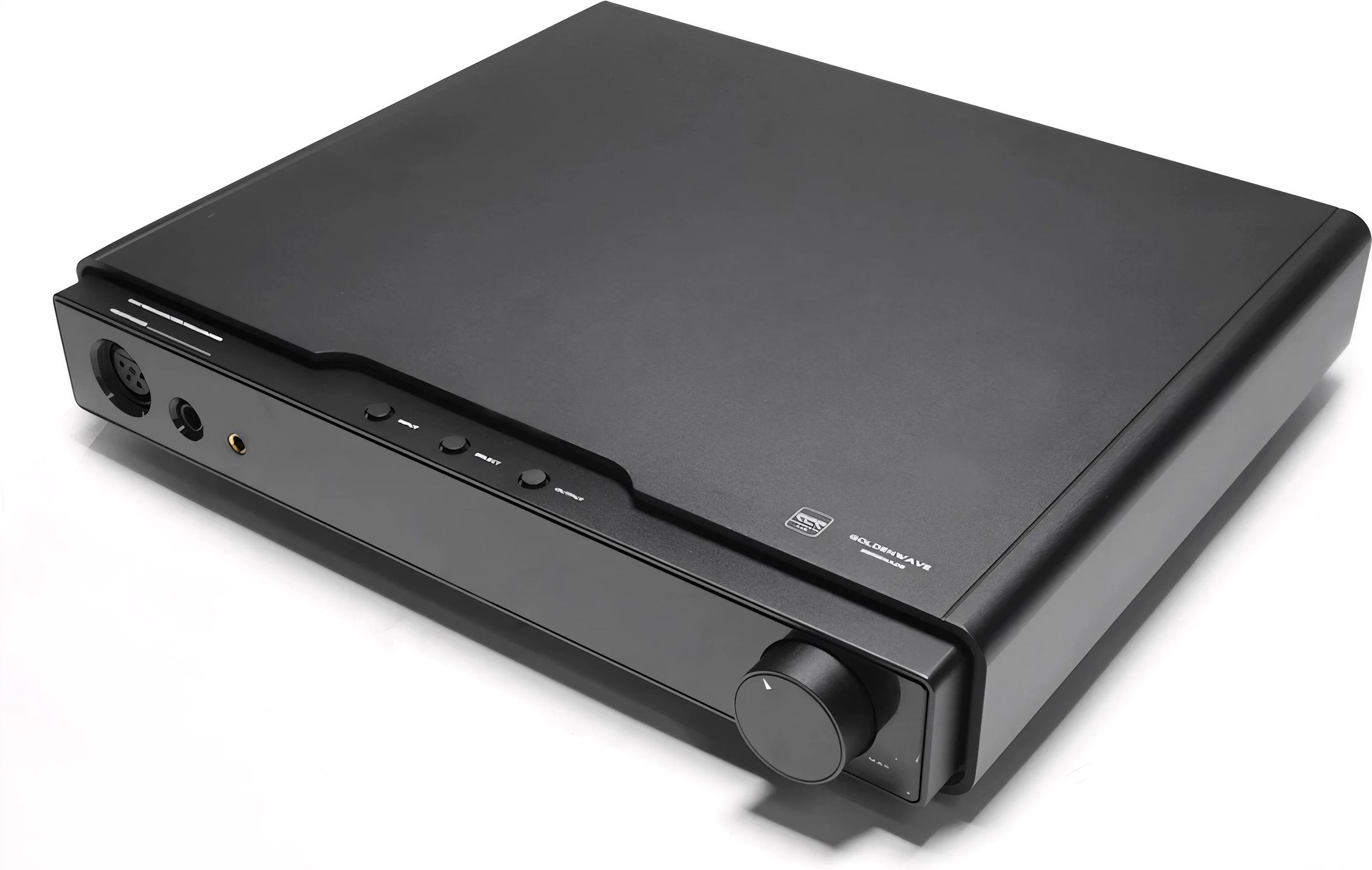
The HiFiMAN Serenade combines the features of a digital-to-analog converter, a headphone amplifier, a preamplifier, and a network player in a sleek and high-performance device.
Exceptional Versatility
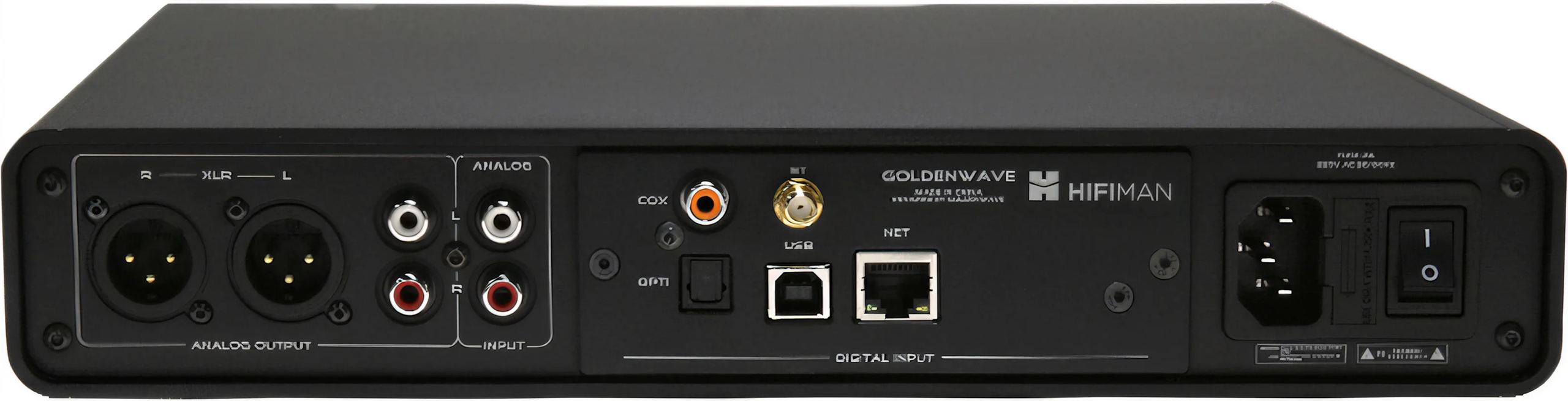
The Serenade stands out for its versatile design, featuring the Himalaya Pro R2R DAC, developed in collaboration with GoldenWave. The device is equipped with an XMOS XU316 USB interface and a Class A amplification circuit, providing a comprehensive solution for discerning audiophiles. Its extensive connectivity includes an RJ45 Ethernet port for network connection, USB-B, coaxial S/PDIF, and optical Toslink digital inputs, as well as various headphone output options.
The Serenade supports a wide range of high-resolution audio formats, including PCM up to 32-bit/768 kHz and DSD512 via its local network connection, as well as DSD256 and PCM 32-bit/384 kHz via USB. This broad compatibility makes it an exceptionally versatile device, capable of adapting to nearly all modern hi-fi setups.
Outstanding Technical Performance
The Serenade’s technical specifications are impressive, with a frequency response of 20 Hz to 20 kHz (+/-0.1 dB), an exceptionally low total harmonic distortion (THD) of 0.0015%, and a signal-to-noise ratio of -110 dB. The output power is particularly generous, reaching 4,000 milliwatts at 32 Ω in balanced mode, ensuring optimal compatibility with a wide range of headphones.
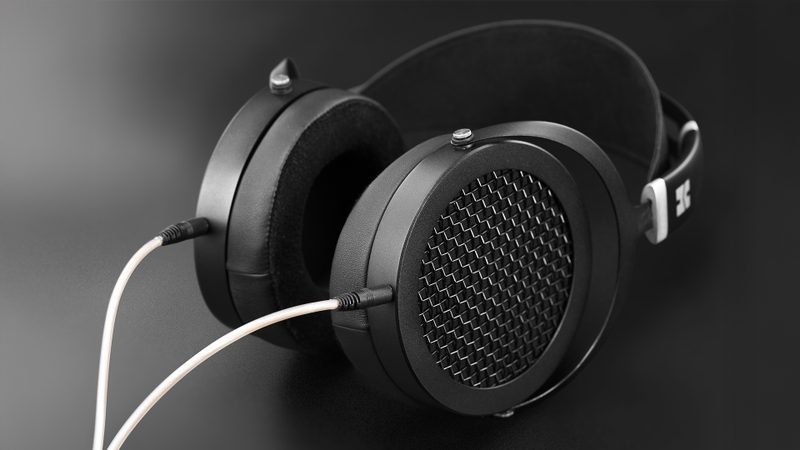
The integrated headphone amplifier, based on a Class A circuit architecture, delivers powerful, rich, and warm sound reproduction. This configuration allows the Serenade to efficiently drive even the most demanding headphones, such as the HiFiMAN Susvara or the Sennheiser HD8XX, with ample power reserves and excellent dynamics.
Design and Ergonomics
The chassis boasts a minimalist and modern aesthetic, crafted from CNC-machined aluminum. The front panel, featuring a glass insert, houses an LCD screen that provides excellent readability of essential information. The ergonomically placed volume control knob completes the intuitive user interface.
Despite its compact size (300 x 255 x 50 mm), the device exudes a sense of solidity with its integrated 50-watt toroidal transformer. This transformer, surrounded by oxygen-free copper wire and featuring a high-quality iron core, ensures a pure and responsive power supply, essential for optimal audio performance.
Distinctive Sound Quality
The Serenade’s sound signature is characterized by a warm and immersive presentation. The midrange is particularly well-rendered, with detailed yet non-aggressive highs. The Class A amplification enables powerful and controlled sound reproduction, especially suited for demanding planar headphones.
HiFiMAN’s Himalaya Pro R2R DAC, with its new FPGA algorithm and 0.01% precision resistors, delivers superior performance, achieving a total harmonic distortion of just 0.0012% at -6 dB. This innovative architecture, which eliminates switches while maintaining or improving THD levels compared to traditional DAC chips, results in better power management and enhanced sound performance.