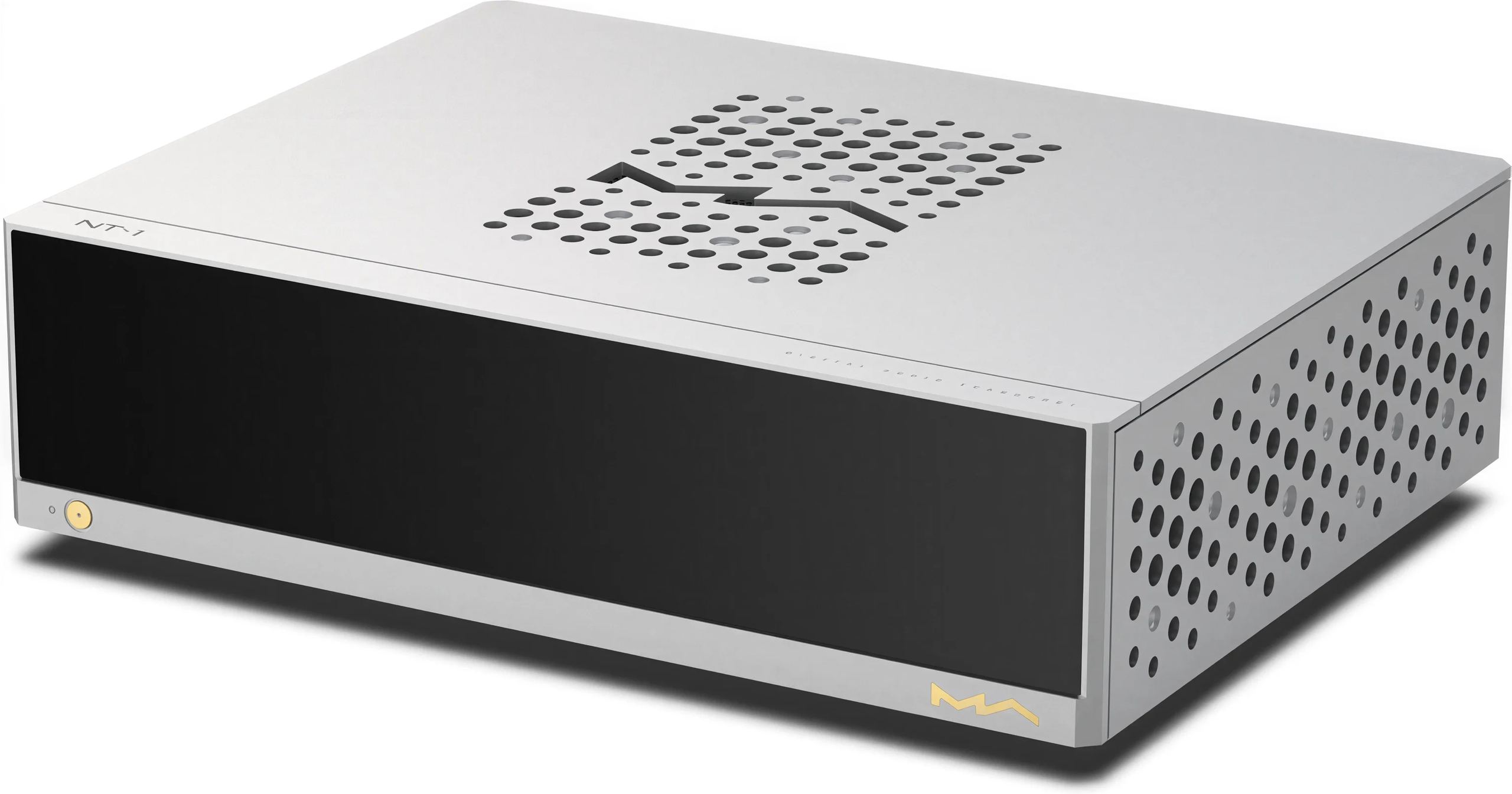
Matrix Audio NT-1 represents the culmination of an audiophile quest for perfect digital transmission. Unlike conventional network players, the NT-1 focuses exclusively on optimizing the digital signal, leaving the analog conversion to an external converter of your choice. This purist approach achieves a level of precision and sonic refinement rarely matched in the world of audio streaming.
An Exceptional Linear Power Supply
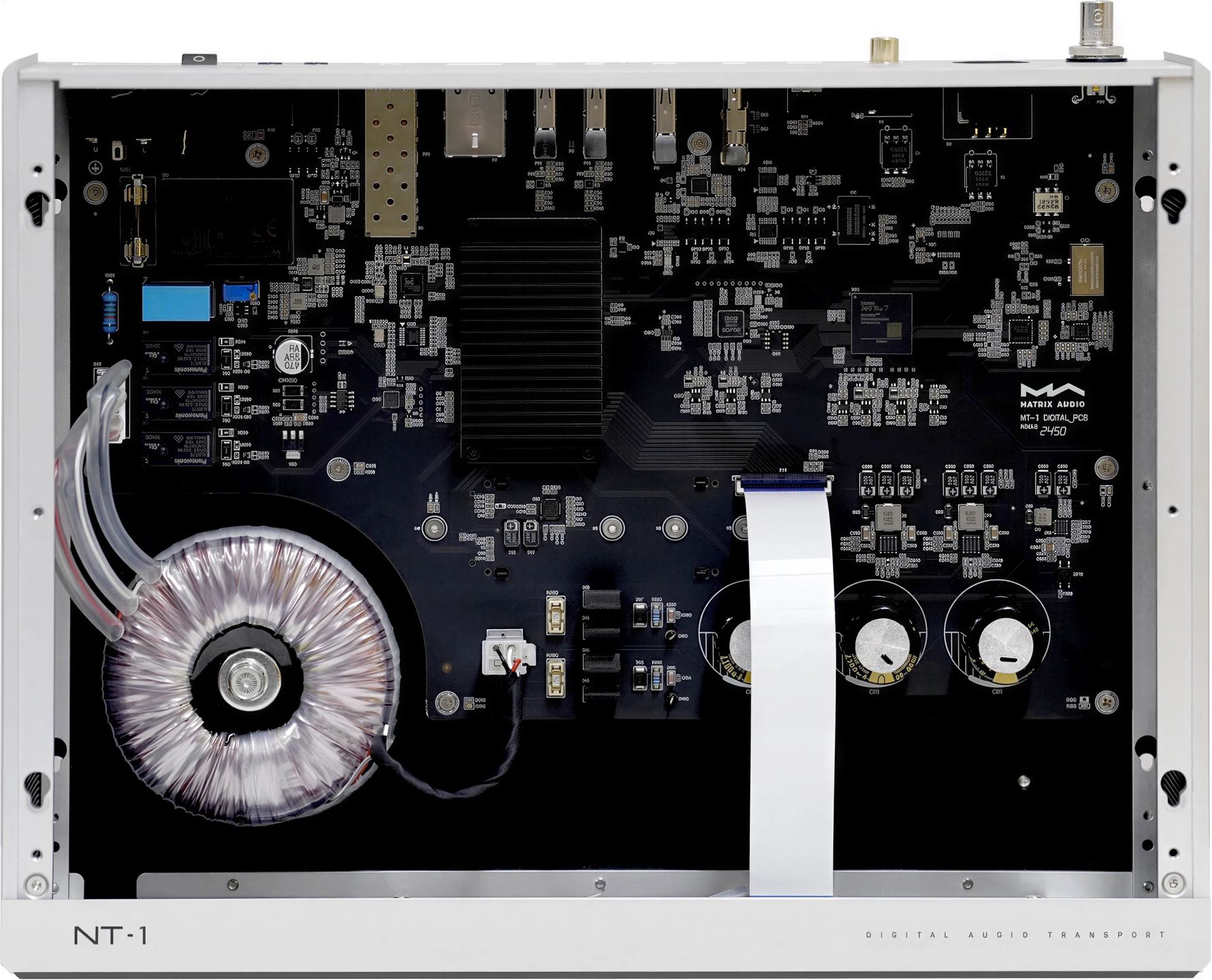
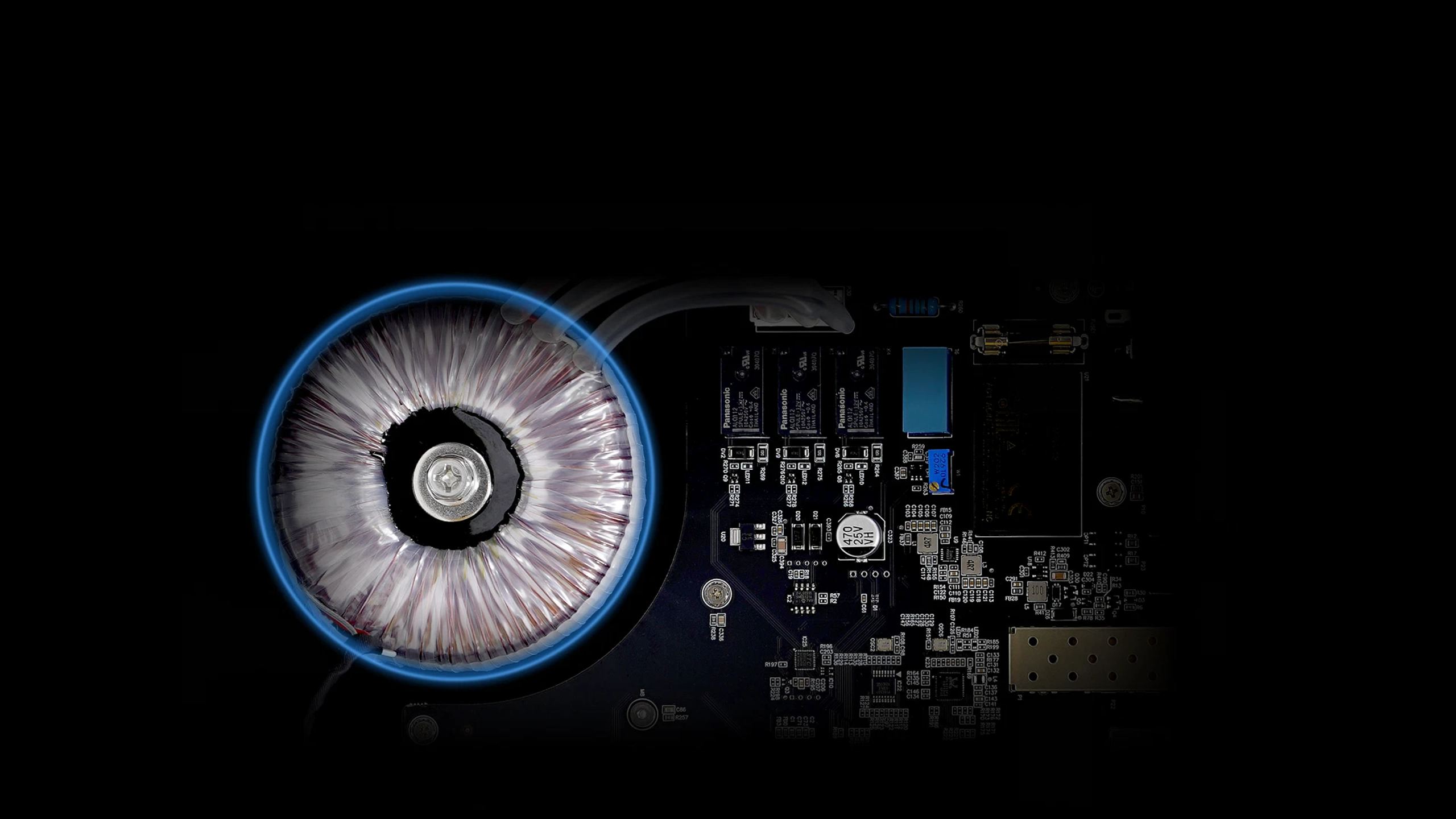
One of the NT-1’s major strengths lies in its sophisticated linear power supply, a technical choice that sets it apart from many competing devices equipped with switching power supplies. At the heart of this system is a 60W toroidal transformer, complemented by multiple low-noise regulators (LDO). This configuration provides remarkable electrical stability and an extremely low noise floor.
The uniqueness of this power supply lies in its independent winding design. The digital audio processing core and the USB-DAC interface each benefit from a dedicated winding, ensuring optimal isolation between these critical sections. This electrical separation significantly reduces interference and contributes to the purity of the audio signal. Unlike switching power supplies, which can generate high-frequency noise likely to contaminate the audio signal, the NT-1’s linear power supply offers an exceptionally clean electrical environment, fundamental for preserving the integrity of musical data.
Refined Design in Service of Music
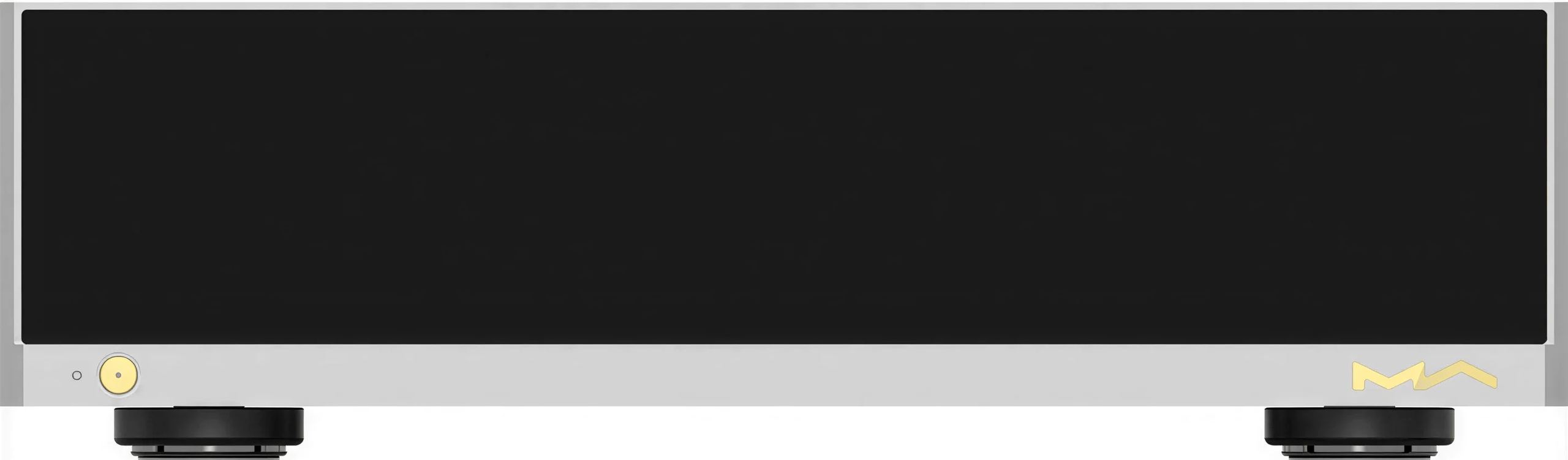
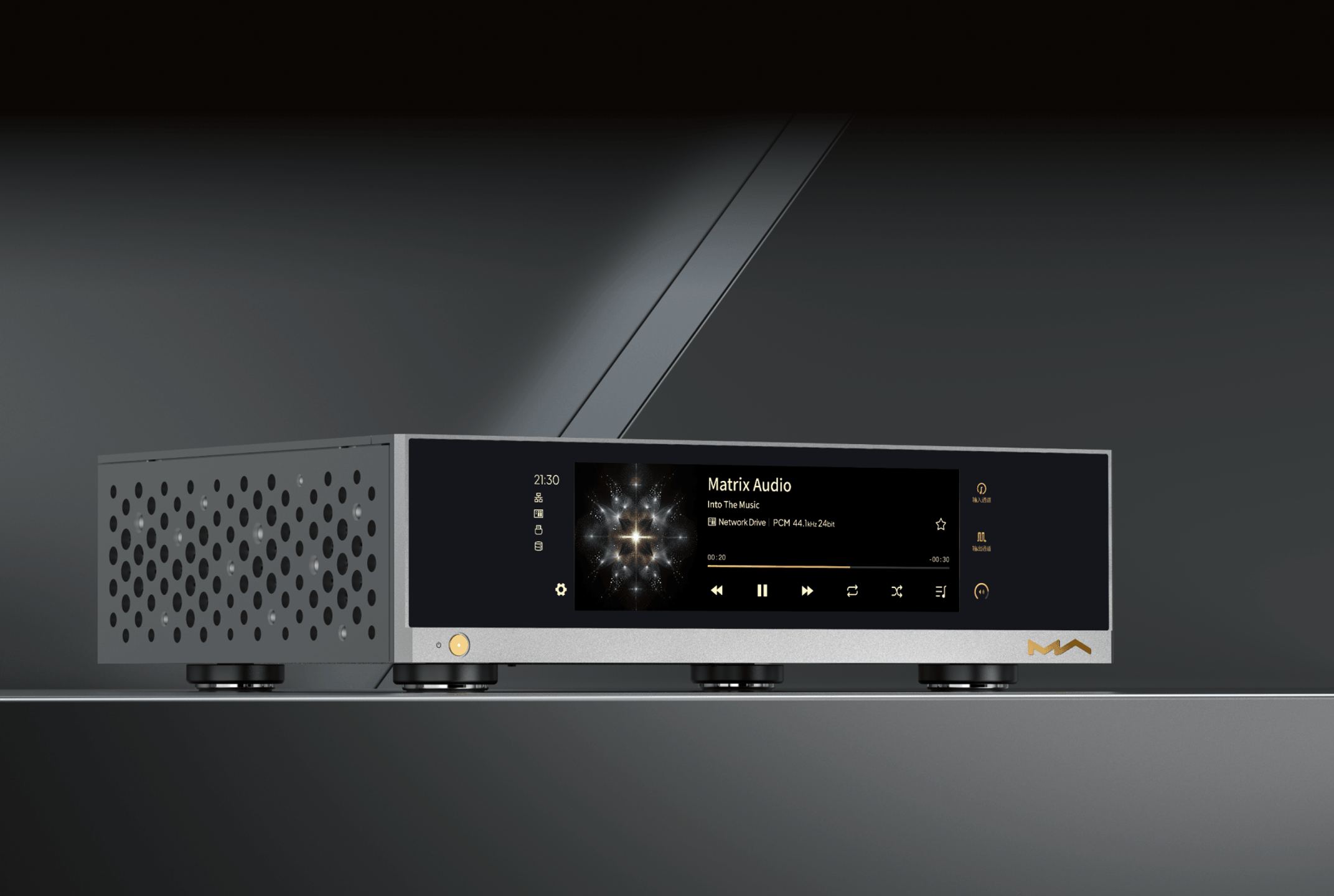
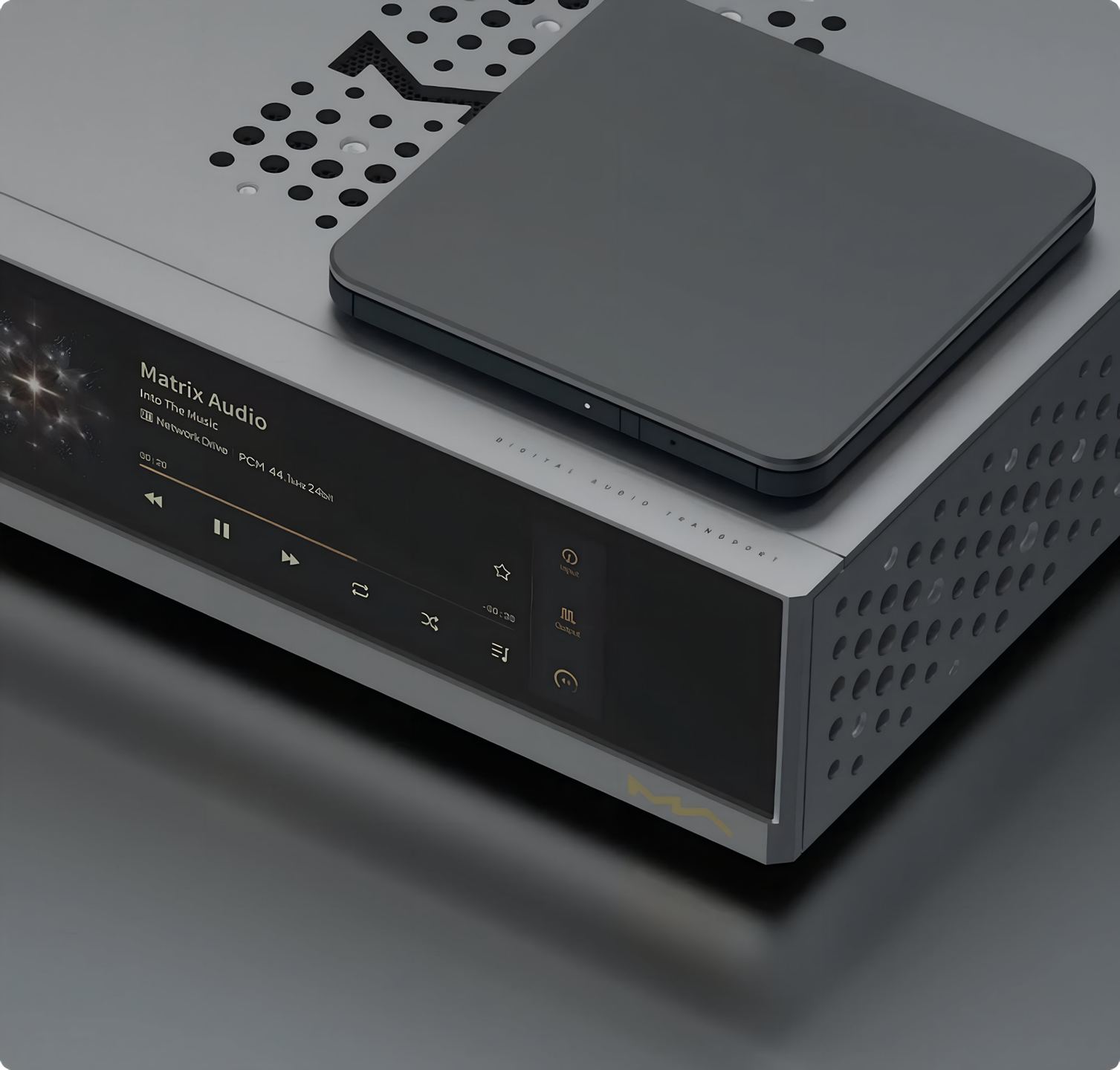
The NT-1 features an elegant aesthetic in line with the visual language developed by Matrix Audio for its prestigious M series. Its generously sized chassis (330 mm wide, 267 mm deep, and 97 mm high) houses carefully arranged and isolated circuits. The front panel is dominated by a large color touchscreen that displays information about the current playback and allows intuitive menu navigation.
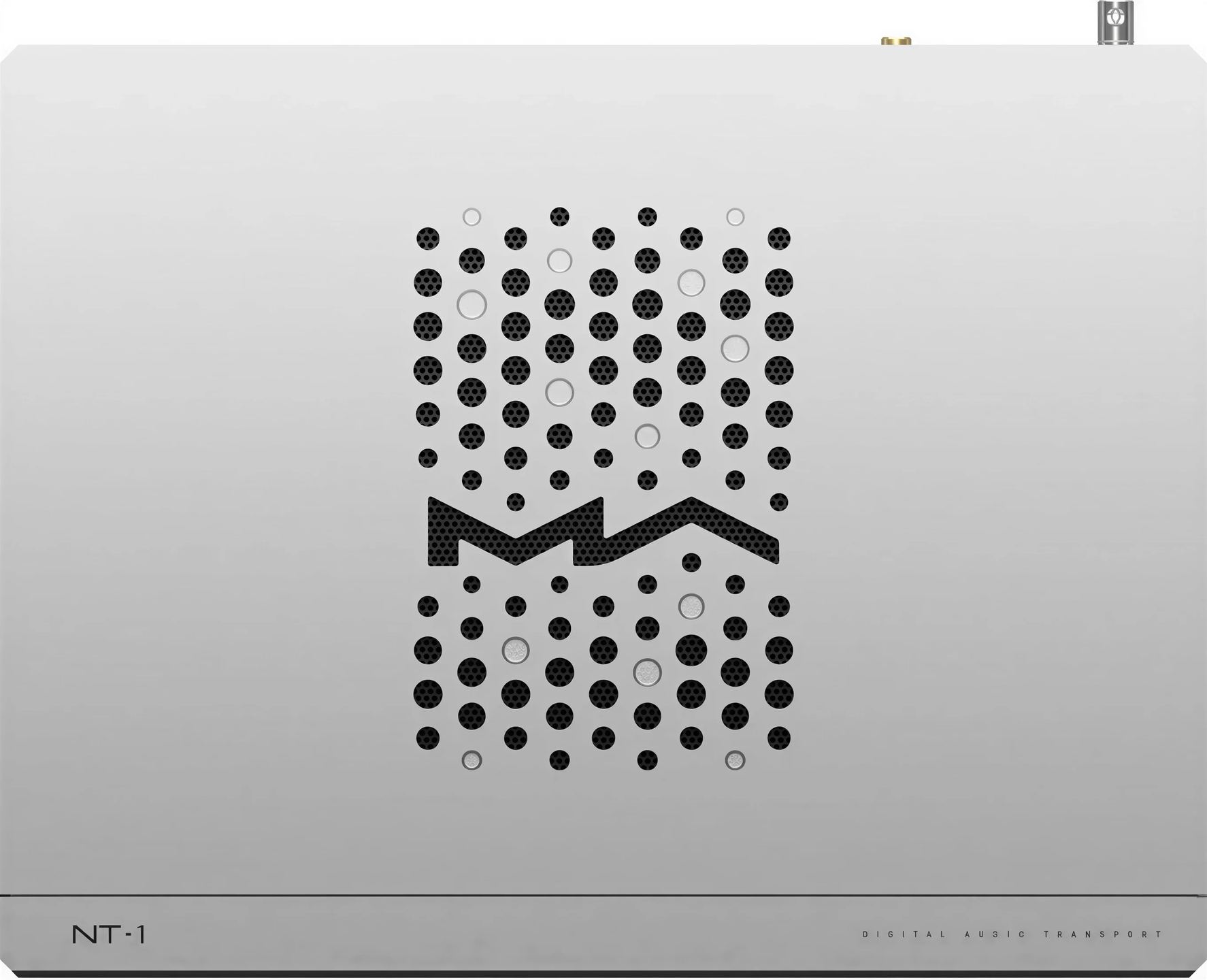
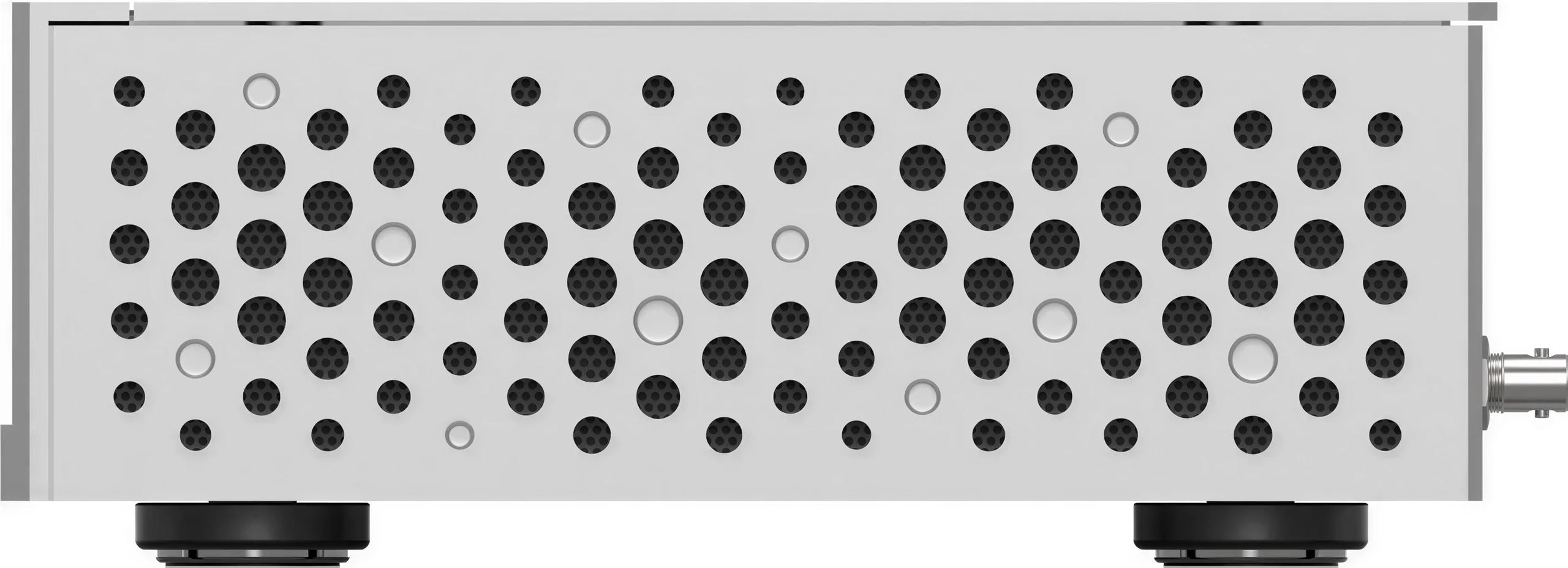
The case features a decorative perforation pattern on its top, ensuring effective ventilation while giving the NT-1 a distinctive visual signature. Every design detail reflects meticulous attention, from gold-plated connectors to damping feet that minimize vibrations. Weighing 4.6 kg, the device exudes a sense of solidity that reflects the quality of its internal components.
Versatile Digital Connectivity
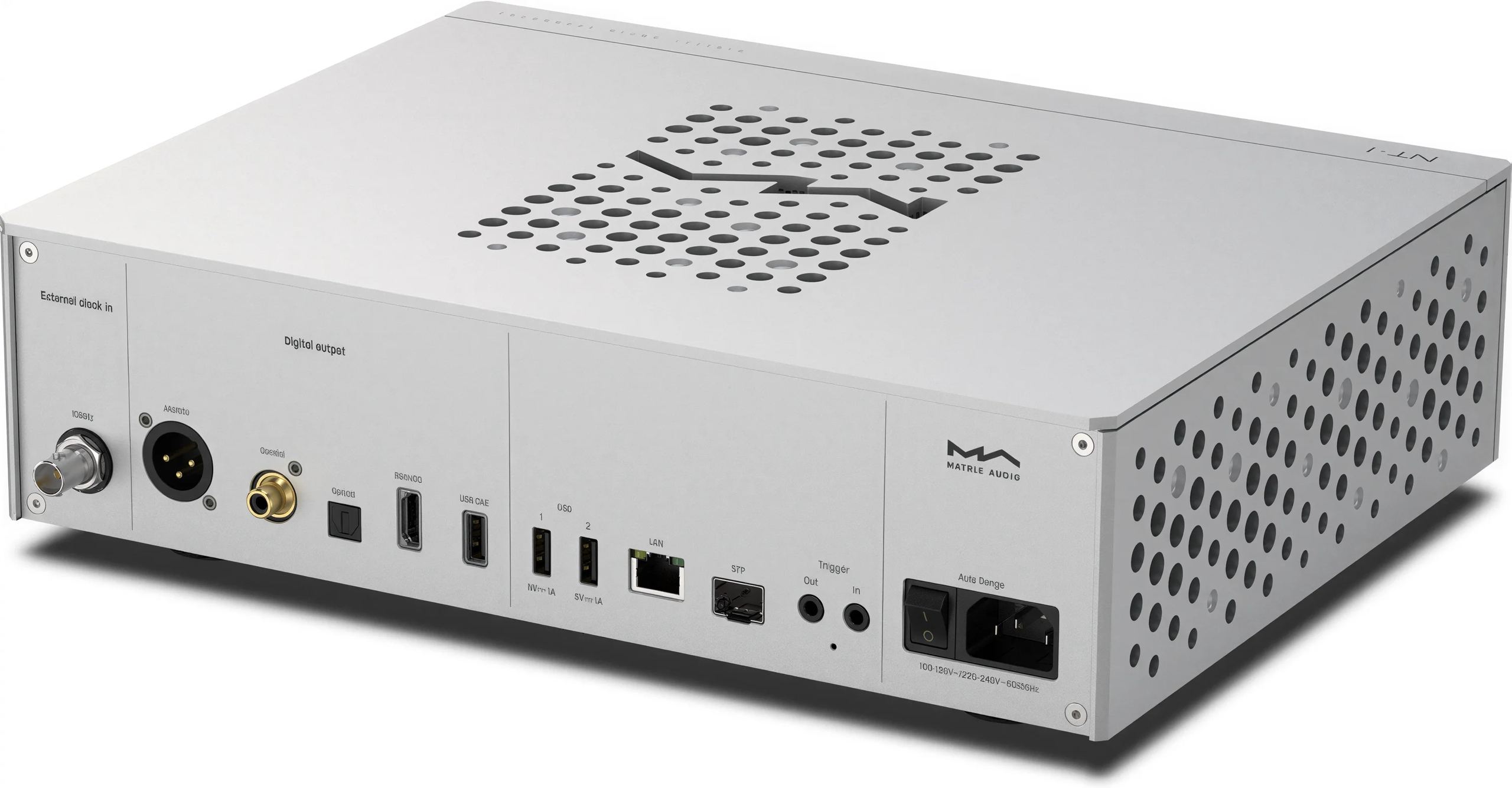
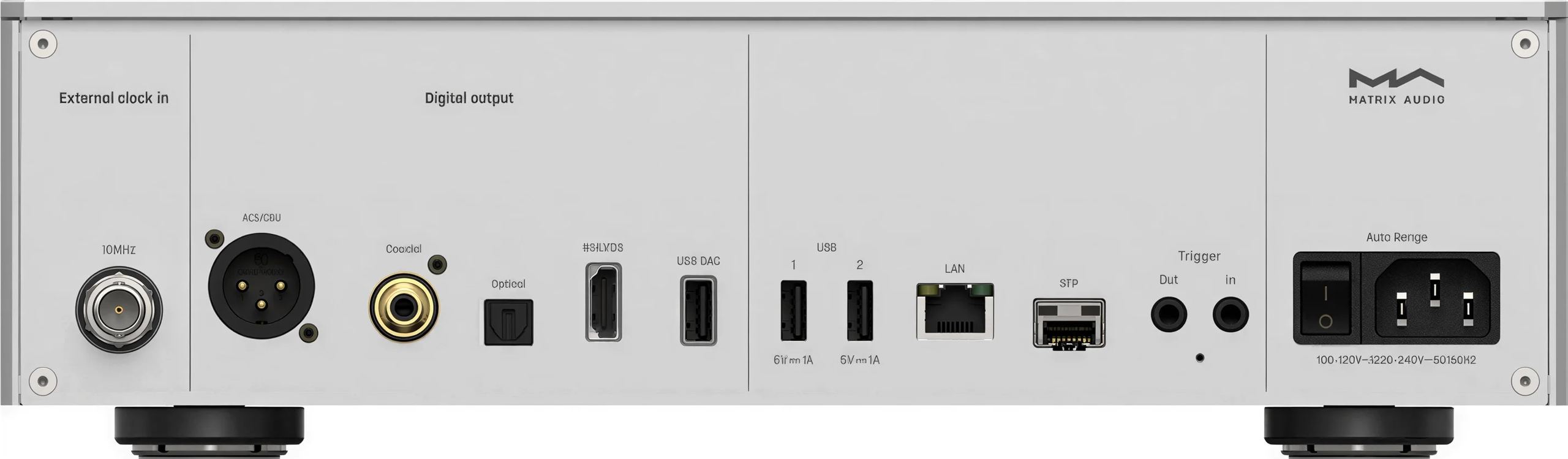
The NT-1 stands out for its wealth of digital outputs, allowing it to be integrated into virtually any audiophile setup. The device offers five types of digital outputs: coaxial (RCA), optical (Toslink), AES/EBU, USB-DAC, and IIS-LVDS. This versatility allows you to connect the NT-1 to virtually any external digital-to-analog converter.
The coaxial, optical, and AES/EBU outputs support PCM signals up to 24 bits/192 kHz as well as DSD 2.8 MHz via DoP. For users seeking ultimate performance, the IIS-LVDS output accepts PCM signals up to 32 bits/768 kHz and DSD up to 24.58 MHz, fully exploiting the potential of the most sophisticated DACs.
The USB-DAC interface receives special attention with galvanic isolation that electrically separates the NT-1 from the connected converter. This design drastically reduces transmission noise and interference, ensuring a digital signal of exceptional purity. Maximum compatibility extends up to PCM 32 bits/768 kHz and DSD 24.58 MHz, depending on the capabilities of the DAC used.
Isolation and Noise Reduction: A No-Compromise Approach
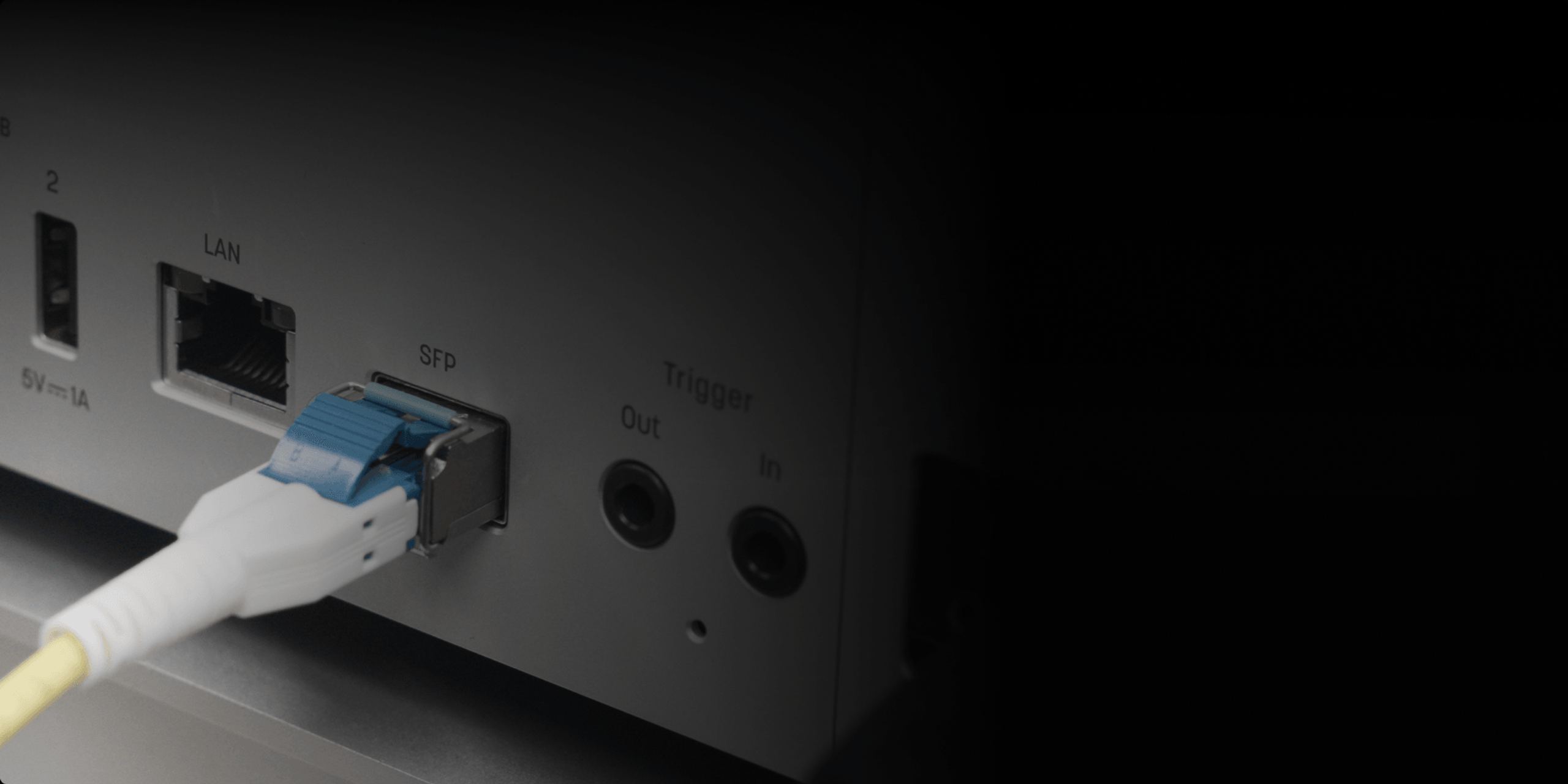
Matrix Audio has paid particular attention to electrical isolation and noise reduction in the design of the NT-1. This philosophy is notably reflected in the SFP (Small Form-factor Pluggable) port, a distinctive feature that allows network connection via optical fiber. Unlike a standard Ethernet connection, optical fiber provides complete electrical isolation between the NT-1 and the rest of the home network, thus eliminating any possibility of audio signal contamination by electrical noise from the network.
This approach is extended in the USB-DAC interface, specifically optimized for audio. Not only is it highly optimized to reduce transmission noise, but it also isolates the USB port’s ground from that of the device. This fundamental separation significantly reduces noise and interference during audio transmission, thus preserving signal purity.
The power supply for the USB-DAC interface is also noteworthy: it comes from a precise, low-noise regulator circuit powered by a dedicated winding of the toroidal transformer, completely isolated from the digital section. This design ensures stability and silent operation, delivering the ultimate hi-fi listening experience.
Temporal Precision: The Heart of Audio Performance
Clock precision is a fundamental element in digital audio reproduction, directly influencing sound stability and soundstage accuracy. The NT-1 features a sophisticated clock system that operates in two modes: either using its high-precision femtosecond internal clock or synchronizing to an external clock via the dedicated 10 MHz input.
The internal clock uses a low phase noise RF synthesizer, ensuring remarkable temporal stability for all digital signal processing operations. For audiophiles seeking absolute perfection, the ability to connect an external 10 MHz clock allows bypassing the internal clock and further optimizing this critical time reference.
Matrix Audio also offers its own external clock, the SC-1, specifically designed to work in perfect harmony with the NT-1. This synergy between the two devices achieves an exceptional level of temporal precision, resulting in a more stable stereo image, more natural timbres, and better definition of micro-details.
Flexible Storage Options
The NT-1 offers remarkable flexibility in music storage. Its underside houses a slot for an NVMe SSD in M.2 format (compatible with sizes 2280, 2260, and 2242), allowing easy installation of internal storage for your music library. What sets this implementation apart is the independently powered, ultra-low-noise supply specifically designed for the SSD, creating a silent operating environment that surpasses what a conventional computer can offer.
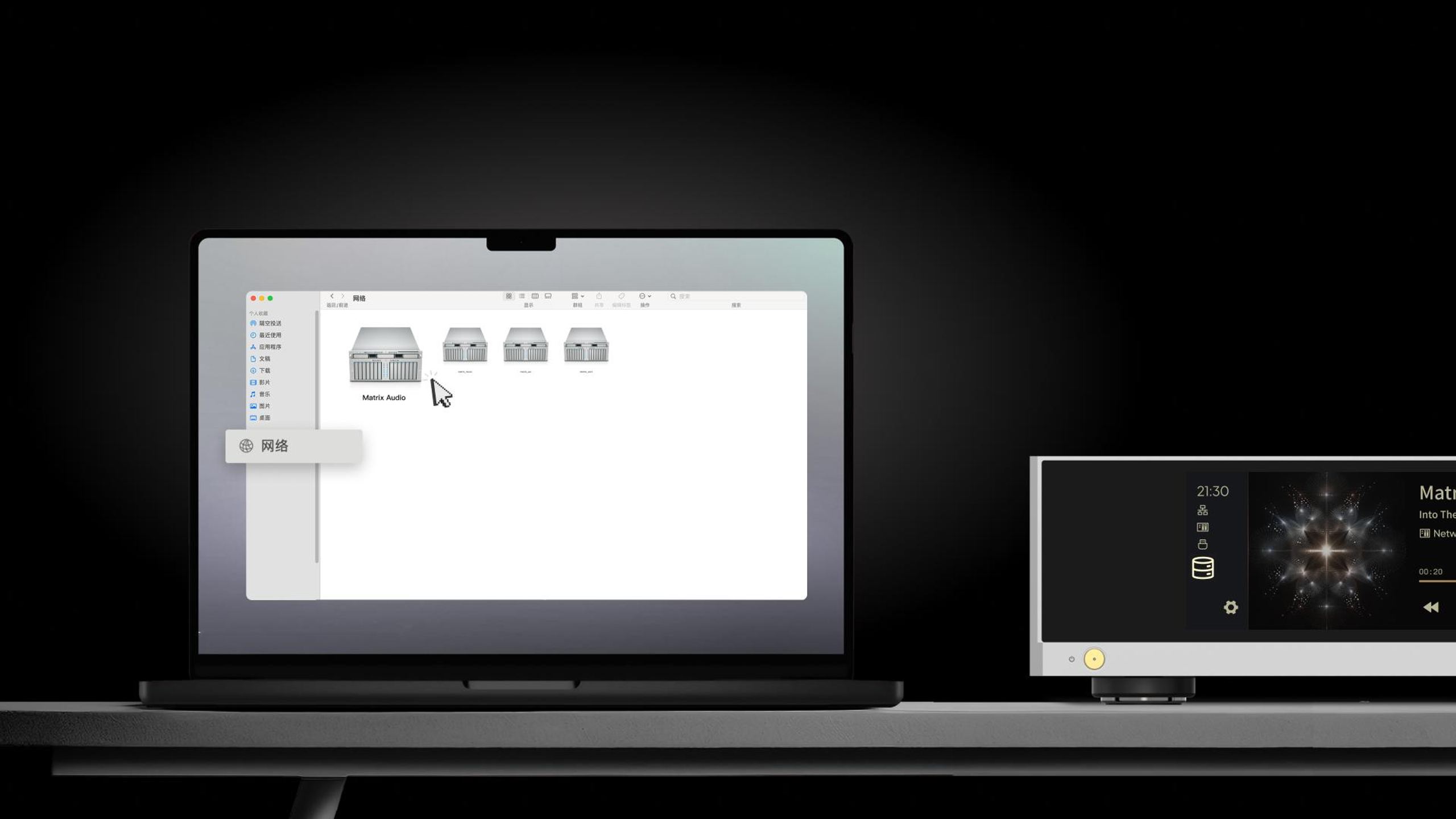
The “One Touch Copy” feature makes library management easy, allowing you to quickly copy files from external media to internal storage. Additionally, the internal storage can be shared over the network, effectively turning the NT-1 into a NAS server for other devices on the home network.
For those who prefer to use external media, the two high-speed USB 3.0 ports allow you to connect hard drives, USB sticks, or even an external CD drive. The latter can be used not only for direct CD playback but also for automatic ripping to internal storage, enriching your music library without the need for a computer.
Intuitive User Interface and Control
Interaction with the NT-1 has been designed to be both powerful and accessible. The large color touchscreen on the front panel allows easy navigation through menus, displays information about the tracks being played, and provides access to various configuration settings. The carefully crafted visual interface offers a smooth and intuitive user experience.
For remote use, Matrix Audio has developed the MA Remote app, available for iOS and Android devices. This constantly evolving app adapts perfectly to smartphones and tablets, offering full control of the NT-1 from anywhere in the house. The app’s interface mirrors the visual codes of the touchscreen, ensuring a consistent user experience.
The MA Player Hi-Fi Streamer operating system powering the NT-1 receives regular updates, bringing new features and improvements. This upgradability ensures the device remains at the cutting edge of technology and compatible with new services and formats that may emerge.
Extensive Compatibility with Streaming Services
The NT-1 integrates seamlessly into the modern digital audio ecosystem thanks to its compatibility with a wide range of services and protocols. The device is Roon Ready certified, allowing seamless integration with this reference audiophile platform. It is also compatible with Audirvana, another software favored by audiophiles for its playback quality.
Mainstream streaming service users are not left out, as the NT-1 supports AirPlay 2, Tidal Connect, and Spotify Connect, allowing direct streaming from the corresponding apps. DLNA/UPnP compatibility ensures interoperability with most servers and network players on the market.
For those who store their music in the cloud, the NT-1 allows direct mounting of online storage services, providing transparent access to these remote libraries without the need for an intermediate computer.
Automation and System Integration
The NT-1 includes automation features that make it easy to integrate into a sophisticated audio system. The Smart Wake-Up function automatically powers on the device during local or network playback, so you don’t have to turn it on manually each time.
The Trigger Control system allows you to synchronize the NT-1’s power-up with other components in the audio system. The trigger input (6-12V) enables the NT-1 to turn on automatically when another device is activated, while the trigger output (12V/50mA) can trigger the power-up of a connected DAC or amplifier. This orchestration of powering up the different links in the audio chain contributes to a smooth and coherent user experience.
Compatibility according to the specifications of the connected USB DAC
Maximum support: PCM 32 bit / 768 kHz and DSD 24.58 MHz
Low-noise power supply: 5 V / 1 A maximum
Connectivity
Network
Ethernet 10 / 100 / 1000 Mbps
SFP 10 / 100 / 1000 Mbps
Compatible with Matrix Audio network switch for enhanced stability
USB Ports
2 USB 3.0 ports
Maximum power supply: 5 V / 1 A
Compatible with USB mass storage devices
Supported file formats: FAT, FAT32, exFAT, and NTFS
Synchronization and Control
External Clock Input
10 MHz / 50 Ω
Compatible with sine or square wave signal
Trigger Interface
Input: DC 6-12 V < 10 mA
Output: DC 12 V / 50 mA
Storage
Storage Expansion
M.2 2280, 2260, 2242 NVMe PCIe SSD slot
Maximum power supply: 3.3 V DC / 3 A
Power Supply
High-End Linear Power Supply
60 W toroidal transformer
Multiple low-noise LDOs
Independent power supply for digital audio core and USB interface
Power Supply Voltage
Automatic range AC 100 V-120 V 50 / 60 Hz or AC 220 V-240 V 50 / 60 Hz
Power Consumption
Standby: < 5 W
Maximum: < 50 W
Physical Characteristics
Weight: 4.6 kg
Dimensions
Width: 330 mm
Depth: 267 mm
Height: 97 mm
Package Contents
Power cable
Printed documentation
Frequently Asked Questions
What is the difference between the NT-1 and the TT-1 from Matrix Audio?
+
The NT-1 (€4,899) is the high-end model with a full linear power supply featuring a 60W toroidal transformer, an SFP port for fiber optic network connection, and a 10MHz external clock input. The TT-1 (€2,249) is more compact, uses a switching power supply, and does not have either the SFP port or the external clock input. Both models, however, share the same digital outputs and streaming features.
Why choose a digital transport without an integrated DAC?
+
This modular approach allows you to optimize each link in the audio chain. The NT-1 focuses exclusively on the perfect extraction and transmission of the digital signal, while digital-to-analog conversion is handled by a specialized external DAC. This separation of functions avoids the compromises inherent in all-in-one devices and offers upgrade flexibility, as you can upgrade your DAC independently of the transport.
What are the concrete advantages of a linear power supply compared to a switching power supply?
+
The NT-1’s linear power supply generates significantly less high-frequency electrical noise than a switching power supply. This electrical silence results in reduced background noise, better definition of micro-details, and a more precise stereo image. Moreover, the independent windings for the digital core and the USB-DAC interface ensure optimal isolation between these critical sections, minimizing interference.
What type of SSD can I install in the NT-1?
+
The NT-1 accepts NVMe SSDs in M.2 format in sizes 2280, 2260, and 2242. The slot is located under the device and benefits from an independently powered, ultra-low-noise supply. The maximum capacity depends on the SSDs available on the market, but models of several terabytes can be installed to store vast music libraries.
What does SFP connection mean and what are its advantages?
+
The SFP (Small Form-factor Pluggable) port allows the use of different modules to establish a network connection, notably via optical fiber. The main advantage is complete electrical isolation between the NT-1 and the rest of the home network, eliminating any possibility of audio signal contamination by electrical noise from the network. This isolation results in a more serene listening experience and an absence of harshness in music reproduction.
User reviews
David
Outstanding From the very first listen, what surprises you is the pure and natural sound. Since it's a transport, it doesn’t have upsampling or a DAC. The files are sent in their native resolutions to the DAC which, if it isn’t equipped with upsampling, will convert the files in their native values. The advantage is that lower-quality files come through better. Combined with high‑quality cables (power and USB or I2S), you’ll find you get a wide, detailed soundstage while avoiding the magnifying‑glass effect of oversampling.
The app is fairly basic. The only small complaint I would make is not being able to access the internal library and external drive directly from the unit’s front panel, which forces you to use the app, even though you can control the other functions from there—this is especially inconvenient in the event of a network failure.
Comment from January 12, 2026 — Experience from January 01, 2026
Automatically translated — Show original (French)
Exceptionnel
Dés la première écoute ce qui vous surprend c'est le son pure et naturel
Comme c'est un transport il est dépourvu de upsampling et dac
Les fichiers sont transmis dans leurs résolutions natives au dac qui si celui ci n'est pas équipé d'un upsampling les fichiers seront convertis dans leurs valeurs natives
L'avantage c'est que les fichiers de qualité moindre passe mieux
Associé avec des câbles de haute qualité (secteur et usb ou I2S) vous constaterez que vous obtiendrez une scène sonore large et détaillée en évitant l'effet loupe du suréchantillonnage L'application est assez basique Le seul petit reproche que je formulerai c'est de ne pas pouvoir accéder à la bibliothèque interne et disque externe à partir du cadran vous obligeant à passer par l'application alors que vous pouvez piloter les autres fonctions surtout en cas de panne réseau
To better understand our visitors, measure marketing effectiveness and personalise ads, we and our partners use cookies and mobile advertising identifiers on your device. This data makes it possible to display personalised and non-personalised ads and measure their performance. Some cookies, which are technically necessary, are exempt from consent. You can accept those that require your consent, refuse them by clicking "Refuse", or customise your choices via the settings screen.
To find out how Google uses the data collected once you have given your consent, see Google’s Business Data Responsibility site.
You can change or withdraw your consent at any time via the "Consent and cookies" link. Your choices will apply on our site for 12 months.