Tivoli Model One walnut/beige


Overview
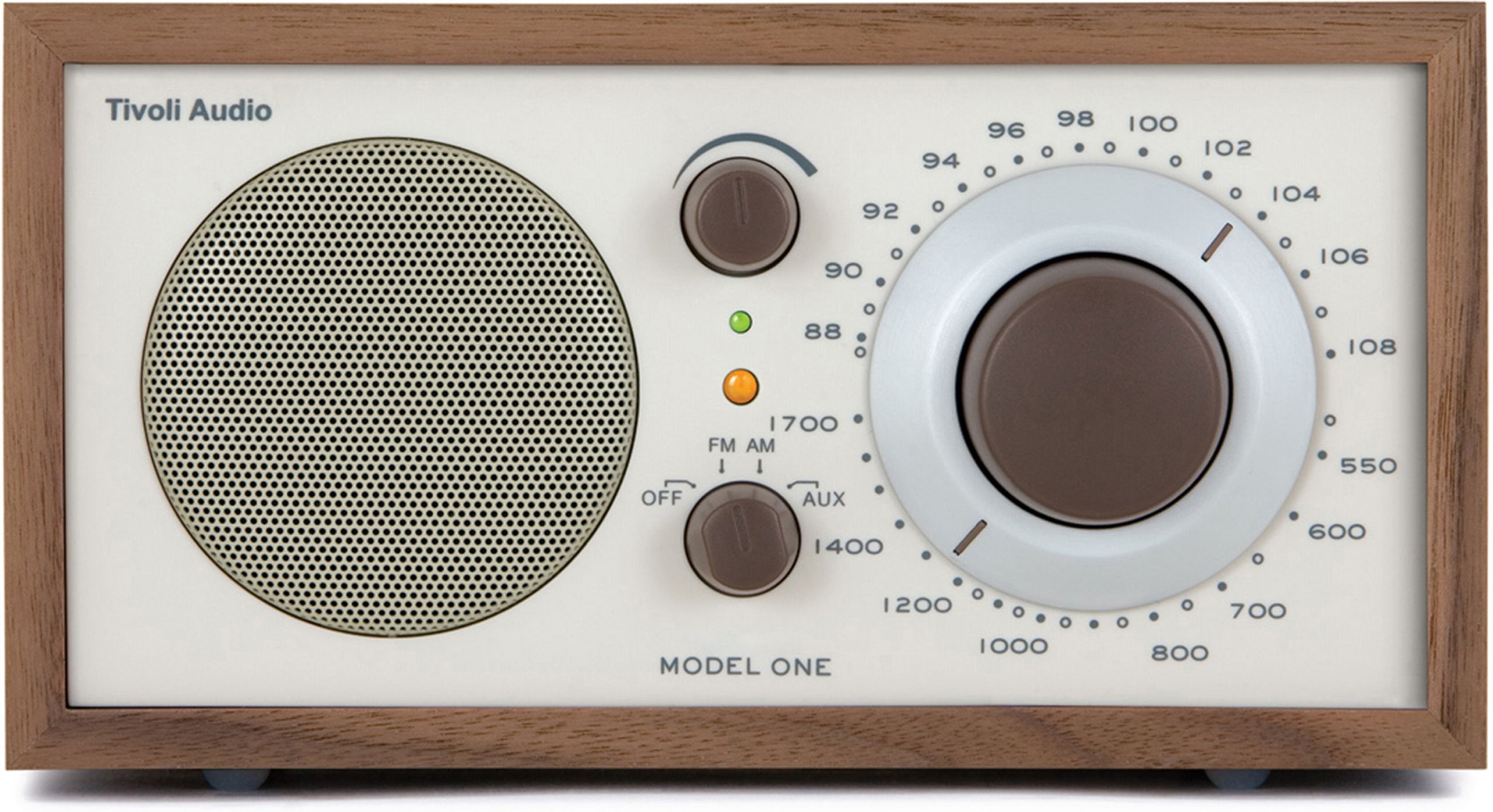
Born at the turn of the millennium from the pen of renowned engineer Henry Kloss, the Tivoli Model One is more than a simple table radio. This creation, the culmination of four decades of acoustic research, has made its mark with clean lines and warm sound in homes around the world. Designed in 2000 to recapture the listening purity of vintage radios while integrating contemporary technological advances, it remains today an essential reference for anyone seeking ease of use paired with authentic sound reproduction.
When military technology meets the home radio
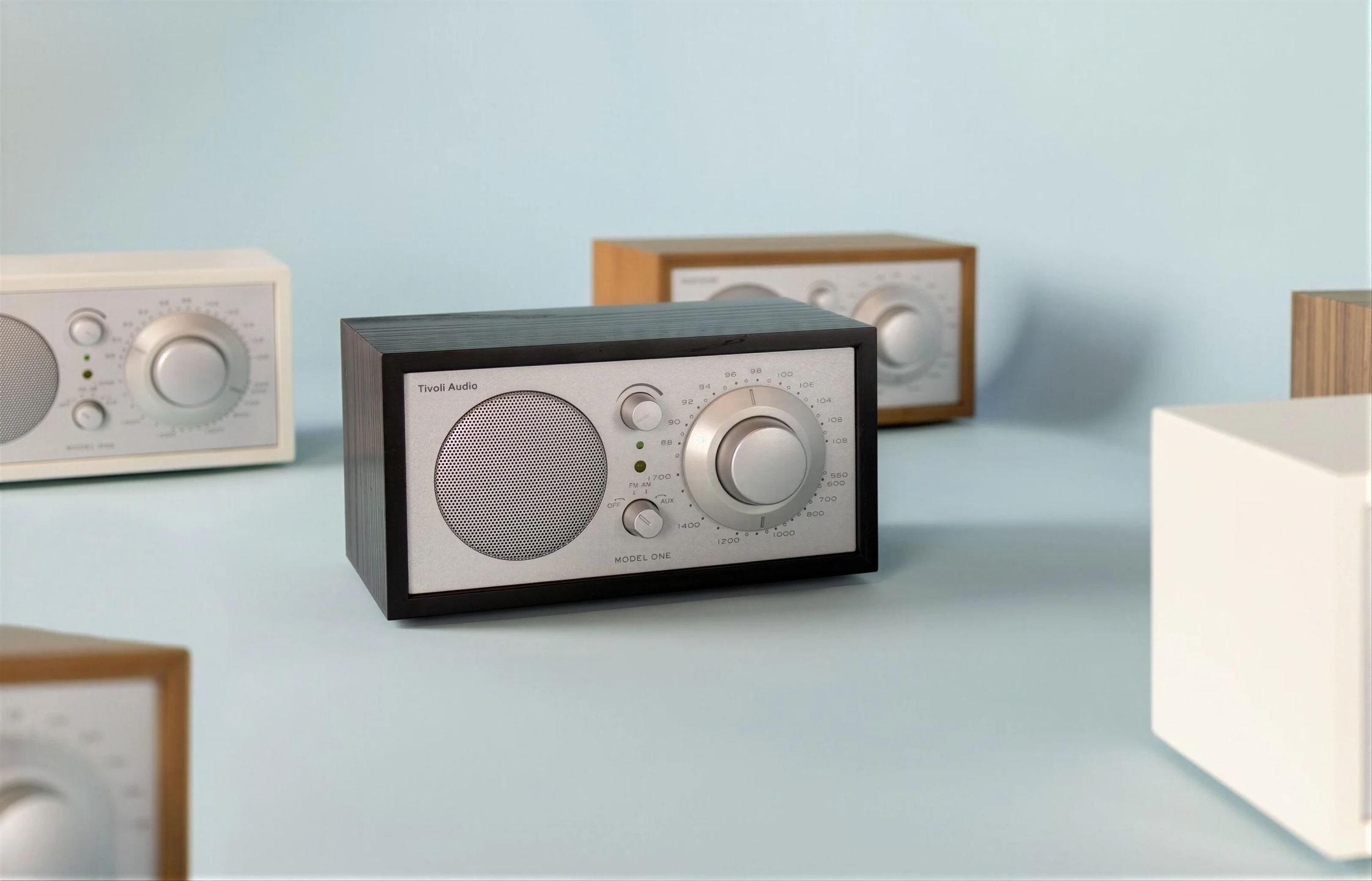
At the heart of the Model One beats a revolutionary tuner that uses GaAs MESFET (gallium arsenide Metal Semiconductor Field Effect Transistor) technology, borrowed from cordless phones and military equipment. This innovation, a first in consumer radios, gives the unit exceptional sensitivity and a remarkable ability to lock onto weak or distant stations.
The analog tuning mechanism, with a 5:1 reduction ratio, turns station selection into a precise and satisfying tactile experience. Unlike digital tuners that jump abruptly from one frequency to another, this system allows gradual, fine adjustments, harking back to a time when tuning a station required patience and finesse. The integrated LED varies in brightness according to signal strength, offering immediate visual feedback on reception quality.
This technology is accompanied by a frequency compensation circuit that continuously adjusts the audio output to maintain optimal sound quality, even with weak signals. The Frequency Hopping Spread Spectrum (FHSS) system limits interference with other household wireless devices, ensuring interference-free listening in RF-crowded urban environments.
A minimalist, against-the-grain user philosophy
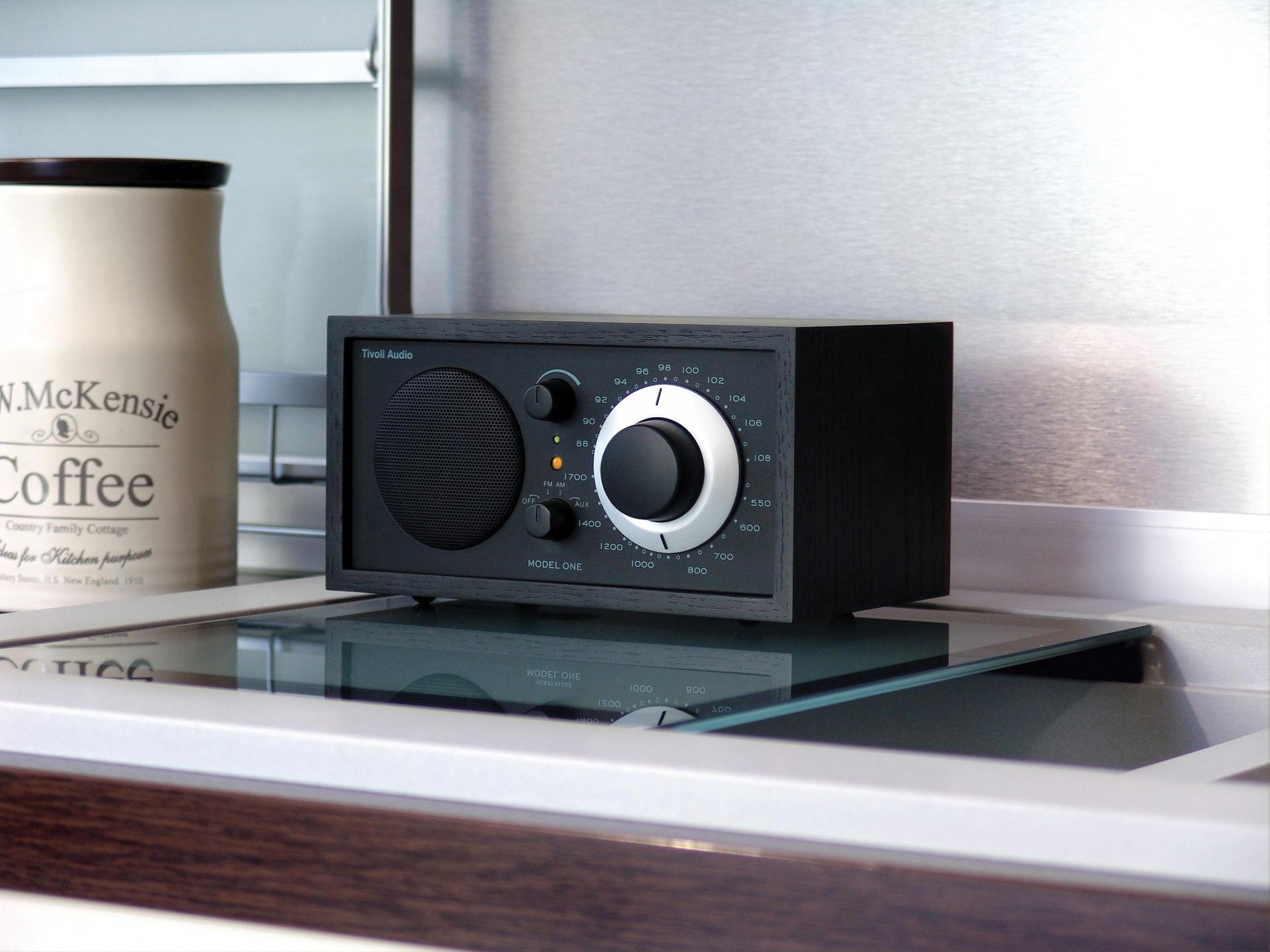
In a world where feature bloat has become the norm, the Model One makes the bold bet of radical simplicity. Just three controls orchestrate all functions: the source selector (FM/AM/Aux), the volume knob, and the tuning wheel. This pared-back approach, far from a limitation, is a deliberate choice that places the user at the center of the listening experience.
The absence of a screen, programmable presets, or a remote control may seem anachronistic, but it reflects a philosophy that favors direct physical interaction with the device. Every manipulation becomes a deliberate gesture, turning radio listening into a daily ritual rather than passive consumption. This simplicity also translates into exemplary reliability: fewer electronic components mean fewer potential failures.
Connectivity, while minimalist, covers the essentials. The 3.5 mm auxiliary input lets you connect any external audio source (smartphone, MP3 player, turntable with preamp), while the headphone jack offers a private listening option. A line-out even allows you to integrate the Model One into a more elaborate hi-fi system, leveraging its excellent tuner as a source.

Carefully tuned acoustics that defy the laws of physics
The Model One’s sonic signature results from a careful balance of acoustic parameters. The built-in equalization slightly favors bass and treble, creating a gentle V-shaped curve that imparts warmth and clarity. The mids, slightly recessed by around 6 dB according to some measurements, avoid the harshness often attributed to small speakers while preserving vocal intelligibility.
The single mono speaker, contrary to received wisdom about stereophony, delivers remarkable spatial coherence. The sound unfolds into a surprisingly wide soundstage, creating an enveloping acoustic bubble that far exceeds the unit’s physical dimensions. This is especially beneficial for talk radio, where vocal clarity matters more than stereo separation.
The bass-reflex port, tuned to around 75 Hz, extends low-frequency response without sacrificing precision. Some users find the bass too present in certain setups; placement greatly influences this parameter. Moving the radio away from walls and room corners naturally tames unwanted resonances.
Technical Specifications
Dimensions and Weight
- Dimensions: 11.43 x 21.27 x 13.34 cm
- Weight: 1.88 kg
Connectivity and Audio
- FM / AM radio
- Auxiliary input
- Headphone jack (rear panel)
- Long-throw driver with deep bass
- Rich, warm analog sound quality
Design and Controls
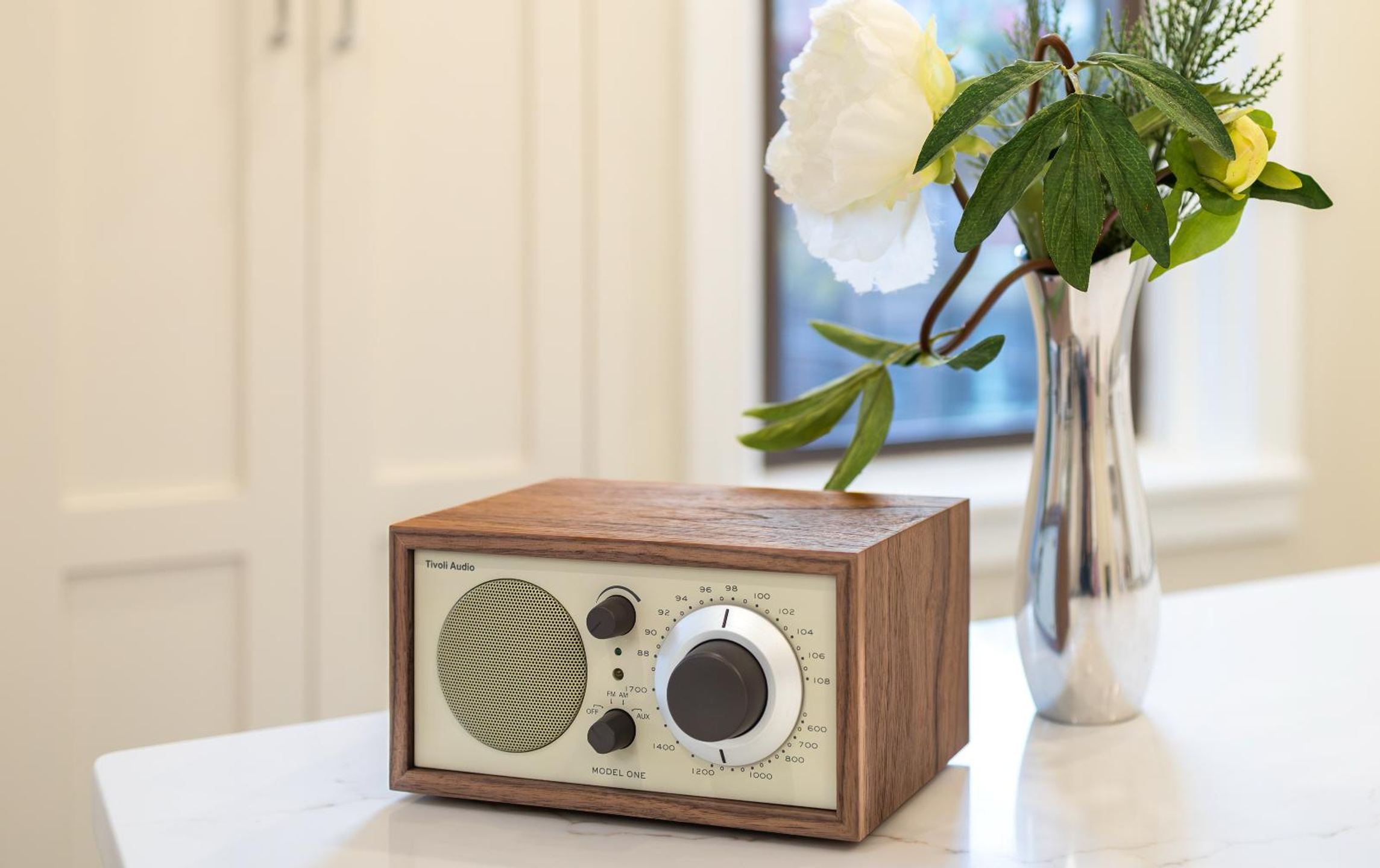
- Handcrafted wooden cabinet
- Available in multiple finishes
- 3 control knobs
- Precise 5:1 tuner
- Elegant, timeless design
Box Contents
- 1 x Model One radio
- 1 x user manual
- 1 x AC power adapter
- 1 x FM antenna
Product Overview
- An audio benchmark for decades
- Compact form factor, ideal for home or office
- Ultra-simple operation with just three controls
- Timeless real-wood design
- Balanced sound with deep bass
- Private listening via the headphone jack
Frequently Asked Questions
What’s the difference between the classic Model One and the BT or Digital versions?
The original Model One remains purely analog with FM/AM tuner and auxiliary input. The BT version adds Bluetooth 2.1+EDR connectivity for wireless streaming from smartphones and tablets. The completely reimagined Model One Digital integrates Wi‑Fi, DAB+, a circular display, and compatibility with AirPlay 2 and Chromecast, representing a major step into digital while preserving the signature aesthetics.
How can I improve FM reception if it seems insufficient?
The supplied telescopic antenna is generally sufficient in urban areas. For challenging reception zones, orient the antenna horizontally and add a thin 1–2 meter wire to significantly improve the signal. An external T-type or dipole FM antenna can be connected via the F-type coaxial jack. Avoid placing the radio near electronic devices that generate interference.
Can the Model One serve as the main speaker for a computer or television?
Absolutely. The auxiliary input accepts any audio source with a 3.5 mm output. Sound quality far surpasses built-in TV speakers or standard computer speakers. For extended use at high volume, allow occasional breaks to prevent the analog amplifier from overheating.
Why are there no tone controls (bass/treble)?
Henry Kloss believed the optimal EQ should be set at the factory according to his acoustic research. This approach ensures a consistent sonic signature and avoids sound degradation from inappropriate settings. Users who wish to adjust tone can use the Model One as a source via its line-out to an external amplifier with an equalizer.
- Eco-contribution of €0.04 included in the sale price.
- Manufacturer reference: TA-M1CLA
- GTIN / EAN: 850003501772