Grado SR60x

Overview
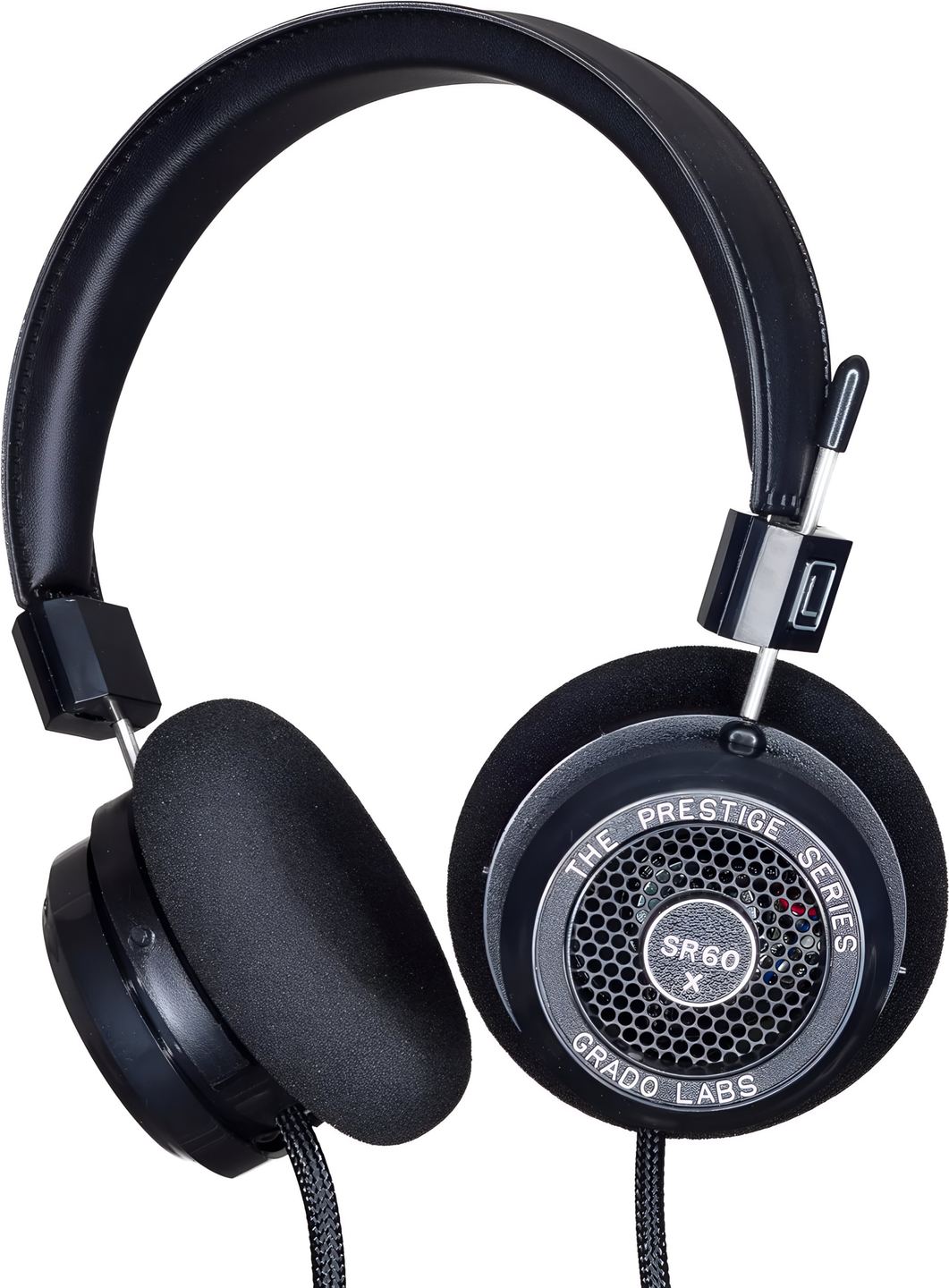
Handcrafted in the same Brooklyn workshop since 1953, the SR60x embodies Grado’s sonic philosophy in its most accessible form. This new iteration incorporates the fourth-generation transducers developed by the Grado family, perpetuating a tradition where each headphone passes from workbench to workbench before being deemed worthy of bearing the brand name.
An unchanged design, a meticulously refined conception
The SR60x retains Grado’s characteristic industrial aesthetic: black ABS plastic housings, a metal headband wrapped in leatherette, and polished metal adjustment rods that slide freely in their housings. This minimalist approach, which may seem puzzling compared to modern headphones packed with technology, conceals remarkable acoustic sophistication. The 44mm transducers are mounted in rear-perforated housings, creating an open acoustic configuration that allows the diaphragms to breathe freely.
The generously thick S-cushion foam pads position themselves on the ears rather than around them. This open-cell foam, softer than on previous generations, ensures good air circulation while keeping the headphones in place through friction rather than excessive pressure. The headband, reinforced with a solid metal bar, can be manually curved to adapt to different skull morphologies - a particularity that requires an adjustment period but allows for lasting personalized fit.
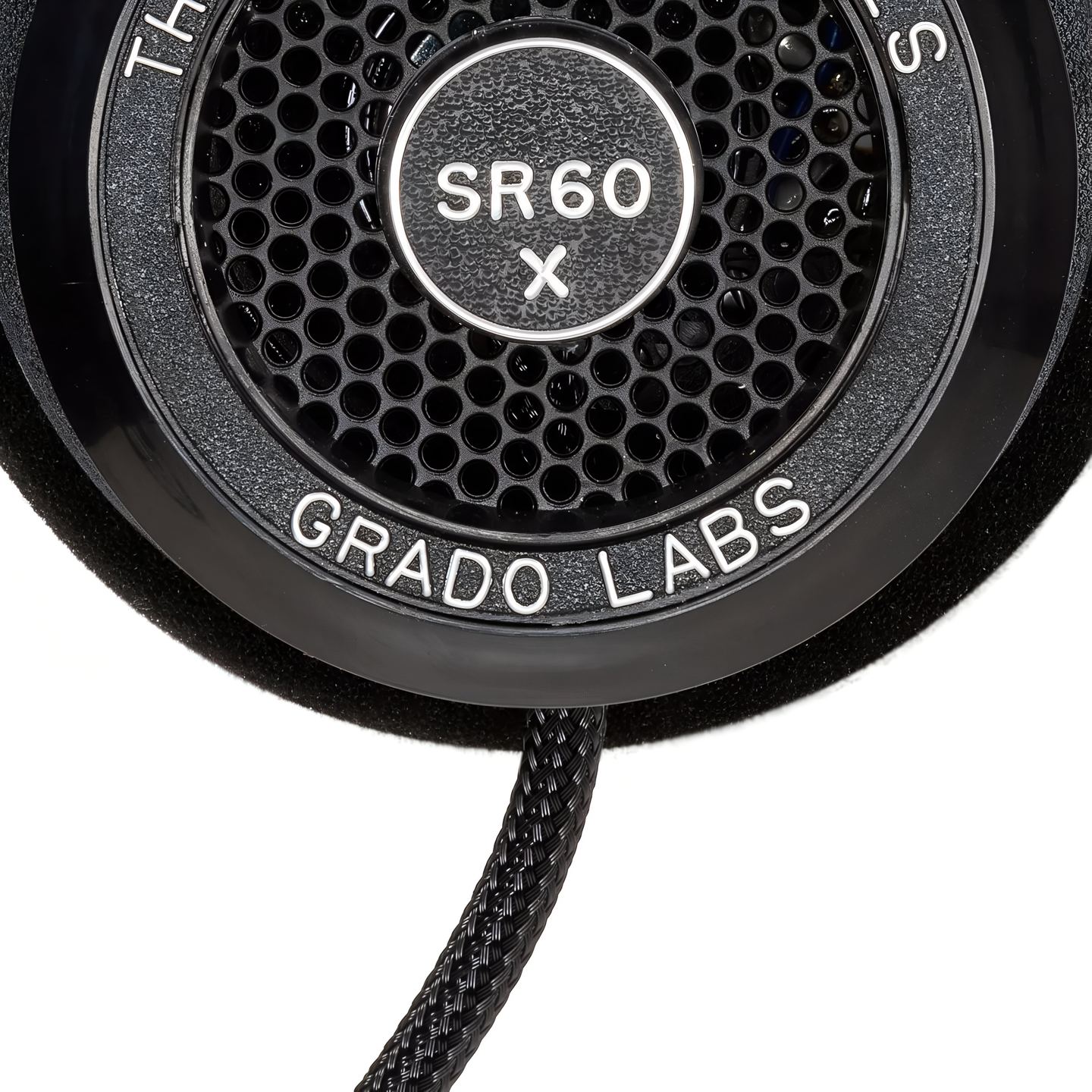
The cable, now sheathed in braided fabric rather than rubber, incorporates four super-annealed copper conductors. This Y configuration, though non-detachable, demonstrates a commitment to optimizing signal transmission. The gold-plated 3.5mm jack connector comes with a screw-on 6.35mm adapter, allowing direct connection to both home amplifiers and portable devices.
Fourth-generation X transducers: a calculated evolution
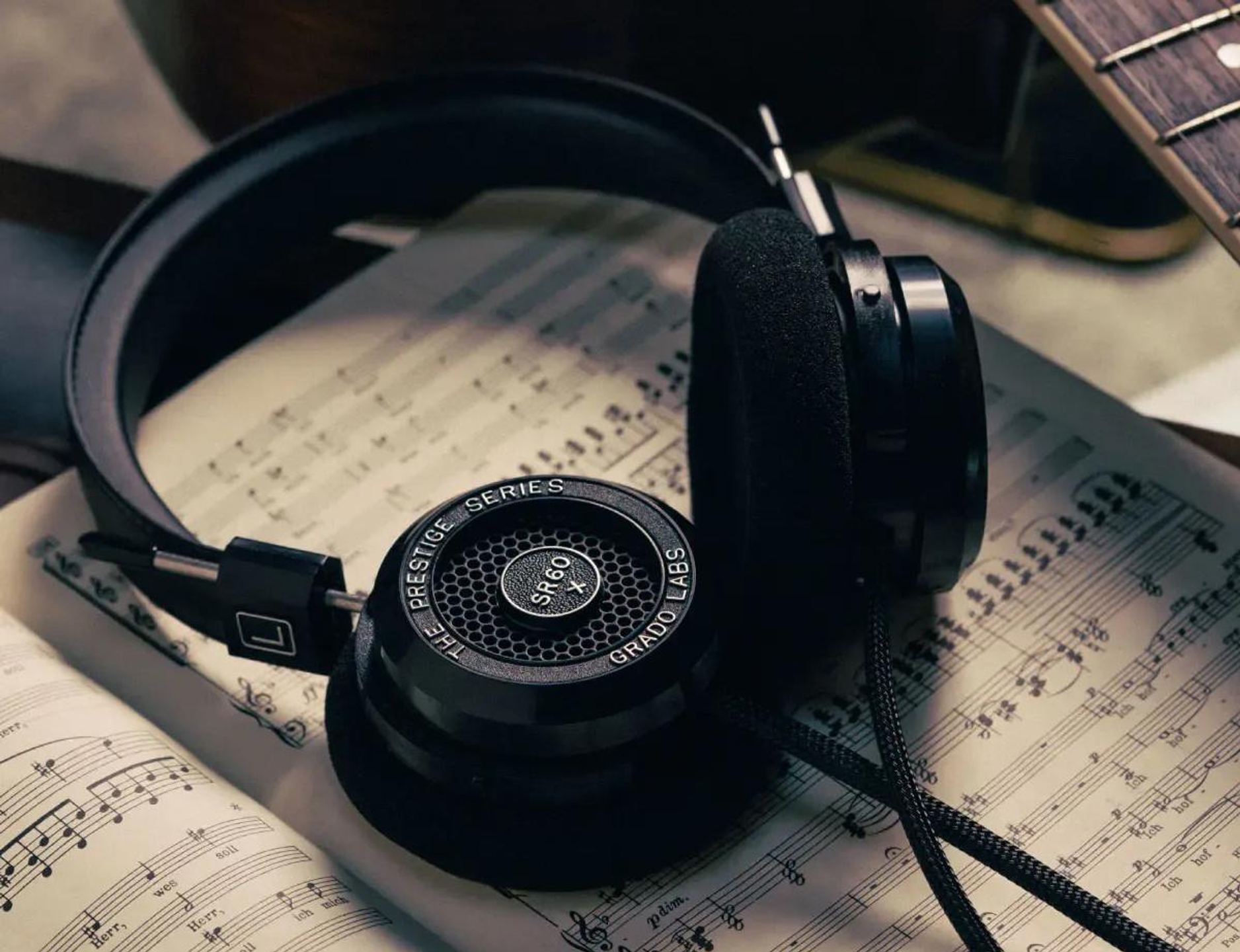
Grado has developed only four generations of transducers since 1991, preferring significant evolutions to annual cosmetic updates. This fourth generation, dubbed “X,” represents several years of development. The reinforced magnetic circuit generates a more powerful field, while the lightened voice coil reduces the system’s effective moving mass. The completely reconfigured diaphragm works in concert with these improvements to minimize transient distortions.
These technical modifications translate to a sensitivity of 99.8 dB/mW and an impedance maintained at 38 ohms. This combination allows the SR60x to deliver comfortable sound levels from any source, from smartphone to dedicated amplifier, without requiring additional amplification. The frequency response extends from 20 Hz to 20 kHz, covering the entire audible spectrum with a balance tolerance between the two transducers limited to 0.1 dB.
The open acoustic principle virtually eliminates cavity resonances that affect closed headphones. The rear waves emitted by the diaphragm disperse freely into the environment rather than being trapped and reflected toward the ear. This design generates a naturally wide and airy soundstage, at the cost of non-existent acoustic isolation in both directions: you hear your environment, and your surroundings perceive your music.
A recognizable sonic signature
The SR60x’s sonic character favors the midrange register, the frequency zone where voices and the majority of acoustic instruments are concentrated. This emphasis, far from being accidental, reflects Grado’s philosophy: revealing harmonics and textures often masked in recordings. Voices acquire striking bodily presence, electric guitars bite with accuracy, brass instruments shine without aggression.
The bass, without reaching the abyssal depths of modern closed headphones, remains articulated and rhythmic. Bass lines follow with clarity, each note distinct from the next. This precision in the lower spectrum largely compensates for limited extension below 60 Hz. The treble, slightly elevated around 2-4 kHz, brings liveliness and detail without veering into stridency - at least on well-mastered recordings.
This signature may surprise those accustomed to the V-shaped curves of consumer headphones. Certain compressed or poorly mixed recordings reveal their flaws mercilessly. Excessive sibilance, digital saturation, cheap production artifacts: everything shows. Paradoxically, this transparency becomes addictive on quality recordings, where every micro-detail, every breath, every finger friction on strings finds its place in the sonic panorama.
Positioning within the range and evolutions
The SR60x occupies the entry-level position in the Prestige series, followed by the SR80x, SR125x, SR225x, and SR325x. The differences between models remain subtle: higher versions benefit from stricter component selection processes, eight-conductor cables, and varied housing materials (aluminum for the SR325x). The major qualitative leap occurs with the Reference and Statement series, which adopt 50mm transducers and noble wood housings.
Compared to the SR60e it replaces, the SR60x brings tangible improvements without revolutionizing the formula. The braided cable replaces the old rubber sheathing prone to hardening. The headband benefits from thickened padding. The X transducers generate less distortion in transients and offer better tonal coherence. These cumulative evolutions justify renewal for owners of aging previous models, without making still-functional previous versions obsolete.
Technical specifications
Acoustic design
- Type: open
- Coupling: supra-aural
- Driver matching: 0.1 dB max.
Audio performance
- Frequency response: 20 Hz to 20 kHz
- Sensitivity: 99.8 dB / 1 mW
- Impedance: 38 ohms
Connectivity
- Cable: 4-conductor, non-detachable, Y configuration
- Covering: braided fabric
- Connector: 3.5 mm with 6.35 mm adapter
Comfort and ergonomics
- Ear pads: replaceable foam
- Headband: padded, synthetic leather covering
Accessories and general information
- Included accessories: 6.35 mm adapter
- Weight: approximately 300 g
Frequently asked questions
Does the SR60x require a dedicated amplifier?
No, with an impedance of 38 ohms and a sensitivity of 99.8 dB/mW, the SR60x works perfectly on any standard headphone output. A quality amplifier can refine the rendering, particularly in bass control and instrument separation, but is absolutely not essential to fully enjoy the headphones.
How to adjust the headphones for optimal comfort?
Start by gently curving the headband outward to reduce lateral pressure. Then adjust the height of the earpieces via the metal rods until the transducers are centered on your ears. The headband will progressively adapt to your morphology over time. If discomfort persists, compatible alternative cushions can improve the situation.
Can the SR60x be used for gaming?
The open soundstage and localization precision constitute assets for gaming. The absence of deep bass may disappoint fans of thunderous explosions. The main obstacle remains the fixed cable without integrated microphone, requiring a separate mic. For competitive gaming where spatialization takes precedence over impact, the SR60x excels.
What are the concrete differences with higher models in the Prestige range?
The SR80x, SR125x, and higher versions share the same basic transducers with stricter manufacturing tolerances. The auditory differences remain subtle: slightly deeper bass, more refined midrange, marginally wider soundstage. The price-to-performance ratio strongly favors the SR60x, with higher models offering incremental rather than transformative improvements.
- Eco-contribution included in the sale price.