Cayin N6 III E203

Specifications and features


Overview
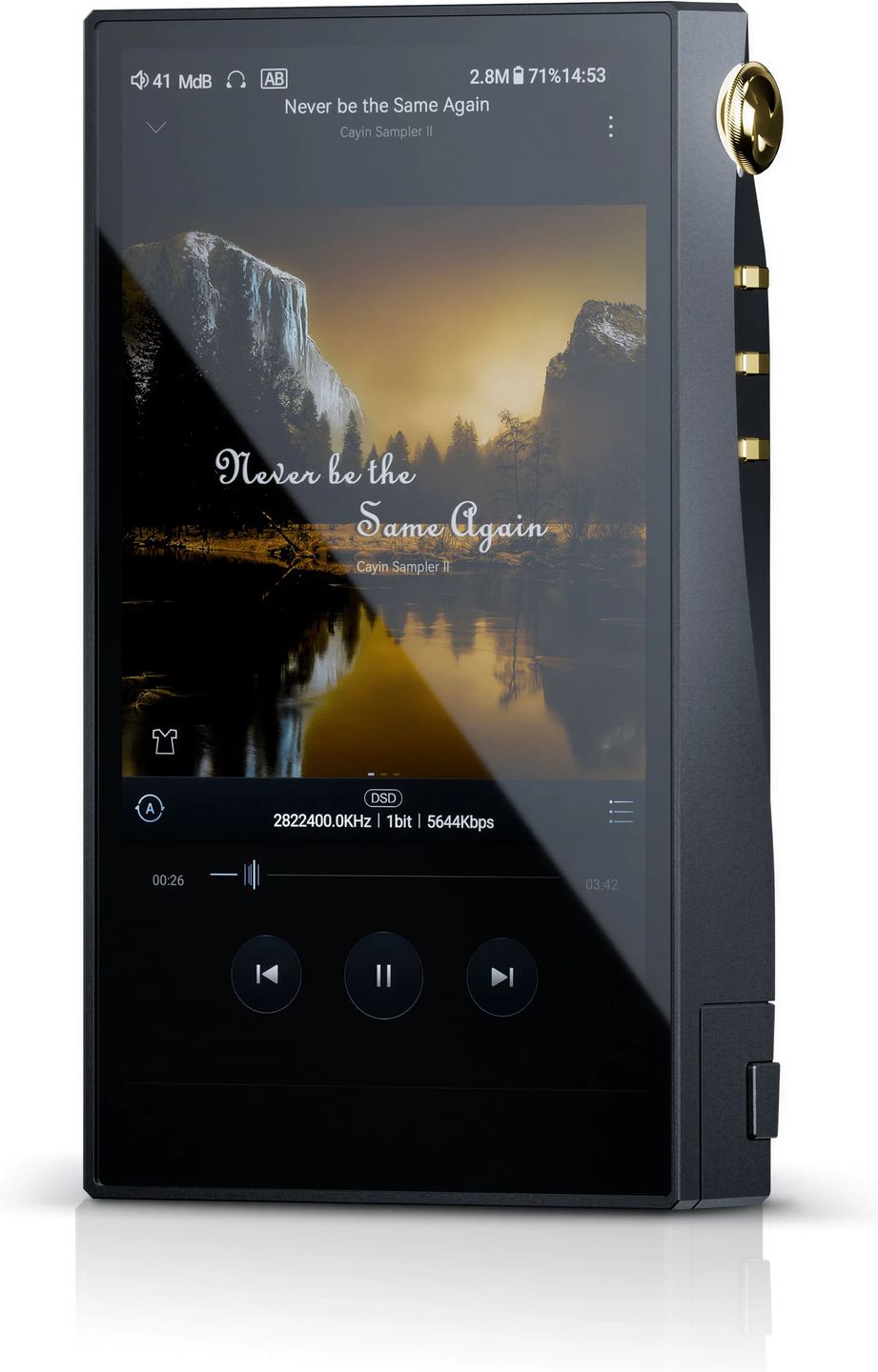
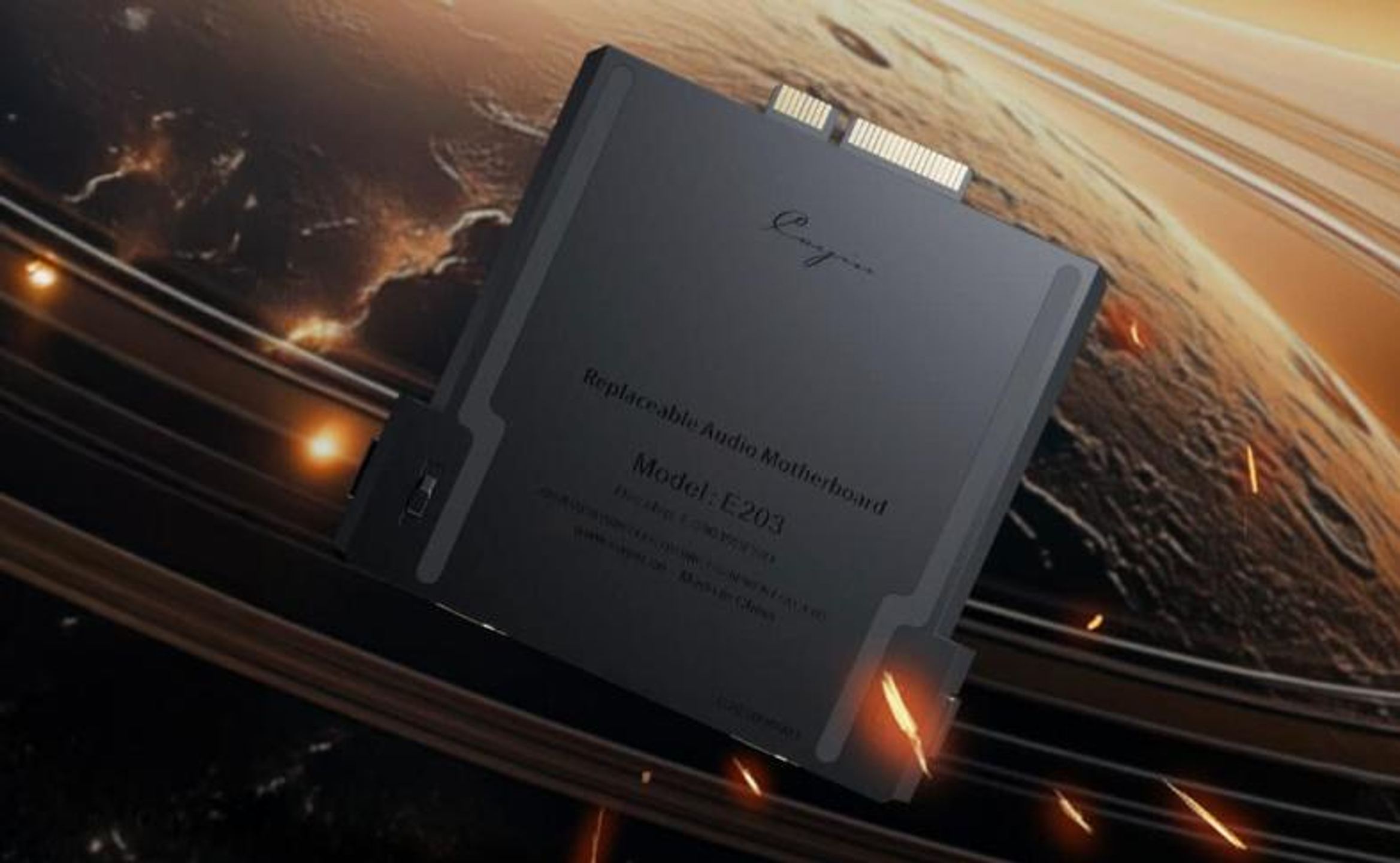
The Cayin N6 III E203 is an amplification-oriented version of the modular N6 III player. It uses an eight-channel ESS Sabre ES9039PRO digital-to-analog converter and a DAO (Dual Amplifier Operation) system offering three operating modes: Class A, Class AB, and Hyper. This second-generation, tool-free interchangeable motherboard is designed for 3.5 mm and 4.4 mm headphone outputs, with no line out, in order to focus resources on direct amplification.
The N6 III and its second-generation modular system
The N6 III continues the modular concept introduced with the N6 II in 2019, allowing the audio motherboard to be replaced. Six years separate these two generations, a longer-than-average span in a sector where refresh cycles are usually short. Cayin prioritized technical improvements over cosmetic updates.
The N6 III’s Gen2 platform features a printed circuit board enlarged by approximately 31% compared to the N6 II, enabling the integration of audio technologies developed over the past five years while maintaining a compact form factor. The player measures 126 × 77.8 × 23 mm and weighs 350 g, representing a volume increase of less than 27% despite the additional internal components.
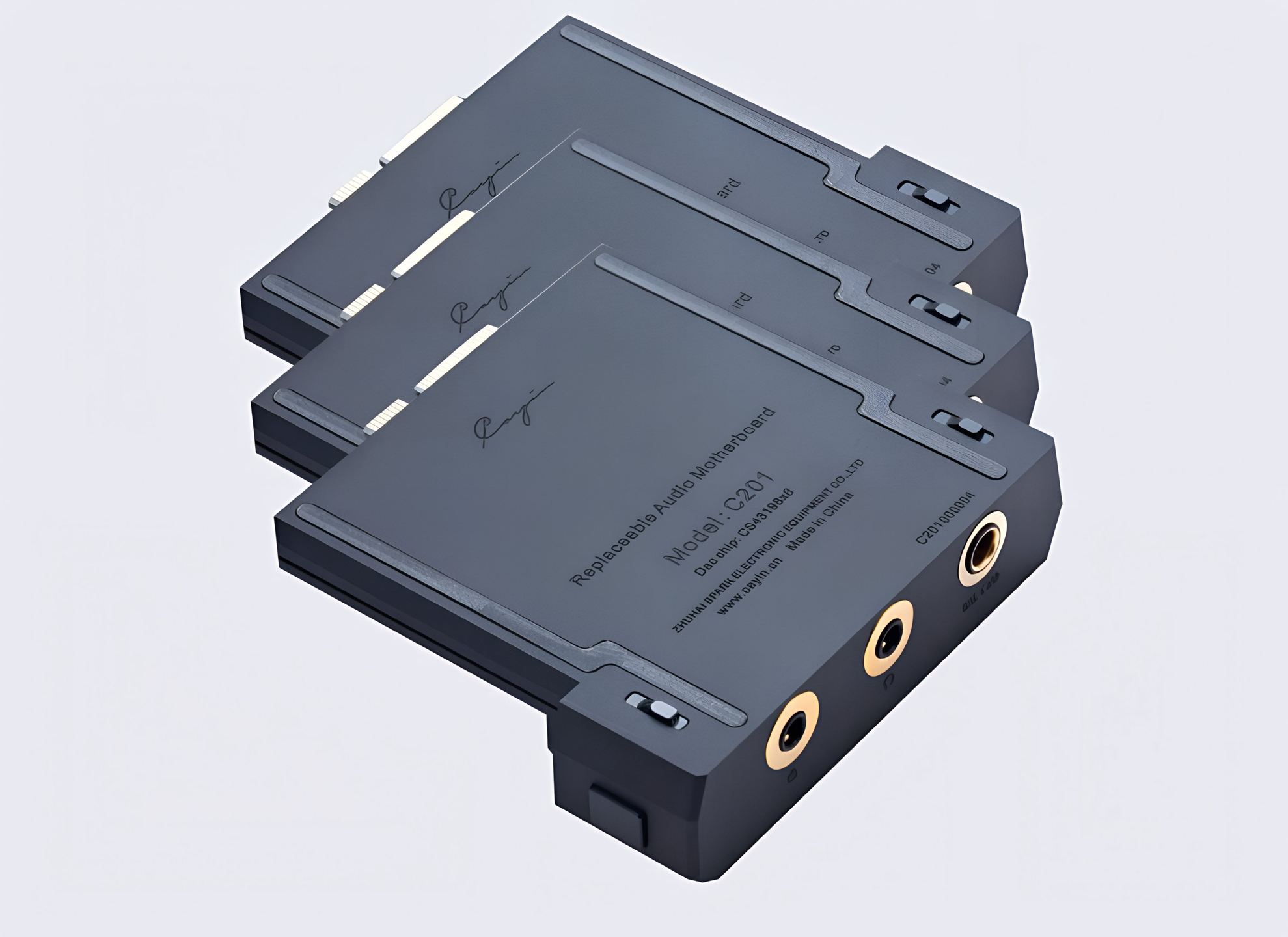
The three-point locking mechanism, inspired by the C9 II, allows the motherboard to be removed and inserted without tools. Swapping can be performed with the device powered on, as each board’s microcontroller communicates with the Snapdragon 665 processor to automatically adjust system parameters.
This modularity is not compatible with first-generation N6 II boards. The increased PCB area made this incompatibility necessary, but it enables the integration of more elaborate audio topologies and higher output power.
The E203 motherboard: ESS Sabre and dual-mode amplification
The E203 board is built around the ESS ES9039SPro converter developed on the Hyperstream IV platform. This chip has eight independent output channels and is paired with an eight-lane current-to-voltage (I/V) conversion stage. This strict correspondence between DAC outputs and conversion stages preserves signal integrity before the low-pass filter (LPF) stage that extracts four full differential signals.
A buffer stage then interfaces with the amplification circuit. Cayin selected Texas Instruments OPA1612 operational amplifiers for these small-signal differential stages, renowned for over a decade in line preamplifiers. This over-specification of the voltage stages enables the E203 to drive the capacitive loads represented by the discrete output transistors effectively.
The DAO (Dual Amplifier Operation) system is the hallmark of this board. It combines operational amplifiers with discrete bipolar junction transistors (BJTs) in a hybrid topology. Three operating modes result:
-
Class A: prioritizes linearity and sonic smoothness by keeping the output transistors constantly biased. Maximum power consumption but minimal distortion at low levels.
-
Class AB: a compromise between energy efficiency and sound quality. The transistors conduct only during part of the cycle, reducing heat dissipation while maintaining performance.
-
Hyper Mode: switches to Class A while maximizing output current. Power rises to 900 mW into 32 Ω on the balanced output, versus 700 mW in standard mode. The single-ended output goes from 300 to 400 mW. Battery life decreases accordingly: about 6.5 hours in Hyper versus 11 hours in normal operation.
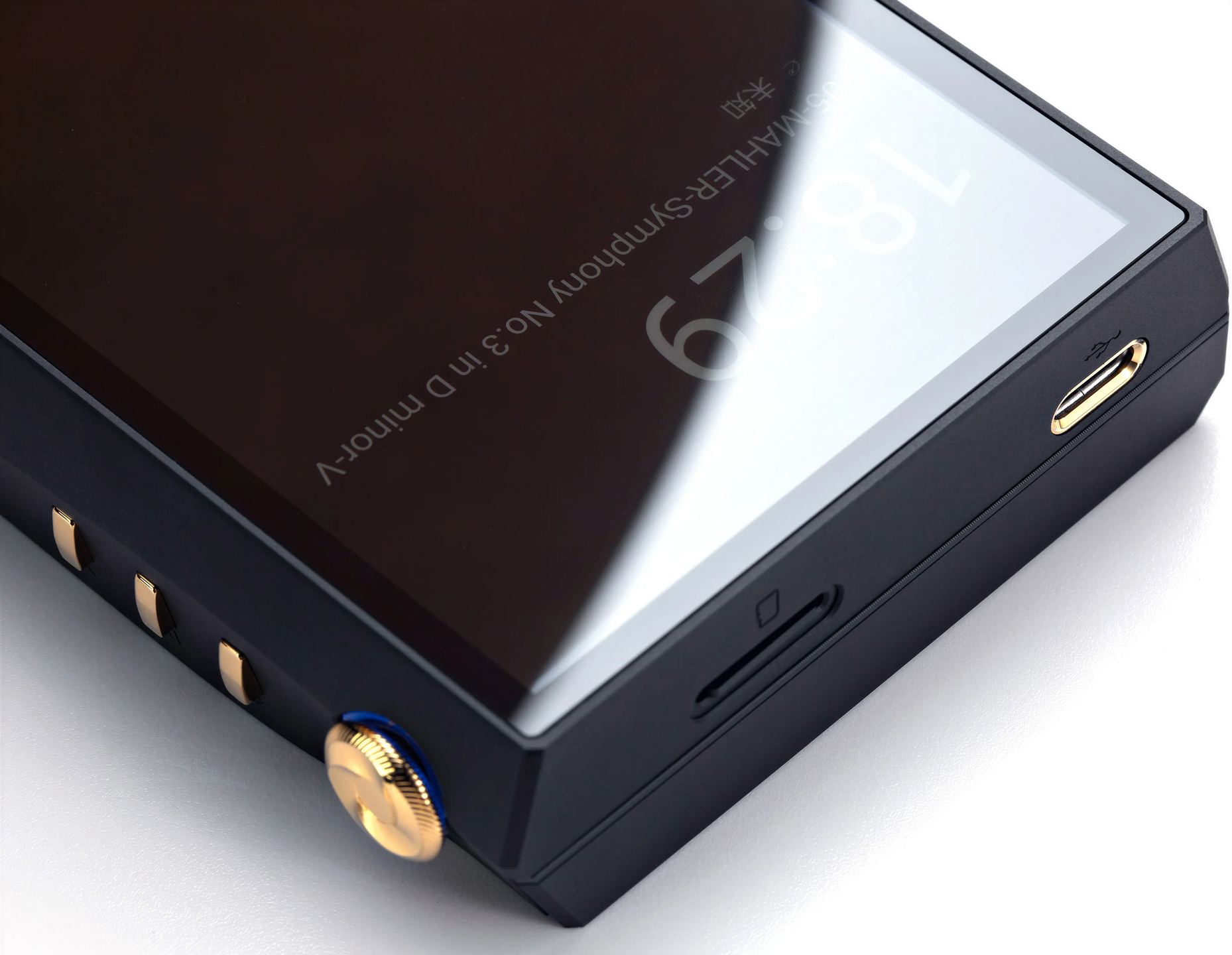
Output impedance remains under 1 Ω on both connectors, ensuring a favorable damping factor even with sensitive in-ear monitors. Outputs are limited to the single-ended 3.5 mm jack and the balanced 4.4 mm Pentaconn connector. The absence of a line out fundamentally differentiates the E203 from the C201 board, which offers three analog connectors including a dedicated line output.
Hardware platform and ergonomics
The N6 III is powered by a Qualcomm Snapdragon 665 octa-core processor paired with 6 GB of RAM. This configuration ensures smooth Android 12 performance, customized by Cayin to prioritize audio. The 128 GB internal storage supports microSD expansion up to 2 TB.
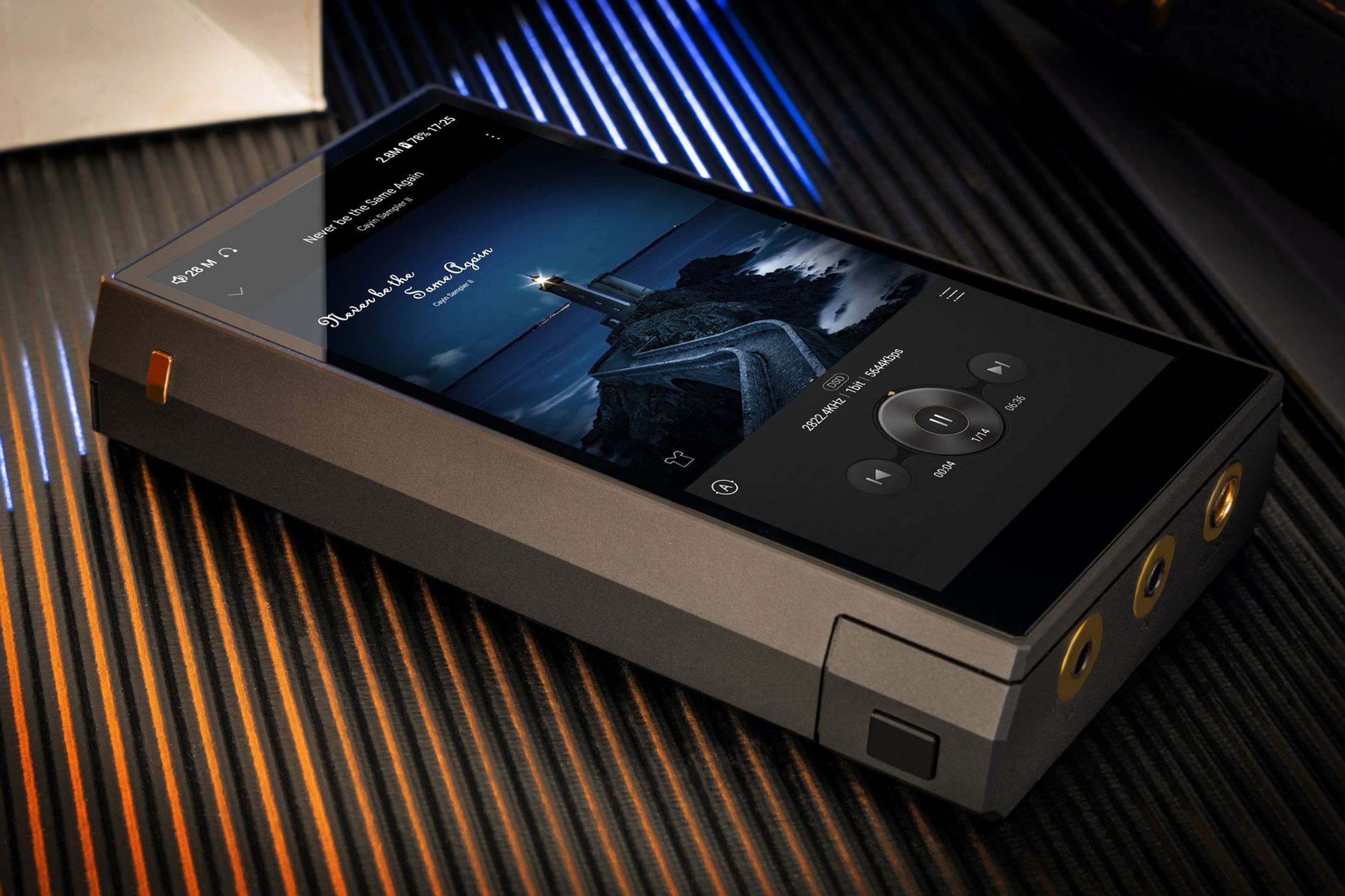
The 5-inch Full HD touchscreen occupies virtually the entire front face. To avoid widening the chassis, Cayin integrated playback controls and the volume potentiometer beneath the glass surface. The curved sides make one-handed handling easier despite the generous display size. The layout differs notably from competing players, which often retain physical controls on the edges.
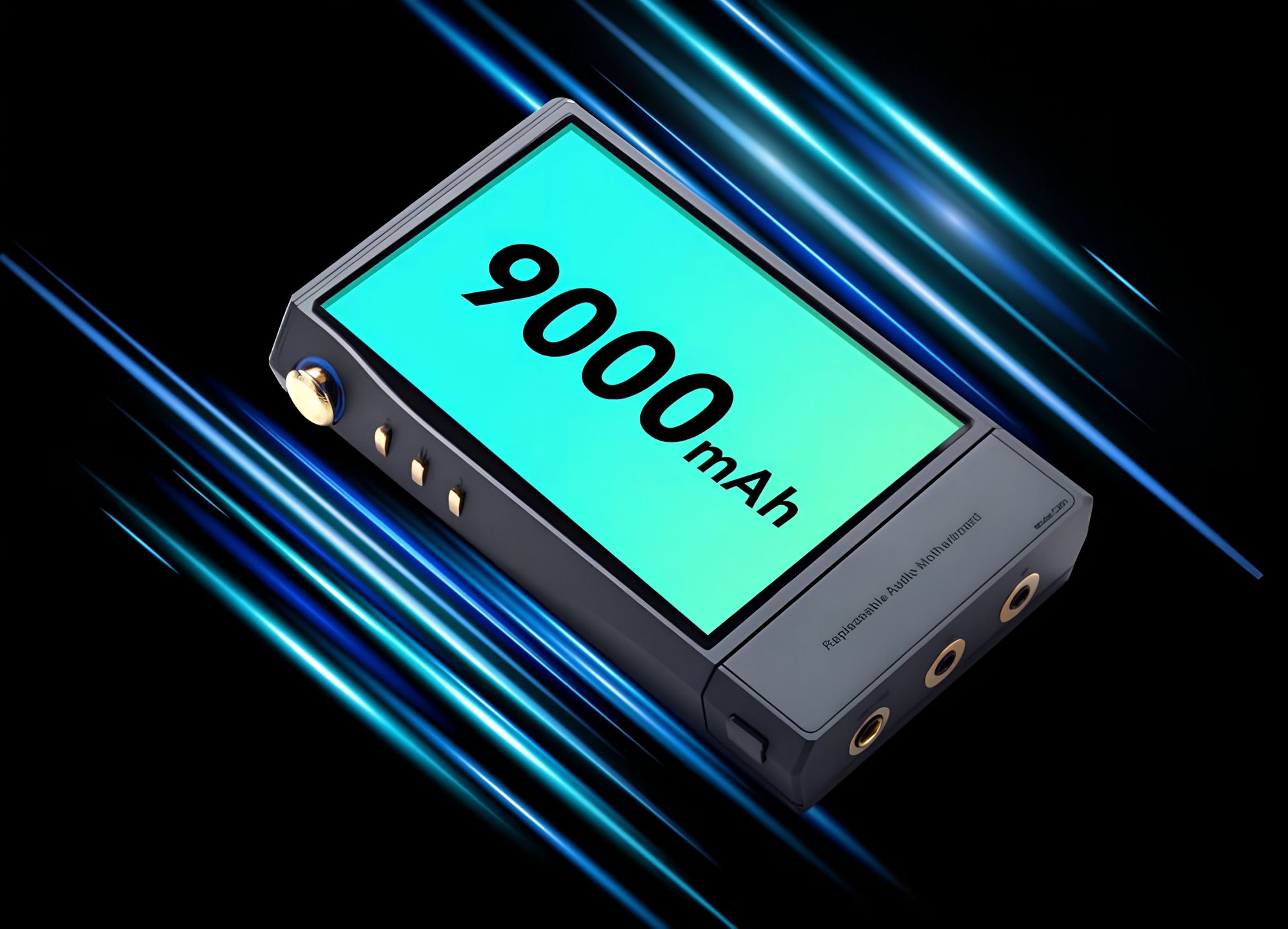
The 9,000 mAh lithium-polymer battery represents a 52.5% increase over the N6 II. This substantial capacity partially offsets the consumption of Gen2 motherboards, whose components are more power-hungry. With the C201 board equipped with low-power Cirrus Logic DACs, battery life reaches 14 hours. The more power-demanding E203 ranges from 6.5 to 11 hours depending on the selected amplification mode.
The 6063 aluminum alloy chassis provides rigidity and thermal dissipation. The supplied synthetic leather case deserves special mention: its back panel opens magnetically halfway down to facilitate removal of the player when changing motherboards, thus preventing premature material wear. Generous cutouts expose all connectors and buttons.
The Wi-Fi antenna adopts a semi-exposed configuration beneath the top panel. This placement, midway between the internal antenna of the N6 II and the external ring antenna of the N7 and N8 II models, improves reception without lengthening the device. Dual-band 2.4/5 GHz Wi-Fi is complemented by Bluetooth 5.0 supporting LDAC, aptX, AAC, and SBC codecs.
The multifunction USB-C port supports PD2 fast charging, USB-DAC connectivity, and coaxial S/PDIF output. The latter requires a specific cable (CS-40TC35) due to the particular pin configuration adopted by Cayin. The N6 II’s I²S connection, appreciated by users for linking to desktop DACs, has been removed in this generation.
Technical Specifications
Audio System
- E203 audio motherboard
- Digital-to-analog converter: ESS Sabre ES9039PRO with 8 channels
- Dual amplification architecture
- Amplification modes: Class A, Class AB, Hyper
- Headphone outputs
- Unbalanced output: 3.5 mm
- Balanced output: 4.4 mm
- No preamp output or line-out to reduce interference
- Printed circuit board enlarged by 31% compared to the C201 model for enhanced stability
Processor and Memory
- Processor: Qualcomm Snapdragon 665
- RAM: 6 GB
- Internal storage: 128 GB
- Expandable storage up to 2 TB via microSD card
Display and Interface
- 5-inch Full HD multi-touch display
- Power button
- Volume potentiometer
- Playback controls
Battery and Battery Life
- Capacity: 9000 mAh
- Battery life: up to 11 hours of continuous playback
Connectivity
- Bluetooth 5.0 with aptX, LDAC, AAC, SBC codecs
- Dual-band Wi-Fi 2.4 / 5 GHz
Dimensions and Weight
- Dimensions: 126 × 77.8 × 23 mm
- Weight: 350 g
Frequently asked questions
Are N6 II boards compatible with the N6 III?
No, first-generation boards (A01, T01, E01, E02, R01, P01) designed for the N6 II do not work with the N6 III. The 31% increase in PCB area and changes to the communication protocol between the board and the main processor make the two generations incompatible. Only Gen2 boards (C201, E203, R202) fit the N6 III.
How do I choose between the C201 and the E203?
The C201 suits users seeking versatility: it offers a dedicated line out, maximum battery life, and a slightly warm sound signature with smooth treble. The E203 is for those prioritizing amplification power, adjustable Class A/AB/Hyper modes, and a more analytical presentation. The C201 consumes less power thanks to its Cirrus Logic DACs, while the E203 taps the full potential of the ES9039PRO at the expense of reduced battery life.
Does Hyper mode really improve sound quality?
Hyper mode increases the available output current, resulting in better driver control, particularly in the bass and during dynamic passages. This effect is more noticeable with headphones and IEMs that demand higher current. With very sensitive IEMs, differences remain subtle. The mode generates more heat and reduces battery life by about 40%, so it’s best activated as needed rather than used constantly.
What file formats are supported by the N6 III?
The player natively decodes PCM up to 768 kHz at 32-bit, DSD up to DSD512, as well as MQA. Common compressed formats (FLAC, ALAC, WAV, AIFF, MP3, AAC, OGG, APE) are supported. Files stored on internal memory or the microSD card are accessible directly. Streaming apps installed via Android handle their own formats according to their specifications.
Is the lack of a line out on the E203 a significant limitation?
It depends on your intended use. Users wishing to connect an external amplifier should opt for the C201, which offers a dedicated 3.5 mm line out and a switchable 4.4 mm output. The E203 focuses its resources on optimizing headphone outputs, with output impedance under 1 Ω on both connectors. For mobile use with headphones and IEMs, this configuration is more than sufficient.
Is the 9,000 mAh battery user-replaceable?
No, the battery is integrated into the chassis and requires a technician for replacement. This design improves the player’s compactness and structural rigidity. The high-capacity cell nonetheless reduces charge cycle frequency: even with intensive use of the E203 in Hyper mode, charging every two days is generally sufficient. The USB-C port supports PD2 fast charging to reduce downtime.
Can the N6 III be used as a USB DAC with a computer?
Yes, the USB-DAC mode turns the N6 III into an external converter for a computer. The player appears as an audio device and processes the digital signal via the installed motherboard. This function lets you benefit from the ES9039PRO’s conversion quality or other DACs available on the interchangeable boards. Drivers are generally not required on Windows 10/11 and macOS, which recognize the device in standard UAC mode.
- Eco-contribution included in the sale price.
- Manufacturer reference: CAYN6IIIE203
- GTIN / EAN: 6957914912094